
Reviewed · GEISHA & GION DISTRICT TOURS
Kyoto Magical Night English Tour: Gion & Fushimi Inari Shrine
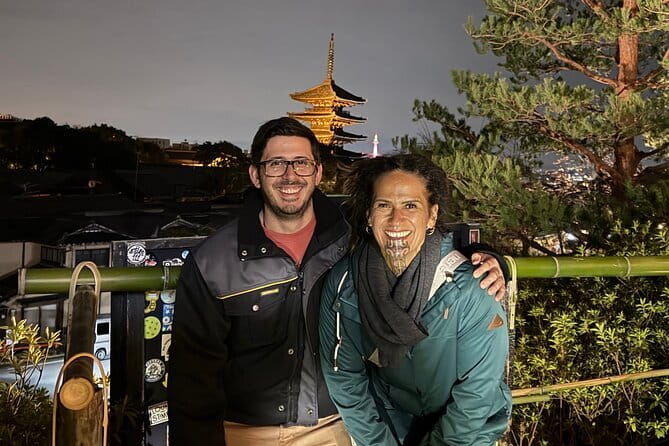
Kyoto looks different after sunset. This 2.5-hour private walking tour links the glowing torii gates of Fushimi Inari with Gion’s quiet lanes, old wooden houses, shrines, and stone-paved streets. An English-speaking local guide adds context, helps with shrine customs, and takes photos along the way.
I especially like the chance to see Fushimi Inari with fewer people around, and I like how the route moves beyond the big-name sights into atmospheric corners of Higashiyama. The main consideration is the pace: you will use public transportation and spend most of the evening on foot, so good shoes and a moderate fitness level matter.
- Fushimi Inari after dark: Walk beneath the famous red torii gates during a cooler, quieter part of the day.
- Private group format: Only your group participates, which allows the guide to answer questions and adjust the pace.
- Gion and Higashiyama in one evening: See Hanamikoji, Yasaka Pagoda, Ninenzaka, Sannenzaka, Nene-no-Michi, and Yasaka Shrine.
- Practical cultural guidance: Learn how to show respect at Shinto shrines and what several unusual religious sites mean.
- Professional photos included: Guides take pictures during the tour and, according to several detailed accounts, often send them soon afterward.
- Strong value at $26.43: The price includes the guide, temple and shrine admission fees, and photos, but not the ¥480 public transportation fare or food.
In This Review
- Why Kyoto at Night Works So Well
- Starting at Fushimi Inari Taisha
- Hanamikoji Street and the Gion Evening
- Yasui-Konpiragu and the Relationship Stone
- Yasaka Pagoda and the Two Slopes
- Nene-no-Michi and Yasaka Shrine
- What the Guides Add
- Photos, Cost, and Overall Value
- Who Should Book This Evening Walk
- Should You Book the Kyoto Magical Night Tour?
- FAQ
- How long is the Kyoto Magical Night English Tour?
- Where does the tour begin?
- Where does the tour end?
- Is the tour conducted in English?
- Is this a private tour?
- Does the price include admission fees?
- Is public transportation included?
- Are food and drinks included?
- Are photographs included?
- What fitness level is required?
- What happens if I arrive late?
- Can I cancel for a full refund?
Why Kyoto at Night Works So Well
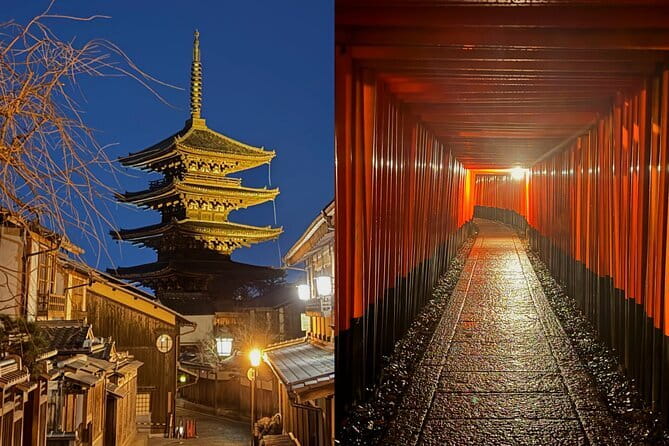
Kyoto’s most famous districts can feel crowded during daylight hours. At night, the mood changes. Lanterns and shop lights pick out the wooden facades in Gion, while the red torii at Fushimi Inari take on a more mysterious look beneath the forest.
The evening timing also gives you a useful introduction to Kyoto customs. Instead of simply walking past a shrine, you can learn the difference between Shinto shrines and Buddhist temples, how to pay your respects, and why certain places attract particular prayers.
I like this approach for a first night in Kyoto. The route gives you a broad sense of the city’s religious traditions, old entertainment district, and eastern historic quarter without asking you to commit an entire day. Several people also used the tour on their first evening and found it helpful for getting oriented.
The tour is private, despite the listed group-discount option. That means your own party takes part rather than joining a larger mixed group. A small family can ask more questions, while a group of eight with children can receive more personal attention.
Starting at Fushimi Inari Taisha
The meeting point is the Statue of Izumo-no-Okuni in Kawabatacho, in Kyoto’s Higashiyama Ward. From there, the tour uses public transportation and plenty of walking to reach the evening sights.
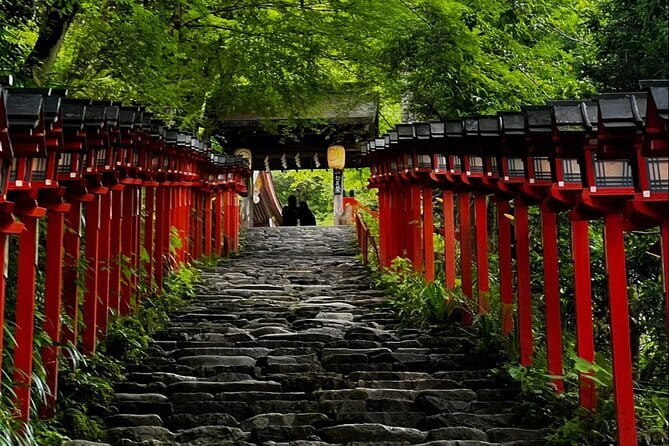
Fushimi Inari Taisha receives about an hour of the itinerary. Its defining feature is the long series of red-orange torii gates that climb the wooded slopes of Mount Inari. Each gate was donated by a person or business seeking good fortune, especially in trade and prosperity.
You will not simply be shown the gates and sent on your way. The guide explains the shrine’s connection with Inari, the Shinto deity associated with rice and prosperity, along with the stories and customs tied to the site. This is where the tour’s cultural teaching earns its keep.
The route does not require an admission ticket, which is useful because Fushimi Inari is already one of Kyoto’s major free sights. Still, the guide adds value by helping you understand what you are seeing and by pointing out good places for photographs.
One practical warning: the shrine route includes slopes and steps. You do not need to complete the entire mountain path during this one-hour visit, but you should expect uneven surfaces and walking uphill. Wear shoes with a firm sole. If you have knee problems or need frequent rests, tell the guide at the start.
Some particularly useful guidance involves shrine etiquette. You can learn the basic way to approach a Shinto shrine and make a prayer, rather than copying other people without knowing what is happening. Bring a few coins if you would like to make an offering or a wish, as one guide specifically suggested.
More Temple & Shrine Tours in Kyoto
- Kyoto: Fushimi Inari, Kinkakuji, Bamboo Grove 1 Day Bus Tour
★ 4.8 · 4,316 reviews - Kyoto: Tea Ceremony in a Traditional Tea House in Kiyomizu
★ 4.9 · 3,519 reviews - Kyoto: Tea Ceremony Ju-An at Jotokuji Temple
★ 4.9 · 3,207 reviews
Hanamikoji Street and the Gion Evening
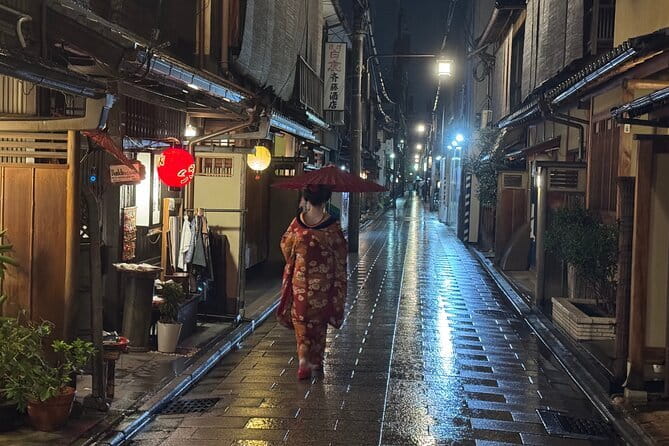
After Fushimi Inari, the route turns toward Gion, Kyoto’s best-known geisha district. The stop at Hanamikoji Street is short, about 10 minutes, but the setting deserves attention.
Hanamikoji is lined with traditional wooden machiya buildings and teahouses. In the evening, the soft light gives the street a quiet, formal mood. You may have the chance to see geisha or maiko, though that is never guaranteed and you should treat anyone you encounter with care and respect.
A good guide helps you understand that Gion is not simply a stage set for photographs. It remains a working district with private homes, restaurants, and businesses. Keep voices low, do not block entrances, and ask before photographing people.
The next Gion stop also lasts about 10 minutes. That may seem brief, but the tour is designed to cover several connected sights rather than spend a long time at one location. If you want a slow night of sitting, eating, or shopping, this is not the right format. If you want a well-planned overview, the compact timing works.
Several guides have been praised for offering restaurant suggestions and helping with practical questions about Kyoto. One guide even helped a group get seated at a recommended yakiniku restaurant after the tour. That kind of local help can be valuable, especially on your first night, though restaurant assistance should be viewed as a courtesy rather than a formal part of the package.
Yasui-Konpiragu and the Relationship Stone
Yasui-Konpiragu is one of the more unusual stops. The shrine is associated with breaking negative relationships and forming better ones. People visit to pray for the end of harmful ties, bad habits, or difficult circumstances.
The shrine is known for a relationship stone and the ritual connected with it. Guides can explain the meaning and show you how people approach the site. This is a good example of why an informed escort adds more than simple directions. Without context, the stone might look like an odd local curiosity. With context, it becomes a window into the way religious practice responds to everyday hopes and worries.
You have about 10 minutes here. That is enough for an explanation and a brief visit, but not a long personal ritual. If this stop matters to you, let the guide know so you can use the available time thoughtfully.
Yasaka Pagoda and the Two Slopes

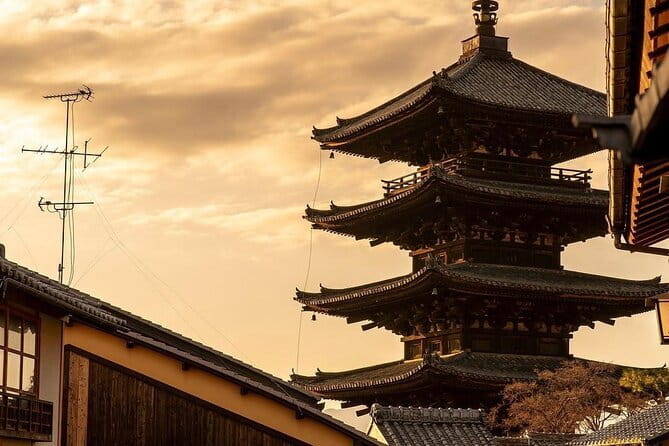
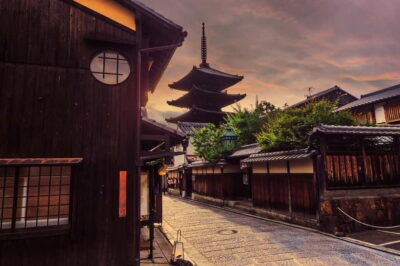
The 15-minute stop at Yasakanoto focuses on Yasaka Pagoda, also called Hokanji Temple. The pagoda is one of Kyoto’s most recognizable buildings and one of the oldest wooden structures in Japan.
Its scale is striking, especially when seen among the surrounding lanes. The building’s traditional construction is part of its appeal, and the guide can put the structure into the wider story of Kyoto’s temples and neighborhoods.
Next come Sannenzaka and Ninenzaka, two stone-paved paths lined with shops, restaurants, and wooden buildings. During the day, these lanes can be very busy. At night, they may feel calmer, though the exact atmosphere depends on the evening and the businesses that are open.
The names are often written as Sannen-zaka and Ninen-zaka. They are attractive places for photos, but they are not flat sidewalks. The stone paving can be slippery in rain, and the slopes require care. One memorable explanation from a guide focused on why you should walk carefully here, a useful reminder that old streets can be both beautiful and awkward underfoot.
The itinerary allows 15 minutes for this area. You will see the main character of the streets, but you will not have time to browse every shop. If you want souvenirs, return during daylight and allow a separate shopping period.
More geisha district walks in Kyoto:
- Kyoto Geisha Walking Tour: Gion District & Hidden Gems
★ 4.7 · 3,273 reviews - Kyoto: Gion Magical Night Walking Tour with Geisha Trivia
★ 4.9 · 2,393 reviews - Kyoto: Gion Geisha District Walking Tour – Stories of Geisha
★ 4.7 · 2,187 reviews - Best of Kyoto: Gion, Geisha, Pagodas & Cobblestones
★ 4.9 · 2,058 reviews
Nene-no-Michi and Yasaka Shrine
Nene-no-Michi provides a calmer stretch of walking. The path is named after Nene, the wife of a powerful Japanese shogun, and runs past temples and traditional streets in the Higashiyama area.
This section helps balance the more famous sights. Instead of moving only from landmark to landmark, you get a sense of how the district connects. The 15-minute visit is short, but it offers a chance to slow down, listen, and take photographs away from the busiest routes.
The final destination is Yasaka Shrine, with another 15 minutes scheduled. Yasaka is the headquarters of roughly 2,300 related shrines across Japan and is associated with prosperity and protection.
This is another place where simple etiquette advice is useful. Your guide can explain how to approach the shrine and what you are looking at, giving the visit more meaning than a quick nighttime photograph.
The tour ends back at the original meeting point. Because the route uses public transportation and covers several areas, pay attention to the return arrangements and keep your group together. The company warns that late arrivals cannot join the tour and will not receive a refund, so arrive early at the Statue of Izumo-no-Okuni.
What the Guides Add
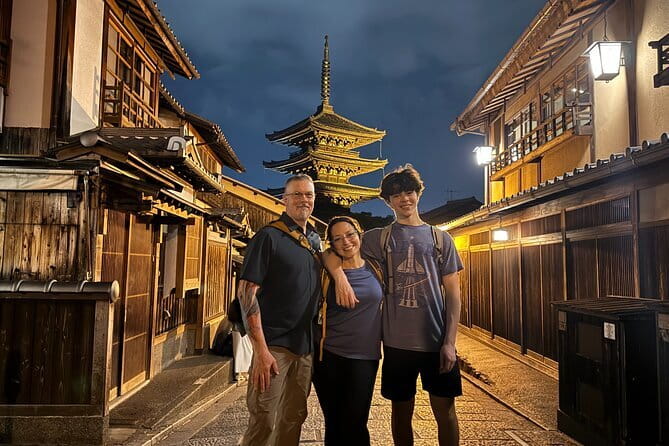
The guide is the heart of this experience. The strongest accounts repeatedly praise guides for warmth, clear explanations, patience, and practical help.
Ikki is named especially often. He uses visual material, including a laminated chart with explanations and graphics, to make history and customs easier to follow. He has also been praised for answering questions about language, culture, transit, restaurants, and Kyoto’s lesser-known corners.
Other guides named in the feedback include Yui, Yuki, Mariko, Joi, and Yuri. Yui was appreciated for making the route easy to follow and offering recommendations for the rest of a Kyoto stay. Mariko was described as energetic and quick on foot, with a talent for taking good night photographs. Yuri was praised for being friendly and easy to talk to.
Guide assignments are not guaranteed, so you should not book on the assumption that a particular person will lead your tour. Still, the repeated pattern is encouraging: the service seems to depend heavily on personal attention rather than a scripted group presentation.
This is also a useful choice for families. One family of eight, including four children from ages five to twelve, found the guide patient and able to keep the children involved. Another group appreciated a guide who slowed down for older participants who needed regular breaks.
That said, private does not automatically mean slow. One guide was described as walking quickly, and the route covers a lot in 150 minutes. Tell the guide if your group needs a gentler pace.
Photos, Cost, and Overall Value
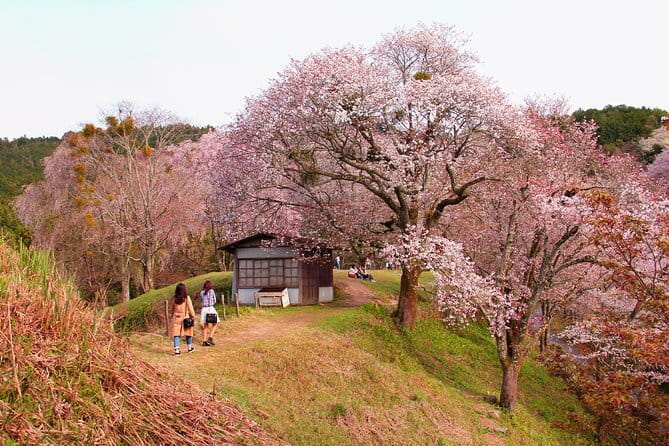
The tour costs $26.43 per person. That price includes the English-speaking local guide, admission fees for the temples and shrines, and professional photos taken during the tour.
The admission savings are modest because the scheduled sites are listed as free. The real value comes from the guide’s time, route planning, cultural explanations, transit coordination, and photography. If you are comfortable researching shrine etiquette and finding the route yourself, you could spend less by exploring independently. You would also lose the built-in explanations and personal help.
The photo service adds real value for families and couples. Several detailed accounts describe receiving dozens of photos, sometimes within about an hour after the tour. Night photography is not easy, so having someone focused on taking pictures can be a welcome benefit.
You pay an additional ¥480 per person for public transportation. Food and drinks are not included. Group discounts may make the per-person price more attractive for larger parties, but check the final booking total before committing.
The experience has a 100 percent recommendation rate and a rating of 5 from 97 reviews. That is a strong record, though you should still match the format to your needs. This is a sightseeing walk with cultural interpretation, not a food tour, shopping tour, or long temple lecture.
Who Should Book This Evening Walk
I would recommend it most strongly if you fit one of these profiles:
- You are visiting Kyoto for the first time and want a useful first-night orientation.
- You want Fushimi Inari and Gion in one carefully arranged evening.
- You prefer a private guide who can answer questions about customs and local transport.
- You are traveling with children and want a guide who can adjust explanations to their age.
- You value good group photographs and do not want to rely only on phone selfies.
- You enjoy walking and can manage slopes, stone paths, and stairs.
It may be less suitable if you want to explore Fushimi Inari’s mountain trails at length. The shrine receives about an hour, and the rest of the route continues through several districts.
It is also not ideal for anyone seeking a slow dinner-centered evening. The schedule is full, the walking is steady, and the tour ends at the starting point rather than at a restaurant.
Book at least 24 hours before the start if you want the option of a full refund. Cancellation within 24 hours is not refundable, and changes inside that window are not accepted.
Should You Book the Kyoto Magical Night Tour?
Yes, if you want a friendly introduction to Kyoto’s evening sights and customs at a modest price. The route covers a lot, the private format gives you direct access to the guide, and the included photographs are a welcome extra.
I would book it early in your Kyoto stay. You can use the guide’s advice for later shrine visits, restaurants, and public transportation. Arrive early, wear reliable walking shoes, carry a few coins, and be ready for a brisk evening on uneven streets.
Skip it if you prefer to move slowly, spend substantial time at one shrine, or explore independently without a fixed route. For most first-time visitors who want context, photos, and a strong first look at Gion and Fushimi Inari, this is a very good deal.
FAQ
How long is the Kyoto Magical Night English Tour?
The tour lasts approximately 2 hours and 30 minutes.
Where does the tour begin?
It begins at the Statue of Izumo-no-Okuni in Kawabatacho, Higashiyama Ward, Kyoto.
Where does the tour end?
The activity ends back at the meeting point.
Is the tour conducted in English?
Yes. The package includes a passionate local English-speaking guide.
Is this a private tour?
Yes. Only your group participates in the activity.
Does the price include admission fees?
Yes. Admission fees for all listed temples and shrines are included, and the scheduled stops are listed with free admission.
Is public transportation included?
No. Public transportation costs an additional ¥480 per person.
Are food and drinks included?
No. Food and drinks are not included.
Are photographs included?
Yes. Professional photos are taken during the tour. Several guides have also sent groups many photos shortly after the experience.
What fitness level is required?
A moderate level of physical fitness is recommended. The experience is a walking tour using public transportation, with substantial time on foot and some uneven or sloped paths.
What happens if I arrive late?
If you are late for the meeting time, you cannot join the tour and will not receive a refund.
Can I cancel for a full refund?
Yes, if you cancel at least 24 hours before the experience start time. Cancellations made less than 24 hours in advance are not refunded.
Just added around Kyoto
- Kyoto: Gion Night Walking Tour with Geisha Insight★ 5.0 · 39 reviews
- Kyoto: Private Customizable Day Trip by Car★ 5.0 · 38 reviews
- Kyoto: Full Day Bike Tour★ 4.9 · 39 reviews
- Private Japanese Calligraphy in Kyoto – Learn Shodō with a Master★ 5.0 · 39 reviews
- Experience a tea ceremony in an authentic tearoom, in Kyoto!★ 4.5 · 41 reviews
- Kyoto: Gion Evening Walk with Hidden Gems, Geisha & Sake★ 5.0 · 41 reviews
- Kyoto Private Photo Shoot & Tour by SnapKyoto★ 5.0 · 41 reviews
- The Way of Tea: Kyoto Crafts, Hidden Temples & Wabi-Sabi Walk★ 5.0 · 41 reviews
Geisha & Gion District Tours, compared.
Kyoto Geisha Walking Tour: Gion District & Hidden Gems
Read our review →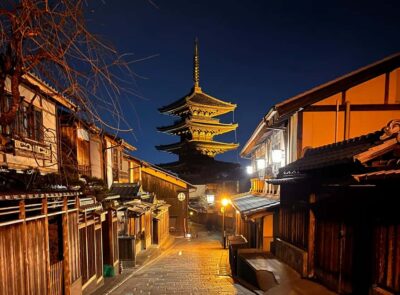
Gion Magical Night Walking Tour with Geisha Trivia
Read our review →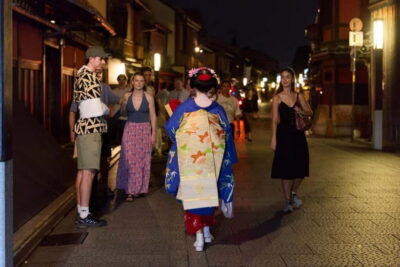
Gion Geisha District Walking Tour – Stories of Geisha
Read our review →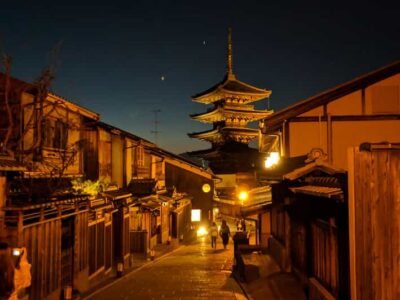
Best of Kyoto: Gion, Geisha, Pagodas & Cobblestones
Read our review →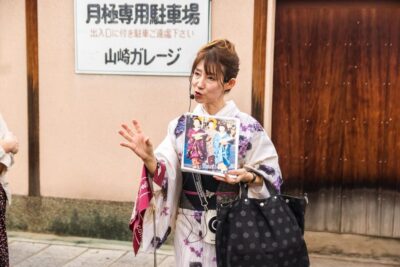
Kyoto Night Foodie Tour in Gion (9+ dishes + 6 Sake tastings)
Read our review →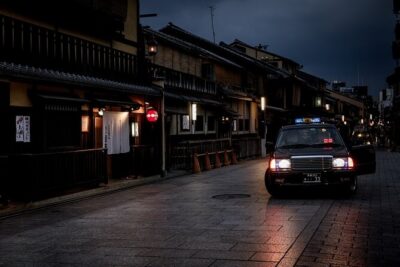
Kyoto Gion Geisha District Walking Tour – The Stories of Geisha
Read our review →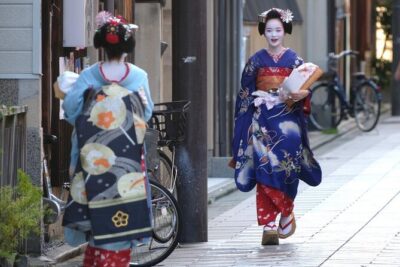
Kyoto Gion: 2-Hour Geisha Culture & History Walking Tour
Read our review →Browse the lists this tour appears in