
Reviewed · GEISHA & GION DISTRICT TOURS
Kyoto Nighttime All-Inclusive Eats and Streets, Gion and Beyond
Kyoto changes character after sunset. This three-hour walk pairs Gion’s geiko traditions with small local eateries, giving you more than a meal and a pretty street stroll. I like the mix of cultural context and regional food, and I like that the tour stays small, with a maximum of six people in most cases. The main catch is that food quality and seating can vary from night to night.
You’ll walk quite a bit, and the meeting point at Minamiza Theater can be confusing when several tours gather nearby. Still, guides such as Laura, Hugo, Joshua, Jamie, Maya, and Rin have earned strong praise for their warmth, English, local tips, and ability to adjust dishes for vegetarian, pescatarian, and gluten-free needs.
In This Review
- Key points to know before booking
- Starting at Minamiza Theater at 6:30 p.m.
- Walking through Gion and learning about geiko
- Traditional entertainment and modern hostess clubs
- The first food stop around 7:30 p.m.
- Pontocho, Kiyamachi, and Kawaramachi after dark
- The second restaurant around 9 p.m.
- What the $119 price includes
- The guides make the evening
- Practical details for a smoother night
- Who should book this Kyoto night tour?
- Should you book Kyoto Nighttime All-Inclusive Eats and Streets?
- FAQ
- How long does the Kyoto nighttime food tour last?
- Where does the tour begin?
- Where does the tour end?
- How many people can join the tour?
- Are drinks included?
- Can people under 20 join?
- Can vegetarian guests join?
- Is the tour suitable in rainy weather?
- Can I cancel for a full refund?
Key points to know before booking
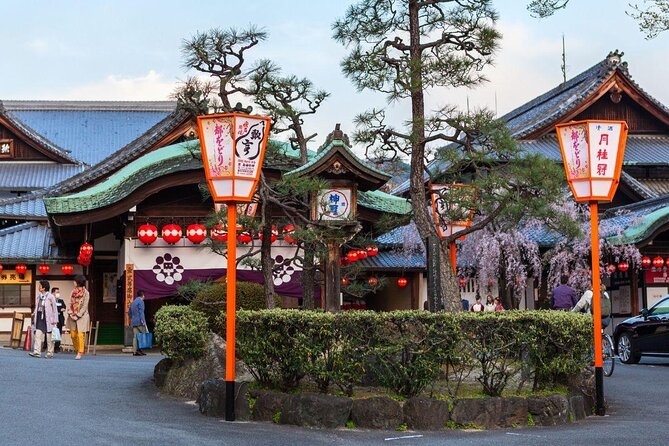
- Gion after dark: Learn about geiko, maiko, Kabuki, shrines, and the changing nighttime entertainment scene.
- Two local food stops: Try several regional dishes at small bars or restaurants, with one included drink at each stop.
- Small groups: The normal maximum is six people, though one reservation may include up to eight people.
- Cultural rather than purely culinary: Your guide explains Kyoto’s traditional geiko districts and modern hostess clubs.
- Good dietary flexibility: Vegetarians are welcomed, and several reviews describe successful vegetarian, pescatarian, and gluten-free arrangements.
- Three-hour evening timing: Meet at 6:30 p.m. and finish around 9:30 p.m. near Kyoto-Kawaramachi Station.
Starting at Minamiza Theater at 6:30 p.m.
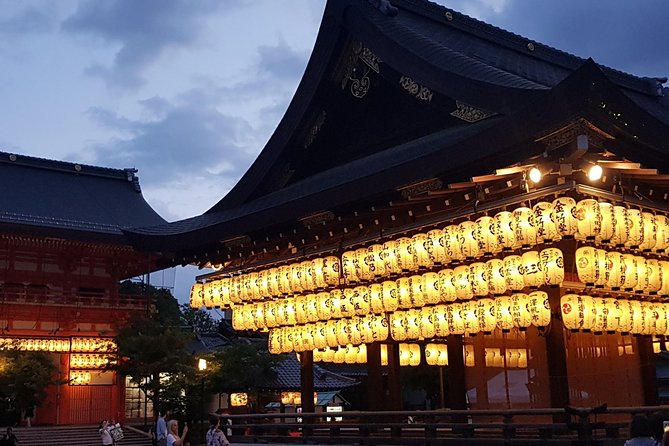
The tour begins at the Minamiza Theater, beside Gion Shijo Station on the east side of the Kamogawa River. The theater is a useful landmark, but the exact meeting point is on the second-floor west lobby, so give yourself enough time to find it.
This matters because the area can host several evening tours at once. One person found the meeting point hard to identify among other groups. I would arrive early, keep your phone available, and look carefully for the tour guide rather than assuming the largest group is yours.
The 6:30 p.m. start is practical after a day of temples and gardens. You have time to rest, but the walk begins while Kyoto’s evening atmosphere is taking shape. One useful suggestion from the feedback was starting slightly earlier, so you could see Gion in the fading daylight as well as after dark. As scheduled, the tour is firmly an evening outing, and photography can be limited once the light drops.
More geisha district walks in Kyoto:
- Kyoto Geisha Walking Tour: Gion District & Hidden Gems
★ 4.7 · 3,273 reviews - Kyoto: Gion Magical Night Walking Tour with Geisha Trivia
★ 4.9 · 2,393 reviews - Kyoto: Gion Geisha District Walking Tour – Stories of Geisha
★ 4.7 · 2,187 reviews
Walking through Gion and learning about geiko
The first hour focuses on Gion, Kyoto’s best-known traditional entertainment district. Your guide explains geiko and maiko, including why Kyoto uses geiko rather than the more familiar word geisha. You’ll also hear about Kabuki and the role these districts have played in Kyoto’s nighttime culture.
The value here is not simply spotting a person in traditional dress. The guide helps you understand the setting, the customs, and the difference between a working entertainment district and a sightseeing display. If you are lucky, you might see a geiko or maiko moving through the neighborhood, but this should not be treated as a guaranteed sight.
Several guides have received especially warm praise. Laura was noted for her clear English, lively personality, and explanations of geiko, maiko, shrines, and temples. Hugo was praised for combining humor with strong knowledge of the area. Joshua received similar approval for making historical and current information easy to follow.
The tone is intended to be suitable for teenagers aged 13 and older. That makes the subject matter more cultural than adult-oriented, even though the tour discusses hostess clubs and the modern nighttime economy.
Traditional entertainment and modern hostess clubs
A particularly useful part of the walk is the comparison between old and new forms of evening entertainment. Gion’s geiko culture represents a highly trained traditional art world, while hostess clubs reflect a more modern social and commercial setting.
Your guide discusses how Kyoto’s nightlife has changed and how different districts serve different audiences. This gives you a better sense of the city beyond shrines and seasonal scenery. Kyoto is often presented as a quiet, preserved city, but this walk shows you that it also has a working nightlife with its own rules and social patterns.
The subject is best suited to people who want cultural explanation rather than a simple list of famous buildings. Guides bring different backgrounds to the conversation. One person particularly enjoyed hearing about Japanese culture from an expatriate guide’s point of view, while others valued practical explanations from guides who now live and work in Kyoto.
You may also pass a Shinto shrine, and some guides explain the difference between a shrine and a Buddhist temple. That kind of short comparison can be useful early in a Kyoto visit, especially if you are still sorting out the city’s religious sites.
The first food stop around 7:30 p.m.
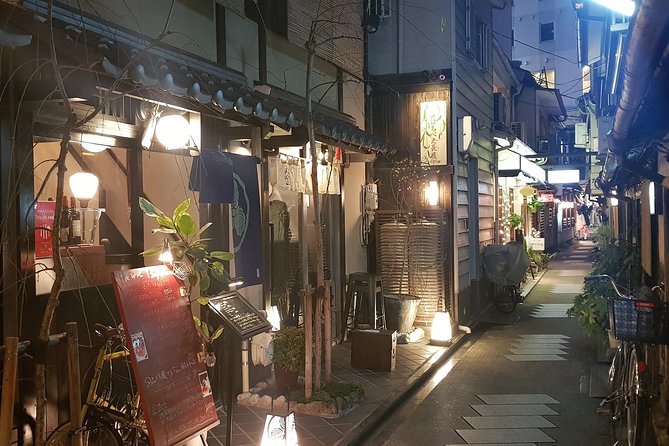
After about an hour of walking, the group reaches the first restaurant or standing bar. The exact venue can change, so you should think of this as a style of stop rather than a fixed restaurant reservation.
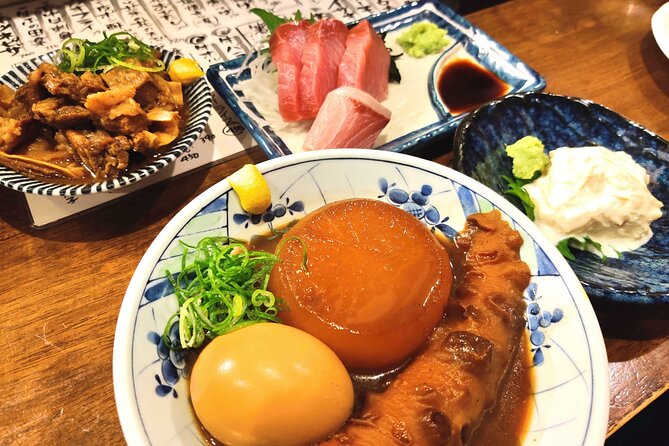
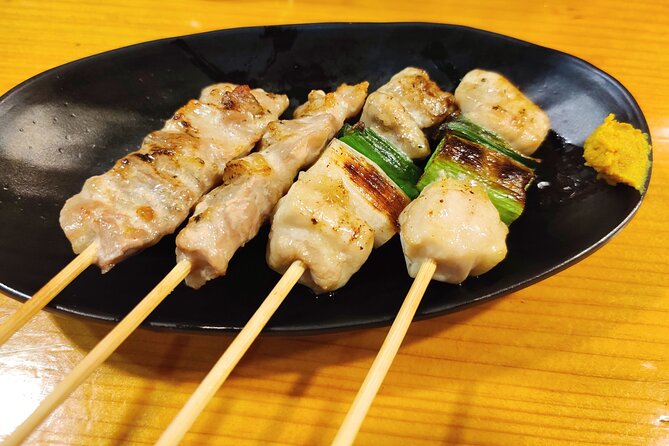
The meal includes several small regional dishes and one drink. You can choose beer, sake, shochu, or a non-alcoholic beverage. The portions are intended to be enough for dinner without leaving you uncomfortably full, which is a sensible approach when a second restaurant is still ahead.
The small-bar setting is part of the appeal. These are the sorts of places that can be hard to enter when you do not read Japanese, do not know the local dining customs, or are unsure what to order. A guide handles the ordering and helps explain what arrives.
Food examples vary, but the experience can include a mix of small dishes, local specialties, and meat options such as wagyu when available. One group requested wagyu on the day of the tour and the restaurant made a special effort to source it. That is a nice sign of flexibility, though it also shows why you should not assume a particular dish will always appear.
Dietary requests should be provided when booking. Vegetarian and pescatarian preferences have been accommodated without reducing the meal to a token side dish, and gluten-free needs have also been handled successfully. Still, food arrangements are easier when the guide has advance notice.
A few more Kyoto experiences worth weighing up
- PERFECT KYOTO 1-Day Bus Tour
★ 5.0 · 13,518 reviews - Kyoto: Fushimi Inari, Kinkakuji, Bamboo Grove 1 Day Bus Tour
★ 4.8 · 4,316 reviews - Kyoto: Tea Ceremony in a Traditional Tea House in Kiyomizu
★ 4.9 · 3,519 reviews - Kyoto: Tea Ceremony Ju-An at Jotokuji Temple
★ 4.9 · 3,207 reviews
Pontocho, Kiyamachi, and Kawaramachi after dark
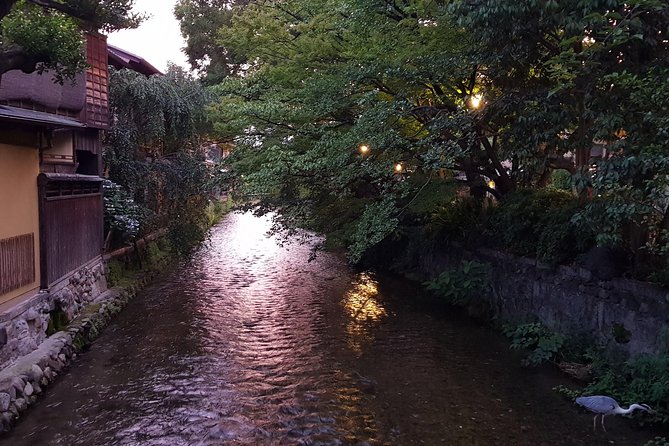
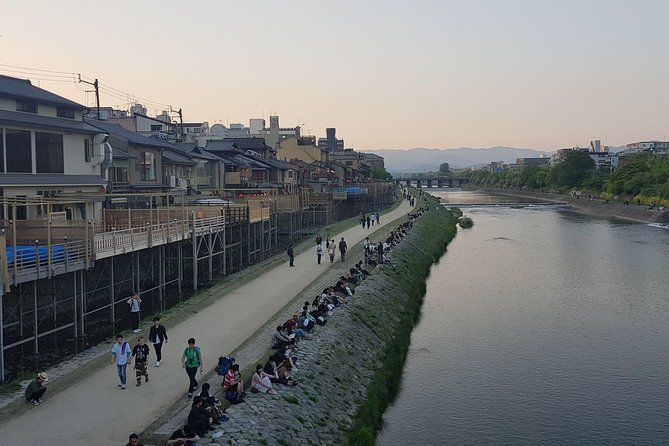
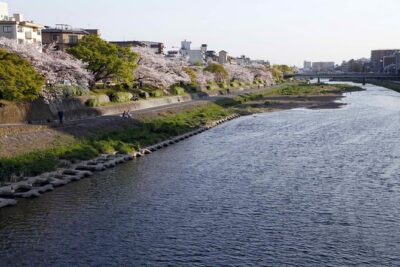
At about 8:15 p.m., the walk crosses to the west side of the Kamogawa River. The route includes Pontocho, Kiyamachi, and the Kawaramachi Street area.
Pontocho is the classic part of this stretch. Its narrow lane preserves the feel of old Kyoto, and the limited space makes walking slowly more rewarding than rushing through with a camera. You get a sense of how carefully Kyoto protects certain traditional streets while still allowing them to function as restaurant and entertainment districts.
A few streets away, the mood shifts. Younger businesses and modern nightlife show how Kyoto also lives in the present. This contrast is one of the tour’s strongest ideas: old Kyoto is not a museum, and modern Kyoto is not separate from its traditions.
The walking is not difficult in the sense of a hike, but it is substantial. One person specifically noted that there was a lot of walking. Wear comfortable shoes and expect to spend much of the evening outdoors between stops. Rain or poor weather can affect the tour, so carry suitable clothing and check the forecast.
The second restaurant around 9 p.m.
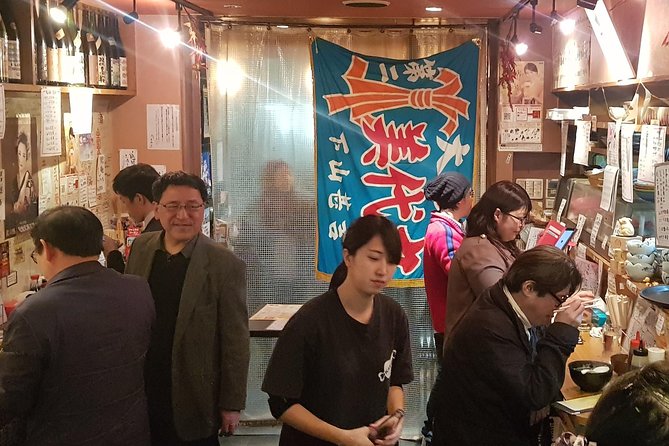
The second food stop arrives around 9 p.m. and includes more dishes plus the second included drink. Some groups have described the first venue as a standing bar and the second as a place with a fuller selection of courses or shared plates.
This two-stop setup gives the evening a useful rhythm. You are not seated in one restaurant for three hours, and you get to compare different styles of local dining. The walk between restaurants also lets you see the districts at changing points in the evening.
The tradeoff is inconsistency. One person found the first restaurant disappointing and felt the second stop was much better. Another found the second venue’s bar seating made conversation difficult, even though the food was excellent. A separate complaint involved smoke at one small establishment, something that can still occur in Japanese bars and restaurants.
That means you should book this tour for the combination of food, walking, and explanation, not for a guaranteed restaurant menu or polished dining room. If you require quiet seating, a smoke-free environment, or a specific dish, tell the provider before the evening begins and understand that the venues may change.
What the $119 price includes
At $119 per person, the tour is not the cheapest way to eat in Kyoto. The price includes dinner, two alcoholic or non-alcoholic beverages, the guide, and the cultural walking tour.
The value depends on how you use it. If you already feel comfortable ordering in small Japanese bars and know your way around Gion, Pontocho, and Kiyamachi, you could spend less by choosing restaurants yourself. But you would also be taking on the work of finding suitable places, managing language concerns, ordering unfamiliar dishes, and understanding the cultural setting.
For a first night in Kyoto, the price makes more sense. You get a guided introduction to several central neighborhoods and practical recommendations for the rest of your stay. Several people specifically appreciated receiving restaurant suggestions and local advice from guides such as Joshua, Jamie, and Hugo.
The tour also limits the usual group to six. That is important in tiny bars where a large party would be awkward. A reservation of the same group may include up to eight people, but the stated maximum for the activity is six in normal circumstances. Confirm your group size if a quiet, personal experience is important to you.
The guides make the evening
The strongest part of this experience is the human element. The food is praised often, but the guides are what turn the evening into a useful introduction to Kyoto.
Laura is frequently described as warm, energetic, and clear in English. Hugo is praised for humor, local insight, and helping groups feel at ease. Joshua is noted for current information, historical context, and practical recommendations. Jamie has received credit for handling a group of eight friends and changing the plan when needed. Maya has helped with gluten-free food and offered stories about the neighborhood. Rin is praised for balancing sightseeing, explanations, and authentic food.
These comments point to a tour that depends partly on the individual guide. That is common with small walking tours. A strong guide can make an ordinary street feel meaningful and help you try dishes you would otherwise skip. A less prepared guide could make the same route feel like too much walking between average stops.
The best reason to book is the chance to ask questions in real time. Ask about geiko etiquette, the difference between a shrine and temple, where to eat later in the trip, or how Kyoto’s nightlife differs from Tokyo or Osaka. The guide’s answer may become more useful than any fixed sightseeing stop.
Practical details for a smoother night
The tour starts at 6:30 p.m. and ends around 9:30 p.m. near Kyoto-Kawaramachi Station. That ending point is convenient for continuing into central Kyoto or returning by public transportation.
The tour is near public transportation, and most people can participate. You should still be ready for a fair amount of walking, narrow streets, standing-bar seating, and a few periods outdoors.
The minimum drinking age in Japan is 20. You do not need to drink alcohol because the two included beverages can be non-alcoholic, but anyone ordering alcohol must meet the legal age requirement.
Gratuities are uncommon in Japan. You do not need to tip as a routine obligation, though the provider says a guide will appreciate a personal thank-you if the evening was especially good.
Free cancellation is available up to 24 hours before the 6:30 p.m. start for a full refund. Changes or cancellations inside that window are not accepted for a refund. The tour requires good weather, and if poor weather causes cancellation, you will be offered another date or a full refund.
Who should book this Kyoto night tour?
I would recommend it to first-time visitors who want an easy introduction to Gion and Kyoto’s evening food culture. It suits couples, families with teenagers, solo visitors, and small groups who would rather have a local guide handle the first round of ordering.
It is also a good choice if you want to try Japanese food but do not want a formal restaurant tasting menu. The two stops offer a more casual evening, with small dishes, drinks, and movement through several neighborhoods.
You may want another type of tour if your main goal is photography. Gion can be dark at night, and the walk is designed more for explanation and atmosphere than for carefully timed photo stops. It is also not ideal if you dislike smoke, standing, narrow dining spaces, or changing restaurant arrangements.
Should you book Kyoto Nighttime All-Inclusive Eats and Streets?
Book it if you want culture and dinner in the same evening. The best features are the small group size, the two local food stops, and the guide’s explanation of geiko culture alongside modern Kyoto nightlife.
The $119 price is fair when you value help with ordering, restaurant selection, and local context. It is less compelling if you only want a guaranteed food menu or a quiet, polished restaurant setting.
For the smoothest experience, wear good walking shoes, arrive early at the second-floor lobby of Minamiza Theater, report dietary needs in advance, and keep an open mind about the venues. With the right expectations, this is a lively first-night introduction to Kyoto after dark.
FAQ
How long does the Kyoto nighttime food tour last?
The experience lasts about three hours. It begins at 6:30 p.m. and ends around 9:30 p.m.
Where does the tour begin?
The meeting point is the second-floor west lobby of Minamiza Theater near Gion Shijo Station, at the east end of the Kamogawa River.
Where does the tour end?
The tour ends near Kyoto-Kawaramachi Station in the Kawaramachi area.
How many people can join the tour?
The normal maximum is six people. Groups of up to eight may be accepted when everyone is part of the same reservation.
Are drinks included?
Yes. Two alcoholic or non-alcoholic beverages are included, with one drink served at each restaurant. Additional drinks cost extra and can be purchased directly from the restaurants.
Can people under 20 join?
Participants must be at least 13 years old. Japan’s minimum drinking age is 20, but non-alcoholic drinks are available.
Can vegetarian guests join?
Yes. Vegetarians are happily accommodated. Vegetarian and pescatarian arrangements have also been handled successfully when provided in advance.
Is the tour suitable in rainy weather?
The activity requires good weather. If poor weather causes cancellation, you will be offered a different date or a full refund.
Can I cancel for a full refund?
Yes, if you cancel at least 24 hours before the experience start time. Cancellations or changes made less than 24 hours before the start are not refunded.
Just added around Kyoto
- Kyoto: Gion Night Walking Tour with Geisha Insight★ 5.0 · 39 reviews
- Kyoto: Private Customizable Day Trip by Car★ 5.0 · 38 reviews
- Kyoto: Full Day Bike Tour★ 4.9 · 39 reviews
- Private Japanese Calligraphy in Kyoto – Learn Shodō with a Master★ 5.0 · 39 reviews
- Kyoto: Gion Evening Walk with Hidden Gems, Geisha & Sake★ 5.0 · 41 reviews
- Experience a tea ceremony in an authentic tearoom, in Kyoto!★ 4.5 · 41 reviews
- Kyoto Private Photo Shoot & Tour by SnapKyoto★ 5.0 · 41 reviews
- The Way of Tea: Kyoto Crafts, Hidden Temples & Wabi-Sabi Walk★ 5.0 · 41 reviews
Geisha & Gion District Tours, compared.
Kyoto Geisha Walking Tour: Gion District & Hidden Gems
Read our review →
Gion Magical Night Walking Tour with Geisha Trivia
Read our review →
Gion Geisha District Walking Tour – Stories of Geisha
Read our review →
Best of Kyoto: Gion, Geisha, Pagodas & Cobblestones
Read our review →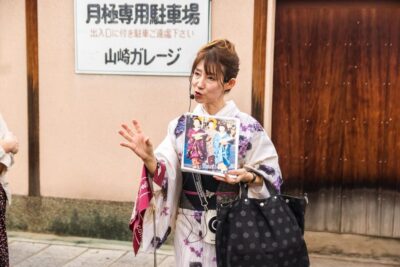
Kyoto Night Foodie Tour in Gion (9+ dishes + 6 Sake tastings)
Read our review →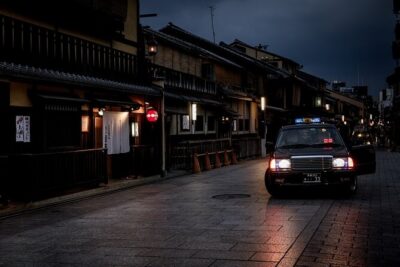
Kyoto Gion Geisha District Walking Tour – The Stories of Geisha
Read our review →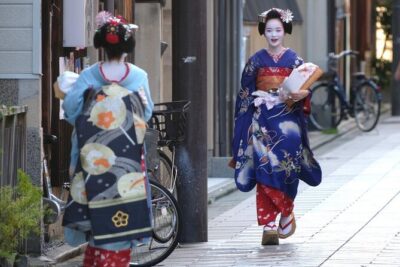
Kyoto Gion: 2-Hour Geisha Culture & History Walking Tour
Read our review →Browse the lists this tour appears in