
Reviewed · GEISHA & GION DISTRICT TOURS
Kyoto: Private Rickshaw Tour of Gion and Higashiyama Area
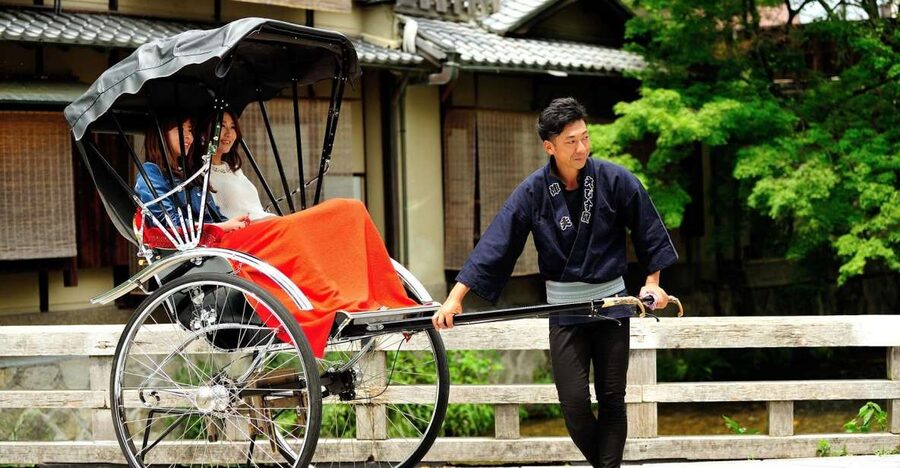
Kyoto looks best at walking pace. This private rickshaw ride makes Higashiyama and Gion easier to understand, especially when narrow lanes, steep streets, and crowds start to wear you down. I like the personal guide, who explains customs and local sights as you go, and I like the many photo stops, where guides such as Fumi, Moto, Shiro, and Daichi have proved excellent at finding good angles. The main consideration is space: each rickshaw is only 21.1 inches, or 74 centimeters, wide, so two average-size adults may prefer separate rickshaws.
I also like the choice of tour lengths. A 45-minute ride gives you a quick introduction, while longer options let you cover more of Higashiyama and northern Gion. The tradeoff is price and pace: this is a sightseeing overview, not a temple-entry tour, and food, drinks, admission fees, and hotel transport are not included.
In This Review
- Key points to know before you book
- Why a rickshaw works so well in Higashiyama
- Starting beside Kodaiji Temple and Nene Street
- Wooden townhouses, shops, and the old streets
- Temple views without a long admission stop
- Entering Gion and its entertainment district
- Willows, rivers, and the best photo stops
- What the guides add to the experience
- Choosing 45, 70, or a longer ride
- Seating, children, and comfort
- Rain, crowds, and the limits of the ride
- Who should book the Kyoto rickshaw tour?
- Final verdict: book it for the guide, not just the vehicle
- FAQ
- Where does the Kyoto rickshaw tour meet?
- How long does the rickshaw tour last?
- Is the tour private?
- What languages are available?
- Can young children ride in the rickshaw?
- Is the tour suitable for people with mobility needs?
Key points to know before you book
- The meeting point is beside Kodaiji Temple: Find your guide at the corner of Nene Street and Ichinenzaka Street in historic Higashiyama.
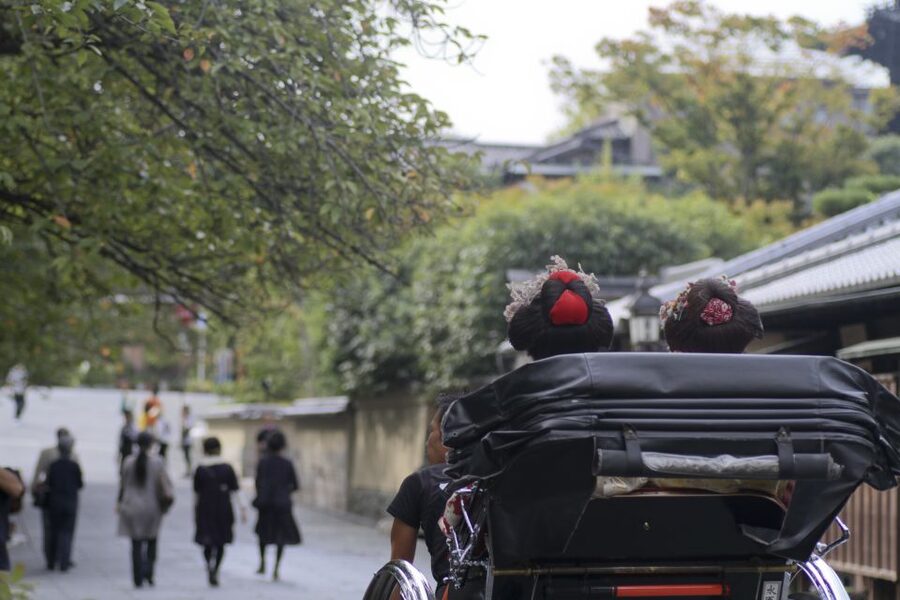
- You ride through old Kyoto streets: Expect wooden townhouses, traditional shops, temple areas, cobbled lanes, and the geisha district of Gion.
- The tour is genuinely private: You can ask your guide to adjust the route around your interests.
- The guides are a major strength: English and Japanese guides explain local customs, take photographs, and add plenty of personality.
- A 45-minute tour can work well: It offers a useful first look, though several customers wished they had booked more time.
- Family seating needs thought: Two children aged five or under can ride with two adults, one child on each adult’s lap, but children aged six and over pay the adult rate.
Why a rickshaw works so well in Higashiyama
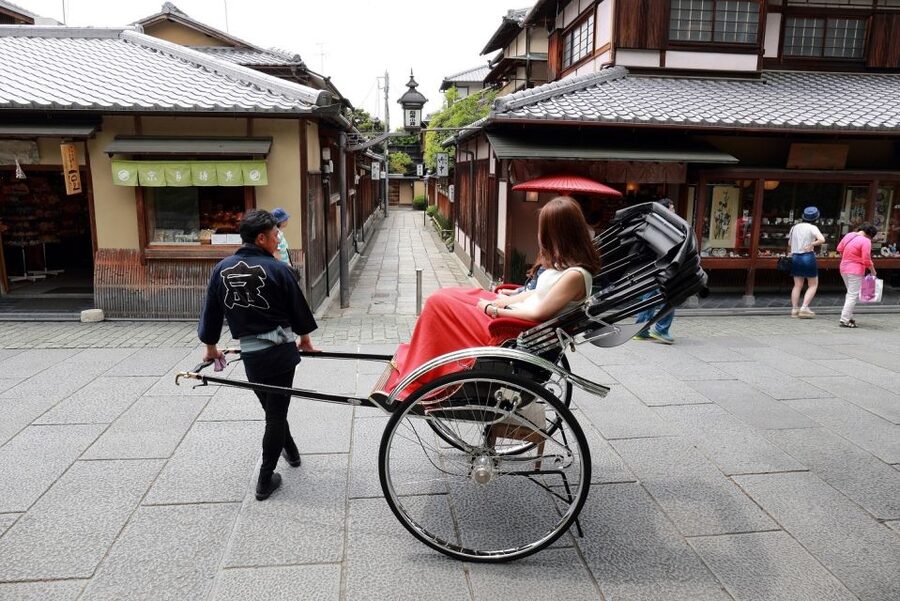
Higashiyama is one of Kyoto’s most atmospheric areas, but it is not always easy to see on foot. The streets around Kodaiji Temple and the famous slopes toward the temples can be crowded, uneven, and tiring. From the rickshaw seat, you get a raised view and a steady route through the old neighborhood without needing to plan every turn.
The ride is not simply transport. Your guide points out buildings, explains Japanese customs, and tells you what makes particular streets important. That personal commentary is the heart of the experience. Guides such as Shintaro Hutakeyna, Yoshito, Takuto, and Suzuki-san have been praised for clear English, enthusiasm, and a friendly manner.
I especially like this format early in a Kyoto visit. You get your bearings quickly, learn which lanes deserve a closer walk, and can ask your guide for ideas for the rest of your stay. One guide may also suggest other places to visit, as Shuhei did for a customer caught in the rain.
The rickshaw itself adds a pleasant old-fashioned touch. You sit back while your driver pulls you through the streets, often stopping when a view or building deserves attention. Several customers praised their guides’ strength and care, but remember that the ride still involves some movement over narrow and sloping streets. People with back problems may find it uncomfortable, and the activity is not suitable for pregnant women.
More geisha district walks in Kyoto:
- Kyoto Geisha Walking Tour: Gion District & Hidden Gems
★ 4.7 · 3,273 reviews - Kyoto: Gion Magical Night Walking Tour with Geisha Trivia
★ 4.9 · 2,393 reviews - Kyoto: Gion Geisha District Walking Tour – Stories of Geisha
★ 4.7 · 2,187 reviews
Starting beside Kodaiji Temple and Nene Street
Your meeting point is on the corner of Nene Street and Ichinenzaka Street, by Kodaiji Temple. This puts you in the middle of the historic Higashiyama area, not at a distant transport stop or hotel lobby.
Allow time to find the exact corner. Higashiyama has several similar-looking lanes, and the tour voucher is only valid for this Kyoto branch, not the company’s Arashiyama branch. That distinction matters if you are visiting both areas.
The first part of the route gives you an immediate sense of old Kyoto. Traditional wooden townhouses line streets that feel far removed from modern Japan. Small shops and carefully maintained facades make the area attractive, but they also draw large crowds, particularly around popular temple approaches.
This is where a private guide earns the fee. Instead of passing through without context, you can ask why a building looks the way it does, how the area is used, or what customs you should understand. The information is adjusted to your questions rather than delivered as a fixed speech.
Wooden townhouses, shops, and the old streets
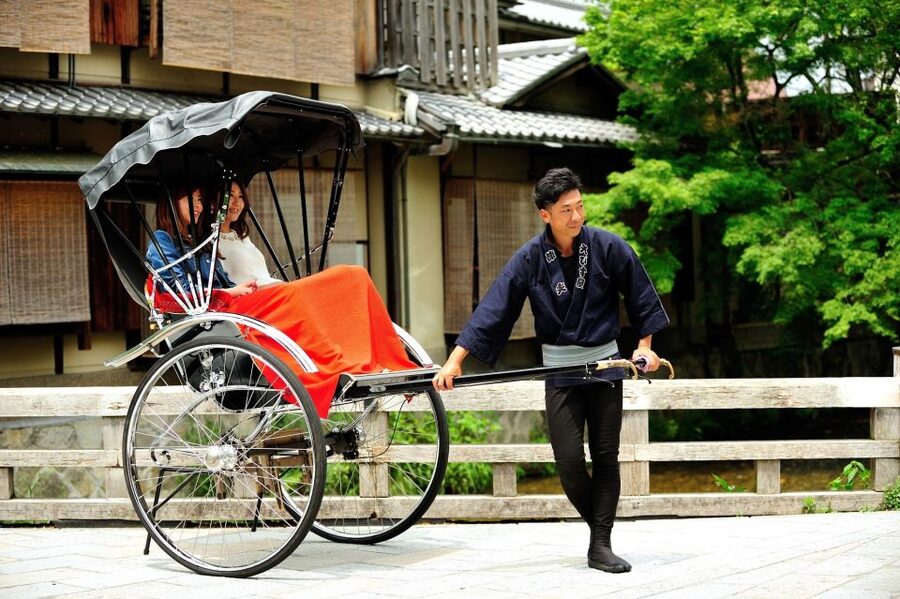
The historic buildings are not just pretty scenery. Their narrow fronts and wooden construction reflect older patterns of urban life, when shops and homes occupied the same compact buildings. Your guide can point out details that are easy to miss from street level, including traditional facades and the way the lanes fit together.
The rickshaw lets you cover more ground than you would comfortably manage while stopping every few minutes for photographs. It also keeps you from spending your whole visit staring at a map. You can concentrate on the buildings, the people around you, and the small changes in atmosphere from one lane to the next.
Do not expect every street to be quiet. Higashiyama is a famous part of Kyoto, and the most attractive lanes can be crowded. The rickshaw gives you a different way to see them, but it cannot remove the crowds. Your guide’s ability to choose a route and pause at suitable photo spots becomes important here.
The photo stops are one of the strongest parts of the ride. Guides are used to taking pictures for customers and often know where the background works best. Fumi was praised for taking creative photographs, Kai for choosing strong photo locations, and Takumi for making a short video with a customer’s phone. A souvenir postcard and sticker are also included.
Temple views without a long admission stop
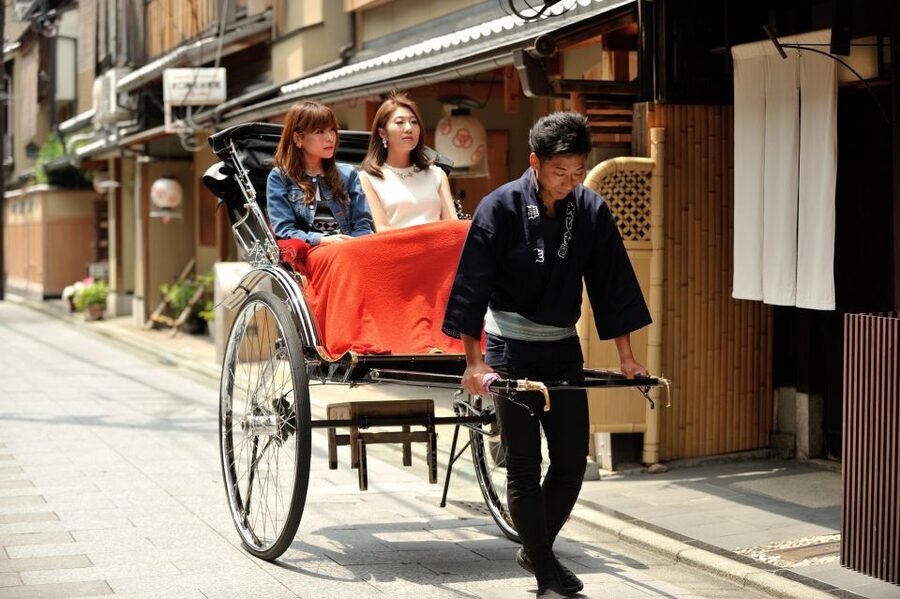
The route passes some of Kyoto’s well-known temples, including the Kodaiji area, but admission fees are not included. The tour is designed for viewing and explanation from the rickshaw, not for a long temple visit or a guided walk inside every complex.
That is both a strength and a limitation. You can see several important areas in one outing without spending the whole morning inside one temple. On the other hand, if your main goal is detailed temple architecture, gardens, or interior spaces, you will need to return later and pay the relevant entrance fees.
I think of the ride as an orientation with a cultural focus. It helps you decide which temples deserve more of your time. The guide can explain what you are seeing, then keep the route moving so you get a broader look at Higashiyama.
Longer tours give you more time among the temple districts and streets north of Gion. They are better suited to first-time visitors who want a broad overview. The shortest ride is more of a sampler, useful when your schedule is tight.
A few more Kyoto experiences worth weighing up
- PERFECT KYOTO 1-Day Bus Tour
★ 5.0 · 13,518 reviews - Kyoto: Fushimi Inari, Kinkakuji, Bamboo Grove 1 Day Bus Tour
★ 4.8 · 4,316 reviews - Kyoto: Tea Ceremony in a Traditional Tea House in Kiyomizu
★ 4.9 · 3,519 reviews - Kyoto: Tea Ceremony Ju-An at Jotokuji Temple
★ 4.9 · 3,207 reviews
Entering Gion and its entertainment district
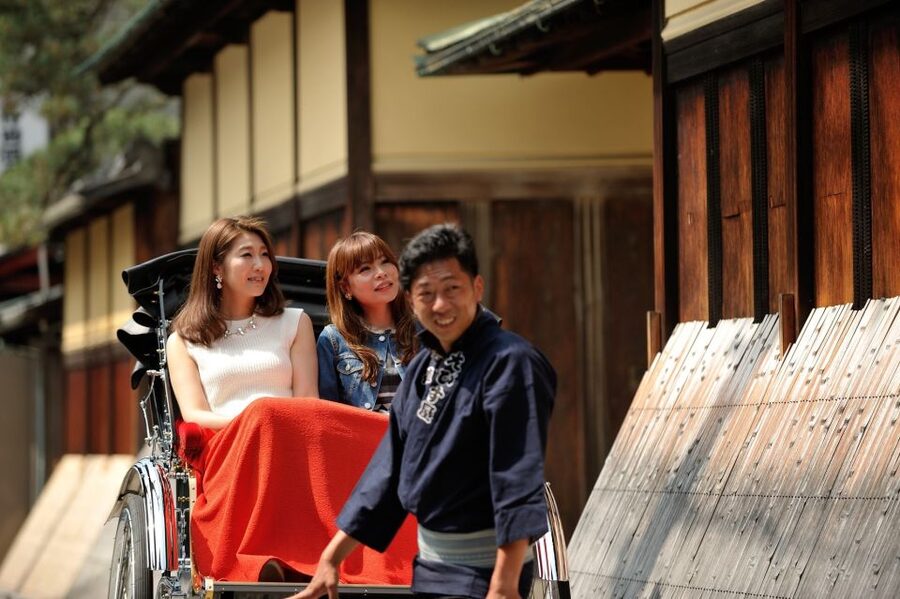
The route continues into Gion, Kyoto’s famous entertainment district. This area is associated with traditional teahouses, wooden buildings, and geisha culture. Your guide explains the customs and points out the character of the district as you pass through.
You may see maiko or geisha, but this should not be treated as a guaranteed sight. You may also see people wearing rented kimono and posing for photographs. One customer described seeing both, along with many people dressed to resemble geisha. The guide helps you understand the difference between a working performer and a visitor in costume.
That distinction is useful. Gion is a living neighborhood, not a stage set made for sightseeing. You should follow your guide’s advice about respectful behavior, avoid blocking lanes, and never use a selfie stick. A rickshaw ride gives you a close look at the district, but it also reminds you that residents and working professionals share these streets.
The northern part of Gion becomes more practical on a longer booking. A short ride may reach only the nearest highlights, while a longer outing allows more time for the streets, waterways, and traditional buildings farther along the route.
Willows, rivers, and the best photo stops
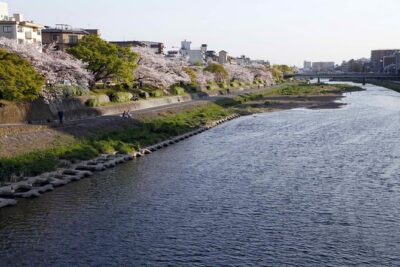
Longer versions continue past a picturesque river lined with weeping willows. This change of scenery gives the ride a calmer side after the busy temple lanes and popular streets of southern Higashiyama.
The river section is especially useful for photographs. The willows, water, old buildings, and passing rickshaw create a distinctly Kyoto setting. Ask your guide to pause for portraits if photography matters to you. The included photo stops are informal, so your own phone or camera is the tool you will use.
A guide may also help you make the most of rainy weather. Shuhei received praise for keeping a wet morning enjoyable and offering useful suggestions. Rain will change the look of the streets, but it does not automatically ruin the outing. Bring suitable clothing and keep your phone ready for photos.
The route is customizable, within the time you book. That means you can tell your guide if you prefer temples, traditional streets, Gion, photography, or cultural explanations. The longer your ride, the more room there is to adjust without sacrificing major sights.
What the guides add to the experience
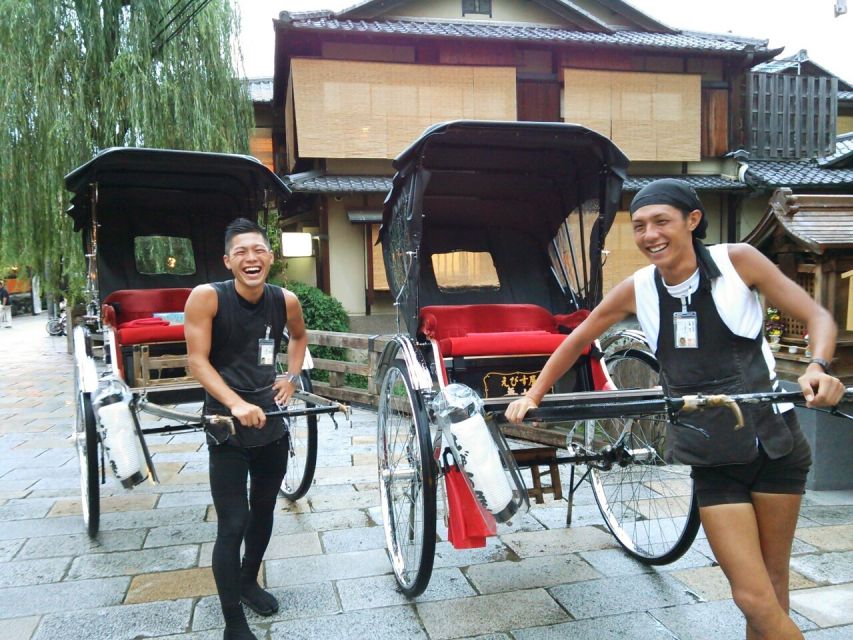
The strongest pattern across the feedback is guide quality. Customers repeatedly singled out individual guides by name, including Moto, Shiro, Fumi, Daichi, Kai, Atsuki, Takuto, Yoshito, and others.
Moto appears several times as a warm, fluent English speaker who explains Kyoto clearly and enjoys meeting people. Shiro is praised for detailed explanations and a helpful manner. Daichi receives credit for adapting the route and showing less obvious places. Fumi is remembered for humor, safe driving, and creative photographs.
This matters because a rickshaw tour can otherwise become a short scenic ride with little substance. Here, the driver is also your guide and photographer. The best guides answer questions, explain what you are seeing, and adjust their tone to your group.
English and Japanese are available. English ability can vary by individual guide, but the feedback includes repeated praise for clear communication. You should still ask questions early and tell the guide what interests you. A private tour gives you that opportunity.
The physical effort of pulling the rickshaw is also part of the experience. Customers often praised the drivers’ strength, fitness, and careful handling on narrow or steep streets. That does not mean the ride is rough, but it does explain why the company pays attention to seating and group size.
Choosing 45, 70, or a longer ride
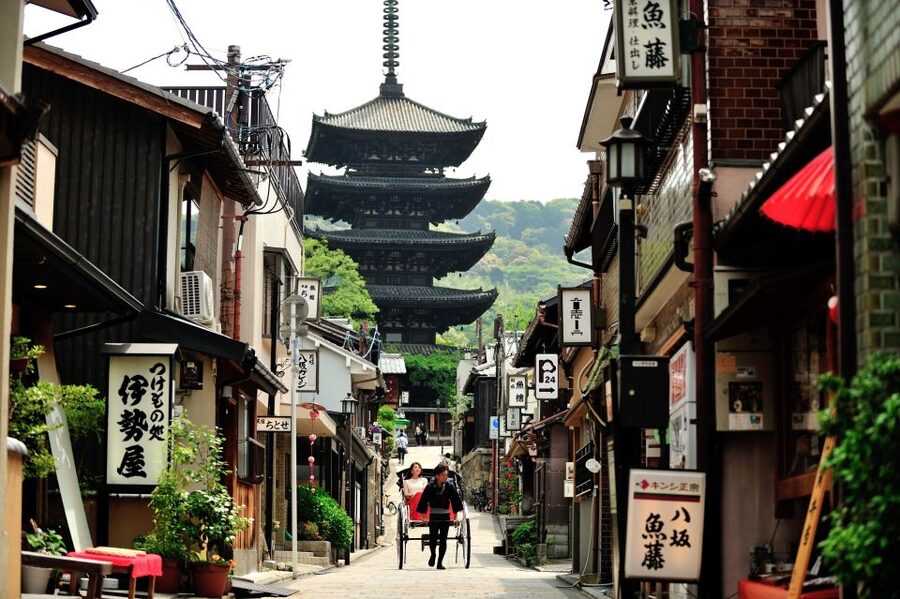
The tour offers four duration choices, with options beginning at 45 minutes. The supplied details describe a range from 45 to 130 minutes, while the longer description refers to a tour lasting 3 hours and 10 minutes. Check the exact duration shown for your chosen booking before paying, since the information gives two different maximum times.
Here is how I would think about the choices:
- Forty-five minutes: Best for a quick introduction, a tight schedule, or a first look before exploring on foot. Several customers found this length worthwhile, but one wished they had booked longer.
- Around 70 minutes: A useful middle choice. One customer felt 70 minutes was enough to see several strong sights without making the ride too long.
- Longer tours: Better if you want both Higashiyama and northern Gion, along with the river, willow-lined views, and additional temple areas.
- The longest listed option: Choose it only if you want the ride to be a central part of your day. Confirm the actual length when checking availability.
The $51 per person price is easiest to justify when you share the ride with someone, value personal guiding, and want photographs without arranging a private walking tour. It is less attractive if you only want a quick transfer or plan to enter several temples, since admission costs extra.
Private pricing also makes more sense for families and couples than for solo visitors. A family of four will generally need two rickshaws, and the separate vehicles let each guide manage the group more easily.
Seating, children, and comfort
Each rickshaw is 21.1 inches, or 74 centimeters, wide. That is a fairly narrow seat, so two average-size adults may feel close together. Several customers specifically advised booking one rickshaw per average-size person unless the passengers are small in stature.
Children aged six and over pay the adult price. Up to two children aged five and under can ride with two adults, with one child sitting on each adult’s lap. If a child aged zero to five uses one of the rickshaw’s two seats, that child must be booked as a full-fare adult.
The activity is wheelchair and stroller-friendly according to the supplied details, but the narrow seat and historic streets still make it sensible to explain your needs when booking. People with back problems should avoid the ride, and it is not suitable for pregnant women, especially during the first 16 weeks.
Hotel pickup and drop-off are not included. You meet at Kodaiji Temple, so plan your route to Higashiyama separately and arrive ready for the scheduled start time.
Rain, crowds, and the limits of the ride
This is not a quiet countryside excursion. Higashiyama and Gion are among Kyoto’s best-known areas, and crowded streets are part of the setting. The rickshaw offers a comfortable viewpoint, but you will still encounter people, traffic restrictions, and narrow passages.
The ride also does not replace walking. You see the streets from the seat and can return later to browse shops, enter temples, or explore lanes at your own speed. Think of it as a guided introduction that saves your legs while giving you useful context.
Rain is manageable, though your comfort depends on the weather and clothing. A customer praised Shuhei for making a wet tour enjoyable, and another guide helped an older father stay warm and safe. Still, check the forecast and dress for the conditions.
Selfie sticks are not allowed. That rule is easy to follow and helps keep narrow streets clear, especially when the rickshaw pauses for photographs.
Who should book the Kyoto rickshaw tour?
I would recommend this experience to first-time Kyoto visitors, couples, families, older adults, and anyone who wants an overview without a long walking route. It is also a good choice for photographers, since the guides stop at scenic places and often take the pictures themselves.
It suits you particularly well if you enjoy personal stories, traditional neighborhoods, and cultural explanation more than formal museum-style detail. The private format means you can ask questions and request a route that fits your interests.
I would be more cautious if you have back problems, are pregnant, dislike close seating, or want extensive temple interiors. You should also reconsider if your budget is very tight and you are happy to explore Higashiyama on foot with a map.
Final verdict: book it for the guide, not just the vehicle
I think this is a strong Kyoto introduction because the rickshaw is only half the experience. The real value comes from the guide who explains Gion, points out details in the wooden townhouses, manages the route, and takes photographs you might not get on your own.
Book 45 minutes if you only want a taste. If your schedule allows, I would choose the longer option, since the route can reach more of Higashiyama, northern Gion, the temples, and the willow-lined river. Confirm the exact duration and seating arrangement, then book this if you want Kyoto to feel personal rather than simply scenic.
FAQ
Where does the Kyoto rickshaw tour meet?
Meet your guide at the corner of Nene Street and Ichinenzaka Street, by Kodaiji Temple in Higashiyama.
How long does the rickshaw tour last?
There are four duration choices beginning with a 45-minute tour. The supplied details also describe longer options, including a stated 3-hour-and-10-minute tour, so check the exact duration and start time when booking.
Is the tour private?
Yes. The experience is offered for a private group, and the route can be adjusted to suit your interests.
What languages are available?
Live guiding is available in English and Japanese.
Can young children ride in the rickshaw?
Up to two children aged five and under can ride with two adults, with one child on each adult’s lap. Children aged six and over pay the adult price. A child aged zero to five using one of the two seats must be booked as a full-fare adult.
Is the tour suitable for people with mobility needs?
The tour is listed as wheelchair and stroller-friendly. It is not recommended for people with back problems or for pregnant women, particularly during the first 16 weeks.
Just added around Kyoto
- Kyoto: Private Customizable Day Trip by Car★ 5.0 · 38 reviews
- Kyoto: Gion Night Walking Tour with Geisha Insight★ 5.0 · 39 reviews
- Kyoto: Full Day Bike Tour★ 4.9 · 39 reviews
- Private Japanese Calligraphy in Kyoto – Learn Shodō with a Master★ 5.0 · 39 reviews
- Kyoto: Gion Evening Walk with Hidden Gems, Geisha & Sake★ 5.0 · 41 reviews
- Experience a tea ceremony in an authentic tearoom, in Kyoto!★ 4.5 · 41 reviews
- Kyoto Private Photo Shoot & Tour by SnapKyoto★ 5.0 · 41 reviews
- The Way of Tea: Kyoto Crafts, Hidden Temples & Wabi-Sabi Walk★ 5.0 · 41 reviews
Geisha & Gion District Tours, compared.
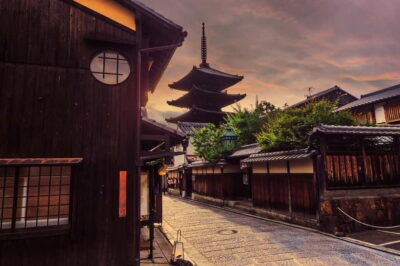
Kyoto Geisha Walking Tour: Gion District & Hidden Gems
Read our review →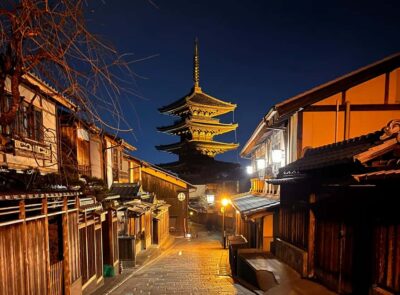
Gion Magical Night Walking Tour with Geisha Trivia
Read our review →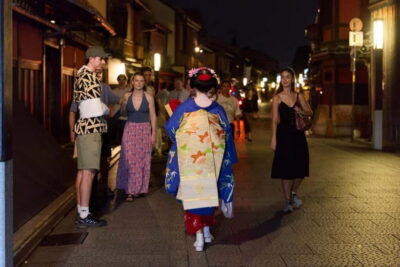
Gion Geisha District Walking Tour – Stories of Geisha
Read our review →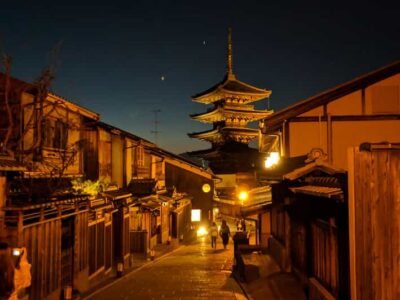
Best of Kyoto: Gion, Geisha, Pagodas & Cobblestones
Read our review →
Kyoto Night Foodie Tour in Gion (9+ dishes + 6 Sake tastings)
Read our review →
Kyoto Gion Geisha District Walking Tour – The Stories of Geisha
Read our review →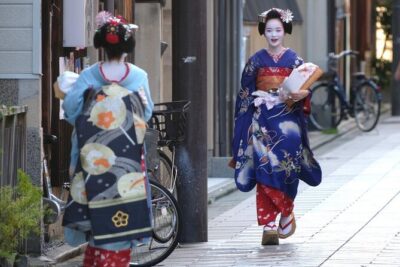
Kyoto Gion: 2-Hour Geisha Culture & History Walking Tour
Read our review →Browse the lists this tour appears in