
Reviewed · SAMURAI & NINJA EXPERIENCES
Kyoto: Samurai Kenbu Traditional Sword Dancing Show
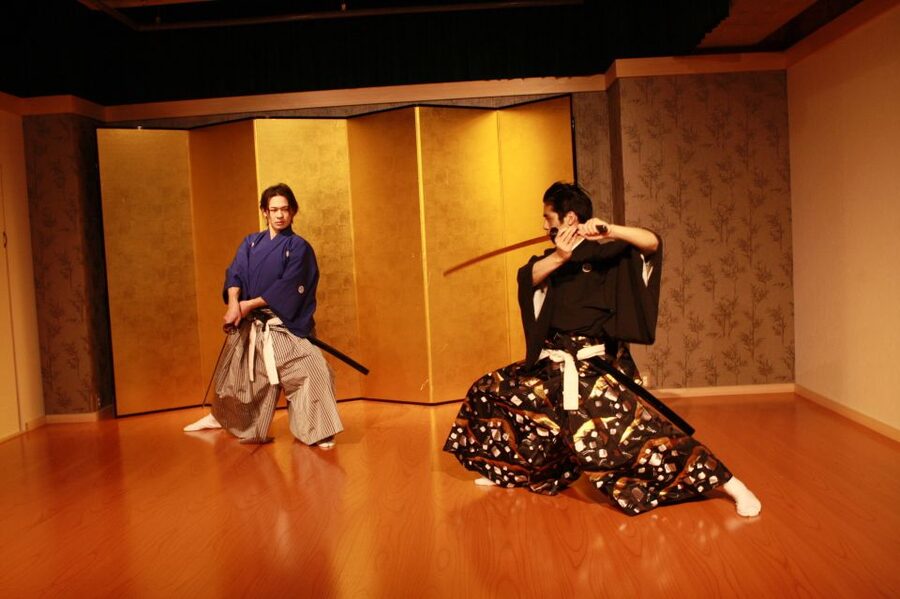
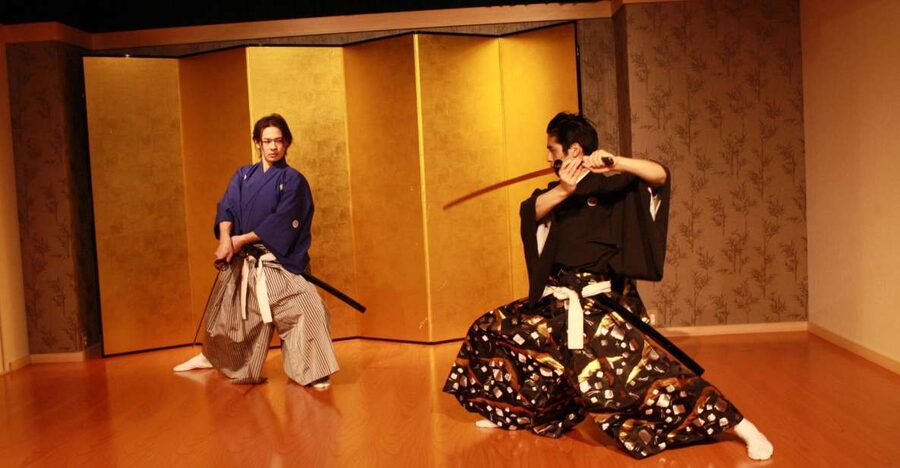
Step into a samurai poem brought to life. Kyoto’s Samurai Kenbu Theater presents Kenbu, a traditional sword dance shaped by more than 700 years of Japanese culture, ceremony, and battlefield lore. This is not a stunt show built around nonstop combat. It is a careful performance of posture, sword movement, poetry, and storytelling, with English narration to help you follow along.
I like the graceful sword choreography, and I especially like the short hands-on lesson at the end. You get to draw a sword, practice basic movements, and pose for photographs with the performers. The main consideration is that the show is more elegant and educational than action-packed, and a few people may find the narration slightly difficult to follow or the hour a little long.
In This Review
- Key points to know before you book
- What Kenbu really is
- Arriving at the Samurai Kenbu Theater
- The opening lesson: samurai, swords, and ceremony
- Watching the Kenbu performances
- The folding fan is part of the story too
- The short sword lesson after the show
- Photography rules and the best picture opportunity
- How authentic and educational is the experience?
- Is $32 a fair price?
- Who will enjoy this Kyoto experience?
- Practical advice for a smooth visit
- Should you book the Samurai Kenbu show?
- FAQ
- How long does the Samurai Kenbu experience last?
- Where does the activity meet?
- How early should I arrive?
- Is the show presented in English?
- Can I take photographs during the show?
- Do I get to hold a real sword?
- Is the theater wheelchair accessible?
- Can I bring large luggage?
Key points to know before you book
- Kenbu is sword dancing, not a full sword-fighting display: The movements are controlled, poetic, and tied to samurai stories.
- The show includes English narration: Each performance is introduced with background about samurai customs, poems, and sword techniques.
- You handle a sword after the performance: The short lesson covers drawing, holding, and gently swinging the blade under instruction.
- Photography is saved for the finale: Photos and videos are not allowed during the show, but there is time afterward for pictures.
- The theater is easy to reach in central Kyoto: It is about four minutes from Sanjo Keihan Station and five minutes from Sanjo Station.
- The one-hour format suits a busy Kyoto day: At $32 per person, it offers a focused cultural activity without taking half a day.
What Kenbu really is
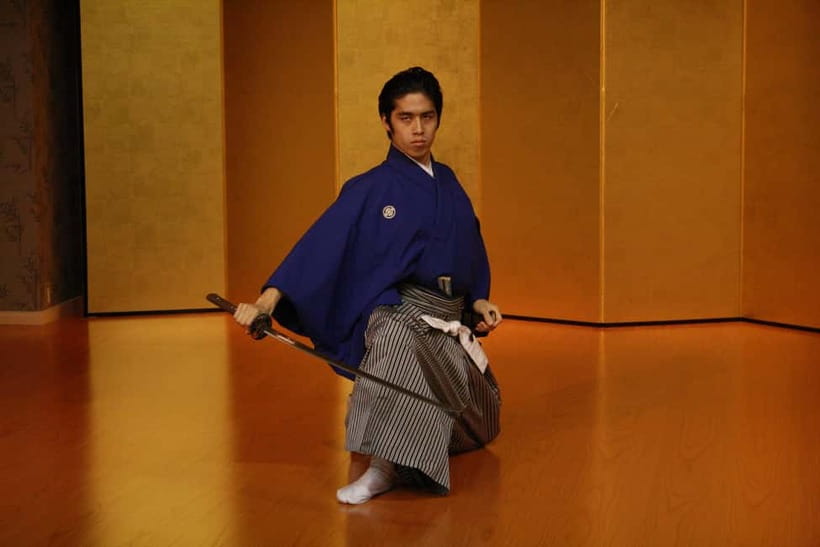
Kenbu is often translated as traditional sword dancing. Samurai performed with swords and folding fans while reciting poems connected to courage, duty, loss, and readiness for battle. The art is not simply about showing off a blade. The gestures express the mood and meaning of the poem.
That distinction matters. If you expect a theatrical fight with constant clashes, you may be surprised. The performers move with control and precision, using the sword to suggest a scene rather than reproduce a realistic duel. The result can feel graceful one moment and fierce the next.
The show also introduces the values connected with the samurai, including responsibility, discipline, and Bushido. You hear about what it meant to carry a sword and how samurai culture developed between the 12th and 19th centuries. The performance offers a useful counterpoint to the exaggerated samurai imagery found in films and video games.
More Samurai & Ninja Experiences in Kyoto
- Kyoto Samurai Experience
★ 5.0 · 1,294 reviews - Kyoto: Kendo and Samurai Experience with Uniform and Gear
★ 4.9 · 815 reviews - Kyoto: Samurai Sword Class by Experts in Traditional Arts
★ 4.9 · 657 reviews
Arriving at the Samurai Kenbu Theater
The theater is in Kyoto’s central Sanjo area. From Subway Sanjo Keihan Station, it is about a four-minute walk. From Sanjo Station on the Keihan Main Line, allow about five minutes.
I would arrive 10 to 15 minutes early. You need to confirm your reservation name at reception, and you will remove your shoes before entering. That small ritual sets the tone for the experience. It also means you should wear socks or otherwise be comfortable going barefoot indoors.
There is no waiting room, so early arrival should be sensible rather than excessive. People without appointments cannot wait inside, and the venue has no space for large suitcases or travel bags. Leave bulky luggage at your hotel or arrange storage before you come.
The theater is wheelchair accessible. The activity is led in English and Japanese, making it suitable for international visitors, though the amount of English explanation you receive may vary with the presentation and your comfort with spoken English.
The opening lesson: samurai, swords, and ceremony
The experience begins with an introduction to Kenbu and its place in Japanese culture. The instructor explains the basic techniques and gives context before the dancing starts. This is important because the gestures can otherwise seem mysterious. You learn to watch the angle of the sword, the position of the body, and the connection between movement and spoken verse.
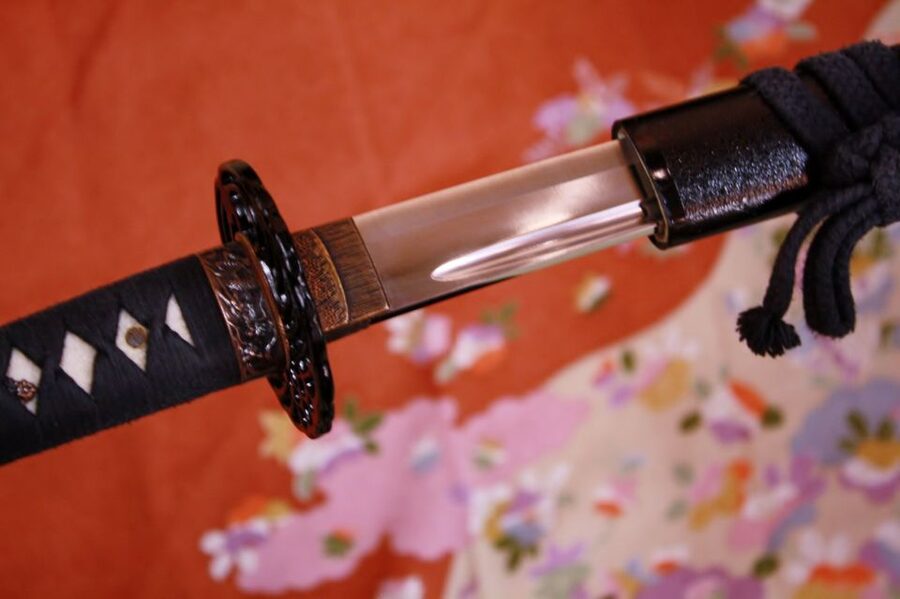
The sword carries more than practical meaning in this setting. It represents the responsibility of the samurai who wears it. The introduction helps you see why drawing, holding, and returning a sword to its scabbard are treated with such care.
The English narration is a strong feature, especially for anyone interested in Japanese culture or military history. Still, listen closely. One person found parts of the explanation difficult to understand, and the presentation contains unfamiliar terms and historical references. If you are not used to spoken English with a Japanese accent, you may miss a detail or two.
That is not a reason to skip the activity. The demonstrations communicate much through movement, and the staff use the performance itself to reinforce the main ideas.
Watching the Kenbu performances
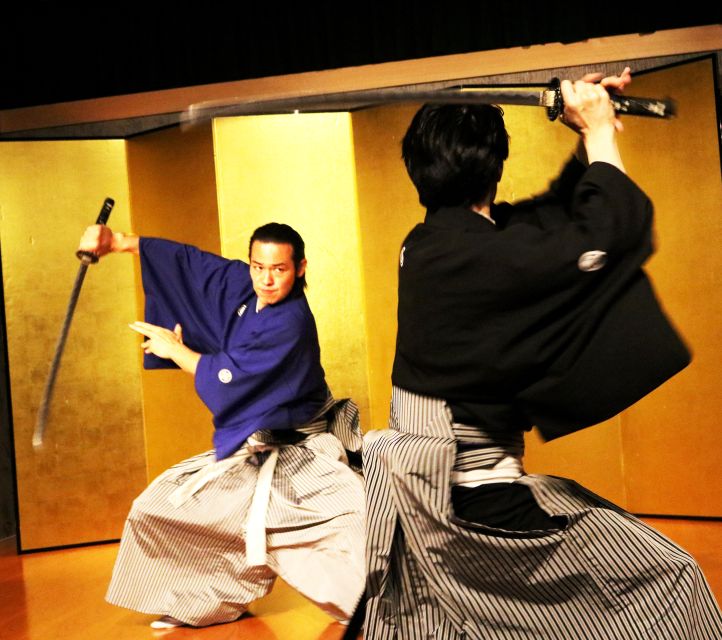
After the introduction, you watch a series of Kenbu demonstrations. Each section includes a short explanation of its story or cultural setting. The performers use complex sword movements to express the poem being recited, creating small dramatic scenes on stage.
You may see both older-style and newer-style Kenbu. The contrast gives you a better sense of how the art continues to develop while keeping its basic forms. The performers can make a sword swing look effortless, but the controlled footwork and timing reveal how much practice lies behind each movement.
The mood changes from piece to piece. Some scenes focus on dignity and calm. Others carry more force and drama. A figure who is meant to die may even add a little humor, which keeps the presentation from feeling stiff or overly solemn. That touch of personality is part of the theater’s appeal.
The performers are praised for being friendly as well as highly skilled. Their warmth becomes more visible after the formal show, but it helps the performance feel welcoming rather than distant.
A completely different kind of day out in Kyoto:
- PERFECT KYOTO 1-Day Bus Tour
★ 5.0 · 13,518 reviews - Kyoto: Fushimi Inari, Kinkakuji, Bamboo Grove 1 Day Bus Tour
★ 4.8 · 4,316 reviews - Kyoto: Tea Ceremony in a Traditional Tea House in Kiyomizu
★ 4.9 · 3,519 reviews - Kyoto Geisha Walking Tour: Gion District & Hidden Gems
★ 4.7 · 3,273 reviews
The folding fan is part of the story too
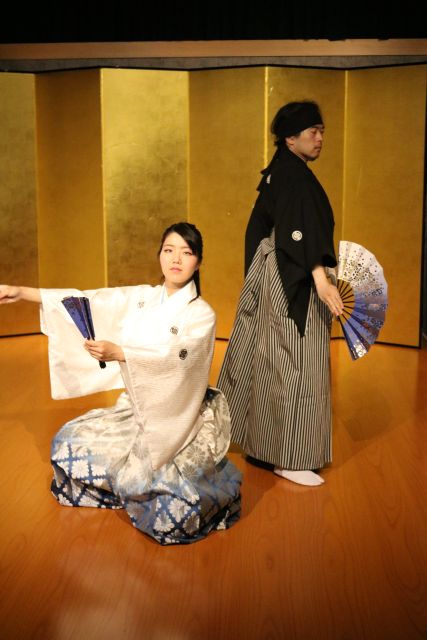
Kenbu is not limited to the sword. The folding fan is also used in the demonstrations, and it has a practical role in the art. Samurai could use fans as signals, symbols, or expressive tools, and Kenbu turns the fan into part of the visual language.
The fan movements give the performance variety. A sword suggests force and readiness, while a fan can express ceremony, command, or subtle emotion. If time allows, you may also receive a short introduction to using the fan during the interactive portion.
This is one of the details that makes the experience more than a basic sword demonstration. You are seeing a form of stage storytelling built from objects, music or recitation, posture, and controlled movement.
The short sword lesson after the show
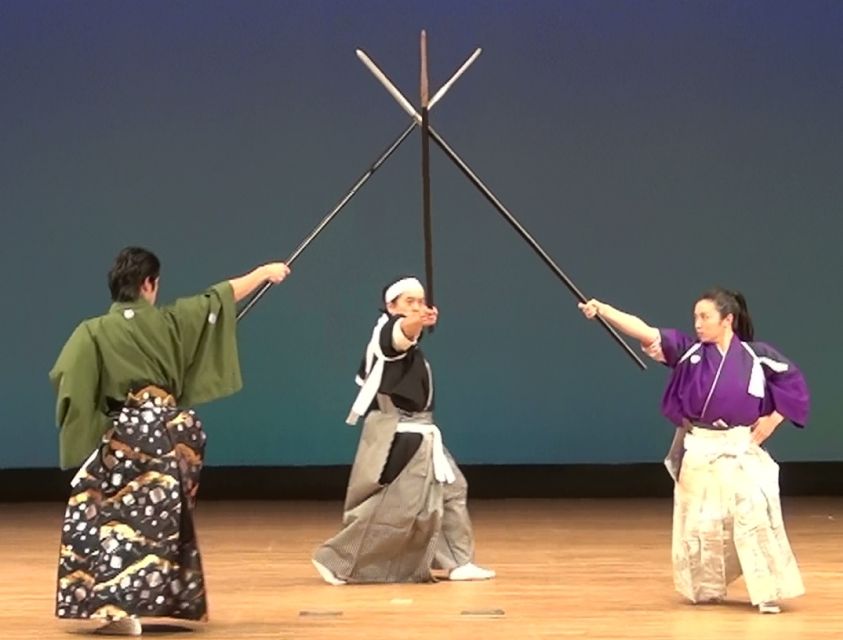
The interactive portion begins after the formal performance. This is when photography becomes welcome. The performers return, and you can take pictures with them and the swords. Staff may also help take photographs, which is useful when you want a picture of your whole group.
The lesson itself is brief and supervised. You pick up a sword, slowly draw it from the scabbard, and learn how to hold it correctly. At the instructor’s command, you start with a gentle swing and then add more force as instructed.
Do not expect a full martial arts class. The point is to give you a physical sense of the discipline and coordination involved. Once you hold and swing a katana, you quickly understand that the polished movements on stage are not easy.
Some sessions may include basic stances, a thrusting movement, shouted phrases, or fan handling. The precise order can vary, and one person found the lesson could have been organized more clearly. Even so, the staff keep the mood relaxed, friendly, and lightly humorous.
This is also the part that works well for families. A three-year-old attended one session with family members, while teenagers also found the sword and fan practice interesting. Young children should follow the instructor’s directions carefully, since the activity involves swords even when handled in a controlled way.
Photography rules and the best picture opportunity
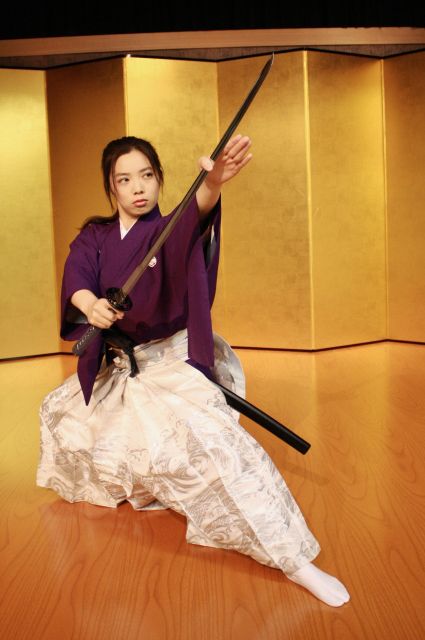
You cannot take photographs or videos during the show. That rule may disappoint you at first, especially when the performers are making dramatic sword movements. It also keeps phones from distracting the audience and lets the performers maintain concentration.
The good news is that the theater allows time for pictures after the performance. You can hold the sword, pose with the performers, and take pictures in your own group. The staff are accustomed to helping with this part, and the informal atmosphere makes it easy to relax.
Bring your camera or phone fully charged. You will not be able to record the actual dancing, but the post-show pictures can still be a fun reminder of the experience. The sword poses also make this a good choice if you want a Kyoto activity with a memorable visual element.
How authentic and educational is the experience?
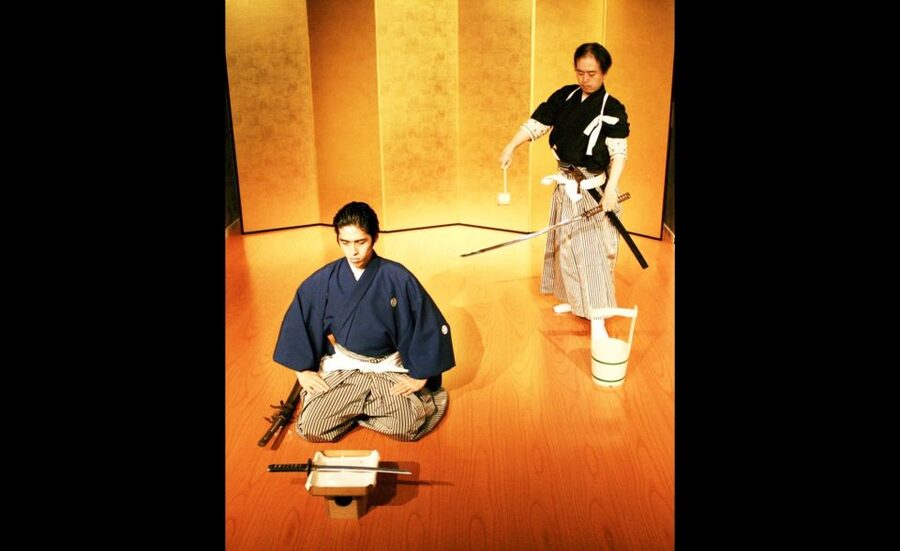
The show presents samurai traditions as a living cultural practice rather than as a museum display. Kenbu remains an art form taught and performed today, and the presentation explains how it preserves older poems, movements, and values.
You should keep your expectations in balance. This is a stage performance designed for visitors, not a reconstruction of an actual medieval battle. The narration simplifies a large subject into a one-hour program, and the stories are presented for a general audience.
That said, the format works. You learn enough to understand the symbols, then you see those ideas expressed through movement. The result is more memorable than a short lecture about samurai customs. People interested in Japanese cultural change, Bushido, or historical performance will get the most from it.
I also appreciate that the show presents both beauty and violence. The sword is graceful in motion, but the stories connect it to duty, danger, and death. That mixture gives Kenbu emotional weight without turning the experience into a grim lesson.
Is $32 a fair price?
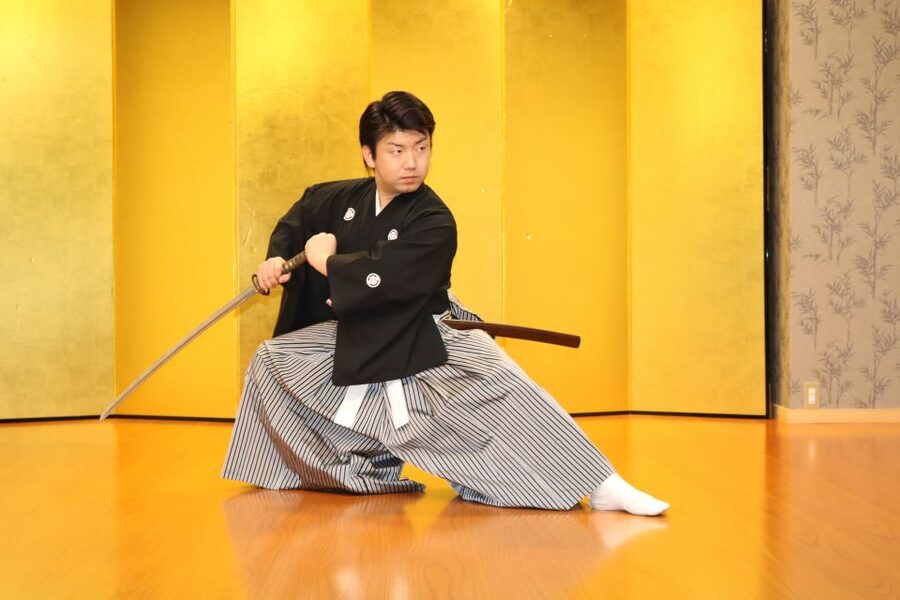
At $32 per person, the experience is reasonably priced for a one-hour Kyoto activity. The fee covers theater admission, the complete Kenbu show, and the short sword lesson. You are paying for a performance and an interactive session, not just a seat in an auditorium.
The value depends on what you want. If you only want to see a sword fight, you may find better entertainment elsewhere. Kenbu is slower, more formal, and more concerned with expression than combat.
If you want a compact cultural experience between sightseeing stops, the price makes sense. You receive English explanation, several demonstrations, access to the performers afterward, and the chance to handle a sword under guidance. The one-hour length also makes it easy to fit around a day in Gion, Higashiyama, or central Kyoto.
Food and drinks are not included, but that is hardly a problem in this part of town. Plan a meal before or after the show rather than expecting refreshments at the theater.
Who will enjoy this Kyoto experience?
I would recommend the show to:
- First-time visitors who want an introduction to samurai culture
- Families looking for a short, indoor activity
- People interested in Japanese history and traditional arts
- Fans of samurai films, provided they understand this is not a stunt show
- Visitors who enjoy performances with English explanation
- Couples and small groups who want memorable photographs
- Anyone who likes trying a cultural activity rather than only watching one
It may not suit you if you dislike staged performances, have no interest in samurai culture, or want an extended martial arts lesson. It is also less appealing if your main goal is to film the action, since photography and video are prohibited during the show.
The activity is wheelchair accessible, which makes it one of the easier cultural performances to consider when planning a Kyoto itinerary. Confirm the specific arrangements when booking if you have mobility needs, but the venue lists accessibility as available.
Practical advice for a smooth visit
Arrive 10 to 15 minutes early, but do not arrive so early that you need somewhere to wait. Keep your luggage small, since large bags and travel cases do not fit comfortably in the theater.
Wear socks or shoes that are easy to remove. You will take off your shoes at the entrance, following local custom.
Avoid arriving after drinking alcohol. The theater asks visitors not to attend under the influence, and the sword-handling portion requires attention and control.
If you need to cancel, you can receive a full refund when you cancel at least 24 hours in advance. The booking option also allows you to reserve now and pay later, which can help when your Kyoto schedule is still shifting.
Finally, keep your expectations clear. The most successful way to watch Kenbu is to treat it as poetry in motion. Look at the posture, the pauses, the fan, and the way each sword movement fits the tale. The show becomes much more interesting when you stop waiting for a duel and start watching the performers communicate through form.
Should you book the Samurai Kenbu show?
Yes, if you want a short and welcoming introduction to samurai culture in Kyoto. The performers are skilled, the English narration gives useful context, and the sword lesson adds a personal connection that a standard stage show would not provide.
Book it with the understanding that Kenbu is graceful sword dance, not continuous fighting. The no-photo rule during the performance is a minor inconvenience, but the post-show picture session helps make up for it. At $32 for an hour of performance, explanation, and supervised sword practice, it is a good-value choice for families, culture lovers, and anyone curious about the real discipline behind the samurai image.
FAQ
How long does the Samurai Kenbu experience last?
The experience lasts one hour, including the Kenbu performance and the short sword lesson.
Where does the activity meet?
You meet at the Samurai Kenbu Theater in Kyoto. It is about four minutes on foot from Subway Sanjo Keihan Station and about five minutes from Sanjo Station on the Keihan Main Line.
How early should I arrive?
Arrive 5 to 15 minutes before the scheduled start time. Arriving around 10 minutes early gives you time to confirm your reservation name and remove your shoes.
Is the show presented in English?
The activity is offered in English and Japanese. The performance includes English narration explaining samurai culture, Kenbu, and the stories shown on stage.
Can I take photographs during the show?
No. Photography and video are not allowed during the performance. You can take pictures after the show during the photo opportunity with the performers and swords.
Do I get to hold a real sword?
The experience includes a short sword lesson. You can practice drawing, holding, and gently swinging a sword under the instructor’s direction.
Is the theater wheelchair accessible?
Yes. The activity is listed as wheelchair accessible.
Can I bring large luggage?
No. The theater does not have room for large luggage or travel bags. There is also no waiting room for people without appointments.
Just added around Kyoto
- Kyoto: Gion Night Walking Tour with Geisha Insight★ 5.0 · 39 reviews
- Kyoto: Private Customizable Day Trip by Car★ 5.0 · 38 reviews
- Kyoto: Full Day Bike Tour★ 4.9 · 39 reviews
- Private Japanese Calligraphy in Kyoto – Learn Shodō with a Master★ 5.0 · 39 reviews
- Kyoto: Gion Evening Walk with Hidden Gems, Geisha & Sake★ 5.0 · 41 reviews
- Experience a tea ceremony in an authentic tearoom, in Kyoto!★ 4.5 · 41 reviews
- Kyoto Private Photo Shoot & Tour by SnapKyoto★ 5.0 · 41 reviews
- The Way of Tea: Kyoto Crafts, Hidden Temples & Wabi-Sabi Walk★ 5.0 · 41 reviews
Samurai & Ninja Experiences, compared.
Samurai Ninja Museum Guided tour and Experience
Read our review →
Kendo and Samurai Experience with Uniform and Gear
Read our review →
Samurai Sword Class by Experts in Traditional Arts
Read our review →
Skip the lines Basic Ticket at SAMURAI NINJA MUSEUM KYOTO
Read our review →
Samurai Sword & Archery Class from Samurai Descendant
Read our review →
Browse the lists this tour appears in