
Reviewed · TEA CEREMONY EXPERIENCES
Kyoto: Tea Ceremony with Kimono and Photoshoot
Kyoto becomes more memorable when you dress for it. This 90-minute experience combines a kimono fitting, an English tea ceremony lesson, matcha preparation, Japanese sweets, and three professional photos. I especially like the chance to learn what the ceremony means instead of simply posing in costume, and I like that you may stroll outside in your kimono afterward. The main drawback is the tight schedule, especially if the shop is busy. One booking reported arriving on time at 1:55 PM but waiting until 3:00 PM for the ceremony to begin.
You can choose between the Nishiki Market location and the Gion location, so selecting the right shop matters. The small group is limited to 10 people, and the experience has earned a 4.9 rating from 90 reviews, with repeated praise for the kind staff, smooth kimono dressing, clear cultural explanations, and excellent photographs.
In This Review
- Key Points At a Glance
- Why This Kyoto Tea Ceremony Works So Well
- Choosing Between Nishiki Market and Gion
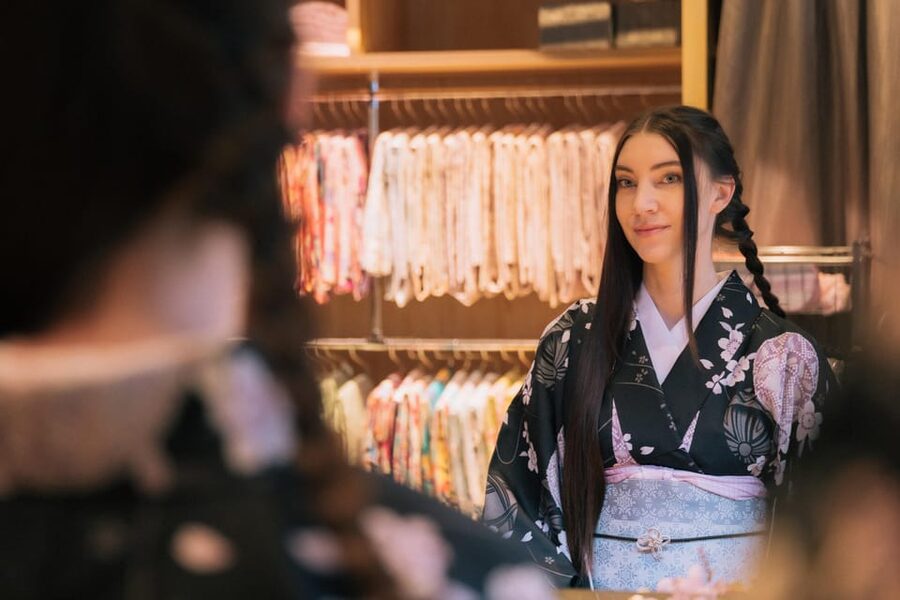
- Getting Dressed in a Traditional Kimono
- Entering the Tea Room and Watching the Demonstration
- Making Matcha and Eating Japanese Sweets
- The Professional Photoshoot and Three Included Images
- Is the $127 Price Good Value?
- Timing, Comfort, and Practical Limits
- Who Will Enjoy This Most?
- How I Would Plan the Afternoon
- Should You Book the Kyoto Kimono Tea Ceremony?
- FAQ
- How long does the Kyoto kimono tea ceremony experience last?
- Where is the meeting point?
- What does the activity include?
- Can I make my own matcha?
- What time must I return the kimono?
- What happens if I arrive late?
Key Points At a Glance
- Choose your Kyoto setting carefully: You can book at Nishiki Market or Gion, but you cannot switch locations after booking.
- Kimono dressing is part of the experience: You choose the kimono color, and some participants can also select hair accessories.
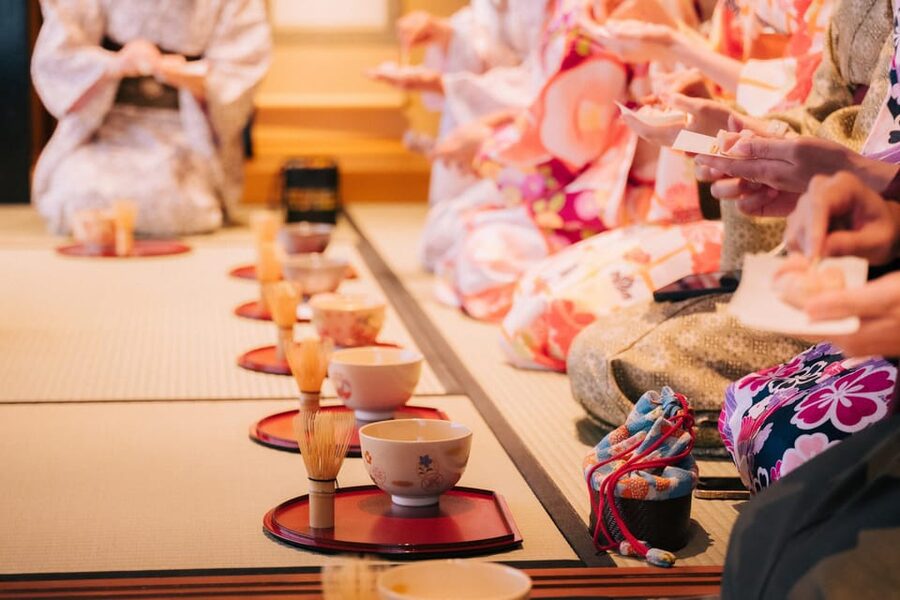
- The tea lesson is in English: You watch a demonstration, learn about cleansing and blessing the tea, then prepare your own matcha.
- The group stays small: A maximum of 10 participants makes it easier to follow the demonstration and ask questions.
- Three professional photos are included: Additional personal photos are also possible during the experience and, in some cases, outside afterward.
- Plan around the return time: Kimonos must be returned by 6:00 PM at Nishiki Market or 5:00 PM in Gion.
Why This Kyoto Tea Ceremony Works So Well
Many kimono activities in Kyoto focus mainly on dressing up and taking pictures. This experience adds a proper cultural lesson, which gives the clothing and photographs more meaning.
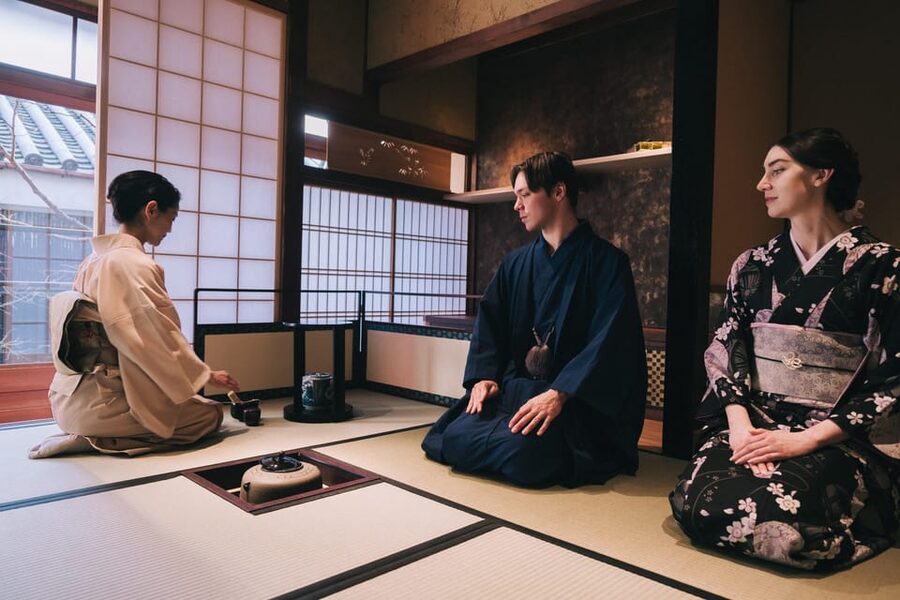
You do not simply put on a kimono, smile for a camera, and leave. You watch an English-speaking tea master explain the ceremony, see the steps performed, and then make matcha yourself. That small amount of participation makes the activity feel more complete.
I also like the relaxed tone. The staff guide you through each stage, from changing clothes to entering the tea room. Several participants praised the team’s kindness and attention to detail, and one specifically highlighted guide Mami for being friendly and well informed about the ceremony.
The 90-minute length is useful if you have a full day planned in Kyoto. It is long enough to cover the main elements without taking over your schedule. At the same time, you should not expect an extended formal tea gathering. This is an introduction designed for international visitors, not a full study of tea ceremony practice.
More Kimono Experiences in Kyoto
- Kimono Tea Ceremony at Kyoto Maikoya, NISHIKI
★ 5.0 · 911 reviews - Kyoto: Kimono Rental with Hairstyling and Accessories
★ 4.8 · 653 reviews - Kyoto: Kimono Tea Ceremony at Orizuruya Gion
★ 4.9 · 618 reviews
Choosing Between Nishiki Market and Gion
Your first decision is the location. The activity operates at two venues, Nishiki Market and Gion, and the meeting point depends on the option you book.
Nishiki Market is a practical choice if you are already exploring central Kyoto. You can combine the experience with food stalls, shops, and nearby streets. The kimono return deadline here is 6:00 PM, giving you a little more time afterward.
The Gion location fits naturally into a day focused on Kyoto’s traditional districts. Gion is associated with old wooden streets and cultural sights, although this experience itself takes place at the booked shop and tea room. The return deadline is earlier, at 5:00 PM.
Do not treat the two locations as interchangeable. The instructions are strict: if you arrive at the wrong shop, you will not be able to join. I recommend checking the selected location immediately after booking and allowing extra time to find it.
You also need to arrive promptly. Anyone more than 10 minutes late cannot join and will not receive a refund. That rule is especially important in Kyoto, where navigating busy streets and unfamiliar shop entrances can take longer than expected.
Getting Dressed in a Traditional Kimono
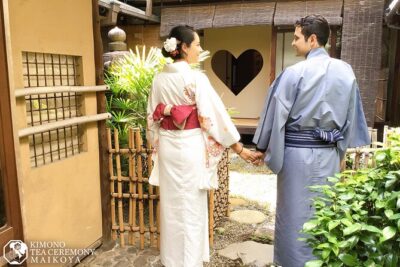
The first major part of the experience is the fitting. You complete a short survey, then staff direct you to the appropriate changing area. The team prepares a kimono in advance, so you must provide the height and gender of every participant before the visit.
The dressing process is guided rather than self-directed. Staff help you put on the layers and arrange the outfit properly. This matters because a kimono is not simply a robe that you tie around your waist. The fit, folds, sash, and overall shape need careful adjustment.
Participants have praised the choice of colors and accessories. Women may also be able to choose hair accessories, adding a personal touch to the finished look. The options are not described in detail in advance, so do not expect a particular color or style unless the shop confirms it directly.
Once dressed, you may have time in the waiting area to take your own photographs. This is a useful part of the schedule because the professional photographer’s three included images are a nice bonus, but your personal phone photos let you capture extra poses and group shots.
The outfit is also practical for walking around afterward, within the return deadline. You are free to stroll outside in the kimono and enjoy Kyoto’s atmosphere. Keep in mind that you must return it to the same shop on time, so do not plan an all-day excursion far from the venue.
Entering the Tea Room and Watching the Demonstration
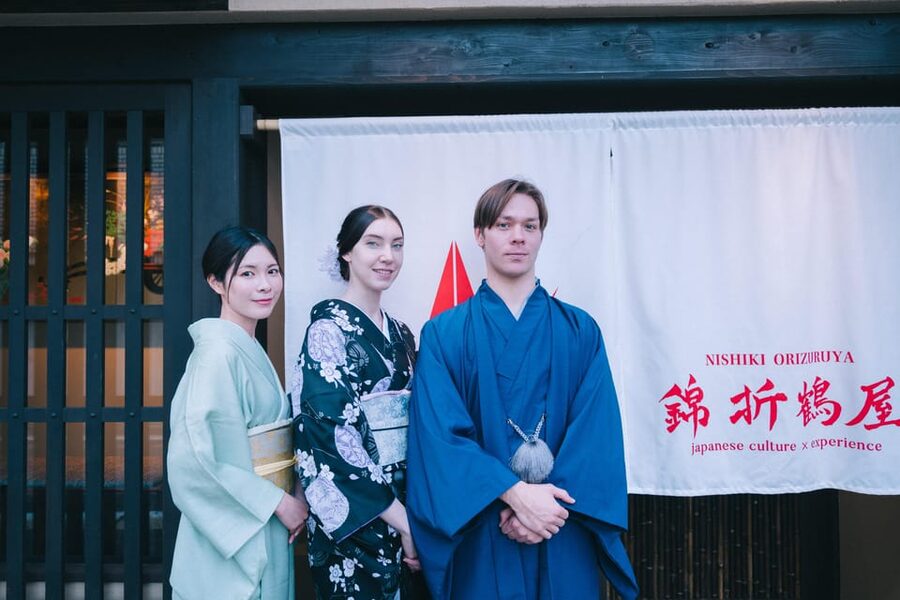
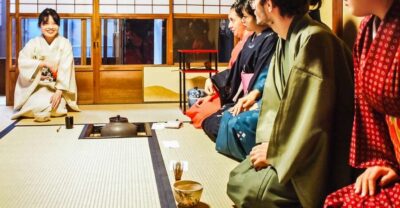
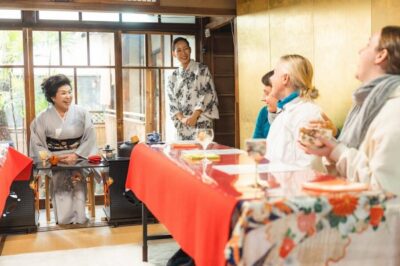
After dressing, you enter the tea room for an English-language demonstration. The tea master explains the purpose and meaning of the ceremony in a friendly, accessible manner.
The ceremony includes formal gestures that can seem mysterious if you have only watched from a distance. The explanation helps you understand why the host handles the bowl, utensils, and tea with such care. One participant particularly appreciated learning about cleansing and blessing the tea, while another called the activity very authentic and praised the friendly staff.
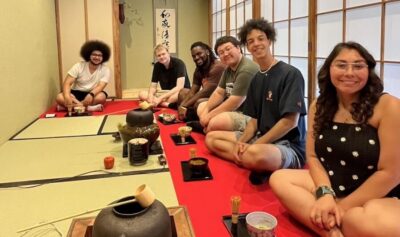
The English instruction is a major advantage. You do not need prior knowledge of Japanese customs, and the small group gives you a better chance to hear and follow the explanation. The group size is capped at 10, though the exact number in your session may vary.
This is also the point where the activity moves beyond costume rental. The kimono creates the visual setting, but the demonstration supplies the cultural context. I would choose this experience over a simple dress-up shop if you want to understand at least the basic ideas behind the ceremony.
The pace may not be perfectly exact every time. One participant described a significant wait between arrival and the ceremony, despite arriving before the scheduled start. That report suggests the operation can become crowded or run behind, so avoid scheduling a train, restaurant reservation, or major attraction immediately afterward.
More Photo Tours in Kyoto
- Kyoto: Maiko Makeover and Photoshoot Experience
★ 4.7 · 239 reviews - Kyoto: Private Photoshoot Service
★ 5.0 · 158 reviews - Your Private Vacation Photography Session In Kyoto
★ 5.0 · 110 reviews - Kyoto: Private Gion District Photoshoot Experience
★ 5.0 · 79 reviews
Making Matcha and Eating Japanese Sweets
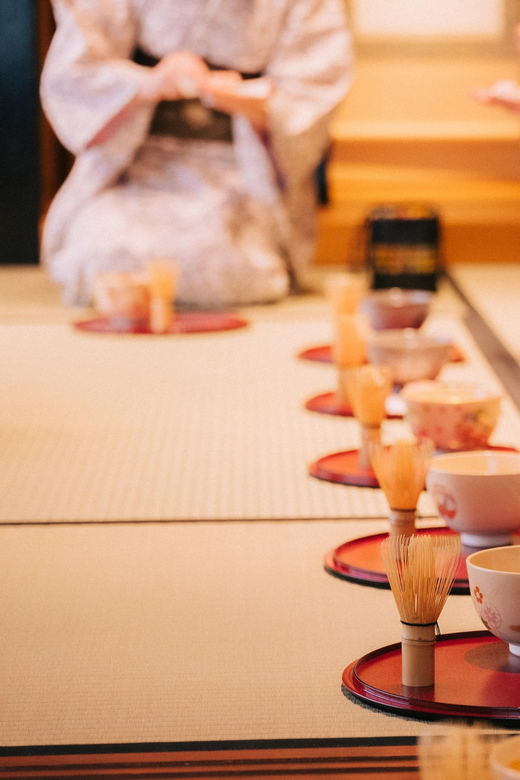
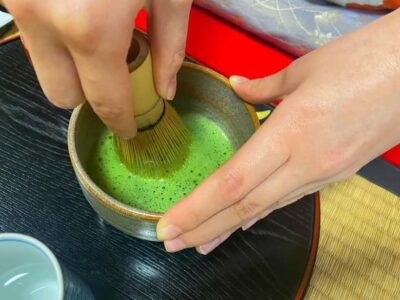
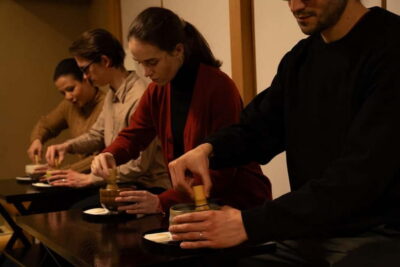
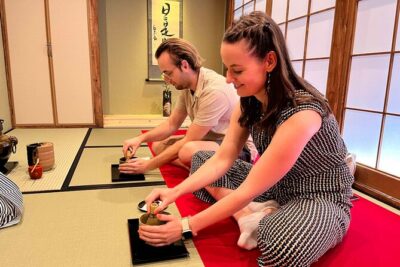
Watching the tea master is only half the fun. You then make your own matcha and enjoy it with Japanese sweets.
The hands-on step is simple enough for beginners, but it gives you a better feel for the process. You handle the tea and take part in the preparation instead of remaining an observer. The sweets provide the traditional companion to the slightly bitter matcha.
If you have a food allergy, notify the provider in advance. The experience includes both matcha and sweets, so this is not the place to stay silent about dietary concerns. The available information does not promise substitute sweets, so ask ahead if you need an alternative.
The tea itself may be an acquired taste. Matcha has a strong, grassy bitterness, and the sweet helps balance it. That contrast is part of the experience, not a flaw, but you should not expect a sweetened café-style green tea.
I like this section because it makes the activity interactive without asking you to master a difficult skill. You get a short lesson, a cultural explanation, and a chance to create something you can immediately enjoy.
The Professional Photoshoot and Three Included Images
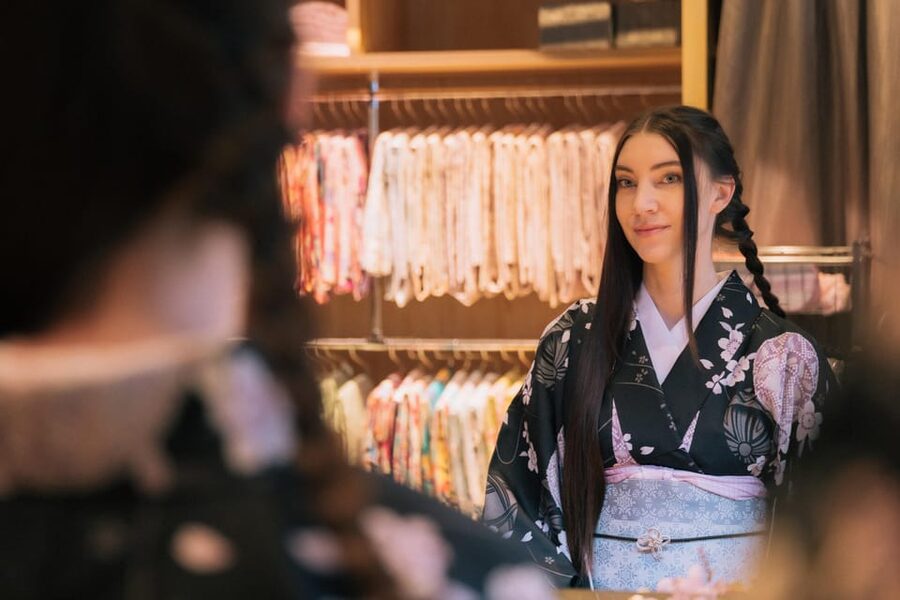
The photoshoot gives the experience its lasting souvenir. A professional photographer takes pictures while you are dressed in the kimono, and three photos are included.
The number is modest, but three well-composed images are more useful than a large batch of rushed snapshots. Participants have praised the picture quality, with one calling the photographs first class and another saying the final images turned out great.
You also have time to take your own photos. This distinction matters. The included professional images are the polished keepsakes, while your phone pictures can capture informal moments, friends, family members, or details that the photographer does not cover.
The exact photography setup is not specified, so do not assume that an outdoor session or a particular Kyoto landmark is included. The experience does allow you to go outside in the kimono afterward, but the three professional photos are the guaranteed part.
Photos are sent by email a couple of hours after the activity, according to one detailed account. Since delivery timing can vary, do not depend on receiving them before boarding a train or flying home. Check that the email address supplied at booking is correct.
Is the $127 Price Good Value?
At $127 per person, this is not a cheap kimono rental. You are paying for several services bundled together: kimono dressing, the tea ceremony demonstration, matcha and sweets, staff instruction, and three professional photos.
The value depends on what you want from the afternoon. If your aim is simply to rent a kimono for street photographs, a lower-cost dressing service may suit you better. But if you want a guided cultural activity with photography included, the price is easier to justify.
I see the strongest value in the combination. A kimono fitting alone can feel brief. A tea ceremony without the clothing may lack the visual character many visitors hope for in Kyoto. Here, each part supports the next: you dress properly, enter the tea room, learn the customs, make matcha, and record the occasion with professional images.
The small group also helps. A maximum of 10 participants is not private, but it is more personal than a large performance. You can see the demonstration clearly and follow the instructions without being lost in a crowd.
The price does not include an all-day kimono rental. You must return the outfit by 6:00 PM at Nishiki Market or 5:00 PM at Gion. Consider the rental window when comparing this activity with a cheaper option.
Timing, Comfort, and Practical Limits
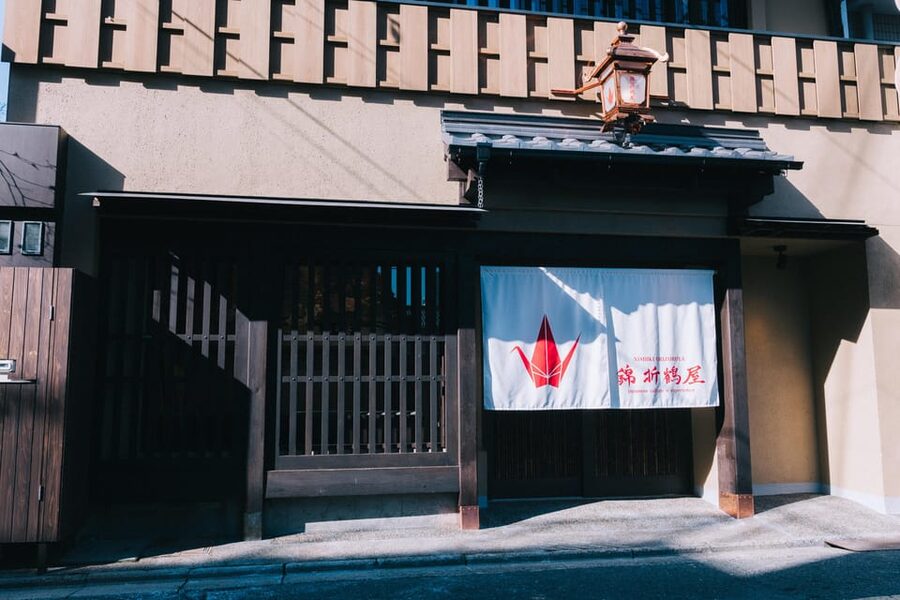
The activity lasts 90 minutes, but you should allow extra time around it for arrival, changing, and possible delays. The ceremony may not begin the instant you walk through the door.
Shoes are not allowed indoors, and smoking is not allowed. Wear clothing that is easy to change out of and avoid anything that makes dressing awkward. The supplied information does not specify whether particular underlayers are required, so contact the provider if you have concerns.
The experience is not suitable for children under 5 or wheelchair users. The dressing process and indoor setting may also be tiring or awkward for anyone who has trouble standing or changing clothes, though the official restriction only identifies wheelchair users.
You need to supply participant heights and genders ahead of time. This is not a minor formality, since the shop prepares kimono sets before arrival. Check that every participant’s information is accurate.
The booking terms are fairly flexible. You can cancel up to 24 hours in advance for a full refund, and a reserve-now, pay-later option is available. That flexibility does not cover lateness, so the 10-minute cutoff deserves more attention than the cancellation window.
Who Will Enjoy This Most?
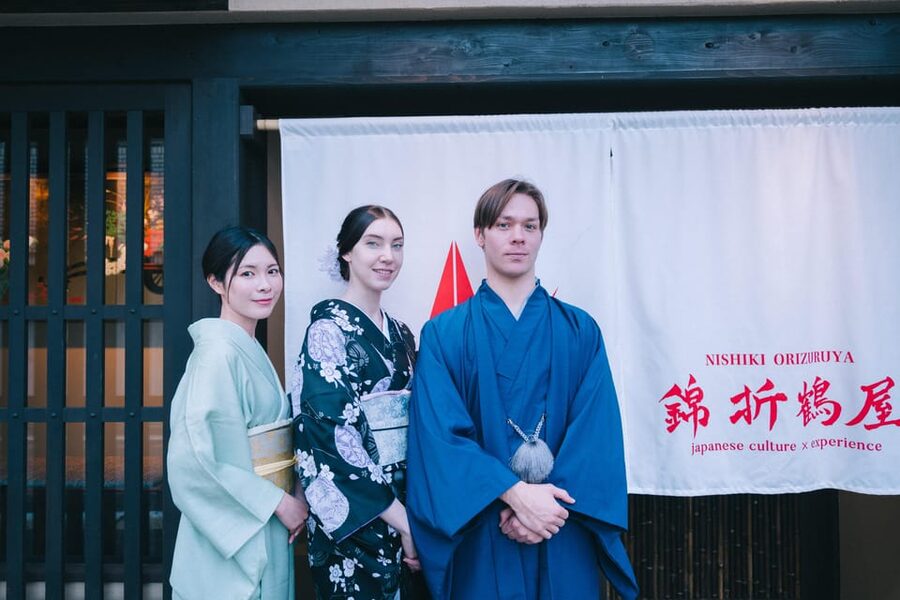
I would recommend this activity to first-time visitors who want a friendly introduction to two well-known parts of Japanese culture. It suits couples, friends, and families with older children who enjoy dressing up, learning by watching, and taking photographs.
It is also a good fit if you want a planned cultural activity rather than an unstructured afternoon. The staff guide you through the whole process, which helps if you are unsure how to wear a kimono or behave in a tea room.
Photography-minded visitors should find the three professional photos worthwhile, especially if you are celebrating a special occasion. The chance to choose colors and hair accessories adds a personal element.
I would hesitate if you dislike formal clothing, have difficulty changing outfits, or want a long, traditional tea ceremony with extensive ritual. This is a concise, visitor-friendly introduction. Its strength is accessibility, not depth.
How I Would Plan the Afternoon
I would book the location that matches the rest of my Kyoto day, then build in a generous arrival buffer. If I chose Nishiki Market, I would pair the activity with time in central Kyoto and keep the 6:00 PM return deadline visible on my schedule.
At Gion, I would be stricter about timing because the kimono must be returned by 5:00 PM. I would avoid planning a distant sightseeing stop between the ceremony and the shop return.
I would also keep the evening free of anything that requires exact timing. The tea ceremony may start later than planned, and the photography and dressing stages can take time. A flexible dinner plan is wiser than a prepaid reservation across town.
After the activity, I would use the remaining kimono time for nearby personal photographs, not a complicated cross-city journey. You get more from the outfit when you can walk at an easy pace and enjoy the setting without watching the clock every five minutes.
Should You Book the Kyoto Kimono Tea Ceremony?
Yes, if you want more than a costume rental. The strongest parts are the kind staff, English explanation, hands-on matcha preparation, choice of kimono details, and three professional photos. The experience gives you a pleasant cultural introduction without requiring prior knowledge.
Book it with realistic expectations. The ceremony lasts only 90 minutes, the schedule can run late, the kimono must come back by a fixed time, and you must choose the correct location. If you arrive more than 10 minutes late, you lose the booking and the money.
For many visitors, the $127 cost is fair because it covers both the cultural activity and the photography. I would choose Nishiki Market for the later return time and central location, or Gion if that district already fits your plans. Arrive early, provide accurate height and gender details, mention allergies, and leave your afternoon open enough to enjoy the experience rather than rush through it.
FAQ
How long does the Kyoto kimono tea ceremony experience last?
The scheduled experience lasts 90 minutes. You may also stroll outside in your kimono afterward, but you must return it by the designated deadline.
Where is the meeting point?
The meeting point depends on the option you book. The experience has a Nishiki Market location and a Gion location. Make sure you arrive at the location selected during booking.
What does the activity include?
It includes kimono dressing, an English tea ceremony demonstration, matcha green tea, Japanese sweets, and three professional photographs.
Can I make my own matcha?
Yes. You watch the demonstration and then prepare your own matcha green tea, which you enjoy with Japanese sweets.
What time must I return the kimono?
At the Nishiki Market location, the kimono must be returned by 6:00 PM. At the Gion location, it must be returned by 5:00 PM on the same day.
What happens if I arrive late?
If you arrive more than 10 minutes after the starting time, you cannot join the experience and no refund is available. Allow extra time to find the correct shop.
More Tea Ceremonies in Kyoto
- Kyoto: Tea Ceremony in a Traditional Tea House in Kiyomizu
★ 4.9 · 3,519 reviews - Kyoto: Tea Ceremony Ju-An at Jotokuji Temple
★ 4.9 · 3,207 reviews - Kyoto: 45-Minute Tea Ceremony Lesson Experience
★ 4.3 · 2,378 reviews - Kyoto: Table-Style Tea Ceremony at a Kyo-Machiya
★ 4.9 · 1,211 reviews
Just added around Kyoto
- Kyoto: Gion Night Walking Tour with Geisha Insight★ 5.0 · 39 reviews
- Kyoto: Private Customizable Day Trip by Car★ 5.0 · 38 reviews
- Kyoto: Full Day Bike Tour★ 4.9 · 39 reviews
- Private Japanese Calligraphy in Kyoto – Learn Shodō with a Master★ 5.0 · 39 reviews
- Kyoto: Gion Evening Walk with Hidden Gems, Geisha & Sake★ 5.0 · 41 reviews
- Experience a tea ceremony in an authentic tearoom, in Kyoto!★ 4.5 · 41 reviews
- Kyoto Private Photo Shoot & Tour by SnapKyoto★ 5.0 · 41 reviews
- The Way of Tea: Kyoto Crafts, Hidden Temples & Wabi-Sabi Walk★ 5.0 · 41 reviews
Tea Ceremony Experiences, compared.
Tea Ceremony in a Traditional Tea House in Kiyomizu
Read our review →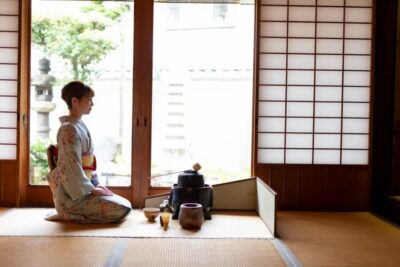
Browse the lists this tour appears in