
Reviewed · KIMONO DRESSING & PHOTOSHOOTS
Kyoto: Traditional Kimono Fabric Handicrafts Workshop
Kyoto souvenirs can be handmade, not bought. This two-hour Temari workshop lets you turn colorful kimono fabric into a traditional Japanese decoration in a renovated antique boutique. I like the personal touch of choosing your own fabric pieces, and I like that instructor May, also called Mae or Mei by past participants, guides beginners with clear English and patient help. The only real consideration is that this is a calm craft session, not a large cultural show, so you should book it for hands-on making rather than entertainment.
The small group of up to four keeps the class friendly and unhurried. You also get a drink and a traditional Japanese sweet, which makes the workshop feel like a pleasant pause between temples and streets. At $25 per person, the price is reasonable, especially since materials, instruction, refreshments, and your finished Temari are included.
In This Review
- Key Points Before You Book
- What a Temari Workshop Actually Involves
- Choosing Five Kimono Fabric Pieces
- Following May’s Step-by-Step Guidance
- A Calm Two Hours in a Traditional Shop
- Tea, Matcha, and a Traditional Sweet
- Why the $25 Price Makes Sense
- Pairing the Workshop With Kyoto Sightseeing
- Who Will Enjoy This Most
- Practical Details That Matter
- The Main Drawback: It Is Simple by Design
- Should You Book the Kyoto Temari Workshop?
- FAQ
- How long does the Temari workshop last?
- How much does the activity cost?
- Do I need previous craft experience?
- Can children join the workshop?
- How many people can join the class?
- Which languages are available?
- What materials are included?
- Do I receive anything to drink or eat?
- Can I take my finished Temari home?
- Is the workshop wheelchair accessible?
Key Points Before You Book
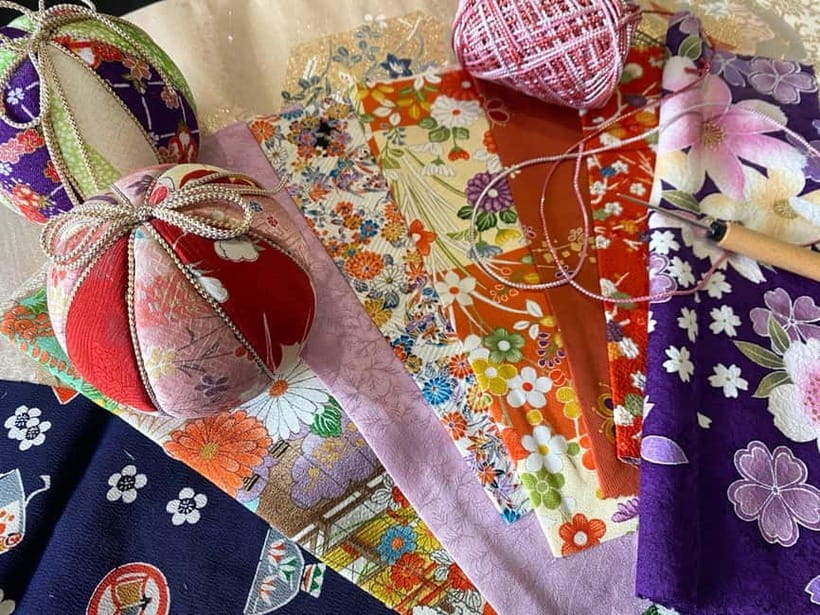
- Choose from beautiful kimono fabrics: Pick five fabric pieces and create a color combination that feels personal to you.
- Beginner-friendly Temari making: No sewing background or craft skill is required, and children can take part.
- A souvenir you actually made: Your finished Temari becomes a small decoration with a direct connection to your Kyoto visit.
- Warm instruction from May: She is praised for clear explanations, patience, friendly conversation, and excellent English.
- A good sightseeing pause: The shop is near temples, shrines, cafes, and the Philosopher’s Path, making it easy to pair with nearby exploring.
- Refreshments included: Enjoy a complimentary drink and one traditional Japanese confectionery while you work.
What a Temari Workshop Actually Involves
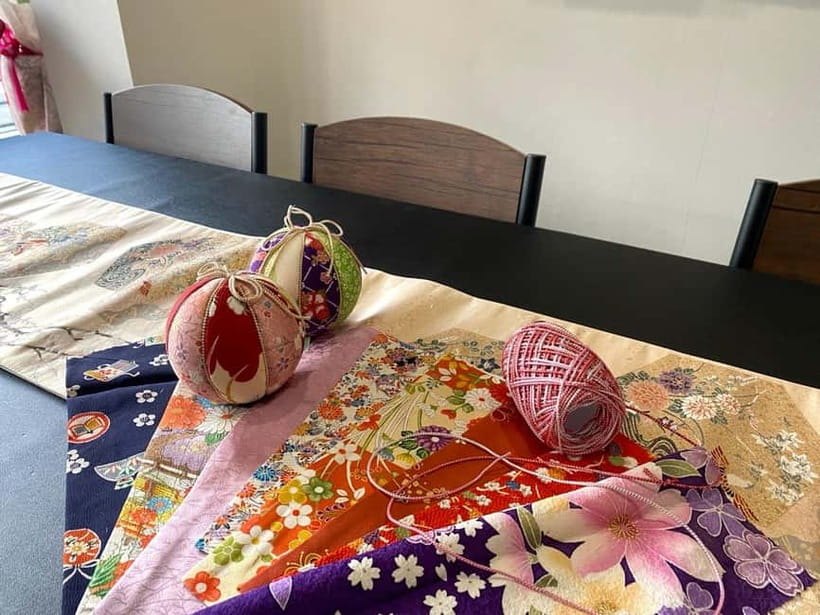
Temari are traditional Japanese handcrafted balls used as interior decorations and for celebrations. They are small, colorful objects, but the making of one gives you a useful look at the care and precision found in Japanese textile crafts.
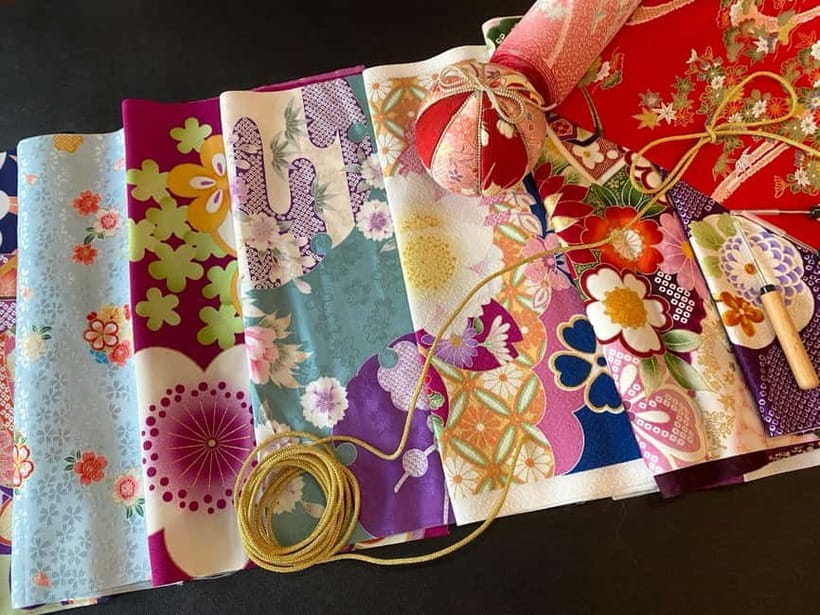
This particular class uses pieces of kimono fabric rather than asking you to begin with a large length of new cloth. That gives the activity a sustainable, personal angle. Each scrap has its own pattern, color, and texture, so the finished Temari is unlikely to look exactly like anyone else’s.
You do not need to arrive with a plan. The class is designed for complete beginners, and the process is broken into manageable steps. The point is not to produce museum-quality work. It is to make something attractive, learn how the craft works, and enjoy a slow creative hour or two.
That makes this a good match for you if Kyoto sightseeing has become a steady march from one famous site to the next. A craft class gives your hands something to do and your mind a chance to settle.
More Kimono Experiences in Kyoto
- Kimono Tea Ceremony at Kyoto Maikoya, NISHIKI
★ 5.0 · 911 reviews - Kyoto: Kimono Rental with Hairstyling and Accessories
★ 4.8 · 653 reviews - Kyoto: Kimono Tea Ceremony at Orizuruya Gion
★ 4.9 · 618 reviews
Choosing Five Kimono Fabric Pieces
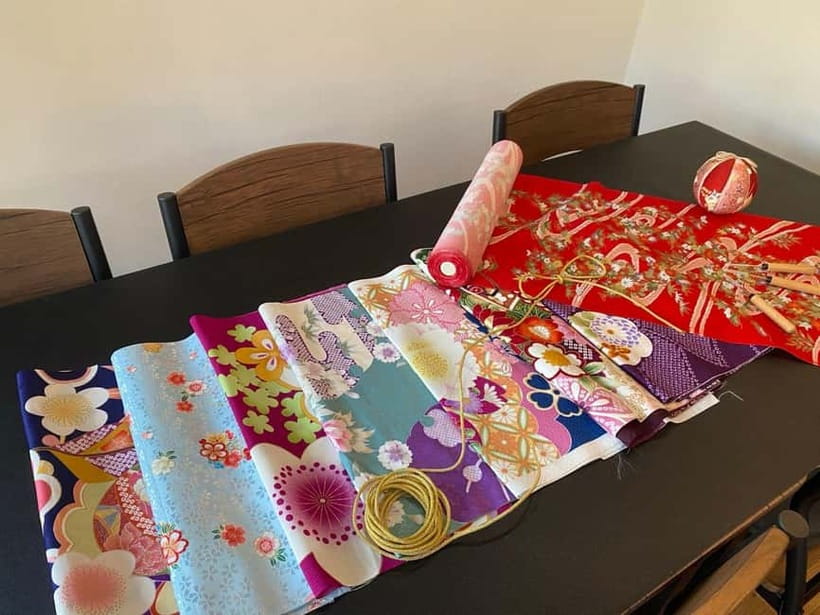
The fabric selection is one of the most enjoyable parts of the experience. You choose five pieces from a range of kimono fabrics, and the decision may take longer than expected. Strong colors, delicate patterns, and contrasting designs all create different results.
You can choose colors that match, or you can make the Temari more playful with patterns that do not seem likely to work together at first. There is no single correct combination. May helps you look at the options and can offer guidance if you feel stuck.
This is also where the workshop feels more personal than a standard souvenir purchase. A shop-bought object may be beautiful, but you usually remember very little about how it came to you. Here, you remember sorting through fabrics, changing your mind, and finally settling on the five pieces that felt right.
If you love textiles, this part may be the highlight. One participant who enjoys fabrics particularly appreciated being in an artisan’s workshop, while another found the hardest part was simply deciding which patterns to use. Give yourself time for the choice rather than grabbing the first five colors you see.
Following May’s Step-by-Step Guidance
Once your fabrics are chosen, May explains how to assemble the Temari. The instructions are clear enough for children and adults with no previous experience. Several families and couples found the activity easy to follow, and even children around ages 10 and 12 were able to take part.
The craft does not depend on advanced sewing. One parent described it as involving very little sewing, which helped keep the activity accessible to a child who was not especially interested in crafts. That is useful to know if you are booking for a mixed-age family.
May’s teaching style is a major part of the appeal. She is described as warm, patient, and generous with help. She explains each stage carefully, checks your progress, and makes the process feel manageable rather than technical.
Her English is strong, and the class is offered in both English and Japanese. You can ask questions as you go, and the small group limit means you should not be lost in a crowd waiting for the instructor’s attention.
The mood is relaxed. You are not racing to finish before a large group moves on to the next activity. If you are the only person booked for a session, May may have time to show you another small fabric craft, such as making flowers. That extra attention is not guaranteed, but the small format gives the class a more flexible feel.
A Calm Two Hours in a Traditional Shop
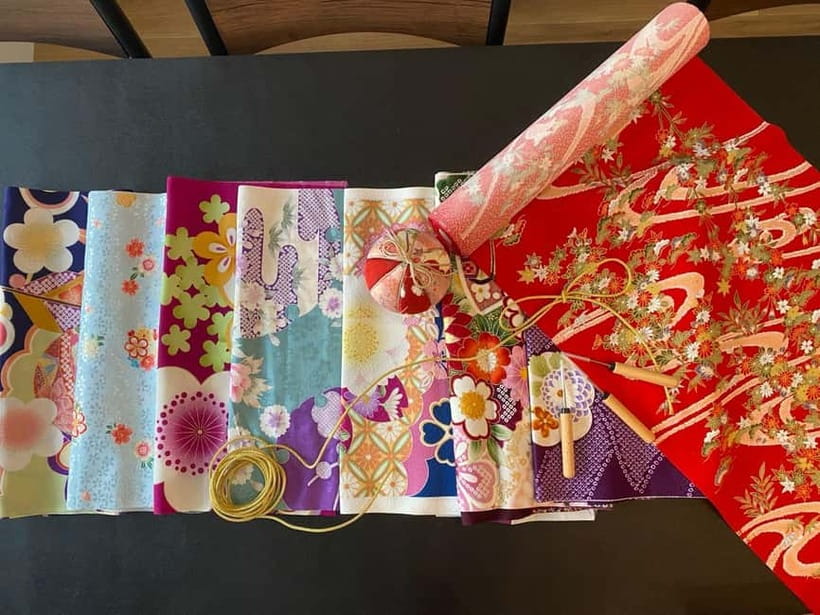
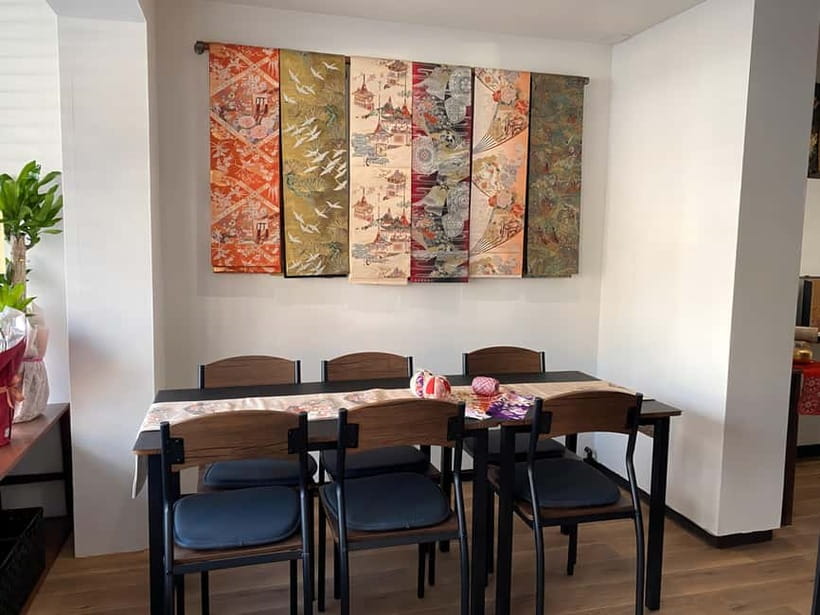
The workshop takes place in a newly renovated traditional Japanese antique boutique. It is not just a plain classroom with craft supplies spread across folding tables. The shop also sells bags, purses, and other handmade items made from old kimono fabric.
That setting adds context to the Temari activity. You can see how a local craftsperson works with textile remnants and turns them into useful or decorative objects. The shop itself may appeal to you if you are interested in Japanese design, fabric reuse, and small artisan businesses.
The atmosphere is one of the strongest reasons to choose this class. It is quiet, social, and easygoing, with time for conversation about Japan, crafts, and everyday life. Some couples used it to make keepsakes together, while others treated it as a restful stop during a honeymoon or sightseeing day.
The experience is not packed with formal historical information. You learn about the background of Temari and the role of these decorations in Japanese life, but most of the time is spent making. If you want a long lecture on textile history, this is not the right activity. If you want a simple cultural activity with a local maker, it fits well.
A completely different kind of day out in Kyoto:
- PERFECT KYOTO 1-Day Bus Tour
★ 5.0 · 13,518 reviews - Kyoto: Fushimi Inari, Kinkakuji, Bamboo Grove 1 Day Bus Tour
★ 4.8 · 4,316 reviews - Kyoto: Tea Ceremony in a Traditional Tea House in Kiyomizu
★ 4.9 · 3,519 reviews - Kyoto Geisha Walking Tour: Gion District & Hidden Gems
★ 4.7 · 3,273 reviews
Tea, Matcha, and a Traditional Sweet
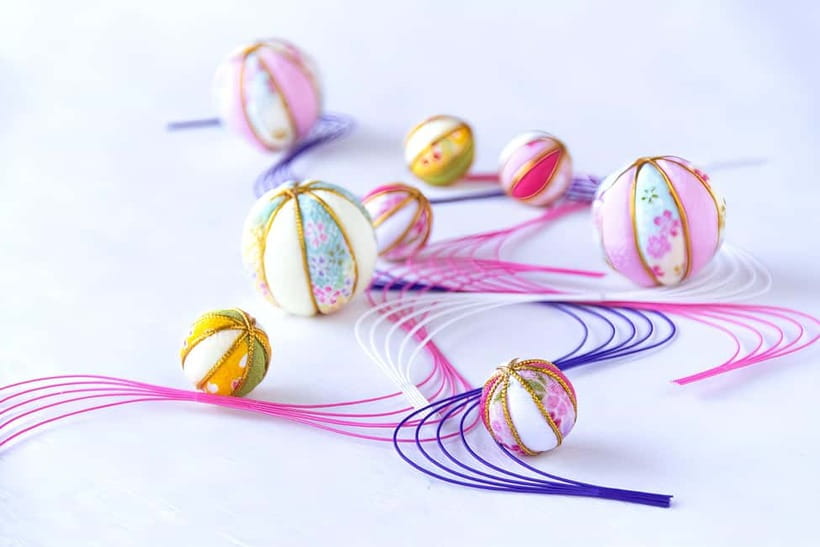
Each participant receives a complimentary drink and a traditional Japanese confectionery of choice. These refreshments are part of the class, not an extra purchase.
The treat gives the session a pleasant Japanese touch without turning it into a formal tea ceremony. You may receive tea or another drink, and one participant especially enjoyed the matcha latte served during the class. The exact drink options are not specified, so do not book this expecting a full meal or a particular beverage.
The sweets are small, but they suit the pace of the workshop. Choosing a confectionery while selecting your fabrics adds another modest decision to the experience. It also gives you a chance to pause during the craft instead of treating the two hours as one continuous task.
Additional food and drinks are not included. If you need more than a light refreshment, plan to eat before or after the session. The surrounding area has cafes nearby, so combining the class with a coffee stop is straightforward.
Why the $25 Price Makes Sense
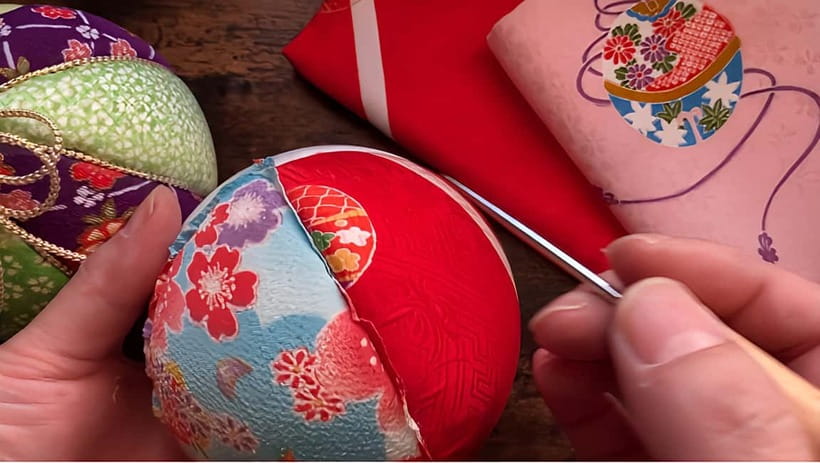
At $25 per person, this is good value for a two-hour activity in Kyoto. The fee covers the Temari workshop, all necessary materials, instruction from a local craft master, a drink, and a traditional confectionery.
The finished object is the main value. You are not paying only for access to a class. You are also taking home something you made from kimono fabric, with your own choice of colors and patterns attached to the memory.
The price also compares well with the cost of many ready-made souvenirs. A purchased item may require less time, but it will not give you the story of making it. If you are already looking for a small gift or decoration from Japan, this activity combines shopping value with an experience.
There are limits. Your Temari will be handmade by a beginner, not by the artisan whose work is displayed in the shop. Small differences in shape or finish are part of the result. You should enjoy the process rather than expect a flawless professional product.
Pairing the Workshop With Kyoto Sightseeing
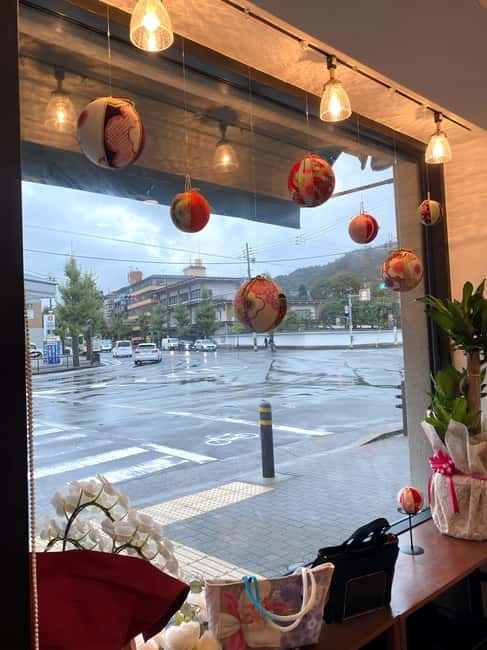
The shop is in a Kyoto sightseeing area near historically significant temples and shrines. The Philosopher’s Path is also nearby, along with cafes. That makes the workshop easy to fit into a day built around eastern Kyoto sightseeing.
You can schedule the craft as a midday rest after visiting temples, or use it as a gentler activity late in the day. The two-hour duration is long enough to feel worthwhile but short enough to leave room for other plans.
The supplied information does not name every nearby temple or give exact walking times, so check a map before setting your schedule. Do not assume you can finish the workshop and reach a distant attraction at a precise time without allowing for local transport and walking.
The location is especially useful for families and older visitors who may appreciate a seated activity between sightseeing stops. It also suits couples who want something quieter than another busy attraction.
Who Will Enjoy This Most
I would recommend the workshop to several kinds of visitors:
- First-time Kyoto visitors: You get a small introduction to a traditional craft without giving up half a day.
- Families: The activity is suitable for adults and children, with no previous skills required.
- Couples: Making two Temari together creates a shared souvenir, and several couples enjoyed the conversation and relaxed pace.
- Textile lovers: The kimono fabric selection is likely to be the most satisfying part.
- Rainy-day planners: This is an indoor activity that still feels closely tied to Japanese culture.
- Visitors needing a slower afternoon: Two hours at a craft table can be a welcome change from temples, trains, and crowded streets.
It may be less suitable if you dislike crafts, want a fast activity, or expect a polished professional souvenir. The class asks you to participate. You will not simply watch an artisan work.
Practical Details That Matter
The experience lasts two hours, and starting times vary by availability. Check the schedule carefully before booking, especially if you are arranging temple visits on the same day.
The group is limited to four participants. That is a major advantage for instruction, but it also means sessions can fill quickly. A small group works particularly well here because fabric selection and handcraft guidance are personal tasks.
The activity is wheelchair accessible. No prior experience or special skill is required, and materials are supplied. Instruction is available in English and Japanese.
You should enter the workshop when you arrive. The host will be waiting to greet you, so there is no separate meeting point described outside the shop. Allow a little time to find the boutique, particularly if you are using a map in an unfamiliar Kyoto neighborhood.
Free cancellation is available up to 24 hours before the activity for a full refund. You can also reserve now and pay later, which helps if your Kyoto schedule is still changing.
The Main Drawback: It Is Simple by Design
The biggest limitation is also part of the appeal. This is a straightforward craft class, not a broad cultural tour. You will not visit several temples as part of the workshop, and you will not receive a long guided walk through Kyoto.
The mention of nearby temples and shrines matters mainly because of the location. You need to arrange those visits yourself. The class can support a sightseeing day, but it does not replace a temple tour.
You should also expect some variation in the final result. Beginners may produce a Temari with an uneven edge or slightly imperfect shape. That does not make it a poor souvenir, but it helps to set the right expectation before you start.
The refreshments are light, too. Tea, a drink, and one sweet are a nice addition, not lunch. Plan another meal if your schedule requires one.
Should You Book the Kyoto Temari Workshop?
Book it if you want a small, personal Kyoto experience rather than another stop where you only take photographs. The combination of recycled kimono fabrics, May’s patient teaching, refreshments, and a finished souvenir gives the $25 fee real value.
I especially recommend it for families, couples, textile fans, and anyone who wants a quiet break near Kyoto’s temple district. The activity is easy enough for children, welcoming to complete beginners, and compact enough to fit into a busy itinerary.
Skip it if you want a major historical tour, a professional-level craft lesson, or a full meal. For most visitors who enjoy making things, though, this is an appealing way to slow down and take home a piece of Kyoto that carries your own fingerprints.
FAQ
How long does the Temari workshop last?
The workshop lasts two hours.
How much does the activity cost?
The price is $25 per person.
Do I need previous craft experience?
No. The activity is designed for beginners, and no prior experience or special skill is required.
Can children join the workshop?
Yes. The activity is suitable for all ages, including adults and children.
How many people can join the class?
The group is limited to four participants.
Which languages are available?
The workshop is offered in English and Japanese.
What materials are included?
All materials needed to make the Temari are included in the activity price.
Do I receive anything to drink or eat?
Yes. Each participant receives a complimentary drink and a traditional Japanese confectionery of their choice.
Can I take my finished Temari home?
Yes. Your completed Temari is a souvenir of your trip to Japan.
Is the workshop wheelchair accessible?
Yes. The activity is wheelchair accessible.
Just added around Kyoto
- Kyoto: Gion Night Walking Tour with Geisha Insight★ 5.0 · 39 reviews
- Kyoto: Private Customizable Day Trip by Car★ 5.0 · 38 reviews
- Kyoto: Full Day Bike Tour★ 4.9 · 39 reviews
- Private Japanese Calligraphy in Kyoto – Learn Shodō with a Master★ 5.0 · 39 reviews
- Experience a tea ceremony in an authentic tearoom, in Kyoto!★ 4.5 · 41 reviews
- Kyoto: Gion Evening Walk with Hidden Gems, Geisha & Sake★ 5.0 · 41 reviews
- Kyoto Private Photo Shoot & Tour by SnapKyoto★ 5.0 · 41 reviews
- The Way of Tea: Kyoto Crafts, Hidden Temples & Wabi-Sabi Walk★ 5.0 · 41 reviews
Kimono Dressing & Photoshoots, compared.

Sumo Show & Experience w/ Optional Kimono & Hot Pot
Read our review →
KYOTO Tea Ceremony with kimono near by Imamiya Jinjya Shrine
Read our review →
Kimono and Tea Ceremony Experience at Cultural Asset
Read our review →

Browse the lists this tour appears in