
Reviewed · GOVERNMENT-LICENSED GUIDE TOURS
Nara 8hr Private Tour – Kyoto DEP. with Licensed Guide
Nara makes Kyoto feel almost modern. This private eight-hour tour lets you choose three or four sights with a licensed local guide, so your day can focus on temples, gardens, old streets, deer, or some mix of all four. I like the freedom to shape the route, and I like having someone explain the religious and political meaning behind places that can otherwise blur together. The main catch is that you pay separately for transportation, meals, and most entrance fees, and the day is entirely on foot.
I especially like the chance to combine famous Tōdaiji with a quieter stop such as Isuien Garden or Naramachi. I also like the personal attention of a private group, particularly for families or anyone who wants help using trains and finding lunch. Guides such as Junichi, Taku, Ken, Yuka, and Masaaki have received especially warm praise for clear explanations and thoughtful planning, although your guide is assigned after booking.
In This Review
- Five things to know before booking
- Why Nara earns a full day from Kyoto
- Building your three or four-site itinerary
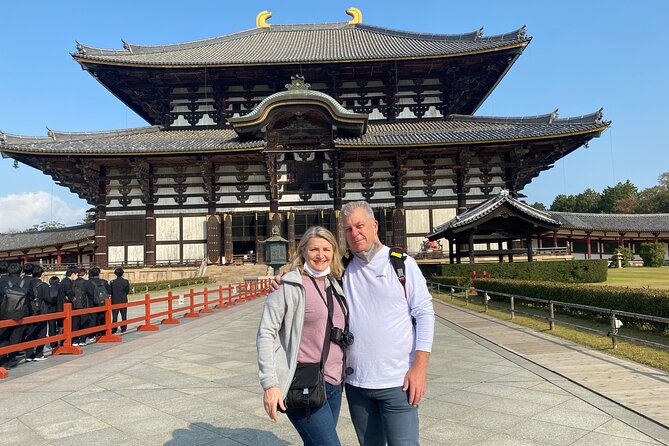
- Tōdaiji and the giant Buddha
- Nara Park and the famous deer
- Kasuga Taisha through the lantern-lined forest
- Wakakusayama for a wider view
- Naramachi and Edo-period town life
- Hōryūji and the oldest wooden buildings
- The temple choices beyond the main route
- Isuien and Yoshikien for a quieter pause
- What the guide adds to the price
- The walking, timing, and guide assignment
- Who should book this Nara day trip
- Final verdict: a strong choice with careful planning
- FAQ
- How long is the Nara private tour?
- Where does the tour begin?
- Is this a private tour?
- How many sights can I visit?
- Is transportation included?
- Are entrance fees included?
- Is lunch included?
- Is Nara Park free to enter?
- What is the cancellation policy?
Five things to know before booking
- Choose three or four sites: You can request famous temples, gardens, historic districts, museums, or less-visited places.
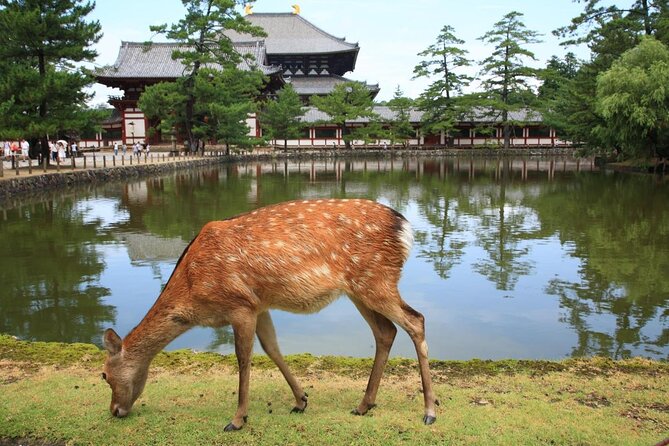
- The deer are part of the day: Nara Park’s free-roaming deer are an unforgettable feature, but deer crackers and close contact require some care.
- Expect a full walking day: Pickup means meeting your guide on foot, not riding in a private vehicle.
- Admissions are mostly extra: Tōdaiji, Wakakusayama, Hōryūji, Kōfukuji, Yakushiji, Shin-Yakushiji, and several other sites list entrance fees separately.
- Private guiding adds real value: You can adjust the pace, ask questions freely, and build the day around children, history, gardens, food, or architecture.
Why Nara earns a full day from Kyoto
Nara was Japan’s capital during much of the period from 710 to 794. That gives the city a different feel from Kyoto. Kyoto is famous for its later imperial and cultural traditions, while Nara offers an earlier look at Buddhism, court power, temple building, and the first permanent capital.
The city is close enough to reach from Kyoto or Osaka, making it a sensible day trip. Yet the main sights are spread across a broad area. A guide helps you decide what fits and prevents you from losing time at train stations, on wrong turns, or in long walks that do not match your interests.
This is not a bus tour. You meet the guide on foot within the designated Kyoto area and continue by walking and public transportation. The private format means only your group participates, so you can stop for photos, slow down for a child, ask for more detail at a temple, or skip a site that does not appeal to you.
The eight-hour length sounds generous, but Nara can fill it quickly. Tōdaiji, Nara Park, Kasuga Taisha, and Naramachi alone create a satisfying day. Adding Hōryūji or the temples west of central Nara requires more transport and leaves less time for the park area.
More Licensed Guide Tours in Kyoto
- Kyoto 6hr Private Tour with Government-Licensed Guide
★ 5.0 · 1,369 reviews - Kyoto 4hr Private Tour with Government-Licensed Guide
★ 5.0 · 629 reviews - Kyoto: Private Tour with Local Licensed Guide
★ 4.8 · 463 reviews
Building your three or four-site itinerary
The most important step comes before the tour. Tell the agency what you care about, then discuss the order with your assigned guide. The available choices cover a wide range of experiences, and choosing too many distant sites can turn a relaxed day into a race.
For a first visit, I would usually pair Tōdaiji, Nara Park, Kasuga Taisha, and Naramachi. This gives you the giant Buddha, deer, a major Shinto shrine, and an old merchant district. If your main interest is early Japanese art and Buddhism, replace Naramachi or Kasuga Taisha with Hōryūji, Yakushiji, or Tōshōdaiji.
Families may prefer Tōdaiji, Nara Park, Naramachi, and one garden. The deer and the famous pillar hole at Tōdaiji give children something playful to remember, while the old streets and gardens keep the day from becoming a string of formal religious sites.
If you enjoy gardens, consider Isuien and Yoshikien. If you want broad city views, ask about Wakakusayama Hill. If you are serious about Buddhist art, the Nara National Museum may deserve your time, but you should expect to sacrifice another stop.
The advertised itinerary lists each possible stop as a 30-minute visit. That is useful as a rough planning guide, not a promise that you will visit all fourteen places. You select only three or four.
Tōdaiji and the giant Buddha
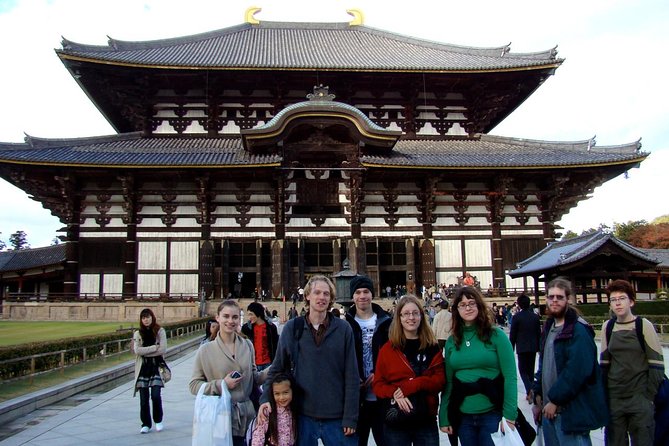
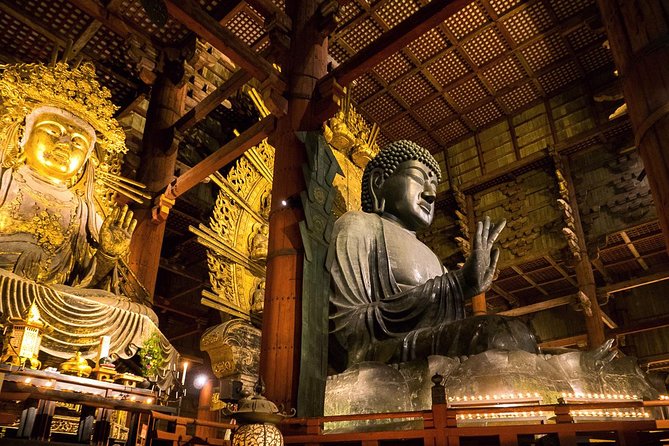
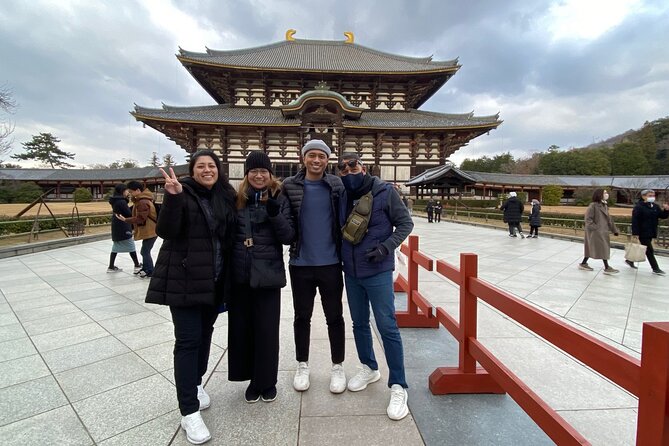
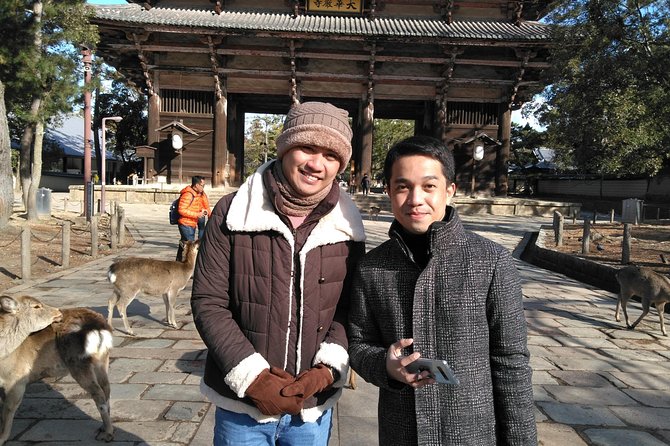
Tōdaiji is the natural anchor for a first Nara visit. Founded in 752, it served as the head temple for provincial temples across Japan. Its scale is hard to grasp until you approach the main hall and pass through the Nandaimon Gate.
Inside the Great Buddha Hall, the bronze Vairocana Buddha dominates the space. The building and statue are both powerful, but the guide’s explanation adds the missing layer: this was not simply a place of private worship. Tōdaiji was tied to the authority of the early Japanese state and the spread of Buddhism across the country.
Thirty minutes can pass quickly here. School groups may fill the hall, especially during busy periods such as Golden Week, and the Buddha area can feel crowded. A guide can still help you focus on key details, including the famous hole in a wooden pillar. Tradition says that fitting through it brings good fortune, especially for academic success.
Entrance to Tōdaiji is not included. Confirm the current admission cost and ask if your guide’s entrance is covered, since guide fees are covered only for sights listed under the tour’s expected stops.
Nara Park and the famous deer
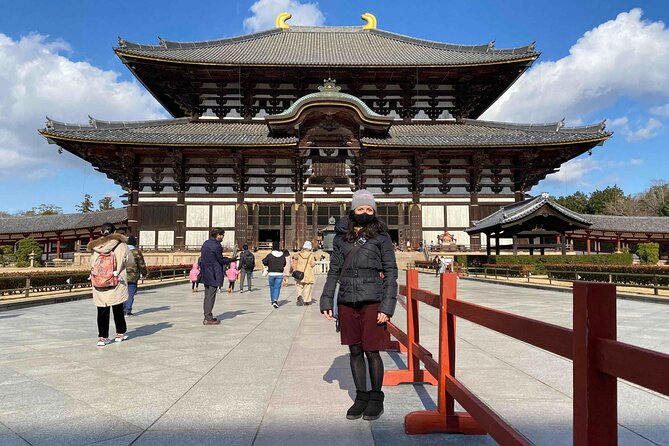
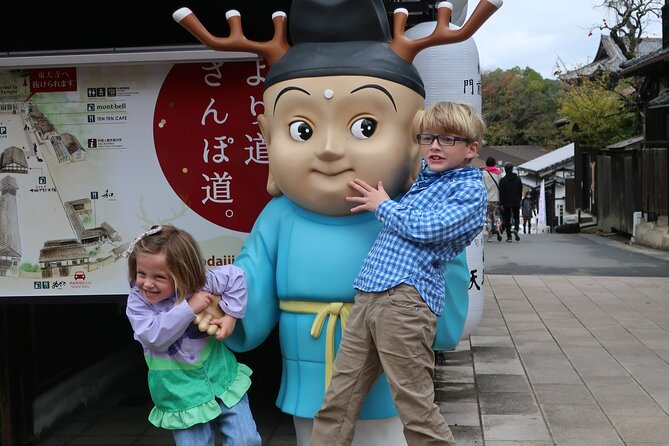
Nara Park is free to enter and contains many of the city’s major sights. Its deer roam freely around the paths, temple grounds, and open spaces. They are accustomed to people, but they are still animals, not theme-park props.
You can buy deer crackers and feed them, which creates some of the day’s most memorable moments. The deer often bow or lower their heads when expecting food. Once the crackers are gone, show your empty hands and move away. Keep paper, maps, and food secure, since curious deer may investigate.
The park is more than a place for animal photos. It links Tōdaiji, Kasuga Taisha, Kōfukuji, and the Nara National Museum. Your guide can help you use it as a route rather than treating it as a quick stop.
The park visit is listed as 30 minutes, but I would ask for more time if deer are a major reason for your visit. Autumn colors, warm weather, and school excursions can affect both comfort and crowd levels. Summer heat and humidity have made some full-day routes tiring, so comfortable shoes, water, and a realistic pace matter.
A completely different kind of day out in Kyoto:
- PERFECT KYOTO 1-Day Bus Tour
★ 5.0 · 13,518 reviews - Kyoto: Fushimi Inari, Kinkakuji, Bamboo Grove 1 Day Bus Tour
★ 4.8 · 4,316 reviews - Kyoto: Tea Ceremony in a Traditional Tea House in Kiyomizu
★ 4.9 · 3,519 reviews - Kyoto Geisha Walking Tour: Gion District & Hidden Gems
★ 4.7 · 3,273 reviews
Kasuga Taisha through the lantern-lined forest
Kasuga Taisha is Nara’s most celebrated Shinto shrine. It was founded when the capital was established and is linked to the deity responsible for protecting the city.
The approach is one of the most memorable walks in Nara. Stone lanterns line the path, and the trees create a quiet transition away from the more open park. The shrine complex has a different mood from Tōdaiji, giving you a useful comparison between Shinto and Buddhist traditions.
The route can take energy, especially after several hours of walking. If you want to explore the shrine properly, do not schedule too many distant temples afterward. Some guides also include Wakamiya Shrine or Tamukeyama Hachiman Shrine when the group has a strong interest in religious history, but the exact route depends on your chosen four sites and the available time.
Kasuga Taisha is listed with free admission, though some areas or special exhibits may follow different rules. Ask your guide what is included on the day.
Wakakusayama for a wider view
Wakakusayama is the grass-covered hill behind Nara Park, between Tōdaiji and Kasuga Taisha. At about 350 meters high, it offers broad views over Nara and the surrounding area.
This is the choice for you if you want a break from interiors and a higher view of the city. It also works well for photographers and anyone who enjoys a slower outdoor stop.
The drawback is simple: a hill adds effort to an already active day. The stop is listed as 30 minutes, and admission is not included. Ask about the walk and current access conditions before choosing it, particularly in hot, wet, or cold weather.
Naramachi and Edo-period town life
Naramachi was the former merchant district. Traditional houses, warehouses, small shops, cafes, and boutiques remain along its narrow streets.
This area gives the day a human scale. At Tōdaiji, you are looking at monumental religious architecture. In Naramachi, you see how ordinary residents lived and worked. Preserved homes may include tatami rooms, alcoves, staggered shelves, and carefully arranged interiors.
Naramachi is a strong choice if you want local atmosphere, shopping, snacks, or a quieter contrast to Nara Park. A guide can point out details you might otherwise miss and help you find a suitable place for lunch.
The old streets are free to explore, but some traditional houses or museums may have separate admission. The tour does not include lunch, so tell your guide about dietary needs early. One guide made a point of finding vegetarian food, while another was praised for knowing a good tofu restaurant. Those small planning details can save time.
Hōryūji and the oldest wooden buildings
Hōryūji lies farther from central Nara, so selecting it affects the rest of your itinerary. Founded in 607 by Prince Shōtoku, it is among Japan’s oldest temples and contains some of the world’s oldest surviving wooden structures.
For many people, this is the intellectual highlight of the day. The site connects early Buddhism, royal patronage, architecture, and the movement of ideas between Japan and the Asian mainland. One carefully planned visit placed Hōryūji in the morning and described it as the day’s highlight, helped by clear skies, clean air, and time to study the art and buildings.
The tradeoff is distance. If Hōryūji is important to you, build the other sites around it rather than adding it at the last minute. Thirty minutes may feel short for a complex with this much to see, and entrance fees are not included.
The temple choices beyond the main route
The tour’s wider menu lets you create a more specialized day.
Kōfukuji was the family temple of the Fujiwara clan, a powerful aristocratic family during the Nara and Heian periods. Its five-story pagoda and historic halls make it a strong choice for architecture and political history. Admission to some areas is not included.
Yakushiji was built by Emperor Tenmu in the late seventh century for his wife’s recovery. Its strict symmetry and East Pagoda, first built more than 1,300 years ago, appeal to anyone interested in design, restoration, and early Buddhist art.
Shin-Yakushiji was founded during the Nara Period for an ailing emperor and is dedicated to Yakushi Buddha, the Buddhist patron of medicine. It is a quieter choice for religious history.
Tōshōdaiji was founded in 759 by Ganjin, a Chinese priest invited to Japan to train priests and strengthen Buddhism. It offers a direct link to the cultural exchange that shaped early Japanese religion.
The Nara National Museum, founded in 1889, focuses mainly on Japanese Buddhist art. It is a good choice in poor weather or for anyone who wants statues and objects explained in detail, but museum time means less time outdoors.
Heijō Palace Site Historical Park covers the former capital complex, which extended roughly one kilometer by one kilometer. Choose it if you want political and urban history rather than another shrine or temple.
Isuien and Yoshikien for a quieter pause
Isuien is an attractive Japanese garden that uses Tōdaiji’s Nandaimon Gate and Wakakusayama as borrowed scenery. That design idea is worth understanding: the garden frames existing buildings and hills as part of the composition.
Yoshikien sits beside the Yoshikigawa River on the former site of Kōfukuji temple priests’ residences. It is another pleasant garden option in central Nara.
Both gardens can slow the day down. That is their appeal. After large temples and deer-filled paths, a garden gives you space to notice water, plants, bridges, and views. Entrance fees are not included, so check the cost before choosing one or both.
What the guide adds to the price
The listed price is $201.51 per person. The value depends heavily on your group size and your plans. A private guide is expensive compared with simply taking the train and walking through Nara, but the price includes a full day of personal planning and a licensed local English-speaking guide.
For a couple, the cost is a bigger decision. For a family or small group, the per-person price may feel more reasonable, especially when everyone has different interests. You are not paying for a fixed route that ignores your preferences.
The strongest benefit is interpretation. Guides such as Ken have been praised for bringing temples and monuments to life, while Junichi has been praised for asking about preferences before the day and adapting the route. Taku has been especially valued for combining historical sites with modern Nara, including cafes, sake tasting, shaved ice, and help communicating in shops.
There is also practical value. Guides have helped with train navigation, restaurant choices, hotel pickup arrangements, and finding vehicles at Nara Station. You are paying partly to avoid friction.
Still, calculate the extras. Transportation, entrance fees, lunch, deer crackers, and personal purchases are not included. There is no private vehicle, and the guide’s admission is covered only at listed expected sights.
The walking, timing, and guide assignment
This is an active day. The pickup is on foot, and the tour continues on foot and by public transportation. Most participants can take part, and the tour is near public transportation, but the description does not promise a private car or door-to-door vehicle service.
Wear shoes you can walk in for hours. Give your guide a clear sense of your group’s fitness, ages, interests, and food needs. One family’s guide shaped the day around a teenager, while another guide adjusted the pace for jet lag and sore feet.
Your guide is assigned after booking, so you cannot assume you will receive Junichi, Taku, Ken, Yuka, Masaaki, Haru, Rie, or another named guide. Those guides have been praised for warmth, clear English, historical detail, and local knowledge, but availability controls the assignment. One poor experience involved communication difficulties in English, so if detailed English explanations are important, make that preference clear before the tour.
Weather matters. Rain did not prevent one successful outing, but summer heat and humidity made long walks harder. Spring and autumn may be more comfortable, though no season guarantees light crowds.
Who should book this Nara day trip
I would recommend it to you if:
- You have one day for Nara and want help choosing among many sites.
- You care about history, Buddhism, Shinto, architecture, or gardens.
- Your group has mixed interests or different walking speeds.
- You want help with trains, lunch, photos, or local neighborhoods.
- You prefer asking questions privately rather than joining a large group.
- You want to combine major sights with less obvious choices.
I would think twice if you want a cheap independent day out, dislike walking, or expect transportation and admissions to be bundled into the price. You may also find the tour less suitable if you want to see all fourteen listed places. The format is designed for three or four sites, not a checklist marathon.
Final verdict: a strong choice with careful planning
This tour succeeds because Nara rewards context. Tōdaiji is impressive on its own, but the day becomes more meaningful when you understand why Nara became a capital, how Buddhism shaped the government, how Shinto traditions fit beside temple worship, and why the deer remain tied to the city’s identity.
I would book it if I had a full day from Kyoto and wanted more than a quick visit to the deer park and giant Buddha. Before paying, I would decide on my top four priorities, confirm the meeting area, ask about transportation and entrance costs, and state any food or mobility needs.
For a first visit, my preferred plan would be Tōdaiji, Nara Park, Kasuga Taisha, and Naramachi. For serious history fans, I would choose Hōryūji plus two or three central sites. The private format costs more than going alone, but it can turn a scattered day into a thoughtful one.
FAQ
How long is the Nara private tour?
The tour lasts approximately eight hours.
Where does the tour begin?
The included meeting arrangement is on foot within a designated area of Kyoto. The overview also describes private day trips from Osaka or Kyoto, so confirm the meeting point if you plan to start in Osaka.
Is this a private tour?
Yes. Only your group participates, and you cannot combine multiple tour groups.
How many sights can I visit?
You choose three to four sites from the available list, based on your interests and the time available.
Is transportation included?
No. Transportation fees are not included, and the tour does not provide a private vehicle.
Are entrance fees included?
Most entrance fees are not included. The guide’s entry fees are covered only for sights listed under the expected stops.
Is lunch included?
No. Lunch and other personal expenses are separate.
Is Nara Park free to enter?
Yes. Nara Park lists free admission. Deer crackers and other purchases are not included.
What is the cancellation policy?
You can receive a full refund by canceling at least 24 hours before the experience start time. Cancellations or changes made less than 24 hours before the start time are not accepted for a refund.
Just added around Kyoto
- Kyoto: Gion Night Walking Tour with Geisha Insight★ 5.0 · 39 reviews
- Kyoto: Private Customizable Day Trip by Car★ 5.0 · 38 reviews
- Kyoto: Full Day Bike Tour★ 4.9 · 39 reviews
- Private Japanese Calligraphy in Kyoto – Learn Shodō with a Master★ 5.0 · 39 reviews
- Kyoto: Gion Evening Walk with Hidden Gems, Geisha & Sake★ 5.0 · 41 reviews
- Experience a tea ceremony in an authentic tearoom, in Kyoto!★ 4.5 · 41 reviews
- Kyoto Private Photo Shoot & Tour by SnapKyoto★ 5.0 · 41 reviews
- The Way of Tea: Kyoto Crafts, Hidden Temples & Wabi-Sabi Walk★ 5.0 · 41 reviews
Government-Licensed Guide Tours, compared.
Tokyo 6hr Private Tour with Government-Licensed Guide
Read our review →
Tokyo 4hr Private Tour with Government-Licensed Guide
Read our review →
Kyoto 6hr Private Tour with Government-Licensed Guide
Read our review →
Hiroshima / Miyajima Full-day Private Tour with Government Licensed Guide
Read our review →
Kyoto 4hr Private Tour with Government-Licensed Guide
Read our review →
Hiroshima City 4hr Private Walking Tour with Licensed Guide
Read our review →
Private Kyoto Tour with Licensed Guide & Vehicle (Max 15 persons)
Read our review →Browse the lists this tour appears in