
Reviewed · COOKING CLASSES
Near Fushimiinari: Kyoto Home Cooking Class & Supermarket tour
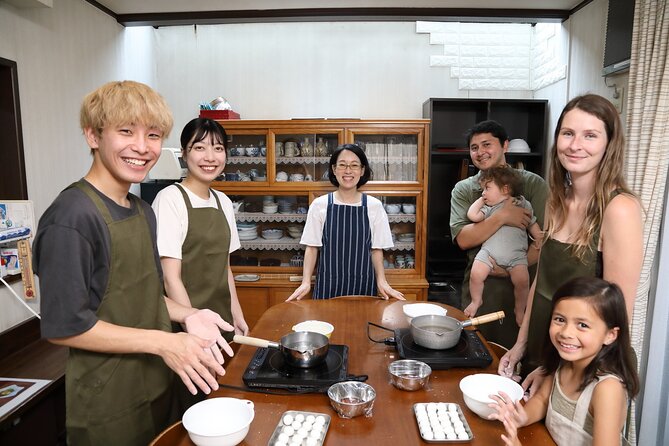
Kyoto tastes better from a local kitchen. This four-hour experience brings you into a traditional Japanese home near Fushimi Inari, where you learn about dashi, prepare roughly five dishes, and eat what you cook in a tatami room overlooking a garden. I especially like the small maximum of six people and the 30-minute supermarket visit, which turns a cooking lesson into useful everyday cultural guidance.
I also like that the class is practical rather than showy. You receive recipes to use at home, and instructor Miho explains ingredients in clear English, including the items that can be confusing in a Japanese grocery store. The main consideration is the price, $118.92 per person, which is a serious spend for lunch, and drinks are not included.
In This Review
- Key points at a glance
- Arriving near Fushimi Inari at 9:30
- Entering a traditional Japanese house
- Learning why dashi matters
- Preparing about five dishes by hand
- Sitting down to a home-cooked lunch
- The 30-minute supermarket walk
- What $118.92 buys you
- Timing, language, and practical concerns
- Who should book this Kyoto class?
- Should you book the Fushimi Inari cooking class?
- FAQ
- Where does the Kyoto cooking class meet?
- What time does the experience start?
- How long does the experience last?
- How many people can join the class?
- Is the class taught in English?
- What food is included?
- Is the supermarket visit included?
- Are drinks and hotel transfers included?
Key points at a glance
- A traditional Kyoto home near Fushimi Inari: Cook in a Japanese house with a tatami room, tokonoma display area, and garden view.
- Dashi comes first: Learn about the Japanese soup stocks that form the base of much of the country’s cooking.
- About five hands-on dishes: Possible dishes include miso soup, sushi, spinach salad, tempura, matcha preparations, and mochi.
- Only six people maximum: The small group leaves more room for questions and personal instruction.
- A supermarket lesson after lunch: Spend about 30 minutes identifying the ingredients used in class and learning what to buy.
- Useful for English speakers: The class is conducted in English, and recipes are provided for cooking at home.
Arriving near Fushimi Inari at 9:30
The class begins at 9:30 a.m. at 38-4 Fukakusa Watamoricho in Fushimi Ward. The meeting point is near public transportation and close to Fushimi Inari Shrine, making this a sensible morning activity if you are already planning to visit the shrine.
The location matters. Fushimi Inari is one of Kyoto’s busiest sights, especially around the famous orange torii gates. A cooking class in a quiet residential setting gives you a different view of the area. Instead of spending the whole morning moving through a major attraction, you get time inside a local home and see how food fits into daily life.
You should allow enough time to find the address without rushing. The experience ends back at the same meeting point, so you will not need to arrange a separate ride from the supermarket. The ticket is mobile, and confirmation is provided when you book.
More Cooking Classes in Kyoto
- Ramen Cooking Class at Ramen Factory in Kyoto
★ 5.0 · 1,937 reviews - Kyoto: Ramen Cooking Class at a Ramen Factory with Souvenir
★ 4.9 · 532 reviews - Kyoto: Ramen, Gyoza, and Onigiri Cooking Class
★ 5.0 · 445 reviews
Entering a traditional Japanese house
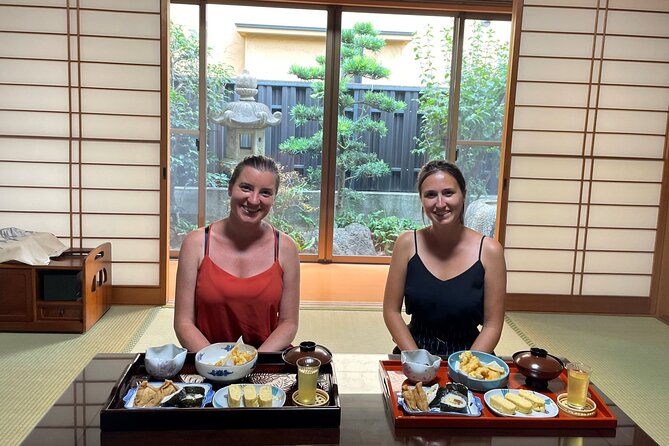
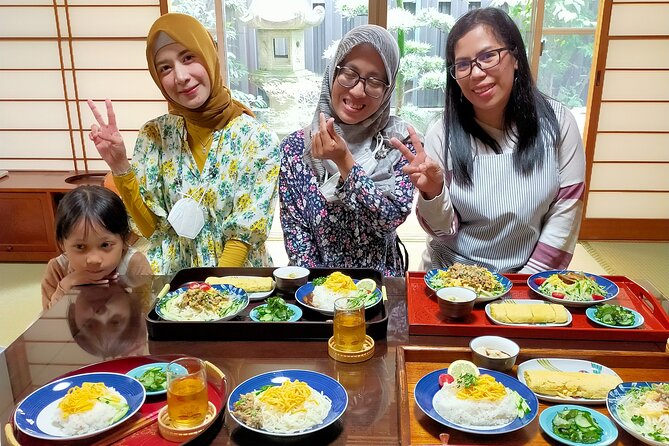
The setting is one of the strongest parts of the class. You cook in a traditional Japanese home, then eat in a room with tatami flooring, a tokonoma display area, and a view of a Japanese garden. This is more personal than a lesson in a large commercial cooking school.
The house also gives the meal a proper sense of place. You are not just following a recipe at a work station. You are sitting on the floor in a traditional room, sharing food after preparing it together, and seeing how the home’s design frames an ordinary meal.
That said, traditional rooms are not ideal for every body. The information provided does not mention chairs, special accessibility arrangements, or adaptations for reduced mobility. If sitting on tatami or working in a home kitchen could be difficult for you, ask the provider before booking.
Miho has received particularly strong praise for her warmth, clear explanations, and friendly way of answering questions. Her background as a licensed guide interpreter also helps connect the cooking to Japanese customs. Her English is described as easy to understand, which is important when you are learning small techniques rather than simply watching a demonstration.
Learning why dashi matters
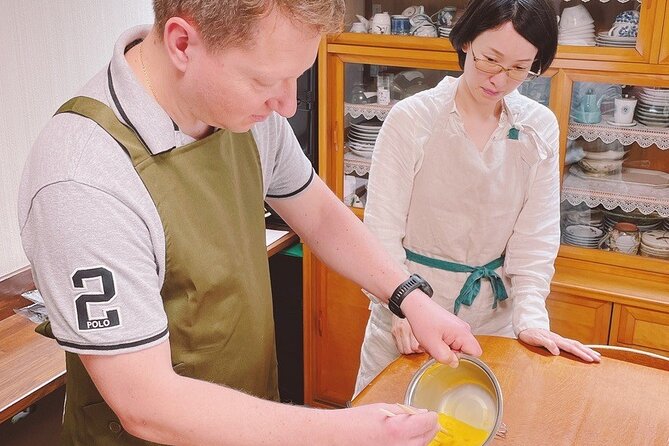
The lesson begins with dashi, the family of Japanese soup stocks used in much of the country’s cooking. This is a smart place to start because dashi explains a great deal about Japanese flavor. It is not simply another recipe. It is a base that appears in soups, sauces, and other dishes.
The class covers different kinds of dashi, giving you a chance to notice how Japanese cooking builds flavor with stock, seasonings, and careful preparation. You may already know miso soup, but learning the stock behind it gives the dish more meaning and makes it easier to recreate at home.
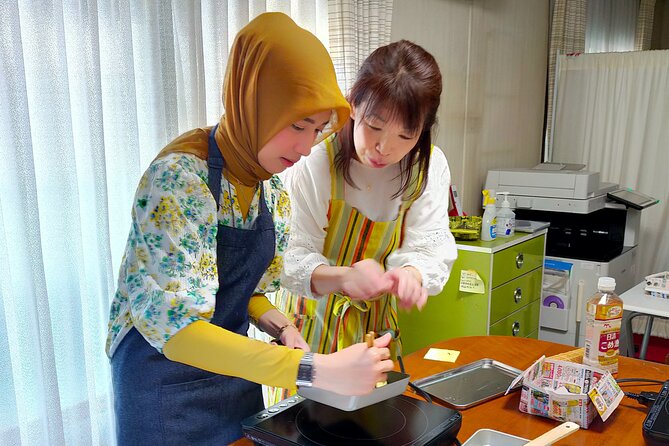
The instructors demonstrate techniques before you begin. You then prepare the dishes yourself, either alone or with a partner. That balance is useful. A full demonstration can leave you with a nice memory but little confidence, while a completely unsupported cooking session can feel awkward. Here, you watch first and then put the method into practice.
The exact menu may vary, but the class has included miso soup, sushi, spinach salad, tempura, matcha, and mochi. That is a broad introduction to Japanese home cooking. You get soup, vegetables, seafood or rice preparation, frying, tea-related elements, and dessert rather than spending four hours on one elaborate dish.
Preparing about five dishes by hand
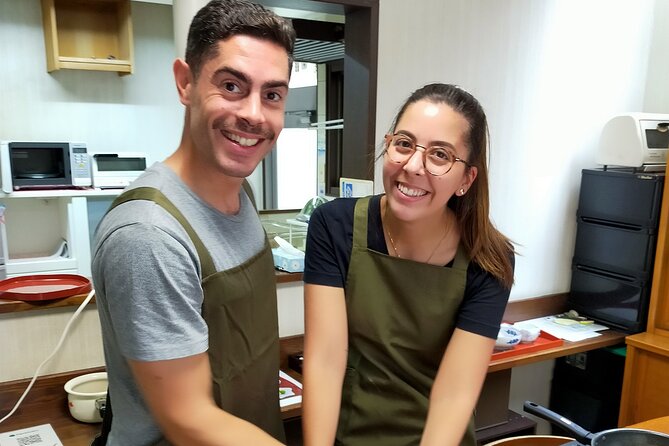
The hands-on work is where the class earns much of its value. You are not only tasting finished food. You are handling ingredients, following instructions, and learning techniques that can be repeated in your own kitchen.
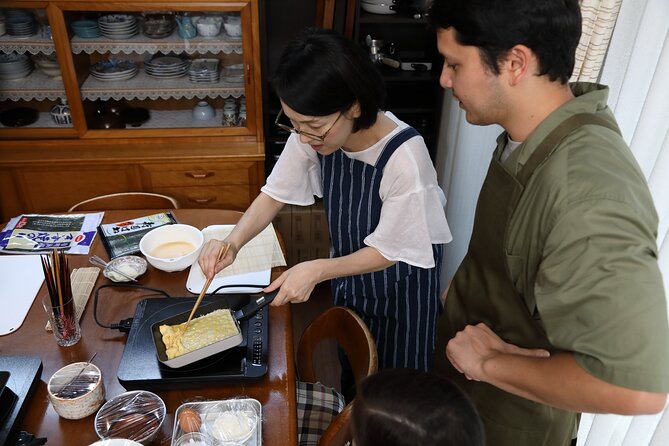
Sushi gives you a chance to work with rice and presentation. Tempura introduces frying, while spinach salad shows how a simple vegetable dish can sit comfortably beside more involved preparations. Miso soup connects back to the dashi lesson. Mochi adds a playful finish, and making it yourself can be a memorable part of the meal, especially for families.
The recipes are sent to you afterward, so the class does not end when you leave the house. That follow-up is important at this price. You can buy the needed ingredients during the supermarket visit, then try the dishes again for friends or family.
The class is suitable for people with different levels of kitchen experience. Beginners get demonstrations and guided steps. More confident cooks can ask about methods, ingredients, and regional habits. The small group helps here, since six people or fewer means you should have more access to the instructor than in a large class.
Still, you should expect a shared activity rather than a private lesson. You may prepare some dishes with a partner, and the pace will be shaped by the group. If you want complete control of every dish, this may feel less tailored than a private booking.
A completely different kind of day out in Kyoto:
- PERFECT KYOTO 1-Day Bus Tour
★ 5.0 · 13,518 reviews - Kyoto: Fushimi Inari, Kinkakuji, Bamboo Grove 1 Day Bus Tour
★ 4.8 · 4,316 reviews - Kyoto: Tea Ceremony in a Traditional Tea House in Kiyomizu
★ 4.9 · 3,519 reviews - Kyoto Geisha Walking Tour: Gion District & Hidden Gems
★ 4.7 · 3,273 reviews
Sitting down to a home-cooked lunch
After the cooking, everyone sits together and eats the meal in the traditional room. The experience is advertised as lunch, although some descriptions refer to preparing an evening meal. Either way, the important point is that the food is cooked during the class and eaten together afterward.
This shared meal gives the lesson a pleasant rhythm. You work in the kitchen, move to the tatami room, and see how the separate dishes come together. The garden view adds calm without turning the experience into a formal restaurant meal.
Lunch is included, along with ingredients, seasonings, and taxes. Drinks are not included, so plan to pay separately if you want something beyond the food provided. Gratuity is also excluded.
The food should not be judged by restaurant standards. The appeal is the process, the home setting, and the chance to understand what you are eating. You may find the dishes simple compared with a high-end Kyoto menu, but that simplicity is part of the lesson. The goal is to show you food that can be made in a home kitchen.
Vegetarian requests can be accommodated, according to the available information. You should raise dietary needs when booking rather than waiting until the morning of the class.
The 30-minute supermarket walk
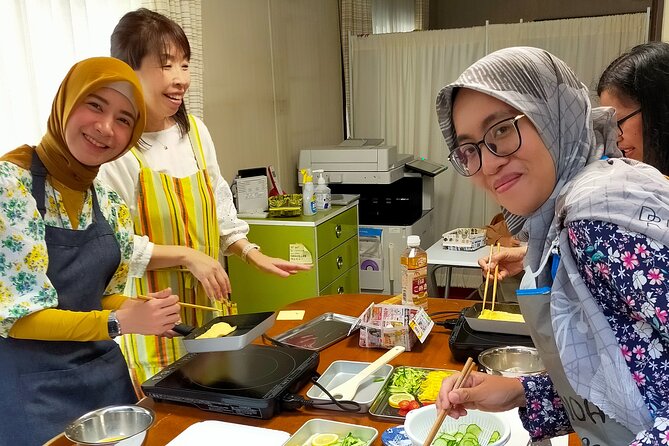
After the meal, you visit a local supermarket for about 30 minutes. This is a small part of the schedule, but it solves one of the biggest problems with cooking classes in Japan: knowing what to buy after you return home.
Japanese packaging can be hard to read, even when you recognize the food. Miho explains the ingredients used in class and helps you understand what is on the shelves. You can also buy items for your own kitchen, although purchases are not included in the tour price.
The supermarket visit adds ordinary local life to the experience. A shrine and a historic temple show you Kyoto’s public face. A grocery store shows you what people actually purchase for meals. You may see familiar ingredients in unfamiliar forms, along with products you would not know how to select without help.
Thirty minutes is enough for orientation, not a full shopping trip. If you want to browse every aisle, compare brands, or make a large food purchase, the time may feel short. Treat it as a focused lesson connected to the dishes you have just prepared.
What $118.92 buys you
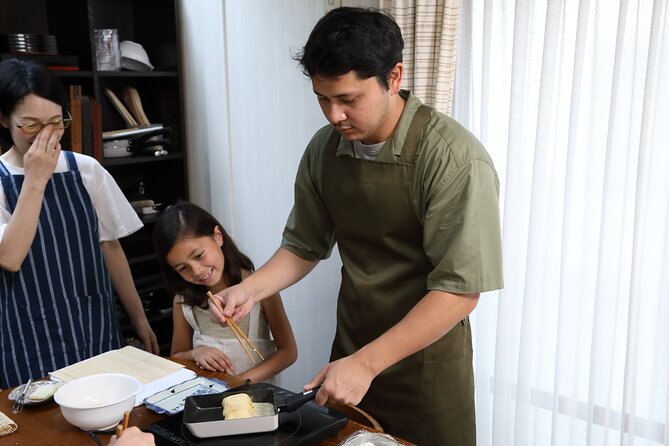
At $118.92 per person, this is not a budget lunch. You are paying for more than ingredients: a four-hour schedule, instruction in English, a traditional home setting, the prepared meal, recipes, taxes, and the supermarket visit.
The price makes more sense if you value personal instruction and cultural context. A six-person limit gives you a better chance to ask questions than a large group class. The home itself is part of what you are buying, as is the practical help with Japanese ingredients.
The value is weaker if your main goal is simply to eat inexpensive local food. Kyoto has cheaper meals, and a cooking class will always cost more than ordering the finished dishes. This experience suits you best if you want skills, conversation, and a closer look at home cooking.
Solo visitors may find the format especially useful. You share the meal and cooking with a small group, so the class creates natural conversation without requiring you to plan a social activity. Couples and families can also enjoy it, especially if they want a souvenir that is more useful than another photograph.
Timing, language, and practical concerns
The four-hour schedule is long enough to feel substantial but still leaves the rest of your day open. Since the class starts at 9:30 a.m. and ends at the original meeting point, you can combine it with other plans in the Fushimi Inari area.
The class is conducted entirely in English. The instructors are licensed guide interpreters, and Miho’s explanations are particularly clear. The available information also says the class can accommodate English and non-English speakers, but English is the teaching language, so confirm your needs if you are not comfortable following instructions in English.
All cooking ingredients and seasonings are included. You do not need to bring supplies, though you may want to carry a reusable bag or some extra spending money if you plan to shop afterward. Hotel pickup and drop-off are not provided.
The activity requires good weather. If poor weather causes a cancellation, you are offered another date or a full refund. You can cancel for a full refund up to 24 hours before the start time. After that point, refunds are not available, and late changes are not accepted.
Who should book this Kyoto class?
I would choose this class if you want to understand Japanese food beyond sushi restaurants. It gives you a taste of dashi, home cooking, ingredient shopping, and traditional domestic life in one compact morning and afternoon program.
It is a strong fit for:
- Solo visitors who want a friendly small-group activity
- Couples looking for a shared hands-on experience
- Families who enjoy cooking together
- Beginners who want clear instruction
- People staying near Fushimi Inari
- Vegetarians who arrange their needs in advance
- Anyone who wants recipes to use after returning home
You may want to skip it if you dislike group cooking, need a fully private lesson, cannot sit comfortably on tatami, or are mainly looking for the cheapest possible meal. The supermarket stop is useful but brief, and the drinks and gratuity add to the total cost.
Should you book the Fushimi Inari cooking class?
Book it if the setting and personal instruction matter as much as the food. The combination of a traditional house, garden-view meal, dashi lesson, hands-on cooking, and supermarket guidance gives you a well-rounded look at everyday Japanese cuisine.
The strongest reason to go is Miho’s teaching style. She explains techniques patiently, answers questions, and makes the class approachable. The small group and take-home recipes add practical value.
At nearly $120, this is a special-occasion activity rather than a casual lunch. But if you want to carry a piece of Kyoto home with you, not just a full stomach, it is a sensible splurge.
FAQ
Where does the Kyoto cooking class meet?
The meeting point is 38-4 Fukakusa Watamoricho, Fushimi Ward, Kyoto, 612-0022, Japan. It is near public transportation and close to Fushimi Inari Shrine.
What time does the experience start?
The class starts at 9:30 a.m.
How long does the experience last?
The full experience lasts approximately four hours.
How many people can join the class?
The class has a maximum of six participants.
Is the class taught in English?
Yes. The class is conducted entirely in English, and the instructors are licensed guide interpreters.
What food is included?
Lunch is included, along with all cooking ingredients, seasonings, fees, and taxes. The class prepares about five dishes. Examples include miso soup, sushi, spinach salad, tempura, matcha, and mochi.
Is the supermarket visit included?
Yes. A visit to a local supermarket for about 30 minutes is included. You can purchase ingredients separately if you wish.
Are drinks and hotel transfers included?
No. Drinks, gratuity, and hotel pickup and drop-off are not included.
Just added around Kyoto
- Kyoto: Private Customizable Day Trip by Car★ 5.0 · 38 reviews
- Kyoto: Gion Night Walking Tour with Geisha Insight★ 5.0 · 39 reviews
- Kyoto: Full Day Bike Tour★ 4.9 · 39 reviews
- Private Japanese Calligraphy in Kyoto – Learn Shodō with a Master★ 5.0 · 39 reviews
- Experience a tea ceremony in an authentic tearoom, in Kyoto!★ 4.5 · 41 reviews
- Kyoto: Gion Evening Walk with Hidden Gems, Geisha & Sake★ 5.0 · 41 reviews
- Kyoto Private Photo Shoot & Tour by SnapKyoto★ 5.0 · 41 reviews
- The Way of Tea: Kyoto Crafts, Hidden Temples & Wabi-Sabi Walk★ 5.0 · 41 reviews
Cooking Classes, compared.
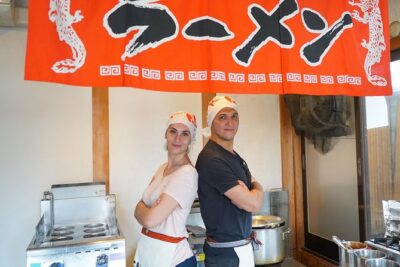
Ramen Cooking Class at Ramen Factory in Kyoto
Read our review →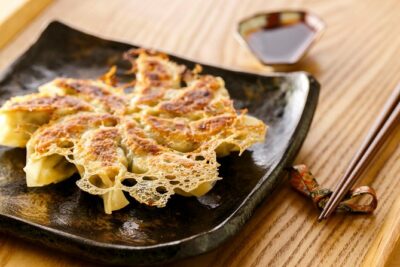
Ramen & Gyoza Cooking Class in Tokyo with Local Supermarket Visit
Read our review →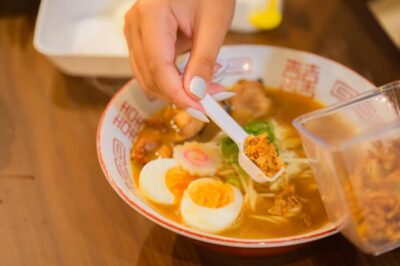
Ramen Cooking Class at a Ramen Factory with Souvenir
Read our review →
Japanese Washoku Bento Small Group Cooking Class
Read our review →

Easy Ramen Cooking Experience in Kabukicho, Shinjuku
Read our review →
Ramen and Sushi Cooking Class with Sake Pairing Set in Tokyo
Read our review →Browse the lists this tour appears in