
Reviewed · SAMURAI & NINJA EXPERIENCES
Ninja Experience (Family Friendly) at Samurai Ninja Museum KYOTO
Ninja training is more fun than a history lecture. This Kyoto activity combines shuriken throwing and blowgun practice with costume time, simple sword techniques, and a visit to the Samurai and Ninja Museum. I like that children and adults can take part together, and I like that ninja and samurai themes are both included. The main caution is value: at $56.16 per person, the hands-on session may feel short if your visit does not include the full museum portion.
The experience is aimed at families, but it is not only for young children. You put on a ninja outfit, learn about stealth and covert missions, try ninja stars and a blowgun, and watch a sword demonstration by a sword master. Children under 3 may enter the venue but cannot join the ninja activity, and all children must have an adult with them.
In This Review
- Key points to know before booking
- What happens during the Kyoto ninja session
- Shuriken and blowgun practice
- Costumes, photos, and the samurai change
- The museum visit needs careful attention
- Is two hours realistic?
- Family suitability and age limits
- The strongest part: shared family fun
- The weakest part: inconsistent value
- Meeting point, transport, and practical planning
- Who should book this experience?
- Should you book the Samurai Ninja Museum experience?
- FAQ
- Where does the ninja experience start?
- Where does the activity end?
- How long does the experience last?
- Is the Samurai and Ninja Museum included?
- What activities are included?
- Can children under 3 join?
- Must children be accompanied by an adult?
- How many people can join?
- Is transportation included?
- Can I cancel for a refund?
Key points to know before booking
- The active ninja training can be brief: Some sessions have provided about 20 to 40 minutes of practical activity, so confirm how the museum visit fits into your time.
- The museum is part of the package: The Samurai and Ninja Museum may be in a different building from the training location, so ask for clear directions before leaving the first venue.
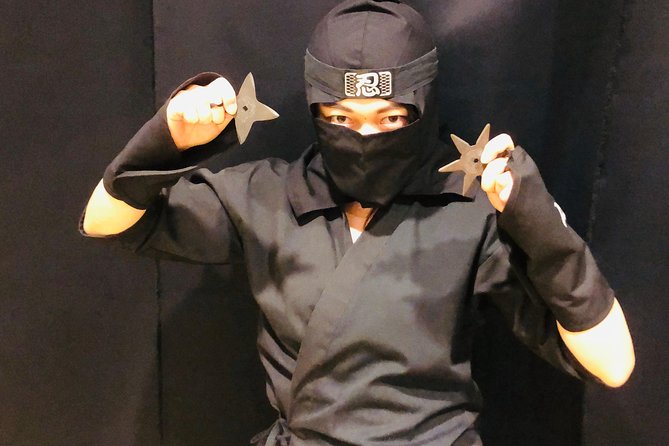
- Costumes are included: You can dress as a ninja and later dress as a samurai, making this a strong photo opportunity for families.
- The group is small: A maximum of four participants allows for a more personal session than a large classroom-style tour.
- The price pays for a full themed visit, not just target practice: The value improves if you take part in the history tour, sword demonstration, costumes, and museum visit.
- The meeting point is central Kyoto: The activity begins at 292 Higashidaimonjicho, Nakagyo Ward, and ends back at the meeting point.
What happens during the Kyoto ninja session
The advertised duration is approximately two hours. That sounds generous for a family activity, but you should understand what those two hours can include. The hands-on training, history explanation, dress-up time, sword demonstration, and museum visit are separate parts of the experience.
The first step is changing into a ninja outfit. This is not just a small accessory added for a photograph. The costume helps children understand the theme right away, and it gives adults permission to join the fun without feeling as if they are only watching from the side.
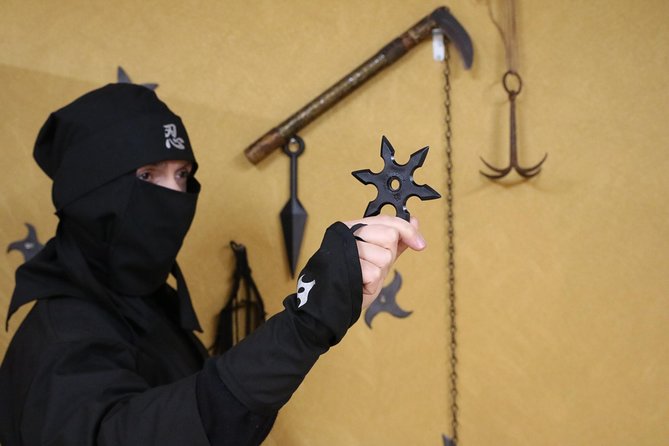
You then receive an introduction to ninja work, including stealth techniques, covert missions, and the tools associated with these missions. The historical material is one of the better reasons to book the activity. You are not simply handed plastic equipment and sent toward a target. At its best, the session explains why ninja weapons were designed for concealment and how ninja stories grew out of feudal Japan.
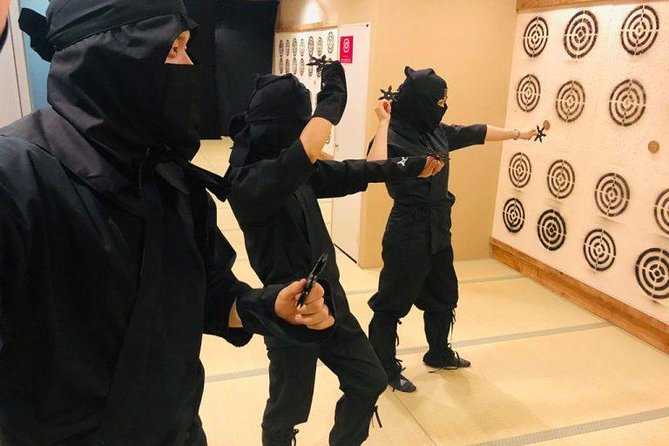
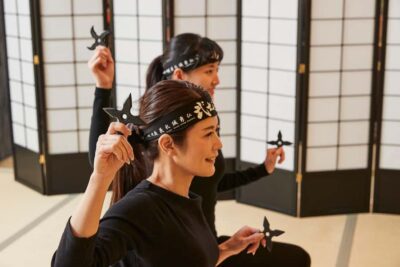
The practical section focuses on two activities: throwing shuriken, often called ninja stars, and using a ninja blowgun. These are the portions children usually anticipate most, and they also give adults an easy way to participate. The targets are designed for a supervised family activity, so you should think of this as themed practice rather than combat training.
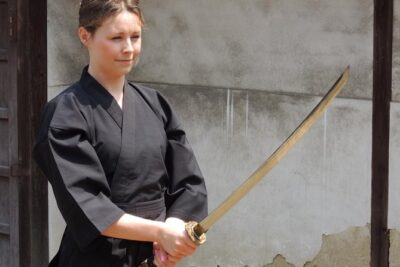
Simple sword techniques are also listed as part of the program. A sword demonstration by a sword master is included in the ticket. That distinction matters. You may watch skilled sword handling, but the activity is not presented as advanced sword instruction.
More Museum Visits in Kyoto
- Kyoto: Tea Museum Tickets and Matcha Grinding Experience
★ 4.9 · 739 reviews - Skip the lines Basic Ticket at SAMURAI NINJA MUSEUM KYOTO
★ 4.5 · 632 reviews - Kyoto : Geiko Maiko Dance of Kyoto & Visits of Gion Museum
★ 4.6 · 415 reviews
Shuriken and blowgun practice
The shuriken portion gives you a direct connection to one of the most familiar images of the ninja. You learn how to hold and throw the star-shaped weapon toward a target. It is a simple activity, but it works well for mixed ages because you can see improvement after only a few attempts.
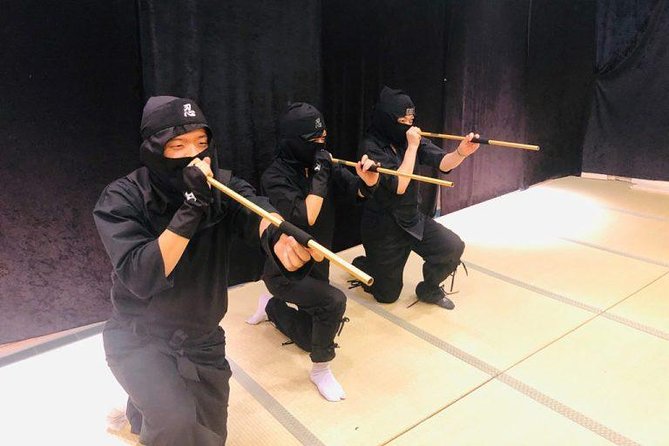
The blowgun section has the same appeal. You use a ninja blowgun to send darts toward a target, with staff supervision. Families often enjoy the contrast between the two skills. Shuriken throwing feels physical and deliberate, while the blowgun asks for careful aim and controlled breathing.
Keep your expectations in check. This is a family attraction with costume elements, not a private martial arts lesson. One disappointed participant described the activity as plastic stars and blow darts aimed at a foam wall, while another found it great fun. Both descriptions can be true. If you want polished entertainment for children, the format works. If you expect historically exact weapons training, the $56.16 price will be harder to justify.
The session can also vary in length. One account described roughly an hour of ninja activity followed by the museum. Other accounts described only 20 to 40 minutes of practical instruction. The provider has explained that the full visit can also include around 30 minutes of history and 15 minutes for dressing and photos. I would treat the two-hour duration as the total planned experience, not two hours of continuous ninja practice.
Costumes, photos, and the samurai change
The included costume rental is a real part of the appeal. You first dress as a ninja, then have the chance to dress as a samurai. That second costume is easy to overlook when reading the title, but it adds variety and gives the experience a stronger connection to the museum visit.
For families, the costume change can be as enjoyable as the weapons practice. Children get a clear role to play, and adults can join the pictures. It also helps break up the activity. Instead of spending the entire visit repeating target exercises, you move between history, dress-up, demonstrations, and hands-on practice.
The drawback is that costume time takes part of the schedule. If you are expecting every minute to be filled with instruction, the changing and photo period may seem like lost time. If you see it as part of a family day out, it is a useful and entertaining pause.
The experience is also suitable for adults interested in feudal Japan, especially if you enjoy the contrast between the hidden work associated with ninja and the more public warrior image of the samurai. The simple sword techniques and sword demonstration add context, though the activity should not be treated as a serious samurai combat course.
The museum visit needs careful attention
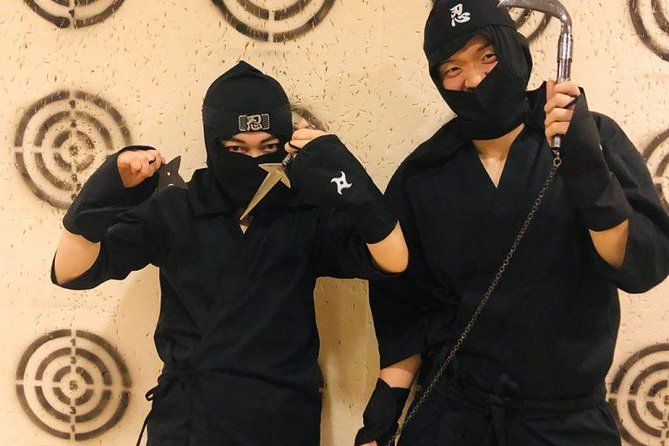
A visit to the Samurai and Ninja Museum is included. This is important because the museum supplies much of the historical value behind the costume and target exercises.
The museum may be located in a different building from the ninja training session. That arrangement has caused confusion, particularly when participants were not told clearly that the museum was included or did not know where to go next. Before you leave the activity area, ask three direct questions:
- Is the museum visit included in your ticket?
- Where exactly is the museum?
- Should you go there immediately after the training?
Do not assume that the session is finished when the practical portion ends. One family thought the experience was over until staff redirected them. Clear instructions will help you get the full value from the booking.
The museum portion is especially useful if you want more than a quick costume photo. It gives you a chance to connect the tools and techniques from the training with samurai and ninja history. The information available does not specify the museum’s full exhibit list, so I would not book this expecting a particular collection or display. Book it for the combined theme and the chance to add historical context to the activity.
More Samurai & Ninja Experiences in Kyoto
- Kyoto Samurai Experience
★ 5.0 · 1,294 reviews - Kyoto: Kendo and Samurai Experience with Uniform and Gear
★ 4.9 · 815 reviews - Kyoto: Samurai Sword Class by Experts in Traditional Arts
★ 4.9 · 657 reviews - Ninja 1-hour Hands-on Lesson by Japanese master in Kyoto -Entry
★ 5.0 · 489 reviews
Is two hours realistic?
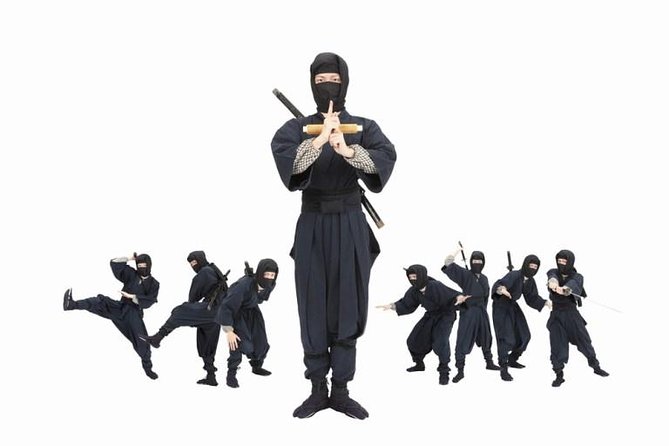
The listed duration is approximately two hours, but the actual experience appears to depend on how the elements are scheduled. Some accounts describe an hour of ninja training followed by the museum. Others describe a shorter practical session, with history, dressing, photos, and the museum making up the rest.
That difference is the biggest planning issue. If you are arranging another Kyoto activity immediately afterward, leave extra time. The meeting point is also the end point, but the museum’s separate location can affect how the overall visit feels.
A small group limit of four is helpful. You are less likely to be lost in a crowd, and the instructor can keep an eye on each person’s turn. It also means this may feel more like a private family appointment than a large tour. On the other hand, the group limit does not guarantee a longer lesson. Small size improves attention, not necessarily the amount of content.
One useful detail from the experience is that a late arrival of about 20 minutes was still accommodated on one occasion. I would not plan to arrive late, but it suggests that staff may show some flexibility. The safe approach is to reach 292 Higashidaimonjicho early, especially since communication about meeting arrangements has not always been perfect.
Family suitability and age limits
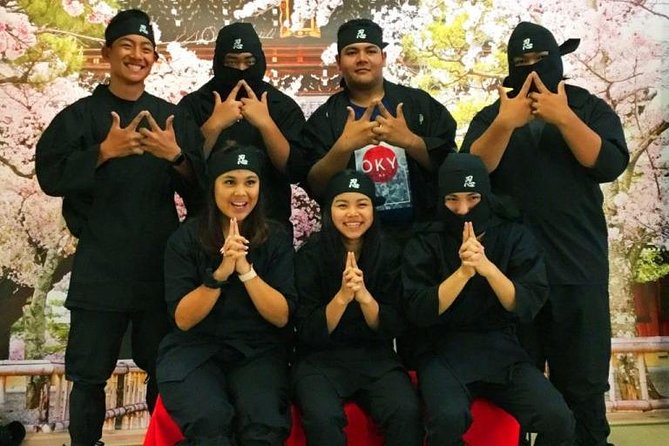
This is a good match for families with school-age children who enjoy dressing up, trying simple skills, and learning through action. It also works for adults who want a light, playful introduction to ninja and samurai culture.
Children under 3 cannot join the ninja experience. They may enter the venue, but they cannot participate in the training. Children must be accompanied by an adult, so a parent or guardian needs to remain involved rather than dropping a child off.
The activity may suit children who are not old enough for a full historical tour because it gives them something physical to do. Still, very young children may have limited interest in the history portions, and the minimum age rule matters if you are planning a mixed-age family outing.
The activity is also friendly to adults without prior martial arts experience. No advanced skill is required in the supplied information, and the listed activities are simple sword techniques, shuriken, and blowgun use. You should expect instruction at an introductory level.
The strongest part: shared family fun
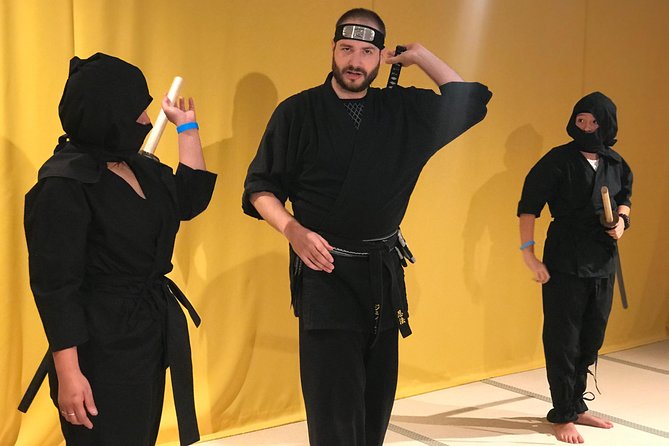
The most consistent strength is the shared experience. Adults and children can throw stars, use the blowgun, dress in costume, and learn about the same subject together. That is more useful than an attraction where parents simply stand at the edge taking pictures.
The instructor has also been praised for being pleasant and accommodating. One named guide, Kiryu, was described as good fun during the visit. The tone appears to be relaxed rather than severe, which suits a family attraction.
The sword demonstration adds a welcome change of pace. Watching a sword master work gives the program a more serious moment and helps separate the experience from pure cosplay. If you are interested in feudal Japan, the museum and demonstration may be as valuable as the target activities.
The weakest part: inconsistent value
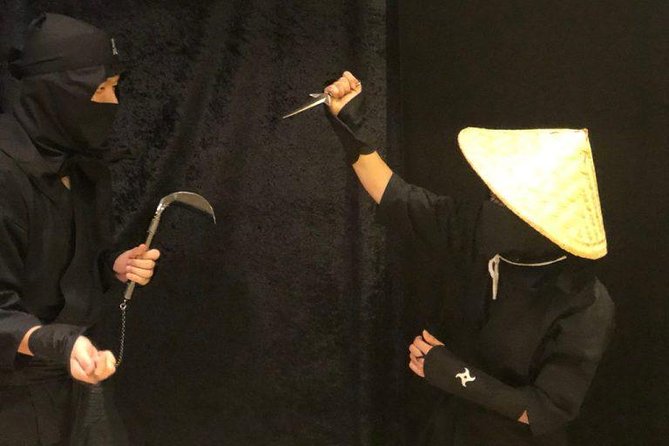
At $56.16 per person, this is not a cheap quick stop. For a family of four, the total reaches more than $224 before transportation. The price can make sense when you use the full package: ninja training, history, costumes, sword demonstration, and museum.
It is poor value if you receive only a short lesson in shuriken and blowgun use. A session lasting about 20 or 25 minutes will feel expensive, especially if the museum visit is missed because of unclear directions. One account described a 75-minute experience that lasted about 40 minutes, while another described the full combination as a good length. That wide range is worth taking seriously.
Busy periods may affect the schedule. The provider has pointed to the sakura season as an exceptionally busy time, when timing and crowd pressure can change. If you visit during a very busy period, confirm the planned sequence at the start rather than assuming the schedule will unfold exactly as expected.
Meeting point, transport, and practical planning
The activity starts and ends at 292 Higashidaimonjicho, Nakagyo Ward, Kyoto, 604-8043, Japan. It is near public transportation, but transportation to and from the attraction is not included.
You receive booking confirmation at the time of reservation. The group maximum is four people, which is useful if you want a small family session. If your party is larger, check how the booking will be arranged before paying.
There is also an elevator outage listed for January 24, 2026 through February 19, 2026. If anyone in your group depends on an elevator, confirm the current access arrangements before visiting during those dates.
Free cancellation is available if you cancel at least 24 hours before the local start time. Changes or cancellations made inside that 24-hour window are not accepted and are not refunded.
Who should book this experience?
I would choose this activity for a family that wants a playful Kyoto experience with a cultural theme. It is especially suitable if your children enjoy costumes, targets, and short bursts of instruction more than long museum explanations.
I would also recommend it to adults who want an easy introduction to ninja and samurai traditions without committing to a full martial arts class. The sword demonstration, historical explanation, and museum visit provide more substance than the costume rental alone.
I would hesitate if your main goal is serious martial arts training, a long ninja lesson, or a museum visit with no uncertainty about timing. The practical exercises are introductory, and the length can feel short. I would also hesitate if $56.16 per person is near the top of your Kyoto activity budget.
Should you book the Samurai Ninja Museum experience?
Book it if you want family participation, costume photos, shuriken throwing, and blowgun practice in one compact activity. The best version includes the history section, sword demonstration, samurai costume, and museum visit, giving you a light but enjoyable look at two famous parts of Japan’s past.
Before you go, confirm the museum location and the full schedule. That single step can prevent the most serious problem reported with this activity. If staff clearly direct you to the separate museum and you receive the complete program, the experience should be fun and worthwhile for the right family. If you want an authentic training session in the strict sense, choose a longer specialist class instead.
FAQ
Where does the ninja experience start?
It starts at 292 Higashidaimonjicho, Nakagyo Ward, Kyoto, 604-8043, Japan.
Where does the activity end?
The activity ends back at the meeting point.
How long does the experience last?
The listed duration is approximately two hours. The practical ninja portion may be shorter because the visit can also include history, costume changes, photographs, a sword demonstration, and the museum visit.
Is the Samurai and Ninja Museum included?
Yes, a visit to the Samurai and Ninja Museum is included. The museum may be in a different building from the ninja training, so ask for directions before leaving the first location.
What activities are included?
You can wear a ninja outfit, learn ninja stealth techniques, throw ninja stars, use a ninja blowgun, learn simple sword techniques, watch a sword demonstration, and dress as a samurai.
Can children under 3 join?
No. Children under 3 may enter the venue but cannot participate in the ninja experience.
Must children be accompanied by an adult?
Yes. Children must be accompanied by an adult.
How many people can join?
The activity has a maximum of four participants.
Is transportation included?
No. Transportation to and from the attractions is not included.
Can I cancel for a refund?
Yes, you can cancel for a full refund at least 24 hours before the experience start time. Cancellations or changes made less than 24 hours before the start time are not accepted.
Just added around Kyoto
- Kyoto: Private Customizable Day Trip by Car★ 5.0 · 38 reviews
- Kyoto: Gion Night Walking Tour with Geisha Insight★ 5.0 · 39 reviews
- Kyoto: Full Day Bike Tour★ 4.9 · 39 reviews
- Private Japanese Calligraphy in Kyoto – Learn Shodō with a Master★ 5.0 · 39 reviews
- Kyoto: Gion Evening Walk with Hidden Gems, Geisha & Sake★ 5.0 · 41 reviews
- Experience a tea ceremony in an authentic tearoom, in Kyoto!★ 4.5 · 41 reviews
- Kyoto Private Photo Shoot & Tour by SnapKyoto★ 5.0 · 41 reviews
- The Way of Tea: Kyoto Crafts, Hidden Temples & Wabi-Sabi Walk★ 5.0 · 41 reviews
Samurai & Ninja Experiences, compared.
Samurai Ninja Museum Guided tour and Experience
Read our review →
Kendo and Samurai Experience with Uniform and Gear
Read our review →
Samurai Sword Class by Experts in Traditional Arts
Read our review →
Skip the lines Basic Ticket at SAMURAI NINJA MUSEUM KYOTO
Read our review →
Samurai Sword & Archery Class from Samurai Descendant
Read our review →
Browse the lists this tour appears in