
Reviewed · RAMEN & NOODLE TOURS
Ramen Gyoza Onigiri Japanese Cooking Class in Kyoto
Three Japanese comfort foods, one compact Kyoto class. This 90-minute lesson packs a lot into a short time, teaching you how to prepare ramen broth, gyoza, and onigiri with friendly English-speaking instructors. I especially like the practical focus on broth, since packaged noodles are easy to find but a good soup base is harder to recreate at home.
I also like that you eat everything you make, turning the lesson into a generous lunch rather than a quick demonstration. The small group limit of eight means you should have useful access to the instructors, including Chef Nori and team members such as Minori and Ryho. The main drawback is the limited diet policy: the vegetarian menu replaces pork with tofu, but vegan, pescatarian, gluten-free, halal, kosher, and other special diets cannot be accommodated.
In This Review
- Key Points to Know Before Booking
- What This Kyoto Cooking Class Actually Teaches
- Beginning With Ramen Broth
- Folding Gyoza by Hand
- Shaping Onigiri, Japan’s Everyday Rice Balls
- A Full Meal at the End
- The Instructors and Small Group Feel
- Is $92.47 Good Value in Kyoto?
- Location, Timing, and What to Expect
- Dietary Rules You Need to Take Seriously
- Who Will Enjoy This Class Most?
- Booking, Cancellation, and Final Advice
- Should You Book the Ramen, Gyoza, and Onigiri Class?
- FAQ
- How long does the cooking class last?
- What dishes will I make?
- Do I eat the food I prepare?
- Is a vegetarian menu available?
- Can vegan or pescatarian participants join?
- Are gluten-free, halal, or kosher options available?
- Are children allowed to attend?
- Where does the class meet?
Key Points to Know Before Booking
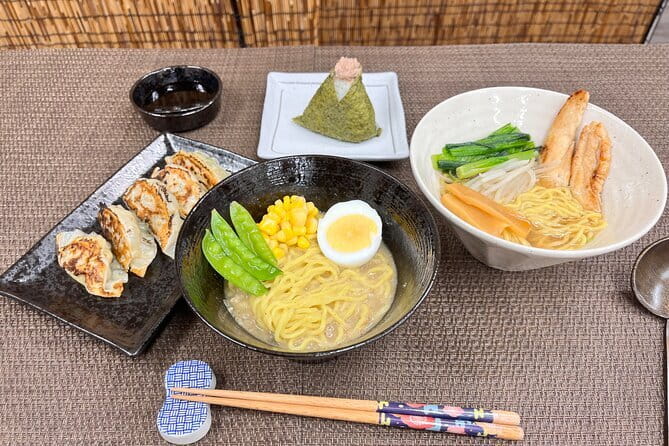
- You make three Japanese dishes in 90 minutes: Ramen, gyoza, and onigiri give you a broad introduction rather than one narrow recipe.
- The class focuses on ramen broth: You do not make noodles, but learn how to build soup with ingredients and seasonings available at home.
- You eat a full meal afterward: The food you prepare is included, so arrive hungry.
- The group is capped at eight people: This keeps the class personal and leaves more room for hands-on instruction.
- The vegetarian menu is limited: Pork is replaced with tofu, while the other ingredients stay the same.
- The Kyoto meeting point is near public transportation: The class begins and ends at Manryo Japanese Cooking Class, at 841 Life Building B1 in Sakyo Ward.
What This Kyoto Cooking Class Actually Teaches
This is not a noodle-making workshop. That distinction matters. The class uses ramen noodles that you can usually buy near home, then puts its teaching time into the broth, toppings, seasoning, and assembly.
I think that is a smart choice for a short class. Homemade noodles require time, equipment, and technique, while broth is the part many home cooks struggle to reproduce. The instructors show you how to combine accessible ingredients and seasonings into a Japanese-style soup that you can make again after your holiday.
The format also includes gyoza and onigiri. Gyoza gives you a hands-on wrapping task, while onigiri teaches the shaping of Japanese rice balls. You leave with three useful recipes instead of one complicated dish that may be harder to repeat.
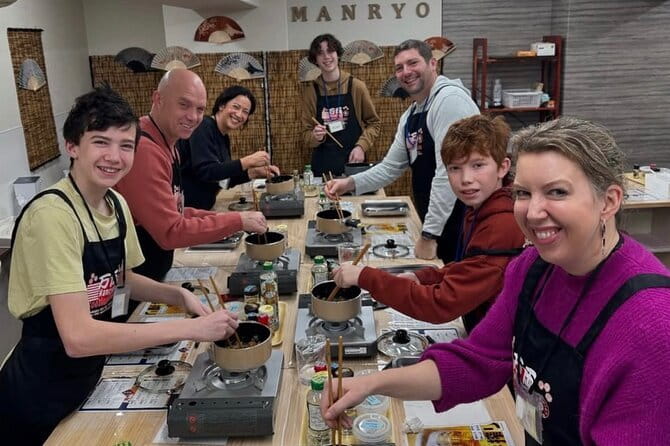
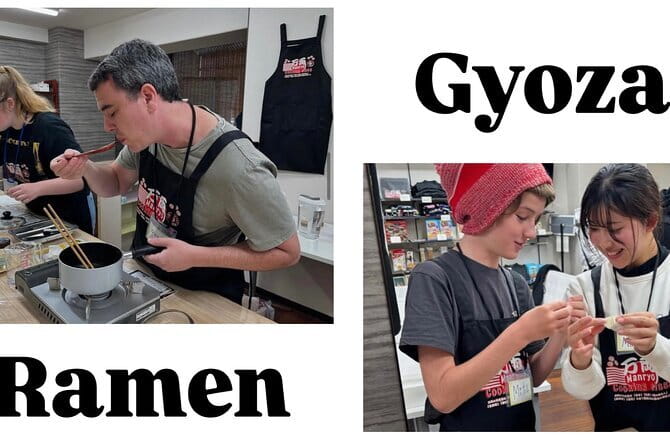
Several class participants describe making two kinds of ramen, along with pork gyoza and onigiri. The exact presentation may depend on the class setup, but you should expect a fast-moving session with several preparations happening in sequence.
More Cooking Classes in Kyoto
- Ramen Cooking Class at Ramen Factory in Kyoto
★ 5.0 · 1,937 reviews - Kyoto: Ramen Cooking Class at a Ramen Factory with Souvenir
★ 4.9 · 532 reviews - Kyoto: Ramen, Gyoza, and Onigiri Cooking Class
★ 5.0 · 445 reviews
Beginning With Ramen Broth
The ramen section is the heart of the lesson. You learn how to prepare the soup rather than simply heating a packaged base, and the instructors explain the ingredients and seasonings in a way designed for home cooking.
That practical angle makes this more useful than a class that only produces a pretty dish in a professional kitchen. You can find ramen noodles in many places, but a satisfying broth takes more understanding. The goal here is to give you a method you can repeat for family or friends.
The class moves quickly, so you need to stay attentive. In 90 minutes, the instructors must explain several dishes, show the steps, and keep the meal on schedule. The pace appears carefully organized, with Nori and his team guiding each stage in a set order.
You should not expect a slow culinary lecture or a long lesson on regional ramen styles. There is a short history of ramen, according to the class experience described by one returning participant, but the emphasis is firmly on cooking and eating.
Folding Gyoza by Hand
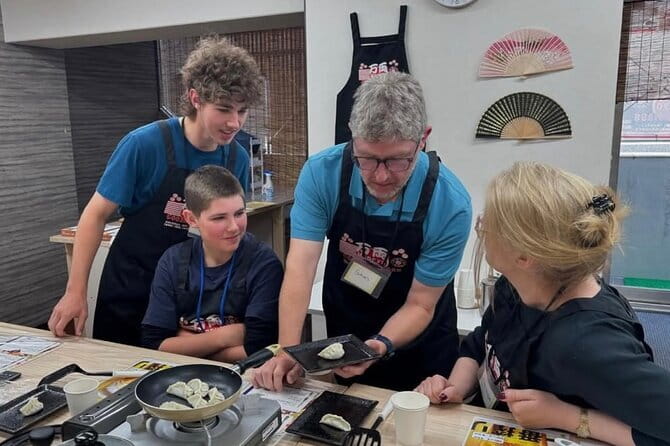
Gyoza brings the most obvious hands-on fun. You prepare the filling, place it into wrappers, and learn the folding technique. The shape may look simple when it arrives on a restaurant plate, but getting the pleats right takes a little practice.
That is exactly why this part works well in a class. You get immediate guidance instead of trying to copy a recipe photograph at home. The instructors can correct your handling and help you turn the filling into a properly sealed dumpling.
The regular menu uses pork gyoza. The vegetarian menu substitutes tofu for pork, but the class does not remove every animal product or alter the rest of the ingredients. If you have a dietary restriction beyond that specific vegetarian option, this is not a flexible cooking experience.
The food is not just for display. You eat the gyoza as part of the meal at the end, which gives you a useful sense of how the finished texture and seasoning should turn out.
Shaping Onigiri, Japan’s Everyday Rice Balls
Onigiri is the simplest-looking dish of the three, but it is an excellent addition. You learn how to shape Japanese rice balls, a skill that can be useful for packed lunches, quick snacks, or an easy meal at home.
The value here is less about restaurant technique and more about everyday Japanese food. Ramen can feel like a project. Onigiri is something you may actually make on a busy weekday.
The class teaches the wrapping and shaping technique alongside the other dishes. Since you are already working with several preparations, the onigiri portion helps round out the meal without requiring a separate long cooking process.
I like this mix of dishes because each teaches a different skill: broth building, dumpling folding, and rice shaping. You get variety without spending half a day in a kitchen.
More Ramen Tours in Kyoto
- Kyoto Ramen and Gyoza Cooking Class with Professional Chefs
★ 5.0 · 282 reviews - Home style Ramen and Homemade Gyoza in Kyoto
★ 5.0 · 152 reviews - Kyoto Ramen & Gyoza Cooking Class with Professional Chefs
★ 4.8 · 100 reviews - Kyoto Michelin Ramen Workshop or Painting Ramen Essentials
★ 4.9 · 100 reviews
A Full Meal at the End
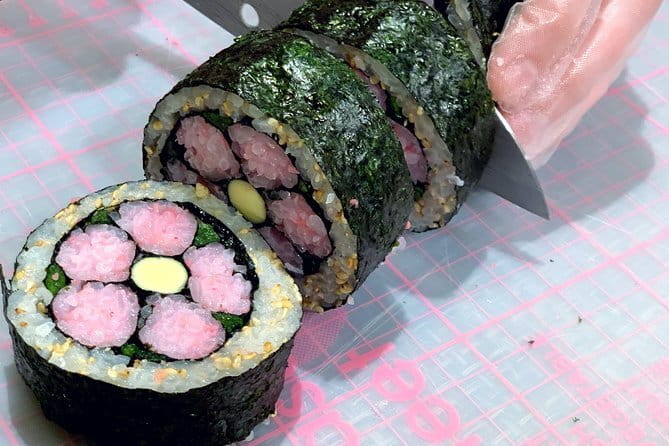
You eat the food you make after cooking. That includes the ramen, gyoza, and onigiri prepared during the lesson, and the quantity appears generous enough that several people specifically advise arriving hungry.
This is important when judging the $92.47 price. You are not paying only for a demonstration or a small tasting. The fee includes instruction, ingredients, the cooking activity, and lunch. For someone who wants a meal plus a practical Kyoto experience, that gives the class stronger value than a short food sample.
The meal also serves as the final test of the class. You can compare the broth, dumpling filling, and rice balls while the techniques are still fresh. If a seasoning or texture surprises you, you can ask about it right away.
The food-focused format suits people who prefer active sightseeing. You do not simply watch a chef work. You take part, then sit down to enjoy the result.
The Instructors and Small Group Feel
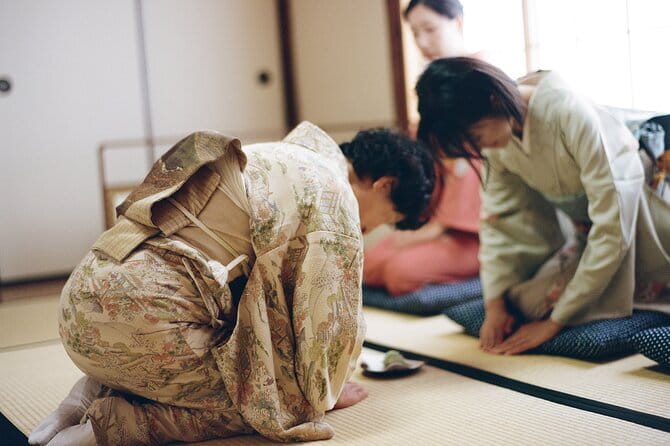
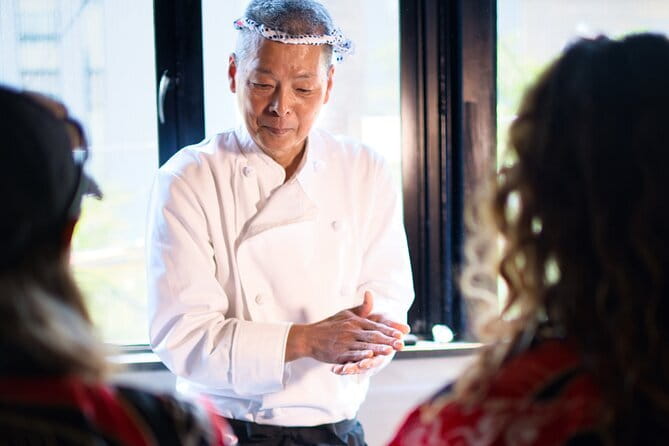
The class uses friendly English-speaking instructors. Chef Nori receives repeated praise for clear instruction, patience, humor, and a warm manner. Minori, Ryho, and the rest of the team also help guide the cooking and keep the atmosphere relaxed.
That team approach matters because the class covers a lot. One person demonstrating every step to a large room could leave you struggling with the gyoza or broth. The maximum group size of eight gives the instructors a better chance to check your work.
The teaching style appears light and social without losing structure. Several descriptions point to clear explanations, good English, and a well-paced process. One person even described the class as choreographed, which is a useful way to think about the format: ingredients and tasks are organized to keep the meal moving.
I would choose this class for people who enjoy a little humor with their instruction. It does not sound formal or stiff. Families and first-time cooks should find the guided approach approachable, though anyone under 13 cannot join.
Is $92.47 Good Value in Kyoto?
At $92.47 per person, this is not a bargain lunch. You can eat ramen, gyoza, or onigiri for less at many Kyoto restaurants. The better comparison is a meal combined with a small-group cooking lesson, recipes, ingredients, and direct instruction.
On that basis, the price is easier to justify. You learn dishes that can be made at home, eat the finished food, and get a social activity that takes only about an hour and a half. The class also makes efficient use of your sightseeing day.
The value is strongest if you want to learn. If you only want a cheap bowl of ramen, book a restaurant instead. If you want to understand how the broth comes together, practice dumpling wrapping, and leave with recipes, the fee buys more than lunch.
The short duration can also be a financial advantage in another way. You do not lose an entire morning or afternoon, so you can fit the class around temples, museums, shopping, or other Kyoto plans.
Location, Timing, and What to Expect
The meeting point is Manryo Japanese Cooking Class, Japan, 606-8366 Kyoto, Sakyo Ward, Chōshōji Monzenchō, 841 Life Building B1. The location is near public transportation, and the activity ends back at the same meeting point.
Because the venue is in a building basement, read the post-booking email carefully and allow time to find the correct entrance. The supplied instructions specifically ask you to pay close attention to that email, so do not rely only on the address saved in your phone.
The experience lasts approximately 1 hour and 30 minutes. A mobile ticket is provided, and booking confirmation arrives at the time of booking. Private transportation is not included, so you must make your own way to the class.
The compact schedule is useful, but it leaves little room for lateness. Arrive ready to start on time, especially since the group may be working through several recipes in one sitting.
Dietary Rules You Need to Take Seriously
There are only two menu choices: Regular or Vegetarian. The vegetarian version replaces pork with tofu, but the other ingredients remain the same.
This is not a class for vegan, pescatarian, gluten-free, halal, kosher, or other special diets. Do not assume the team can make last-minute changes. If you have allergies or restrictions outside the listed vegetarian arrangement, choose another cooking experience.
Children under 13 are also not accepted. Families with older children may find the hands-on approach enjoyable, and one family described the class as a favorite Kyoto activity for their daughter. Still, check every participant’s age before booking.
These restrictions are not minor details. The class includes shared instruction and a set menu, so the provider needs to know that you fit one of the two available options.
Who Will Enjoy This Class Most?
I would recommend it to you if you like food, want a short activity, and prefer learning by doing. It works especially well for first-time visitors who want a taste of home-style Japanese cooking without committing to a full-day course.
It also suits families with children aged 13 or older, couples, and small groups of friends. The varied menu keeps the session lively, and everyone has several tasks to try.
You may also like it if you plan to cook Japanese food at home. The broth lesson is the strongest reason to book, since noodles are easy to purchase but soup bases often require more know-how. The gyoza and onigiri techniques are also simple enough to practice again.
I would skip it if you want a quiet, slow-paced class, need strict dietary adjustments, or mainly want to make noodles from scratch. This experience does not include noodle production, and the schedule is designed for variety and efficiency.
Booking, Cancellation, and Final Advice
You can cancel for a full refund if you do so at least 24 hours before the local start time. Cancellations or changes made inside that window are not accepted for a refund, so check your Kyoto schedule before committing.
The class has a 5.0 rating from 44 reviews and a 100 percent recommendation rate. The most consistent praise centers on the friendly team, easy-to-follow instruction, generous amount of food, and the chance to recreate the recipes at home.
Should You Book the Ramen, Gyoza, and Onigiri Class?
Book it if you want three dishes, a full lunch, and useful home-cooking skills in one short Kyoto activity. The broth lesson, small group size, and warm teaching team make the $92.47 fee reasonable for people who value participation over a simple restaurant meal.
Before booking, confirm that everyone is at least 13 and that your diet fits the regular or limited vegetarian menu. Arrive hungry, read the confirmation email carefully, and allow enough time to find the basement meeting point.
If those conditions work for you, this is a practical and cheerful addition to a Kyoto itinerary. You leave with a full stomach, a few new techniques, and recipes that can bring a little Japanese cooking into your own kitchen.
FAQ
How long does the cooking class last?
The class lasts approximately 1 hour and 30 minutes.
What dishes will I make?
You will learn to make ramen, gyoza, and onigiri. The class focuses on preparing ramen broth rather than making noodles.
Do I eat the food I prepare?
Yes. Lunch after cooking is included, and you eat the dishes made during the class.
Is a vegetarian menu available?
Yes. The vegetarian menu replaces pork with tofu. Other ingredients remain the same.
Can vegan or pescatarian participants join?
No. The class cannot accommodate vegan or pescatarian diets.
Are gluten-free, halal, or kosher options available?
No. Gluten-free, halal, kosher, and other special dietary options are not available.
Are children allowed to attend?
Participants must be at least 13 years old. Children under 13 cannot join the class.
Where does the class meet?
The class meets at Manryo Japanese Cooking Class, Japan, 606-8366 Kyoto, Sakyo Ward, Chōshōji Monzenchō, 841 Life Building B1. The activity ends at the same meeting point.
Just added around Kyoto
- Kyoto: Gion Night Walking Tour with Geisha Insight★ 5.0 · 39 reviews
- Kyoto: Private Customizable Day Trip by Car★ 5.0 · 38 reviews
- Kyoto: Full Day Bike Tour★ 4.9 · 39 reviews
- Private Japanese Calligraphy in Kyoto – Learn Shodō with a Master★ 5.0 · 39 reviews
- Kyoto: Gion Evening Walk with Hidden Gems, Geisha & Sake★ 5.0 · 41 reviews
- Experience a tea ceremony in an authentic tearoom, in Kyoto!★ 4.5 · 41 reviews
- Kyoto Private Photo Shoot & Tour by SnapKyoto★ 5.0 · 41 reviews
- The Way of Tea: Kyoto Crafts, Hidden Temples & Wabi-Sabi Walk★ 5.0 · 41 reviews
Ramen & Noodle Tours, compared.
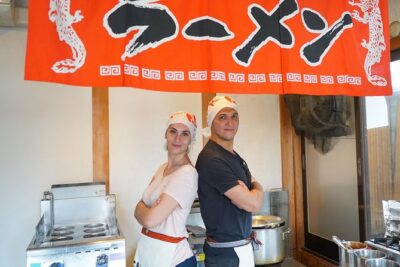
Ramen Cooking Class at Ramen Factory in Kyoto
Read our review →
Eat and Drink Like a Local: Tokyo Ueno Food Tour-Taverns&Ramen
Read our review →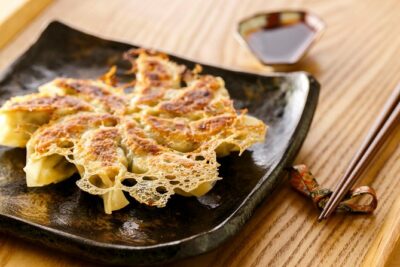
Ramen & Gyoza Cooking Class in Tokyo with Local Supermarket Visit
Read our review →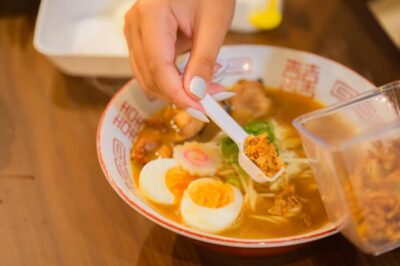
Ramen Cooking Class at a Ramen Factory with Souvenir
Read our review →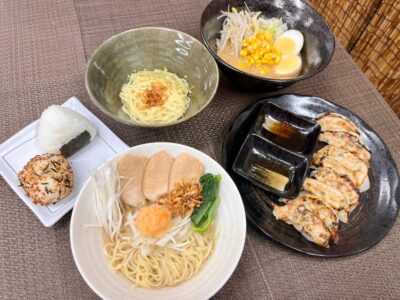
Five Must-See Highlights Walking Tour & Ramen Lunch
Read our review →
Browse the lists this tour appears in