
Reviewed · SAMURAI & NINJA EXPERIENCES
Samurai School in Kyoto: Samurai for a Day
Trade a museum visit for a sword. At Kembu Kyoto Dojo, you learn how to bow, draw a katana, strike, and move like a samurai under an English-speaking instructor. I like the practical format and the small groups, which make this more than a costume photo stop. The main caution is timing: the show and photo session can sometimes take longer or feel more rushed than expected.
I also like that the lesson explains kenbu, a stylized samurai performing art, rather than pretending you are receiving modern combat training. Dressing in a samurai costume, receiving a certificate and tenugui towel, and watching skilled performers give the visit a pleasant sense of occasion. If you want serious martial arts instruction, though, the short session is only an introduction.
In This Review
- Key points before you book
- What the Kyoto samurai class really teaches
- Finding Kembu Kyoto Dojo in Higashiyama
- Suiting up as a samurai
- Learning the bow and the katana
- The short session and the longer upgrade
- The show puts the lesson into context
- Photos, certificate, and the tenugui towel
- Is $66.32 good value?
- Who will enjoy this most?
- Useful planning details for your Kyoto day
- Should you book Samurai for a Day?
- FAQ
- How long does the Samurai for a Day activity last?
- Where does the class meet?
- Is the activity taught in English?
- What will I learn during the lesson?
- What does the longer practice option include?
- Is a costume included?
- Are photos included?
- Can children take part?
- What should I wear?
- Can I cancel for a refund?
Key points before you book
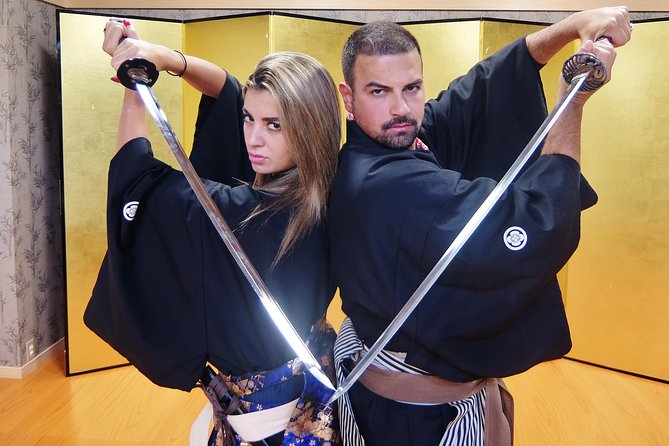
- A real sword-handling lesson: You practice bowing, drawing the sword, returning it to its scabbard, striking, and thrusting.
- Kenbu, not just dress-up: The class teaches graceful stage movements tied to samurai performance traditions.
- Small groups help: The maximum group size is 10, and several sessions have had only a few participants.
- Costumes are part of the lesson: You wear a samurai uniform, white belt, Japanese-style socks, and traditional clothing for photos.
- The longer option adds depth: An upgrade may include walking technique, a folding fan, and a choreographed sword routine with music and poetry.
- Allow extra time: The show or photo session may run beyond the stated 90-minute schedule.
What the Kyoto samurai class really teaches
This is a short introduction to the arts of the samurai, not a crash course in battlefield warfare. The focus is kenbu, a Japanese sword performance style built around controlled movement, posture, rhythm, and dramatic presentation.
That distinction matters. You are not simply waving a prop sword for a picture. You learn how to stand, bow, draw the sword, make basic cuts, and put it away correctly. The movements are formal and deliberate. The instructor expects you to pay attention to safety and follow directions.
A brief three-minute film introduces the samurai and the basic practices of the class. It gives you enough background to understand why the bow, sword handling, and posture matter before you begin moving.
The class works especially well for people who learn by doing. If museums lose a teenager after five minutes, this offers a more active way to approach Japanese history. Several families have found it a strong choice for teens, and it can give children a memorable first contact with martial arts and traditional performance.
More Samurai & Ninja Experiences in Kyoto
- Kyoto Samurai Experience
★ 5.0 · 1,294 reviews - Kyoto: Kendo and Samurai Experience with Uniform and Gear
★ 4.9 · 815 reviews - Kyoto: Samurai Sword Class by Experts in Traditional Arts
★ 4.9 · 657 reviews
Finding Kembu Kyoto Dojo in Higashiyama
The meeting point is at 35 Sanchome, Higashiyama Ward, Kyoto, postal code 605-0005. The venue is near public transportation, but you still need to pay attention when you arrive.
On the day of the class, go to the first basement floor using the stairs on the right side of the GOZAN building. That basement detail is easy to miss, so I would save it on your phone before leaving your hotel.
Arrive around 10 minutes before the start. The instructions also ask you to arrive no later than three minutes before the class, but early is the safer choice. Costume changes and group preparation take time, and arriving flustered is a poor way to begin a lesson built around calm, controlled movements.
The activity ends back at the same meeting point. Hotel pickup and drop-off are not included, and no food or drinks are provided.
Suiting up as a samurai
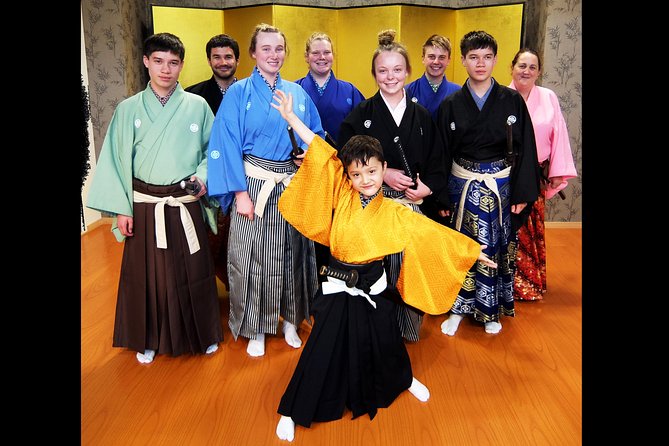
The costume change is one of the most enjoyable parts, especially for families and couples. You put on a samurai uniform with a white belt, Japanese-style socks, and the sword used during the lesson.
The clothing makes the movements feel more serious. Once the belt is tied and the sword is at your side, even a simple bow feels different. It also gives you a clear visual record of the day, since the photo session takes place in costume.
Wear clothes that allow you to move and that make changing easy. A single hoodie or tight clothing is not suitable for the costume change. Exercise-friendly clothes are the practical choice.
The photo session is included, but you should keep your expectations realistic. You are allowed to take souvenir photos, and the setting makes for memorable pictures. Still, one part of the process may feel hurried if another class is waiting. If posed photos matter greatly to you, be ready to organize your own camera quickly and ask for the shots you want before the session ends.
Learning the bow and the katana
The lesson begins with the proper way to bow. This is not filler. The bow sets the tone for the class and introduces the respect and discipline expected when handling the sword.
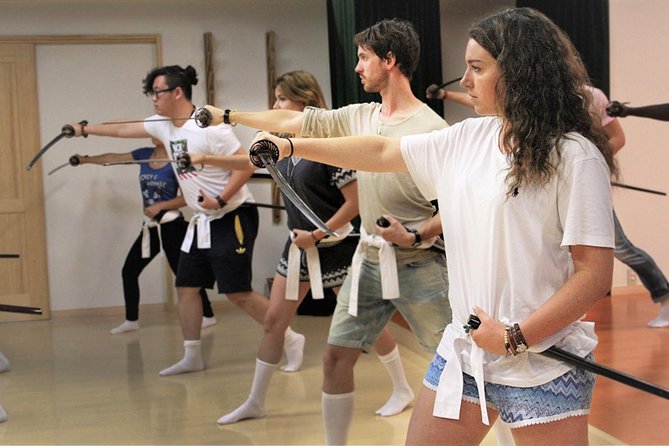
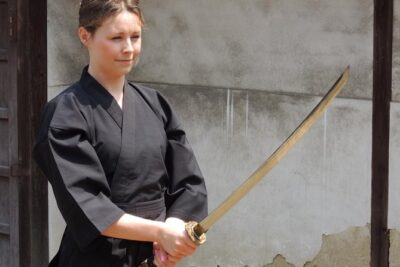
Next comes the tricky part: drawing the sword and returning it to its protective scabbard. The instructor breaks down the movement so you can work on hand position and control. You then practice basic strikes, along with actions against a potential opponent.
The sword work is structured and supervised. You are expected to follow the instructor’s directions closely, which is especially important when several people are moving in the same room. The activity requires a moderate level of physical fitness, but it is not described as an advanced athletic session.
The instruction is in English, making the class accessible to international visitors. The teachers are praised for patience, clear explanations, and a professional approach. One particularly strong account described the owner giving two participants extra attention and more advanced instruction when the group’s different interests made that useful. That sort of flexibility can make a small class feel personal.
Still, the experience can vary with the group. A small child who struggles to follow directions may find the instructor strict. That is not necessarily a flaw in a sword class, but parents should consider the age guidance: children from 5 to 11 are preferably attending some kind of class or martial arts school.
A completely different kind of day out in Kyoto:
- PERFECT KYOTO 1-Day Bus Tour
★ 5.0 · 13,518 reviews - Kyoto: Fushimi Inari, Kinkakuji, Bamboo Grove 1 Day Bus Tour
★ 4.8 · 4,316 reviews - Kyoto: Tea Ceremony in a Traditional Tea House in Kiyomizu
★ 4.9 · 3,519 reviews - Kyoto Geisha Walking Tour: Gion District & Hidden Gems
★ 4.7 · 3,273 reviews
The short session and the longer upgrade
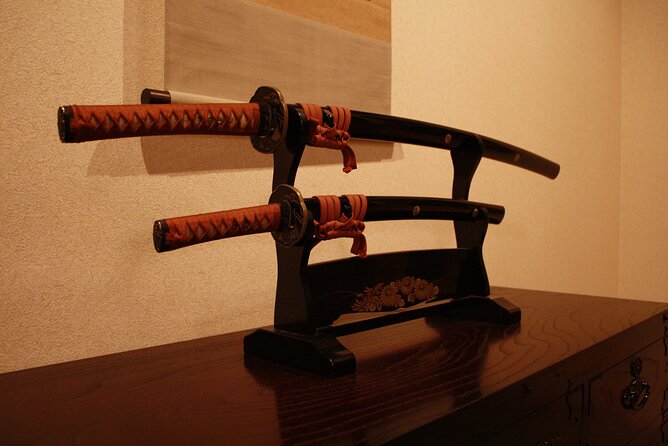
The standard class gives you a compact introduction. You learn the bow, draw, scabbard technique, basic strikes, and sword movements, then change into traditional costume for photos.
If you choose the longer practice option, you continue with more stylized samurai movements. These may include walking technique and the use of a folding fan. The class finishes with kenbu choreography performed on stage with a sword, poem, and music.
The upgrade makes sense if you want to understand how the movements fit together. The shorter class gives you individual techniques. The longer version shows how those techniques become a polished performance.
I would choose the longer option for martial arts enthusiasts, history buffs, and anyone who wants more than a quick photo opportunity. For a family fitting several Kyoto sights into one day, the shorter lesson may be enough. The activity lasts about 1 hour and 30 minutes, but reports of the show or photo process running over mean you should avoid placing a tightly timed reservation immediately afterward.
The show puts the lesson into context
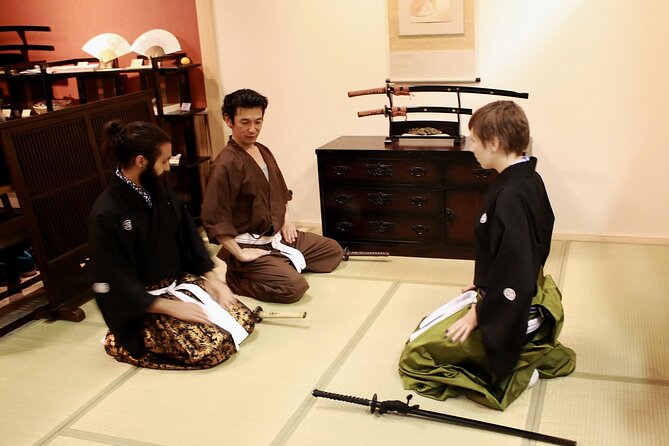
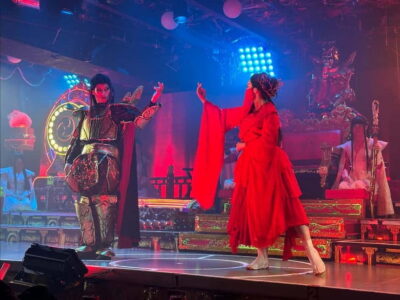
The performance is a major part of the appeal. The performers use controlled sword movements, posture, timing, and theatrical gestures to present kenbu as a performance art.
Seeing the show after training can change how you watch it. You have just struggled with a basic draw and strike, so the performers’ precision becomes easier to appreciate. You can see that the graceful movements require control rather than simple speed.
The running order may not always feel identical from one session to another. Some schedules place the performance after the lesson, while some descriptions from participants indicate that a longer show came first. If you are mainly booking for hands-on sword practice, confirm the expected timing when you arrive and allow some flexibility.
One caution is worth spelling out. A longer opening show can test the patience of someone expecting to handle the sword right away. The show itself is considered highly entertaining, but the practical lesson is the part most people anticipate. Families with restless children should prepare them for a performance as well as a class.
Photos, certificate, and the tenugui towel
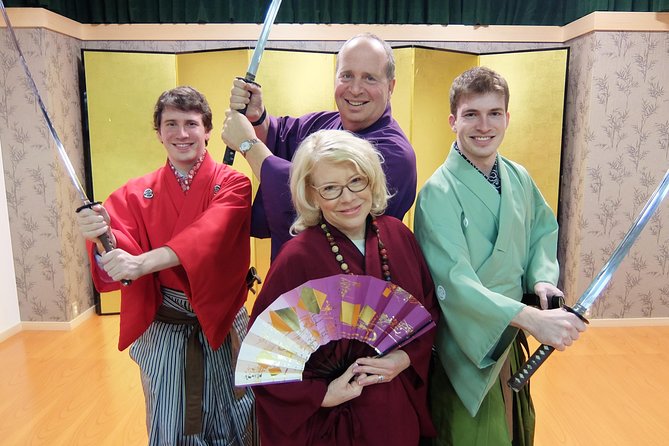
At the end, you receive a lesson completion certificate and a tenugui towel, a traditional Japanese hand towel. These are modest souvenirs, but they help turn a brief activity into something you can take home.
The costume photos are likely to be your most useful keepsake. You can choose traditional clothing and pose with the sword, making the session appealing for couples, families, and friends who want a shared memory rather than another temple snapshot.
The weakness is the pace. The photo time may be short, and the quality of your pictures depends partly on how quickly you and your companions can arrange yourselves. Decide in advance who will hold the camera and which poses you want. That small bit of preparation can save the session from becoming a blur of rushed snapshots.
Is $66.32 good value?
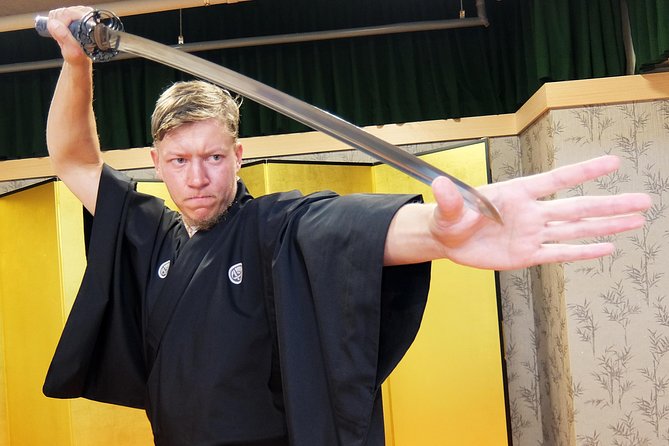
At $66.32 per person, this is not the cheapest cultural activity in Kyoto. But you are paying for more than admission to a show. The price includes an English-speaking instructor, costume use, a photo session, a certificate, and a tenugui towel, along with direct practice using a sword.
The value is strongest when you take part fully. If you attend only for the performance and photos, the cost may feel high compared with a standard cultural show. If you enjoy active lessons, the price is easier to justify because you receive instruction and personal practice.
The maximum group size is 10. That is small enough for an instructor to watch the basic movements, and some time slots have been even smaller. A smaller group also makes the costume change and sword practice less chaotic.
With more than 20 bookings in the previous month and a 4.9 rating from 202 reviews, the activity has clear demand. The 98 percent recommendation rate also suggests that it consistently works for its intended audience: people seeking a fun, structured introduction to samurai culture.
Who will enjoy this most?
I would recommend the class to:
- Families with older children and teens who prefer activities to long explanations
- Couples looking for a shared Kyoto memory
- Martial arts enthusiasts curious about kenbu
- History buffs who want a physical connection to samurai traditions
- Visitors seeking an indoor activity on a rainy day
- Small groups that enjoy dressing up and performing together
It is less suitable if you want a full academic lecture, a private lesson guaranteed for your party, or modern self-defense training. The lesson is formal and practical, but it is also theatrical. The sword movements are designed as part of kenbu performance, not presented as a complete fighting system.
You should also be comfortable with instructions and a moderate amount of movement. The staff take safety seriously, and you need to follow directions on the day.
Useful planning details for your Kyoto day
The class is indoors, so it can rescue a wet afternoon. It also fits neatly into a Kyoto itinerary because it lasts about 90 minutes, though I would leave a generous cushion afterward.
Do not book a major timed attraction immediately after it. The show, photos, costume changes, and group transitions may push the finish later than expected.
The venue is near public transportation, but the basement entrance can make the first arrival less obvious. Keep the building name, address, and stair instructions available offline.
Free cancellation is available if you cancel at least 24 hours before the start time. Cancellations made less than 24 hours before the activity are not refunded, and changes inside that period are not accepted. You handle cancellation through Viator.
Should you book Samurai for a Day?
Yes, if you want an active, friendly introduction to samurai culture rather than another passive sightseeing stop. The strongest parts are the hands-on sword lesson, the skilled performance, the small groups, and the chance to wear traditional clothing.
Choose the longer option if the choreography and martial arts side interest you. Choose the shorter session if you mainly want a taste of the craft, some photos, and a memorable activity for the family.
Book with two expectations in mind: the class is stylized kenbu, not combat training, and the timing may stretch beyond 90 minutes. Plan around those points, arrive early at the GOZAN building, and you have a good chance of leaving with better photos, a certificate, and a new respect for how much control goes into a samurai performance.
FAQ
How long does the Samurai for a Day activity last?
The experience lasts approximately 1 hour and 30 minutes. A longer practice option is available, and the show or photo session may sometimes cause the activity to run over.
Where does the class meet?
It meets at 35 Sanchome in Kyoto’s Higashiyama Ward, postal code 605-0005. Go to the first basement floor using the stairs on the right side of the GOZAN building.
Is the activity taught in English?
Yes. An English-speaking local guide or instructor leads the class.
What will I learn during the lesson?
You learn how to bow, draw a samurai sword, return it to its scabbard, and perform basic strikes and other sword movements. The lesson also introduces kenbu choreography.
What does the longer practice option include?
The longer option may include more detailed practice, stylized walking, use of a folding fan, and a stage performance with sword choreography, music, and a poem.
Is a costume included?
Yes. You wear a samurai uniform with a white belt, Japanese-style socks, and a sword. Traditional costume is also used for the photo session.
Are photos included?
Yes. A photo shoot is included. You also receive a lesson completion certificate and a tenugui towel.
Can children take part?
Children aged 5 to 11 may participate, but it is preferable that they attend some kind of class or martial arts school. All participants must follow the instructor’s safety directions.
What should I wear?
Wear clothes suitable for exercise and movement. A single hoodie or tight clothing is not suitable for changing into the costume.
Can I cancel for a refund?
Yes, if you cancel at least 24 hours before the experience begins. Cancellations made less than 24 hours before the start time are not refunded.
Just added around Kyoto
- Kyoto: Gion Night Walking Tour with Geisha Insight★ 5.0 · 39 reviews
- Kyoto: Private Customizable Day Trip by Car★ 5.0 · 38 reviews
- Kyoto: Full Day Bike Tour★ 4.9 · 39 reviews
- Private Japanese Calligraphy in Kyoto – Learn Shodō with a Master★ 5.0 · 39 reviews
- Experience a tea ceremony in an authentic tearoom, in Kyoto!★ 4.5 · 41 reviews
- Kyoto: Gion Evening Walk with Hidden Gems, Geisha & Sake★ 5.0 · 41 reviews
- Kyoto Private Photo Shoot & Tour by SnapKyoto★ 5.0 · 41 reviews
- The Way of Tea: Kyoto Crafts, Hidden Temples & Wabi-Sabi Walk★ 5.0 · 41 reviews
Samurai & Ninja Experiences, compared.
Samurai Ninja Museum Guided tour and Experience
Read our review →
Kendo and Samurai Experience with Uniform and Gear
Read our review →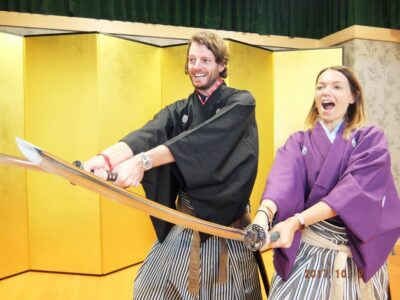
Samurai Sword Class by Experts in Traditional Arts
Read our review →
Skip the lines Basic Ticket at SAMURAI NINJA MUSEUM KYOTO
Read our review →
Samurai Sword & Archery Class from Samurai Descendant
Read our review →
Browse the lists this tour appears in