
Reviewed · SAMURAI & NINJA EXPERIENCES
Samurai Training with Modern day Musashi in Kyoto
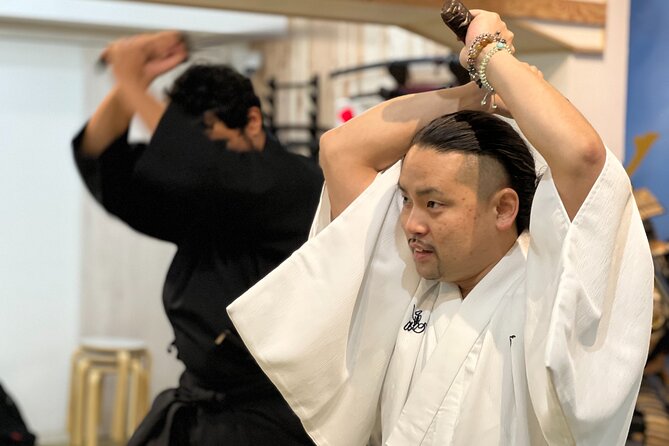
Step into a real samurai dojo. This Kyoto experience gives you hands-on katana training, traditional clothing, and a close look at iaido, the Japanese art of drawing and using a sword. Rather than watching a staged show, you spend time inside an active martial arts center with Yushin Sensei, a master with more than 20 years of experience.
I like the small-group format, which allows the instructors to correct your stance and answer questions. I also like the balance between practice and culture: you learn how to handle the sword safely, then hear about samurai traditions, sword parts, and etiquette. The main consideration is that real-katana mat cutting is not currently offered, so anyone expecting a dramatic cutting session should adjust their expectations.
The class lasts about 1 hour and 45 minutes, though it can run closer to two hours depending on group size. You must be at least 12, and the activity requires a moderate level of physical fitness. At $132.65 per person, it is not a cheap photo stop, but the time inside an actual dojo and the personal instruction make it a strong choice for visitors who want more than a costume pose.
In This Review
- Key points before you book
- Entering a working dojo in central Kyoto
- Changing into dōgi, obi, and hakama
- Learning what the samurai sword represents
- Drawing, wielding, and sheathing the katana
- Practicing an actual kata
- Watching Yushin Sensei perform
- How authentic is the experience?
- Is $132.65 good value?
- Who should book this Kyoto activity?
- Booking, cancellation, and practical details
- Should you book Samurai Training in Kyoto?
- FAQ
- Where does the Samurai Training experience take place?
- How long does the experience last?
- What age do you need to be?
- How many people can join the class?
- What clothing will participants wear?
- Will I cut mats with a real katana?
- What happens if I need to cancel?
Key points before you book
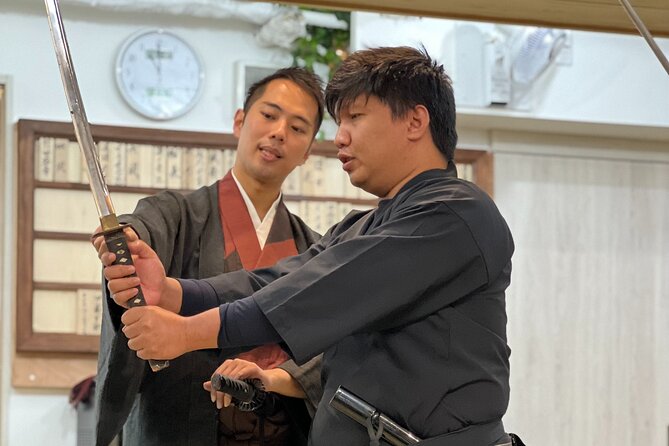
- Train inside an actual Kyoto dojo: The setting is a working martial arts center, not a theater built only for sightseeing.
- Learn a real kata: You practice a short sword form, including drawing, wielding, and sheathing the katana.
- Meet Yushin Sensei: The master leads the session and performs a striking two-katana demonstration.
- Wear traditional training clothing: You put on a dōgi, obi, and hakama before beginning the lesson.
- Expect a small class: Classes are designed for six people, though the total can reach nine in some circumstances.
- No current mat cutting: The class uses iaito for safe practice, and live-katana mat cutting is not part of the present program.
Entering a working dojo in central Kyoto
The meeting point is at 452-4 Matsugaechō in Nakagyo Ward, central Kyoto. It is near public transportation, which matters in a city where a short walk from a station can save you from wrestling with a taxi during busy sightseeing hours.
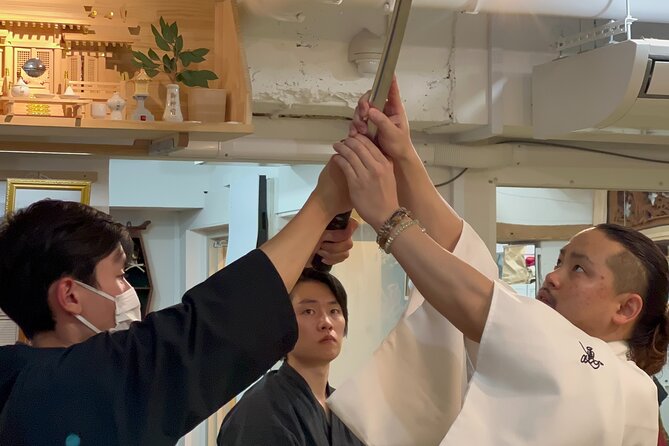
The dojo is located on the basement level of a building complex. That detail may sound ordinary, but it helps set the mood. You are not entering a theme-park courtyard with plastic armor and a quick photo line. You are entering a martial arts space with a Shinto shrine and wooden name plaques connected with the dojo community.
That setting gives the activity its strongest quality: a sense of place. You see that this is a school where people train beyond the single class offered to visitors. The atmosphere can feel more serious than a standard cultural demonstration, while the instructors still work hard to keep the mood friendly and relaxed.
Finding the entrance is important, so use the meeting instructions carefully. The activity begins and ends at the same location. Since you will be handling a sword and wearing training clothing, arriving with enough time to locate the dojo is wiser than rushing in at the last minute.
More Samurai & Ninja Experiences in Kyoto
- Kyoto Samurai Experience
★ 5.0 · 1,294 reviews - Kyoto: Kendo and Samurai Experience with Uniform and Gear
★ 4.9 · 815 reviews - Kyoto: Samurai Sword Class by Experts in Traditional Arts
★ 4.9 · 657 reviews
Changing into dōgi, obi, and hakama
The session begins with a change into samurai training gear. You wear a dōgi, obi, and hakama, the traditional trousers associated with Japanese martial arts. This is not just a costume add-on for photographs.
The clothing changes how you move. The hakama encourages you to pay attention to your footwork, posture, and the position of your hands. The obi helps hold the clothing in place, while the dōgi gives the session the feel of practice rather than dress-up.
You should treat the clothing respectfully and follow the instructors’ guidance when putting it on. The experience is designed for participants age 12 and older, and families with teenagers have found the combination of dressing, movement, and sword work particularly appealing.
The outfit also makes the activity more memorable for family groups. You can take photographs during appropriate moments, and one small touch mentioned by past participants is a school membership card. It adds a playful souvenir without turning the whole session into a photo opportunity.
Learning what the samurai sword represents
Before you begin swinging anything, the instructors explain samurai culture and swordsmanship. This part gives the physical practice a needed frame.
You learn about the role of the sword, who could use one, and the care and etiquette connected with it. The lesson also covers the parts of a traditional Japanese sword and how swords are made. A real historical katana may be shown during the session, giving you a chance to see details that are easy to miss behind glass in a museum.
The teaching is handled by Yushin Sensei along with instructors such as Jordan and John. Yushin leads the technical side, while the other instructors help explain instructions in English and Japanese and assist with individual corrections.
The cultural portion is not presented as a long academic lecture. It is worked into the practice, which keeps the pace moving. You hear about the samurai code and traditions, then see how those ideas affect posture, control, and behavior in the dojo.
I especially like this structure because it prevents the sword from becoming a toy. You begin to understand that a katana is tied to discipline and responsibility. The class remains fun, but it does not reduce samurai culture to costumes and dramatic poses.
Drawing, wielding, and sheathing the katana
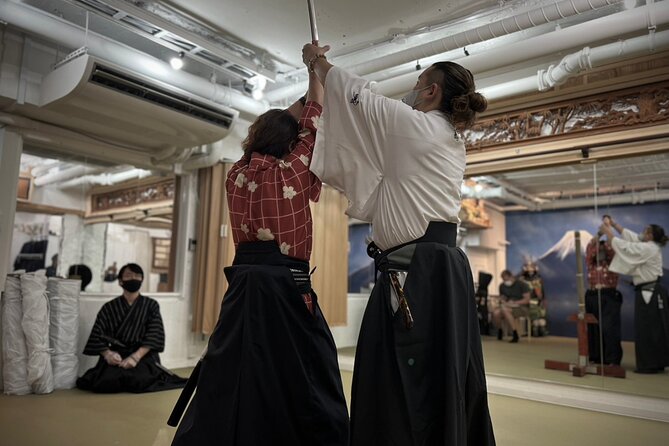
The practical training begins with the basics. You learn how to draw the katana, how to hold and move it, and how to return it to the scabbard.
This is where the experience demands concentration. A sword movement may look simple when performed by a master, but the instructor has to coordinate the hands, shoulders, hips, feet, and eyes. You will probably discover that a slow, controlled movement is harder than a fast one.
The class uses iaito for practice. These are training swords designed to allow authentic sword handling without the same cutting edge as a sharpened katana. That distinction matters. The swords feel more serious than foam replicas, but the instructors can teach the movements in a safer setting.
You should still expect to follow instructions closely. This is not a free-form activity where you grab a sword and start copying movie scenes. The instructors focus on safety, spacing, and form. They also correct participants rather than letting poor technique slide.
That personal attention is one reason the group size matters. The class is intended for six participants, although the maximum is nine and the actual number can vary. With fewer people, you are more likely to receive direct corrections. With a larger group, you may spend more time waiting for your turn or watching someone else practice.
The required fitness level is moderate. You do not need to be a martial arts expert, but the class involves standing, controlled movement, and repeated practice. Anyone with concerns about balance, mobility, or prolonged standing should take that into account before booking.
A completely different kind of day out in Kyoto:
- PERFECT KYOTO 1-Day Bus Tour
★ 5.0 · 13,518 reviews - Kyoto: Fushimi Inari, Kinkakuji, Bamboo Grove 1 Day Bus Tour
★ 4.8 · 4,316 reviews - Kyoto: Tea Ceremony in a Traditional Tea House in Kiyomizu
★ 4.9 · 3,519 reviews - Kyoto Geisha Walking Tour: Gion District & Hidden Gems
★ 4.7 · 3,273 reviews
Practicing an actual kata
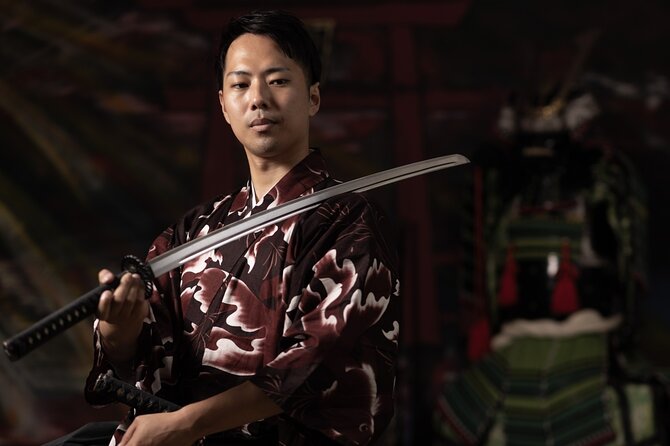
The central achievement of the session is learning a kata, a formal sequence of movements. You are not simply shown one impressive gesture. You practice a connected routine that combines sword drawing, positioning, cuts, and sheathing.
A kata gives the activity structure. You can remember a loose collection of sword motions, but a set form helps you understand how the pieces fit together. It also gives you something concrete to repeat later, perhaps in a hotel room only as a mental exercise, since swinging a sword in a narrow space would be a poor idea.
The instruction is gradual. You first watch the movement, then copy it in stages. Jordan and the other assistants help participants keep track of the sequence, while Yushin Sensei focuses on the quality and precision of the form.
This is also the point where the activity feels most like training. You are expected to listen, repeat, and improve. The class remains welcoming, but it rewards patience more than speed.
If you have practiced karate, kenjutsu, or another martial art, you may appreciate the attention to detail even more. Still, beginners are not left behind. The instructors explain the movements clearly and make time for questions.
Watching Yushin Sensei perform
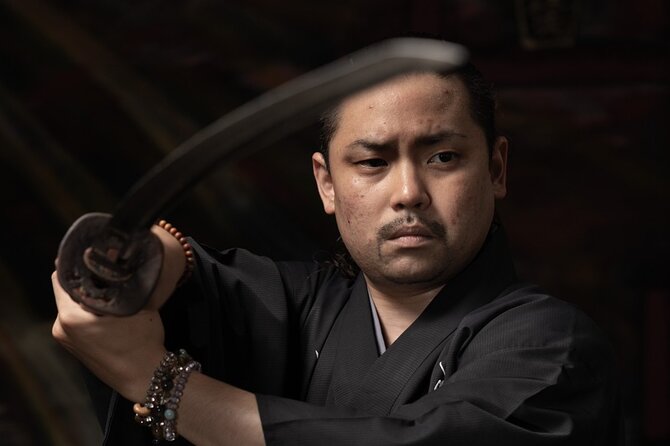
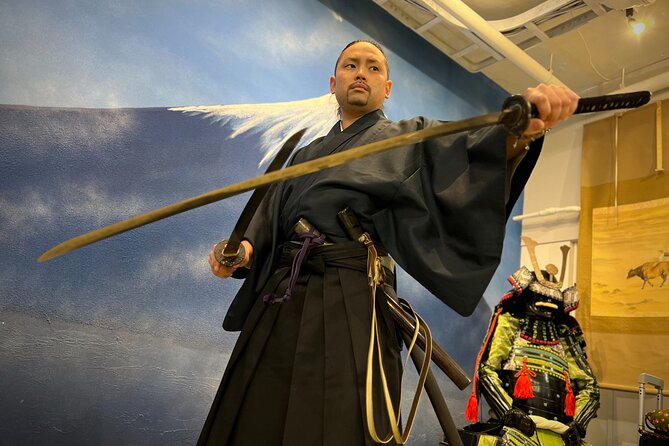
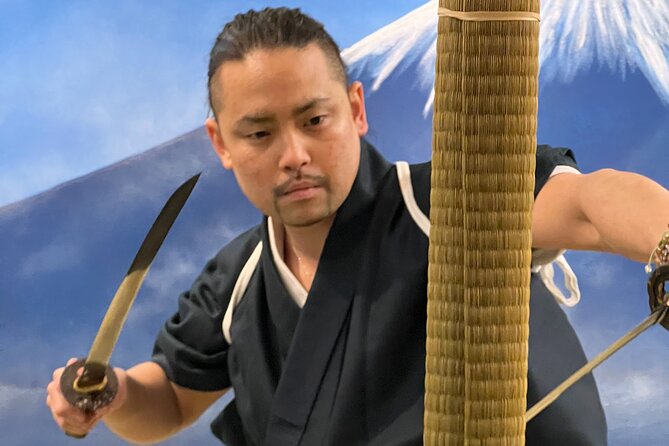
After your practice, Yushin Sensei demonstrates his skill. The performance is a highlight, especially when he uses two swords.
The two-katana display is the feature most likely to impress even someone with no interest in martial arts. It shows the difference between copying a movement and controlling it after years of practice. The speed is eye-catching, but the control and precision are the real point.
The program can also include demonstrations of sword cuts and a closer look at historical katana components. However, the current activity does not offer mat cutting with a real katana. Older descriptions of the experience may refer to cutting demonstrations, so you should rely on the current arrangement and expect a performance rather than participant mat cutting.
That change may disappoint visitors who booked mainly for the cutting spectacle. On the other hand, the present format puts more weight on instruction, safety, and the art of iaido. You still get to watch the master work, but you are not promised a live-blade cutting session.
The demonstration works best after your own practice. Once you have struggled through the basic form, you can better appreciate the timing and control in Sensei’s performance.
How authentic is the experience?
The word authentic can be overused in Kyoto, but here it has a clear meaning. You train in an actual dojo, with instructors connected to that school, and you learn a real kata rather than a made-up routine designed only for photographs.
You also see the signs of an active practice community. Wooden plaques display student names, and the dojo includes a Shinto shrine. These details make the room feel like a place with its own customs and continuity.
Authentic does not mean that you become a samurai for the afternoon. You receive a short introduction, not a full martial arts course. You will not master iaido in less than two hours, and the experience cannot replace regular training.
That is a fair limit. The class gives you an honest taste of the discipline, vocabulary, and movement. It also shows why swordsmanship requires years of repetition. For many people, that small dose is more meaningful than a polished stage show.
The instructors’ approach seems to balance seriousness with humor. Jordan and John help make the class accessible to English-speaking participants, while Yushin Sensei provides the technical authority. This combination is useful because the session includes both physical instruction and cultural explanation.
Is $132.65 good value?
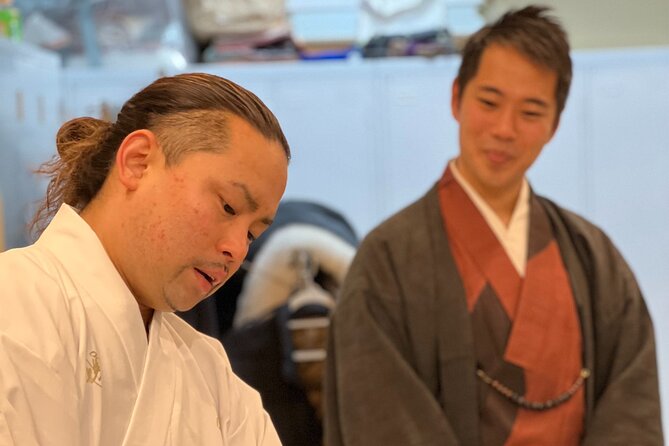
At $132.65 per person, this is a premium short activity. You are paying for about 1 hour and 45 minutes, with some sessions lasting up to two hours. That price may look high beside a standard museum ticket or a brief cultural demonstration.
The value improves if you want several elements in one booking:
- Traditional clothing
- Personal sword instruction
- A formal kata
- Samurai culture and sword information
- A demonstration by an experienced master
- Time inside a working dojo
You are also paying for a small class, at least in the intended format. Six participants allows for a more direct lesson than a large group activity. The maximum can reach nine, so I would not assume every session will feel equally private.
For a family, the price adds up quickly. Still, the activity can work well as a shared experience for parents and teenagers. Several age groups can take part together, provided everyone is at least 12 and physically able to stand and practice.
For a solo visitor or couple interested in Japanese martial arts, the cost is easier to justify. You receive instruction, cultural context, and a performance in one sitting. If you only want a costume photograph, less expensive options may make more sense.
Who should book this Kyoto activity?
I would recommend it most strongly to:
- Visitors interested in martial arts and Japanese culture
- Families with children aged 12 and older
- Teenagers who enjoy hands-on activities
- Adults who want an active break from temples and museums
- People who value a real dojo setting over a staged attraction
- Beginners who want a clear introduction to sword handling
You do not need prior martial arts experience. The lesson is built for newcomers, while people with karate or other martial arts backgrounds can pay closer attention to the form and technique.
I would be more cautious if you dislike structured instruction, standing for much of an activity, or following safety rules closely. I would also reconsider the booking if live-katana mat cutting is the main reason you are interested. That is not currently part of the program.
The experience is near public transportation, but the meeting point is still in central Kyoto, so it fits best between other activities in Nakagyo Ward. Since it ends where it begins, you can continue sightseeing or return to your accommodation without arranging a separate transfer.
Booking, cancellation, and practical details
Confirmation is sent within 48 hours of booking, subject to availability. The ticket is mobile, so you can keep the booking on your phone.
Free cancellation is available if you cancel at least 24 hours before the start time. Cancellations or changes made within 24 hours are not accepted for a refund, and the cutoff follows local Kyoto time.
The class has a maximum of nine participants. It is planned around six people per class, but the operator notes that the number can be higher when only a small number of parties are booked.
Wear something that allows comfortable movement beneath the training gear. The provided dōgi, obi, and hakama are part of the experience, so plan for a proper change rather than arriving expecting to practice in ordinary sightseeing clothes.
Should you book Samurai Training in Kyoto?
Yes, if you want a hands-on cultural experience with real instruction and a genuine dojo setting. The strongest parts are the careful sword-safety lesson, the chance to learn a proper kata, the traditional clothing, and Yushin Sensei’s two-katana performance.
The price is high for a short class, and the group may occasionally be larger than the preferred six people. You also need to accept that real-katana mat cutting is not currently offered.
For families, martial arts fans, and curious visitors who want to understand more than the movie version of the samurai, I think this is a worthwhile Kyoto choice. Book it for the training and the setting, not just the costume. You will leave with a better sense of the discipline behind the sword, plus a memorable story to take home.
FAQ
Where does the Samurai Training experience take place?
It takes place at 452-4 Matsugaechō, Nakagyo Ward, Kyoto, 604-8034, Japan. The dojo is near public transportation.
How long does the experience last?
The activity takes approximately 1 hour and 45 minutes. Depending on the number of participants, it may last between 1.5 and 2 hours.
What age do you need to be?
Participants must be at least 12 years old.
How many people can join the class?
The class is designed for six participants, though there may be more than six when only a small number of parties are booked. The maximum is nine travelers.
What clothing will participants wear?
You will change into samurai training gear consisting of a dōgi, obi, and hakama.
Will I cut mats with a real katana?
No. Mat cutting with a real katana is not currently offered. The program includes katana practice, a kata lesson, and demonstrations by the master.
What happens if I need to cancel?
You can receive a full refund if you cancel at least 24 hours before the start time. Cancellations or changes made less than 24 hours before the experience are not accepted for a refund.
Just added around Kyoto
- Kyoto: Gion Night Walking Tour with Geisha Insight★ 5.0 · 39 reviews
- Kyoto: Private Customizable Day Trip by Car★ 5.0 · 38 reviews
- Kyoto: Full Day Bike Tour★ 4.9 · 39 reviews
- Private Japanese Calligraphy in Kyoto – Learn Shodō with a Master★ 5.0 · 39 reviews
- Kyoto: Gion Evening Walk with Hidden Gems, Geisha & Sake★ 5.0 · 41 reviews
- Experience a tea ceremony in an authentic tearoom, in Kyoto!★ 4.5 · 41 reviews
- Kyoto Private Photo Shoot & Tour by SnapKyoto★ 5.0 · 41 reviews
- The Way of Tea: Kyoto Crafts, Hidden Temples & Wabi-Sabi Walk★ 5.0 · 41 reviews
Samurai & Ninja Experiences, compared.

Samurai Ninja Museum Guided tour and Experience
Read our review →
Kendo and Samurai Experience with Uniform and Gear
Read our review →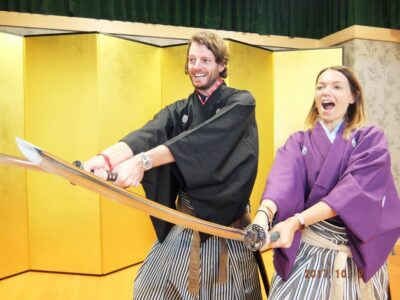
Samurai Sword Class by Experts in Traditional Arts
Read our review →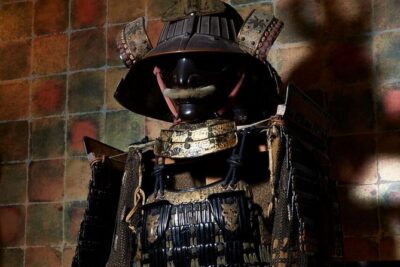
Skip the lines Basic Ticket at SAMURAI NINJA MUSEUM KYOTO
Read our review →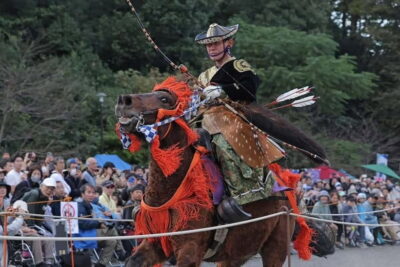
Samurai Sword & Archery Class from Samurai Descendant
Read our review →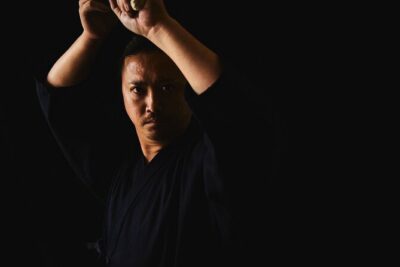
Browse the lists this tour appears in