
Reviewed · TEMPLE & SHRINE TOURS
Tokyo Morning Tour : Meiji Shrine, Asakusa and Fish Market
Tokyo wakes up with flavor. This four-hour tour links Meiji Shrine, Tsukiji’s outer market, and Asakusa in a compact morning route, with sushi, sashimi, mochi, sweet potato, and a savory cutlet along the way. I like the mix of quiet temple grounds and lively food streets, and I like the small maximum of eight people, which should make questions and conversation easier.
I also like that the tour ends at Asakusa Station, rather than returning you to the starting point. That is useful if you want to keep exploring Senso-ji, shop along Nakamise-dori, or continue elsewhere in Tokyo. The main consideration is that public transport costs about 550 yen extra, and the listed inclusions do not clearly say whether the food tastings are covered in the $72.67 price.
In This Review
- Key points at a glance
- Three sides of Tokyo before lunch
- Meeting at Harajuku and starting at Meiji Jingu
- Tsukiji Jogai Market and the morning food stop
- A short tasting tour through Asakusa
- Senso-ji and the Kaminarimon approach
- Guides who add value to a short route
- Is $72.67 a fair price?
- Who will get the most from this morning?
- Practical details before you book
- Should you book this Tokyo morning tour?
- FAQ
- How long does the Tokyo morning tour last?
- Where does the tour begin?
- Where does the tour end?
- What places are visited?
- Is public transportation included?
- Is food included in the tour price?
- How many people can join the tour?
- Can I cancel for a full refund?
Key points at a glance
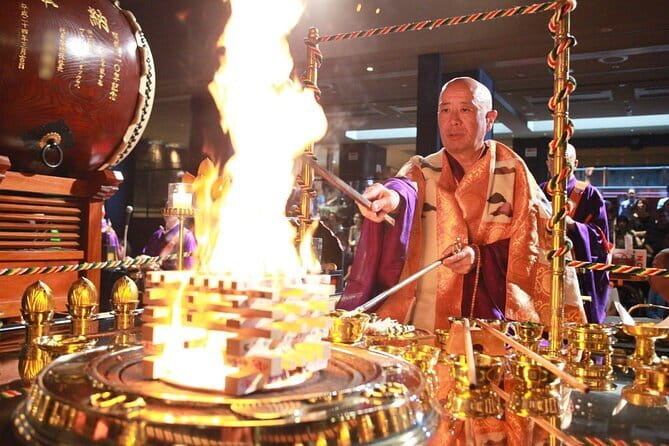
- Three very different Tokyo settings: A forested Shinto shrine, a working food market, and an old Buddhist temple all fit into one morning.
- Early food stops: You may try sushi and sashimi at Tsukiji, plus mochi, sweet potato, and a savory cutlet in Asakusa.
- Small group format: The tour accepts a maximum of eight people, a useful size for city streets and temple grounds.
- Strong guide feedback: Shoma Sato is praised for clear explanations and patience, while Yosuke is noted for sharing history, philosophy, and customs.
- Simple onward plans: The tour finishes at Asakusa Station, leaving you in a useful part of eastern Tokyo.
- Allow extra cash: Public transportation is not included and costs around 550 yen.
Three sides of Tokyo before lunch
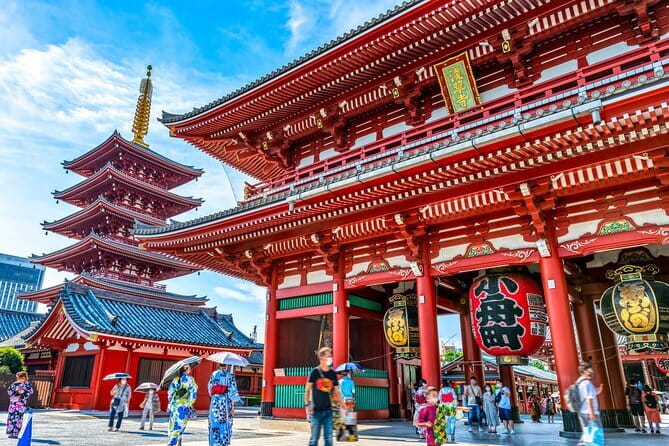
The appeal here is contrast. You begin among tall trees at Meiji Jingu Shrine, shift to the smells and counter service of Tsukiji Jogai Market, then finish at Senso-ji and Nakamise-dori in Asakusa.
That is a lot of Tokyo in about four hours. You will not get an unhurried, museum-level study of each district, but you will get a well-chosen first look at three places that feel quite different from one another. For a short stay, I see the value.
The tour is especially useful if you have only a morning available or want a guide to handle the cultural context while you concentrate on seeing and tasting. The listed group limit of eight keeps it more personal than a large coach excursion. It also gives the guide a better chance to adjust explanations and pauses to the group.
The pace is the tradeoff. Each named stop is scheduled for about an hour, and the route also includes movement between districts and food stops. You should expect an introduction rather than a long visit at each site.
More Market Tours in Tokyo
- Tokyo Tsukiji Fish Market Food and Culture Walking Tour
★ 5.0 · 3,184 reviews - Tokyo: Tsukiji Fish Market Food and Walking tour
★ 5.0 · 1,724 reviews - Tokyo: Tsukiji Fish Market Guided Walking Tour
★ 4.9 · 1,397 reviews
Meeting at Harajuku and starting at Meiji Jingu
The meeting point is the IKEA Swedish Cafe in Harajuku, at 1-chome 14-29 Jingumae, Shibuya. The address includes a building and room reference, so I would check the exact map pin and arrive early rather than search at the last minute.
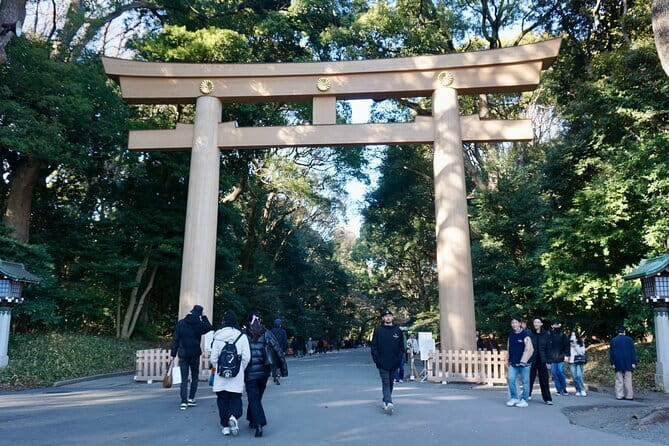
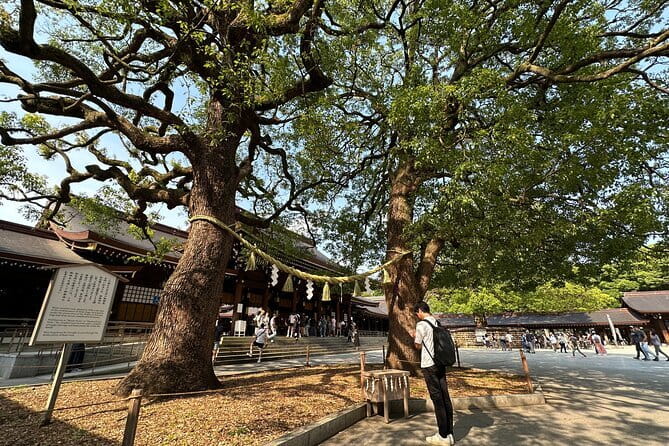
From there, the tour begins at Meiji Jingu, Tokyo’s major Shinto shrine dedicated to Emperor Meiji and Empress Shoken. The first hour is meant for walking through forested paths, passing beneath large torii gates, and getting a sense of the shrine’s calm setting.
This is a smart first stop. Morning is a good time for a shrine visit because the grounds offer a clear break from Tokyo’s traffic and concrete. You can focus on the approach, the gates, and the customs of a Shinto site before the day becomes busier.
The guide’s role matters here. A shrine can look simple if you do not know what you are seeing. Historical insights about the emperor, empress, shrine customs, and the meaning of the setting help turn a walk into something more useful.
You should also keep your expectations realistic. Admission is free, and this is not a private ceremony or a special-access visit. The value comes from the setting and explanation, not from an exclusive entry. The itinerary allows about one hour, so you will get an overview rather than time to inspect every corner.
Photos are included as part of the tour. That is a nice practical touch, particularly if you want a few pictures of the group and the morning route without constantly asking strangers to take them.
Tsukiji Jogai Market and the morning food stop
The next major stop is Tsukiji Jogai Market, the outer market associated with Tokyo’s former wholesale fish market. The wholesale auction area moved to Toyosu, but Tsukiji’s outer market remains a place for food shops and market stalls.
That distinction is important. If you book this tour expecting to see the famous wholesale auction, you will be disappointed. This experience is centered on the outer market and its food culture, not the auction floor.
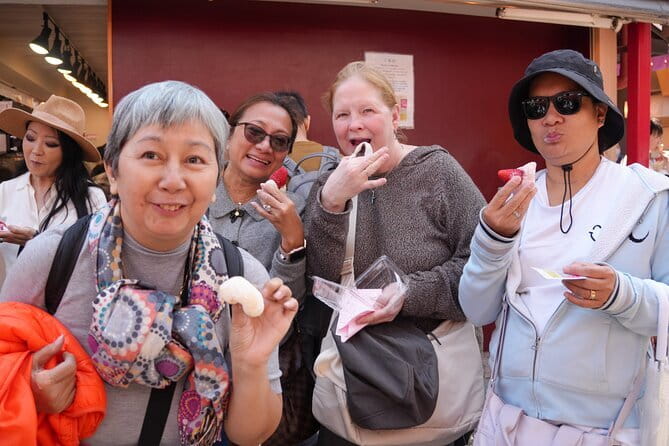
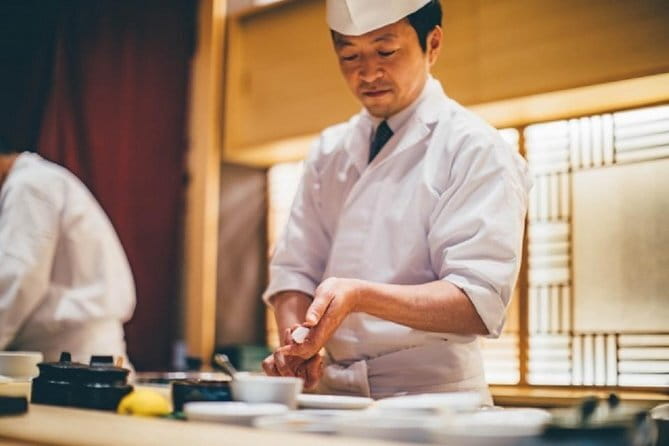
The tour description highlights fresh sushi and sashimi straight from market stalls. It also includes street foods such as sweet mochi, sweet potato, and a savory cutlet. These samples give the stop a broader purpose than a quick photo visit. You get a chance to think about how Japanese food is presented, sold, and eaten in a market setting.
I would plan to bring some yen anyway. The inclusions list names the guide, photos, historical explanations, and entry to the three main sites, but it does not clearly state that sushi, sashimi, or street food is included in the $72.67 price. Ask Goen Japan before departure if you want a firm answer about tastings and any extra purchases.
The market portion lasts about an hour. That should be enough to get a taste of the area, but not enough for a long, independent food crawl. If you already know you want a full breakfast at Tsukiji, you may need to choose between eating with the group and saving room for your own finds.
There is also a practical point about timing. Market food is the reason to go early, and this tour is built around the morning. You are not being taken there at the quiet end of the day when many stalls have already lost their best selection.
A short tasting tour through Asakusa
The food does not stop at Tsukiji. The tour also includes local bites in Asakusa, with sweet mochi, sweet potato, and a savory cutlet listed among the street foods.
I like this pairing because it shows two different food environments. Tsukiji is tied to seafood and market stalls, while Asakusa gives you snack foods and sweets as you walk through an older commercial district.
The details here are modest but useful. Mochi is a sweet rice cake with a chewy texture, and sweet potato offers a simple seasonal-style snack. The cutlet provides a savory change. These are small tastes rather than a sit-down meal, so do not book this as a replacement for lunch.
Food preferences also matter. The available information does not give exact vendors, portion sizes, ingredients, or allergy guidance. If you have dietary restrictions, contact the operator before booking. Do not assume every sample will suit you.
More Temple & Shrine Tours in Tokyo
- Tokyo: Meiji Shrine, Asakusa, Skytree Bus Tour and Cruise
★ 4.7 · 1,986 reviews - Tokyo: Asakusa Walking Tour with Sensoji Temple Visit
★ 4.8 · 1,583 reviews - Nikko: Kegon Falls, Lake Chuzenji & Toshogu Temple
★ 4.6 · 1,577 reviews - Tokyo: Nikko Toshogu Shrine and Kegon Waterfall Tour
★ 4.5 · 1,266 reviews
Senso-ji and the Kaminarimon approach
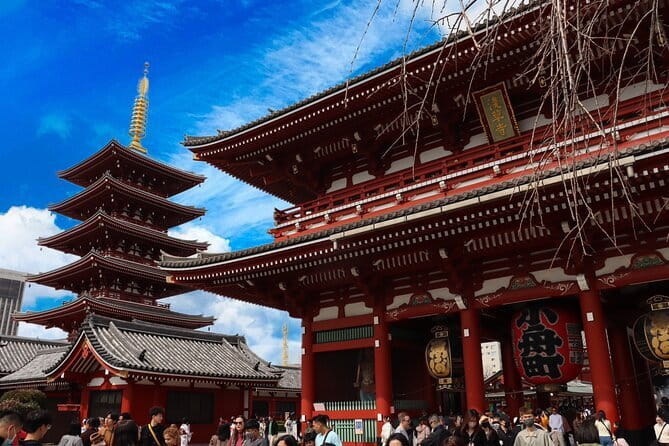
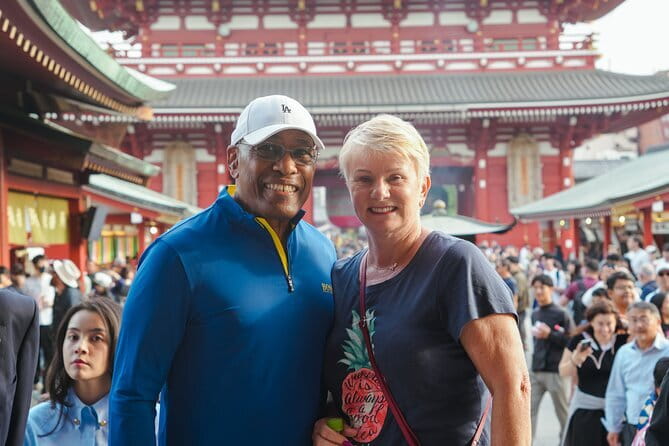
The final main stop is Senso-ji, Tokyo’s oldest Buddhist temple, in Asakusa. You enter through Kaminarimon, the Thunder Gate, then continue along Nakamise-dori, the shopping street leading toward the temple.
This is a strong ending because Asakusa gives the morning a different mood from Meiji Jingu. The shrine is framed by trees and quiet paths. Senso-ji is tied to an active temple approach, shopping, snacks, and old Tokyo imagery.
The tour allows about an hour here. That gives you time to see the gate, walk the approach, and hear the guide explain the temple and district. It also leaves you at a useful point for your own plans.
I would not treat the one-hour visit as enough for all of Asakusa. The district has more to see than the tour can cover, and you may want extra time for Nakamise-dori or the surrounding streets. The good news is that you do not have to rush back to Harajuku. The tour ends at Asakusa Station, so you can continue at your own pace.
This ending also helps visitors who are building a larger Tokyo day. After the tour, you are already in eastern Tokyo rather than spending time retracing the route to the starting point.
Guides who add value to a short route
A short city tour depends heavily on its guide. The strongest praise for this experience focuses on the guides’ attitude and explanations, not simply on the number of sights.
Shoma Sato is singled out for explaining what the group saw, showing patience, and trying to accommodate everyone. That matters on a food and culture tour, where people may have different interests, walking speeds, and questions.
Yosuke is praised for discussing history, philosophy, and customs. Those subjects can make the difference between seeing a shrine and understanding why the visit feels different from a Buddhist temple or market stop.
One useful detail is the report of a guide being so impressive that strangers interrupted the tour to ask for his card. That suggests a personable style that catches attention beyond the group itself. Still, I would not assume you will receive a specific guide. Shoma Sato and Yosuke are names connected with the strong feedback, but guide assignment can vary.
The maximum group size is eight. That is not the same as a fully private tour, yet it is small enough to make a real difference in Tokyo’s narrow shopping lanes and crowded temple approaches. You are more likely to hear explanations and get a direct answer than in a large group.
Is $72.67 a fair price?
At $72.67 per person, this is not the cheapest way to see the three districts. You can visit Meiji Jingu and Senso-ji without paying admission, and you can reach many Tokyo sights on your own using the city’s excellent rail and subway system.
The price makes more sense if you value the guide. You are paying for a four-hour route, cultural context, help moving between districts, photos, and a small group rather than simply paying to enter attractions. For a first morning in Tokyo, that guidance can save time and reduce the confusion of sorting out shrine customs, market etiquette, and transport alone.
The food question affects the value. Sushi, sashimi, mochi, sweet potato, and a savory cutlet are central to the experience, but the supplied details do not clearly identify them as included costs. I would confirm this before booking. If the samples are extra, bring enough yen and treat the price as a guided sightseeing tour with optional food purchases.
The transport fare is another small addition. About 550 yen is not a major cost, but it is excluded, so include it in your budget. The tour does not hide a large entrance fee, since the three listed sites are free to enter.
Who will get the most from this morning?
I think this tour works best for you if:
- You have limited time in Tokyo and want three major areas in one morning.
- You want explanations of Japanese history, philosophy, and customs.
- You enjoy trying small food portions rather than planning a full restaurant meal.
- You prefer a group capped at eight people.
- You want to finish in Asakusa for your own afternoon plans.
- You would rather have a guide manage the route than work out every transfer yourself.
It may be less suitable if you want a slow, independent visit at each site. Three districts in four hours requires movement and focus. It may also disappoint you if your main goal is the Toyosu wholesale auction, since this tour visits Tsukiji’s outer market instead.
Most people can participate, and the activity is near public transportation. The information does not give a detailed walking distance or accessibility plan, so contact the operator if stairs, long walks, or uneven surfaces are a concern.
Practical details before you book
You receive confirmation at booking, and the ticket is mobile, which keeps the meeting process simple. Still, I would save the meeting address and map location before leaving your hotel, especially because the starting point is a specific cafe and building address in Harajuku.
The experience runs for about four hours. The listed timing gives roughly one hour each at Meiji Jingu, Tsukiji Jogai Market, and Senso-ji, with transfers and food stops fitted around them.
Public transportation is not included and costs about 550 yen. The tour ends at Asakusa Station, in Taito City. That final location is one of the better features for planning the rest of your day.
Free cancellation is available until 24 hours before the start time for a full refund. Changes or cancellations made less than 24 hours before the start are not refunded, and a minimum number of participants is required for the tour to operate.
Should you book this Tokyo morning tour?
I would book it if you want a guided first morning in Tokyo that combines food, religion, and old city streets without taking a full day. The route is well chosen, the group size is manageable, and the praise for Shoma Sato and Yosuke points to guides who make the cultural details easier to understand.
I would skip it if you want the fish auction, a long Tsukiji breakfast, or several hours at each temple. Before paying, confirm the food-tasting arrangements and plan for the extra 550 yen transport fare.
For a short Tokyo stay, the tour’s best feature is its finish. You see Meiji Jingu and Tsukiji, then get left in Asakusa with the afternoon still ahead. That is a practical way to turn four morning hours into a useful introduction to the city.
FAQ
How long does the Tokyo morning tour last?
The tour lasts approximately four hours.
Where does the tour begin?
It begins at the IKEA Swedish Cafe in Harajuku, at the listed address in Jingumae, Shibuya, Tokyo.
Where does the tour end?
The tour finishes at Asakusa Station in Taito City, Tokyo.
What places are visited?
The route includes Meiji Jingu Shrine, Tsukiji Jogai Market, and Senso-ji Temple in Asakusa.
Is public transportation included?
No. Public transportation is not included. The estimated fare is around 550 yen.
Is food included in the tour price?
The experience includes sushi and sashimi at Tsukiji in its description, along with mochi, sweet potato, and a savory cutlet in Asakusa. The listed inclusions do not clearly state whether food costs are covered, so confirm this with Goen Japan before booking.
How many people can join the tour?
The tour has a maximum of eight participants.
Can I cancel for a full refund?
Yes. You can cancel at least 24 hours before the local start time for a full refund. Cancellations made less than 24 hours before the start time are not refunded.
More Shopping Tours in Tokyo
- Tsukiji Fish Market Small-Group Food Walking Tour
★ 5.0 · 621 reviews - Tokyo: Tsukiji Fish Market Sushi Making Class with Pro Chef
★ 4.9 · 506 reviews - Tokyo Food Tour Taste Fresh Delights at Tsukiji Market
★ 5.0 · 429 reviews - Tokyo Tsukiji Fish Market Tour and Sushi Making Lesson
★ 5.0 · 390 reviews
More Fish Market Tours in Tokyo
- Tokyo Sushi Making Class in Tsukiji with Professional Chef
★ 5.0 · 1,177 reviews - Tsukiji Fish Market Guided Tour and Sushi Making with Pro Chef
★ 5.0 · 775 reviews - Tokyo: Tsukiji Fish Market Food and Culture Walking Tour
★ 4.7 · 757 reviews - Tsukiji Fish Market: Street Food & Culture Walking Tour
★ 5.0 · 669 reviews
Just added around Tokyo
- Tokyo 6hr Instagram Highlights Private Tour with Licensed Guide★ 5.0 · 38 reviews
- Tokyo Small Group Tour with Guide★ 4.5 · 38 reviews
- Tokyo Sumo Experience with Live Show & Audience Challenge★ 5.0 · 38 reviews
- Japanese Food Cooking Class in Asakusa, Tokyo★ 5.0 · 39 reviews
- Very popular in Harajuku♡Animal petting zoo★ 4.6 · 39 reviews
- Ramen Making from Scratch with Tokyo Mom(Vegan Option Available)★ 5.0 · 39 reviews
- Tokyo JDM Night: 600hp C63s AMG Edition 1 (Private)★ 4.9 · 39 reviews
- Tokyo: Kimono Rental inside Shinjuku Gyoen National Garden★ 4.9 · 39 reviews
Temple & Shrine Tours, compared.
Fushimi Inari, Kinkakuji, Bamboo Grove 1 Day Bus Tour
Read our review →
Tea Ceremony in a Traditional Tea House in Kiyomizu
Read our review →
Meiji Shrine, Asakusa, Skytree Bus Tour and Cruise
Read our review →
Fushimi Inari Hidden Hiking Tour (Private Option Available)
Read our review →
Osaka/Kyoto:Kinkakuji,Arashiyama,FushimiInariShrine,NaraPark
Read our review →
Asakusa Walking Tour with Sensoji Temple Visit
Read our review →
Nikko: Kegon Falls, Lake Chuzenji & Toshogu Temple
Read our review →Browse the lists this tour appears in