
Reviewed · JAPANESE CALLIGRAPHY CLASSES
Calligraphy Workshop at Traditional Folk Craft Shop in Hiroshima
Slow down and let the brush speak. This 45-minute Hiroshima workshop gives you a quiet, hands-on introduction to Japanese calligraphy inside Takumi, a 50-year-old folk craft shop near the Atomic Bomb Dome. I like the use of handmade brushes from nearby Kumano, Japan’s leading brush-making town, and I like that you finish with a personal souvenir rather than simply watching a demonstration. The main consideration is time: 45 minutes is enough for a focused introduction, but not a long study of calligraphy.
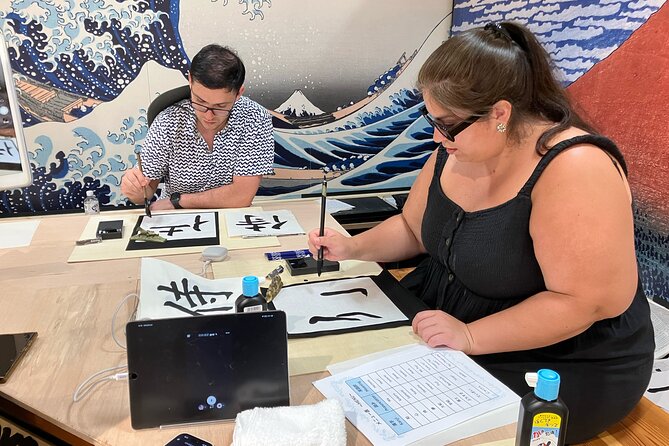
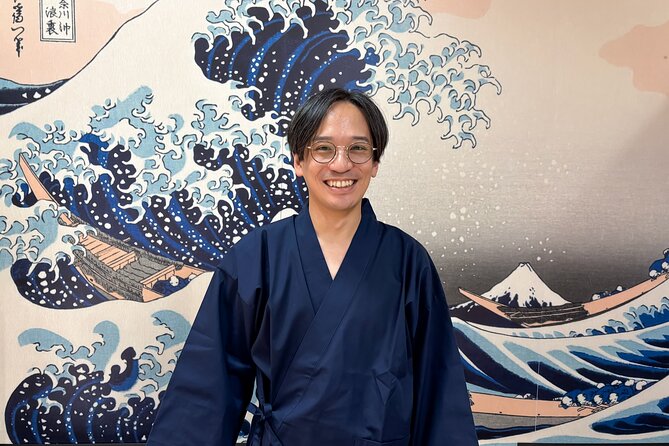
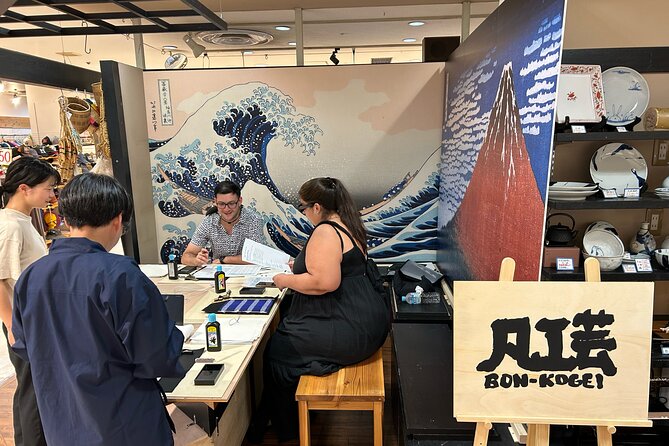
The setting adds character. One wall features ukiyo-e prints, and the shop itself sells traditional crafts from across Japan. Instructor Sensai Ryosei is praised for a patient, calm teaching style, which matters if you have never held a calligraphy brush before. This is a private activity for your group, but the compact format may feel brief if you want a slower, more advanced lesson.
In This Review
- Key points at a glance
- Why calligraphy fits a Hiroshima visit
- Finding Takumi near the Atomic Bomb Dome
- The first lesson: brush, ink, paper, and posture
- Trying hiragana and kanji
- Creating your fan or shikishi artwork
- What the private format changes
- Is $32.81 a fair price?
- Who will enjoy this workshop most?
- Practical planning for your Hiroshima day
- The final call: should you book it?
- FAQ
- Where is the calligraphy workshop held?
- How long does the experience last?
- How far is Takumi from the Atomic Bomb Dome?
- How far is the workshop from Hiroden Hondori Station?
- Are calligraphy materials provided?
- What souvenir can I make?
- Can I cancel for a refund?
Key points at a glance
- Write with handmade Kumano brushes: You use brushes made in Hiroshima’s famous brush-making town, giving the activity a clear local connection.
- Work inside a 50-year-old craft shop: Takumi offers a traditional setting rather than a plain classroom.
- Learn through simple practice strokes: You begin with dots, lines, and sweeps before trying hiragana and kanji.
- Take home a personal artwork: Your final piece goes on a traditional hand fan or shikishi calligraphy board.
- Enjoy a calm private session: The class is limited to your own group, with gentle guidance from Sensai Ryosei.
- Reach it easily from central Hiroshima: The shop is a five-minute walk from the Atomic Bomb Dome and three minutes from Hiroden Hondori Station.
Why calligraphy fits a Hiroshima visit
Hiroshima is often visited through powerful historical sites, especially the Atomic Bomb Dome and Peace Memorial Park. Those places deserve time and attention, but a short creative workshop can give your day a different rhythm. Instead of moving from one sight to the next, you sit down, handle traditional tools, and concentrate on one careful movement at a time.
Calligraphy has a meditative quality because the brushstroke cannot easily be erased. You need to watch the amount of ink, the pressure of the brush, and the speed of your hand. Even a simple character asks you to slow down.
You do not need prior experience. The workshop is designed for first-timers, and the instructor guides you through the basic actions before asking you to create a final piece. That makes this a good choice if Japanese writing looks beautiful to you but also seems intimidating.
The experience also gives you a small connection to Hiroshima beyond its major memorials. Kumano, in Hiroshima Prefecture, is known for brush-making, so the tools are not random craft supplies. They link the workshop to a local tradition that you can feel in your hand as you write.
More calligraphy classes:
- An Amazing set of Cultural experience: Kimono, Tea Ceremony and Calligraphy
★ 5.0 · 69 reviews - Cultural Activities :Kimono, tea ceremony, Calligraphy and Amulet
★ 5.0 · 44 reviews - Tokyo: Calligraphy on Kanji Fan & Scroll with Drink
★ 5.0 · 210 reviews
Finding Takumi near the Atomic Bomb Dome
The meeting point is Bonkogei Takumi at 2-chōme-2-18 Kamiyachō, Naka Ward, Hiroshima. It is on the fifth floor of Sanmall Mall, with UNIQLO on the second floor as a useful landmark.
The location is practical for a sightseeing day. You can walk from the Atomic Bomb Dome in about five minutes, or reach the building in roughly three minutes from Hiroden Hondori Station. That makes it easy to place the workshop before or after the Peace Memorial Park, though you should allow enough time to locate the correct floor inside the mall.
Takumi is more than the room used for the class. It is known as a leading Hiroshima craft shop with traditional items from around Japan. If you arrive early, you may find the shop worth a look, though the calligraphy session itself is the main reason to come.
The ukiyo-e display adds a visual lift to the room. It gives you something traditional to look at while you prepare your ink and paper, and it helps the activity feel connected to Japanese art rather than set up as a generic tourist craft.
The first lesson: brush, ink, paper, and posture
The session begins with an introduction to the calligraphy tools. All materials are supplied, including the brush, ink, paper, and other items needed for the activity. You do not need to pack anything special.
The first stage is about getting comfortable with the brush. You practice basic strokes such as dots, straight lines, and sweeping movements. These exercises may look simple, but they teach the main skills you need: controlling pressure, lifting the brush, and allowing the ink to create thicker or thinner marks.
This step is especially useful for beginners because it removes some pressure from the final artwork. You can make mistakes on practice paper before choosing the word you want to place on your fan or board.
The instructor’s approach is a strong part of the experience. Sensai Ryosei is described as calm and patient, with a teaching style that makes the process feel manageable. If you are worried about producing an ugly first stroke, that steady guidance should help you relax.
Do not expect a formal lecture on the full development of Japanese calligraphy. The purpose here is practical. You learn enough about the tools and strokes to create something of your own during the short session.
Trying hiragana and kanji
After the basic strokes, you move on to writing hiragana and kanji. The choice gives you a chance to try both the flowing phonetic characters of hiragana and the more complex symbols of kanji.
You will likely find that calligraphy is not simply a matter of copying a shape. Each character has an order and a balance. The placement of one stroke affects the whole design, and the instructor can help you understand how to approach the form.
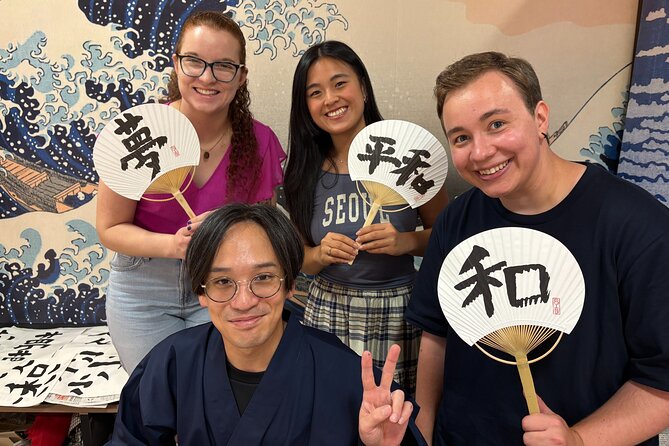
The activity description invites you to choose a word with personal meaning. The exact word is up to you, so you can select something connected to your trip, a quality you admire, or a simple Japanese term you find appealing. If you are unsure what to write, ask for help before the final stage.
This is also the point where the workshop becomes more personal. You are not just repeating a character from a worksheet. You are deciding what your finished souvenir should say and how you want it to look.
Because the class lasts about 45 minutes, keep your choice realistic. A short word or a single character will give you more room to focus on brush control and presentation. A long phrase may feel rushed within the available time.
A few more Hiroshima experiences worth weighing up
- Private Japanese Cooking Class in Hiroshima with Machiko’s Family
★ 5.0 · 35 reviews - Experience the Soul of Hiroshima: A Peaceful Koto Workshop
★ 5.0 · 32 reviews - Sushi Making Tokyo Roll and Authentic Japanese Sushi Class
★ 5.0 · 3,971 reviews - Kyoto: 45-Minute Tea Ceremony Lesson Experience
★ 4.3 · 2,378 reviews
Creating your fan or shikishi artwork
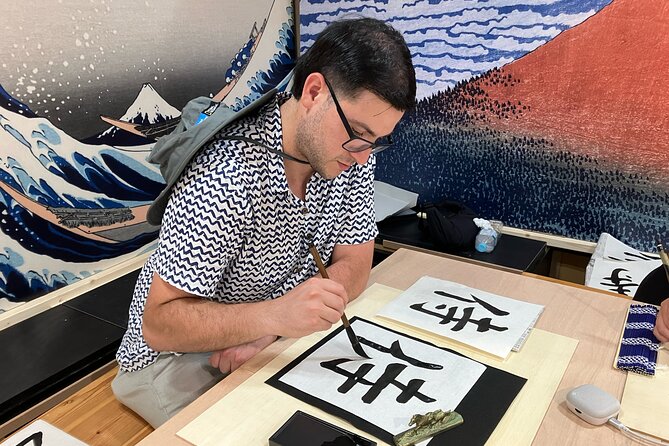
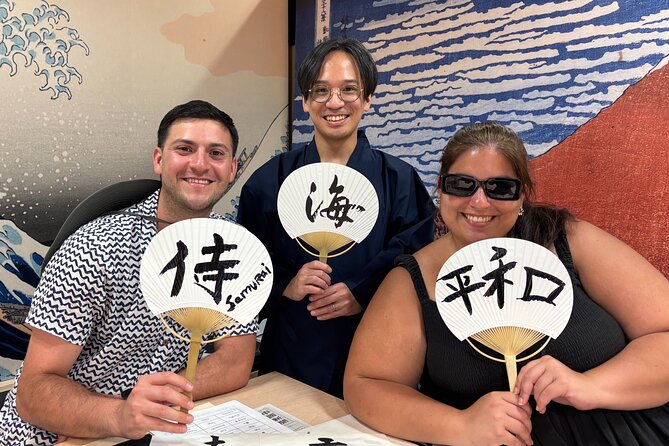
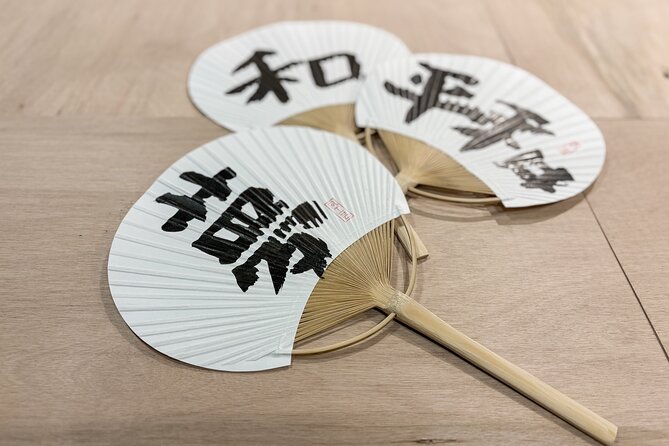
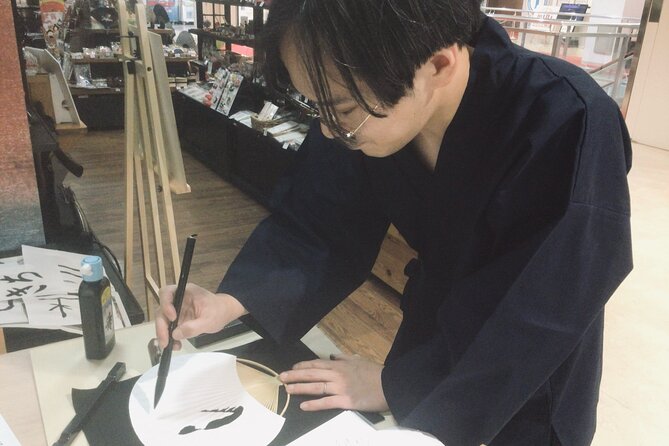
The final task is to write your chosen word on a traditional Japanese hand fan, called an uchiwa, or on a shikishi calligraphy board. The supplied details identify an original calligraphy fan as an included souvenir, while the activity description also presents the board as an available format. If the format matters to you, confirm the exact choice when booking or at the start of the session.
This is the part you will probably remember most clearly. Your finished work is not a mass-produced item picked from a shelf. It carries the uneven lines, ink weight, and small decisions that came from your own hand.
The fan is a particularly useful souvenir because it is light and easy to pack. A shikishi board has a more formal presentation and may suit you if you want something to display at home. Neither option requires artistic skill, but you should expect the result to look handmade rather than perfectly uniform.
You are welcome to take photos during the session. There is also an optional photo service: the staff can photograph you while you work and send the images digitally afterward at no extra charge. This is a helpful touch if you want a record of the activity without interrupting your concentration to take pictures yourself.
What the private format changes
This is a private activity, so only your group participates. That can make the lesson feel less exposed, especially if you are nervous about trying Japanese characters in front of strangers.
A private session also gives the instructor a better chance to respond to your pace. If one person in your group has never used a brush before, the lesson can focus on the basics. If another person wants to attempt a more complex character, there may be room to ask for extra guidance.
The trade-off is that the 45-minute duration remains short. A private format does not turn this into a full course. You will get personal attention, but you will still move through the tools, practice strokes, characters, and final artwork in a compact period.
The activity may suit couples, families, friends, or solo participants who prefer a quiet appointment. Since the activity ends back at the meeting point, you do not need to arrange transport between separate parts of the experience.
Is $32.81 a fair price?
At $32.81 per person, this is priced as a small cultural activity rather than an all-day class. The fee includes the calligraphy tools, use of the venue, and the original souvenir, so you are paying for both instruction and a finished item.
I see the value in the combination of location, materials, and personal guidance. You are not paying only for paper and ink. You are also getting access to a professional calligrapher, a private session, and a setting with a real connection to Japanese folk crafts.
The price makes more sense if you plan to visit central Hiroshima anyway. With the Atomic Bomb Dome and Hiroden Hondori Station close by, you can fit the workshop into a day without adding a long transfer or separate transport cost.
The short length is the main limit on value. If you want technical training, several finished pieces, or time to perfect your brushwork, you may find the session too brief. If you want one thoughtful activity and a meaningful souvenir, the cost is easier to justify.
Who will enjoy this workshop most?
I would recommend it to first-time calligraphy students, people interested in Japanese culture, and anyone who likes making rather than simply buying souvenirs. It is also a good option for a parent and child or a small group looking for an activity that does not depend on weather.
The calm setting may appeal after a busy day of sightseeing. The session does not ask you to prepare in advance, and the instructor’s gentle manner should help you settle into the process quickly.
You should think twice if you dislike guided craft activities or want a longer lesson. Calligraphy rewards patience, and the workshop is built around a short introduction rather than open-ended creative time.
It is also worth remembering that the final piece will reflect your own skill. The goal is not to produce museum-quality calligraphy. The value comes from learning the motions and taking home something that you made yourself.
Practical planning for your Hiroshima day
The workshop lasts approximately 45 minutes and begins and ends at Takumi. Since it is near major Hiroshima sights and public transport, it works well as a planned stop between visits.
Confirmation is provided within 48 hours of booking, subject to availability. The experience accepts mobile tickets, so you can keep the booking on your phone rather than printing paperwork.
Most people can participate, and the location is near public transportation. No private transportation is included, and parking fees are not included, so public transport or walking is the simplest choice.
Free cancellation is available if you cancel at least 24 hours before the scheduled start time. Cancellations made less than 24 hours ahead are not refunded, and late changes are not accepted. The cut-off follows Hiroshima local time, so check the time carefully if you are arranging the workshop during a tightly planned trip.
The final call: should you book it?
Book this workshop if you want a calm, personal activity close to Hiroshima’s central sights. The handmade Kumano brushes, ukiyo-e decorated room, patient instruction from Sensai Ryosei, and take-home artwork give the 45 minutes real character.
I would especially choose it for a first introduction to calligraphy. You get enough practice to understand the basics, yet the session does not demand a large time commitment. The private format also makes it easier to ask questions and work at your own level.
Skip it if you want an advanced class or a long creative session. For everyone else, $32.81 is a reasonable price for a guided cultural experience, useful location, supplied materials, and a souvenir that carries your own brush marks.
FAQ
Where is the calligraphy workshop held?
It is held at Bonkogei Takumi, located at 2-chōme-2-18 Kamiyachō, Naka Ward, Hiroshima. The shop is on the fifth floor of Sanmall Mall, with UNIQLO on the second floor.
How long does the experience last?
The calligraphy workshop lasts approximately 45 minutes.
How far is Takumi from the Atomic Bomb Dome?
The shop is about a five-minute walk from the Atomic Bomb Dome.
How far is the workshop from Hiroden Hondori Station?
Takumi is about a three-minute walk from Hiroden Hondori Station.
Are calligraphy materials provided?
Yes. The workshop provides the brush, ink, paper, and other calligraphy tools needed for the session.
What souvenir can I make?
You can create calligraphy on a traditional Japanese hand fan or a shikishi calligraphy board. The included souvenir is described as an original calligraphy fan, so confirm the available format if you specifically want the board.
Can I cancel for a refund?
Yes. You can receive a full refund if you cancel at least 24 hours before the experience start time. Cancellations or changes made less than 24 hours before the start are not accepted for a refund.
Just added around Hiroshima
- Hiroshima Country Cycling: Explore Rural Life 1 HR from City★ 5.0 · 22 reviews
- History of Hiroshima Group Walking Tour★ 5.0 · 23 reviews
- Hiroshima and Miyajima 1 Day Cruise Tour★ 5.0 · 24 reviews
- Hiroshima Peace Park & Atomic Bomb Dome Guided Walk★ 4.9 · 24 reviews
- Hiroshima Private Tour with a Local – Highlights & Hidden Gems★ 4.5 · 24 reviews
- Hiroshima & Miyajima: UNESCO A-Bomb Dome & Itsukushima with Local★ 5.0 · 25 reviews
- Hiroshima Peace Park & A-Bomb Dome Private Walking Tour (4 Hours)★ 5.0 · 26 reviews
- Hiroshima History Tour : A-Bomb Dome, Peace Memorial & City★ 5.0 · 26 reviews
Japanese Calligraphy Classes, compared.
Calligraphy class at Buddhist temple in city center
Read our review →
Let’s experience calligraphy in YANAKA, Taito-ku, TOKYO !!
Read our review →
Calligraphy Workshop & Original T-Shirt Creation
Read our review →
Calligraphy Workshop & Original T-Shirt Creation
Read our review →Browse the lists this tour appears in