
Reviewed · HISTORICAL TOURS
History of Hiroshima Group Walking Tour
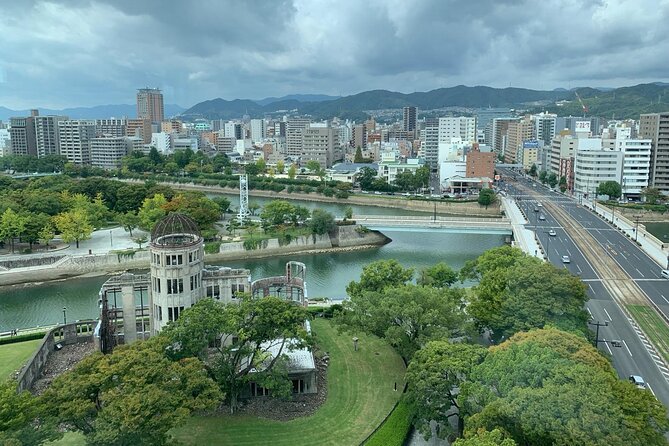
History can be felt in every quiet corner. This two-hour Hiroshima walk brings the Peace Memorial Park into focus through personal stories, historic sites, and the city’s message of peace. I like the Peace Studies background offered by the guide, and I like the compact route, which works well if you have only a short time in Hiroshima. The main consideration is pace: nine stops in about two hours leaves limited time at each place.
The tour costs $32.84 per person and includes guiding but no food. It is a group walk capped at 30 people, although the experience can feel more personal when attendance is smaller. Guides named Cva, Malek, Moe, Shiva, and Ali have all been praised for clear English, warmth, humor, and strong answers to difficult questions.
In This Review
- Key points to know before booking
- Why a guide helps in Hiroshima Peace Memorial Park
- Beginning at the 10 Gates of Peace
- The Mother and Baby in the Storm
- The Cenotaph and the names of the dead
- Inside the National Peace Memorial Hall
- The Rest House and a rare survival story
- Sadako, paper cranes, and the Children’s Peace Monument
- The Korean Victims and Survivors Monument
- The Peace Bell
- The Atomic Bomb Dome and the end at ground zero
- What the two-hour timing really means
- Group size, guide style, and questions
- Price and practical value at $32.84
- Who should book this Hiroshima walk?
- Should you book the History of Hiroshima Group Walking Tour?
- FAQ
- How long is the History of Hiroshima Group Walking Tour?
- Where does the tour begin?
- Where does the tour end?
- What sites are included?
- Is food included?
- Can children join the tour?
- What happens if I cancel?
Key points to know before booking
- Starts at the 10 Gates of Peace: The opening stop gives you historical context before the memorials begin.
- A focused two-hour route: You visit nine important sites without spending an entire day in the park.
- Guiding adds meaning to quiet monuments: The tour explains the people and stories behind places that are easy to pass without context.
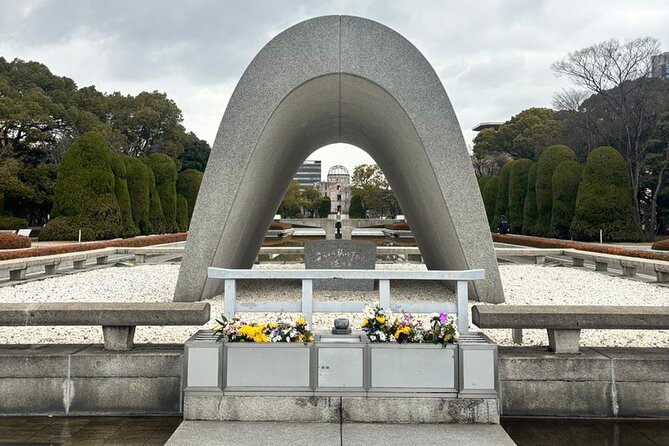
- Includes the Atomic Bomb Dome: You finish at one of Hiroshima’s most recognizable surviving structures.
- The route is free to enter: The price pays for the guide, not admissions to the outdoor memorials.
- Good for short stays: The walk is near public transportation and ends at the Atomic Bomb Hypocenter Monument.
Why a guide helps in Hiroshima Peace Memorial Park
Hiroshima Peace Memorial Park is easy to reach, but it is not always easy to understand. The grounds contain monuments, bells, statues, halls, and preserved buildings spread across a compact area. Without explanation, you may recognize the Atomic Bomb Dome and the Cenotaph, yet miss the human stories connecting them.
This walk gives each stop a place in the larger story. The guide explains why the atomic bomb was dropped on Hiroshima, how the bombing affected world history, and how the city later became a symbol of peace and resilience.
That framing matters. Hiroshima is not simply a place to look at damaged buildings and memorial statues. It is also a place where questions about war, civilian life, responsibility, survival, and nuclear weapons remain close to the surface. A guide with a degree in Peace Studies can help you approach those subjects with care rather than reducing the experience to a list of dates.
The tone is serious, but it is not intended to be grim from start to finish. Several guides have been praised for using light humor at suitable moments while keeping respect for the subject. That balance can help you stay attentive during an emotionally demanding walk.
More History Tours in Hiroshima
- Hiroshima Historical Walking Tour – Why A-Bomb was Dropped
★ 4.8 · 893 reviews - Hiroshima Peace (Heiwa) Walking Tour at World Heritage Sites
★ 5.0 · 872 reviews - Miyajima Half-day Trip Historical Walking Tour
★ 5.0 · 284 reviews
Beginning at the 10 Gates of Peace
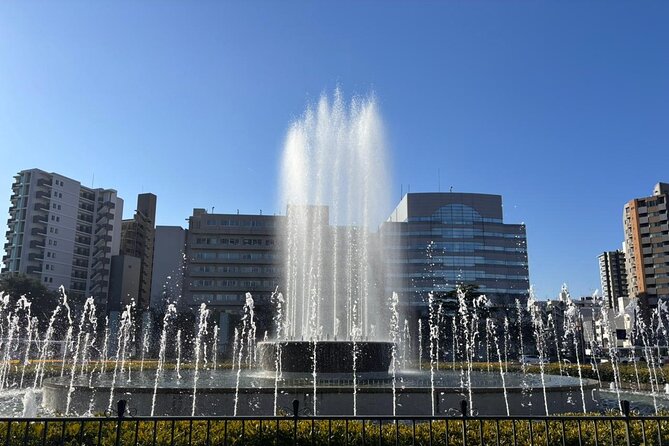
The tour starts at Ristorante Mario, at 4-11 Nakajimacho in Hiroshima’s Naka Ward. From there, the group begins at the 10 Gates of Peace, where the guide introduces the bombing and its place in world history.
Nine of the gates represent the circles of hell described in Dante’s Divine Comedy. The tenth gate represents Hiroshima’s own suffering. This is a striking place to begin because it sets a reflective tone before you reach the better-known monuments.
Expect about 20 minutes here. That is enough time for the guide to establish the main themes and explain why the park is arranged as more than a collection of memorials.
If you prefer to begin a tour with basic context, this opening works well. If you already know a great deal about the bombing, the introduction may feel familiar, but the guide can add local and human detail.
The Mother and Baby in the Storm
The next stop is the Arashi no Naka no Boshi Statue, translated as Mother and Baby in the Storm. The monument honors mothers who lost their lives while trying to save their children.
The stop lasts only about five minutes, but its short length does not make it unimportant. It shifts the focus from broad military and political history to the instinctive actions of parents during a disaster.
This is one of the details that can be easy to miss when exploring on your own. A guide helps explain why the statue matters and connects it with the wider civilian experience of the bombing.
The Cenotaph and the names of the dead
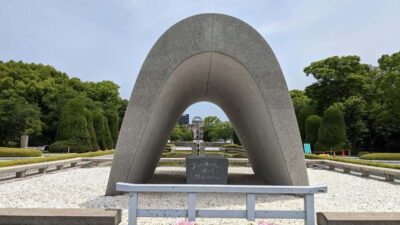
The Hiroshima Peace City Monument, also called the Cenotaph for the Atomic Bomb Victims, receives about 20 minutes. The monument holds the names of people who died in the bombing.
Here, the tour moves from a general account of Hiroshima to a direct reminder that the death toll was made up of individual people. The guide can help you understand the memorial’s design and the meaning of the names preserved there.
Allow yourself some quiet time at this stop. A group walk naturally includes conversation, but this is a place where you may want to listen, look carefully, and pause before moving on.
More Walking Tours in Hiroshima
- Hiroshima City 4hr Private Walking Tour with Licensed Guide
★ 5.0 · 437 reviews - Hiroshima Walking Tour Why A Bomb was dropped to Hiroshima
★ 5.0 · 347 reviews - Hiroshima: History of Hiroshima Group Walking Tour
★ 4.8 · 266 reviews - Hiroshima: Food and Culture Guided Walking Tour with Dinner
★ 4.9 · 212 reviews
Inside the National Peace Memorial Hall
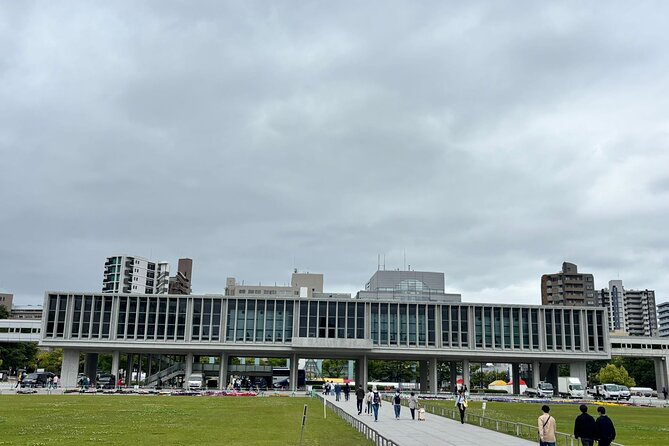
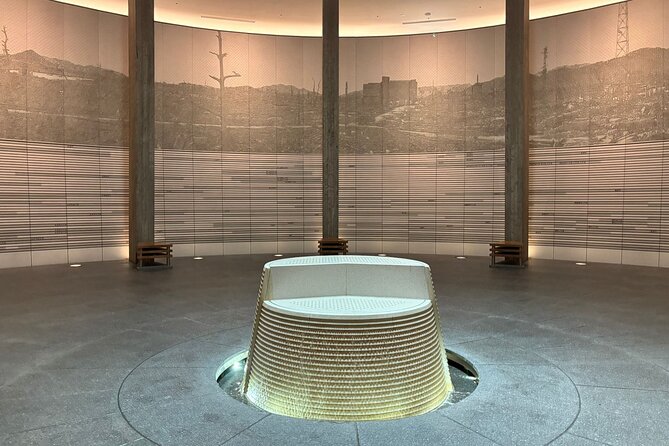
The Hiroshima National Peace Memorial Hall for the Atomic Bomb Victims is scheduled for about 20 minutes. The hall presents the destruction of the city and adds another layer to the outdoor memorials.
The outdoor park can sometimes feel calm and orderly. The hall helps show the scale of what happened and the condition of Hiroshima after the bombing. It also gives you a more direct account of the city’s destruction than monuments alone can provide.
Because the walk has a fixed schedule, you should not expect a long museum visit. The guide’s role is to point out the main meaning of the hall and place it in the route’s larger story. If you want to spend considerable time reading every display, you may need to return on your own after the tour.
The Rest House and a rare survival story
The Rest House of Hiroshima Peace Park is scheduled for about 15 minutes. The building is noted for surviving despite being only 170 meters from ground zero.
That distance makes the structure’s survival especially important. It gives you a physical sense of how close the blast was to the center of the park and how unusual it was for a building to remain standing.
This stop is useful because it turns an abstract measurement into something you can see. Instead of hearing only about the radius of destruction, you are looking at a structure connected to that fact.
Sadako, paper cranes, and the Children’s Peace Monument
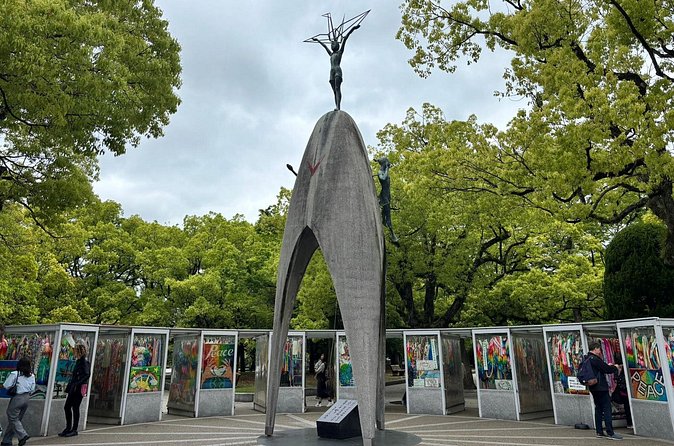
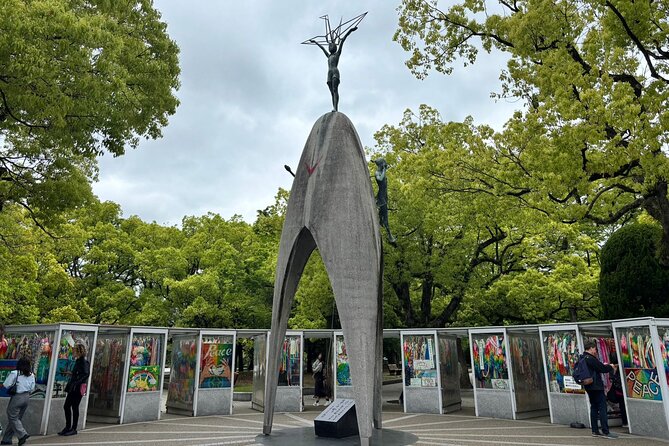
The Children’s Peace Monument receives about 10 minutes. It honors Sadako and the children who died after the bombing, and it explains the paper crane as a symbol of peace.
Sadako’s story has become one of the best-known personal accounts connected with Hiroshima. The paper crane also gives the park a message that younger people can understand, making this stop especially meaningful for families.
Two children aged 0 to 10 can join the tour free of charge. That makes the walk more practical for families, although parents should still consider the emotional weight of the subject. The guide’s explanation can help children understand the monument without leaving them to interpret it alone.
The brief stop is enough for an introduction, but not for a long discussion of every detail. Families who want more time around the monument can stay after the guided walk.
The Korean Victims and Survivors Monument
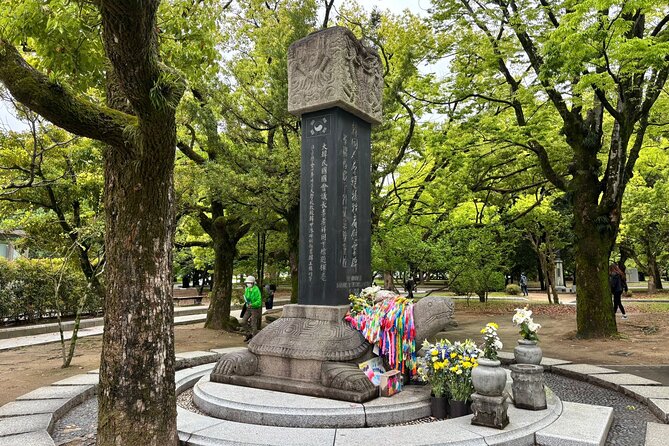
The tour then visits the Monument to Korean Victims and Survivors for about five minutes. This stop recognizes Koreans who were victims of the bombing.
Including the monument broadens the story beyond Hiroshima’s Japanese population. It reminds you that the city was connected to the wider Japanese Empire and that people from different backgrounds were present when the bomb fell.
This is a small stop, but it is important for a more complete understanding of who suffered. The guide’s explanation helps prevent the memorial park from being viewed through only one national perspective.
The Peace Bell
The Peace Bell is another short stop, lasting about five minutes. Its message is direct: peace should replace war.
On a two-hour route, a brief visit here is sensible. The bell gives the group a moment to consider the central idea of the park before moving toward the Atomic Bomb Dome.
The stop may feel less detailed than the memorial hall or Cenotaph, but it provides a change of rhythm. Hiroshima’s memorials do not all tell the same kind of story. Some preserve names, some show destruction, and others express hope for the future.
The Atomic Bomb Dome and the end at ground zero
The Atomic Bomb Dome receives about 15 minutes and is one of the most powerful stops on the route. The structure survived the atomic bombing, although the city around it was devastated.
Its damaged frame is visually striking, but the guide’s explanation gives it greater meaning. You learn why this building remains important and how it became linked with Hiroshima’s message of peace.
The tour ends at the Hiroshima Atomic Bomb Hypocenter Monument, at 1-5-25 Otemachi. This is identified as the ground zero area, so the walk finishes at the point most directly tied to the bombing.
Ending there gives the route a clear shape. You begin with a broad explanation at the Gates of Peace, move through memorials and personal stories, and finish at the physical center of the event. You may want a quiet break afterward.
What the two-hour timing really means
The stated duration is approximately two hours. That makes this a useful choice for a short Hiroshima visit, especially if you are fitting the Peace Memorial Park between train connections or other sightseeing.
The route is active without being described as difficult. One direct assessment called it an easy two-hour walk. Still, you will be on your feet for most of the experience, and the group moves from one stop to the next.
The schedule gives each location roughly five to 20 minutes. That is enough for explanation and questions, but not enough for a slow museum visit or extended personal reflection at every monument.
I see this as an orientation walk rather than a complete study of the park. You get the structure, the key stories, and a useful introduction. Afterward, you can return to the places that affected you most.
Group size, guide style, and questions
The maximum group size is 30 people. A group that size can make it harder to hear or ask questions, especially around popular sites, but the experience may be smaller on your departure.
The strongest praise focuses on the guides’ ability to explain difficult material in clear English and respond to questions. Cva is described as warm, personable, and able to bring in humor at the right moments. Malek is praised for giving strong historical insight, while Moe is noted for explaining the Japanese perspective before and after the bombing. Shiva is described as energetic and able to answer questions well.
Those details suggest that the guide can make a major difference. Since the experience provider is Ali and several guide names appear in the tour’s feedback, your exact guide may vary. You should expect the same general route, but personal style and depth may differ.
The group format also means the walk is not built around your private schedule. The route is fixed, and the guide needs to keep moving so all nine stops fit into two hours.
Price and practical value at $32.84
At $32.84 per person, the main value comes from interpretation. The outdoor memorials do not require admission, so you are paying for the guide’s time, route planning, historical context, and help making sense of the site.
That is a fair price if you want to understand what you are seeing rather than simply photograph the major landmarks. It is especially useful if you have one day or less in Hiroshima and do not want to spend hours sorting out the park alone.
The value is weaker if you prefer to explore quietly at your own speed or already have a strong understanding of Hiroshima’s history. You will still visit the main sites, but the two-hour schedule limits how long you can linger.
No lunch or food is included, so plan to eat before or after the walk. The start is near public transportation, and the route ends at the Hypocenter Monument rather than returning to the restaurant. A mobile ticket is provided, and confirmation arrives when you book.
Free cancellation is available up to 24 hours before the start time. Changes or cancellations within 24 hours are not refunded. The tour also requires good weather and a minimum number of participants, so a weather or low-attendance cancellation can result in another date, another experience, or a full refund.
Who should book this Hiroshima walk?
This tour suits you best if you want a clear introduction to Hiroshima in a limited amount of time. It is a good match for first-time visitors, people interested in peace studies, and anyone who wants the human stories behind the park’s monuments.
Families can also consider it, especially since two children aged 0 to 10 may join free. The content is serious, so adults should decide how much historical detail is suitable for their children.
The walk is less suitable if you need a private pace, want long museum visits, or prefer to avoid group activities. A maximum of 30 participants is manageable, but it is not the same as a private guide.
You should also leave room in your day for your own exploration. The tour gives you a strong route through the park, but the short stops mean you may want to revisit the National Peace Memorial Hall, Children’s Peace Monument, or Atomic Bomb Dome afterward.
Should you book the History of Hiroshima Group Walking Tour?
I would book this tour if you have roughly two hours and want more than a quick look at Hiroshima’s famous landmarks. The guide’s Peace Studies background, the attention to Korean victims and children, and the final stop at the Hypocenter Monument give the walk a thoughtful structure.
The best reason to choose it is the human focus. You are not just moving from statue to statue. You hear about mothers, children, survivors, victims from outside Japan, and the city’s effort to turn catastrophe into a call for peace.
Skip it if you already know the park well or want to spend the entire day inside the memorial facilities. For most first-time visits, though, $32.84 is a reasonable price for a respectful, focused introduction that helps you see Hiroshima with greater care.
FAQ
How long is the History of Hiroshima Group Walking Tour?
The tour lasts approximately two hours.
Where does the tour begin?
It begins at Ristorante Mario, located at 4-11 Nakajimachō, Naka Ward, Hiroshima, 730-0811, Japan.
Where does the tour end?
The walk ends at the Hiroshima Atomic Bomb Hypocenter Monument, located at 1-chōme-5-25 Ōtemachi, Naka Ward, Hiroshima, 730-0051, Japan.
What sites are included?
The route includes the 10 Gates of Peace, Arashi no Naka no Boshi Statue, the Cenotaph for the Atomic Bomb Victims, Hiroshima National Peace Memorial Hall, the Rest House, Children’s Peace Monument, Monument to Korean Victims and Survivors, Peace Bell, and Atomic Bomb Dome.
Is food included?
No. Lunch and all other food are not included.
Can children join the tour?
Yes. Two children aged 0 to 10 can join free of charge.
What happens if I cancel?
You can receive a full refund if you cancel at least 24 hours before the experience begins. Cancellations or changes made less than 24 hours before the start are not refunded.
Just added around Hiroshima
- Hiroshima Country Cycling: Explore Rural Life 1 HR from City★ 5.0 · 22 reviews
- Hiroshima and Miyajima 1 Day Cruise Tour★ 5.0 · 24 reviews
- Hiroshima Peace Park & Atomic Bomb Dome Guided Walk★ 4.9 · 24 reviews
- Hiroshima Private Tour with a Local – Highlights & Hidden Gems★ 4.5 · 24 reviews
- Hiroshima & Miyajima: UNESCO A-Bomb Dome & Itsukushima with Local★ 5.0 · 25 reviews
- Calligraphy Workshop at Traditional Folk Craft Shop in Hiroshima★ 5.0 · 26 reviews
- Hiroshima Peace Park & A-Bomb Dome Private Walking Tour (4 Hours)★ 5.0 · 26 reviews
- Hiroshima History Tour : A-Bomb Dome, Peace Memorial & City★ 5.0 · 26 reviews
Historical Tours, compared.
World Heritage Shirakawa-go and Experience Tours from Kanazawa
Read our review →
Imperial Palace and Shogun Historical Walking Tour
Read our review →
World Heritage Kyoto & Nara Uji Authentic Matcha Experience
Read our review →
Kyoto Gion: 2-Hour Geisha Culture & History Walking Tour
Read our review →
World Heritage Shirakawa-go Morning Guided Tour
Read our review →
Hiroshima Historical Walking Tour – Why A-Bomb was Dropped
Read our review →
Hiroshima Peace (Heiwa) Walking Tour at World Heritage Sites
Read our review →Browse the lists this tour appears in