
Reviewed · WORKSHOPS
Experience the Soul of Hiroshima: A Peaceful Koto Workshop
Music can carry what words cannot. In a quiet Hiroshima studio, you learn the 13-string koto, hear how Fukuyama became Japan’s leading koto-making center, and play a complete piece with an English-speaking instructor. I especially like the use of authentic Fukuyama instruments and the way the lesson connects music with Hiroshima’s message of peace. The main drawback is simple: 90 minutes passes quickly, and some people may want more time to build confidence.
I also like that this is not a performance you only watch. You sit at the instrument, learn posture and plucking, read basic koto music, and join a group finale. The $50 price feels fair for a small-group lesson with drinks, a video keepsake, and an origami crane, though the short session limits how much technique you can cover.
In This Review
- Key Points at a Glance
- Why a Koto Lesson Fits Hiroshima So Well
- Meeting the Koto, Japan’s 13-String Instrument
- What Happens During the 90-Minute Class
- The Final Performance and Your Video Keepsake
- The Instructors Make the Difference
- Is $50 a Good Value?
- Who Will Enjoy This Most?
- Practical Tips for a Smoother Visit
- My Take on the Peaceful Atmosphere
- Should You Book This Hiroshima Koto Workshop?
- FAQ
- Where does the Hiroshima koto workshop take place?
- How do I reach the meeting point by streetcar?
- How long does the koto class last?
- Is the workshop taught in English?
- Do I need musical experience or Japanese language skills?
- What age group can join?
- What is included after the lesson?
Key Points at a Glance
- Play a complete piece in 90 minutes: Beginners work from basic posture and plucking toward a group performance.
- Use instruments from Fukuyama: More than 70 percent of Japan’s kotos are said to be made in Fukuyama City, a major center for the craft.
- Connect music with Hiroshima’s peace message: The workshop features Echo of Serenity, a composition honoring atomic bomb victims.
- Learn entirely in English: You do not need Japanese or previous musical training.
- Leave with meaningful keepsakes: You receive a recording of the final performance and a folded origami crane.
- Keep the group small: The class is limited to six people, which gives the instructor room to help beginners.
Why a Koto Lesson Fits Hiroshima So Well
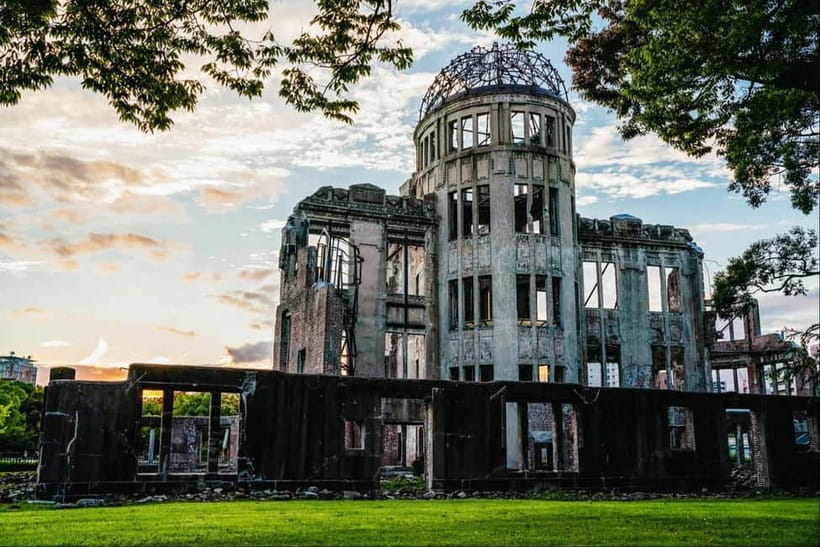
Hiroshima is a city where the past is never far away. The Peace Memorial Park, museum, and A-Bomb Dome ask you to think about war and peace in direct, sometimes difficult ways. This workshop offers a quieter response.
Instead of standing silently in front of a memorial, you take part in a shared musical activity. The koto’s long, resonant notes give the class a reflective mood without turning it into a formal ceremony. You learn an instrument, but you also spend time considering how art can express grief, hope, and peace.
The featured composition is Echo of Serenity, described as a musical prayer for people who died in the atomic bombing. You do not need a musical background to understand its purpose. The piece gives the lesson a clear emotional center, and the final group performance allows you to contribute rather than simply observe.
Some past sessions have included Sakura, so the exact piece may vary by class or program. If playing Echo of Serenity is the main reason you are booking, confirm the planned music when you reserve.
A few more Hiroshima experiences worth weighing up
- Private Japanese Cooking Class in Hiroshima with Machiko’s Family
★ 5.0 · 35 reviews - Calligraphy Workshop at Traditional Folk Craft Shop in Hiroshima
★ 5.0 · 26 reviews - Sushi Making Tokyo Roll and Authentic Japanese Sushi Class
★ 5.0 · 3,971 reviews
Meeting the Koto, Japan’s 13-String Instrument
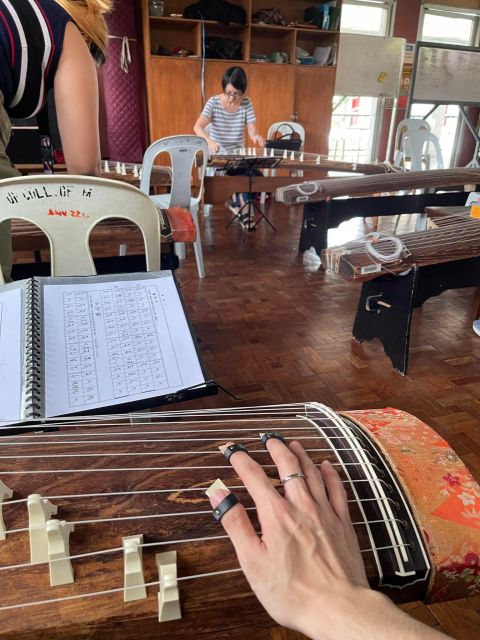
The koto is an elegant instrument with 13 strings stretched across a long wooden body. During the introductory part of the lesson, you learn about its roughly 1,300-year history and the meaning behind parts of its design.
That background matters because the koto can otherwise seem like a beautiful but unfamiliar object. Once you hear how it developed and why its parts were made in particular ways, the instrument feels less like a museum piece and more like something you can approach.
You also learn about Fukuyama City in Hiroshima Prefecture. It is presented as the heartland of Japanese koto craftsmanship, with more than 70 percent of Japan’s kotos produced there. The workshop uses Fukuyama-made instruments, so you are not merely hearing about the craft. You are playing an instrument from the region associated with its modern production.
I appreciate this local connection. The class links Hiroshima’s peace message with a nearby Japanese craft tradition, rather than presenting a generic cultural activity that could happen anywhere in Japan.
What Happens During the 90-Minute Class
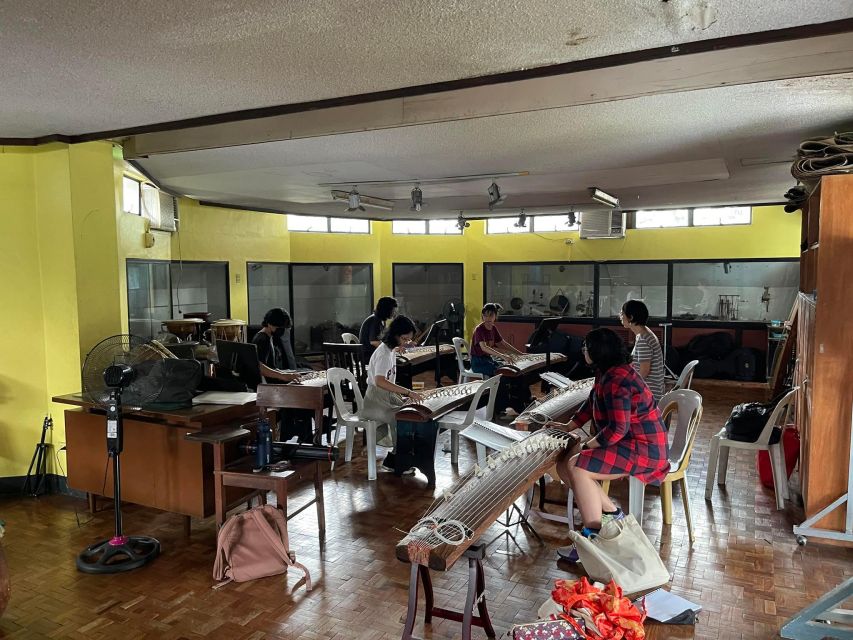
The workshop begins at 石田第2ビル, a studio within walking distance of Peace Memorial Park. If you arrive by streetcar, get off at Tatemachi Station. From there, walk straight from the corner marked by Tully’s Coffee toward the YMCA.
When you reach the Gokku okonomiyaki restaurant, turn right. Look for the workshop sign and continue to the second floor. These directions are specific, but allow yourself enough time to find the building, since the meeting point is not described as a major tourist landmark.
The first part of the class covers the koto’s background and construction. You learn why the instrument matters in Japanese music and how Fukuyama fits into that story.
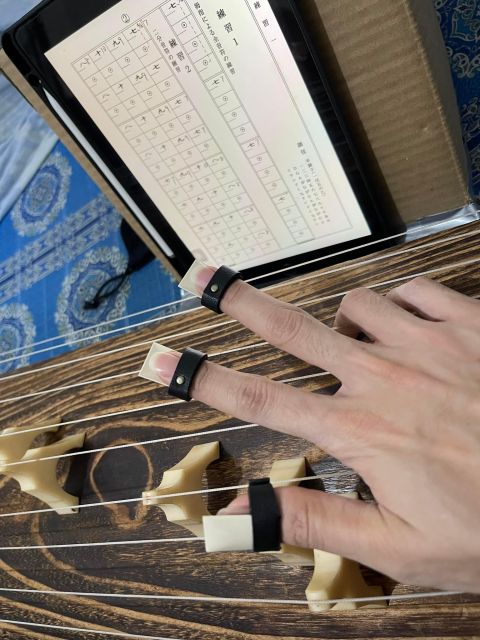
Next comes the physical introduction. The instructor shows you how to sit, where to place your hands, and how to pluck the strings. This is useful for complete beginners because the koto does not work like a guitar or piano. You need to become comfortable with the instrument’s length, string spacing, and playing position before the music starts to make sense.
The class then moves through simple exercises. You build toward a complete piece rather than spending the whole time on isolated notes. Elizabeth from the United States described learning both a song and the basics of reading koto music in about an hour, while James from the United Kingdom praised the gradual progression from history to exercises and then to a group performance.
That progress is one of the workshop’s strongest features. You will not become a koto player in one session, but you can make music by the end. For many people, that is more satisfying than receiving a short demonstration from an expert.
The Final Performance and Your Video Keepsake
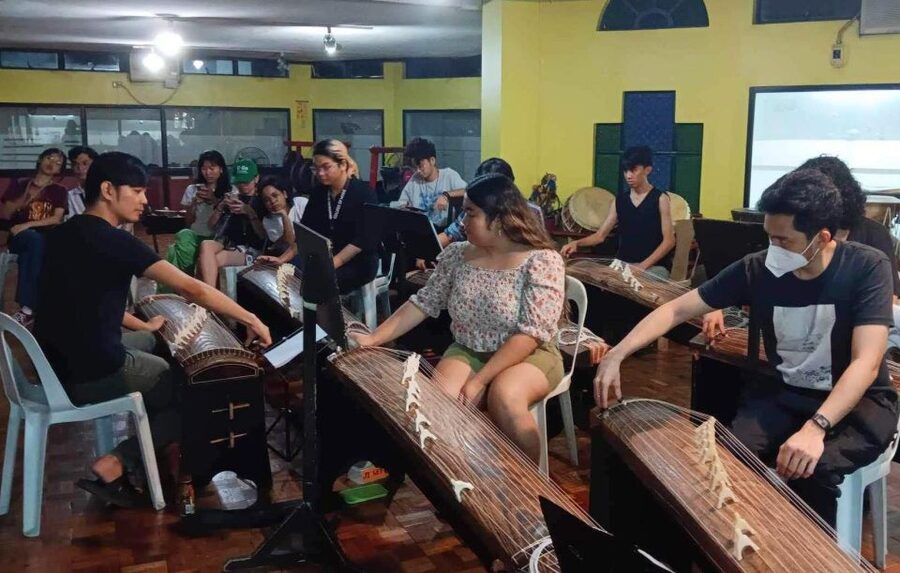
The finale brings the small group together for Echo of Serenity, with accompaniment from the instructor. Each participant contributes a part, so the result is a shared performance rather than a solo test.
You should not expect concert-level precision. The point is to hear the group create something together after starting with no experience. That makes the finale especially suitable for couples, families with children aged 10 and older, friends, and solo participants who enjoy meeting others through an activity.
The workshop provides a video recording of the performance. This is a useful keepsake because it captures more than a photograph of you sitting beside an instrument. You can share the recording with family or friends, and it gives you a reminder of the peace theme at the center of the lesson.
The recording also helps justify the $50 cost. You are paying for instruction, cultural context, use of the instrument, a group performance, and a personal memento. It is not the cheapest activity in Hiroshima, but it offers more participation than a standard cultural demonstration.
A completely different kind of day out in Hiroshima:
- Peaceful Hiroshima & Miyajima UNESCO 1 Day Bus Tour
★ 5.0 · 5,309 reviews - Hiroshima: Hiroshima and Miyajima UNESCO Sites 1-Day Tour
★ 4.9 · 2,330 reviews - Hiroshima / Miyajima Full-day Private Tour with Government Licensed Guide
★ 5.0 · 1,298 reviews - Hiroshima Historical Walking Tour – Why A-Bomb was Dropped
★ 4.8 · 893 reviews
The Instructors Make the Difference
The available feedback points to strong teaching as one of the workshop’s most praised qualities. Vincent has been described as an excellent teacher who explains the instrument’s background before guiding participants through exercises. Nicholas has also taught the class, including a session featuring Sakura.
The strongest comments focus on clear explanations, patience, encouragement, and humor. Those qualities matter in a short class. A rushed or overly formal instructor could make a new instrument intimidating, while a friendly teacher can get you playing quickly.
Instruction is in English throughout. You do not need to know Japanese, and no musical experience is required. That makes the workshop a practical choice if you want a cultural activity but do not feel comfortable navigating a Japanese-language lesson.
The limited group size of six is another advantage. You are more likely to receive direct help with posture and technique than in a large demonstration. Still, a small group does not change the time limit. If everyone needs extra assistance, the final practice period may feel brief.
Is $50 a Good Value?
At $50 per person, this workshop sits in the reasonable range for a guided cultural activity in Hiroshima. The value comes from the combination of features rather than from the length alone.
You receive a 90-minute English-language lesson, use of a traditional instrument, historical and cultural context, instruction from a teacher, a group performance, a video recording, and a folded origami crane. Coffee, tea, juice, and a soft drink are also available after the session.
The origami crane is a small item, but it has a clear connection to Hiroshima. It is widely recognized as a symbol of peace and hope, and taking one home gives you a simple way to explain the workshop’s purpose to someone else.
The biggest value question is your expectation. If you want a serious introduction to koto technique, 90 minutes will feel limited. One participant specifically wished for a longer class to become more familiar with the instrument. If you want a memorable first encounter and the ability to play a short piece, the timing works much better.
There is also an option to purchase a koto at the studio. If you become interested, you can continue lessons online after returning home. The information provided does not give the instrument’s price, so treat this as an extra possibility rather than part of the $50 package.
Who Will Enjoy This Most?
I would recommend the workshop to several kinds of people:
- First-time visitors to Hiroshima: It adds a thoughtful cultural activity near the Peace Memorial Park.
- Music lovers: You get to handle a rare traditional instrument and play an original composition or, depending on the class, a familiar Japanese song such as Sakura.
- Families with older children: The minimum age is 10, and the hands-on format may hold attention better than a passive museum visit.
- Couples and friends: The final ensemble creates a shared memory without requiring anyone to perform alone.
- Solo participants: The group setting gives you a natural way to take part with others.
- People seeking a reflective activity: The peace theme gives the class more weight than a basic craft or entertainment session.
I would be less enthusiastic if you want a long, technical music course. You will learn the essentials, but the workshop is designed to give you an accessible first experience, not mastery.
Practical Tips for a Smoother Visit
Plan the class around your visit to Peace Memorial Park. The studio is within walking distance of the park, so the workshop can work well before or after time at the memorials. The music may feel especially meaningful after visiting the park, though some people may prefer to take the class first and approach the historical sites afterward with the koto’s message in mind.
Arrive with enough time to follow the streetcar and walking directions. Tatemachi Station, Tully’s Coffee, the YMCA, and Gokku are the useful landmarks. The final instruction is to go to the second floor of the building marked by the workshop sign.
Wear something that allows you to sit comfortably and use your arms freely. The supplied information does not specify a dress code, but posture and hand position are part of the lesson, so restrictive clothing could be inconvenient.
If you are booking for a child, remember the minimum age is 10. The activity is suitable for beginners, but younger children are not accepted.
The workshop does not allow pets, except assistance dogs, and alcohol and drugs are prohibited. Cancellation is free up to 24 hours before the start time, and you can reserve now and pay later if that option is available for your chosen time.
My Take on the Peaceful Atmosphere
The best part of this activity is its balance. It gives you facts about the koto, but it does not stop at a lecture. It gives you a peace-themed piece, but it does not ask you to treat the lesson as a solemn memorial service. You learn, play, laugh, and then take part in a quiet group performance.
That balance also explains why the class has earned a perfect rating from 32 reviews. The praise centers on the instructors, the clear teaching, the chance to play a real song, and the satisfaction of making music so quickly. One participant even singled out the pineapple juice, which is a reminder that small comforts can make a short class feel relaxed.
The occasional concern is consistent too: some people want more time. I would keep that limitation in mind, especially if you already play an instrument or plan to buy a koto and continue lessons. For everyone else, the short format is part of the appeal. You can fit it into a full Hiroshima day without giving up half your sightseeing schedule.
Should You Book This Hiroshima Koto Workshop?
Book it if you want a hands-on activity with real local context, clear English instruction, and a meaningful connection to Hiroshima. The Fukuyama-made instruments, small group, peace-themed performance, video recording, and origami crane give the experience more substance than a quick cultural photo opportunity.
Skip it if you need an extended technical lesson or dislike group activities. You will not cover every aspect of the koto in 90 minutes, and the final performance is shared with other participants.
For most visitors, I think the workshop is a good $50 choice, especially when paired with a visit to Peace Memorial Park. You leave with a new skill, a short piece of music, and a reminder that remembrance can take a quiet, creative form.
FAQ
Where does the Hiroshima koto workshop take place?
The workshop takes place at 石田第2ビル in Hiroshima, in a studio within walking distance of Peace Memorial Park.
How do I reach the meeting point by streetcar?
Get off at Tatemachi Station. Walk straight from the corner with Tully’s Coffee toward the YMCA, turn right at the Gokku okonomiyaki restaurant, and follow the sign to the second floor.
How long does the koto class last?
The class lasts 90 minutes.
Is the workshop taught in English?
Yes. All instruction is conducted in English.
Do I need musical experience or Japanese language skills?
No. The workshop is designed for beginners, and Japanese is not needed.
What age group can join?
Participants must be at least 10 years old.
What is included after the lesson?
Coffee, tea, juice, and a soft drink are available after the session. You also receive a video recording of the final performance and a folded origami crane.
Just added around Hiroshima
- Hiroshima Country Cycling: Explore Rural Life 1 HR from City★ 5.0 · 22 reviews
- History of Hiroshima Group Walking Tour★ 5.0 · 23 reviews
- Hiroshima and Miyajima 1 Day Cruise Tour★ 5.0 · 24 reviews
- Hiroshima Peace Park & Atomic Bomb Dome Guided Walk★ 4.9 · 24 reviews
- Hiroshima Private Tour with a Local – Highlights & Hidden Gems★ 4.5 · 24 reviews
- Hiroshima & Miyajima: UNESCO A-Bomb Dome & Itsukushima with Local★ 5.0 · 25 reviews
- Calligraphy Workshop at Traditional Folk Craft Shop in Hiroshima★ 5.0 · 26 reviews
- Hiroshima Peace Park & A-Bomb Dome Private Walking Tour (4 Hours)★ 5.0 · 26 reviews
Workshops, compared.
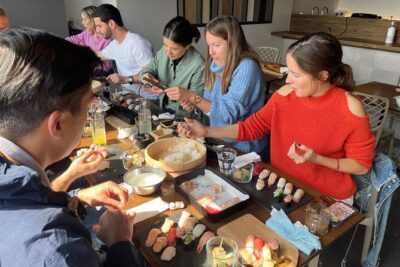
Sushi Making Tokyo Roll and Authentic Japanese Sushi Class
Read our review →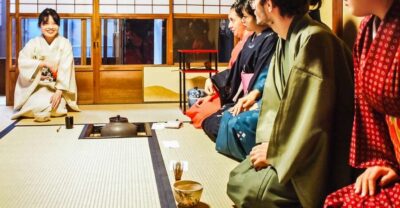

Roll and Authentic Sushi Making Class in Asakusa
Read our review →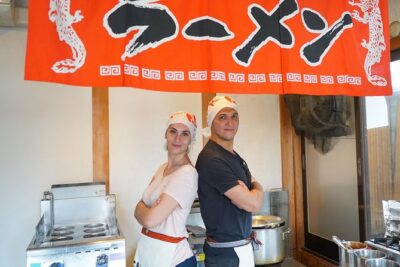
Ramen Cooking Class at Ramen Factory in Kyoto
Read our review →
Sushi Making Class in a Happi Coat near a Famous Spot
Read our review →
Sushi Making Osaka Roll and Authentic Japanese Sushi Class
Read our review →Browse the lists this tour appears in