
Reviewed · CASTLE TOURS
Kyoto Imperial Palace & Nijo Castle Guided Walking Tour – 3 Hours
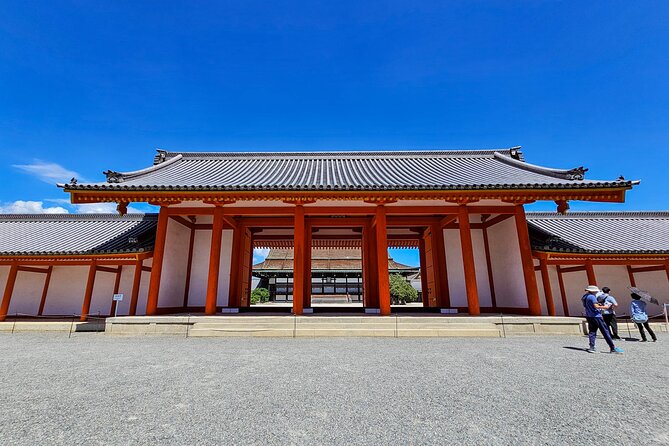
Kyoto’s past comes alive at two grand landmarks. This three-hour tour links Nijo Castle and Kyoto Imperial Palace, giving you a useful historical thread from shogun rule to imperial Kyoto. The small group, limited to nine people, should make it easier to hear your guide and ask questions.
I like the included entrance fees and the chance to choose a departure time. I also like the personal touch praised by several guests, especially guides such as Jasmine, Taku, Atsushi, and Raphael, who were described as clear, patient, and good with questions. The main drawback is practical: the two sites are not next door, and transportation between them is not included.
In This Review
- Key points to know before booking
- Why these two sites belong together
- Starting at Nijo Castle
- The transfer between castle and palace
- Entering Kyoto Imperial Palace
- What makes the guide worthwhile
- Price, group size, and overall value
- Who should book this Kyoto walking tour?
- Practical advice for a smoother visit
- Should you book it?
- FAQ
- How long is the Kyoto Imperial Palace and Nijo Castle tour?
- What is included in the price?
- How much does the tour cost?
- Where does the tour begin?
- Where does the tour end?
- Is transportation between the two sites included?
- How many people can join the group?
- Can I cancel for a full refund?
Key points to know before booking
- Nijo Castle comes first: Expect about 90 minutes among shogun-era rooms, gardens, architecture, and historic interiors.
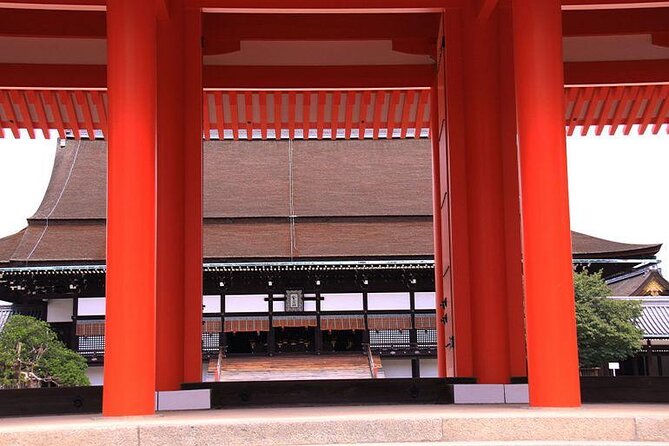
- Kyoto Imperial Palace follows: The second 90-minute visit focuses on imperial architecture, grounds, and Kyoto’s long role as Japan’s capital.
- Small groups matter: The maximum group size is nine, a comfortable number for a walking tour and discussion.
- Plan your transfer: The tour begins at Nijojo-mae Station and ends at Imadegawa Station, but you must arrange your own movement between the two sites.
- Guides are a major part of the value: Jasmine received repeated praise for her explanations, flexibility, photographs, and clear English. Guide assignments are not guaranteed.
- The price is reasonable: At $55 per person, admission and three hours with an English-speaking guide make this a fair choice for first-time visitors who want context.
Why these two sites belong together
Kyoto can feel like a city of separate attractions. One temple here, one garden there, one palace behind a wall. This tour gives you a clear line through an important part of Japanese history by pairing Nijo Castle with the Imperial Palace.
Nijo Castle represents the military government of the shoguns. The Kyoto Imperial Palace represents the emperor and the court that remained in Kyoto for more than a thousand years. Seeing both in one morning or afternoon helps you understand that Japanese power was not centered in one simple place.
That contrast is the real reason to book. On your own, you can admire painted rooms, gates, gardens, and broad courtyards. With a good guide, those details gain meaning. You can better understand why a castle built for a shogun looks and feels different from a palace built for the imperial family.
The experience is conducted in English and keeps moving for three hours. It is not designed as a slow, private architectural study. Instead, you get a practical introduction to two of Kyoto’s most important historic sites in one compact outing.
More Castle Tours in Kyoto
- Kyoto: Nijo-jo Castle and Ninomaru Palace Guided Tour
★ 4.7 · 1,020 reviews - Kyoto: Nijo Castle, Kiyomizu & Fushimi Inari Guided Tour
★ 4.7 · 700 reviews - Kyoto: Imperial Palace & Nijo Castle Guided Walking Tour
★ 4.7 · 453 reviews
Starting at Nijo Castle
The meeting point is Nijojo-mae Station, at Nijojocho in Kyoto’s Nakagyo Ward. Starting here makes sense because the castle is the first major stop, and the station is close to the entrance area.
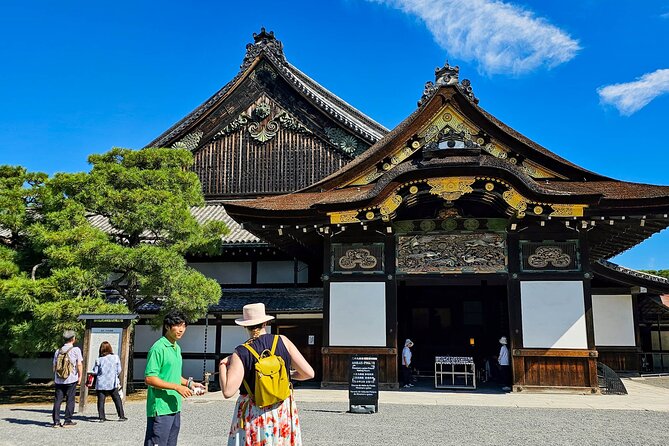
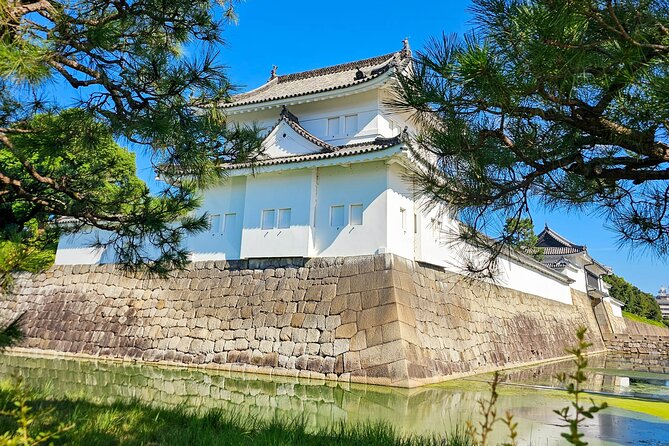
Nijo Castle offers an immediate change of mood from ordinary city streets. Its scale, formal design, gardens, and decorated interiors give you a direct look at the world of Japan’s shoguns. The visit lasts about 90 minutes, enough time for a guided introduction without turning the entire day into a museum marathon.
Your guide is expected to explain the castle’s architecture, history, and artistic details. Several guests especially valued explanations of cultural symbolism and shogun-era customs, rather than a simple list of construction dates. That distinction matters. A guide who points out why a room looks the way it does gives you something to remember after you leave.
The interiors are a key part of the visit. You can expect intricate decoration and rooms that suggest how status, ceremony, and authority were displayed. The gardens add a quieter counterpoint, with open views and attractive places for photographs.
Jasmine was praised several times for making the castle easy to understand, answering questions beyond a prepared script, and keeping her voice clear for a group that included a hard-of-hearing parent. Alex was appreciated for offering just the right amount of information while keeping the group moving. These comments point to the kind of guiding that works best here: enough detail to sharpen your eyes, but not so much that you spend the whole visit listening instead of looking.
You should allow time for walking and standing. Nijo Castle is a sightseeing visit, not a seated presentation, and the tour covers substantial grounds. On a hot day, the pace and breaks become important. One guide was praised for making regular stops for water and air conditioning, while another was credited with keeping the route moving in high heat.
The transfer between castle and palace
This is the part you should understand before paying. Transportation between Nijo Castle and Kyoto Imperial Palace is not included, and the sites are not adjacent.
The supplied route information gives the experience as a walking tour, but practical reports indicate that walking between the two locations can take about 30 minutes. That time can reduce the amount available for sightseeing, particularly if the group is delayed or you are visiting in hot weather.
Some guests arranged taxis. One unfortunate outing involved a group being split between two cabs, with one vehicle going to the wrong gate. The result was confusion, extra expense, and lost tour time. This appears to have been an individual mishap rather than the normal design of the experience, but it exposes a real weakness: the route needs clear coordination between the guide, group, and drivers.
If you book, ask the guide at the start how the transfer will work. Confirm the Imperial Palace gate or meeting point before leaving the castle. Keep your phone charged, stay with the group, and do not assume that a taxi driver will know the exact entrance from a vague destination.
This is also where your departure time matters. A morning visit may be more comfortable in warm weather, while an afternoon outing could fit neatly after another Kyoto sight. The available departure choices are useful, but the tour still follows a fixed three-hour framework.
Entering Kyoto Imperial Palace
The second half takes place at Kyoto Imperial Palace, ending near Imadegawa Station in Kamigyo Ward. The palace was once the residence of Japan’s imperial family, and the grounds offer a different view of Kyoto’s past from the one you get at Nijo Castle.
Expect broad spaces, formal architecture, gardens, and an atmosphere shaped by court life rather than military rule. Your guide will explain the palace’s role and point out features that are easy to pass without context.
This is where a guide can help you notice subtleties. One guest said the tour helped explain the meaning of the palace and grounds in a way that would have been hard to grasp alone. Another praised the comparison between historic customs and present-day Japanese culture.
The palace portion is also a good chance to slow down visually. At Nijo Castle, you are likely to focus on interiors, decoration, and the authority of the shogun. At the palace, the scale and arrangement of the grounds create a more measured impression. You get photographs, architecture, and garden views, along with the historical explanation that ties them together.
The scheduled time is another 90 minutes. That is enough for an organized overview, but you should not expect to inspect every corner at length. If you are an architecture specialist or a serious garden enthusiast, you may want a separate visit with more time. If your aim is to understand the palace’s place in Kyoto’s story, this format should serve you well.
The tour ends at Imadegawa Station, which is useful for continuing your day. Hotel pickup and drop-off are not provided, so you should plan your route afterward before setting out.
More Walking Tours in Kyoto
- Kyoto Geisha Walking Tour: Gion District & Hidden Gems
★ 4.7 · 3,273 reviews - Kyoto: Gion Magical Night Walking Tour with Geisha Trivia
★ 4.9 · 2,393 reviews - Kyoto: Gion Geisha District Walking Tour – Stories of Geisha
★ 4.7 · 2,187 reviews - Night Walk in Gion: Kyoto’s Geisha District
★ 4.5 · 2,003 reviews
What makes the guide worthwhile
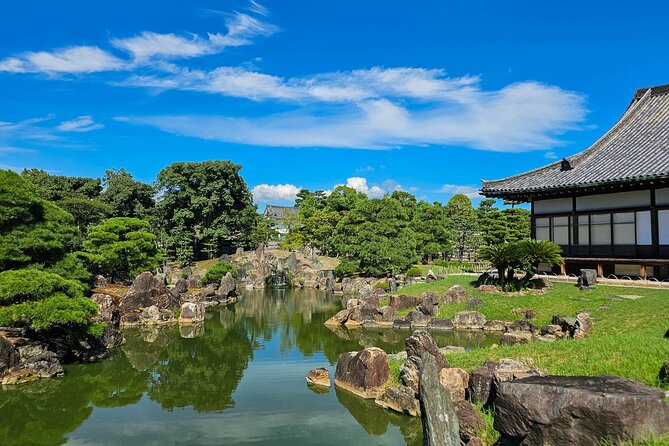
The tour’s strongest feature is not simply access to two famous sites. It is the human explanation between them.
Several guides earned praise for being friendly, patient, and flexible. Jasmine appears repeatedly in the feedback, with particular credit for her English, historical explanations, clear speaking voice, photo help, and care with transportation after the tour. Taku was described as a local certified Kyoto guide with extensive experience at both Nijo Castle and the Imperial Palace. Atsushi was praised for special stories about the sites, while Raphael received warm comments for patiently answering many questions.
You cannot request a particular guide with certainty based on the information provided, so book for the format rather than for one individual. Still, these names show the standard the operator can deliver.
The best guides do more than recite facts. They connect the shogun’s castle, the emperor’s former residence, architecture, art, ceremony, and modern Japanese life. That kind of explanation is especially useful if you are new to Japanese history or find palace layouts difficult to interpret.
A guide also helps with group rhythm. The comments describe guides taking photographs, adjusting for heat, waiting at meeting points, and helping people find transportation afterward. Those small acts can make a three-hour walk feel much easier.
Price, group size, and overall value
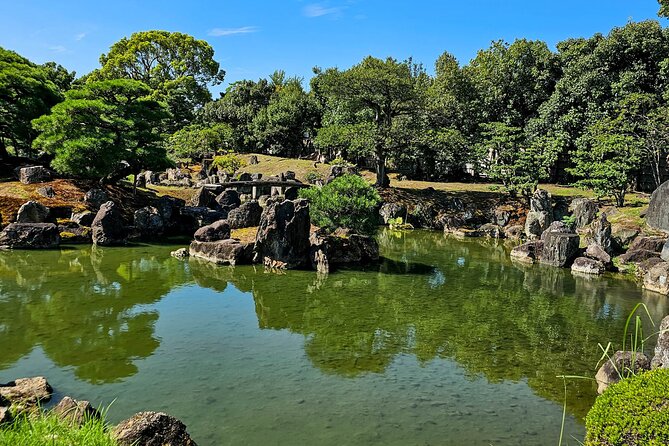
The cost is $55 per person, with group discounts available. Admission fees are included, along with an English-speaking guide and the three-hour walking tour.
I consider that a fair price if you want both sites and prefer not to build the historical framework yourself. Entrance tickets, route planning, and explanation are handled together. The maximum of nine people is also a good balance: small enough for conversation, but not priced like a private tour.
The value drops if you already know Japanese political history or prefer to explore at your own pace. You will have less freedom to linger, and the transfer between sites takes planning. An audio guide or a strong guidebook could replace some of the explanation, especially at Nijo Castle.
Still, the price is modest for a half-day Kyoto activity that includes two major landmarks. You are paying for interpretation and structure, not just entry. For many first-time visitors, that is the part that makes the outing worthwhile.
Who should book this Kyoto walking tour?
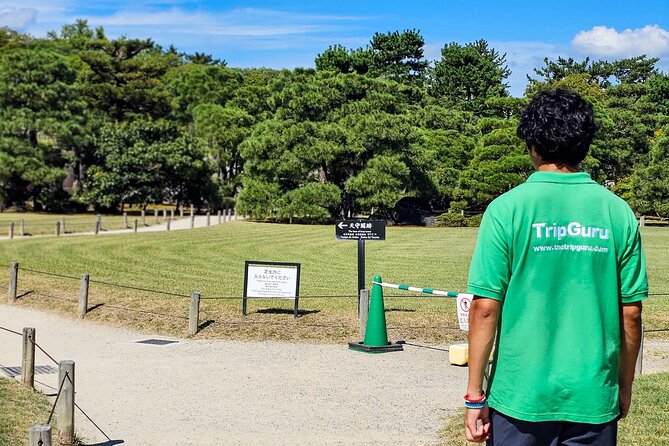
I would recommend it to first-time Kyoto visitors, families, couples, and anyone who wants a clear introduction to the city’s political and imperial past. Children can take part, and one guide was specifically praised for answering children’s questions with patience.
It also suits people who like organized sightseeing but do not want a large coach group. Nine people is small enough to hear the guide and ask questions without turning every stop into a crowd-control exercise.
The tour may be less suitable if you have limited walking ability, dislike moving between sites, or want extensive free time for photography. The route includes outdoor walking, and summer heat can make the pace tiring. Most people can participate according to the supplied information, but you should be comfortable walking for much of the three hours.
I would also think carefully if your schedule is tight. The transfer is the uncertain part. A delay, a wrong taxi gate, or a crowded transport connection can affect the palace visit.
Practical advice for a smoother visit
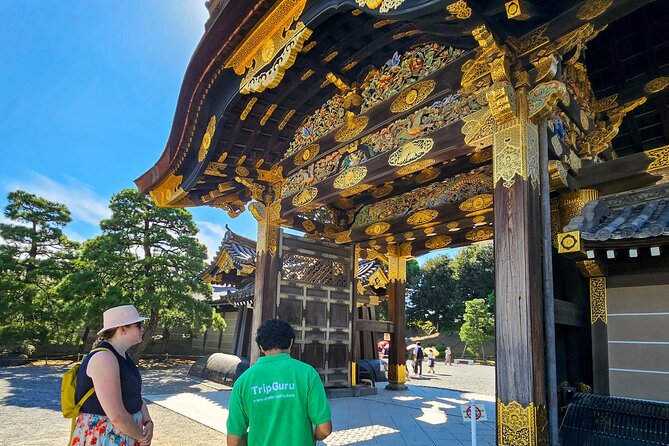
Meet at Nijojo-mae Station with a little extra time. One guide was praised for being present even when the group arrived early, but arriving early is still wise when a tour begins at a station rather than a hotel.
Wear comfortable shoes and bring water, especially in warm weather. The route includes gardens, courtyards, and outdoor paths, and you may spend much of the visit on your feet.
Keep your phone available during the transfer. Ask exactly where the group will meet at the Imperial Palace, and confirm whether the group is walking or using taxis. If you choose a taxi, show the driver the precise destination rather than relying on a general site name.
Bring a camera, but do not let photographs replace the explanations. The most useful moments may be the small details your guide connects to court ceremony, shogun authority, architecture, or modern culture.
The cancellation terms are simple: you can receive a full refund if you cancel at least 24 hours before the start time. Changes or cancellations inside that window are not accepted for a refund.
Should you book it?
Book this tour if you want two major Kyoto landmarks explained in one compact outing, especially if Japanese history is new to you. The included admission, small group, strong guide feedback, and reasonable $55 price create a good package.
Before booking, make a plan for the transfer between Nijo Castle and the Imperial Palace. That is the clearest weakness, and it can affect both comfort and sightseeing time.
My advice is to book, arrive prepared, and ask about the route between sites before the group leaves Nijo Castle. If you do that, this should be an efficient and worthwhile way to see the shogun’s castle and the former imperial residence in the same afternoon.
FAQ
How long is the Kyoto Imperial Palace and Nijo Castle tour?
The tour lasts approximately three hours, with about 90 minutes at Nijo Castle and 90 minutes at Kyoto Imperial Palace.
What is included in the price?
The price includes an English-speaking guide, entrance fees, and the three-hour walking tour.
How much does the tour cost?
The listed price is $55 per person. Group discounts are available.
Where does the tour begin?
The tour begins at Nijojo-mae Station near Nijo Castle, at Nijojocho in Kyoto’s Nakagyo Ward.
Where does the tour end?
The tour ends at Imadegawa Station in Kyoto’s Kamigyo Ward.
Is transportation between the two sites included?
No. Hotel transfers, meals, drinks, and personal expenses are not included. Transportation between Nijo Castle and Kyoto Imperial Palace must be arranged separately.
How many people can join the group?
The tour has a maximum of nine participants.
Can I cancel for a full refund?
Yes. You must cancel at least 24 hours before the experience start time for a full refund. Cancellations or changes made less than 24 hours before the start time are not accepted for a refund.
More 3-Hour Experiences
- 3-Hour Kyoto Insider Sake Brewery Tour with Tastings & Pairings
★ 5.0 · 917 reviews - Kyoto: 3-Hour Fushimi Inari Shrine Hidden Hiking Tour
★ 4.9 · 270 reviews - Tokyo Top Highlights 3h Guided E-bike Tour
★ 5.0 · 714 reviews - 3h Tokyo E-Bike Tour: Hidden Gems, and Local Life with guide
★ 5.0 · 670 reviews
Just added around Kyoto
- Kyoto: Gion Night Walking Tour with Geisha Insight★ 5.0 · 39 reviews
- Kyoto: Private Customizable Day Trip by Car★ 5.0 · 38 reviews
- Kyoto: Full Day Bike Tour★ 4.9 · 39 reviews
- Private Japanese Calligraphy in Kyoto – Learn Shodō with a Master★ 5.0 · 39 reviews
- Kyoto: Gion Evening Walk with Hidden Gems, Geisha & Sake★ 5.0 · 41 reviews
- Experience a tea ceremony in an authentic tearoom, in Kyoto!★ 4.5 · 41 reviews
- Kyoto Private Photo Shoot & Tour by SnapKyoto★ 5.0 · 41 reviews
- The Way of Tea: Kyoto Crafts, Hidden Temples & Wabi-Sabi Walk★ 5.0 · 41 reviews
Castle Tours, compared.
Tokyo Castle & Imperial PalaceーShogun Walking Tour
Read our review →
Nijo-jo Castle and Ninomaru Palace Guided Tour
Read our review →
Ultimate Osaka Walking Tour: Castle, Dotonbori & Hidden Gems
Read our review →Tokyo Castle & Imperial PalaceーShogun Walking Tour
Read our review →
Nijo Castle, Kiyomizu & Fushimi Inari Guided Tour
Read our review →
Osaka Castle Walking Tour and Castle Tower Admission
Read our review →
Imperial Palace East Garden and Edo Castle Walking Tour in Tokyo
Read our review →Browse the lists this tour appears in