
Reviewed · TEA CEREMONY EXPERIENCES
Kyoto Newly Opened Tea Ceremony – Sanjo Chasuian
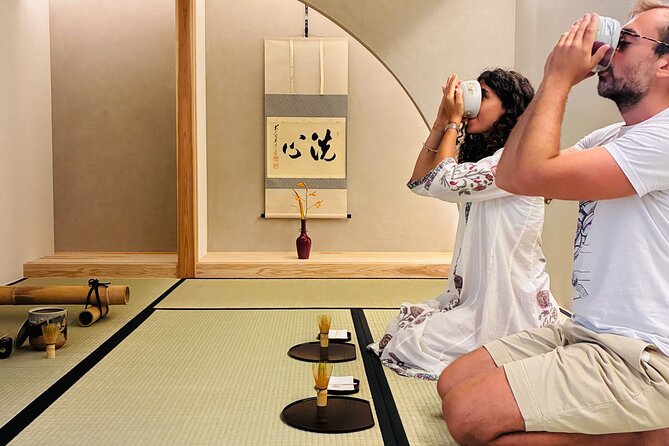
Slow down with a bowl of matcha. Kyoto Newly Opened Tea Ceremony at Sanjo Chasuian gives you a calm, hands-on introduction to one of Japan’s most thoughtful traditions. In about an hour, you watch a tea master prepare matcha, learn why each movement matters, and make a bowl yourself.
I especially like the two servings of matcha, one prepared by the host and one whisked by you. The beautiful seasonal sweet from a Kyoto shop with more than a century of history is another fine touch. The main consideration is strict timing: arrive late, even by one minute, and you cannot enter or receive a refund.
In This Review
- Key details before you book
- What makes this Kyoto tea ceremony worth an hour
- Arriving at Sanjo Chasuian in Nakagyo Ward
- Crossing the nijiriguchi
- Watching the host prepare the first bowl
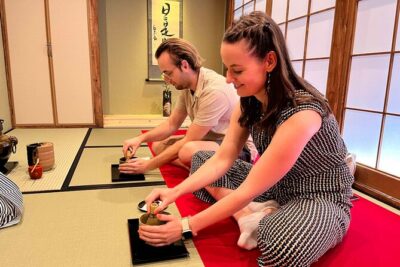
- Choosing a bowl and whisking your own matcha
- Seasonal Kyoto sweets with the tea
- A calm lesson rather than a formal test
- Optional traditional clothing and a possible sake add-on
- Price, timing, and practical value
- Who will enjoy Sanjo Chasuian most
- Should you book this Kyoto tea ceremony?
- FAQ
- How long does the tea ceremony last?
- What is included in the price?
- Can I make my own matcha?
- How many people can join the session?
- Where does the experience begin and end?
- Do I need to arrive early?
- What is the cancellation policy?
Key details before you book
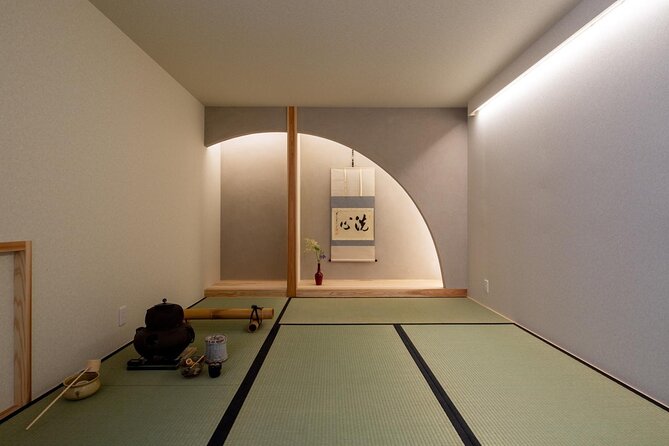
- You make your own matcha: Choose a tea bowl, use the whisk, and prepare a serving after watching the host.
- The session includes two bowls: You drink one made by the tea master and one made by yourself or a companion.
- The tea room has a nijiriguchi: This small crawl-in entrance is a traditional feature that marks the step from ordinary life into the tea room.
- Seasonal sweets are included: The confectionery comes from a Kyoto sweet shop with more than 100 years of history.
- The group is limited to 10 people: That keeps the lesson personal and leaves room for questions.
- You must bring or wear socks: Chairs are available, but the setting remains quiet and traditional.
What makes this Kyoto tea ceremony worth an hour
Kyoto offers many ways to see its old customs. You can walk through shrine grounds, admire gardens, or watch a craft demonstration. A tea ceremony asks something different of you: stop moving, pay attention, and take part in a carefully ordered exchange.
That is the appeal of Sanjo Chasuian. This is not only a performance where you sit silently while an expert handles everything. You first watch the host prepare matcha, then try the process yourself. The lesson gives you enough background to understand the ceremony without turning the hour into a lecture.
I like that balance. The ritual has rules, but the teaching style is friendly and accessible. Questions are welcome, and the host explains both the practical steps and the meaning behind them. The result feels less intimidating than a formal ceremony might.
The experience is also a good fit for a busy Kyoto schedule. At roughly one hour, it is long enough to give you a real sense of the tradition but short enough to fit between sightseeing stops. You return to the same meeting point at the end, so there is no complicated transfer or separate finish location to manage.
More Tea Ceremonies in Kyoto
- Kyoto: Tea Ceremony in a Traditional Tea House in Kiyomizu
★ 4.9 · 3,519 reviews - Kyoto: Tea Ceremony Ju-An at Jotokuji Temple
★ 4.9 · 3,207 reviews - Kyoto: 45-Minute Tea Ceremony Lesson Experience
★ 4.3 · 2,378 reviews
Arriving at Sanjo Chasuian in Nakagyo Ward
The meeting point is Tea Ceremony & Sake Tasting Kyoto, Sanjo Chasuian, at 324-2 Sanjōchō, Nakagyo Ward, Kyoto, postal code 604-8205. The venue is near public transportation, and the activity begins and ends there.
Finding the entrance deserves a little care. Google Maps may guide you toward a smaller street at the corner. A useful landmark is the green matcha ice cream cone in front of the venue. Stay on the main street and look for that sign rather than following the map blindly into the side lane.
Plan to arrive early. Entry is allowed from five minutes before the scheduled start, and the door is locked once the session begins. This is not a drop-in activity. Arriving one minute late means missing the ceremony and losing the payment, so I would give yourself extra time for the walk from the station or your hotel.
The room is described as clean and new, which matters here. A tea ceremony depends on order and quiet. A tidy space helps you focus on the bowl, the whisk, the sweets, and the host’s movements instead of on clutter around you.
Crossing the nijiriguchi
One of the most distinctive features is the nijiriguchi, a small crawl-in entrance found in traditional tea rooms. Its low height has a practical and symbolic purpose. Everyone entering must lower themselves, leaving status and the outside world behind before the ceremony begins.
You do not need to treat this as a physical challenge. Chairs are available, and the host allows you to sit in a way that feels comfortable. Still, you should expect some floor sitting and some movement around the low entrance. Bring or wear socks, as requested by the venue.
That combination makes the setting approachable for first-time visitors. You get an authentic tea-room detail without being expected to manage a highly formal posture for the whole hour. If floor sitting is difficult for you, contact the provider before booking to clarify what arrangement can be made.
The quiet atmosphere is part of the experience. This is not a loud tasting session or a rapid photo stop. Once inside, you are asked to listen, watch, and let the pace slow down.
Watching the host prepare the first bowl
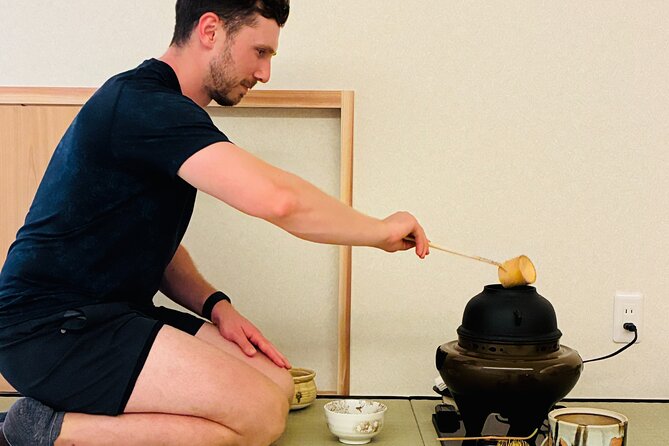
The ceremony begins with explanation and demonstration. The host introduces the background and significance of the Japanese tea ceremony, then shows how the utensils are handled and how matcha is prepared.
This first bowl is important because it gives you a model to follow. You can watch the position of the bowl, the use of the bamboo whisk, and the measured rhythm of the preparation. The host explains the reasons behind the steps rather than simply performing them without comment.
The teaching is delivered in English. The host has been praised for a warm presentation, clear instruction, patience, and a good ability to answer questions. One note is that the English may have a slight accent, though the instructions remain understandable. If a detail is unclear, ask at once. The small group makes that easier.
The host’s own bowl is included in the price. You are not merely observing someone else’s tea. You receive a serving prepared by a professional, along with the seasonal sweet meant to accompany it.
A completely different kind of day out in Kyoto:
- PERFECT KYOTO 1-Day Bus Tour
★ 5.0 · 13,518 reviews - Kyoto: Fushimi Inari, Kinkakuji, Bamboo Grove 1 Day Bus Tour
★ 4.8 · 4,316 reviews - Kyoto Geisha Walking Tour: Gion District & Hidden Gems
★ 4.7 · 3,273 reviews - Kyoto: Gion Magical Night Walking Tour with Geisha Trivia
★ 4.9 · 2,393 reviews
Choosing a bowl and whisking your own matcha
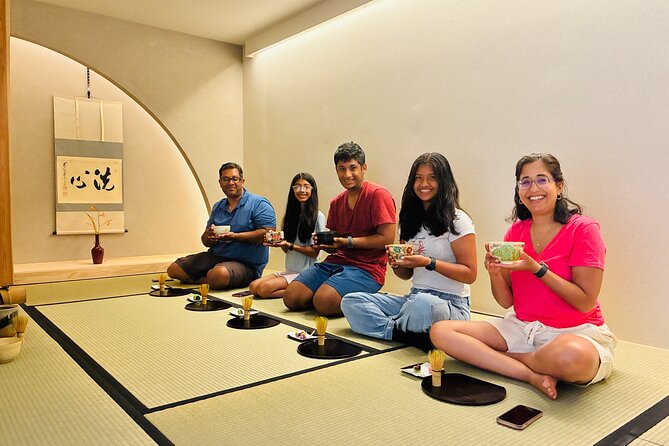
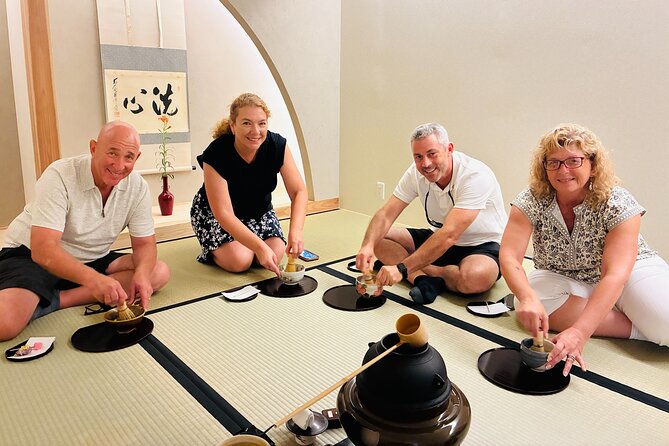
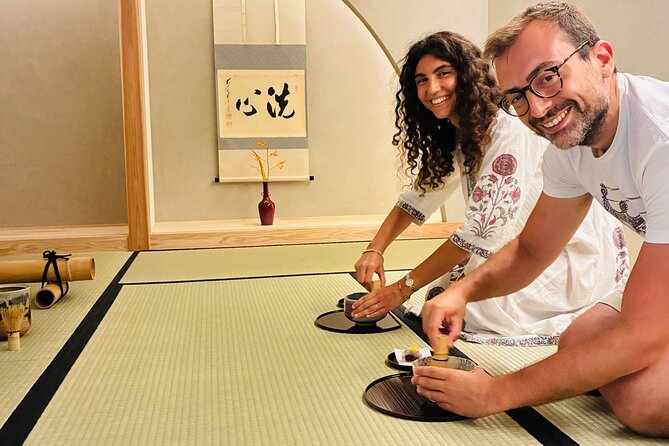
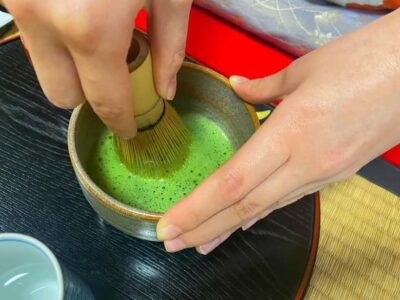
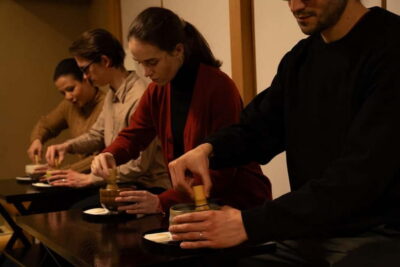
After watching the demonstration, you choose a tea bowl and prepare your own serving. This is the part that turns a cultural explanation into something you can remember through your hands.
Matcha preparation looks simple until you try it. The whisking motion, the amount of effort, and the feel of the tea all become easier to understand once you hold the tools yourself. The host guides you through the process and allows you to prepare a bowl alone or with a companion.
I like this hands-on section because it removes the pressure to be perfect. You are not being tested on a sacred skill. You are learning by copying the host’s movements, asking questions, and noticing how the powdered tea changes as you whisk it.
You receive a second bowl of matcha, the one you make yourself. That is a strong value point at $32.77 per person. Many short cultural activities give you one taste and a brief demonstration. Here, you watch, drink a professionally prepared bowl, and then practice the method for yourself.
You can also purchase matcha, tea bowls, and selected items at the venue. Those purchases are optional and are not part of the stated price.
Seasonal Kyoto sweets with the tea
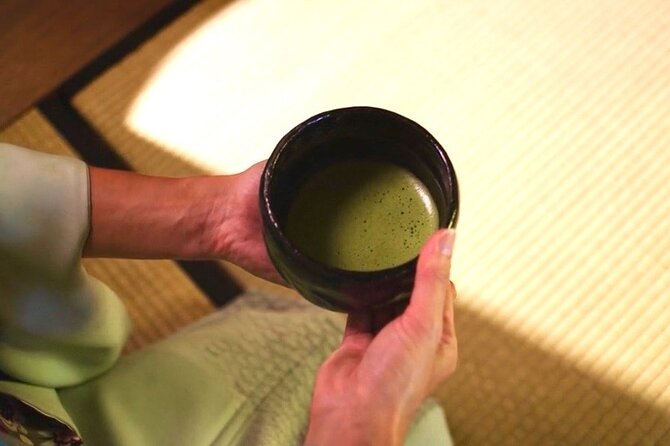
The included confectionery comes from a Kyoto sweet shop with more than 100 years of history. The sweet is seasonal and carefully presented, giving the tasting a visual element as well as a flavor pairing.
Traditional Japanese sweets can be quite different from the desserts you may know at home. Their appearance often reflects the season, and their sweetness is designed to work with the bitterness of matcha. The host can explain how the sweet fits into the ceremony and when to enjoy it.
This is a small serving, not a meal. You should treat it as part of the tea ritual rather than a snack stop. The sweets have been described as especially beautiful and delicious, which adds to the sense that the details matter here.
For someone trying matcha for the first time, the sweet also helps balance the drink. Matcha has a distinct grassy bitterness, and the confectionery gives your palate a softer contrast before or alongside the tea.
A calm lesson rather than a formal test
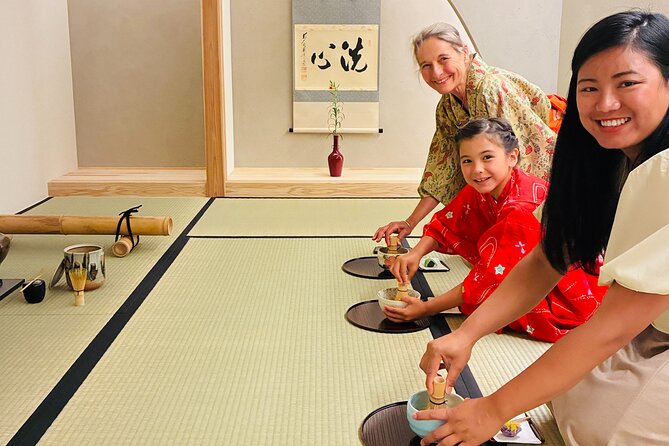
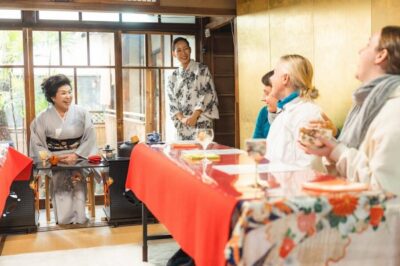
The strongest feature of this activity is the host’s teaching style. The ceremony is described as educational, relaxing, friendly, and easy to follow. The host explains the history, customs, and meaning of the process while keeping the mood light enough for families and first-time visitors.
That matters because the tea ceremony can seem mysterious if you only see it from the outside. Small gestures may look decorative or fixed, but the explanation shows you that they express care, attention, hospitality, and respect for the moment.
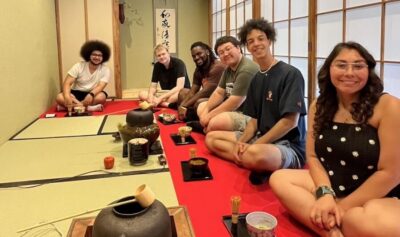
The small group size helps. With a maximum of 10 people, the host can demonstrate at a readable distance and answer questions without turning the session into a crowd experience. Families of three adults have found the format comfortable, and the setting can work well for older children or teenagers who can remain quiet and follow instructions.
The room is intentionally serene. You should not expect constant conversation, music, or a party atmosphere. If you want an energetic activity, this may feel too restrained. If you have spent the morning racing between temples and shops, the slower pace may be exactly what you need.
Optional traditional clothing and a possible sake add-on
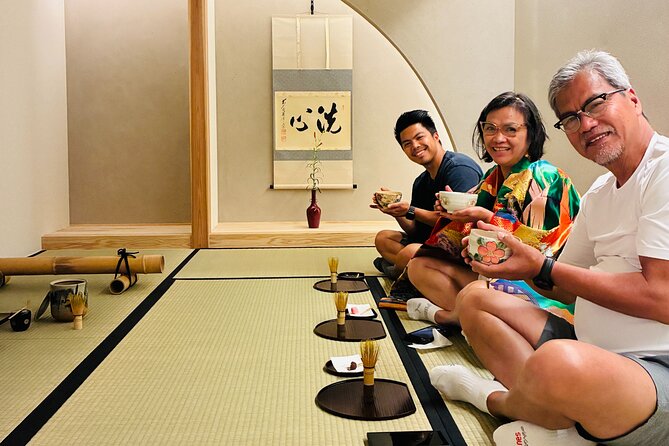
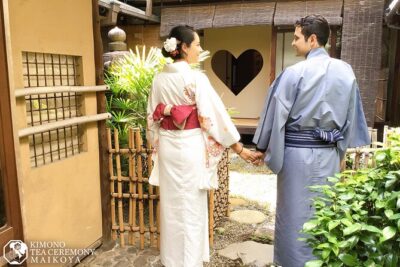
The experience may offer the option to wear a formal uchikake, a traditional Japanese outer robe. This is presented as something more formal than a standard kimono, and it is used for ceremonial occasions. Ask about availability and any extra cost before counting on it, since the provided information does not specify those details.
The venue also offers sake tasting as a separate experience. Some visitors have stayed afterward for an informal sake tasting, but it is not included in the $32.77 tea ceremony. You should book or confirm that activity separately rather than assuming it is part of the hour.
These extra possibilities may appeal to you if you want to build a larger Japanese food and culture stop around the tea session. Still, the core experience works well on its own. The ceremony has a clear beginning, a complete demonstration, a tasting, and a hands-on finish.
Price, timing, and practical value
At $32.77 per person, this is a reasonable price for a one-hour Kyoto cultural activity. You receive two bowls of matcha, a traditional seasonal sweet, instruction from a tea master, and time to practice with the utensils. The small group limit adds value because you are not simply watching from the back of a large room.
The price is particularly fair for first-time visitors who want more than a photo opportunity. You leave with a basic understanding of how matcha is made and why the ceremony uses such deliberate movements. You may even be able to repeat the preparation at home if you purchase the right ingredients and tools later.
The limitation is the short duration. One hour cannot cover every school of tea, every utensil, or the full range of Japanese tea culture. Think of this as a focused introduction, not a complete course or a long formal ceremony.
The mobile ticket makes entry simple, but the strict start time means you still need to plan carefully. Free cancellation is available up to 24 hours before the local start time. Within 24 hours, cancellations and changes are not accepted and the amount paid is not refunded.
Who will enjoy Sanjo Chasuian most
I would choose this experience if you want a clear, friendly first encounter with Japanese tea ceremony customs. It suits couples, families, and solo visitors who prefer learning by doing rather than only watching.
It is also a good choice if you are staying near Nijo Castle. The venue can be a short walk from that area, depending on your accommodation. Its central Kyoto location and public transportation access make it practical to pair with other sightseeing.
You will likely appreciate it if you enjoy:
- Small groups instead of large guided activities
- Clear explanations of cultural customs
- Hands-on food and drink experiences
- Quiet settings
- Traditional Japanese design and clothing
- Activities that fit into a tight sightseeing day
You may want to skip it if you dislike matcha, cannot tolerate a quiet room, or expect a full meal. Also consider your comfort with floor sitting and the low nijiriguchi. Chairs are available, but the tea-room setting still has traditional features.
Should you book this Kyoto tea ceremony?
I would book it if you want an authentic-feeling, approachable introduction to matcha without spending half a day in a formal program. The best reasons are the chance to make your own bowl, the two servings of tea, the seasonal confectionery, and the host’s patient explanations.
Book with care. Use the green matcha ice cream cone as your arrival landmark, come before the five-minute entry window closes, and wear socks. For $32.77, Sanjo Chasuian offers a meaningful hour of Kyoto culture, provided you arrive on time and accept the calm, respectful pace.
FAQ
How long does the tea ceremony last?
The experience lasts approximately one hour.
What is included in the price?
The price includes two cups of matcha from Kyoto, one prepared by the host and one you prepare yourself, plus a traditional seasonal Japanese confectionery.
Can I make my own matcha?
Yes. You choose a tea bowl and whisk matcha yourself or with a companion after watching the host’s demonstration.
How many people can join the session?
The activity has a maximum of 10 travelers.
Where does the experience begin and end?
It begins at Tea Ceremony & Sake Tasting Kyoto, Sanjo Chasuian, 324-2 Sanjōchō, Nakagyo Ward, Kyoto, 604-8205, Japan, and ends back at the same meeting point.
Do I need to arrive early?
Yes. Entry is permitted from five minutes before the start time. Once the session begins, the door is locked, and arriving even one minute late means you cannot join or receive a refund.
What is the cancellation policy?
You can cancel at least 24 hours before the local start time for a full refund. Cancellations or changes made within 24 hours are not accepted and are not refunded.
Just added around Kyoto
- Kyoto: Private Customizable Day Trip by Car★ 5.0 · 38 reviews
- Kyoto: Gion Night Walking Tour with Geisha Insight★ 5.0 · 39 reviews
- Kyoto: Full Day Bike Tour★ 4.9 · 39 reviews
- Private Japanese Calligraphy in Kyoto – Learn Shodō with a Master★ 5.0 · 39 reviews
- Experience a tea ceremony in an authentic tearoom, in Kyoto!★ 4.5 · 41 reviews
- Kyoto: Gion Evening Walk with Hidden Gems, Geisha & Sake★ 5.0 · 41 reviews
- Kyoto Private Photo Shoot & Tour by SnapKyoto★ 5.0 · 41 reviews
- The Way of Tea: Kyoto Crafts, Hidden Temples & Wabi-Sabi Walk★ 5.0 · 41 reviews
Tea Ceremony Experiences, compared.
Tea Ceremony in a Traditional Tea House in Kiyomizu
Read our review →
Browse the lists this tour appears in