
Reviewed · TEA CEREMONY EXPERIENCES
Kyoto: Newly Opened Tea Ceremony – Sanjo Chasuian
Slow down in central Kyoto. Sanjo Chasuian offers a calm, hands-on introduction to matcha, with two bowls of tea: one prepared by the host and one you whisk yourself. I especially like the thoughtful setting, including the traditional nijiriguchi, a small crawl-in entrance that leads into the tea room, and the easy five-minute walk from Karasuma Oike Station. The main thing to consider is the strict timing: arrive late, even by one minute, and you cannot enter or receive a refund.
The one-hour session works well for first-time visitors because the English explanations come before the quiet ceremony. Guides such as Yuko and Reina are praised for clear teaching, warm manners, and patient answers. Socks are required, chairs are available, and the shared plan means you may take part with other people, in a group of up to 10.
In This Review
- Key points at a glance
- Why this one-hour ceremony works for first-timers
- The welcome, explanation, and first bowl
- Taking the whisk for your second bowl
- Crawling through the nijiriguchi
- Seasonal sweets and matcha purchases
- Location, timing, and the strict door policy
- Shared plan, private plan, and who should book
- What makes the atmosphere special
- Should you book Sanjo Chasuian?
- FAQ
- How long does the Sanjo Chasuian tea ceremony last?
- How much does the experience cost?
- How many bowls of matcha are included?
- Is the experience held in English?
- Is the seasonal Japanese sweet included?
- Do I need to bring anything?
- What happens if I arrive late?
Key points at a glance
- Two servings of matcha: Watch the host prepare one bowl, then whisk your own or make one with a companion.
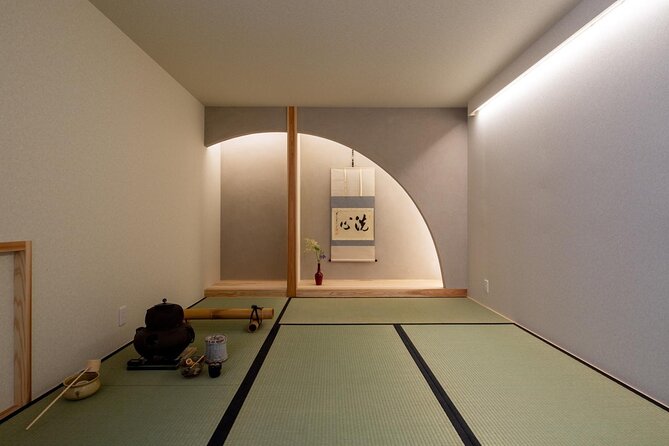
- A real nijiriguchi: Crawl through the low entrance and enter the tea room as the ceremony traditionally intends.
- Seasonal wagashi included: Enjoy a Japanese sweet from a Kyoto confectioner with more than 100 years of history.
- Five minutes from Karasuma Oike: The central location makes this easy to fit between sightseeing stops.
- English instruction for beginners: You learn the purpose behind the movements before the ceremony begins.
- Small shared group: Sessions are limited to 10 people, but a private plan is required for children under 5 or anyone needing an interpreter.
Why this one-hour ceremony works for first-timers
A tea ceremony can seem mysterious if you do not know when to bow, how to hold the bowl, or why the host moves with such care. Sanjo Chasuian makes the experience easier to follow by explaining the background and the steps before the formal preparation begins.
That order matters. Once the quiet part starts, you are not left wondering what every movement means. You can watch the host, notice the placement of the utensils, and understand why the ceremony values attention, respect, and the moment at hand.
I like the balance between watching and doing. Some cultural demonstrations keep you at a distance. Here, you first receive tea prepared by the host, then take a turn with the whisk. That second bowl gives you a small taste of the concentration required to create a smooth cup of matcha.
The instruction is in English, and the strongest praise goes to the hosts’ manner. Yuko, Reina, and Renna are each described as warm, careful, and easy to follow. One point worth noting is that an Icelandic participant found the English pronunciation somewhat difficult, so clear communication may vary slightly by instructor. Still, the overall teaching approach is aimed at international visitors.
More Tea Ceremonies in Kyoto
- Kyoto: Tea Ceremony in a Traditional Tea House in Kiyomizu
★ 4.9 · 3,519 reviews - Kyoto: Tea Ceremony Ju-An at Jotokuji Temple
★ 4.9 · 3,207 reviews - Kyoto: 45-Minute Tea Ceremony Lesson Experience
★ 4.3 · 2,378 reviews
The welcome, explanation, and first bowl
Find the Sanjo Chasuian sign at the stated address. A large plate displays the facility’s logo and name. Open the door, and staff will be waiting inside to welcome you.
The first part of the hour is instructional. You learn about matcha and the origins and meaning of the tea ceremony. This is not only a talk about tea as a drink. The host also explains the relationship between the room, the utensils, the guest, and the person preparing the tea.
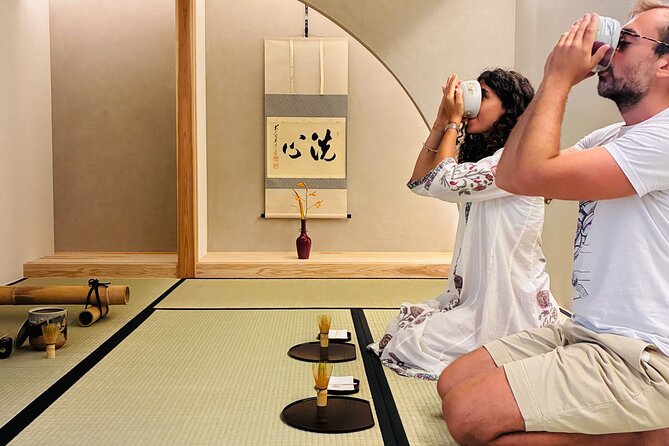
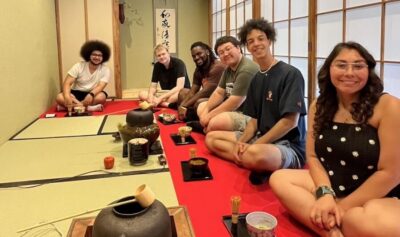
Then comes the first bowl. The host prepares the matcha while you watch the controlled movements. The process is deliberately unhurried, and the quiet atmosphere is part of the lesson. You are not simply being served a beverage. You are being shown a form of hospitality in which preparation, presentation, and attention all count.
Your matcha comes with a seasonal Japanese confection, known as wagashi. The sweet is supplied by a Kyoto confectioner with more than a century of experience. Its role is practical as well as decorative: the sweetness prepares your palate for the slightly bitter taste of matcha.
This pairing is a fine detail. Matcha can be unfamiliar if you expect a sweet latte or a mild green tea. The wagashi makes the flavor easier to appreciate, while its seasonal design adds a small connection to Kyoto’s confectionery tradition.
Taking the whisk for your second bowl
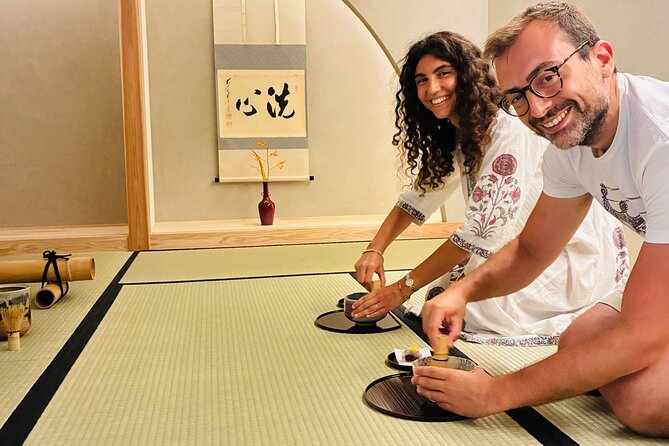
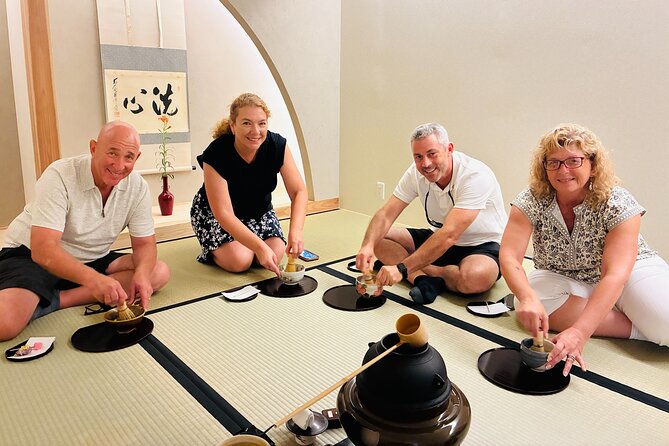
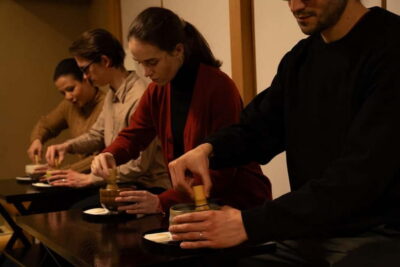
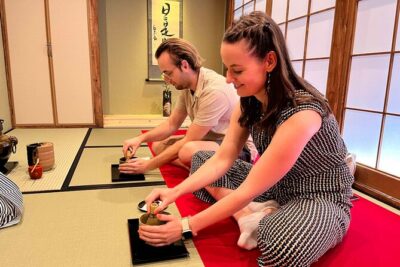
The hands-on portion is the heart of this experience. You choose a tea bowl, add the tea and hot water with guidance, and whisk the matcha using the traditional bamboo whisk. You can prepare it yourself or make it with a companion, depending on how you book and participate.
Do not worry about producing a perfect foam. The point is to learn by copying the host’s movements and feeling how much focus the task requires. Several participants especially appreciated this chance to make the tea themselves, since it turns an elegant performance into something you can understand through your hands.
The host can take photographs and videos while you prepare the matcha, which is useful if you want a record without interrupting the session. It also lets you stay focused instead of trying to manage your phone during the activity.
You then drink the second bowl. It may taste different from the host’s version, and that is part of the fun. You notice how speed, whisking, and technique affect the result. The exercise gives you respect for the host’s precise preparation without making the activity feel like a test.
I find this format better value than a ceremony that only asks you to sit and watch. For $31 per person, you receive two servings of matcha, a traditional sweet, an English explanation, and direct instruction. The hour is short, but it contains both cultural context and a genuine activity.
Crawling through the nijiriguchi
Sanjo Chasuian includes a nijiriguchi, a low entrance that requires you to crawl or stoop as you enter the tea room. It is one of the most memorable physical details of the experience.
The entrance is designed to make you leave the outside world behind before entering the ceremony space. It also carries a traditional idea of humility, since everyone enters through the same small opening rather than arriving with status or importance.
You do not need to treat this as a theatrical trick. It is a simple architectural feature, but it changes how you approach the room. After walking through central Kyoto, stepping through a small entrance helps mark a clear shift from street life to the quiet ceremony.
Chairs are available if sitting on the floor is uncomfortable. That is helpful, but the activity is not suitable for wheelchair users. The crawl-in entrance and the nature of the room make access limitations important to consider before booking.
A completely different kind of day out in Kyoto:
- PERFECT KYOTO 1-Day Bus Tour
★ 5.0 · 13,518 reviews - Kyoto: Fushimi Inari, Kinkakuji, Bamboo Grove 1 Day Bus Tour
★ 4.8 · 4,316 reviews - Kyoto Geisha Walking Tour: Gion District & Hidden Gems
★ 4.7 · 3,273 reviews - Kyoto: Gion Magical Night Walking Tour with Geisha Trivia
★ 4.9 · 2,393 reviews
Seasonal sweets and matcha purchases
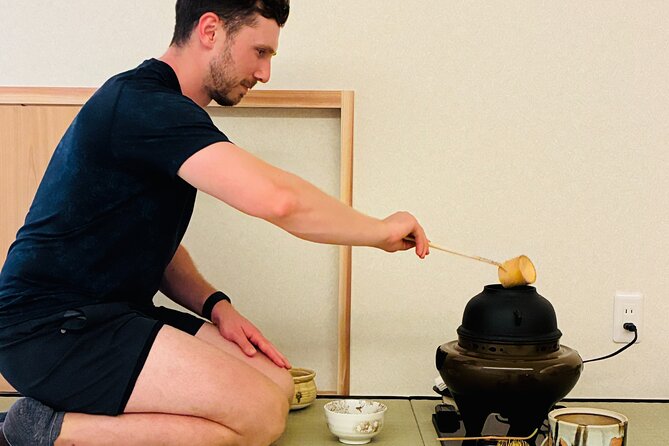
The included wagashi is one of the nicest extras because it is not a generic snack added at the end. The sweet comes from a long-established Kyoto confectioner and changes with the season, giving the ceremony a small connection to the time of year.
Matcha, tea bowls, and selected tea items are available to buy after the experience. This is optional, and the purchase is not presented as part of the ceremony itself. If you enjoy the tea you make, the shop area gives you a chance to continue the ritual at home.
Some people bought matcha or a tea set afterward. Tea bowls may be available, but do not assume every bowl used in the session is for sale. One participant specifically wished for the option to purchase the matcha cup, so ask staff if a particular item catches your eye.
There is also an optional uchikake experience for ¥1,500, including tax. This is a coat-style kimono option, not standard kimono rental or a full dressing service. You can ask about it on the day, but advance reservations are not accepted and supplies are limited.
Location, timing, and the strict door policy
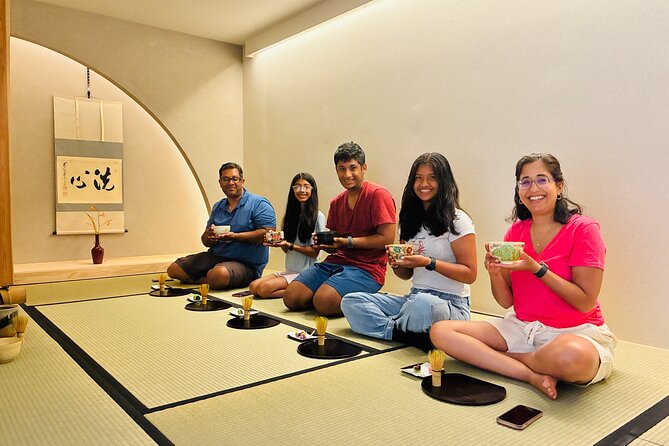
The facility is about a five-minute walk from Subway Karasuma Oike Station. That central position is a real advantage if you are organizing a full day in Kyoto. You can reach the ceremony without arranging a hotel transfer, and one participant found it less than a 10-minute walk from a hotel.
The venue is also convenient for combining with central Kyoto sightseeing. One participant noted that it was not far from Nijo Castle. The activity lasts one hour, so it can fit neatly before dinner or between other plans without taking half a day.
Plan to arrive early. Entry is allowed from five minutes before the scheduled start. Once the session begins, the door is locked, and even a one-minute delay means you cannot participate or receive a refund.
That rule may feel severe, especially in a city where trains, crowds, and unfamiliar streets can slow you down. It protects the calm of the room, but you should build in extra time. Find the station exit, walk to the address, locate the logo plate, and be at the door before the five-minute entry window opens.
The experience costs $31 per person. That is fair value for a one-hour cultural activity in central Kyoto, especially since the price includes two matcha servings and a seasonal sweet rather than only a demonstration. The grand opening discount was available until September 15, but you should check the current price when booking because that offer may no longer apply.
Free cancellation is available up to 24 hours in advance, and a reserve-now, pay-later option may help if your Kyoto schedule is still changing. Neither policy makes late arrival flexible, so timing remains the key practical issue.
Shared plan, private plan, and who should book
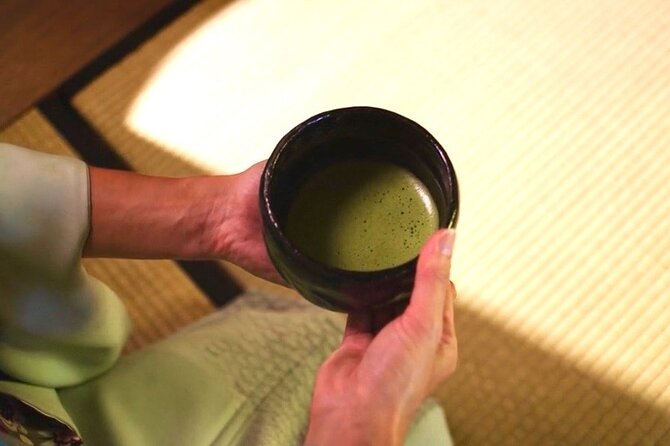
The shared plan is a group session with other participants, limited to 10 people. That size is small enough for personal instruction while still giving the room a social element. If you want a private setting, check the private plan when booking.
Children under 6 are not suitable for this activity. The specific rule is especially important for families: anyone with children under 5 must book the private plan, and an incorrect shared-plan booking may result in no participation and no refund.
Anyone requiring an interpreter must also book the private plan. The facility provides guidance in English, but it does not provide an interpreter as part of the shared session.
I would recommend this experience to you if you want a first introduction to Japanese tea practice, prefer a short activity, and enjoy learning through participation. It suits couples, solo visitors, and small groups who can respect a quiet setting.
It is less suitable if you want a costume-focused photo session, a long formal ceremony, or a fully accessible venue. The uchikake option is limited and is not the same as renting and being dressed in a complete kimono.
What makes the atmosphere special
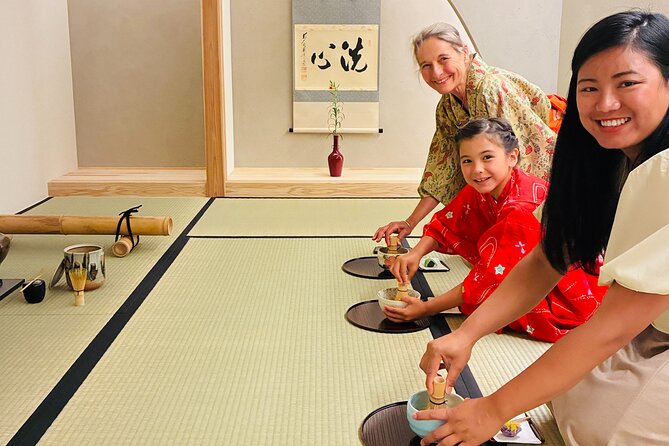
The strongest feature is the calm. Kyoto can become a race between temples, trains, restaurants, and photo stops. This hour asks you to pause and pay attention to one bowl, one sweet, and one set of deliberate movements.
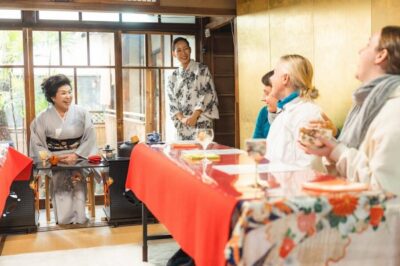
The hosts’ attitude supports that mood. Yuko and Reina receive repeated praise for their patience, care, and clear explanations. The best version of this experience is not only about getting a photograph with matcha. It is about understanding why the ceremony is performed slowly and why every object has a place.
The quiet section also benefits from the early explanation. The hosts can answer questions before the formal preparation, then perform the ceremony without constant conversation. That gives you both access and atmosphere, a useful combination for someone experiencing the ritual for the first time.
Should you book Sanjo Chasuian?
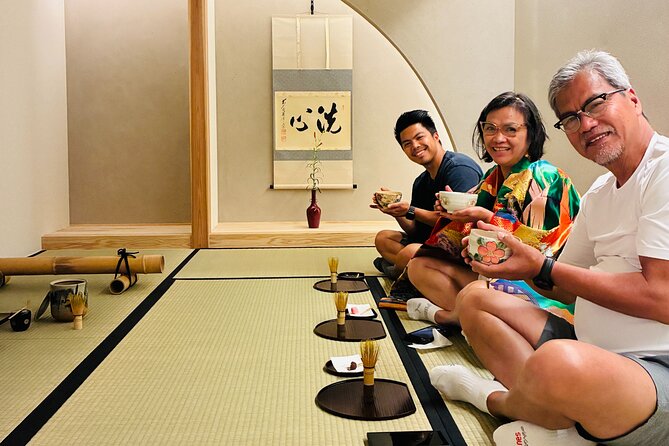
Book it if you want a well-priced, one-hour introduction to Kyoto tea culture with a real hands-on element. The two bowls, seasonal wagashi, English guidance, central location, and nijiriguchi make this more meaningful than a quick cup of matcha at a café.
Choose another activity if you need wheelchair access, are bringing a young child, want full kimono dressing, or cannot guarantee an early arrival. For everyone else, Sanjo Chasuian is an easy way to trade an hour of sightseeing speed for concentration, courtesy, and a better understanding of what a tea ceremony asks you to notice.
FAQ
How long does the Sanjo Chasuian tea ceremony last?
The experience lasts one hour. Starting times vary, so check availability when booking.
How much does the experience cost?
The listed price is $31 per person. A grand opening discount was offered until September 15, so check the current price before booking.
How many bowls of matcha are included?
Two bowls are included. The host prepares the first, and you prepare the second yourself or with a companion.
Is the experience held in English?
Yes. Sanjo Chasuian provides guidance and explanations in English.
Is the seasonal Japanese sweet included?
Yes. A traditional seasonal Japanese confection is included with the matcha.
Do I need to bring anything?
You must bring or wear socks. Chairs are available for anyone who prefers not to sit on the floor.
What happens if I arrive late?
Entry is allowed from five minutes before the start. Once the session begins, the door is locked, and even one minute of lateness means you cannot join or receive a refund.
Just added around Kyoto
- Kyoto: Private Customizable Day Trip by Car★ 5.0 · 38 reviews
- Kyoto: Gion Night Walking Tour with Geisha Insight★ 5.0 · 39 reviews
- Kyoto: Full Day Bike Tour★ 4.9 · 39 reviews
- Private Japanese Calligraphy in Kyoto – Learn Shodō with a Master★ 5.0 · 39 reviews
- Experience a tea ceremony in an authentic tearoom, in Kyoto!★ 4.5 · 41 reviews
- Kyoto: Gion Evening Walk with Hidden Gems, Geisha & Sake★ 5.0 · 41 reviews
- Kyoto Private Photo Shoot & Tour by SnapKyoto★ 5.0 · 41 reviews
- The Way of Tea: Kyoto Crafts, Hidden Temples & Wabi-Sabi Walk★ 5.0 · 41 reviews
Tea Ceremony Experiences, compared.
Tea Ceremony in a Traditional Tea House in Kiyomizu
Read our review →
Browse the lists this tour appears in