Reviewed · SHOW
Kyoto: Non-Verbal Theatre Show Tickets at GEAR
Expect the unexpected on this small Kyoto stage. GEAR combines mime, magic, breakdancing, juggling, and precise physical acting with lighting, sound, and clever mechanical effects. Because nobody speaks, the story travels easily across language barriers, making this one of Kyoto’s most approachable evening shows.
I especially like the intimate 72-seat theater, where the action feels close enough to study every gesture. I also like the simple but moving idea at its center: robot workers discover their humanity through contact with a doll that comes to life. The main consideration is the seating. The historic 1928 building has compact seats, roughly 18 by 18 inches, and you cannot choose a seat number.
In This Review
- Five things to know before seeing GEAR
- Why GEAR feels different from a regular Kyoto performance
- Arriving at the 1928 theater
- A 90-minute story about robots and a living doll
- Stagecraft that rewards close attention
- The performers: precision, humor, and physical skill
- Why the lack of dialogue is a real advantage
- Seating, comfort, and the small-theater tradeoff
- Is $46 a good value in Kyoto?
- Who will enjoy GEAR most?
- Practical tips for planning your evening
- FAQ
- Where is the GEAR theater located?
- How long does the GEAR show last?
- Is GEAR performed without spoken dialogue?
- What is included with the ticket?
- Can I choose my seat number?
- How many seats are in the theater?
- Are young children allowed to attend?
- Can I eat or drink inside the theater?
- Should you book GEAR in Kyoto?
Five things to know before seeing GEAR
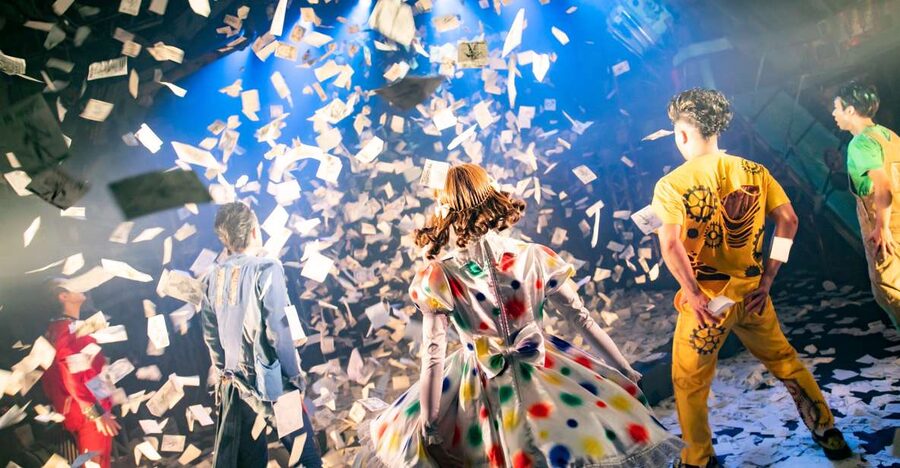
- The story takes place in a broken toy factory of the future, where robot workers encounter a living doll.
- There is no spoken dialogue, so you can follow the action without knowing Japanese.
- The 72-seat theater keeps the cast close, with every seat designed to face the stage well.
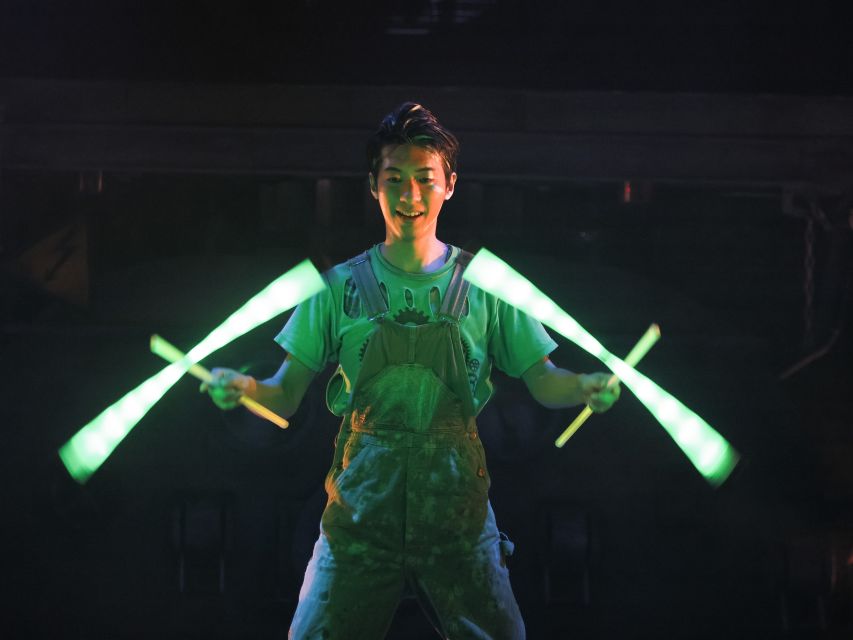
- The performers use several specialties, including magic, mime, juggling, dance, breakdancing, and robotic movement.
- Doors open 30 minutes before showtime, giving you time to find the old theater and settle into its small seats.
- An S, or Premium, ticket costs $46 per person, a fair price for a 90-minute theatrical production with limited seating.
Why GEAR feels different from a regular Kyoto performance
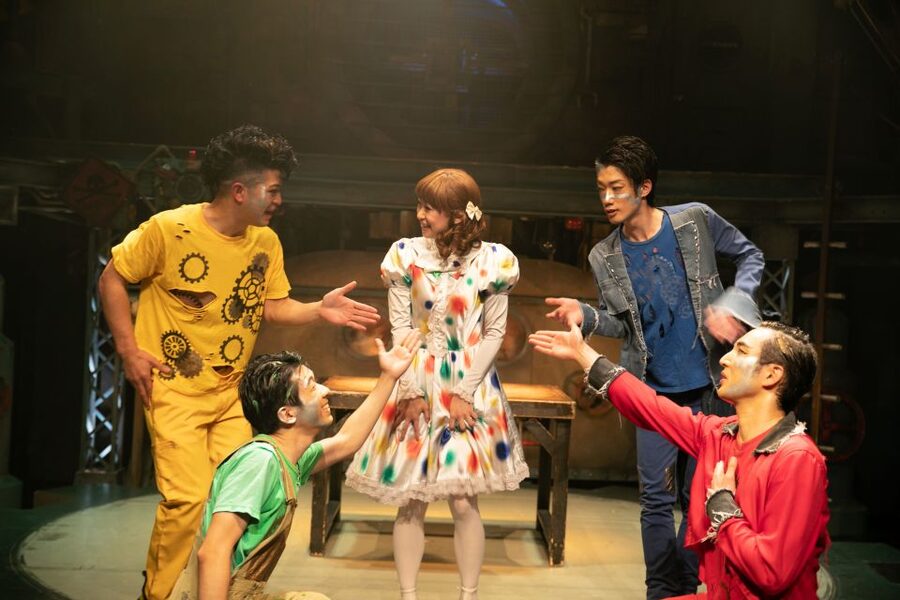
Kyoto gives you plenty of chances to look backward: wooden lanes, temple gardens, ancient crafts, and formal performing arts. GEAR takes another route. It uses techniques associated with Kabuki theater, then mixes them with modern stage technology and contemporary physical performance.
That blend is the heart of the production. You are not watching a traditional Kabuki performance, and the show is not presented as a lesson in Japanese culture. Instead, it takes an old Kyoto habit, using theatrical illusion and exact physical control, and applies it to a new story.
The result is easy to understand without being simplistic. A robot does not need to explain that it is stiff, programmed, or emotionally closed. The performer can show it through posture, timing, repeated movements, and the contrast between mechanical behavior and human reaction.
That physical clarity matters. You can enjoy the show even if this is your first visit to Japan, and you do not need to spend the performance reading subtitles. The absence of dialogue also gives the cast a tricky job. Every joke, surprise, and emotional turn must come through movement, music, sound, lighting, and the audience’s own reading of the scene.
A few more Kyoto experiences worth weighing up
- Kyoto Gion Cultural Walk & Geisha Show with Dining Options
★ 5.0 · 518 reviews - Kyoto Gion Cultural Walk & Geisha Show with Dining Options
★ 5.0 · 483 reviews - 1 Hour Geisha Show in Kyoto
★ 5.0 · 452 reviews
Arriving at the 1928 theater
Your meeting point is GEAR / Non-Verbal Theatre. The theater is in an old building dating from 1928, an important detail because the setting contributes to the evening before the curtain rises.
The small venue has only 72 seats. That limited capacity helps explain why tickets can be harder to find and why the production feels more personal than a large touring spectacle. It also means you should not treat the show as a last-minute backup if your Kyoto schedule is already packed.
The doors open 30 minutes before the performance. I would use that time rather than arriving at the last moment. You need to locate the theater, get comfortable in the compact seating, and take in the unusual old-building atmosphere before the lights go down.
The area around the theater also gives you a reason to come early. One ticket holder specifically found the surrounding streets worth exploring, with unusual shops near the venue. The exact mix of shops can change, but the advice is sound: leave a little breathing room instead of racing from dinner to your seat.
Food and drink are not allowed inside the theater. Plan your meal or snack before you enter, and do not count on carrying a drink into the auditorium.
A 90-minute story about robots and a living doll
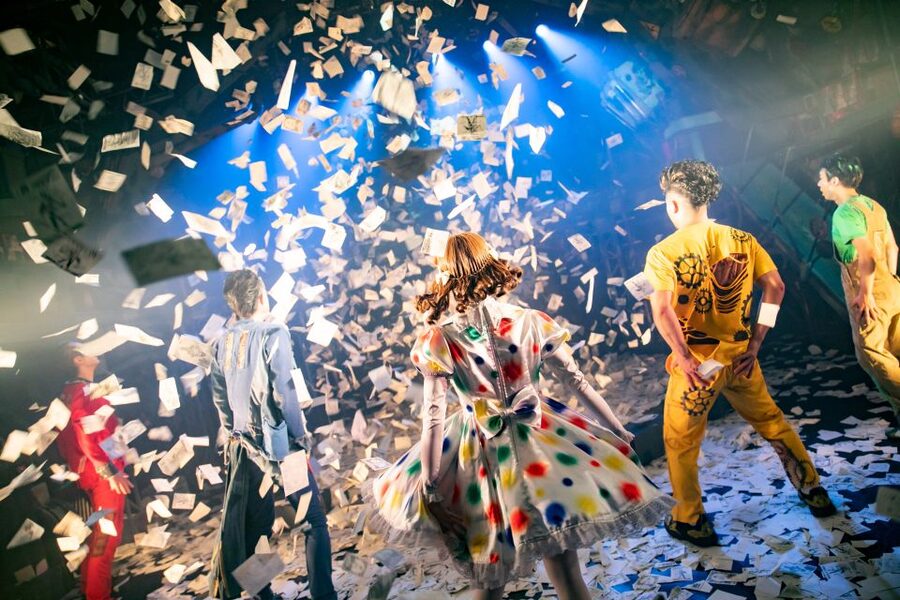
The production is set in a broken toy factory in the future. Its workers are robots, moving through a world that seems designed for function rather than feeling. Then a doll comes to life, and the encounter begins changing the workers.
The central idea is the power of touch. That gives the show a clear emotional thread without requiring a spoken explanation. The doll is not simply a prop or a visual gimmick. The character helps the robot workers move toward curiosity, connection, and a more human way of seeing the world.
You can expect the story to be carried through short visual exchanges, comic business, physical reactions, and carefully timed entrances and surprises. The structure leaves room for several types of performance, so the evening is not just mime from beginning to end.
The story works best if you allow it to unfold without trying to predict every trick. One useful piece of advice is to go in with as little advance information as possible. Knowing the basic setting is helpful, but the production depends on surprise, and its unusual effects are more fun when you do not know exactly how they work.
Stagecraft that rewards close attention
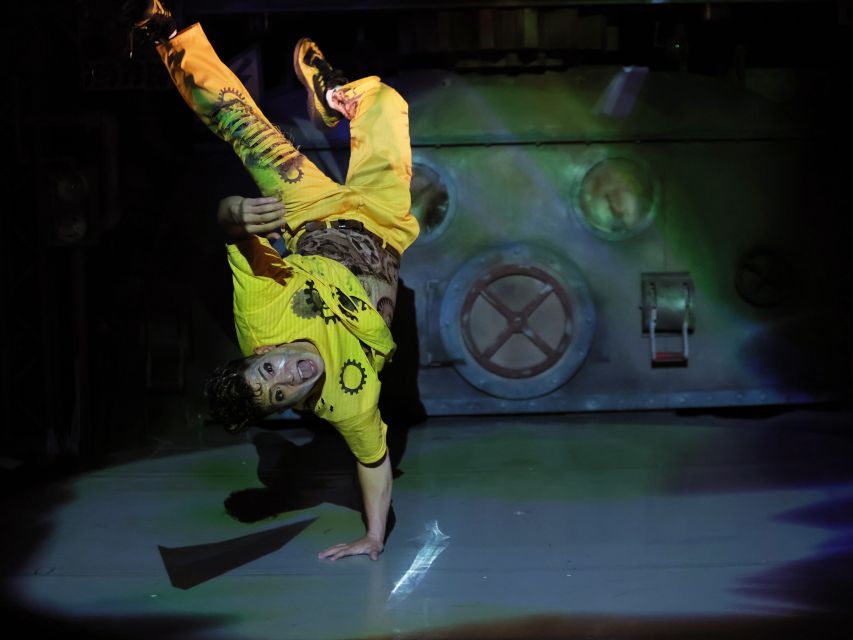
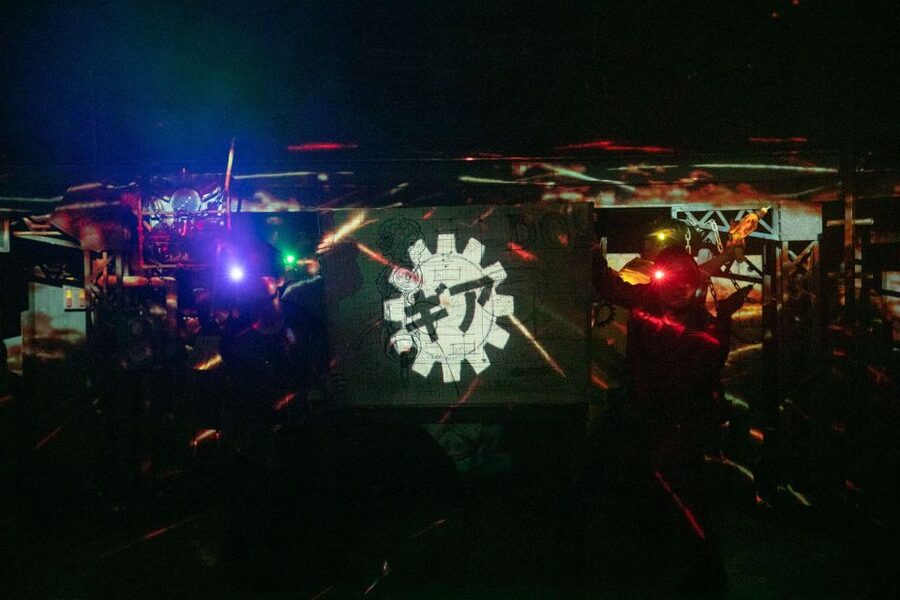
The set is one of GEAR’s strongest features. The stage represents a damaged toy factory, yet it is designed to produce more than a fixed background. It supports tricks and transformations using methods linked to Kabuki stagecraft as well as newer technology.
I would pay attention to the edges of the set, not only the performers in the center. The production’s appeal comes from the way bodies, objects, lights, sound, and scenery cooperate. A shift in lighting can change the mood quickly. A familiar object can become part of a magic routine. A movement that first looks like a robot’s repeated task can turn into a joke or an emotional beat.
This is also why the small theater matters. With only 72 seats, you are close enough to see the performers’ control. Their work is not just broad stage acting. A robotic turn, a perfectly held pose, or a tiny reaction can carry meaning.
The lighting and sound are not decoration added after the fact. They help give shape to an otherwise silent story. Several audience members singled out the music, sound design, lighting, and visuals as equal partners to the cast. That balance is important. If any one part failed, the nonverbal storytelling would become harder to follow.
A completely different kind of day out in Kyoto:
- PERFECT KYOTO 1-Day Bus Tour
★ 5.0 · 13,518 reviews - Kyoto: Fushimi Inari, Kinkakuji, Bamboo Grove 1 Day Bus Tour
★ 4.8 · 4,316 reviews - Kyoto: Tea Ceremony in a Traditional Tea House in Kiyomizu
★ 4.9 · 3,519 reviews - Kyoto Geisha Walking Tour: Gion District & Hidden Gems
★ 4.7 · 3,273 reviews
The performers: precision, humor, and physical skill
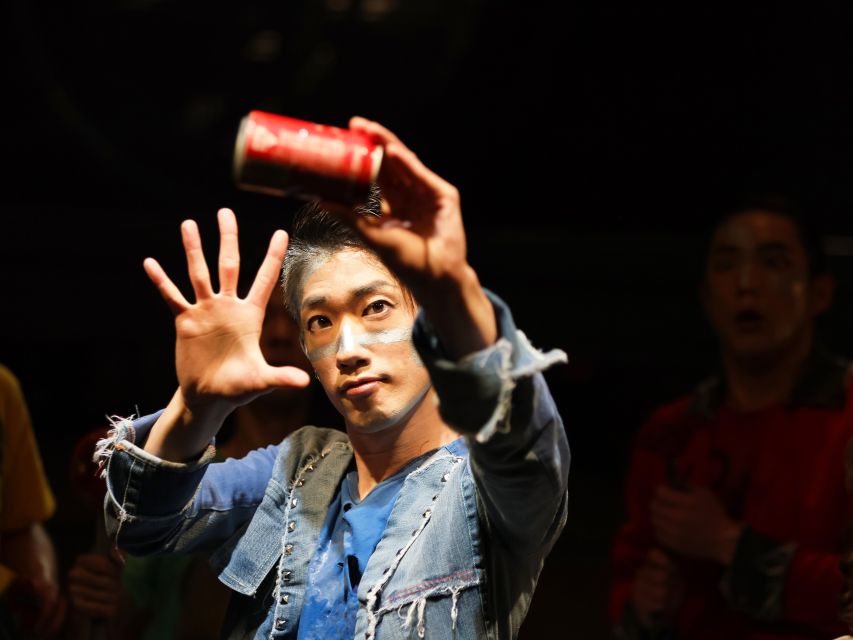
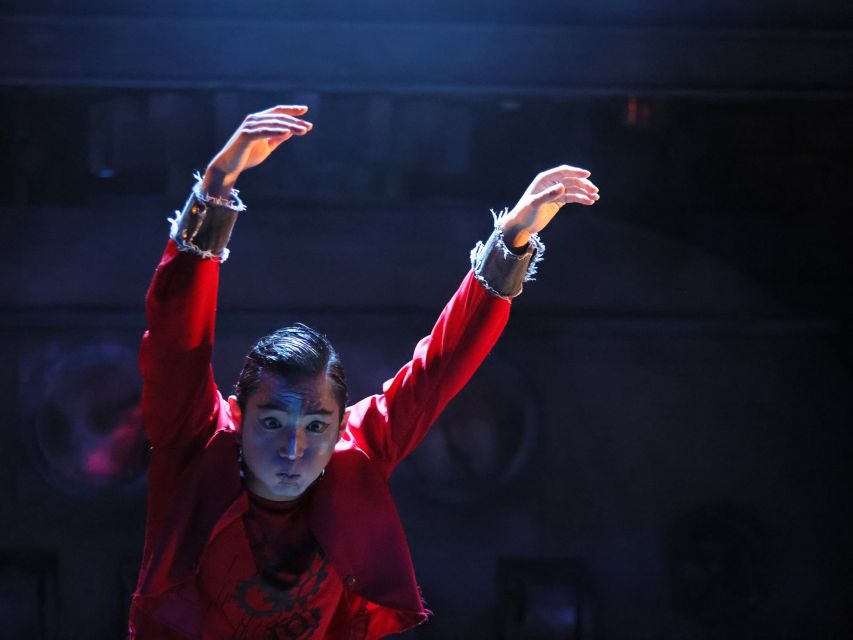
GEAR asks its cast to do several jobs well. The performers act, dance, handle objects, create comic timing, and maintain the physical rules of their characters. Reviews of the production repeatedly praise their precision and expressive faces, and those are exactly the qualities a dialogue-free show needs.
The cast includes specialists in areas such as:
- Mime and physical comedy
- Magic
- Juggling
- Breakdancing
- Dance and choreography
- Robotic and doll-like movement
The variety keeps the pacing lively. You might be watching an actor build a character through stiff mechanical gestures, then find yourself watching a fast dance passage or a magic effect. These changes are not random additions. They show different sides of the factory and its inhabitants while keeping the 90-minute running time moving.
The comedy is broad enough to cross language barriers, but the show also aims for tenderness. That balance is one of its best features. You can laugh at a carefully timed gag and then find yourself caught by a quiet moment between characters.
The physical acting is particularly important for international audiences. Japanese performance traditions can sometimes feel distant when you do not know the conventions. GEAR gives you a direct visual route into the action. You do not need a guide beside you explaining what a gesture means.
Why the lack of dialogue is a real advantage
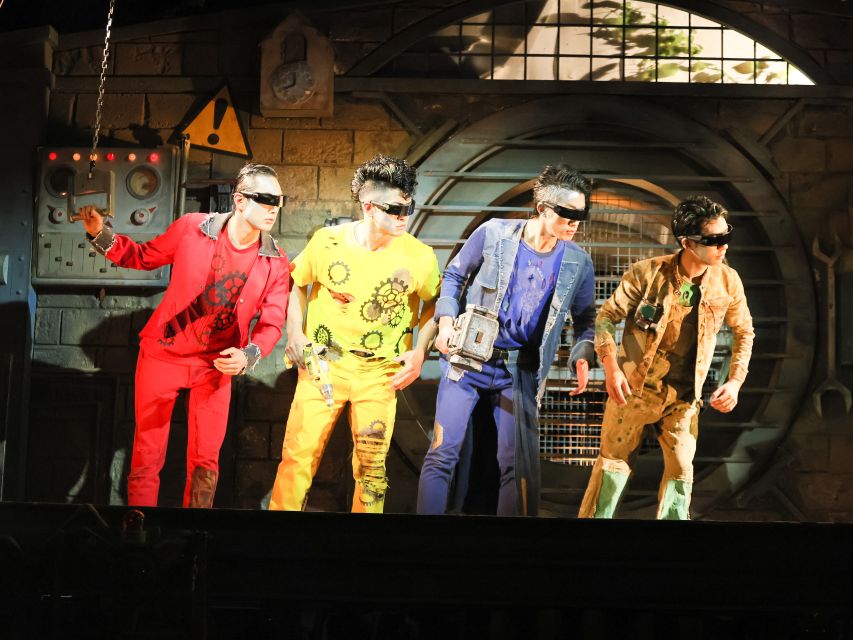
A silent show can sound like a novelty, but here the lack of speech solves a practical problem. Kyoto attracts people from around the world, and a performance in Japanese can require translation or subtitles. GEAR avoids that barrier altogether.
You can understand the broad story through character behavior and staging. That does not mean every symbol or joke will land in exactly the same way for every person. Nonverbal theater asks you to read the action and fill in some emotional details yourself. For many people, that makes the experience more personal.
I would especially recommend it if you are traveling with people who do not share a first language. Everyone can watch the same action at the same time, without one person quietly translating. It also works well for an evening when you want something more active than a museum and less language-heavy than a conventional play.
The show is not exclusively for international visitors. Its emotional themes are broad, and the performance style gives Japanese audiences plenty to enjoy too. That mixed appeal helps explain why the production has continued for about ten years and attracted such a wide age range.
Seating, comfort, and the small-theater tradeoff
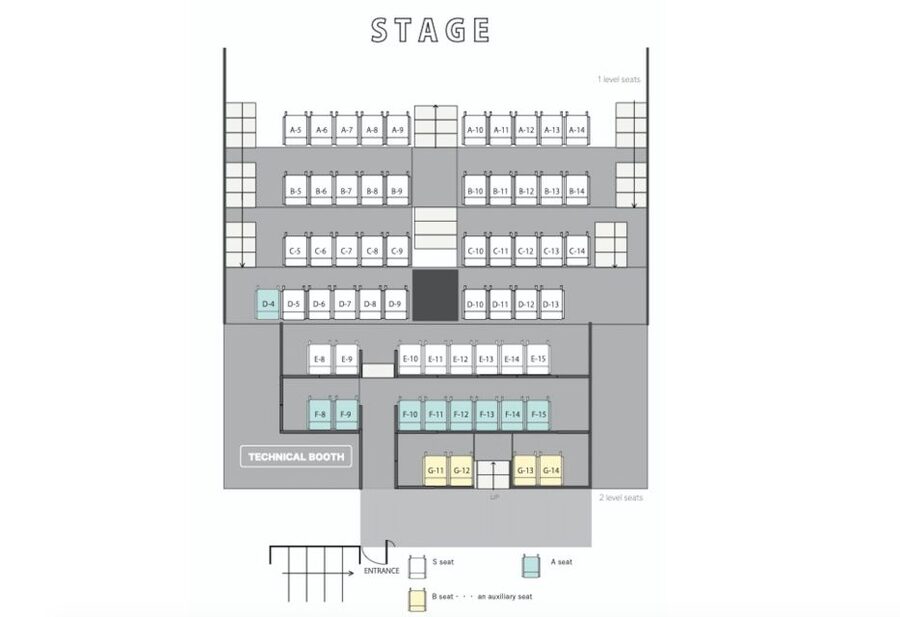
The S, or Premium, ticket is the available ticket type, and it includes admission. You cannot select a seat number because the theater has so few seats.
The venue’s small size is a benefit for sightlines. The stage is close, and one audience member described the view from every seat as good. Another noted that the seats were comfortable enough even for larger European bodies. Still, the stated dimensions are approximately 18 by 18 inches, so I would not describe the seating as spacious.
That is the main practical drawback. If you need extra room, a larger seat, or lots of space to shift around, this old theater may test your patience during 90 minutes. The compact layout is part of what makes the show intimate, but intimacy and elbow room are not the same thing.
Children under four are not admitted for security reasons. Older children may enjoy the comedy, visual effects, and physical performance, and one family described the show as a hit with both children and adults. I would still consider your child’s ability to sit through a 90-minute performance, especially since eating and drinking are not permitted inside.
Is $46 a good value in Kyoto?
At $46 per person, GEAR is not a bargain attraction in the way a free temple garden or public street performance can be. But the price is reasonable for a 90-minute professional production in a theater with only 72 seats.
You are paying for more than a chair and a view. The production combines a trained cast, custom scenery, stage effects, lighting, sound, choreography, and magic. The theater’s limited capacity also gives the performance a quality that is difficult to reproduce in a large hall.
The value improves if you want a distinctive evening activity. GEAR is not a generic dance show or a standard magic performance. Its different parts are woven around one story, and the emotional arc gives the tricks more purpose.
I would be less enthusiastic about the price if you are seeking a strongly traditional Japanese performance. The show draws on Kabuki methods, but it is modern, international, and technology-driven. One useful criticism is that it may not feel specifically Japanese in the way a Kabuki or Noh performance would.
That is not a flaw for everyone. If your Kyoto plans already include temples and traditional arts, GEAR gives you a different view of the city’s creative side.
Who will enjoy GEAR most?
I would put this show high on the list for several kinds of visitors:
- First-time visitors to Japan who want an evening show without a language barrier.
- Couples looking for something playful and emotionally warm.
- Families with children age four and older who can sit through a 90-minute performance.
- Fans of magic, mime, dance, and stage mechanics who enjoy watching skilled performers work.
- Repeat visitors to Kyoto who want something different from temples, gardens, and formal cultural shows.
- People who value intimate venues and close views of performers.
You may want to skip it if you dislike theatrical illusion, physical comedy, or compact seats. You should also pass if your main goal is a strictly traditional Japanese art form. GEAR uses Japanese stage ideas, but its tone is contemporary and broadly accessible.
Practical tips for planning your evening
Book ahead if the show fits your schedule. With only 72 seats, availability can matter more than the ticket price.
Arrive before the doors open or close to that time. The theater opens 30 minutes before the show, and the nearby shops give you a useful way to fill that gap.
Eat before entering. Food and drinks are prohibited in the theater, so plan around that rule rather than hoping to bring water inside.
Keep your expectations flexible. The story is easy to follow, but the pleasure comes from discovering how the cast uses the set and objects. The less you know about the exact tricks, the better.
If your plans might change, cancellation is free up to 24 hours before the performance, and you can reserve now and pay later. That gives you some room to secure a limited-capacity seat while your Kyoto schedule is still taking shape.
FAQ
Where is the GEAR theater located?
The meeting point is GEAR / Non-Verbal Theatre in Kyoto on Honshu, Japan. The venue is in an old building constructed in 1928.
How long does the GEAR show last?
The performance lasts 90 minutes.
Is GEAR performed without spoken dialogue?
Yes. GEAR is a nonverbal theater production, so the story is told through movement, acting, music, sound, stage effects, and visual performance.
What is included with the ticket?
The ticket includes admission with an S, or Premium, seat.
Can I choose my seat number?
No. Seat numbers cannot be selected because the theater has a limited number of seats.
How many seats are in the theater?
The venue has 72 seats.
Are young children allowed to attend?
Children under four years old are not allowed to enter the theater for security reasons.
Can I eat or drink inside the theater?
No. Eating and drinking are prohibited inside the theater. Doors open 30 minutes before the performance begins.
Should you book GEAR in Kyoto?
I would book GEAR if you want an evening performance that is easy to follow, visually inventive, and different from Kyoto’s traditional cultural offerings. The strongest reasons are the close seating, the high level of physical skill, and the way the story moves from comedy toward genuine emotion without spoken words.
Go in expecting a modern stage production, not a historical Japanese theater demonstration. Accept the compact seats, arrive early, and avoid reading too much about the tricks beforehand. At $46, it is a solid use of 90 minutes for anyone who enjoys live performance, and the limited 72-seat setting makes securing a ticket ahead of time a sensible move.
Just added around Kyoto
- Kyoto: Private Customizable Day Trip by Car★ 5.0 · 38 reviews
- Kyoto: Gion Night Walking Tour with Geisha Insight★ 5.0 · 39 reviews
- Kyoto: Full Day Bike Tour★ 4.9 · 39 reviews
- Private Japanese Calligraphy in Kyoto – Learn Shodō with a Master★ 5.0 · 39 reviews
- Experience a tea ceremony in an authentic tearoom, in Kyoto!★ 4.5 · 41 reviews
- Kyoto: Gion Evening Walk with Hidden Gems, Geisha & Sake★ 5.0 · 41 reviews
- Kyoto Private Photo Shoot & Tour by SnapKyoto★ 5.0 · 41 reviews
- The Way of Tea: Kyoto Crafts, Hidden Temples & Wabi-Sabi Walk★ 5.0 · 41 reviews
Show, compared.

Mt Fuji & Hakone Cruise, Drum Show Bullet Train 1 Day from Tokyo
Read our review →
Tokyo Shinjuku Sumo Show & Experience with Photo
Read our review →

Mt Fuji & Hakone Cruise, Drum Show Bus 1 Day from Tokyo
Read our review →