Reviewed · GUIDED
Kyoto: Private Customizable Day Tour with Guide and Vehicle
Kyoto is easier with wheels and a plan. I like the door-to-door pickup and the clean, air-conditioned vehicle, especially for families, seniors, or anyone trying to cover far-flung sights in one day. I also like the freedom to shape the route around your interests, with guides such as Yash, Sam, Nisal, Sha, Shan, Tom, and Niall praised for adjusting the pace, suggesting photo stops, and explaining local customs.
The main consideration is ambition. Arashiyama, Kinkaku-ji, Nishiki Market, Gion, Kiyomizu-dera, and Fushimi Inari make a very full day. You can see a lot, but you cannot linger everywhere. Also, one direct account notes that the guide did not always enter each attraction, so confirm how much inside guidance you want before setting your plans.
This is a strong choice when your time in Kyoto is short or your group does not want to wrestle with buses and trains. At $382 per group of up to six, it can be good value for a family or small group, though admission tickets and meals are extra.
In This Review
- Key points before you book
- Why a private car helps in Kyoto
- Arashiyama Bamboo Forest: an early priority
- Kinkaku-ji: Kyoto’s famous Golden Pavilion
- Nishiki Market: food, color, and a short lunch window
- Gion and Kiyomizu-dera: Kyoto’s old streets and hillside temple
- Fushimi Inari: vermilion gates and a choice about distance
- How much can you really see in one day?
- What the $382 price means for your group
- Pickup, comfort, and access details
- Who will get the most from this Kyoto day?
- Should you book this private Kyoto tour?
- FAQ
- How long does the Kyoto private tour last?
- How many people can join the private tour?
- What is included in the price?
- Are attraction tickets and meals included?
- Can I be picked up or dropped off in Osaka?
- Is the tour wheelchair accessible?
Key points before you book
- Six major Kyoto stops in one private day: The route links Arashiyama, Kinkaku-ji, Nishiki Market, Gion, Kiyomizu-dera, and Fushimi Inari.
- A vehicle saves time and energy: You avoid repeated transfers, long waits, and some of the walking needed to connect distant districts.
- The route can change to suit you: You can focus on temples, food, photography, shopping, quiet streets, or nature.
- Guide support goes beyond history: Guides have helped with restaurant choices, wheelchair access, elevators, shopping stops, and family photos.
- It works well for mixed-age groups: Several families appreciated a slower pace for parents and seniors, while younger members could tackle longer walks.
- Plan your priorities in advance: Six one-hour visits leave little room for a long lunch, boat ride, shopping, or an extended hike.
Why a private car helps in Kyoto
Kyoto looks compact on a map, but its best sights are spread across different parts of the city. Arashiyama lies west of the central area. Fushimi Inari is south. Kinkaku-ji is northwest, while Gion, Kiyomizu-dera, and Nishiki Market sit closer to the center but still require time on foot.
Public transportation works well in Kyoto, but it often means combining trains, buses, and walking. At popular times, a short-looking bus ride can take much longer than expected. A private vehicle cannot remove all congestion, but it gives you one person who knows the roads, parking areas, and practical drop-off points.
That matters most on a tight schedule. You can leave your hotel, visit a temple, return to the vehicle, and continue without checking maps at every corner. Several families also appreciated saving their feet, particularly in cold weather, rain, or snow.
The vehicle is promised to match the quality shown in the booking photos, with no last-minute downgrade. It includes air-conditioning, spacious seating, and free WiFi. The transport received a perfect score from 94 percent of customers, and the overall activity rating is 4.9 from 334 reviews.
The trade-off is that Kyoto’s charm often reveals itself on foot. A car gets you efficiently between districts, but you still need to walk through temple grounds, shrine paths, markets, and old streets. This is not a no-walking tour. It is a way to cut out the less interesting walking between them.
A few more Kyoto experiences worth weighing up
- PERFECT KYOTO 1-Day Bus Tour
★ 5.0 · 13,518 reviews - Kyoto: Fushimi Inari, Kinkakuji, Bamboo Grove 1 Day Bus Tour
★ 4.8 · 4,316 reviews - Kyoto: Tea Ceremony in a Traditional Tea House in Kiyomizu
★ 4.9 · 3,519 reviews
Arashiyama Bamboo Forest: an early priority
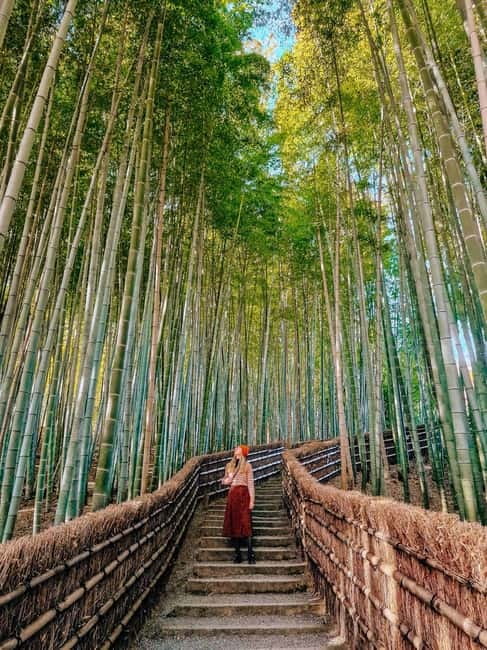
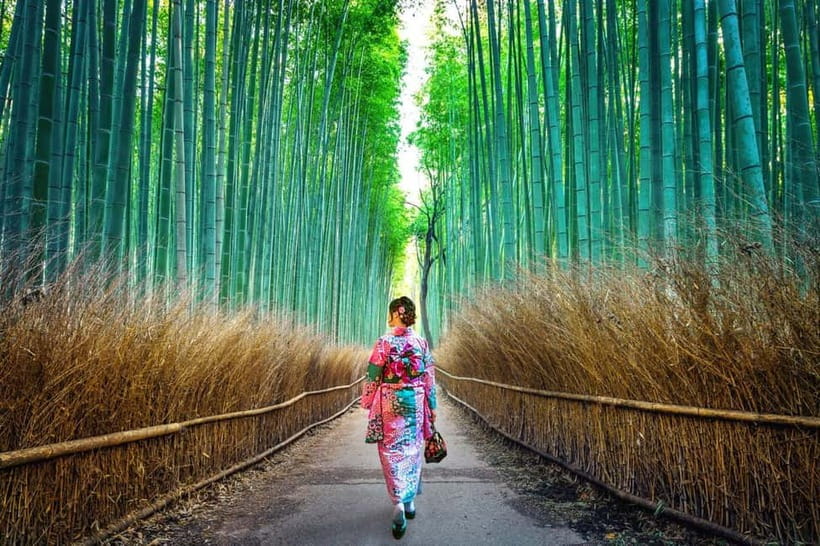
Arashiyama is usually the most demanding first stop because the bamboo grove draws large crowds. The tall stalks make a memorable photo setting, but the central path can become crowded, especially later in the day.
The scheduled visit allows about an hour for a guided stop and photos. That is enough for the famous grove and a quick look around, but not enough for every nearby sight. If Arashiyama matters most to you, tell the guide at the start and ask for the best timing.
The district offers more than bamboo. You might find traditional streets, riverside views, temple grounds, and additional photo spots nearby. One visitor specifically recommended adding a boat ride on the river, but doing so would require cutting time elsewhere. Discuss this before the vehicle leaves your hotel.
The bamboo path is not a flat, indoor attraction. Wear shoes that can handle uneven surfaces and a fair amount of walking. In wet or snowy weather, the private vehicle becomes particularly useful because you have a warm, dry place between stops.
Kinkaku-ji: Kyoto’s famous Golden Pavilion
Kinkaku-ji, known as the Golden Pavilion, is one of Kyoto’s quickest visual rewards. The gold-covered building sits beside a pond, where the reflection often provides the classic photograph.
The visit is planned for about an hour. That gives you time to follow the viewing path, take pictures, and hear about the site, but it does not suggest a slow, detailed exploration of every corner. The pavilion itself is the main event, and crowds can make the route feel more like a moving line than a quiet temple visit.
A guide can add useful context about the building and its cultural importance. Still, ask whether your guide will walk inside the grounds with you or provide an introduction before you enter. One account specifically noted that the guide remained outside some stops, while offering local information and practical help.
Kinkaku-ji is also a good example of why a custom day requires choices. If you want time for a peaceful temple garden or a longer explanation, you may need to drop one of the other major stops.
Nishiki Market: food, color, and a short lunch window
Nishiki Market gives the day a welcome change from temples. The narrow market street is lined with food stalls and small shops, making it a practical place to sample Kyoto specialties or browse for edible souvenirs.
The plan allows about an hour. That is enough for a walk through the market and a few tastings, but it is a short lunch break if you are traveling with six people. Food and drinks are not included, so budget separately and tell the guide if you want a proper meal rather than quick snacks.
Guides have helped visitors find restaurants and explain how local places work. One family enjoyed a conveyor-belt sushi lunch after their guide explained the system. That sort of help can be valuable when menus, ordering methods, or restaurant customs feel unfamiliar.
Nishiki Market is not a quiet stop. Its narrow layout can be difficult for wheelchairs or anyone who dislikes crowds, even though the tour itself is listed as wheelchair accessible. If accessibility is important for your group, discuss the route and the best entry points in advance.
A completely different kind of day out in Kyoto:
- Kyoto Geisha Walking Tour: Gion District & Hidden Gems
★ 4.7 · 3,273 reviews - Kyoto: Tea Ceremony Ju-An at Jotokuji Temple
★ 4.9 · 3,207 reviews - Kyoto: Gion Magical Night Walking Tour with Geisha Trivia
★ 4.9 · 2,393 reviews - Kyoto: 45-Minute Tea Ceremony Lesson Experience
★ 4.3 · 2,378 reviews
Gion and Kiyomizu-dera: Kyoto’s old streets and hillside temple
Gion is the best stop for traditional Kyoto atmosphere. Its streets are associated with old wooden buildings, teahouses, and the city’s geisha culture. The area rewards a respectful, slow walk, but an hour goes quickly.
Your guide can point out details you might miss on your own, including traditional architecture and streets suited to photographs. Keep expectations realistic: Gion is a living neighborhood, not a stage set. Stay on public paths, avoid blocking doorways, and do not photograph people without permission.
Kiyomizu-dera follows naturally as a major cultural stop, though it is not a flat one. The approach includes an uphill traditional street and the temple grounds require walking. The famous wooden stage and hillside setting make it one of Kyoto’s essential visits, but the route can be tiring for anyone with knee or mobility problems.
This is where the guide’s flexibility has real value. Yash was praised for finding wheelchairs, elevators, and easier access for a mother with a bad knee. Another family appreciated a slower pace for seniors on a rainy day. You should be clear about mobility needs before the tour begins, rather than hoping the schedule will somehow stretch.
Fushimi Inari: vermilion gates and a choice about distance
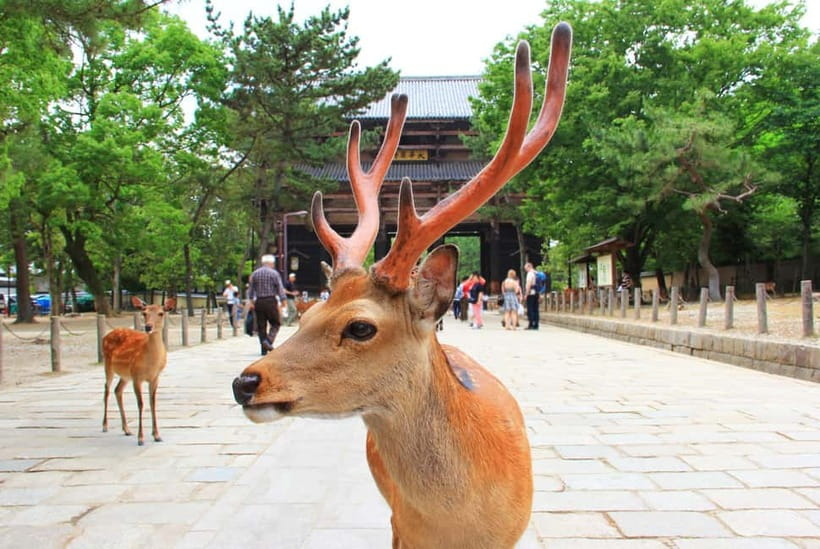
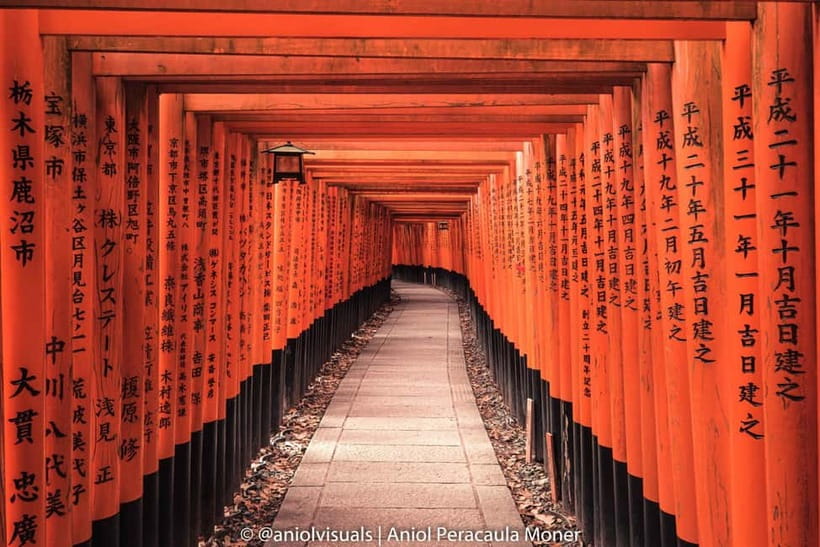
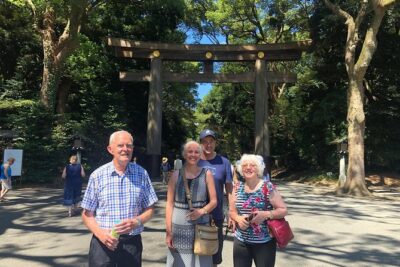
Fushimi Inari Taisha is famous for its long tunnel of vermilion torii gates. The lower section offers an immediate taste of the shrine, while the full mountain path continues much farther than many first-time visitors expect.
The planned stop lasts about an hour, so you will likely focus on the entrance area and part of the gate route. If you want to climb higher, you will need to reduce time at another stop. One family with fit teenagers enjoyed going farther up, while others chose a gentler pace.
This is a good final stop if you want dramatic photographs and a memorable shrine visit. It is less suitable as a relaxed final stop if everyone is tired, since the path is uphill and the day already includes several walking sites.
Ask the guide to help you choose a realistic turnaround point. The best route is not always the longest one. A shorter visit with time to enjoy the shrine is better than racing back to the vehicle with sore legs.
How much can you really see in one day?
The six-stop plan is possible, but it is a highlights tour, not a leisurely study of Kyoto. Each listed attraction receives about an hour, with driving between districts and time for pickup, drop-off, parking, and walking from the vehicle.
You can make the day work by choosing your priorities. A first-time visitor may want all six headline sights. A repeat visitor might skip Kinkaku-ji and use the time for smaller streets, food, shopping, or a quieter temple.
Tell the guide what kind of day you want:
- For first-time sightseeing, keep the major shrines and temples.
- For families, build in coffee, lunch, and fewer long walks.
- For photography, ask for flexible timing and extra stops.
- For food lovers, protect time at Nishiki Market or a recommended restaurant.
- For repeat visits, replace familiar sights with local streets and lesser-known places.
- For seniors, identify steep paths and request easier access from the start.
The best reports describe the guides as patient, relaxed, and willing to make changes. Yash was often praised for taking excellent family photographs, while Nisal was appreciated for matching the pace of both teenagers and older adults. Sam received strong marks for smooth driving and local suggestions. These personal touches may matter as much as the sightseeing list.
Guide assignments vary, so you cannot assume a particular person will be available. The names connected with especially strong feedback include Yash, Sam, Nisal, Sha, Shan, Tom, Niall, and Ali. You can ask about guide preferences, but availability is not guaranteed.
What the $382 price means for your group
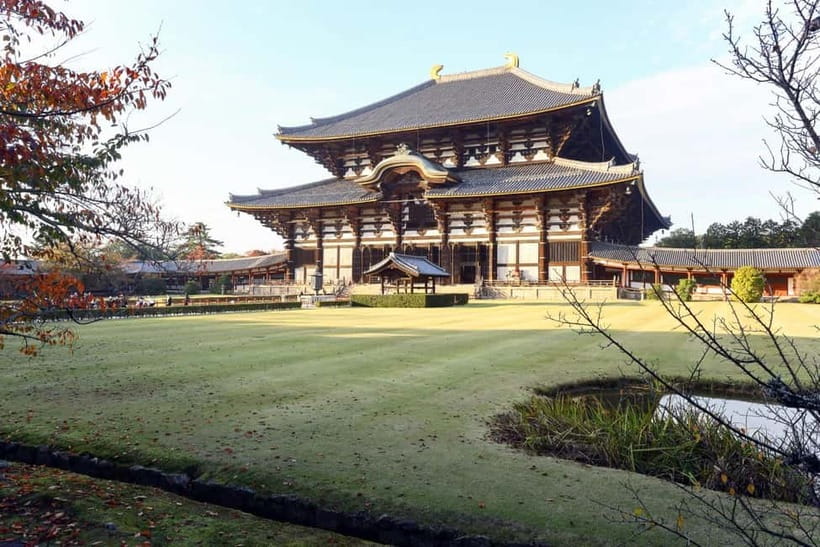
The listed rate is $382 for up to six people, not $382 per person. For a full group, that works out to about $64 per person before food and attraction fees. For four people, it is about $96 each. For two people, the private convenience costs considerably more.
The value improves when you consider what is included: hotel pickup and drop-off in Kyoto, private air-conditioned transport, an English-speaking guide, and WiFi. You are paying for time, comfort, route planning, and the ability to adjust the day, not just for entry to the temples.
Admission tickets are not included, and food and drinks are also separate. Optional entry fees can add to the total, so keep some room in your budget. The activity advertises skip-the-ticket-line access, but that does not mean admission itself is free.
For a family of five or six, this can be a sensible way to use one precious Kyoto day. For a couple who enjoys trains, buses, and wandering, the price may be harder to justify. You might see fewer places independently, but you would spend less and have more freedom to linger.
Pickup, comfort, and access details
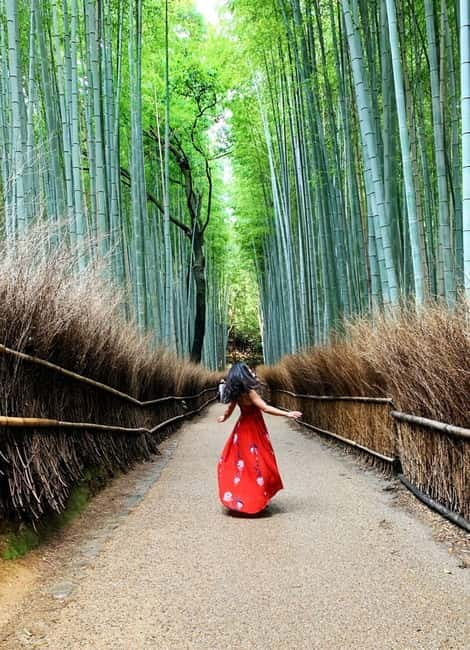
Pickup and drop-off are included anywhere in Kyoto city. The driver-guide is scheduled to arrive at your hotel or Airbnb lobby five minutes before departure. If you arrive at Kyoto Station, the meeting point is the Central Exit at the agreed time.
Osaka pickup and drop-off can be arranged by contacting the provider. Several bookings used the service to travel from a Kyoto hotel to an Osaka hotel, making it useful on a transfer day. Confirm this arrangement before booking, since the standard included pickup is described as Kyoto city service.
The tour is listed as wheelchair accessible, but the sights themselves vary. Temple approaches, shrine paths, traditional streets, and market lanes can include slopes, steps, tight spaces, or uneven ground. Share your exact needs early so the guide can adjust the pace and access plan.
Bring comfortable shoes. That is simple advice, but it matters here. You will walk at every stop, even though the vehicle handles the long connections.
Free cancellation is available up to 24 hours before departure for a full refund. You can also reserve now and pay later, which helps if your Kyoto schedule is still shifting.
Who will get the most from this Kyoto day?
I would recommend this experience most strongly to families with children, older relatives, groups of friends, and visitors with only one or two days in Kyoto. It also suits anyone who wants an English-speaking guide but does not want to join a fixed group.
The tour is especially helpful when your group has different walking speeds. A private guide can slow down for a parent, let younger people walk farther, or change a stop when the weather turns unpleasant.
It is less ideal for independent visitors who prefer one temple per day and long unplanned walks. You may also find the schedule too brisk if your goal is extended time inside each temple or a full mountain walk at Fushimi Inari.
Should you book this private Kyoto tour?
Book it if you want to connect Kyoto’s major sights without spending your day navigating transport. The strongest reasons are the private vehicle, flexible pacing, hotel pickup, and practical care shown by guides who have helped with photos, restaurants, shopping, seniors, and children.
Before you commit, decide which three stops matter most. Then tell the guide what can be shortened or removed. That small bit of planning will keep the day from becoming a race.
For a group of five or six, the price is easier to defend. For two people, compare it with the cost of taxis and the pleasure of using Kyoto’s excellent rail system. If comfort, efficiency, and personal help matter more than a slow independent wander, Alpha Tours Japan offers a well-regarded way to see a lot in one day.
FAQ
How long does the Kyoto private tour last?
The experience lasts one day. Starting times depend on availability when you book.
How many people can join the private tour?
The price covers one private group of up to six people.
What is included in the price?
The tour includes Kyoto hotel pickup and drop-off, private transportation in an air-conditioned vehicle, free WiFi, and an English-speaking guide.
Are attraction tickets and meals included?
No. Food and drinks are not included, and entry tickets are listed as optional extras.
Can I be picked up or dropped off in Osaka?
Osaka pickup and drop-off can be arranged by contacting the provider. Kyoto city pickup and drop-off are included.
Is the tour wheelchair accessible?
The activity is listed as wheelchair accessible. Because individual temples, shrine paths, markets, and traditional streets may have different surfaces and access points, discuss your needs in advance.
Just added around Kyoto
- Kyoto: Private Customizable Day Trip by Car★ 5.0 · 38 reviews
- Kyoto: Gion Night Walking Tour with Geisha Insight★ 5.0 · 39 reviews
- Kyoto: Full Day Bike Tour★ 4.9 · 39 reviews
- Private Japanese Calligraphy in Kyoto – Learn Shodō with a Master★ 5.0 · 39 reviews
- Experience a tea ceremony in an authentic tearoom, in Kyoto!★ 4.5 · 41 reviews
- Kyoto: Gion Evening Walk with Hidden Gems, Geisha & Sake★ 5.0 · 41 reviews
- Kyoto Private Photo Shoot & Tour by SnapKyoto★ 5.0 · 41 reviews
- The Way of Tea: Kyoto Crafts, Hidden Temples & Wabi-Sabi Walk★ 5.0 · 41 reviews
Guided, compared.
Tokyo 6hr Private Tour with Government-Licensed Guide
Read our review →
Shinjuku Local Bar and Izakaya Guided Walking Tour
Read our review →
Private City Highlights Tour with Local Guide
Read our review →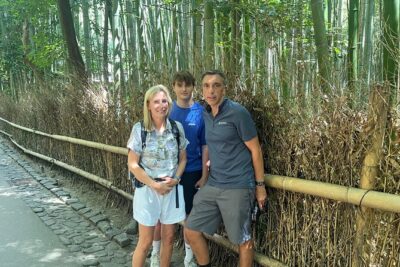
Kyoto Early Morning Tour with English-Speaking Guide
Read our review →
Tokyo 4hr Private Tour with Government-Licensed Guide
Read our review →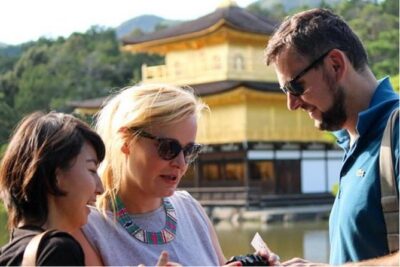
Kyoto 6hr Private Tour with Government-Licensed Guide
Read our review →