
Reviewed · TEA CEREMONY EXPERIENCES
Kyoto: Tea Ceremony Experience
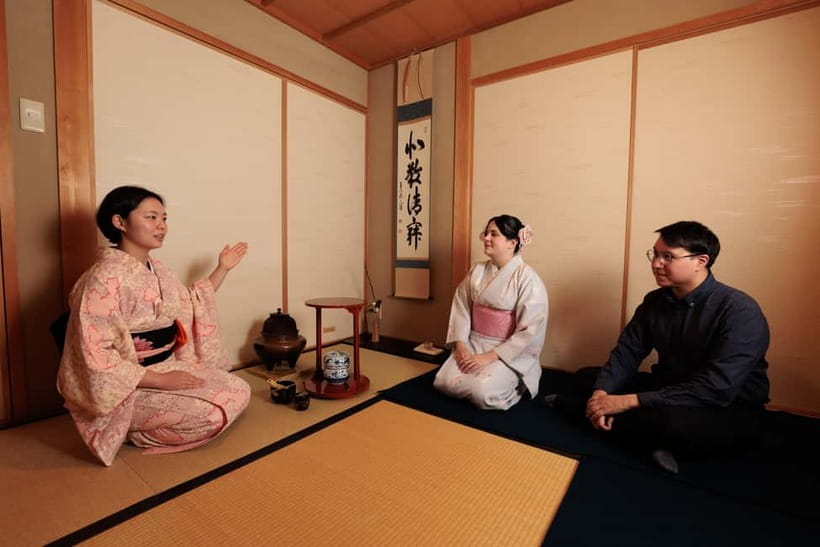
Slow down in Kyoto for one bowl. This 45-minute tea ceremony offers a clear, friendly introduction to matcha inside a traditional machiya in Higashiyama. You watch a formal demonstration, taste a seasonal sweet, then whisk your own bowl with help from an English-speaking host.
I especially like the setting near Ninenzaka and the chance to ask real questions about Japanese culture, utensils, room design, and the three main tea schools. I also like that you do more than sit and watch: you make the tea yourself. The main consideration is comfort, since much of the session may involve sitting on the floor, though chairs and tables are available.
In This Review
- Key points to know before you book
- Finding the machiya in Ninenzaka
- The first lesson: matcha, utensils, and the room
- Watching the ceremony in a quiet room
- Making your own bowl of frothy matcha
- What the 45-minute schedule feels like
- Sitting on the floor and other practical details
- Group size, private bookings, and kimono options
- Is $32 good value in Kyoto?
- Who will enjoy this experience most?
- My verdict on the Camellia Tea Ceremony
- FAQ
- How long does the Kyoto tea ceremony experience last?
- What is included in the price?
- Where does the tea ceremony take place?
- Is the experience offered in English?
- Do I have to sit on the floor?
- Is the tea ceremony wheelchair accessible?
- Can I take photographs or videos?
Key points to know before you book
- The setting is central Higashiyama: The teahouse is down an alley near the Park Hyatt, a short walk from Kiyomizu-dera, Kodai-ji, Yasaka-jinja, Maruyama Park, Chion-in, and Gion.
- You watch before you whisk: The host first demonstrates the ceremony, then guides you through making your own frothy matcha.
- The lesson is cultural, not just culinary: You learn about utensils, room decoration, ceremony steps, symbolism, and Kyoto-grown tea.
- Seasonal sweets are included: A traditional Japanese sweet balances the bitter matcha and adds a small taste of the seasons.
- The mood is calm and welcoming: The hosts use English and encourage questions, making this a good first encounter with tea ceremony customs.
- Floor seating may affect your comfort: Chairs are available, and the Garden Teahouse is wheelchair accessible.
Finding the machiya in Ninenzaka
The experience begins in Kyoto’s Higashiyama district, one of the city’s most atmospheric areas. The teahouse is located down a narrow alley branching from the main Ninenzaka thoroughfare, so the final approach takes a little attention.
The simplest landmark is the Park Hyatt hotel. Across from it, you will see a Studio Ghibli store. The alley is just to the left of that shop. Clear directions are important here, and the entrance can be easy to miss if you are hurrying through the busy streets.
Once you reach the alley, look for the sign and follow the instructions to the teahouse. If you are uncertain, allow a few extra minutes rather than arriving breathless and rushed. This is an activity built around calm attention, and it is nicer to begin in that spirit.
The location works especially well as part of a full Higashiyama day. You can visit Kiyomizu-dera and walk through the surrounding lanes before the ceremony, or use the tea session as a quiet pause after sightseeing. Kodai-ji, Yasaka-jinja, Maruyama Park, Chion-in, and Gion are all nearby.
The city center is reachable by bus from Higashi Oji, about 10 minutes away on foot. If you enjoy walking, you can reach the center in about 25 minutes through Gion. That makes the teahouse practical for a day on foot, though buses may be useful when Kyoto’s hills and long temple approaches catch up with you.
More Tea Ceremonies in Kyoto
- Kyoto: Tea Ceremony in a Traditional Tea House in Kiyomizu
★ 4.9 · 3,519 reviews - Kyoto: Tea Ceremony Ju-An at Jotokuji Temple
★ 4.9 · 3,207 reviews - Kyoto: 45-Minute Tea Ceremony Lesson Experience
★ 4.3 · 2,378 reviews
The first lesson: matcha, utensils, and the room
The host begins with a short introduction to matcha and the tea ceremony. This opening gives you the basic framework without asking you to memorize a long list of rules.
You learn about the tools used to prepare the tea and the role each item plays. The bamboo whisk is not simply a decorative object. The bowl, scoop, whisk, and other utensils form part of a carefully ordered process, and the host explains how they fit together.
The room itself is also part of the lesson. You hear why the decoration and layout matter, and how the setting helps create a focused moment between host and visitor. This is one of the most useful parts for first-time participants because it shows that tea ceremony is not only about drinking green tea.
The host also discusses the three schools of tea ceremony. You do not become a tea master in 45 minutes, of course, but you gain enough background to understand that Japanese tea practice has different traditions and approaches.
The English instruction is a major strength. Hosts such as Ikuko have been praised for explaining each stage clearly, patiently, and with a good sense of timing. The lesson is informative without turning into a lecture, and you can ask questions as the session unfolds.
Watching the ceremony in a quiet room
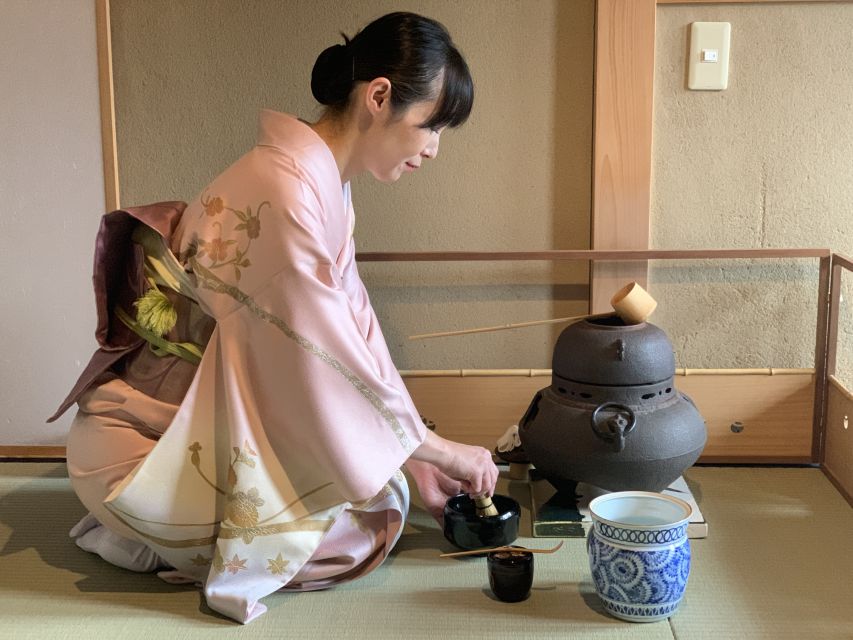
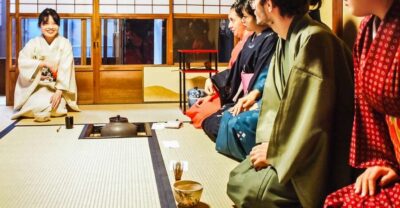
After the introduction, the host performs the ceremony. The demonstration lasts around 10 minutes, according to the experience details shared by past participants, and it is the most visually precise portion of the session.
Watch the hands rather than trying to catch every rule. The measured movements, the handling of each utensil, and the order of service are the point. The ceremony can feel almost meditative, especially after the noise of Ninenzaka outside.
You will have a chance to sit with a seasonal sweet and tea while speaking with the host. The sweet is traditionally served before the matcha because its sugar helps prepare your palate for the tea’s strong, grassy bitterness.
Do not expect a sugary café drink. Matcha has a distinct bitter flavor, and part of the fun is tasting it in its traditional form. The tea used here is grown in Kyoto, adding a local connection to the lesson.
The ceremony is explained as a cultural practice shaped by care, harmony, presence, and respect. That may sound lofty on paper, but the demonstration makes those ideas easier to understand. The host’s attention to small gestures gives you a practical sense of why the ritual has lasted so long.
Making your own bowl of frothy matcha
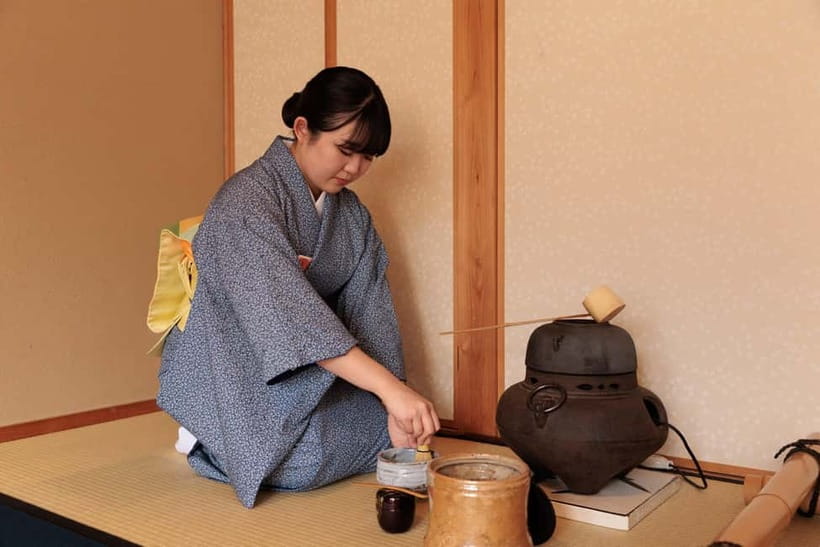
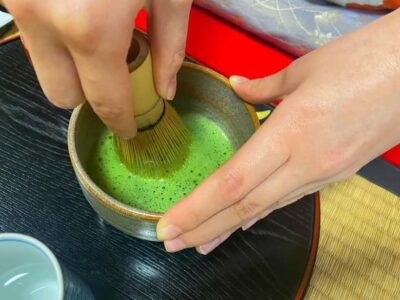
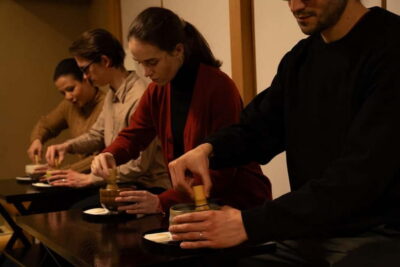
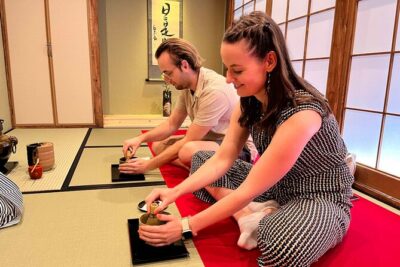
The hands-on part follows the demonstration. With guidance from the host, you use the tea-making utensils to whisk your own bowl of matcha.
This is not a test. The host shows you how to handle the whisk and helps you create the foam. First-time tea drinkers are welcome, and you do not need prior knowledge of Japanese etiquette or tea preparation.
The activity is simple enough for families and beginners, but it still gives you a real connection to the process. You are not merely posing in a beautiful room while someone else performs. You learn the basic action behind the cup you have just watched being prepared.
The quality of the foam will depend on your technique, so do not be surprised if your first attempt is less smooth than the host’s. That is part of the charm. The goal is to understand the method and enjoy the taste, not to produce a competition-winning bowl.
You can ask questions while making the tea, which makes this section feel personal rather than scripted. It is also where the session becomes most memorable for many people. You leave with a better idea of the care involved in something that can look effortless when performed by an expert.
A completely different kind of day out in Kyoto:
- PERFECT KYOTO 1-Day Bus Tour
★ 5.0 · 13,518 reviews - Kyoto: Fushimi Inari, Kinkakuji, Bamboo Grove 1 Day Bus Tour
★ 4.8 · 4,316 reviews - Kyoto Geisha Walking Tour: Gion District & Hidden Gems
★ 4.7 · 3,273 reviews - Kyoto: Gion Magical Night Walking Tour with Geisha Trivia
★ 4.9 · 2,393 reviews
What the 45-minute schedule feels like
The short duration is a good fit for a Kyoto itinerary. You get a demonstration, an explanation of the cultural background, a seasonal sweet, and a hands-on tea-making lesson without giving up half a day.
The pace is generally efficient. There is enough time to understand the ceremony, but not enough time for a full formal training course. One important distinction: you learn how to make matcha, but you do not learn to perform the entire tea ceremony yourself. The full sequence is too complex for a short introductory session.
That limitation is worth knowing before booking. If you want a detailed study of tea school traditions or formal etiquette, you will need a longer and more specialized class. If you want a welcoming first look at the practice, 45 minutes is a sensible length.
I would place this experience between major sightseeing stops rather than treat it as the only activity of the day. It provides a welcome change of pace after temples and shopping streets, particularly in a district that can become noisy and crowded.
Sitting on the floor and other practical details
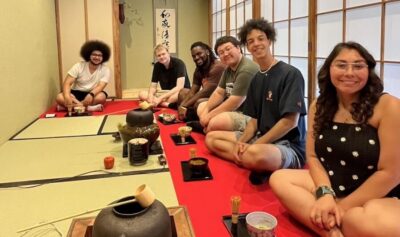
Traditional tea rooms commonly use floor seating, and you may sit on the floor for much of the session. One participant found the position uncomfortable after about 40 minutes, particularly around the knees and lower body.
The hosts understand that not everyone can sit in the traditional posture. You do not have to kneel formally, and you are encouraged to make yourself comfortable. Chairs and tables are available for anyone who finds floor seating difficult.
The tea rooms are upstairs. If you have mobility concerns, choose the Garden Teahouse, which is wheelchair accessible. It is important to check this point before booking rather than assume every room has the same access.
Still photography without flash is allowed, so you can take a few photographs of the room or your finished bowl. Video recording is not allowed. If photographs matter to you, ask before the ceremony begins so you do not interrupt the demonstration.
Accompanying guides can wait in a waiting room with Wi-Fi and refreshments. Restrooms are available. If you plan to bring an interpreter, book a private ceremony so the interpretation does not disturb a small shared group.
Families with a baby or infant under three years old are asked to book a private ceremony at the Garden Teahouse. This arrangement gives the family more room and avoids disrupting other participants.
Group size, private bookings, and kimono options
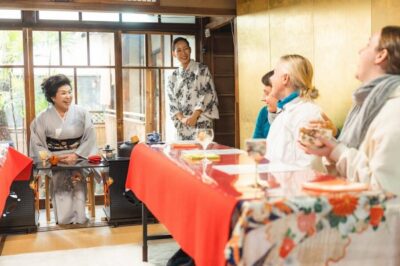
Private and small-group sessions are available. A small group lets you ask questions while keeping the room fairly intimate. A private booking makes more sense if you need an interpreter, have a young child, or want more control over the pace.
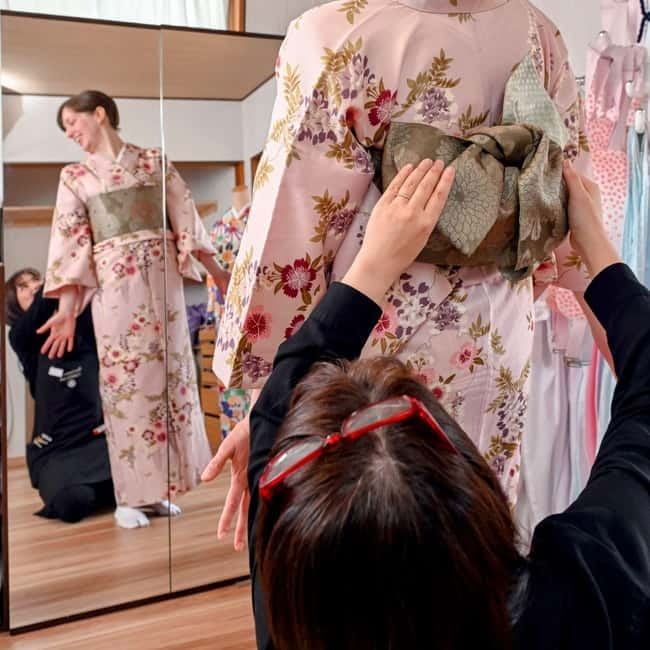
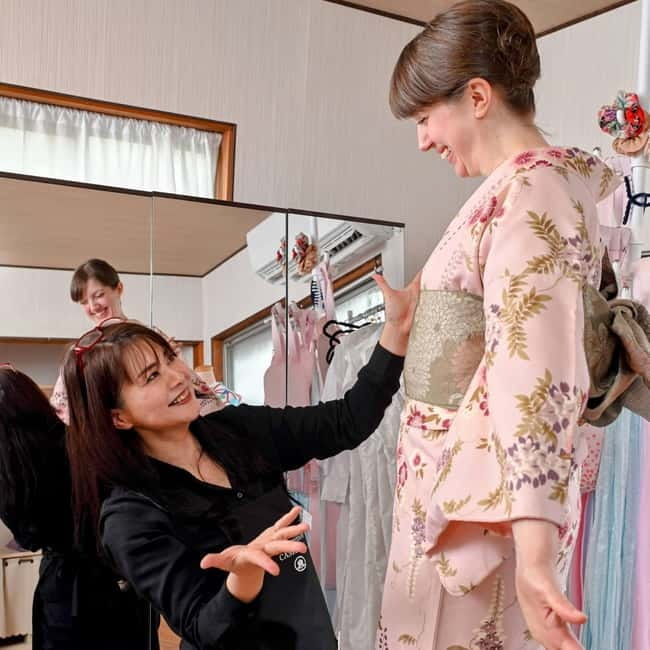
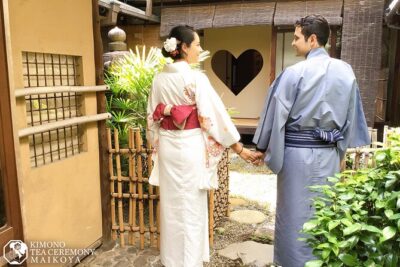
A kimono is not included in the $32 price. However, kimono rental is available nearby, and several people found that combining the two made the cultural setting feel more complete.
Plan the kimono rental before the tea ceremony, not after. The rental shop is close by, but it is easy to overlook the entrance or underestimate the time needed to dress. If you are alone, staff may also help with photographs, which is useful in a district designed for picture-taking.
A kimono is optional, not necessary. The ceremony itself remains the main event, and ordinary respectful clothing is fine. I would choose the rental if you want photographs and enjoy dressing for cultural activities. I would skip it if you are trying to keep the day simple or dislike restrictive clothing.
Is $32 good value in Kyoto?
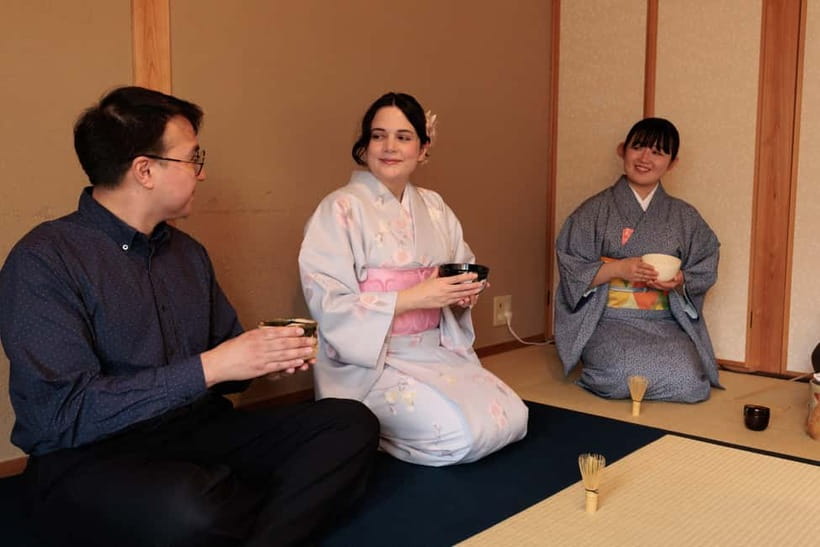
At $32 per person, this is a fairly accessible cultural activity, especially in one of Kyoto’s most expensive sightseeing areas. The price includes matcha, a seasonal sweet, all tea-making utensils, and a personal English-speaking host or instructor.
The real value is the explanation. A cup of matcha alone would cost less, but a café visit would not show you the room layout, ceremonial movements, utensils, or reasons behind the customs. You are paying for context and guided participation, not just a drink.
The session is also efficient for a busy trip. You do not need transportation across the city, and the location can be combined with several major sights. That saves both time and money compared with a separate excursion.
I would not call it a complete education in Japanese tea ceremony. It is an introduction. For most first-time visitors, that is exactly the right level. You get a meaningful cultural encounter without committing to a long class or paying for an advanced workshop.
Free cancellation up to 24 hours before the start time and the option to reserve now and pay later add useful flexibility. Starting times vary, so check availability before arranging temple visits around it.
Who will enjoy this experience most?
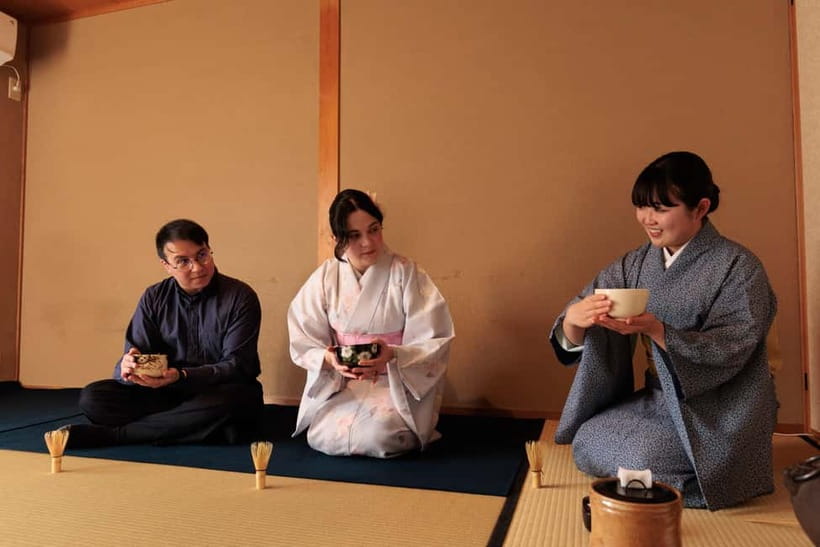
This ceremony suits first-time visitors to Kyoto, tea lovers, families with older children, couples, and solo visitors who want a calm cultural activity. The English instruction makes it easy to follow, and the hosts are warm about questions.
It is particularly good for anyone who wants more than a quick photograph in a kimono. You learn why the objects, gestures, and room matter, then take part in preparing the tea.
It may be less suitable if you want a full formal ceremony in silence, advanced instruction, or a long study of tea-school technique. The format is friendly and accessible, so it is designed more as an introduction than a strict training session.
The floor seating also matters. Ask for a chair if needed, and select the Garden Teahouse if wheelchair access is important. Private booking is the sensible choice for families with infants or anyone bringing an interpreter.
My verdict on the Camellia Tea Ceremony
I would book this experience if you want a short, well-located introduction to Kyoto’s tea culture. The strongest features are the clear English explanations, the peaceful demonstration, and the chance to whisk your own matcha rather than simply watch.
The experience works best when you arrive with realistic expectations. You will not master the complete ceremony, but you will understand its basic structure, taste Kyoto-grown matcha with a seasonal sweet, and see how much care goes into each movement.
Book it as a quiet break during a Higashiyama sightseeing day. Choose a private session for an interpreter, an infant under three, or extra comfort. Consider a kimono if you want a fuller photo-friendly outing, but do not feel you need one to enjoy the ceremony.
For $32 and 45 minutes, this is a practical way to slow down and meet an important part of Kyoto culture on its own terms.
FAQ
How long does the Kyoto tea ceremony experience last?
The experience lasts 45 minutes. It includes an introduction, a tea ceremony demonstration, a seasonal sweet, and hands-on matcha preparation.
What is included in the price?
The price includes matcha, traditional seasonal sweets, tea-making utensils, and a personal English-speaking host or instructor.
Where does the tea ceremony take place?
It takes place in a traditional machiya in Kyoto’s Higashiyama district, down an alley branching from Ninenzaka. The alley is just to the left of the Studio Ghibli store opposite the Park Hyatt hotel.
Is the experience offered in English?
Yes. The instructor and host provide the experience in English.
Do I have to sit on the floor?
Floor seating is part of the traditional setting, but chairs and tables are available for people who find it difficult. You do not have to sit formally on your knees.
Is the tea ceremony wheelchair accessible?
The Garden Teahouse is wheelchair accessible. The regular tearooms are upstairs, so select the Garden Teahouse if you need wheelchair access.
Can I take photographs or videos?
Non-flash still photography is permitted. Video recording is not allowed.
Just added around Kyoto
- Kyoto: Private Customizable Day Trip by Car★ 5.0 · 38 reviews
- Kyoto: Gion Night Walking Tour with Geisha Insight★ 5.0 · 39 reviews
- Kyoto: Full Day Bike Tour★ 4.9 · 39 reviews
- Private Japanese Calligraphy in Kyoto – Learn Shodō with a Master★ 5.0 · 39 reviews
- Experience a tea ceremony in an authentic tearoom, in Kyoto!★ 4.5 · 41 reviews
- Kyoto: Gion Evening Walk with Hidden Gems, Geisha & Sake★ 5.0 · 41 reviews
- Kyoto Private Photo Shoot & Tour by SnapKyoto★ 5.0 · 41 reviews
- The Way of Tea: Kyoto Crafts, Hidden Temples & Wabi-Sabi Walk★ 5.0 · 41 reviews
Tea Ceremony Experiences, compared.
Tea Ceremony in a Traditional Tea House in Kiyomizu
Read our review →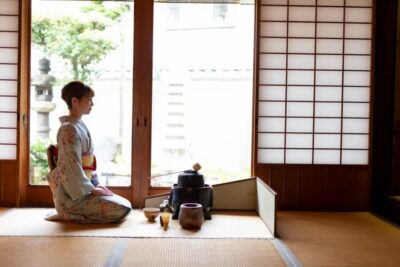
Browse the lists this tour appears in