
Reviewed · TEA CEREMONY EXPERIENCES
Kyoto: Tea Ceremony Meditation – Make Matcha with Tea Master
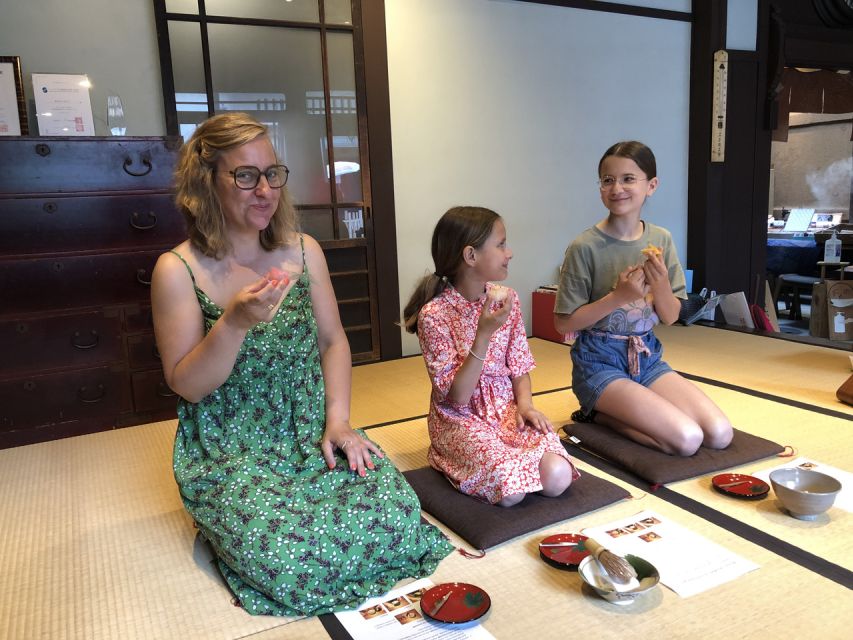
Slow tea, quiet room, lasting memory. In central Kyoto, this 45-minute experience introduces you to matcha preparation inside a 100-year-old traditional townhouse, with tatami, handcrafted utensils, and a host trained in the Omotesenke school of tea. I especially like the small groups, limited to 10 people, and the friendly English-language teaching. The main consideration is that this is a modern, visitor-friendly introduction rather than a long, highly formal tea ceremony, and kimono rental is not included.
I also like that you do more than watch. After the tea master demonstrates the process, you prepare your own bowl of matcha and enjoy it with a Japanese sweet. Hosts including Miki, Aki, Yoko, Joko, and Kiyoka have been praised for clear explanations and patient answers, though the compact 45-minute schedule leaves little time to linger.
In This Review
- Key Points at a Glance
- Entering the Townhouse Near Gojo
- What the Omotesenke Tradition Adds
- Watching the Demonstration, Then Taking Your Turn
- A Short Ceremony With a Useful Rhythm
- Why the Small Group Makes a Difference
- The Matcha, Utensils, and Crafts
- Price and Practical Value at $45
- Who Will Enjoy This Most
- My Final Take: A Calm, Hands-On Kyoto Choice
- FAQ
- How long does the Kyoto tea ceremony experience last?
- How much does the experience cost?
- Is matcha included?
- Is the activity taught in English?
- How many people can join the activity?
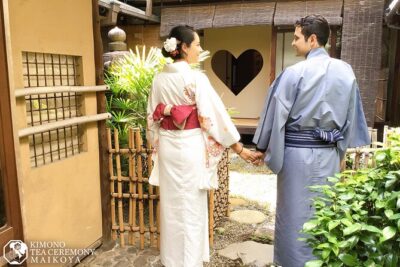
- Is kimono rental included?
- Is the venue wheelchair accessible?
Key Points at a Glance
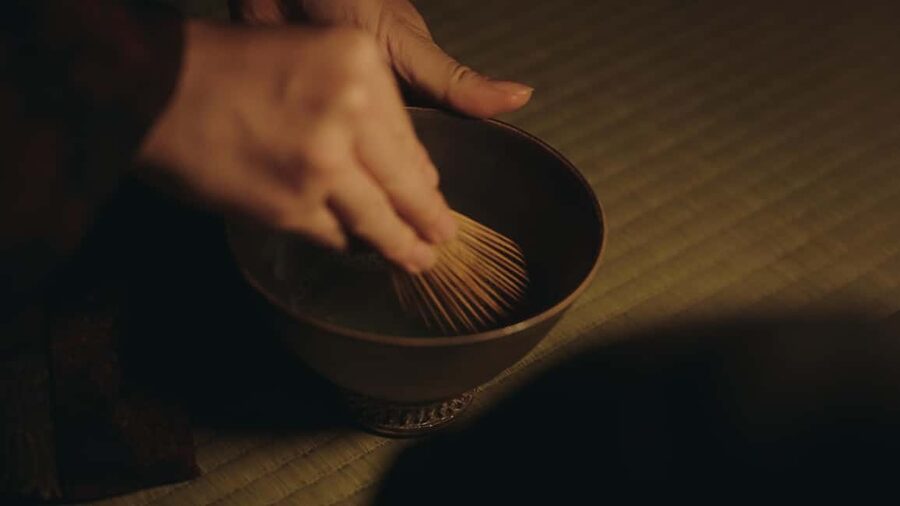
- Make your own matcha: You learn the basic technique and prepare a bowl yourself, rather than simply observing.
- Historic Kyoto setting: The ceremony takes place in a roughly 100-year-old townhouse with tatami and a calm, contemporary Japanese feel.
- Omotesenke tradition: Your host is trained in one of Japan’s respected tea schools and explains the meaning behind the movements.
- Small group format: With no more than 10 participants, you have a better chance to ask questions and receive individual help.
- English-language cultural lesson: The tea masters explain etiquette, matcha, and Japanese customs in English.
- Handcrafted souvenirs: Japanese tea utensils and other selected crafts are available to browse after the activity, though purchases cost extra.
Entering the Townhouse Near Gojo
The meeting point is at aeru gojo, in central Kyoto. If you come from Karasuma-dori Street, turn at the corner beside the Family Mart convenience store and walk straight for one block. Look for the aeru gojo sign next to Only Corporation and across from Zen Kyoto.
This is useful to know because the experience is not presented as a large attraction with a wide entrance or obvious street presence. Give yourself enough time to find the sign, but do not arrive more than 10 minutes early. The space is limited, so an early arrival may simply mean waiting outside.
There is no parking lot. If you arrive by rental bicycle, bikes are not allowed at the venue, and you should use public bicycle parking. The closest listed parking area is provided by the operator.
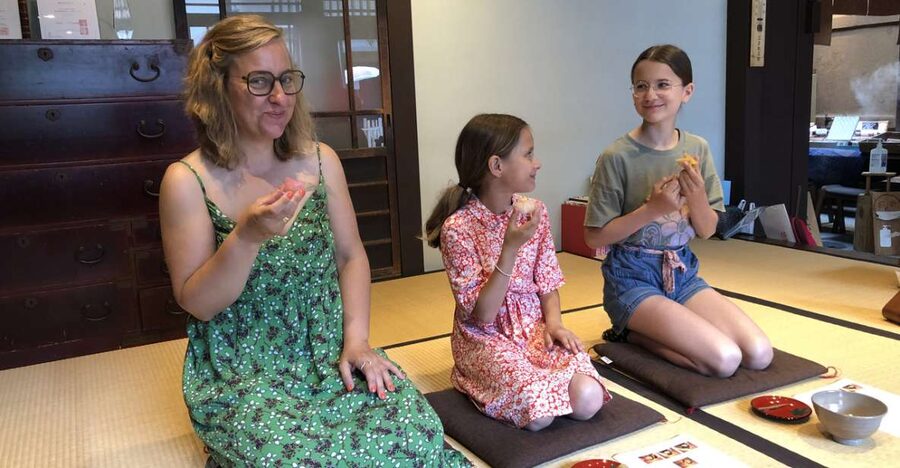
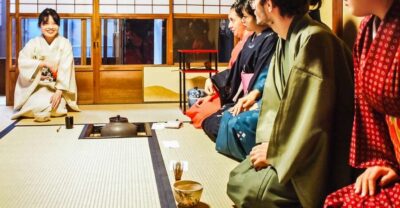
Once inside, the setting does much of the work. Tatami, the scent of straw mats, and a quiet room create a clear change of pace from Kyoto’s streets. The townhouse is old, but the atmosphere is not described as dusty or museum-like. It has a contemporary Japanese feel, with traditional details used for comfort rather than display.
More Tea Ceremonies in Kyoto
- Kyoto: Tea Ceremony in a Traditional Tea House in Kiyomizu
★ 4.9 · 3,519 reviews - Kyoto: Tea Ceremony Ju-An at Jotokuji Temple
★ 4.9 · 3,207 reviews - Kyoto: 45-Minute Tea Ceremony Lesson Experience
★ 4.3 · 2,378 reviews
What the Omotesenke Tradition Adds
The host is trained in the Omotesenke tradition, one of Japan’s major schools of tea ceremony. You do not need prior knowledge of tea etiquette, and you are not expected to perform a perfect formal ceremony. Instead, the host explains what is happening and why.
That distinction matters. Tea ceremony is not simply the preparation of powdered green tea. The direction of the bowl, the way utensils are handled, the order of movements, and the relationship between host and guest all carry meaning. In a short class, you will not master every rule, but you can begin to see that the ceremony is built around attention, respect, and care.
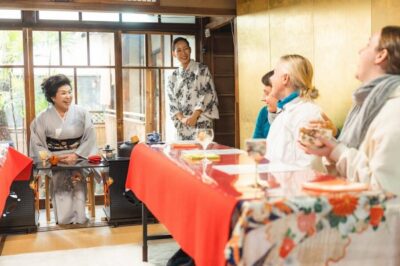
The demonstration is one of the quiet highlights. Hosts such as Miki have been praised for staying calm and explaining each stage clearly. Yoko, Joko, Aki, and Kiyoka have also been singled out for warm teaching and fluent English. Their role is not only to show hand movements, but to make the customs understandable to someone seeing them for the first time.
The tone is welcoming rather than stiff. You can ask about matcha, tea schools, Japanese culture, and the details of the ceremony. One of the better features is that questions beyond the basic preparation are welcomed, so the class can become a broader conversation about Japan.
Watching the Demonstration, Then Taking Your Turn
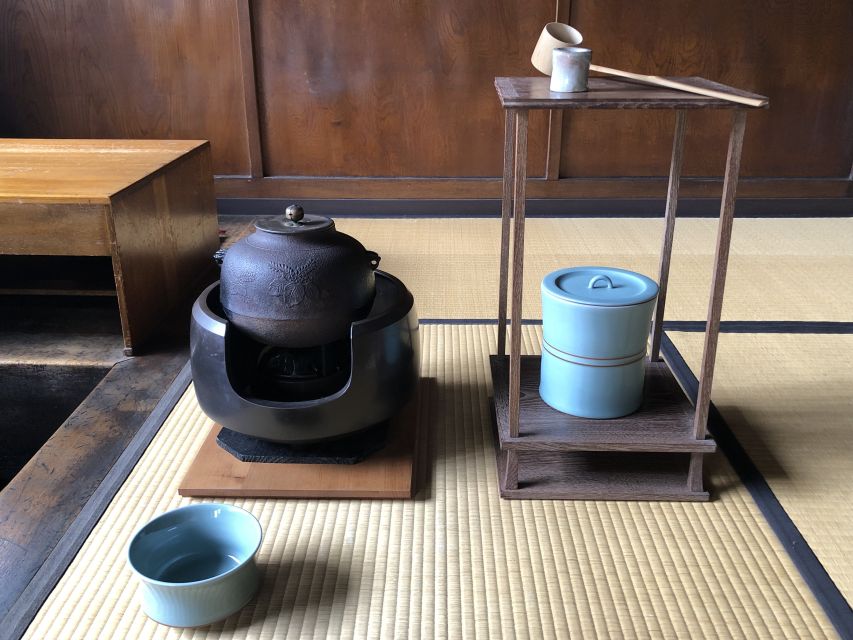
The experience begins with an introduction to the tea ceremony and its cultural background. Your tea master demonstrates the preparation, explaining the utensils and the order of the process. The slow pace makes the movements easy to follow, and several people have described watching the demonstration as calming or almost meditative.
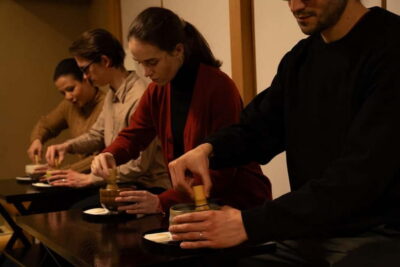
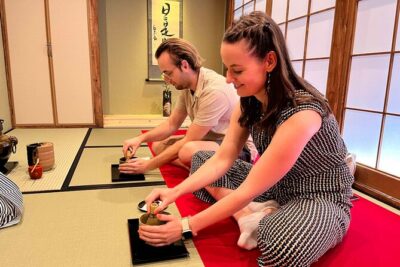
Then comes the hands-on part. You make your own bowl of matcha with authentic utensils made by Japanese artisans. The important word here is your own. This is not a staged photo opportunity where you hold a whisk for a moment. You take part in the preparation and learn the basic technique under guidance.
The host helps you as needed, and the small group makes individual instruction possible. That works well for first-time matcha makers, especially if you are unsure about how firmly to whisk or how to hold the bowl. The instructors are described as patient, including with families and young children.
After preparing the tea, you drink it with a traditional Japanese sweet. The sweet is more than a snack. In the tea tradition, it provides a gentle contrast to matcha’s earthy, bitter flavor. The tea and dessert are included in the $45 price.
You should not expect free refills or a full meal. One past participant specifically noted the absence of refills, and the venue is not suitable for eating. Food and drinks are not allowed in the space, apart from the tea and sweet provided as part of the activity.
A Short Ceremony With a Useful Rhythm
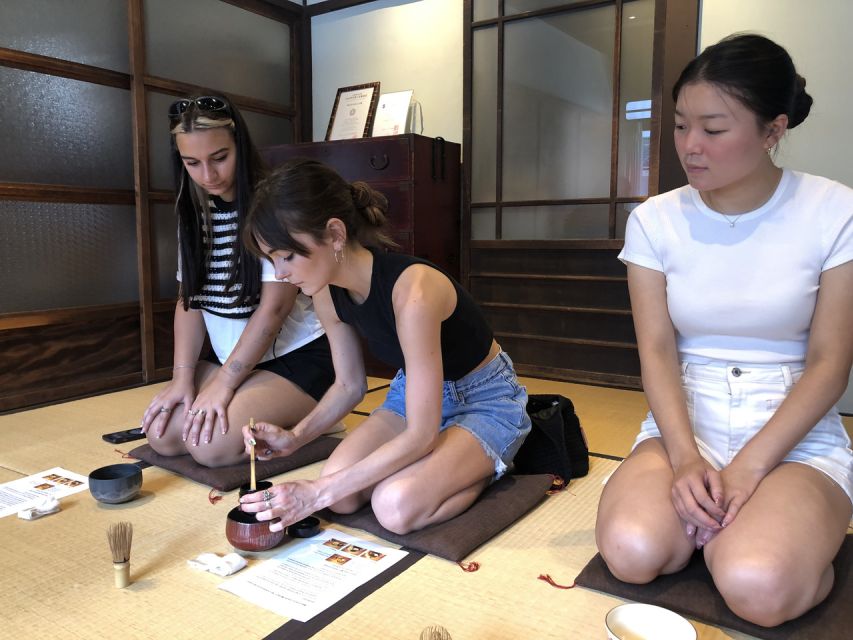
Forty-five minutes is a good length for a first introduction. It is long enough to explain the ceremony, watch a demonstration, prepare matcha, and ask some questions. It is also short enough to fit between sightseeing stops at Nishiki Market, Gion, Kyoto Station, or other central areas.
I would not choose this activity if you want a full formal tea gathering with extended silence, several servings, or elaborate dress. The time limit keeps the experience approachable, but it also means the session moves along. If your group asks many questions, the final conversation may be brief.
That tradeoff is part of the value. Kyoto offers many cultural activities, but some can feel difficult to enter if you do not speak Japanese or already understand the etiquette. Here, the host explains the basics in English and lets you learn by doing. You leave with enough understanding to recognize the care behind a tea ceremony, without needing to study an entire tea school.
The activity also works well late in a trip. One participant found it especially satisfying on a final day in Japan, when a quiet cultural experience offered a chance to reflect rather than rush from one major sight to another.
A completely different kind of day out in Kyoto:
- PERFECT KYOTO 1-Day Bus Tour
★ 5.0 · 13,518 reviews - Kyoto: Fushimi Inari, Kinkakuji, Bamboo Grove 1 Day Bus Tour
★ 4.8 · 4,316 reviews - Kyoto Geisha Walking Tour: Gion District & Hidden Gems
★ 4.7 · 3,273 reviews - Kyoto: Gion Magical Night Walking Tour with Geisha Trivia
★ 4.9 · 2,393 reviews
Why the Small Group Makes a Difference
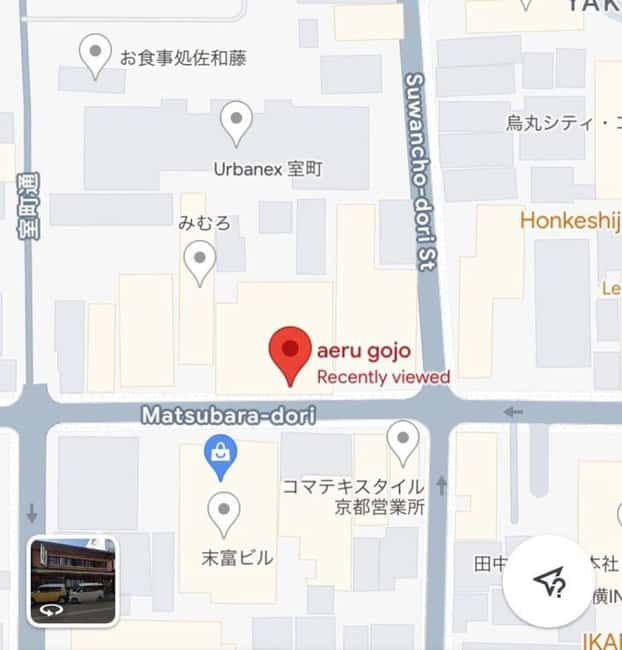
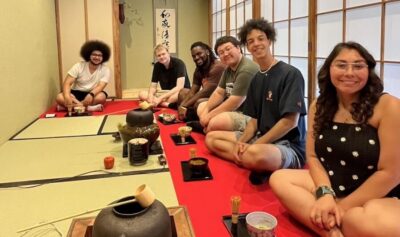
The group limit is 10 people, though sessions may be smaller. Some participants have found themselves in very intimate groups, including one pair who had the ceremony almost to themselves. That changes the feel of the activity.
In a large class, tea ceremony can become a demonstration viewed from the back of the room. Here, you are more likely to see the utensils clearly, hear the explanations, and ask a question without interrupting a crowd. You also get a more direct turn at making matcha.
The small format is especially helpful for solo visitors. You can meet people from other countries while sharing a quiet activity, yet you are not forced into a large social event. Couples and families also benefit from the personal attention.
Children can take part, but your family should consider their temperament. Children aged 8 and 10 were described as enjoying the mix of explanation and hands-on work, and a host was praised for patiently engaging with a restless toddler. Another participant felt the quiet atmosphere was better suited to people ready to sit still. My advice is simple: bring children who can handle a calm, guided activity, and explain beforehand that this is not a free-play workshop.
The Matcha, Utensils, and Crafts
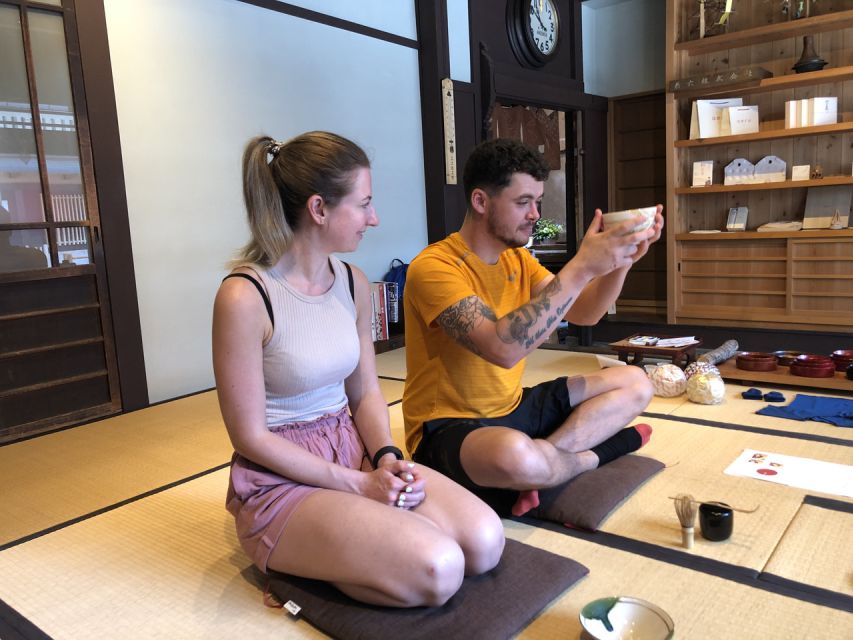
The experience uses authentic, handcrafted utensils made by skilled artisans. This gives the activity a tactile quality that a basic café matcha class may lack. You are not just looking at a powdered drink in a modern cup. You are learning how bowl, whisk, scoop, and other tools fit into a traditional practice.
The matcha itself has been praised as good quality and tasty. That does not mean you should expect every bowl to suit your palate. Matcha has a distinct vegetal bitterness, and your enjoyment will depend partly on how you feel about green tea. The traditional sweet helps balance it.
After the ceremony, you can browse Japanese crafts and tea-related items available for purchase. These are optional souvenirs, not part of the $45 fee. I like this arrangement because the objects connect directly to what you have just learned. A whisk, bowl, or small craft can carry more meaning than a random souvenir, but you should treat the shopping as an extra rather than a reason to book the activity.
The setting and utensils also make this a good choice for anyone interested in Japanese design. You get a close look at objects chosen for use, beauty, and handling, not just decoration behind glass.
Price and Practical Value at $45
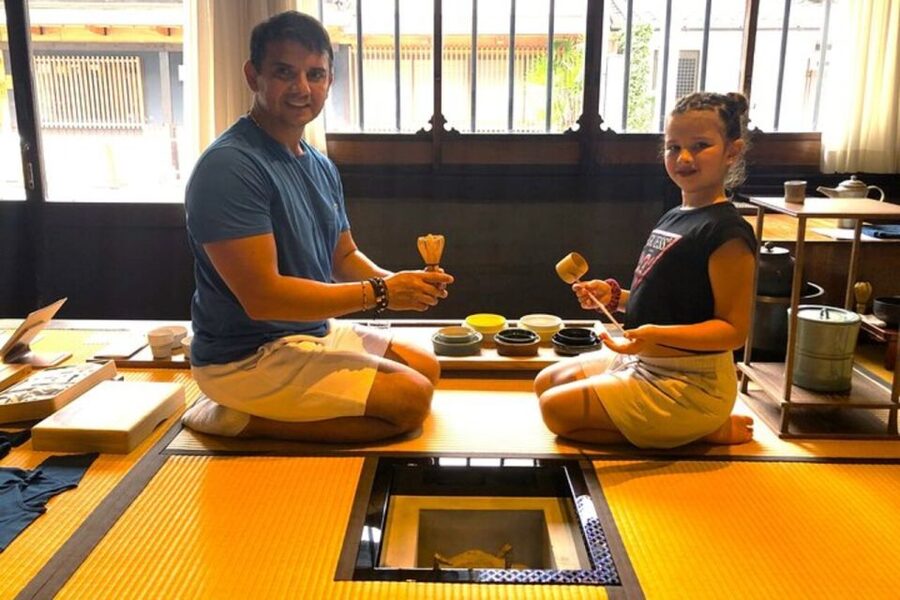
At $45 per person, this is not the cheapest way to taste matcha in Kyoto. A tea at a café costs much less. But the comparison is not really tea versus tea.
Your fee covers instruction, a cultural explanation, the ceremony demonstration, your own hands-on preparation, one bowl of matcha, and a traditional sweet. You also receive access to a historic townhouse and a small-group setting. For a first visit to Japan, that combination gives the price reasonable value.
I would judge the cost this way:
- If you only want to drink matcha, visit a café.
- If you want to understand how matcha is prepared and why the ritual matters, this class earns its price.
- If you want a kimono photo session, budget for a different activity because kimono and hair setting are not included.
- If you want a long, formal ceremony, this 45-minute introduction may feel too brief.
The American Express Award recognition adds some confidence in the program’s cultural focus, but I would base your decision on the format itself: English instruction, small groups, and active participation.
Who Will Enjoy This Most
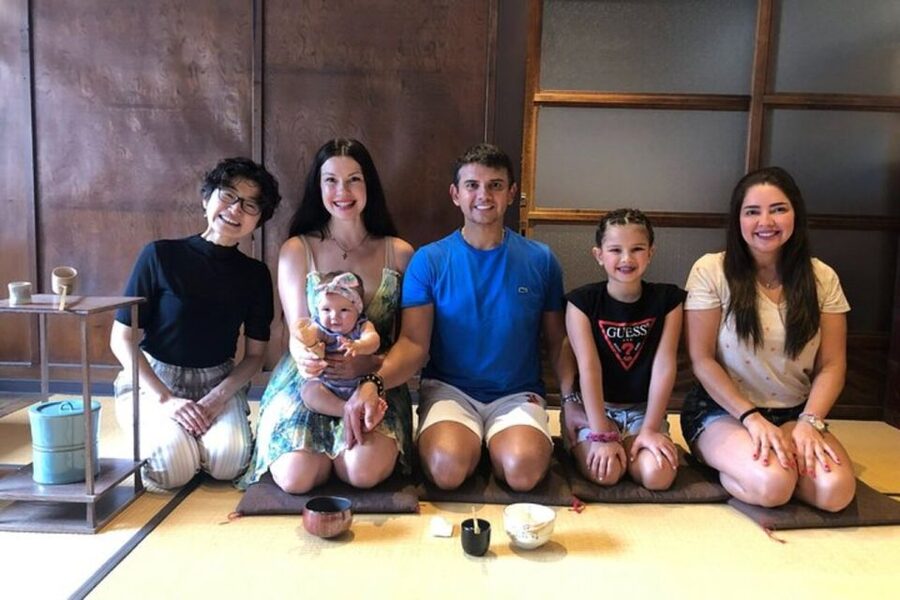
I would recommend this experience to first-time visitors who want a manageable introduction to Japanese culture. It is also a good fit if you have already seen Kyoto’s temples and want an activity that asks you to slow down instead of simply taking another photograph.
It suits:
- Solo visitors who want a friendly, low-pressure cultural activity
- Couples looking for a quiet shared experience
- Families with children who can sit and listen
- People interested in Japanese customs, crafts, or design
- Anyone who has never prepared matcha before
- Visitors who want English explanations and time for questions
It may not suit you if you dislike powdered green tea, cannot sit comfortably for a short ceremony, or want a fully formal experience with traditional clothing. You also need to avoid perfume or cologne. That rule is practical: strong scents can cover the delicate aroma of matcha and affect the experience for everyone in the room.
The venue is wheelchair accessible, which makes it easier for more people to take part. Food and drinks are not allowed, and bicycles cannot be brought inside.
My Final Take: A Calm, Hands-On Kyoto Choice
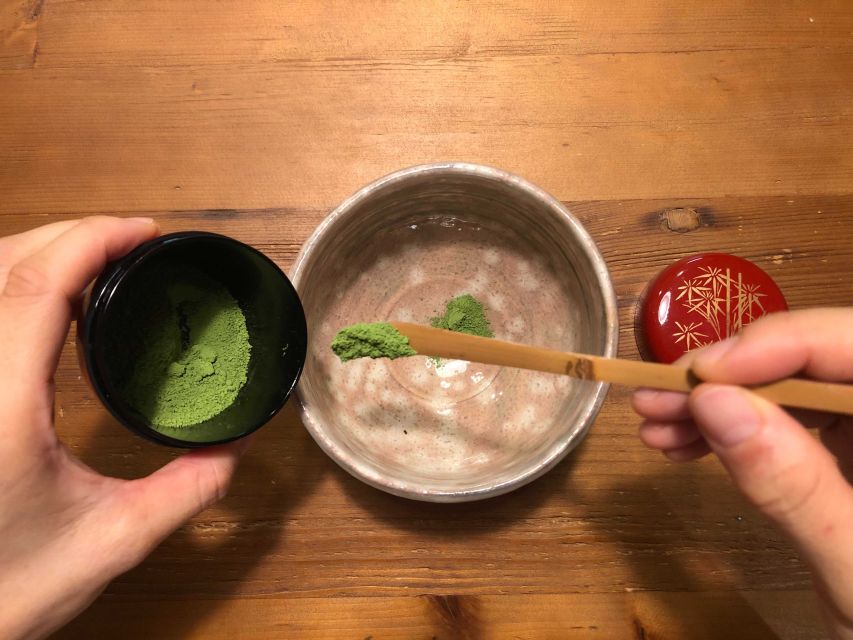
I would book this tea ceremony if I wanted a short, thoughtful cultural activity rather than another sightseeing stop. The best features are clear: excellent English guidance, an inviting townhouse setting, high-quality utensils, and the chance to prepare your own matcha.
The 45-minute length is both its strength and its limit. You can fit it into a busy Kyoto day, but you should not expect a full study of tea ceremony. Kimono rental is also absent, so choose this for learning and participation, not costume photos.
For $45, the experience makes sense when you value personal instruction and cultural context. Miki, Aki, Yoko, Joko, and Kiyoka are all praised for warmth, patience, and clear teaching, and that human touch is central to the activity. If you arrive curious, quiet your phone, skip the perfume, and let the room slow you down, you should leave with more than a cup of tea. You will have a simple skill and a better sense of why matcha matters in Japan.
FAQ
How long does the Kyoto tea ceremony experience last?
The experience lasts 45 minutes.
How much does the experience cost?
The price is $45 per person.
Is matcha included?
Yes. The experience includes one cup of matcha tea and a traditional Japanese sweet.
Is the activity taught in English?
Yes. The instructor language is English, and the tea masters explain the ceremony, preparation, etiquette, and cultural background in English.
How many people can join the activity?
It is a small-group experience limited to 10 participants.
Is kimono rental included?
No. Kimono rental and hair setting are not included.
Is the venue wheelchair accessible?
Yes. The activity is wheelchair accessible.
Just added around Kyoto
- Kyoto: Private Customizable Day Trip by Car★ 5.0 · 38 reviews
- Kyoto: Gion Night Walking Tour with Geisha Insight★ 5.0 · 39 reviews
- Kyoto: Full Day Bike Tour★ 4.9 · 39 reviews
- Private Japanese Calligraphy in Kyoto – Learn Shodō with a Master★ 5.0 · 39 reviews
- Experience a tea ceremony in an authentic tearoom, in Kyoto!★ 4.5 · 41 reviews
- Kyoto: Gion Evening Walk with Hidden Gems, Geisha & Sake★ 5.0 · 41 reviews
- Kyoto Private Photo Shoot & Tour by SnapKyoto★ 5.0 · 41 reviews
- The Way of Tea: Kyoto Crafts, Hidden Temples & Wabi-Sabi Walk★ 5.0 · 41 reviews
Tea Ceremony Experiences, compared.
Tea Ceremony in a Traditional Tea House in Kiyomizu
Read our review →
Browse the lists this tour appears in