
Reviewed · TRADITIONAL CRAFT WORKSHOPS
Kyoto: Traditional Yuzen Dyeing Experience
Kyoto’s quietest souvenirs may be the ones you paint yourself. In a Nishijin machiya, an artisan guides you through Yuzen dyeing, a refined Kyoto craft with centuries of cultural importance. I especially like the personal color advice from the master and the calm, private-home setting. The main consideration is that the $161 price is high for a two-hour activity, and you may spend much of the session seated on the floor.
This is not a casual T-shirt dyeing class. You paint a silk piece with a prepared design, while the artisan mixes colors and shows you how much dye and water to use. Small groups of up to six, plus an English or Chinese interpreter, make the instruction patient and personal, though the limited design selection may disappoint you if you want a wide range of patterns.
In This Review
- Key points at a glance
- Entering a Nishijin machiya for a hands-on craft lesson
- Choosing a phoenix, crane, or fan design
- Letting the artisan build your color palette
- Painting silk while the interpreter explains the craft
- Seeing the master’s Yuzen work before you leave
- What the $161 price really buys you
- Comfort, clothing, and practical limits
- Who will enjoy this Kyoto experience most
- Should you book this Yuzen dyeing session?
- FAQ
- How long does the Yuzen dyeing experience last?
- Where does the experience take place?
- What can I make during the session?
- Is instruction available in English?
- What should I wear?
- Is the activity suitable for children and wheelchair users?
Key points at a glance
- Paint silk in a real Kyoto artisan’s home: The setting is a traditional machiya in the historic Nishijin district, with Yuzen works on display.
- Choose the mood, not every color: You select one or two preferred colors, then the artisan builds a balanced palette around them.
- Work with prepared designs: Phoenixes, cranes, and fans are among the options mentioned, with golden outlines already placed on the silk.
- Get close help throughout: The artisan mixes the dye and guides your brushwork, while an interpreter explains the process in English or Chinese.
- Take home a useful keepsake: Your finished silk artwork is a personal souvenir rather than a factory-made purchase.
- Plan for a calm, focused two hours: Wear clothes you do not mind staining, and tell the provider about allergies or chemical sensitivities ahead of time.
Entering a Nishijin machiya for a hands-on craft lesson
The setting gives this experience much of its value. You meet inside a traditional machiya townhouse in Kyoto’s Nishijin district, an area closely associated with textile production. Instead of sitting in a large commercial classroom, you enter the artisan’s home studio and see his own Yuzen pieces nearby.
That change of setting matters. You are not only learning a craft technique. You are seeing how the work fits into a Kyoto home, with the quiet pace and careful order that suit a fine textile art. One participant described a studio overlooking a Zen garden, while others appreciated the chance to see finished pieces made by the master.
The group is limited to six people. It may be smaller, and several bookings have been private or nearly private. That gives you room to ask questions and receive corrections without feeling like you are holding up a class.
The atmosphere is gentle rather than theatrical. You will not be rushed through a polished performance or moved from one station to another. The focus stays on the silk, the colors, and the artisan’s method.
More Craft Workshops in Kyoto
- Kyoto : Chopsticks Making Workshop in Gion with Engraving Option
★ 5.0 · 958 reviews - Authentic knife making experience at a blacksmith in Kyoto
★ 4.8 · 350 reviews - Roketsu dyeing experience: M course Roketsu Dyeing Experience
★ 5.0 · 163 reviews
Choosing a phoenix, crane, or fan design
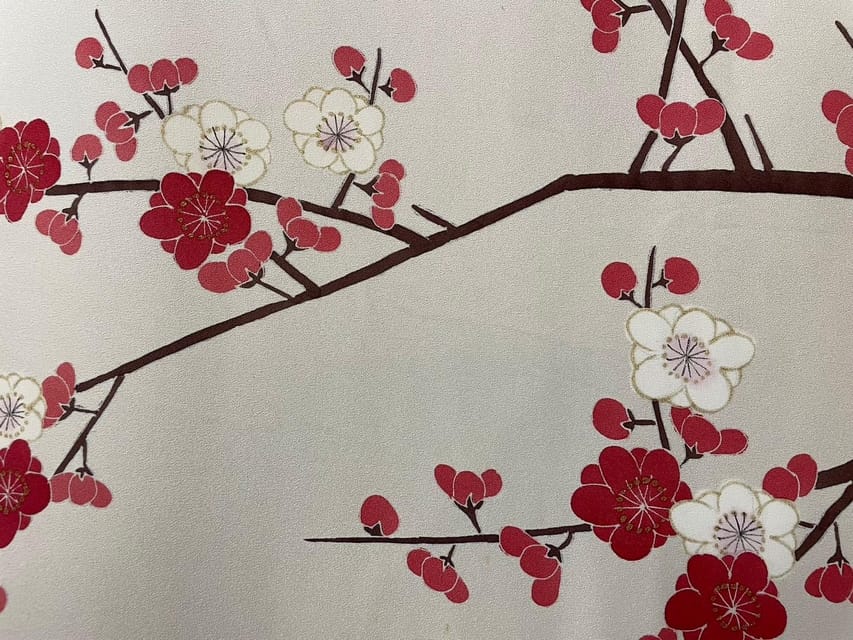
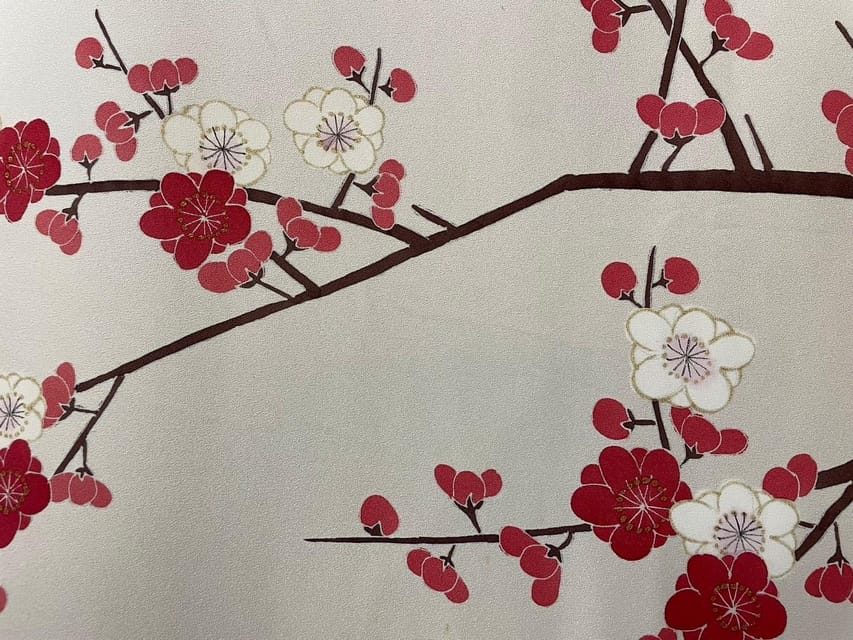
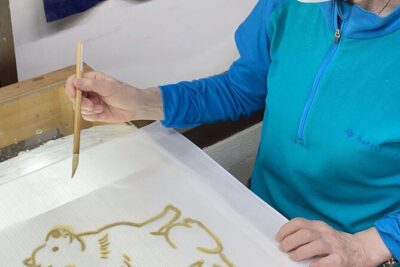
The activity begins with a choice of design. The available patterns have included phoenixes, cranes, and fans, with finished examples displayed for inspiration. The designs are placed on the silk in advance, often with golden outlines that mark the areas you will color.
This makes the class approachable. You do not need to draw a picture from scratch, and you do not need advanced art training. Your task is closer to painting within a carefully prepared framework, although the work still demands a light touch.
The selection may be the weakest part for some people. One participant found only three designs available and wished for more variety. If choosing a pattern is a major part of the fun for you, do not expect a large art catalogue. You may spend less time deciding than you would at a broad craft workshop.
That limitation also keeps the session focused. The artisan has prepared designs that suit the technique and can be completed during the allotted time. If you choose a phoenix in front of a crescent moon, as some participants did, you can put your attention into color and brush control instead of wrestling with a blank sheet.
A useful tip is to make your design decision promptly. You need most of the two hours for painting, and careful color work takes longer than it first appears.
Letting the artisan build your color palette
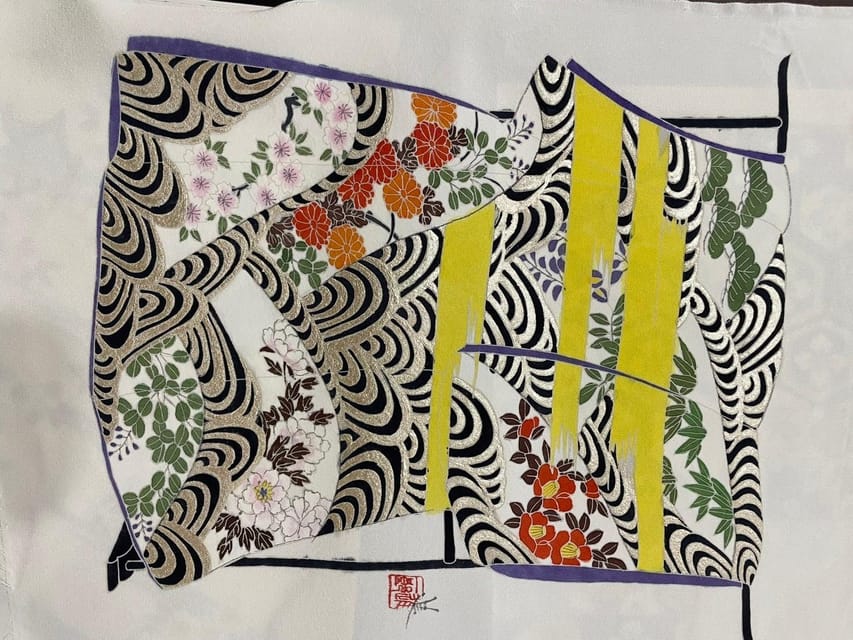
You begin by choosing one or two colors that appeal to you. The artisan then selects additional tones to create a balanced design. This is one of the strongest features of the experience because you get personal choice without being left alone with a confusing tray of paints.
Master Shin’Ichiro has been identified by participants as the artisan leading the session. He mixes the colors himself and can show you an example of how a particular shade will look on fabric. His advice is practical: the amount of water and dye affects the final tone, and he knows how to adjust the mixture.
You might arrive wanting strong red, soft blue, or a certain shade of green. The master can help you build a palette that works across the entire picture. You still make the important artistic choices, but you benefit from someone who has spent years seeing how pigments behave on silk.
This is also where the craft feels different from ordinary tie-dye. The process has been described as similar to painting with dye, not twisting a cotton shirt and hoping for a pattern. You place color carefully inside outlined shapes, and the fluidity of the dye means a heavy brush can cause bleeding.
Keep track of how much liquid is on your brush. One participant’s most useful practical tip was not to overload it, since excess dye can spread beyond the outline. The artisan will help, but you will get better results if you work slowly and use less paint than your first instinct suggests.
Painting silk while the interpreter explains the craft
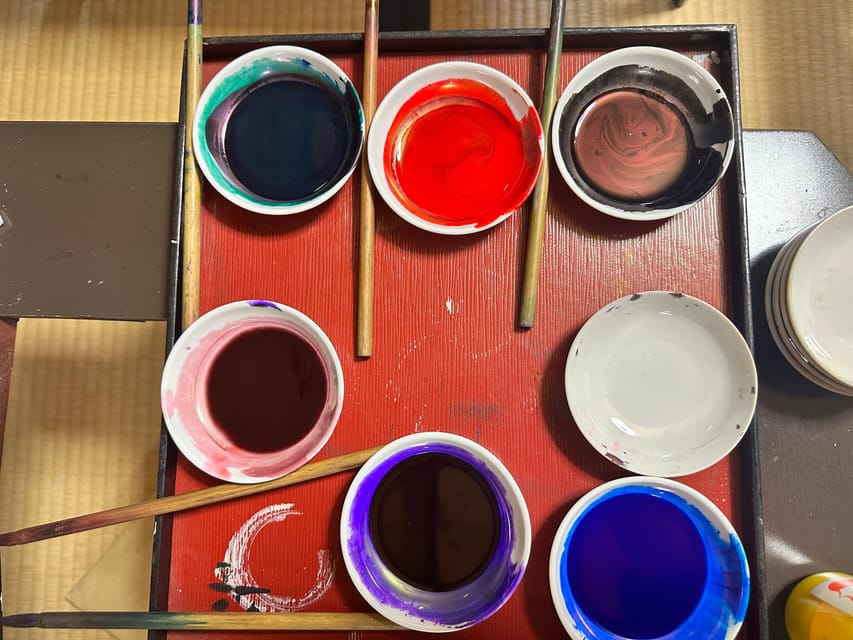
Once your colors are ready, you paint the design. The artisan demonstrates the technique, gives suggestions, and watches your progress. The activity is easy to follow, but it is not completely passive. You need to remain attentive to the amount of dye, the pressure of the brush, and the edges of each shape.
The interpreter is an important part of the experience. English and Chinese interpretation is available, and participants have praised the interpreters for explaining the process clearly and helping conversation flow between the artisan and the group. Ha was named as one interpreter and was also noted for taking photographs during the session.
The communication style is part of the charm. The master may not speak much English, so the interpreter helps explain the details of the technique and translates his suggestions. You still see his hands, demonstrations, and reactions directly, rather than receiving everything through a distant guide.
The pace is usually calm. Several people found the activity relaxing or meditative, and the quiet work can pull your attention away from the noise of a busy sightseeing day. If you are prone to perfectionism, you may need to accept that handmade art will have small variations. That is not a flaw here. It is evidence that you made the piece with guidance from an artisan instead of buying a uniform souvenir.
The scheduled time is two hours, but the pace may not be rigid. Some sessions have run over by about 30 minutes because participants needed more time. That flexibility was appreciated, although you should not plan a tight appointment immediately afterward. The exact finish can depend on the group and the speed of your painting.
A completely different kind of day out in Kyoto:
- PERFECT KYOTO 1-Day Bus Tour
★ 5.0 · 13,518 reviews - Kyoto: Fushimi Inari, Kinkakuji, Bamboo Grove 1 Day Bus Tour
★ 4.8 · 4,316 reviews - Kyoto: Tea Ceremony in a Traditional Tea House in Kiyomizu
★ 4.9 · 3,519 reviews - Kyoto Geisha Walking Tour: Gion District & Hidden Gems
★ 4.7 · 3,273 reviews
Seeing the master’s Yuzen work before you leave
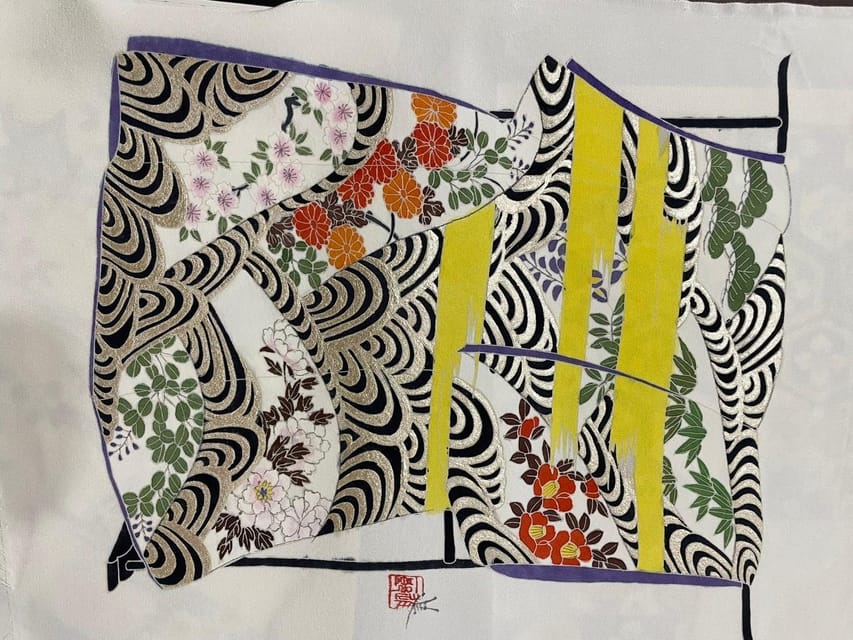
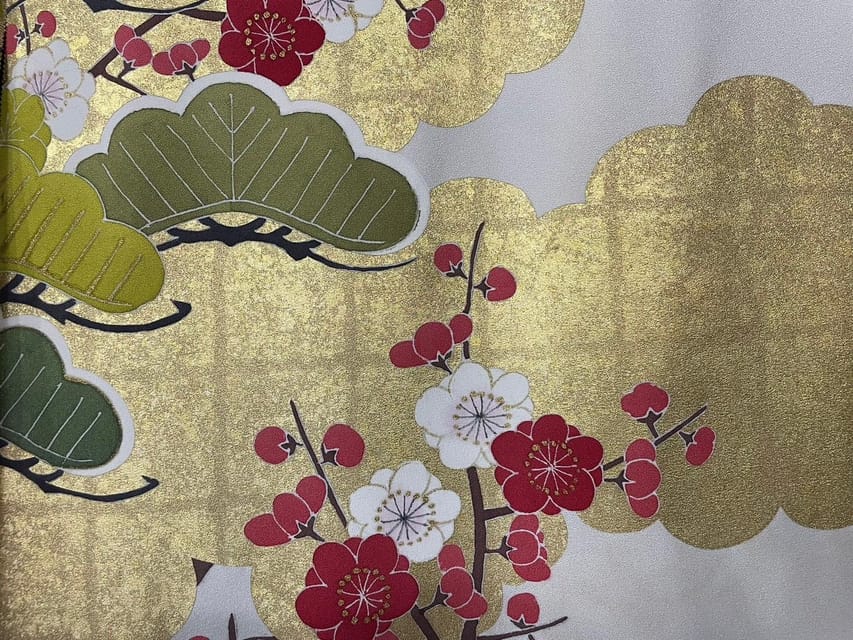
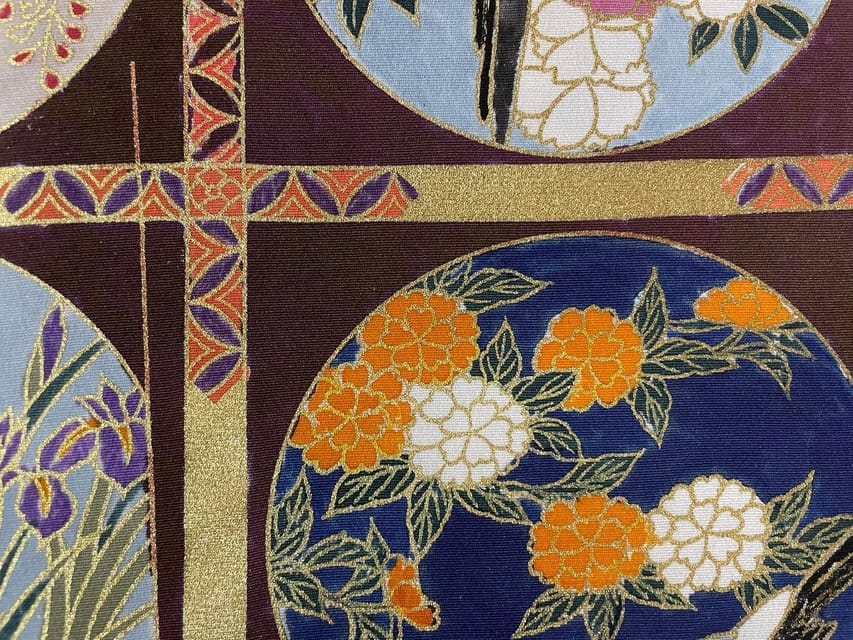
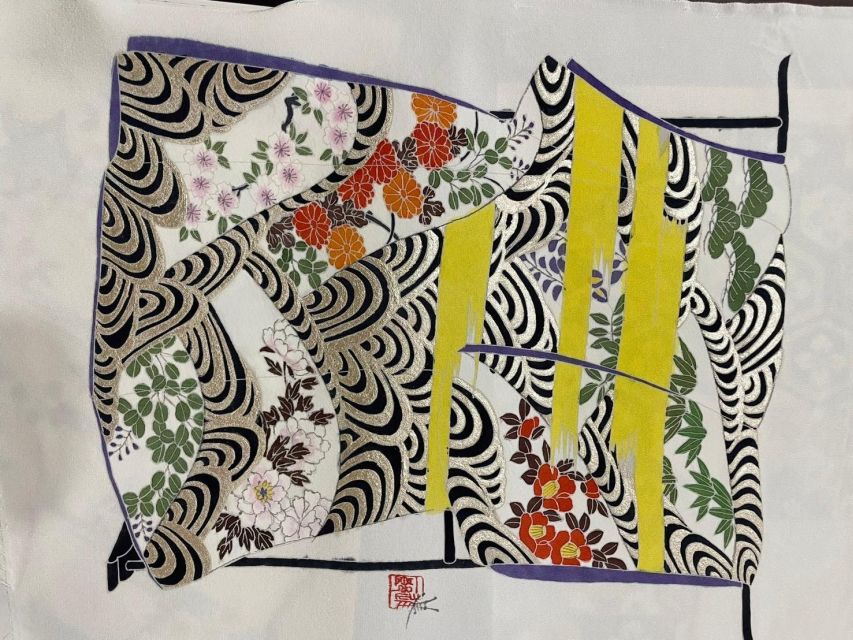
The experience includes a display of Kyoto Yuzen works. This viewing gives you a better sense of what the finished craft can look like and helps you understand the difference between your beginner piece and the artisan’s full work.
Do not treat this as a formal museum visit. The value is in seeing the work where it is made and connecting the finished examples to the tools and process in front of you. The master’s pieces provide color ideas and show why the palette advice matters.
For many people, this is the moment that turns a pleasant craft class into a cultural experience. You are supporting a local artist, seeing a traditional home, and learning about an art form that participants described as needing preservation. The experience gives context to Kyoto textiles without requiring a full day at a museum or workshop tour.
You may also have the chance to purchase additional works from the artisan. Those purchases are not included and may require cash, so consider that only if you want a more finished example to take home. The main souvenir is the silk piece you create yourself.
What the $161 price really buys you
At $161 per person, this is not a bargain activity in the usual sense. You can find cheaper craft classes, and the session lasts only two hours. The value comes from the setting, the small group, the direct time with an artisan, the interpreter, and the finished silk artwork.
You are paying for more than materials. The artisan mixes your colors, helps shape the palette, explains the craft, and gives you individual guidance. The traditional machiya and the display of his work add something that a modern activity room cannot easily copy.
I would consider the price reasonable for someone who values personal instruction and a meaningful souvenir. It is less convincing for a family that simply wants a quick, inexpensive activity for children. The minimum age is 10, and younger children are not accepted. A family with older children who can work carefully may find the experience worthwhile, but the cost rises quickly for a larger group.
The small-group format improves the value. If six people attend, you may have less individual attention than a private booking, but the group remains limited. If only two people book, you could receive a very personal lesson.
Comfort, clothing, and practical limits
Wear comfortable clothing that you do not mind getting dye on. This is not a place for your best travel outfit, especially if you tend to work with a full brush or lean close to the silk.
The activity may involve chemicals, so tell the provider in advance about allergies or sensitivities. This is a simple step, but it matters more here than it would at a standard sightseeing stop.
The experience is listed as wheelchair accessible. At the same time, one participant specifically advised against it for anyone who cannot sit on the floor for two hours. Those details suggest you should confirm the exact seating arrangement and your access needs before booking. Do not assume that a general accessibility label answers every question about floor seating in a traditional home.
Alcohol, drugs, fireworks, and party groups are not allowed. That fits the tone of the session, which is quiet and craft-focused rather than a social celebration.
Transportation to and from the meeting point is not included. You need to arrange your own way there, and the activity works best when you allow enough time to arrive without rushing into the lesson.
Free cancellation is available up to three days in advance for a full refund. Check the starting times for your date, since the activity lasts two hours and sessions have set availability.
Who will enjoy this Kyoto experience most
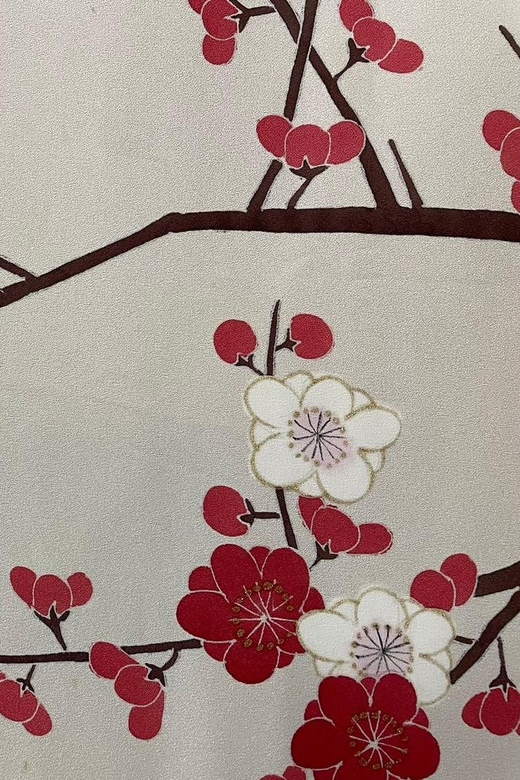
I would recommend this for people who want to slow down and make something with their hands. It suits art lovers, hobbyists, couples, solo visitors, and families with children aged 10 or older who can concentrate on careful painting.
It is also a good choice if you have already seen Kyoto’s major temples and want a quieter cultural activity. You will leave with a stronger sense of how much patience and control fine textile work requires.
The class may not suit you if you want a broad choice of designs, a fast souvenir, or a fully guided sightseeing route. It also may not be comfortable if you cannot sit on the floor, dislike the risk of dye on clothing, or have chemical sensitivities that have not been discussed in advance.
The interpreter helps make the class accessible to English and Chinese speakers, but the experience still depends on watching demonstrations and following visual instructions. You do not need fluent conversation to take part.
Should you book this Yuzen dyeing session?
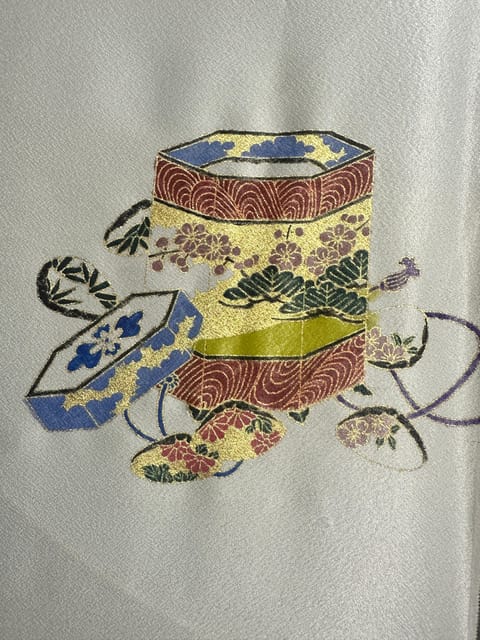
Book it if you want a personal Kyoto memory rather than another purchased object. The strongest reasons are the artisan’s direct guidance, the thoughtful color mixing, the small group, and the chance to work inside a real machiya in Nishijin.
I would be comfortable paying the $161 price for a special occasion, especially if you value handmade art and local craft. Just keep your expectations clear: design choices may be limited, the work is guided rather than fully free-form, and the two-hour schedule may stretch.
Wear older comfortable clothes, choose your pattern without taking too long, use a light brush, and leave space in your day afterward. If those conditions suit you, this is one of Kyoto’s more personal craft experiences, with a silk artwork that carries your own color choices and the artisan’s hand.
FAQ
How long does the Yuzen dyeing experience last?
The experience is scheduled for two hours. Some sessions may run longer if participants need extra time, so avoid making a tight appointment immediately afterward.
Where does the experience take place?
It takes place in a traditional machiya townhouse in Kyoto’s historic Nishijin district, inside the artisan’s own home and studio.
What can I make during the session?
You create a Yuzen-dyed silk fabric piece using a prepared design. Designs mentioned include phoenixes, cranes, and fans, with outlines already placed on the fabric.
Is instruction available in English?
Yes. Live guidance is available in English and Chinese, with an interpreter helping explain the artisan’s instructions and the dyeing process.
What should I wear?
Wear comfortable clothing that you do not mind getting dye on. The activity may also involve chemicals, so tell the provider about allergies or sensitivities in advance.
Is the activity suitable for children and wheelchair users?
Children under 10 are not permitted, and babies under 1 year are not suitable for the activity. The experience is listed as wheelchair accessible, but one participant noted that the class may involve sitting on the floor for two hours, so confirm your specific access needs before booking.
Just added around Kyoto
- Kyoto: Private Customizable Day Trip by Car★ 5.0 · 38 reviews
- Kyoto: Gion Night Walking Tour with Geisha Insight★ 5.0 · 39 reviews
- Kyoto: Full Day Bike Tour★ 4.9 · 39 reviews
- Private Japanese Calligraphy in Kyoto – Learn Shodō with a Master★ 5.0 · 39 reviews
- Kyoto: Gion Evening Walk with Hidden Gems, Geisha & Sake★ 5.0 · 41 reviews
- Experience a tea ceremony in an authentic tearoom, in Kyoto!★ 4.5 · 41 reviews
- Kyoto Private Photo Shoot & Tour by SnapKyoto★ 5.0 · 41 reviews
- The Way of Tea: Kyoto Crafts, Hidden Temples & Wabi-Sabi Walk★ 5.0 · 41 reviews
Traditional Craft Workshops, compared.
Chopsticks Making Workshop in Gion with Engraving Option
Read our review →
Kintsugi Experience: Art of Golden Joinery in Tokyo
Read our review →
Authentic knife making experience at a blacksmith in Kyoto
Read our review →
Traditional Mochi Pounding Experience with Tasting
Read our review →
Authentic Pure Gold Kintsugi Workshop with Master Taku in Tokyo
Read our review →
Roketsu dyeing experience: M course Roketsu Dyeing Experience
Read our review →Browse the lists this tour appears in