
Reviewed · TRADITIONAL CRAFT WORKSHOPS
Let’s make only one original onigawara in the world
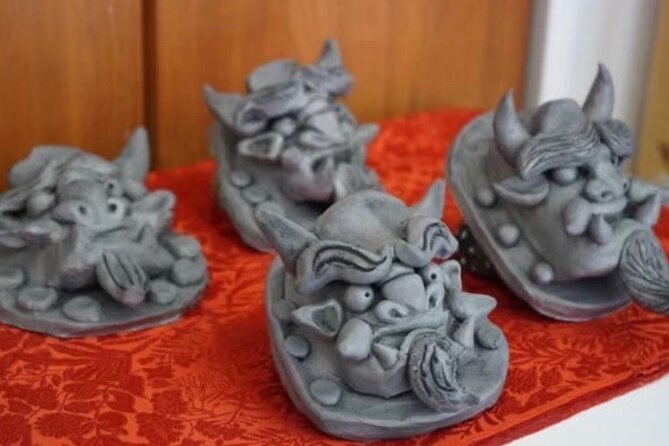
Clay can tell a story. In Kyoto, you can shape that story into an onigawara, a traditional demon-faced roof tile, with artist Yuya guiding you through each step. I like the hands-on format and the chance to take home a souvenir you made yourself, not something lifted from a shop shelf. I also like the small-group setting, advertised for no more than five participants.
The main catch is that the $89.17 price does not include shipping, and you must wait for the tile to dry, fire, and travel to your home. Bring clothes that can get dirty, and bring cash for delivery costs. The advertised duration is about two hours, but some sessions take closer to three.
In This Review
- Key points before you book
- Why an onigawara makes such a good Kyoto souvenir
- Arriving at 瓦工房 You家 in Higashiyama
- The opening lesson: kawara, roofs, and protection
- Building the oni from one lump of clay
- A creative break that works for families
- What the small-group format really adds
- The wait for firing and delivery
- Is the $89.17 price good value?
- Who should book this Kyoto craft activity?
- Booking, cancellations, and practical preparation
- Should you book the onigawara workshop?
- FAQ
- How long does the onigawara workshop last?
- Where does the workshop begin and end?
- What is an onigawara?
- Do I need clay or pottery experience?
- Is shipping included in the price?
- When will my finished onigawara arrive?
- Should I wear special clothing?
- How many people can join the regular class?
Key points before you book
- You make a demon-faced roof tile from clay, using a step-by-step method designed for beginners.
- Artist Yuya teaches the class, offering clear instructions, patient help, and English guidance.
- Your finished onigawara is fired after class and sent to your home once the process is complete.
- The workshop is small, with a stated maximum of five participants for the regular format.
- Shipping costs extra, and the fee may be paid separately in cash.
- The activity connects craft with architecture, explaining how roof tiles helped protect Japanese buildings from rain and evil.
Why an onigawara makes such a good Kyoto souvenir
Kyoto gives you no shortage of souvenirs. You can buy fans, sweets, chopsticks, postcards, and small ceramic figures almost anywhere. An onigawara offers something different: it is a handmade object tied to the buildings you are seeing around the city.
An onigawara is a carved roof ornament, often placed at the ends of a main roof ridge. Its face may look fierce, comic, grotesque, or almost friendly. The demon form has traditionally been linked with protection, guarding buildings from evil and helping shield roof structures from rainwater.
That meaning gives your finished piece more weight than a standard craft project. You are not simply molding a decorative face. You are learning why this particular object appears on Japanese temples and other buildings, then making your own small version.
I especially like the way the workshop turns sightseeing into something physical. After spotting onigawara on Kyoto rooftops, you will have a better idea of what you are looking at. You may even start comparing the expressions and shapes on real buildings with the face you made in class.
More Craft Workshops in Kyoto
- Kyoto : Chopsticks Making Workshop in Gion with Engraving Option
★ 5.0 · 958 reviews - Authentic knife making experience at a blacksmith in Kyoto
★ 4.8 · 350 reviews - Roketsu dyeing experience: M course Roketsu Dyeing Experience
★ 5.0 · 163 reviews
Arriving at 瓦工房 You家 in Higashiyama
The meeting point is 瓦工房 You家, also written as kawarakoubouyouya, at 373-2 Yamazakichō in Kyoto’s Higashiyama Ward. The postal code is 605-0841. The studio is near public transportation, though the supplied information does not specify a particular station or walking time.
The activity begins and ends at the same place. That makes the workshop easy to fit into a Kyoto day, especially if you want a break from temple visits and long walks. You can also leave luggage at the studio, according to one participant’s account, which may help if you are moving between accommodations.
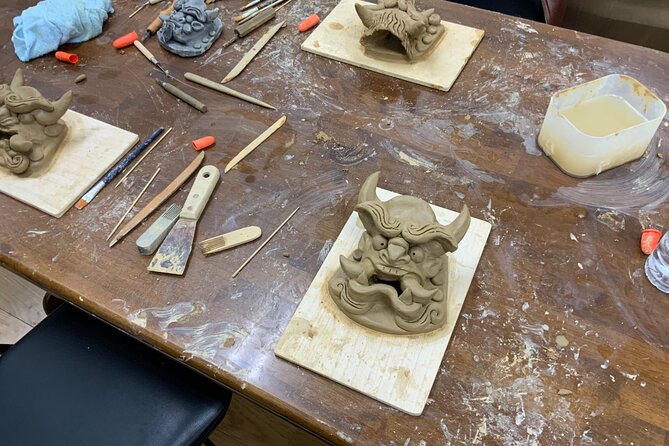
The space is intimate rather than polished like a large visitor center. That is part of the appeal. The setting supports a direct connection with the craft and with the person teaching it. At the same time, anyone expecting a formal museum presentation should adjust expectations. This is a working workshop, with clay, tools, and hands-on instruction at its center.
Service animals are allowed, and most people can take part. The activity is near public transportation, but the information does not give a detailed accessibility assessment. If you need specific physical accommodations, ask the provider before booking.
The opening lesson: kawara, roofs, and protection
The class begins with an introduction to kawara, Japan’s traditional roof tiles. The lesson explains the role of the demon-faced ornaments found at roof ends and ridge points.
This cultural context matters. Without it, you might see an onigawara as a cute monster sculpture. With it, you understand that the face has a job, at least in the symbolic sense. It is a guardian, a warning, and a piece of roof design shaped by practical concerns.
The instructor also explains how tile production has changed over time. Modern manufacturing has made roof tiles more efficient to produce, but this workshop gives you a small taste of the older hand-shaped process. You are not reproducing a full temple ornament, of course. You are making a smaller, simpler piece suited to a short class.
Yuya is the instructor named throughout the experience. His teaching style seems to be one of the strongest reasons this activity works. He breaks a complicated-looking finished object into manageable stages, gives instructions in clear English, and provides hands-on guidance when needed.
That is important because an onigawara can look far beyond the reach of a first-time clay worker. The process is designed so children, adults, and people who describe themselves as clumsy can produce an oni. You do not need prior pottery or sculpting experience.
Building the oni from one lump of clay
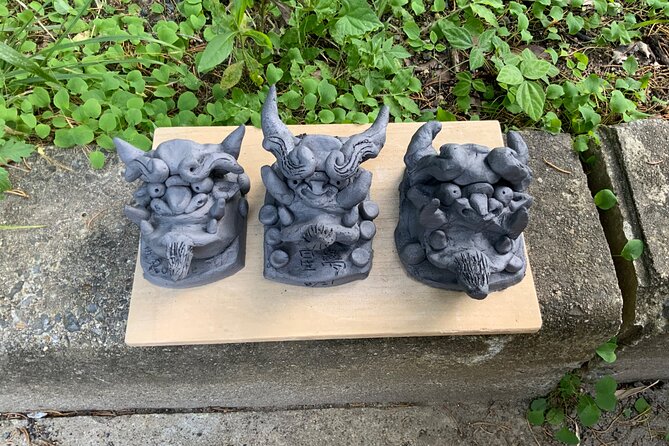
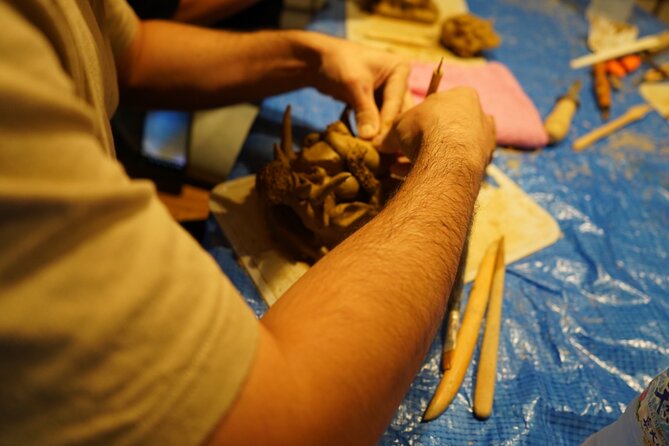
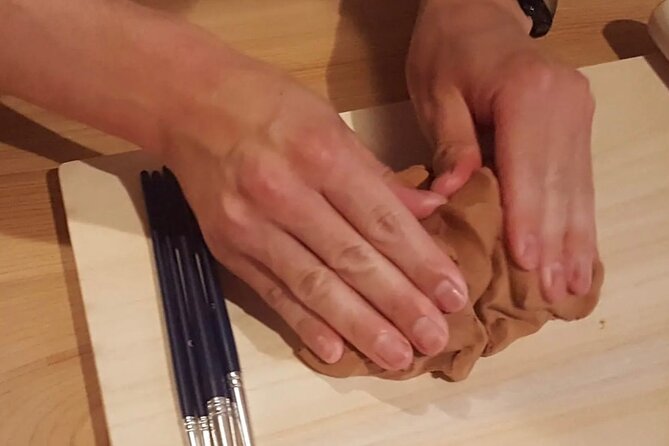
The central part of the class is a guided construction process. Yuya teaches you how to turn clay into the basic form, then add the features that give your demon its character.
The method uses a set sequence of steps. That structure keeps the project moving and helps you finish within the available time. At the same time, your shaping choices affect the result, so no two pieces need to look alike.
This balance is one of the workshop’s best features. You are not left alone with a large lump of clay and vague instructions. You also are not handed a rigid mold that produces the same object as everyone else. Your oni may end up snarling, playful, lumpy, angular, or slightly odd. That is the point.
Some participants initially worry that their clay has gone wrong. The form can look misshaped while you are building it, especially if you have never worked with clay. The instructor’s method allows the face to develop gradually, and the finished result can look much better than expected once the parts come together.
Yuya’s guidance is patient rather than heavy-handed. He demonstrates each technique, checks that everyone understands, and offers suggestions to strengthen the design. You still make the creative decisions. That makes the final object personal even when everyone follows the same general recipe.
The class can move at a fairly quick pace. One account describes a session of almost three hours for six people, while the stated duration is approximately two hours. Allow extra time if you work slowly, ask many questions, or want to add your own details.
A completely different kind of day out in Kyoto:
- PERFECT KYOTO 1-Day Bus Tour
★ 5.0 · 13,518 reviews - Kyoto: Fushimi Inari, Kinkakuji, Bamboo Grove 1 Day Bus Tour
★ 4.8 · 4,316 reviews - Kyoto: Tea Ceremony in a Traditional Tea House in Kiyomizu
★ 4.9 · 3,519 reviews - Kyoto Geisha Walking Tour: Gion District & Hidden Gems
★ 4.7 · 3,273 reviews
A creative break that works for families
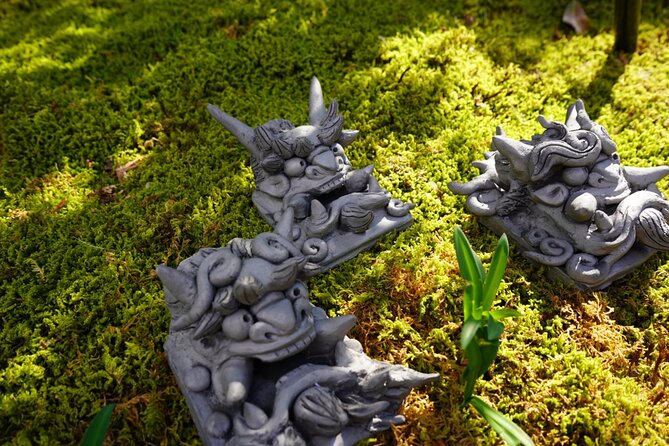
This is a strong choice for families, especially with artistic teenagers. Children can take part, and the instructions are structured enough to keep beginners moving. The finished pieces can also become a fun family comparison: same basic process, completely different expressions.
The activity suits adults just as well. Several people who had never worked with clay found the instructions approachable. You do not need to consider yourself artistic. In fact, the guided format may be more helpful if you feel creatively challenged, since each stage gives you a clear task.
The workshop also offers a useful change of pace during a Kyoto visit. Temples and shrines involve walking, standing, and taking in large amounts of visual information. Sitting down to work with clay gives your attention a different job.
I would be cautious about booking it for anyone who dislikes getting messy or prefers passive cultural activities. Clay gets on your hands, and possibly your clothes. An apron is not included, so wear something washable and practical.
What the small-group format really adds
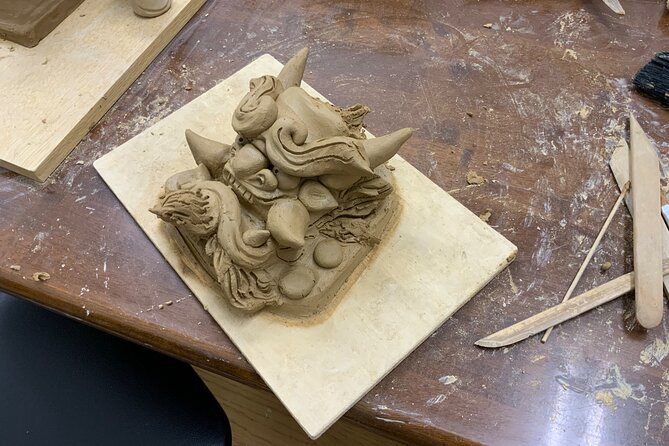
The regular class has a maximum of five participants. That small size gives Yuya room to watch each person’s progress and offer individual help.
For a clay activity, that matters more than it might for a standard walking tour. A small adjustment to the shape can change the expression of the face. You want the instructor to notice if a piece needs support, smoothing, or a different angle.
Some sessions may have fewer people. A private lesson for two was described as especially helpful, since the instructor could give close attention throughout the process. Another participant appreciated that the class still ran even when only one booking had been made that day.
The supplied information also says groups of five or more can be accepted, with up to 40 people, and that the location changes for group bookings. This is separate from the regular small-group format, so larger parties should confirm the arrangements before booking. The maximum of five applies to the advertised activity format, while group bookings may use a different setup.
The wait for firing and delivery
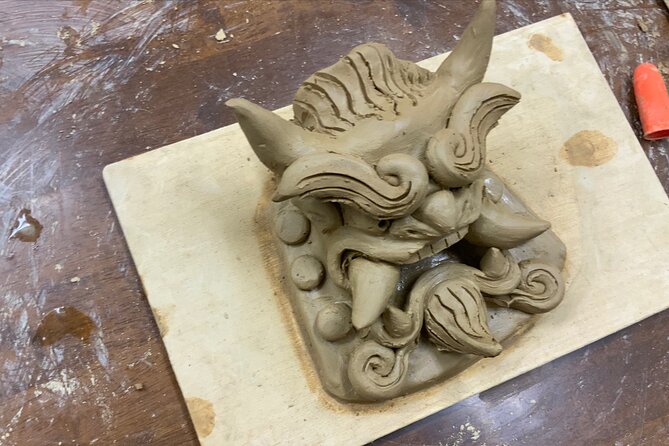
You do not leave the workshop with a finished, hardened ceramic tile. After you complete the clay work, Yuya fires the onigawara in a kiln at the factory.
The piece must first dry before firing. One account says the clay takes approximately one month to dry, while other comments describe delivery after several weeks or around two months. The exact timing may vary, so do not plan to carry the finished piece home in your suitcase.
Instead, the fired onigawara is shipped to your home. This is convenient, especially for an awkward or fragile ceramic object, but shipping is not included in the workshop price. The cost is calculated separately, and one participant noted paying in cash at the end of class.
This is the most important practical detail to understand before booking. The $89.17 fee covers the workshop itself, but not the later delivery. The shipping amount is not provided in advance in the supplied information, so ask about the current fee before you begin. Bring cash, since that has been requested for shipping in the class instructions.
The delivery process has worked smoothly for many participants, including one person whose statue arrived without damage. Still, because the final piece arrives later, the workshop ends with anticipation rather than a ready-to-pack souvenir.
Is the $89.17 price good value?
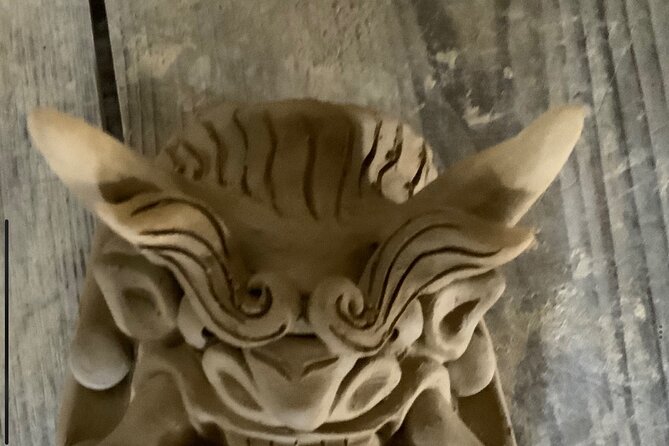
At $89.17 per person, this is not the cheapest activity in Kyoto. You can spend little or nothing visiting temples, walking through historic districts, or browsing markets.
The value here comes from the combination of instruction, cultural background, materials, kiln firing, and a custom object sent to your home. You are paying for time with an artist, not simply purchasing a souvenir. The activity also gives you a story to attach to the object, which makes it more meaningful than a mass-produced ornament.
Bottled water is included. An apron is not included, and shipping costs extra. Those additions and exclusions should be part of your budget.
I see the price as fair for someone who values making things and wants a lasting reminder of Kyoto. It is less appealing if you want a quick, inexpensive craft or need to keep your total activity cost tightly controlled.
The opening period includes a special discount price, according to the activity information. Since discounts can change, check the current amount when you book.
Who should book this Kyoto craft activity?
I would recommend it for:
- Families with artistic children or teenagers
- Couples who want a shared souvenir
- Solo visitors who enjoy making things by hand
- People with an interest in Japanese architecture
- Anyone looking for a quiet break from sightseeing
- Beginners who want structured instruction
It is also a good option if you have already seen several temples and want to understand one small architectural detail more clearly.
I would hesitate if your Kyoto schedule is so tight that you cannot allow extra time beyond two hours. I would also think twice if you are leaving Japan before the tile can be fired and shipped, unless you are comfortable arranging delivery to your home.
The workshop is not about producing a perfect museum-quality sculpture. Its charm comes from the fact that your skills, choices, and small irregularities remain visible. If you want an object with a human touch, that is a strength. If you want a flawless replica, this may not be the right activity.
Booking, cancellations, and practical preparation
Confirmation is provided when you book. Free cancellation is available until 24 hours before the local start time. Cancellations made less than 24 hours ahead are not refunded, and changes within that period are not accepted.
Wear clothes that may get dirty. Bring cash for shipping, and ask about the current amount before the end of class. You may want to leave room in your luggage plans for the fact that the piece will be delivered later, not carried away on the day.
The class accepts mobile tickets. Group discounts are available, though larger groups may use a different location. Regular sessions are advertised for a maximum of five participants.
Should you book the onigawara workshop?
Book it if you want a personal Kyoto souvenir, enjoy creative work, and can wait for delivery. Yuya’s clear teaching and patient manner make the class accessible even if you have never touched clay before.
Skip it if you need a finished item immediately, dislike mess, or do not want to pay a separate shipping fee. For most people who value hands-on culture, though, this is a memorable use of a few hours. You leave with a better understanding of Japanese roof design and, eventually, an original guardian made by your own hands.
FAQ
How long does the onigawara workshop last?
The advertised duration is approximately two hours. Some sessions may take closer to three hours, particularly for larger groups or participants who work slowly.
Where does the workshop begin and end?
It begins and ends at 瓦工房 You家, kawarakoubouyouya, at 373-2 Yamて?崎町, Higashiyama Ward, Kyoto, 605-0841, Japan. The activity returns to the meeting point.
What is an onigawara?
An onigawara is a traditional demon-faced roof tile or roof ornament. It is commonly found at the ends of main roof ridges and has been associated with protecting Japanese buildings from evil and rainwater.
Do I need clay or pottery experience?
No. The instructor teaches the process step by step and the activity is designed so beginners, children, and people with little confidence in their hand skills can make an onigawara.
Is shipping included in the price?
No. Shipping is not included in the experience fee. The finished piece is fired after the workshop and then sent to your home, with delivery paid separately.
When will my finished onigawara arrive?
The clay needs time to dry and be fired. The supplied information indicates that drying can take about one month, with delivery sometimes taking several weeks or around two months.
Should I wear special clothing?
Wear clothes that can get dirty because the activity uses soil and clay. An apron is not included.
How many people can join the regular class?
The regular activity has a maximum of five participants. Groups of five or more can be accepted, and the location may change for larger group bookings.
Just added around Kyoto
- Kyoto: Gion Night Walking Tour with Geisha Insight★ 5.0 · 39 reviews
- Kyoto: Private Customizable Day Trip by Car★ 5.0 · 38 reviews
- Kyoto: Full Day Bike Tour★ 4.9 · 39 reviews
- Private Japanese Calligraphy in Kyoto – Learn Shodō with a Master★ 5.0 · 39 reviews
- Kyoto: Gion Evening Walk with Hidden Gems, Geisha & Sake★ 5.0 · 41 reviews
- Experience a tea ceremony in an authentic tearoom, in Kyoto!★ 4.5 · 41 reviews
- Kyoto Private Photo Shoot & Tour by SnapKyoto★ 5.0 · 41 reviews
- The Way of Tea: Kyoto Crafts, Hidden Temples & Wabi-Sabi Walk★ 5.0 · 41 reviews
Traditional Craft Workshops, compared.
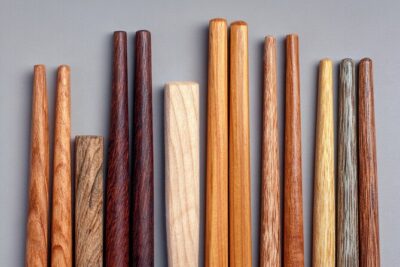
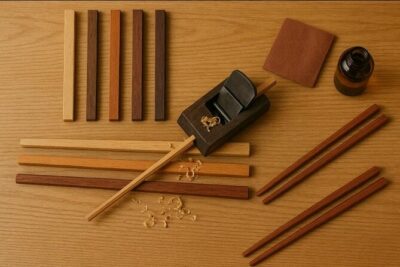
Chopsticks Making Workshop in Gion with Engraving Option
Read our review →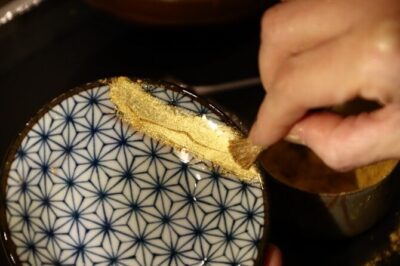
Kintsugi Experience: Art of Golden Joinery in Tokyo
Read our review →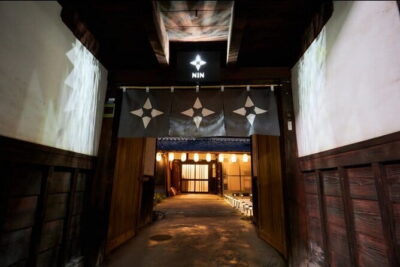
Authentic knife making experience at a blacksmith in Kyoto
Read our review →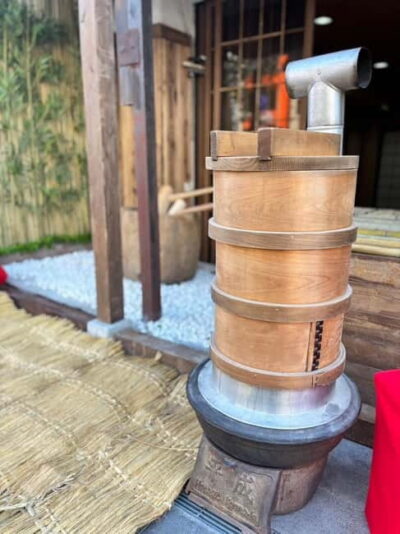
Traditional Mochi Pounding Experience with Tasting
Read our review →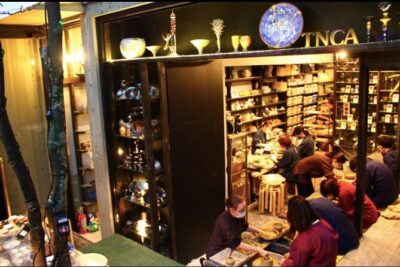
Authentic Pure Gold Kintsugi Workshop with Master Taku in Tokyo
Read our review →
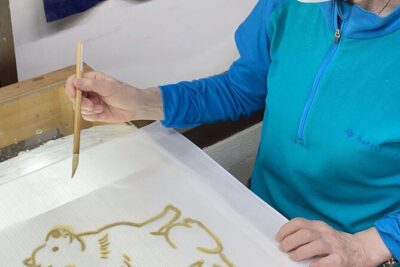
Roketsu dyeing experience: M course Roketsu Dyeing Experience
Read our review →Browse the lists this tour appears in