
Reviewed · RAMEN & NOODLE TOURS
Osaka: Cooking Class Ramen & Gyoza Course in Nanba
Make noodles, fold dumplings, then eat your homework. This Osaka class gives you a hands-on way to learn two Japanese favorites in a small group, rather than simply watching a chef work. I especially like the chance to make the ramen noodles from scratch and practice the careful folds used for gyoza. The English-speaking instructors also get high marks for patience and clear guidance.
The tasting session adds real value, with your freshly made meal served alongside sake, beer, and soft drinks. You also receive recipes to try at home. One point needs checking before you book: the advertised duration is two hours, but the listed schedule adds up to three hours, with 30 minutes of preparation, 1.5 hours of cooking, and a one-hour tasting session.
In This Review
- Key points at a glance
- Making ramen from flour, water, and patience
- Folding gyoza without losing your filling
- A clear schedule, with one timing detail to confirm
- Eating the meal you prepared
- The instructors make the difference
- Dietary needs and ingredients
- Finding Dear Court Semba 303
- Is $70 a fair price?
- Who will enjoy this class most?
- Should you book the Osaka ramen and gyoza class?
- FAQ
- How long does the Osaka ramen and gyoza class last?
- What dishes do I make?
- Are drinks included?
- Is the class suitable for beginners?
- What language is the class taught in?
- Can vegetarian or vegan participants join?
- Where is the meeting point?
Key points at a glance
- Fresh noodles made by hand: You prepare ramen noodles yourself instead of only assembling a prepared bowl.
- Small group of up to eight: The limited size gives you a better chance to ask questions and get help with gyoza folding.
- Friendly English instruction: Named instructors including Nana, Yuriko, Ryota, Mimi, Kiho, Keiichi, Saya, and Yuma have helped make the class relaxed and easy to follow.
- A meal at the end: You eat the ramen and gyoza you prepared, with sake, beer, or soft drinks included.
- Dietary flexibility: Vegetarian and vegan adjustments have been accommodated, but you should raise your needs before arriving.
- Recipes to take home: You leave with written recipes and, according to several participants, enough confidence to try the dishes again.
Making ramen from flour, water, and patience
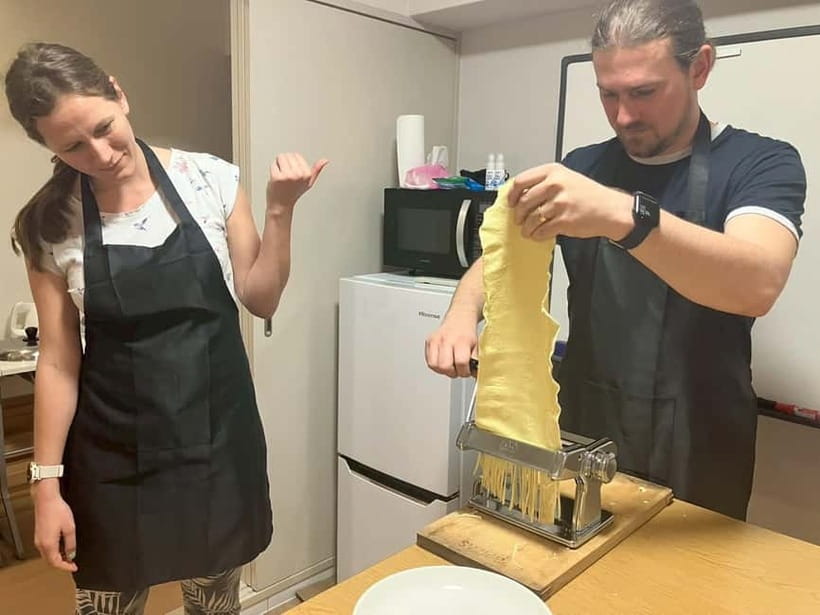
The heart of the class is the ramen preparation. You do not simply add toppings to noodles supplied by the kitchen. You work through the process of making the noodle dough, with the instructors explaining each step and helping you handle the mixture.
That matters because ramen is often treated as a finished restaurant dish, not something visitors can easily understand from the bowl alone. Here, you see one part of the dish take shape under your own hands. Several participants particularly enjoyed making the noodles from scratch, and that is likely to be the most memorable part for anyone who already loves ramen.
The class is designed for beginners, so you do not need previous cooking experience. The instructors guide the group through the work and make sure people are involved. That said, this is a shared class, not a private lesson. If you prefer long one-to-one instruction, a group of up to eight may feel less personal.
The cooking is also a social activity. You work alongside family members, friends, or other people from different countries. The setting encourages conversation while you prepare the food, which gives the class more of a shared dinner-party feel than a formal culinary school lesson.
More Cooking Classes in Osaka
- Osaka: Ramen and Gyoza Cooking Class in Dotonbori
★ 5.0 · 378 reviews - Osaka Cooking Class: Okonomiyaki &Japanese cuisines experience
★ 5.0 · 261 reviews - Ramen and Gyoza Cooking Class in Osaka
★ 5.0 · 202 reviews
Folding gyoza without losing your filling
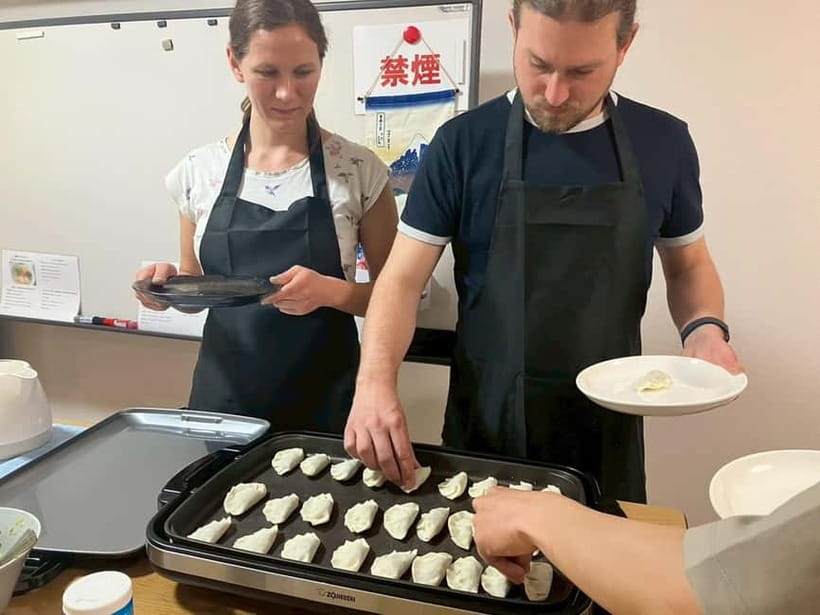
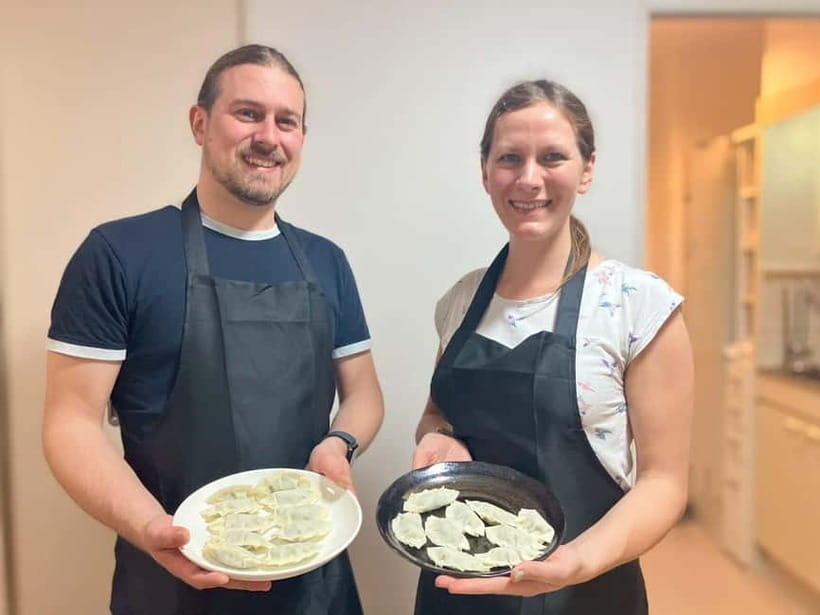
Gyoza looks simple until you try to seal one neatly. The class gives you time to prepare the filling of vegetables and pork, then learn how to fold and close the dumplings. The folding technique receives especially warm praise, and several people found it both tricky and satisfying.
This is where a patient instructor helps. The kitchen team demonstrates the method, then watches as you try it yourself. If your first dumpling looks more like a small sealed parcel than a restaurant-ready crescent, that is part of the fun. You get repeated practice, and the low participant limit should make it easier to ask for a quick correction.
The focus on technique is useful beyond the meal itself. You learn how the wrapper, filling, and seal work together, rather than leaving with only a list of ingredients. The recipes help, but your hands remember the folding process in a way a printed page cannot quite capture.
The gyoza also gives the class a nice contrast. Ramen involves dough and noodles, while gyoza asks for filling, portion control, and careful shaping. You get two different Japanese cooking tasks in one session.
A clear schedule, with one timing detail to confirm
The experience is described in three stages:
- A 30-minute orientation and preparation period
- About 1.5 hours of hands-on cooking
- A one-hour tasting session with drinks
The preparation period is useful for introductions, getting set up, and learning what you will make. All ingredients and tools are supplied, so you do not need to arrive with equipment or shopping bags full of specialty items.
The 1.5-hour cooking block is the main event. You prepare the ramen and gyoza with help from the instructors, rather than rushing through a short demonstration. This length should give beginners enough time to follow along without making the class feel like a full day in a kitchen.
The final tasting session lets you sit down and eat what you made. Sake, beer, and soft drinks are included, while extra food and drinks cost more if available. The supplied details describe the tasting as one hour, which brings the total schedule to three hours. At the same time, the experience is advertised as lasting two hours. I would confirm the actual start and finish times before arranging another activity afterward.
That small check is important in Osaka, where train connections, restaurant bookings, and evening plans can run on tight schedules. Treat the class as potentially closer to three hours unless the organizer confirms otherwise.
Eating the meal you prepared
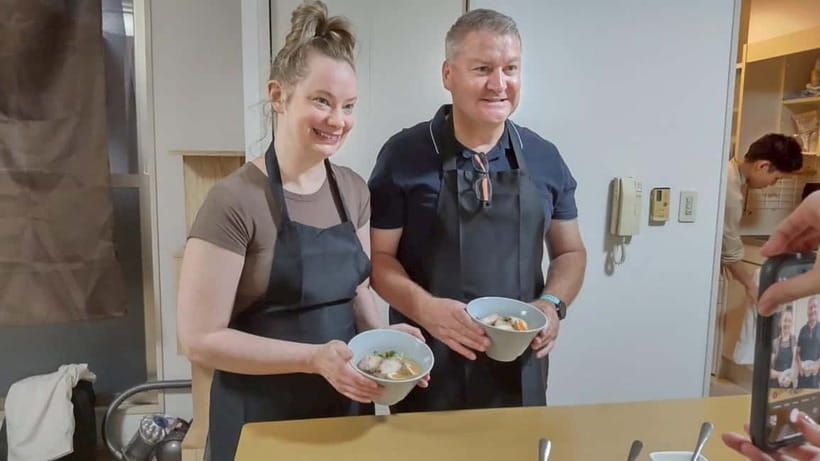
The tasting is more than a quick sample at the counter. You sit down after cooking and enjoy the ramen and gyoza as a meal. That creates a satisfying finish: you can see the result of the work, compare techniques with the people around you, and ask final questions while the experience is still fresh.
The included drinks also help make the class feel like a complete evening activity. Beer and sake suit the savory food, while soft drinks provide a nonalcoholic option. You should not expect unlimited drinks or extra dishes, since anything beyond the provided tasting session is excluded.
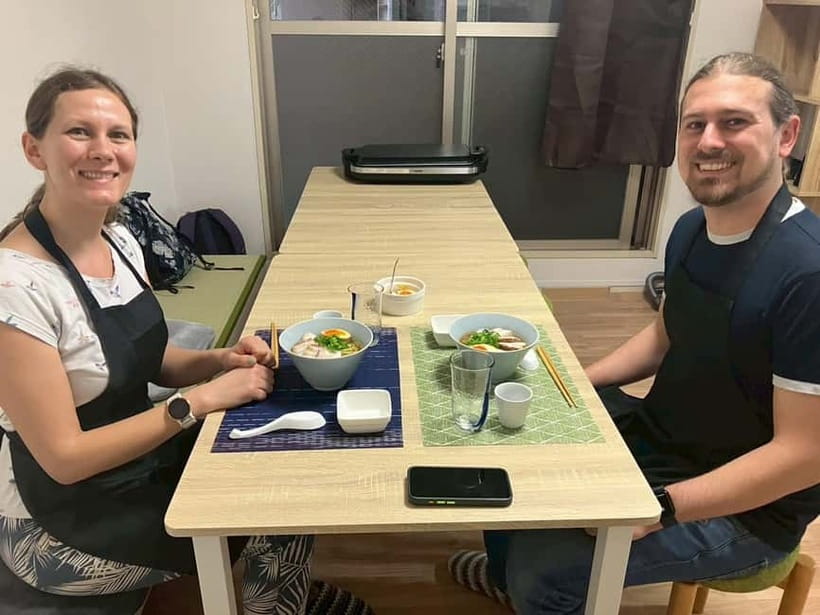
The strongest praise centers on flavor. People were surprised by how good the food turned out, especially considering that many began with little or no cooking experience. One person called the ramen the best they had eaten, while others singled out the gyoza as the favorite.
That enthusiasm should be read sensibly. This is not a restaurant tasting menu, and the final result depends partly on how carefully the group follows instructions. Still, making the food yourself gives the meal a value that a standard restaurant visit cannot match.
More Ramen Tours in Osaka
- Osaka: Five Must-See Highlights Walking Tour & Ramen Lunch
★ 4.7 · 411 reviews - Walking Tour of Osaka’s 5 Must-See Sights, with Ramen for Lunch
★ 5.0 · 158 reviews - Cooking Ramen&Gyoza/KatsuCurry/Bento/Okonomiyaki+Store Tour@Osaka
★ 5.0 · 138 reviews - Three Types of Ramen Cooking Class in Osaka
★ 5.0 · 119 reviews
The instructors make the difference
The class is led by seasoned Washoku professionals, with instruction available in English and Japanese. The most useful feature is not simply the language choice. It is the teaching style described by people who worked with Nana, Yuriko, Ryota, Mimi, Kiho, Keiichi, Saya, and Yuma.
The instructors are repeatedly praised for being warm, patient, and easy to follow. Family groups found the class comfortable for teenagers and adults, and solo participants can expect a welcoming group setting rather than an intimidating professional kitchen.
Clear instruction matters with both dishes. Ramen dough can be unfamiliar, and gyoza folding is a visual skill that is easier to learn when someone can demonstrate it directly. The instructors also explain the reasons behind some steps, which makes the recipes more useful once you return home.
The class does not appear to be presented as a lecture on Japanese food culture. Its strength is practical learning, friendly help, and shared cooking. If you want a long discussion of regional ramen styles or a detailed history of Washoku, you may need a different type of tour.
Dietary needs and ingredients
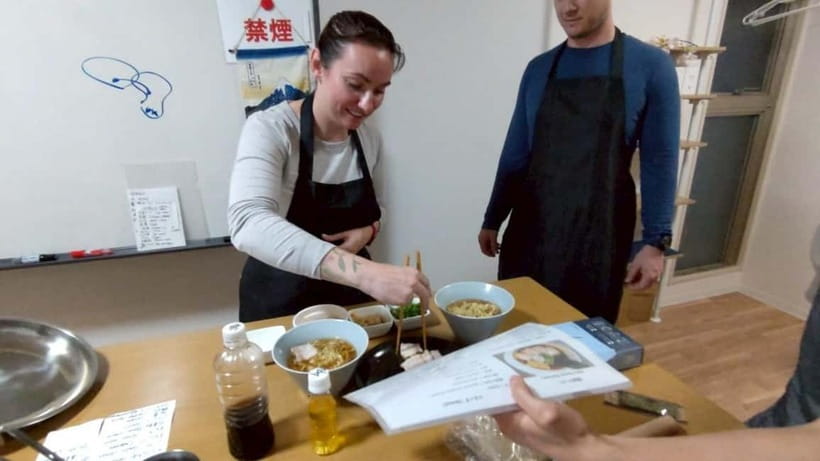
Vegetarian and vegan adjustments have been made for participants, which is an important strength. However, you should tell the organizer about your requirements before the class rather than waiting until you arrive. The standard gyoza filling includes vegetables and pork, so substitutions need to be arranged.
The recipes are another useful part of the experience. You take them home, giving you a way to repeat the dishes and share the meal with family or friends. Several people appreciated leaving with enough confidence to make ramen and gyoza again.
There is one practical limit. Some ingredients may be authentic but difficult to find outside Japan. You may need to visit a Japanese grocery store or use substitutes at home. The recipes still give you a working guide, but do not assume every item will be available at an ordinary supermarket.
Finding Dear Court Semba 303
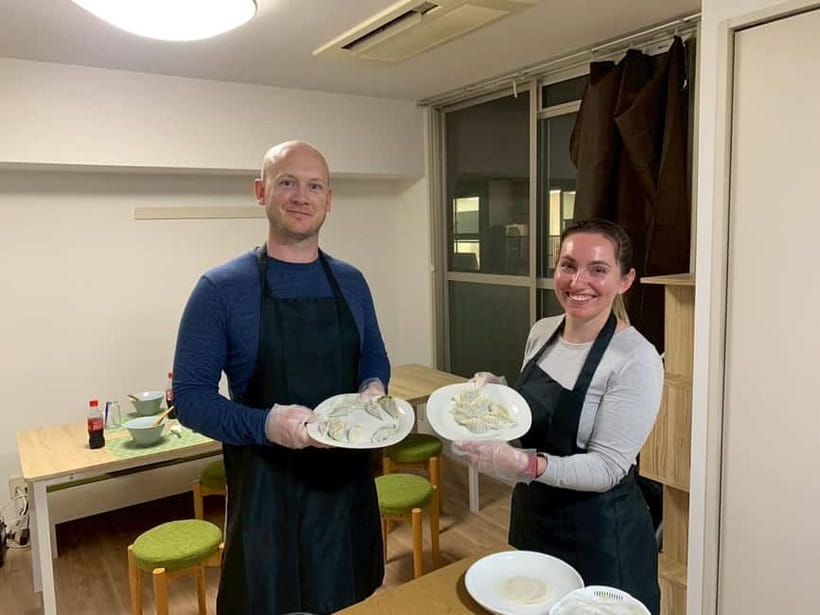
The meeting point is Dear Court Semba 303, at 4-chōme-3-1 Bakurōmachi, Chuo Ward, Osaka 541-0059. The class takes place in an apartment-style building, rather than a prominent street-level cooking school, so allow time to locate the entrance.
At the building, look for the doorbell panel. Press 303, then press the button marked Call 呼. Once the door opens, take the stairs or elevator to Room 303 on the third floor.
A useful local tip is that the building can be tucked behind the Ferrari dealership, near a large stairway leading to a gym and an outdoor lounge area with couches. That detail may save you from circling the block. If you still have trouble, the host can be contacted by phone or message.
The experience is described as wheelchair accessible, and the building has an elevator. Because the meeting point is in a multi-floor building, I would still contact the organizer ahead of time if you have specific mobility needs.
Is $70 a fair price?
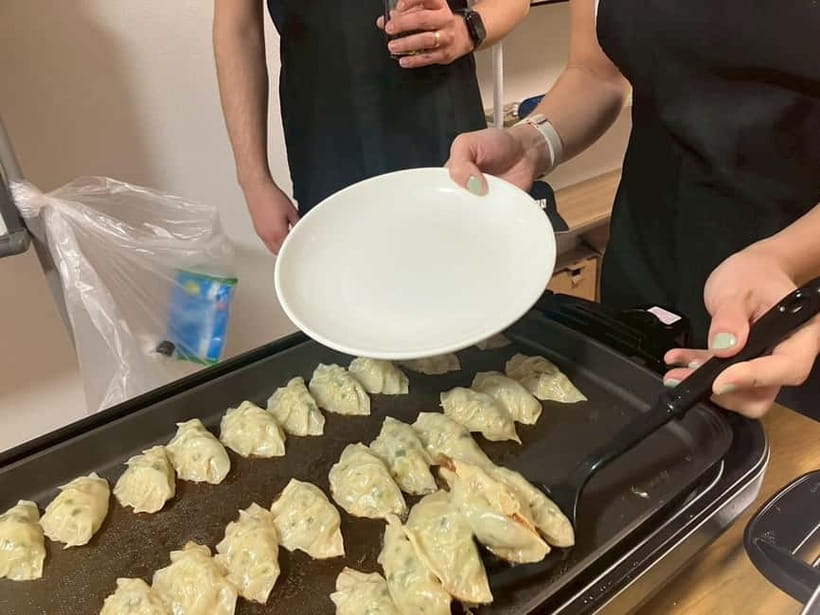
At $70 per person, this is not the cheapest way to eat ramen in Osaka. You can find a bowl of noodles for far less. The value comes from the combination of instruction, ingredients, equipment, a full meal, drinks, and recipes to take home.
The small group size improves the calculation. With a maximum of eight people, you are not watching from the back of a large demonstration room. You get your own hands-on practice and access to instructors when a dough mixture or gyoza fold goes wrong.
The price also includes something lasting. A restaurant meal disappears when the bowl is empty. Here, you take home a method you can use again, though the availability of certain Japanese ingredients may affect how closely you can repeat the result.
I think the cost is fair for people who want a cooking activity, a social evening, and dinner in one booking. It is less compelling if you only want a cheap meal or if you already cook ramen and gyoza confidently.
Who will enjoy this class most?
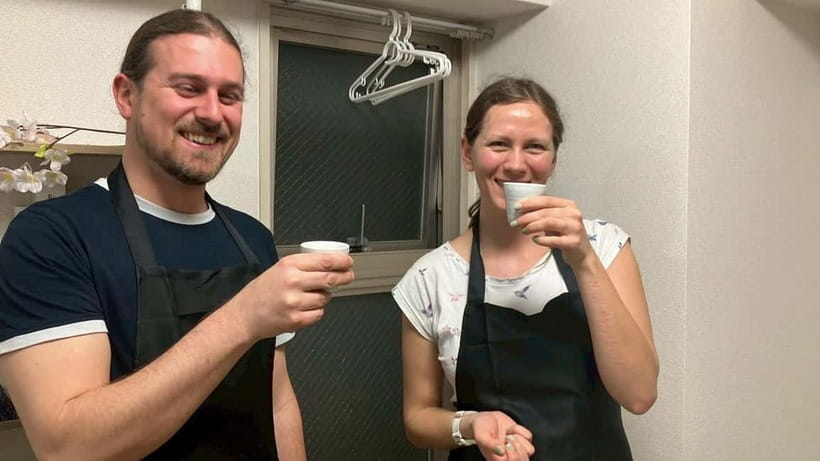
This is a good choice for first-time cooks, food enthusiasts, families, and solo visitors who like meeting people through an activity. The class has worked well for families with older children and teenagers, and the friendly style should suit people who do not want a stiff or overly formal lesson.
It also fits an Osaka itinerary neatly. A two to three-hour cooking activity gives you a break from sightseeing and lets you engage with Japanese food in a more active way. You do not need to bring ingredients, tools, or special equipment.
You should think twice if you dislike group cooking, have a very restrictive diet that requires exact control, or want a private chef-led lesson. The group setting is central to the experience, and extra food or drinks are not included.
Book at least one day ahead. A reservation is required, and the small capacity can limit last-minute choices. Free cancellation is available up to 24 hours before the activity for a full refund, and the reserve-now-pay-later option can help if your Osaka plans are still changing.
Should you book the Osaka ramen and gyoza class?
I would book this class if you want to do more than photograph Japanese food. The strongest reasons are the from-scratch ramen noodles, repeated practice with gyoza folding, patient English instruction, and the chance to eat your own work with a drink afterward.
Before paying, confirm the true duration, especially if the published two-hour label conflicts with the three-part schedule. Also contact the organizer about vegan or vegetarian adjustments and make sure you can find the apartment entrance without stress.
For a reasonable cooking group, $70 buys an activity and a meal, not just dinner. If that sounds better to you than another restaurant table, this is a worthwhile Osaka experience.
FAQ
How long does the Osaka ramen and gyoza class last?
The activity is advertised as two hours, but the detailed schedule lists 30 minutes of orientation and preparation, 1.5 hours of cooking, and one hour of tasting. Those stages add up to three hours, so confirm the exact timing before booking other plans.
What dishes do I make?
You make ramen, including the noodles, and gyoza filled with vegetables and pork. You then eat the dishes during the tasting session.
Are drinks included?
Yes. The tasting session includes sake, beer, and soft drinks. Additional food and drinks beyond the provided tasting are not included.
Is the class suitable for beginners?
Yes. The class is described as suitable for beginners and food enthusiasts, and the instructors provide hands-on guidance throughout the preparation and cooking.
What language is the class taught in?
Instruction is available in English and Japanese.
Can vegetarian or vegan participants join?
Vegetarian and vegan adjustments have been accommodated. Contact the organizer before the class to discuss your dietary needs, since the standard gyoza filling includes pork.
Where is the meeting point?
The class meets at Dear Court Semba 303, 4-chōme-3-1 Bakurōmachi, Chuo Ward, Osaka 541-0059. Press 303 and the Call 呼 button on the entrance panel, then go to Room 303 on the third floor.
Just added around Osaka
- Osaka Food Tour with 10 Classic Japanese Tastings & Drinks★ 5.0 · 38 reviews
- Osaka: Highlights & Hidden Gems Private Walking Tour★ 4.7 · 38 reviews
- Kyoto private tour (Shore excursion available from Osaka or Kobe port)★ 5.0 · 39 reviews
- Osaka Private Day Trip – Enjoy Your First-Time Visit to Osaka!★ 5.0 · 39 reviews
- Kyoto & Nara & Uji: Full Day Sightseeing Tour from Osaka or Kyoto★ 4.5 · 39 reviews
- Authentic SUSHI Course Cooking Class★ 5.0 · 39 reviews
- Osaka: Mind & Spirit Balance Temple Reiki Healing★ 5.0 · 41 reviews
- Osaka Afternoon Walking Tour with Osaka River Cruise★ 3.5 · 42 reviews
Ramen & Noodle Tours, compared.

Ramen Cooking Class at Ramen Factory in Kyoto
Read our review →
Eat and Drink Like a Local: Tokyo Ueno Food Tour-Taverns&Ramen
Read our review →
Ramen & Gyoza Cooking Class in Tokyo with Local Supermarket Visit
Read our review →
Ramen Cooking Class at a Ramen Factory with Souvenir
Read our review →
Five Must-See Highlights Walking Tour & Ramen Lunch
Read our review →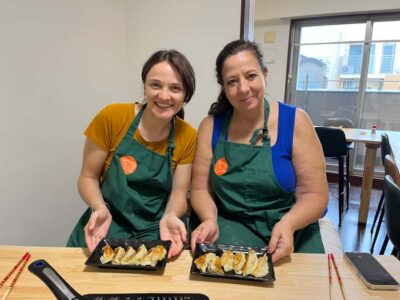
Browse the lists this tour appears in