
Reviewed · WALKING TOURS
Osaka: Main Sights and Hidden Spots Guided Walking Tour
Osaka reveals itself one neighborhood at a time. This four-hour tour links the city’s grand castle, Korean quarter, food markets, high-rise views, and neon-lit Namba in one smart route. I like the mix of famous sights and ordinary streets, and I like that guides such as Kevin, Ferdinand, Oisin, Bryan, and Jamie add history, social context, food advice, and help with photos. The main drawback is the pace: you cover a lot of ground, use public transport, and may walk more than 10,000 steps.
The price is $59 per person, before transportation and food. That is good value if Osaka is new to you and you want a guide to handle the city’s broad sweep in half a day. Just remember that this is a sightseeing walk, not a food tour, and you should wear proper walking shoes.
In This Review
- Key points at a glance
- Why this route works for a first day in Osaka
- Osaka Castle Park and the story behind the walls
- Tsuruhashi and Osaka’s Korean quarter
- Abeno Harukas and the department store food hall
- Shinsekai, a district caught between eras
- Namba, Dotonbori, and the noisy center of modern Osaka
- Kuromon Ichiba and Doguyasuji’s playful shopping streets
- How much walking and transit should you expect?
- What the $59 price really buys you
- Who should book this Osaka walking tour?
- Should you book it?
- FAQ
- How long is the Osaka walking tour?
- Where does the tour start?
- Where does the tour finish?
- Is transportation included in the price?
- Does the tour include food or drinks?
- Do you enter Osaka Castle?
- What languages are available, and can I book a private group?
- Is the tour suitable for people with mobility impairments?
Key points at a glance
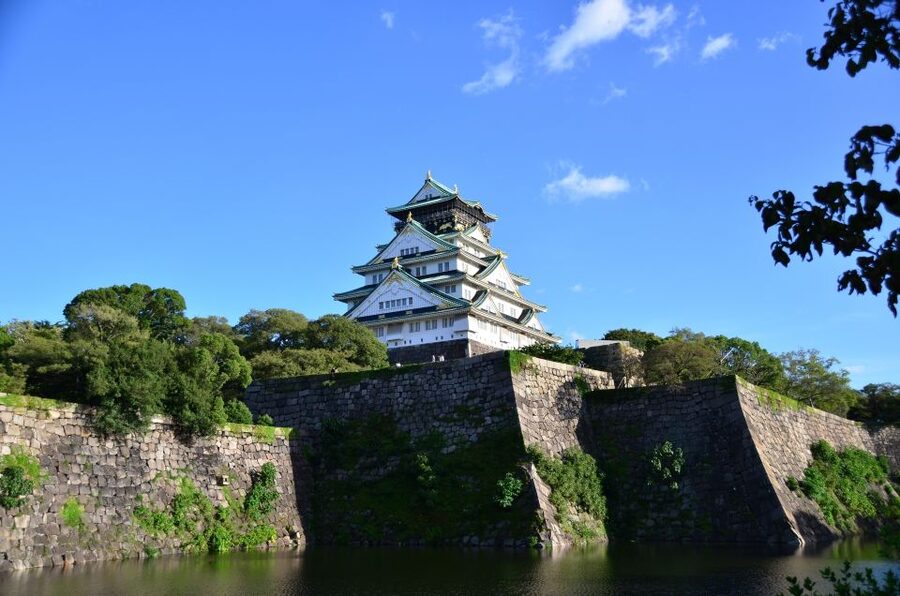
- Osaka Castle Park first: Spend about 75 minutes around the castle exterior and learn how Osaka shaped Japan’s political story.
- Korea Town in Tsuruhashi: Walk narrow pre-war streets and see a side of Osaka many first-time visitors miss.
- Harukas from above: Take in the city from a high floor before browsing the department store food hall.
- Old and modern Osaka together: Move from Shinsekai’s weathered entertainment district to Dotonbori’s giant signs and bright nights.
- Public transport is part of the tour: Subway and train rides connect far-flung neighborhoods, so budget for fares or buy a day pass.
- Guide quality is a major strength: The strongest praise centers on clear storytelling, cultural explanation, flexible pacing, and practical Osaka tips.
Why this route works for a first day in Osaka
Osaka can feel scattered at first. Osaka Castle is in the east, Tsuruhashi lies farther south, Harukas rises in Abeno, and Namba fills the southwest with shops, restaurants, markets, and signs. Trying to connect all of these areas alone in four hours means plenty of map checking and station navigation.
This tour gives you a useful framework. You begin with Osaka’s political past, then see its Korean cultural influence, modern commercial power, working-class entertainment districts, and famous food streets. I like that progression because it explains Osaka as more than a place for takoyaki and neon photographs.
The guides also seem to be the heart of the experience. Kevin is often praised for explaining history, Japanese society, local customs, and cultural differences in plain English. Ferdinand receives similar praise for his storytelling around the castle and his broad knowledge of Japanese history. Oisin is noted for keeping the big picture in view while adding unusual facts, and Bryan has helped families navigate the city and take photographs.
Your guide may be someone else, since the team includes English, French, and Spanish speakers. Still, the repeated pattern is useful: expect the tour to be built around conversation and explanation, not simply a list of photo stops.
More Walking Tours in Osaka
- Osaka: Hotspots & Hidden Gems Walking Tour Private or Group
★ 4.9 · 1,300 reviews - Osaka Local Foodie Walking Tour in Dotonbori and Shinsekai
★ 5.0 · 985 reviews - Osaka Bar Hopping Night Walking Tour in Namba (3 bars, 6 tastes)
★ 5.0 · 958 reviews
Osaka Castle Park and the story behind the walls
Meet above ground at Exit 2 of Tanimachiyonchome Station. If you arrive by taxi, the useful intersection name is Tanimachi 3-chome, written 谷3交差点. This detail matters because Osaka’s station exits can be confusing, and meeting at the wrong side of a large intersection can waste precious time.
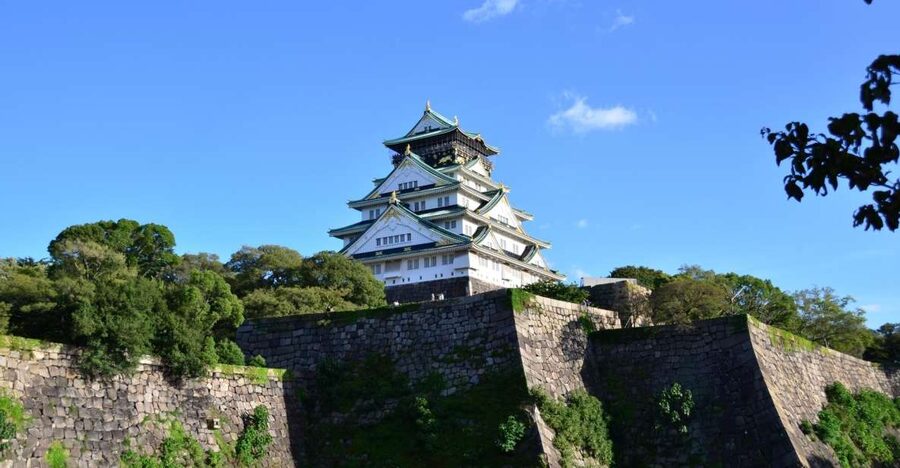
The opening stop is Osaka Castle Park, with about 75 minutes for guided sightseeing. You do not go inside the castle. Instead, you admire its imposing exterior and walk through the broad park around it.
That choice has both benefits and limits. You save the extra admission time and keep the tour moving, while the open grounds give your guide room to explain Osaka’s past. If entering the castle museum is important to you, plan to return later on your own.
The historical story is one of power, ambition, and near disaster. Guides explain how Osaka was almost taken from the Japanese about 400 years ago, during the shogun period. This gives the castle more meaning than a quick photograph of its rooflines and stone walls.
I especially like beginning here because it gives you a political lens for the rest of the day. Osaka later became famous for merchants, food, entertainment, and a down-to-earth urban character, but the castle reminds you that the city once sat at the center of struggles for control of Japan.
Allow time for walking across the park and listening. The grounds are expansive, so this is not a quick step off the train, snap a picture, and leave kind of stop.
Tsuruhashi and Osaka’s Korean quarter
A short public transport ride takes you to Tsuruhashi, where the tour spends about 45 minutes. Here, the focus shifts from national power to neighborhood life.
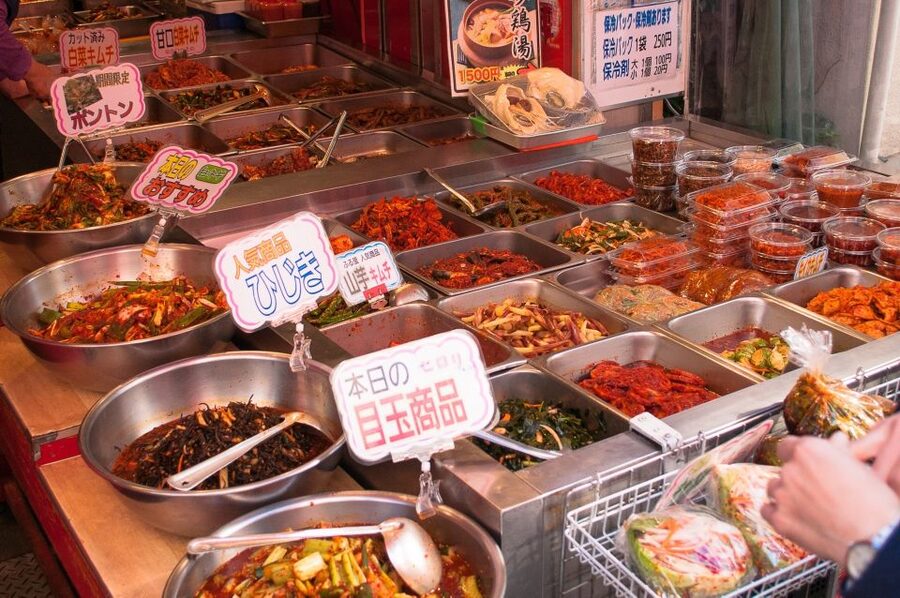
Tsuruhashi’s Korea Town is a maze of narrow streets and alleys in a pre-war commercial district. You may see food shops, signs, small businesses, and streets that feel quite different from the broad grounds around Osaka Castle. This is one of the tour’s most useful changes of pace.
A guide helps explain how different cultural communities fit into Osaka’s social story. Several guides have been praised for discussing not only places, but also the way cultures interact in Japan, differences in language, and modern social life. That context is hard to pick up from a quick walk alone.
Do not expect a long meal here. The tour includes no formal food stops, though you have chances to buy snacks if you are hungry. One person specifically enjoyed a kimchi pancake during the outing, so small purchases may be possible depending on timing and the guide’s route.
The limitation is time. Forty-five minutes allows a taste of the district, not a full exploration. If Korean food, markets, or local shopping are major interests, note where you want to return after the tour.
Abeno Harukas and the department store food hall
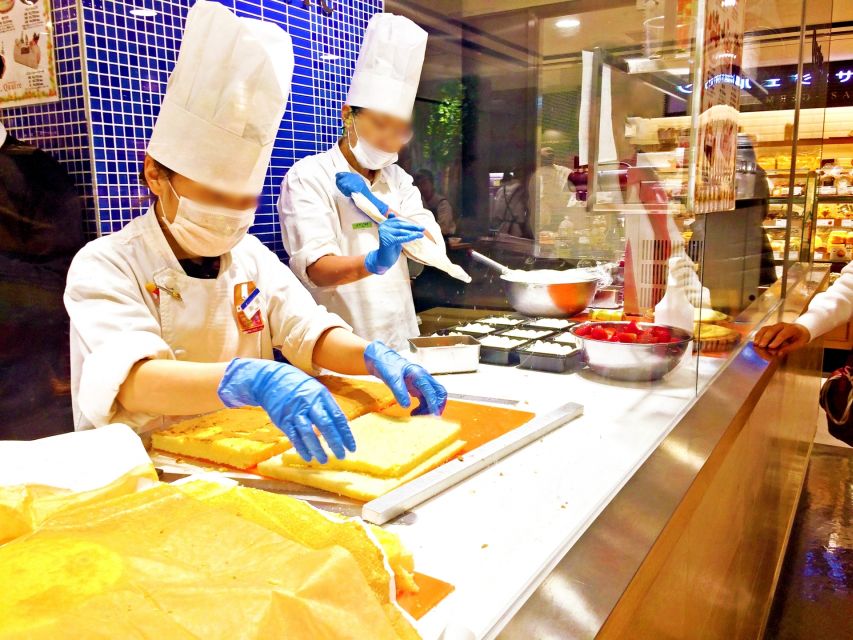
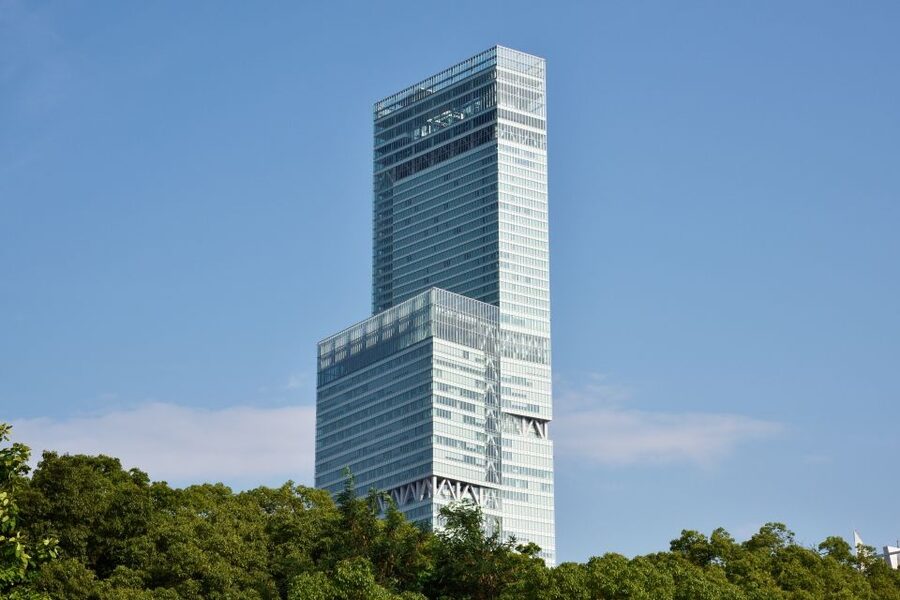
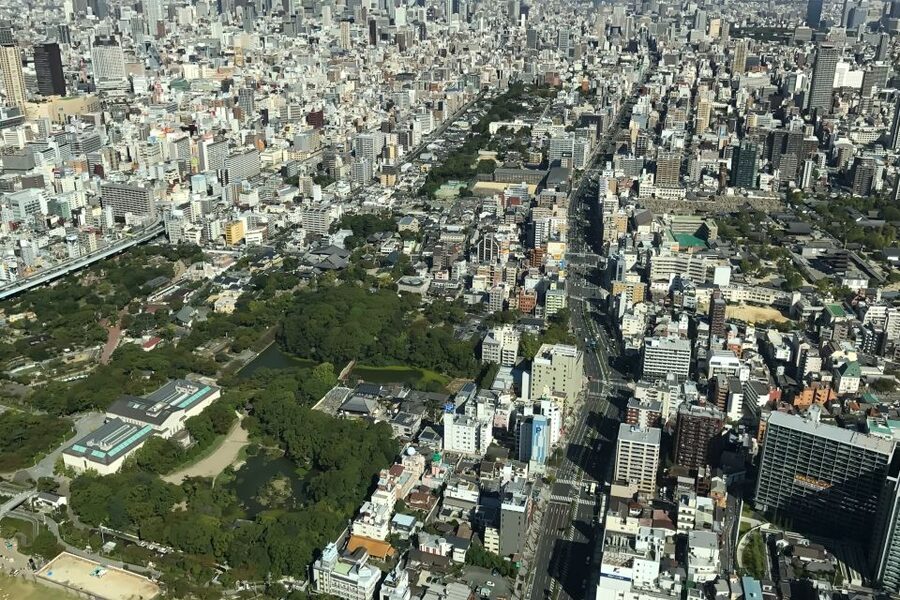
The next stop is Abeno Harukas 300, with about 30 minutes of guided time. You go to a high floor for a broad view over Osaka, then head underground to the department store food hall.
The viewpoint gives you a useful sense of the city’s scale. After seeing Osaka through castle walls and narrow alleys, you look down on the larger urban picture. It is a good visual pause in a route that otherwise keeps you close to street level.
The food hall adds another side of Osaka’s commercial culture. You may see high-quality products such as puffer fish and Kobe beef, along with carefully presented foods and ingredients. This is more than a place to grab lunch. It shows the care, price, packaging, and presentation found in Japan’s department store food basements.
There is a practical catch: the tour does not include entry fees, food, or drinks. The supplied details describe a chance to enjoy the view from a high floor, but do not specify a separate observatory admission charge. Check the current booking details so you know what is covered.
The half-hour stop also means you will not have much time to shop. Think of Harukas as a quick look at Osaka from above and a short food-culture lesson, not a dedicated shopping visit.
A completely different kind of day out in Osaka:
- Osaka Go Karting Tour with Funny Costume
★ 5.0 · 2,658 reviews - Osaka Castle: Museum and Tower Entry Ticket
★ 4.5 · 2,380 reviews - Osaka: Shinsekai Food Tour with 13-15 Dishes at 5 Eateries
★ 4.8 · 2,204 reviews - Osaka Food Tour: 13 Dishes at 5 Local Eateries
★ 5.0 · 2,149 reviews
Shinsekai, a district caught between eras
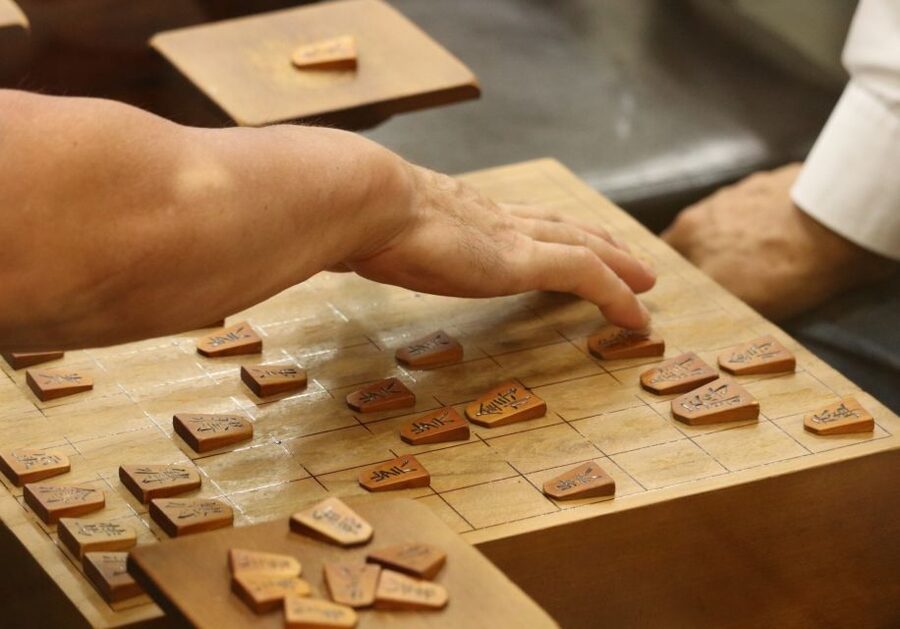
From Harukas, it is not far to Shinsekai. The guided portion lasts around 30 minutes.
Shinsekai is presented as an older entertainment district with slightly crumbling local sights and an atmosphere that feels frozen in time. Its appearance contrasts sharply with the polished height of Harukas. That contrast is one of the most interesting parts of the day.
The neighborhood’s story includes leisure culture and Osaka’s less polished urban past. One detailed description also refers to its connections with former leisure, yakuza, and gay subcultures. Your guide can help put those references into social context rather than leaving you with only an impression of aging signs and old facades.
I value this stop because it avoids presenting Osaka as a perfect postcard. You see a district shaped by working-class entertainment and changing fortunes. Some people will find the worn appearance fascinating; others may prefer Osaka’s cleaner, more polished areas.
Thirty minutes is enough for orientation and photographs, but not enough to explore every street. Listen carefully here, because the guide’s explanation is what turns the setting into a meaningful stop.
Namba, Dotonbori, and the noisy center of modern Osaka
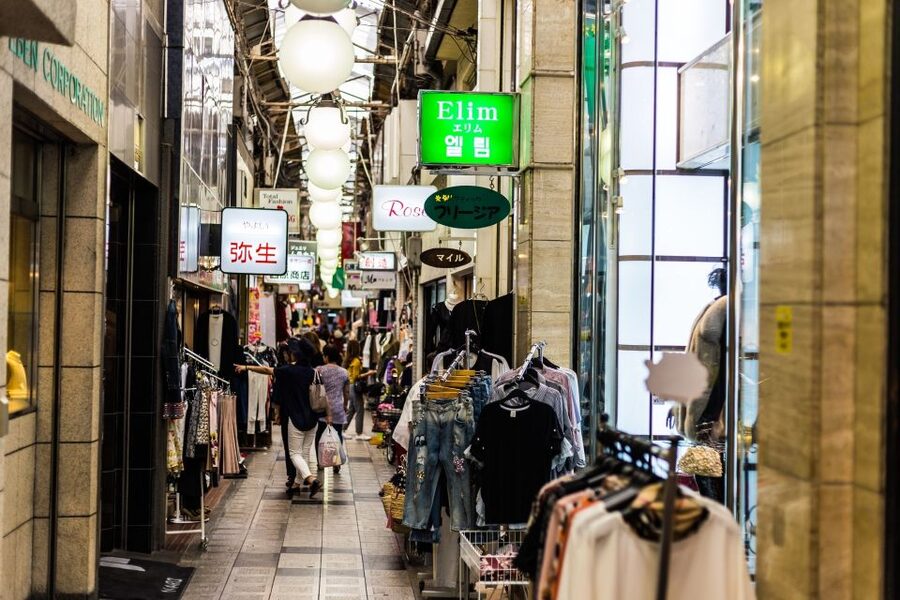
The route then moves to Namba, the center of Osaka’s present-day shopping, dining, and entertainment culture. This is where the city’s famous energy takes over.
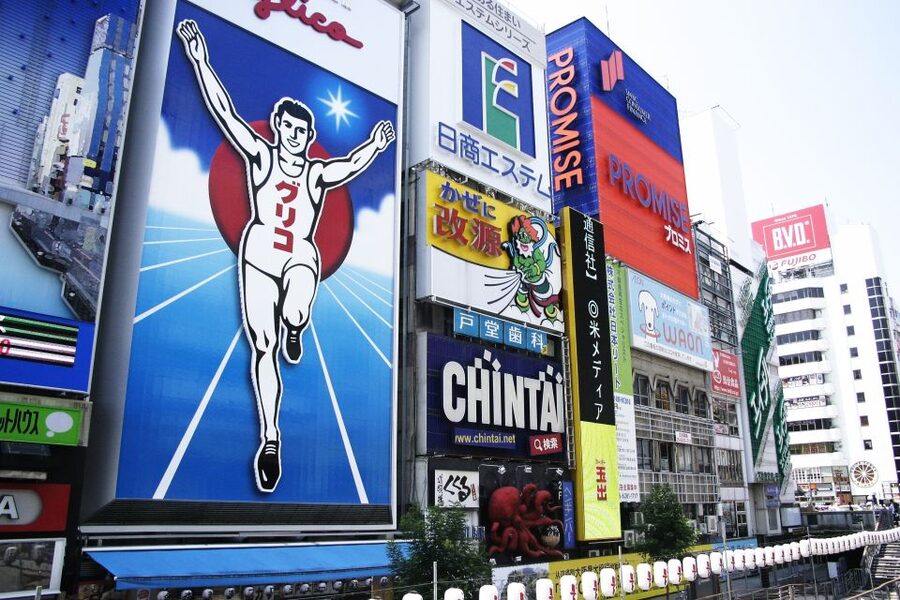
Dotonbori is often compared with Times Square because of its huge signs, bright displays, and constant visual noise. You will see the famous canal-side area, but the guide also leads you into back streets with their own character. These smaller lanes are important. The main signs are easy to find, while the side streets are where you begin to understand how the district works beyond the standard photograph.
This is likely to be the busiest portion of the tour. Keep your group in sight, especially around crowded crossings and narrow lanes. The short schedule means you may stop for explanations and photographs, then continue rather than linger at every restaurant or sign.
Dotonbori is also a useful place to end the main sightseeing portion because your afternoon or evening can continue here. Ask your guide for food suggestions. Kevin has been praised for recommendations that worked well, and several guides have helped people decide what to eat or how to use the rest of their day.
Kuromon Ichiba and Doguyasuji’s playful shopping streets
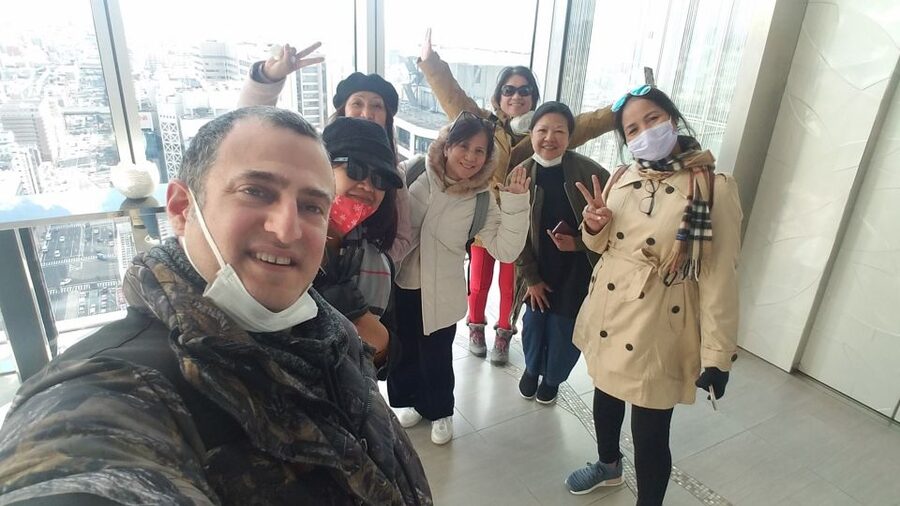
Kuromon Ichiba is a fresh fish market with more than 150 years of importance to Osaka’s food culture. It is one of the best places on the route for seeing the city’s connection with seafood, prepared foods, and professional cooking.
The word market can create the wrong expectation. This is not necessarily a quiet local morning market. It is a major sightseeing area, and conditions can vary by time of day. Still, a guide can point out what you are seeing and explain why the market matters.
You can buy snacks along the way, but there are no included tastings or meal stops. Bring some yen if you want to sample something, and do not assume every food purchase is part of the tour price.
The final area is Doguyasuji, Osaka’s kitchen and cooking district. Here you may browse wax food models, Japanese noren curtains, and oversized pottery pieces. The wax dishes are especially fun because they show how restaurants display food before you order. The noren offer a small look at Japanese storefront design, while the large pottery gives the street a wonderfully odd visual character.
The listed finish is at 1-chome-4-2 Namba, Chuo-ku. The tour information places the ending in the Namba area, so you should have plenty of options afterward for food, shopping, or returning to your hotel.
How much walking and transit should you expect?
This is called a walking tour, but it is really a walking and public transport tour. You move between distant districts by train or subway, then explore each area on foot.
The operator asks you to buy a subway day pass and use it both to reach the meeting point and during the tour. Transportation is not included in the $59 price. A day pass may make sense if you plan to keep using the subway after the tour, but check current Osaka fares and pass terms before buying.
The walking load is substantial. One person described the day as more than 10,000 steps, while another noted tired legs after visiting many neighborhoods. You get a relaxed pace in some groups, with short breaks, but the route still covers a lot.
Comfortable shoes are essential. Osaka’s stations, park paths, markets, and shopping streets all add up. Summer heat can also affect the pace. A guide named Kevin was praised for adjusting the route as energy faded in hot weather, but you should still arrive ready for a full half-day outside.
The information says the tour is not suitable for people with mobility impairments, even though wheelchair accessibility is also listed. That combination needs clarification before booking. Ask the operator about station access, walking distances, stairs, and the exact route for your date.
What the $59 price really buys you
At $59, this tour is not the cheapest way to see Osaka. You still pay for public transportation, and food is extra. You also do not enter Osaka Castle itself, and the details do not confirm that a Harukas observation admission is included.
The value comes from the route and the guide. In four hours, you see several districts that are widely separated and learn how they connect through Osaka’s political, commercial, and cultural story. Doing this alone would be possible, but you would need to plan transport, find the right alleys, understand the historical background, and decide which stops deserve your limited time.
I consider the price fair for a first visit, especially if you have one full day in Osaka or want a strong orientation early in your stay. The tour can also help you plan the rest of your trip. Guides have offered restaurant suggestions, explained subway use, helped with vending-machine ramen orders, and recommended what to do next.
A solo booking needs special attention. If at least two people do not book, the operator may offer another date, ask for a 4,000 yen solo supplement, or provide a full refund. Ask about this before you build a tight itinerary around the tour.
Hotel pickup in central Osaka and port pickup at the Tempozan Ferris wheel are possible for an additional 5,000 yen. That fee is payable in cash to the guide or through a secure payment link. For most visitors, meeting at the station is the better value.
You can cancel up to 24 hours ahead for a full refund, and reserve now while paying later. The tour runs rain or shine, so bring suitable clothing and accept that weather may affect the experience.
Who should book this Osaka walking tour?
I would choose this tour if you are visiting Osaka for the first time, want history with your sightseeing, or have limited time in the city. It is also a good fit if you enjoy seeing ordinary neighborhoods alongside major attractions.
Families may appreciate the human guide and the help with photographs, food ordering, and local customs. Teenagers can get a change from temple and castle visits through Dotonbori, markets, Korea Town, and the unusual kitchen shops. The route also works well for curious adults who want social and cultural explanation, not just landmark facts.
You may want something else if you dislike public transport, prefer a slow pace, or want long visits inside each attraction. Food lovers looking for a dedicated tasting tour should also look elsewhere, since snacks are optional and meals are not included.
The strongest part of the experience is the guide’s ability to connect places. Osaka Castle, Tsuruhashi, Shinsekai, Harukas, Kuromon, and Dotonbori could feel like unrelated stops. With a good guide, they become chapters in one city story.
Should you book it?
Book this tour if you want a lively, efficient introduction to Osaka and do not mind walking hard for four hours. The blend of castle grounds, Korean streets, city views, old entertainment districts, markets, and neon Namba is unusually broad for a half-day outing.
Skip it if you need a low-mobility route, want a relaxed food crawl, or plan to spend most of your time inside attractions. For everyone else, the tour offers a strong first look, especially when paired with a subway day pass and a free evening afterward to revisit the neighborhood you liked best.
FAQ
How long is the Osaka walking tour?
The tour lasts four hours. The route includes walking and short journeys by public transportation between districts.
Where does the tour start?
Meet above ground at Exit 2 of Tanimachiyonchome Station. If arriving by taxi, use the intersection name Tanimachi 3-chome, written 谷3交差点.
Where does the tour finish?
The tour finishes at 1-chome-4-2 Namba, Chuo-ku, Osaka, 542-0076, in the Namba area.
Is transportation included in the price?
No. Transportation is not included. You are asked to buy a subway day pass and use it to reach the meeting point and during the tour.
Does the tour include food or drinks?
No. Food and drinks are not included, and there are no formal food stops. You may have opportunities to buy snacks during the route.
Do you enter Osaka Castle?
No. You see the castle exterior and explore the surrounding park, but entry inside the castle is not included in the route described.
What languages are available, and can I book a private group?
The tour is available with English, French, or Spanish-speaking guides. Private and small-group options are available.
Is the tour suitable for people with mobility impairments?
The activity is listed as not suitable for people with mobility impairments. It is also described as wheelchair accessible, so you should confirm the exact route, station access, and walking requirements with the operator before booking.
Just added around Osaka
- Osaka Food Tour with 10 Classic Japanese Tastings & Drinks★ 5.0 · 38 reviews
- Osaka: Highlights & Hidden Gems Private Walking Tour★ 4.7 · 38 reviews
- Kyoto private tour (Shore excursion available from Osaka or Kobe port)★ 5.0 · 39 reviews
- Osaka Private Day Trip – Enjoy Your First-Time Visit to Osaka!★ 5.0 · 39 reviews
- Kyoto & Nara & Uji: Full Day Sightseeing Tour from Osaka or Kyoto★ 4.5 · 39 reviews
- Authentic SUSHI Course Cooking Class★ 5.0 · 39 reviews
- Osaka: Mind & Spirit Balance Temple Reiki Healing★ 5.0 · 41 reviews
- Osaka Afternoon Walking Tour with Osaka River Cruise★ 3.5 · 42 reviews
Walking Tours, compared.
Kyoto Geisha Walking Tour: Gion District & Hidden Gems
Read our review →
Tokyo Tsukiji Fish Market Food and Culture Walking Tour
Read our review →
Gion Magical Night Walking Tour with Geisha Trivia
Read our review →
Imperial Palace and Shogun Historical Walking Tour
Read our review →
Gion Geisha District Walking Tour – Stories of Geisha
Read our review →
Shinjuku Local Bar and Izakaya Guided Walking Tour
Read our review →
Browse the lists this tour appears in