
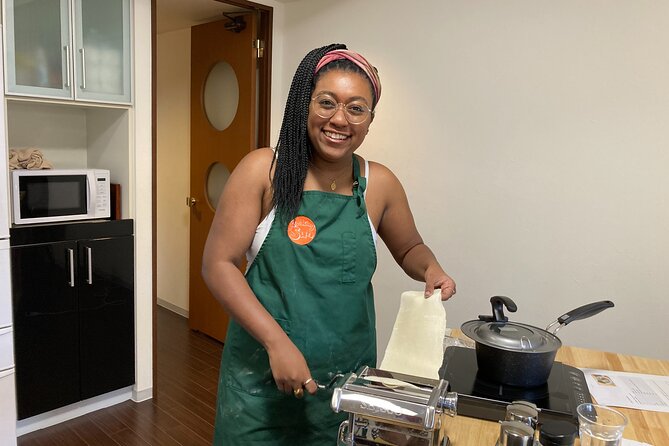
Reviewed · RAMEN & NOODLE TOURS
Ramen and Gyoza Cooking Class in Osaka Dotonbori
Good noodles make a great afternoon.
I like this class for two clear reasons: you make the ramen noodles and soup from scratch, and the small group, capped at eight people, allows for patient, personal instruction. It also offers useful guidance on changing fillings, toppings, and ingredients for different tastes and dietary needs. The main caution is practical: gluten-free cooking is not available, and the class finishes around 3:30 pm, so you may want a light lunch first.
The setting works well, too. You cook in Dotonbori, Osaka’s food-centered entertainment district, then sit down to eat what you made. English-speaking instructors guide each stage, explain ingredients such as fish flakes, soy sauce, and miso, and send you home with printed recipes.
In This Review
- Key points to know before booking
- Why this Osaka class is worth your afternoon
- Finding Cooking SunJapan in Dotonbori
- A small kitchen with personal instruction
- Kneading ramen noodles by hand
- Building a fish and chicken ramen broth
- Folding gyoza with a filling you can adjust
- What you actually learn, not just what you eat
- The meal at the end
- Who should book this experience?
- Price, timing, and booking advice
- Should you book the ramen and gyoza class?
- FAQ
- How long does the ramen and gyoza class last?
- Where does the cooking class meet?
- Does the class end at the same place?
- Is the class taught in English?
- Are vegetarian or no-fish options available?
- Is a gluten-free option available?
- What is included in the price?
Key points to know before booking

- Ramen noodles are kneaded by hand, giving you a better sense of the work behind the bowl.
- The broth is made from scratch, with fish and chicken used in the standard preparation.
- Gyoza filling is customizable, and you fold the dumplings yourself using prepared wrappers.
- The class has a maximum of eight people, making it suitable for families and first-time cooks.
- Recipes, ingredients, utensils, fees, and taxes are included in the listed price of $71.35 per person.
- The meeting room is on the eighth floor of an apartment-style building, so use the full address rather than searching only for Cooking SunJapan.
Why this Osaka class is worth your afternoon
Osaka is famous for eating well and eating often. You can sample takoyaki, okonomiyaki, kushikatsu, and bowls of ramen across the city, but a cooking class gives you something a restaurant meal cannot: a method you can take home.
This three-hour session focuses on two dishes commonly paired in Japan: ramen and gyoza. At a ramen shop, ordering both as a set is a familiar choice. Here, you learn how the two dishes are built, then eat them together as your main meal.
The price is $71.35 per person. That is not a budget lunch, but it covers all ingredients and equipment, an English-speaking instructor, recipes, the hands-on lesson, and the finished meal. For a visitor who wants more than a quick food stop, the value comes from the practical instruction and the chance to repeat the dishes after returning home.
I especially like that the class does not reduce ramen to a packet of noodles and a few toppings. You work with the soup, the dough, and the finishing ingredients. The process takes more effort, but that is exactly what makes the meal satisfying.
More Cooking Classes in Osaka
- Osaka: Ramen and Gyoza Cooking Class in Dotonbori
★ 5.0 · 378 reviews - Osaka Cooking Class: Okonomiyaki &Japanese cuisines experience
★ 5.0 · 261 reviews - Ramen and Gyoza Cooking Class in Osaka
★ 5.0 · 202 reviews
Finding Cooking SunJapan in Dotonbori
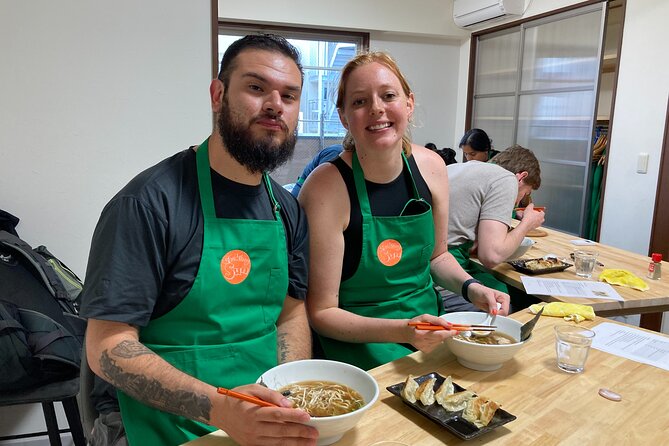
The class begins at Cooking SunJapan, at 542-0082 Osaka, Chuo Ward, Shimanouchi, 2-chōme 9-14, room 807. You go to the eighth floor by elevator, and the activity ends at the same place.
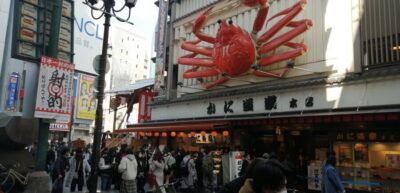
The location is near public transportation and sits in the Dotonbori area, which makes it easy to pair with sightseeing before or after class. Still, the building can be confusing to identify. It is in a residential-style apartment building rather than an obvious street-front cooking school.
Use the full street address in your map app. Searching only for Cooking SunJapan may send you to the wrong place. Allow extra time for finding the entrance, locating the elevator, and reaching room 807. This is one of those small Osaka logistics points that can turn a relaxed cooking lesson into a rushed arrival if ignored.
The scheduled start time is 1:30 pm. Since the cooking and eating finish at roughly 3:30 pm, you should not arrive hungry enough to be distracted. A small lunch beforehand is sensible, especially for children and teenagers.
A small kitchen with personal instruction
The class is limited to eight people. That number matters because ramen and gyoza involve several stages, and you may need help with dough, seasoning, folding, or timing.
Past classes have included private family groups as well as mixed groups. Families with children and teenagers have found the pace manageable, including a 12-year-old and teenagers aged 14 and 17. You do not need to be an experienced cook. The instruction is designed for beginners, while confident home cooks can still pick up useful details about Japanese ingredients and technique.
Two instructors may work with a full group. Miki, Jun, Kassa, and Marina have been praised for friendly, clear teaching at different sessions. The strongest pattern is patient, organized guidance. The instructors explain why a step matters instead of simply telling you to copy it.
That approach helps with unfamiliar ingredients. You might learn why one kind of miso differs from another, how soy sauces vary, or how different fish flakes affect a broth. These explanations turn the class into more than a recipe recital.
The kitchen has been described as clean, modern, and well organized. That is important here. You are handling several ingredients and tools, so a tidy workspace keeps the lesson moving and makes it easier to focus on the food.
Kneading ramen noodles by hand
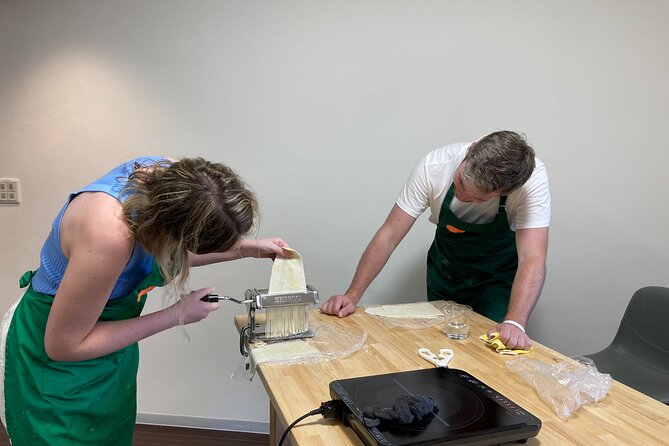
The noodle portion is the most distinctive part of the class. You knead the dough by hand rather than opening a package, then work through the steps needed to create ramen noodles.
Making noodles from scratch is not instant. It can feel a little tedious, especially if you expected a quick demonstration followed by lunch. Yet the hands-on work gives you a better understanding of ramen’s texture and preparation.
The instructors guide you through the process step by step. This is useful because noodle dough can seem simple until you start working it. You learn through touch and repetition, not just by watching someone else.
For many people, this will be the part they remember best. You are not merely adding toppings to a ready-made bowl. You are helping create the base itself, then eating the result soon afterward.
The recipes you receive afterward help make the lesson useful beyond Osaka. You may not find every ingredient immediately at home, but the instructors also explain possible substitutions and ingredients that may be easier to locate in other countries.
More Ramen Tours in Osaka
- Osaka: Five Must-See Highlights Walking Tour & Ramen Lunch
★ 4.7 · 411 reviews - Walking Tour of Osaka’s 5 Must-See Sights, with Ramen for Lunch
★ 5.0 · 158 reviews - Cooking Ramen&Gyoza/KatsuCurry/Bento/Okonomiyaki+Store Tour@Osaka
★ 5.0 · 138 reviews - Three Types of Ramen Cooking Class in Osaka
★ 5.0 · 119 reviews
Building a fish and chicken ramen broth
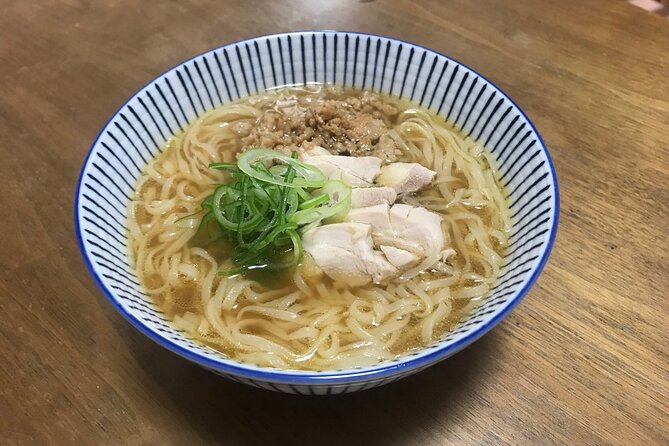
The soup is also made from scratch. The standard broth uses fish and chicken, giving the finished ramen a savory base with a clear Japanese character.
If you are not fond of fish, this is worth considering. One class participant who normally avoids fish found the fish and chicken base enjoyable, but taste is personal. If you prefer a no-fish version, you must leave a note when booking.
The broth lesson is valuable because it shows how much of ramen’s flavor comes from the soup, not just the noodles or toppings. The instructors discuss fish flakes, soy sauce, and miso, helping you understand how small changes affect the bowl.
You also have room to adjust the finished ramen to your taste. Toppings can be changed, and the class includes advice for different dietary needs. That flexibility makes the recipe more useful than a fixed dish that only works one way.
The meal is served after the cooking is complete. This creates a natural reward at the end of the class: you sit down with a bowl of ramen that required your own hands, attention, and a fair amount of kneading.
Folding gyoza with a filling you can adjust
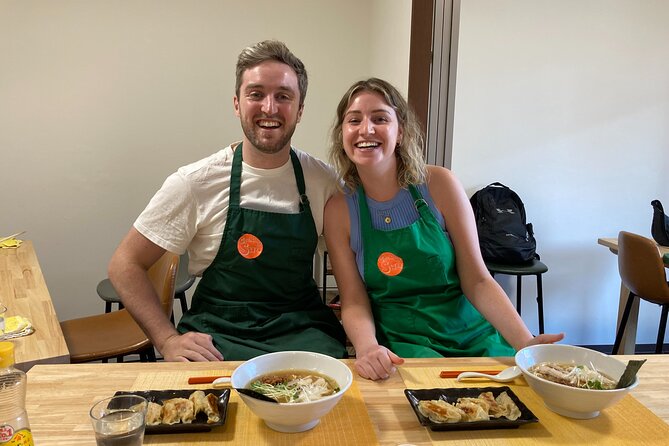
The gyoza portion adds a different kind of work. You prepare the filling by chopping ingredients, then season and combine it before folding the dumplings with prepared wrappers.
Using premade wrappers keeps the class focused. You learn the filling and folding techniques without adding another dough-making project to an already full afternoon.
Folding gyoza is a good group activity because each dumpling can look a little different. The instructors demonstrate the process and help correct mistakes. Even if your first few dumplings look uneven, the finished result can still cook well and taste delicious.
The standard filling is chicken-based, but the class can accommodate vegetarian, pescatarian, and no-fish options if you leave a note during booking. You should make your dietary request in advance rather than waiting until you arrive.
Food allergies have also been accommodated in past sessions, but you should provide full details when booking. The available information supports dietary adjustments, yet gluten-free cooking is specifically not offered. Anyone with gluten intolerance should choose a different activity.
The combination of ramen and gyoza gives the class a good rhythm. Noodle making asks for patience, while folding dumplings provides a more tactile and social task. Then both dishes come together for the meal.
What you actually learn, not just what you eat
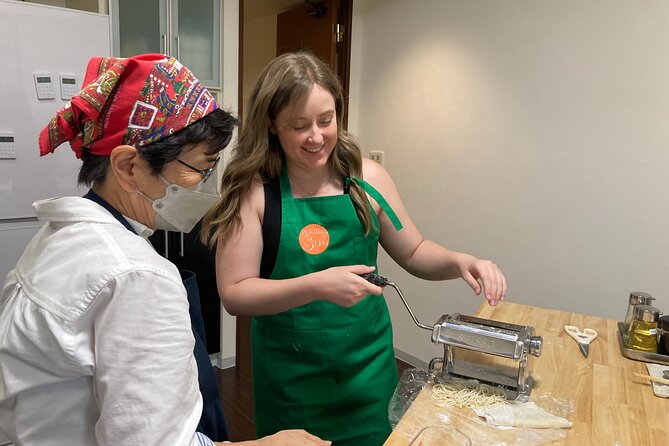
The best part of a cooking class is the information you can use later. Here, the practical value comes from learning how to adapt the food.
You get guidance on changing ramen toppings, adjusting gyoza filling, and replacing certain ingredients with options available in your home country. The instructors also explain Japanese pantry staples rather than treating them as interchangeable bottles.
That matters when you try the recipes later. Soy sauce, miso, and fish flakes can vary a great deal. If you understand their role, you can make sensible substitutions instead of wondering why your home version tastes different.
The recipe handouts are another useful touch. They give you a written reference after the class, when the details may otherwise blur together. Bring the recipes home and use them as a starting point rather than expecting to recreate every Japanese ingredient perfectly on your first attempt.
The lesson is also cultural in a modest, practical way. Instructors explain customs and the reasons behind certain cooking steps. You learn how the dishes fit into everyday Japanese food culture, especially the familiar ramen and gyoza combination.
The meal at the end
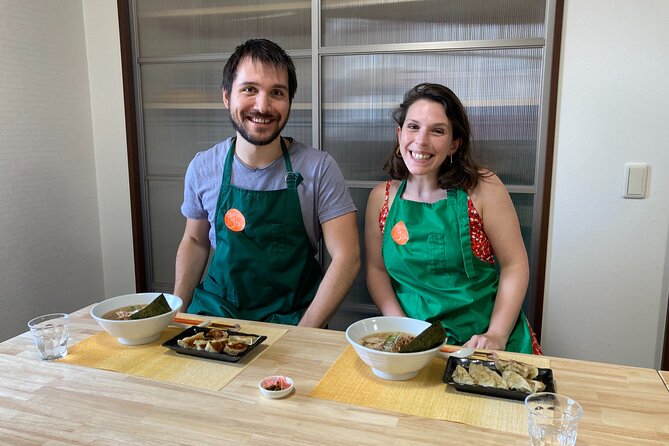
The cooking session ends with a full meal of ramen and gyoza. This is more substantial than a snack, and many people finish with full stomachs.
The finished food has received especially strong praise. The ramen soup and gyoza are described as delicious, authentic-tasting, and restaurant-like. That does not mean every bowl will be identical. Your seasoning, folding, and topping choices are part of the result.
Eating your own noodles also changes the experience. You notice the work behind the food and understand why a bowl of ramen can involve more than a quick pour of hot soup.
The timing makes this an early dinner for some schedules. At 1:30 pm, the class begins after lunch and ends in the middle of the afternoon. That timing is useful if you want a substantial meal before an evening in Osaka, but it is less convenient if you prefer a late lunch.
Who should book this experience?
I would recommend the class to food-focused visitors who want an activity with a clear result. You do not need cooking experience, and the instructors are accustomed to guiding beginners through mistakes.
It suits families particularly well. Children and teenagers can take part in chopping, kneading, filling, and folding, though an adult should use good judgment about what each child handles. The small group makes it easier for younger participants to receive help.
It is also a good choice for people who enjoy practical souvenirs. Instead of bringing home another object, you leave with recipes and the ability to try the dishes again.
You should think twice if you have gluten intolerance, since gluten-free cooking is unavailable. You should also mention vegetarian, pescatarian, no-fish, or allergy requirements when booking. The class can adjust some elements, but the information provided does not promise every possible dietary arrangement.
This may not be the right pick if you want to spend the afternoon simply eating in Dotonbori. You will be doing real preparation, and the noodle-making process takes time. For me, that work is the point, but it will not suit anyone seeking a quick demonstration.
Price, timing, and booking advice
At $71.35 per person, the class sits in the mid-range for a three-hour food activity. You are paying for instruction, ingredients, equipment, the meal, recipes, and a small group rather than just a tasting.
The strongest value comes if you plan to cook ramen or gyoza again. If the recipes stay in a drawer, the cost feels more like an expensive lunch. If you use the methods at home, the class becomes a practical food lesson and a memorable Osaka activity.
The tour has a mobile ticket, and confirmation is provided at booking. Free cancellation is available if you cancel at least 24 hours before the 1:30 pm start time. Cancellations within 24 hours are not refunded, and late changes are not accepted.
Plan to arrive early because of the apartment-building entrance. Save the exact address, not only the business name, and remember room 807 on the eighth floor.
Should you book the ramen and gyoza class?
Book it if you want to understand how two familiar Japanese dishes are made, not just photograph and eat them. The small group, friendly English instruction, recipes, and hands-on noodle work make this a strong choice for families, couples, and food lovers.
Skip it if you need gluten-free cooking, dislike hands-on preparation, or want a fast meal. For everyone else, $71.35 buys three useful hours in Dotonbori, a filling early dinner, and recipes you can attempt again long after Osaka is behind you.
FAQ
How long does the ramen and gyoza class last?
The class lasts approximately three hours. It starts at 1:30 pm and has finished around 3:30 pm in some sessions.
Where does the cooking class meet?
It meets at Cooking SunJapan, 542-0082 Osaka, Chuo Ward, Shimanouchi, 2-chōme 9-14, room 807. Take the elevator to the eighth floor.
Does the class end at the same place?
Yes. The activity ends back at the meeting point.
Is the class taught in English?
Yes. An English-speaking instructor is included.
Are vegetarian or no-fish options available?
Vegetarian, pescatarian, and no-fish options can be requested. Leave a note when booking so the instructors can prepare.
Is a gluten-free option available?
No. A gluten-free option is not available, and the class is not recommended for people with gluten intolerance.
What is included in the price?
The price includes all ingredients and utensils, the hands-on ramen and gyoza lesson, an English-speaking instructor, recipes to take home, and all fees and taxes. Extra food or drinks are not included.
Just added around Osaka
- Osaka Food Tour with 10 Classic Japanese Tastings & Drinks★ 5.0 · 38 reviews
- Osaka: Highlights & Hidden Gems Private Walking Tour★ 4.7 · 38 reviews
- Kyoto private tour (Shore excursion available from Osaka or Kobe port)★ 5.0 · 39 reviews
- Osaka Private Day Trip – Enjoy Your First-Time Visit to Osaka!★ 5.0 · 39 reviews
- Kyoto & Nara & Uji: Full Day Sightseeing Tour from Osaka or Kyoto★ 4.5 · 39 reviews
- Authentic SUSHI Course Cooking Class★ 5.0 · 39 reviews
- Osaka: Mind & Spirit Balance Temple Reiki Healing★ 5.0 · 41 reviews
- Osaka Afternoon Walking Tour with Osaka River Cruise★ 3.5 · 42 reviews
Ramen & Noodle Tours, compared.
Ramen Cooking Class at Ramen Factory in Kyoto
Read our review →
Eat and Drink Like a Local: Tokyo Ueno Food Tour-Taverns&Ramen
Read our review →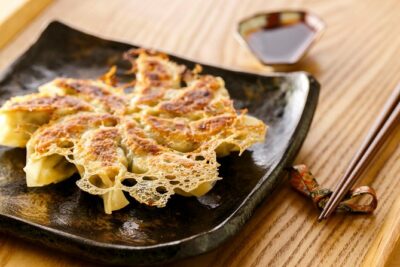
Ramen & Gyoza Cooking Class in Tokyo with Local Supermarket Visit
Read our review →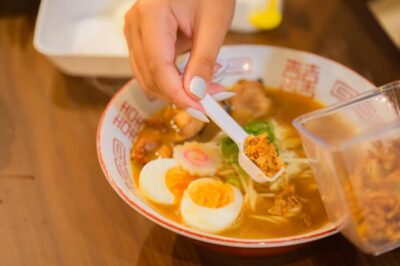
Ramen Cooking Class at a Ramen Factory with Souvenir
Read our review →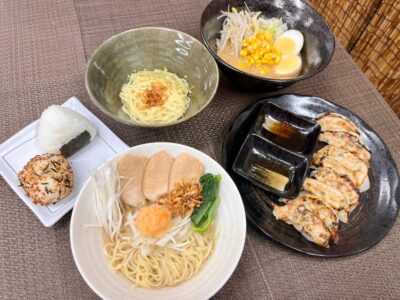
Five Must-See Highlights Walking Tour & Ramen Lunch
Read our review →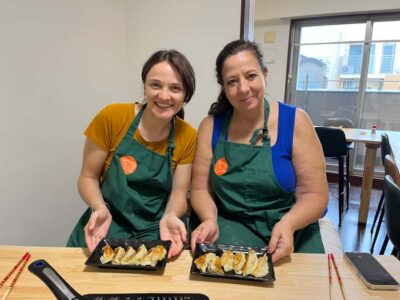
Browse the lists this tour appears in