
Reviewed · RAMEN & NOODLE TOURS
Ramen Craftsman Experience in Osaka
Ramen is better when you make the final bowl. This one-hour workshop at Menya SHU lets you work behind a real ramen counter, choose from four flavors, and finish a bowl under the guidance of chef Shu. I especially like the four-person limit, which gives you room to ask questions, and the warm, family-run setting with Shu and Amanda. One thing to understand: you are not making the broth from scratch, since that takes many hours and several days of preparation. You are learning and performing the final cooking and assembly.
I also like that the experience feels tied to a working Osaka ramen shop rather than a polished cooking school. You boil the noodles, prepare the soup, arrange the toppings, and eat what you made. The main drawback is the compact kitchen and gas stove, which means this is not suitable for infants or very young children.
In This Review
- Key points at a glance
- What this Osaka ramen class actually teaches
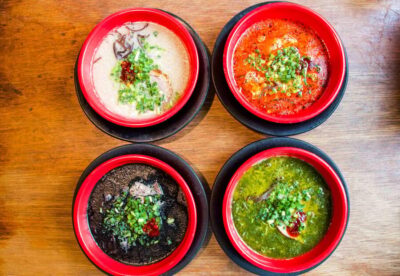
- Choosing between four very different ramen styles
- Behind the counter at Menya SHU
- The cooking sequence, from soup to finished bowl
- What makes the small group worth paying for
- Is $42.94 a fair price?
- Getting there and handling the timing
- Who will enjoy this experience most?
- Should you book the Ramen Craftsman Experience?
- FAQ
- Where does the ramen experience take place?
- How long does the experience last?
- How many people can join?
- What ramen types can I choose?
- Can I choose my own toppings?
- Is lunch included?
- Are cooking supplies provided?
- Do I make the ramen broth from scratch?
- Can small children or infants join?
- What happens if I arrive late?
- Can I cancel for a full refund?
Key points at a glance
- Four ramen choices: Pick chicken white soup, seafood chicken white soup with clam broth, Chinese soba with soy sauce, or sea bream dashi salt ramen.
- A tiny class with personal attention: No more than four people take part at once, so Shu can guide each step closely.
- You cook the final stages: The long-prepared broth is ready, but you boil noodles, prepare the bowl, handle toppings, and work behind the counter.
- A real ramen shop setting: The activity takes place in the kitchen of Menya SHU at 11-7 Higashikōzu-chō in Osaka’s Tennoji Ward.
- Lunch is included: Utensils, aprons, and gloves are provided, and you eat the ramen you prepare.
- Good value for food lovers: At $42.94 per person for about an hour, the price covers instruction, lunch, ingredients, and a private-feeling class.
What this Osaka ramen class actually teaches
This is best understood as a ramen craftsman experience, not a full recipe course for making broth at home. Ramen soup requires long preparation, so Shu has already handled the most time-consuming work. That is not a weakness by itself. It lets you focus on the parts of the dish you can see and control during a short class.
You begin with an explanation of the ingredients and cooking tools. Shu talks through the differences between the ramen styles, then demonstrates how the elements come together. The activity moves from explanation to action, with you boiling the noodles, preparing the soup, arranging the toppings, and building the finished bowl.
That division matters. A one-hour class could not honestly teach you every stage of a broth that takes many hours, or several days, to prepare. Instead, you get a practical look at how a ramen order is finished in a shop. You see how timing, heat, noodle texture, soup, and presentation work together.
One useful way to think about it is this: you are not learning to become a ramen shop owner in 60 minutes. You are learning what happens behind the counter between a prepared broth and the bowl placed in front of you.
More Ramen Tours in Osaka
- Osaka: Five Must-See Highlights Walking Tour & Ramen Lunch
★ 4.7 · 411 reviews - Osaka: Ramen and Gyoza Cooking Class in Dotonbori
★ 5.0 · 378 reviews - Ramen and Gyoza Cooking Class in Osaka
★ 5.0 · 202 reviews
Choosing between four very different ramen styles
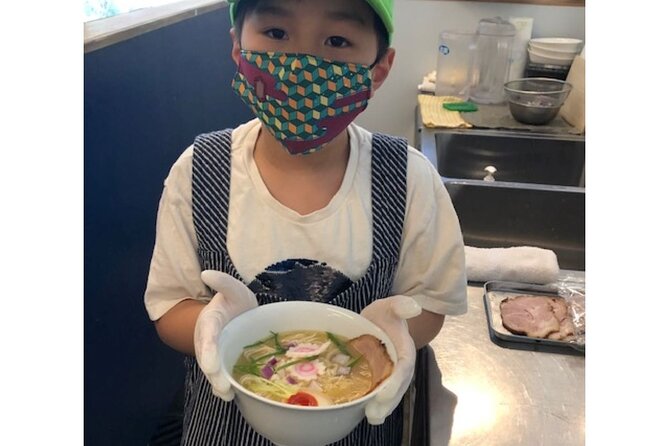
The menu gives you four clear options. You choose one ramen style, then select your preferred toppings. This personal choice is a major part of the fun because you are not simply handed the same bowl as everyone else.
The chicken white soup ramen is the straightforward poultry choice. It gives you a chance to focus on the texture of the noodles and the character of the broth without a seafood element.
The seafood chicken white soup ramen adds clam broth to the chicken base. This is a useful choice if you want to compare how seafood changes the aroma and taste of a familiar white soup style.
The Chinese soba, described here as soy sauce ramen, offers a darker and more savory direction. It is a good pick if you prefer soy sauce seasoning to a creamy white soup.
The sea bream dashi salt ramen is the more delicate-sounding option. Sea bream dashi and salt seasoning give you another way to see how a ramen bowl can be shaped without relying on a heavy soy sauce profile.
I would choose your ramen based on what you already like, not on what sounds most exotic. If you are unsure, ask Shu to explain the differences before you decide. The class is designed around personal choices, so the selection is part of the lesson.
Behind the counter at Menya SHU
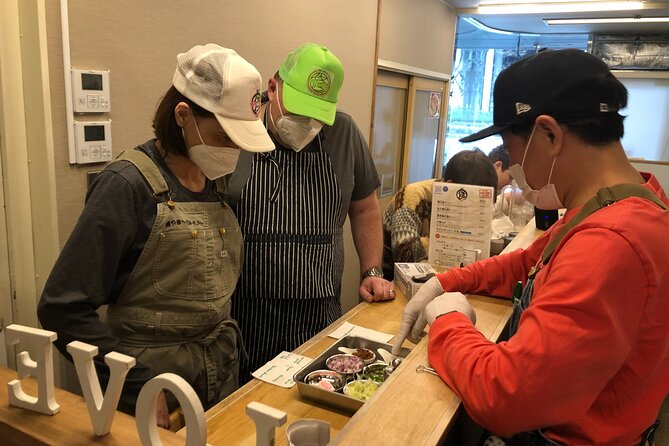
The setting is one of the strongest reasons to book this activity. You are not standing in a large teaching kitchen with a row of identical stations. You rent the kitchen of the ramen shop run by Shu and take part in the final preparation where the restaurant normally operates.
That gives the class a close, practical feel. You can work behind the counter, handle the noodles, and see how a bowl is put together in a real shop environment. The kitchen is small, but that works in your favor for a class limited to four people. You are close enough to see the demonstrations clearly and receive direct help.
Shu is repeatedly praised for being friendly, entertaining, and comfortable explaining the process in English. Amanda and other family members may also help with the class, adding to the welcoming atmosphere. The tone sounds relaxed rather than formal, with plenty of conversation alongside the cooking.
Some of the most appealing details come from the little human touches. Shu has been described as helpful with families and children, and one family even ended the meal with a Rubik’s Cube game involving Shu’s son. That is not a guaranteed part of every booking, but it gives you a sense of the informal, family-run character of the place.
You can also take photographs and video during the activity. Since the cooking happens at close range, this is a good experience to document, especially if you enjoy showing the steps behind a dish rather than taking only a picture of the finished bowl.
The cooking sequence, from soup to finished bowl
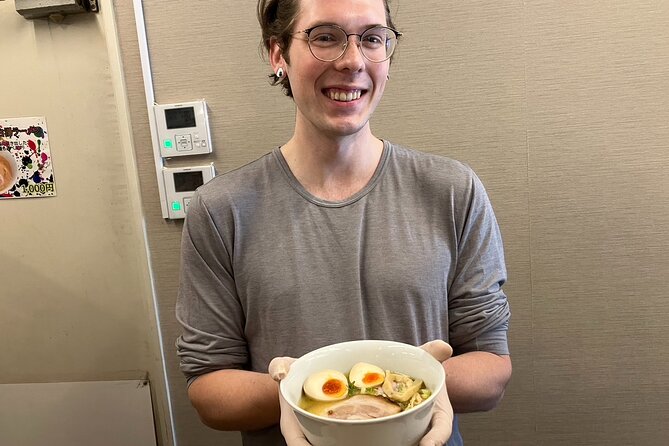
The process starts with instruction. Shu explains the ingredients, the utensils, and the different ramen styles. Pay attention here, because this is where you learn why the choices matter rather than simply following movements without context.
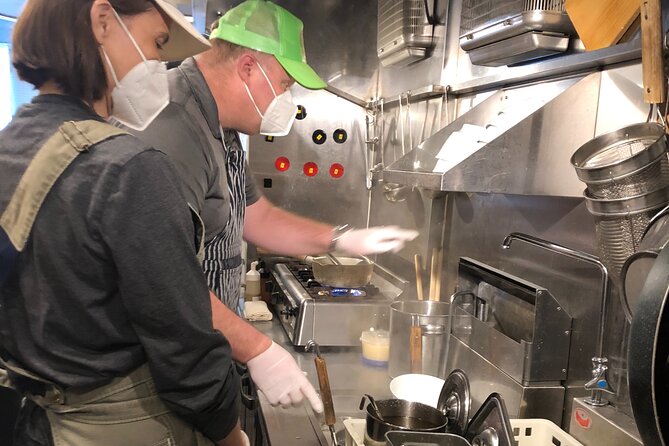
Next comes the noodle cooking. You will use the gas stove to boil the noodles, an important practical detail because timing affects the finished texture. Shu guides you through this stage, and the small group means each person can take a turn rather than watching from the back of a large room.
You then prepare the soup and bring the separate components together. The broth has already received its long preparation, but you get to see how it is handled at the final stage. This is where the workshop differs from a simple ramen meal. You begin to understand that the bowl is assembled through a sequence, not thrown together at random.
The finishing work includes presentation and toppings. Depending on your chosen bowl, you might cut an egg, handle the meat, or take part in other final touches. One especially memorable step described by a participant is torching the meat, which gives you a close look at restaurant-style finishing.
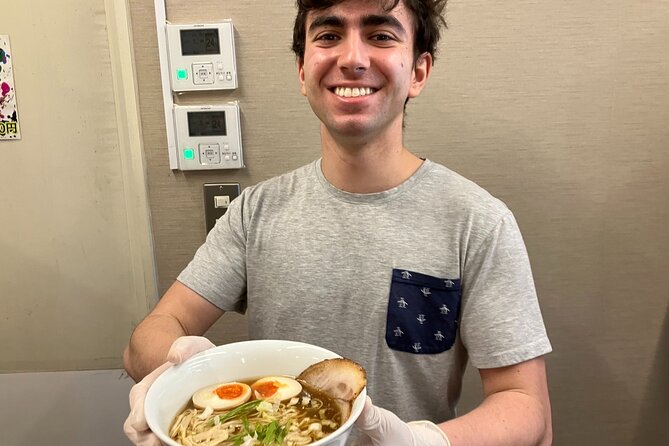
Finally, you eat the ramen. That meal is included in the $42.94 price, and it is the payoff for the work. The food is not an afterthought. Shu’s cooking is the foundation of the experience, and the finished ramen is repeatedly praised for its freshness and strong flavor.
A completely different kind of day out in Osaka:
- Osaka Go Karting Tour with Funny Costume
★ 5.0 · 2,658 reviews - Osaka Castle: Museum and Tower Entry Ticket
★ 4.5 · 2,380 reviews - Osaka: Shinsekai Food Tour with 13-15 Dishes at 5 Eateries
★ 4.8 · 2,204 reviews - Osaka Food Tour: 13 Dishes at 5 Local Eateries
★ 5.0 · 2,149 reviews
What makes the small group worth paying for
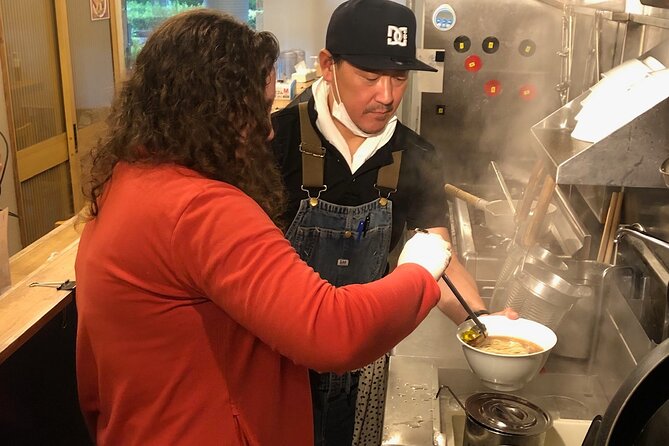
A maximum of four people changes the feel of this class. In a large cooking workshop, you might spend most of the hour watching someone else work. Here, the format allows each person to take an active turn with the noodles and other final steps.
The group size also makes questions easier. If you want to know why one broth tastes different from another, or how noodle timing affects the bowl, you can ask during the process. Shu can correct your technique as you go instead of giving one general demonstration and moving on.
This is especially helpful for families or friends who want a shared activity. A group of four can book the full capacity, though the exact arrangement depends on the reservation. The experience has also been described as comfortable for children around seven years old, provided they can safely follow instructions around the cooking equipment.
The small format has one tradeoff. The kitchen can feel close and crowded, especially if you prefer lots of personal space. I would see that as part of the behind-the-counter character, but it is worth knowing before you book.
Is $42.94 a fair price?
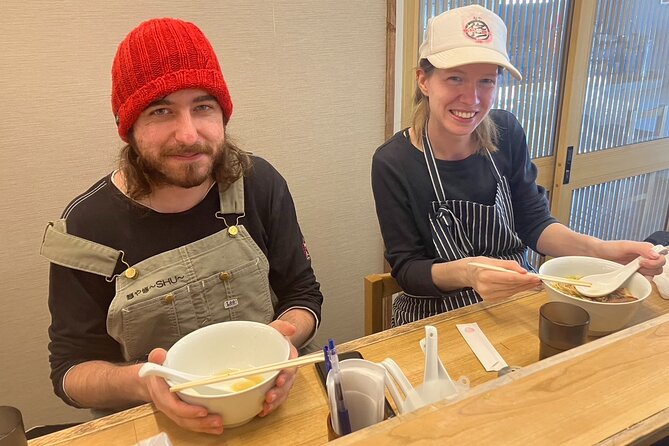
At $42.94 per person, this is not the cheapest ramen meal in Osaka. You can eat ramen for much less if all you want is lunch. The price makes more sense when you count the meal, the instruction, the private-feeling kitchen access, the prepared ingredients, and the chance to work behind the counter.
You also avoid buying or preparing the tools and supplies. Cooking utensils, an apron, and gloves are provided. The mobile ticket keeps the arrival process simple, and the activity begins and ends at the ramen shop.
For me, the value is strongest if you enjoy food culture and want more than a photograph of a bowl. You learn how ramen is finished, hear about the work behind the broth, and eat a meal connected to the lesson. It is less valuable if you are looking for a full technical course that teaches every stage of ramen production.
The experience lasts about one hour, so it fits neatly into an Osaka day. You could schedule it around other Tennoji sightseeing or use it as a compact meal stop. Since it is a small class and often booked about 10 days ahead, I would not leave it until the last minute if your schedule is fixed.
Getting there and handling the timing
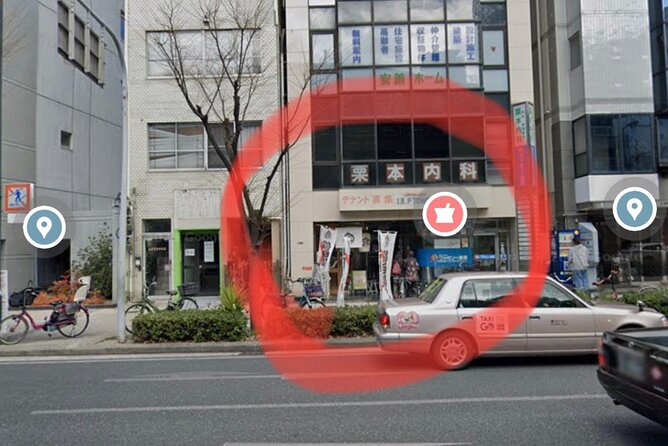
The meeting point is Menya SHU, 11-7 Higashikōzu-chō, Tennoji Ward, Osaka, 543-0021, Japan. The shop is near public transportation, but private transportation is not included. You arrange your own way to the meeting point and return there after the activity.
Pay close attention to the start time. If you will be late, contact the provider. Arrival more than 15 minutes after the reserved start time can lead to cancellation because the delay affects the next booking.
The cancellation terms are simple but strict close to departure. You receive a full refund if you cancel at least 24 hours before the start time. Cancellations or changes within 24 hours are not accepted for a refund.
The gas stove also affects who should book. Infants cannot take part, and the activity is not suitable for small children. Children around seven years old may be able to participate, but adults should use their judgment and follow Shu’s safety instructions closely.
Who will enjoy this experience most?
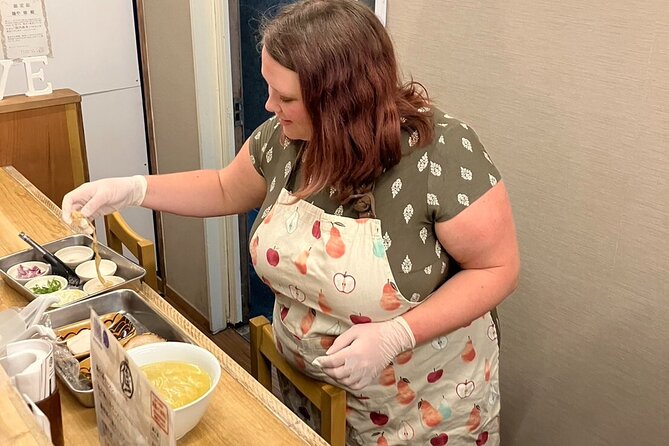
I would recommend it first to people who love ramen and want to understand the bowl beyond its surface. You get enough explanation to appreciate the differences in broth and seasoning, then enough hands-on work to make the meal feel like your own.
It is also a strong choice for couples, families with older children, and small groups of friends. The personal format gives you time to talk with Shu and Amanda, and the family-run setting feels more personal than a standard food demonstration.
English-speaking visitors should find the class manageable. Shu has been praised for his English, clear instructions, and easy conversation. Still, this is a food experience rather than a formal language lesson, so ask questions when you need clarification.
I would be more cautious if you want to make ramen broth entirely from raw ingredients. The broth is prepared in advance because of the long cooking time. You will learn about that process, but you will not spend the class making it from the beginning.
Should you book the Ramen Craftsman Experience?
Yes, if you want a friendly, hands-on food activity in Osaka and you understand what the class includes. The strongest features are the four-person maximum, the real ramen-shop kitchen, the choice of four ramen styles, and the chance to eat the bowl you help finish.
Book it several days ahead, arrive on time, and choose your ramen with an open mind. If you want a full ramen-making course, this may feel more like final assembly than complete instruction. If you want a tasty meal, personal teaching, and a close look at the craft behind an Osaka staple, the $42.94 price is reasonable.
FAQ
Where does the ramen experience take place?
It takes place at Menya SHU, located at 11-7 Higashikōzu-chō, Tennoji Ward, Osaka, 543-0021, Japan.
How long does the experience last?
The experience lasts approximately one hour.
How many people can join?
The activity has a maximum of four participants at one time.
What ramen types can I choose?
You can choose chicken white soup ramen, seafood chicken white soup ramen with clam broth, Chinese soba with soy sauce, or sea bream dashi salt ramen.
Can I choose my own toppings?
Yes. The experience allows you to choose your preferred toppings.
Is lunch included?
Yes. Lunch is included, and you eat the ramen you prepare.
Are cooking supplies provided?
Yes. Cooking utensils, aprons, and gloves are provided.
Do I make the ramen broth from scratch?
No. The chef prepares the ramen soup in advance because it takes many hours and several days to make. You take part in boiling the noodles, preparing the soup, presentation, and final assembly.
Can small children or infants join?
Infants cannot participate because a gas stove is used. The experience is not suitable for small children, though children around seven years old may be able to take part.
What happens if I arrive late?
You should contact the provider if you will be late. If you cannot arrive within 15 minutes of the reservation start time, the booking may be cancelled.
Can I cancel for a full refund?
Yes. You can receive a full refund if you cancel at least 24 hours before the experience start time. Cancellations or changes within 24 hours are not accepted for a refund.
Just added around Osaka
- Osaka Food Tour with 10 Classic Japanese Tastings & Drinks★ 5.0 · 38 reviews
- Osaka: Highlights & Hidden Gems Private Walking Tour★ 4.7 · 38 reviews
- Kyoto private tour (Shore excursion available from Osaka or Kobe port)★ 5.0 · 39 reviews
- Osaka Private Day Trip – Enjoy Your First-Time Visit to Osaka!★ 5.0 · 39 reviews
- Kyoto & Nara & Uji: Full Day Sightseeing Tour from Osaka or Kyoto★ 4.5 · 39 reviews
- Authentic SUSHI Course Cooking Class★ 5.0 · 39 reviews
- Osaka: Mind & Spirit Balance Temple Reiki Healing★ 5.0 · 41 reviews
- Osaka: Gluten-Free Ramen and Gyoza Cooking Class★ 5.0 · 42 reviews
Ramen & Noodle Tours, compared.
Ramen Cooking Class at Ramen Factory in Kyoto
Read our review →
Eat and Drink Like a Local: Tokyo Ueno Food Tour-Taverns&Ramen
Read our review →
Ramen & Gyoza Cooking Class in Tokyo with Local Supermarket Visit
Read our review →
Ramen Cooking Class at a Ramen Factory with Souvenir
Read our review →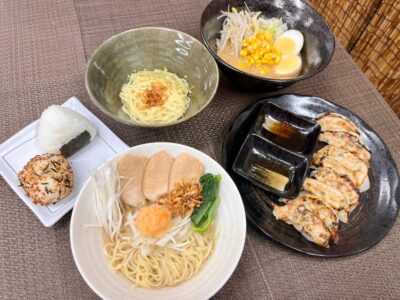
Five Must-See Highlights Walking Tour & Ramen Lunch
Read our review →
Browse the lists this tour appears in