
Reviewed · TEA CEREMONY EXPERIENCES
Tea ceremony by the tea master in Kyoto SHIUN AN
Slow tea rewards patient travelers. SHIUN AN offers a small, traditional ceremony near Daitoku-ji, where you learn the meaning behind the movements rather than simply watching a staged performance. I especially like the maximum six-person group and the chance to prepare your own matcha. The two sweets and two bowls of tea also make the $33.03 price feel fair. The main catch is location: this is in a quiet residential area, not central Gion, and finding the house can take extra time.
The ceremony lasts about 45 minutes, though several people found it closer to an hour. An English translator helps explain the tea master’s actions, the utensils, and the room’s seasonal decoration. You should also know that the ceremony involves sitting on the floor, with stairs at the location, although accommodations were made for people who could not use the traditional seated position.
In This Review
- Key points to know before booking
- Why SHIUN AN feels more traditional than a quick tourist demonstration
- What happens during the 45-minute tea ceremony
- Entering the tea room
- Watching the tea master prepare matcha
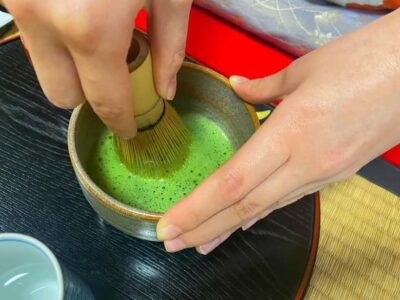
- Making your own bowl of matcha
- Daitoku-ji gives the setting real cultural weight
- Getting there takes more care than the ceremony itself
- What the $33.03 price really buys you
- Sitting, etiquette, and what to wear
- Who will enjoy this most
- A few useful ways to plan your visit
- Should you book SHIUN AN?
- FAQ
- Where does the tea ceremony take place?
- How long does the experience last?
- How many people can join each session?
- What is included in the price?
- How much matcha and how many sweets are provided?
- Do I get to make my own matcha?
- Is the ceremony suitable for people who cannot sit on the floor?
- Can I cancel for a refund?
Key points to know before booking
- Tea master with a formal Tea Name: The instructors hold a full professor qualification in the tea tradition.
- Small sessions near Daitoku-ji: Most sessions allow up to six people, increasing to eight during peak periods.
- Two bowls of matcha: You watch the formal preparation, then make your own bowl with a bamboo scoop and whisk.
- Two Japanese sweets included: A seasonal sweet accompanies the tea, adding an important part of the ceremony’s rhythm.
- Quiet northern Kyoto setting: The house is near Daitoku-ji and four bus stops from Kinkaku-ji, but it is not close to Gion.
- Useful cultural explanation: A translator helps explain etiquette, room decoration, utensils, and the spiritual link between tea practice and Zen.
Why SHIUN AN feels more traditional than a quick tourist demonstration
Kyoto offers plenty of short cultural activities, but not all tea ceremonies give you time to understand what you are seeing. SHIUN AN takes place in a small house near Daitoku-ji, a Zen Buddhist temple complex with a long connection to tea culture. That setting matters. You are not simply being handed a bowl of green tea in a busy sightseeing district.
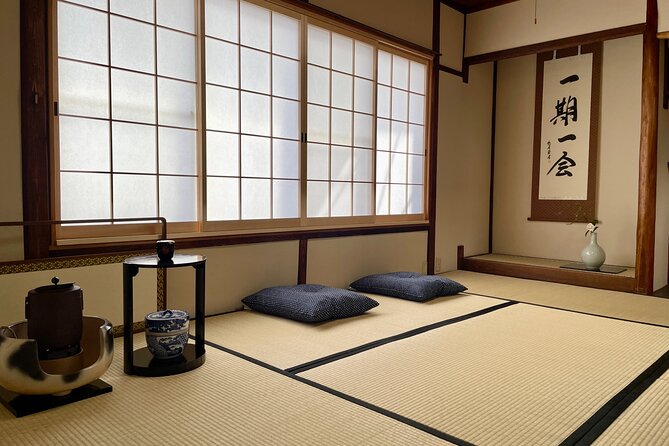
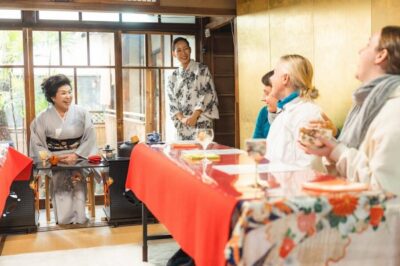
The ceremony begins with the room itself. Before the tea is made, the host introduces the hanging scroll and flower arrangement. These are not random decorations. Their placement and seasonal character form part of the message of the gathering, and the tea master explains why the room is arranged as it is.
I like this opening because it teaches you to look before you drink. The bowl, scoop, whisk, container, flowers, and scroll all have a place in the experience. Even if you know little about Japanese tea, you quickly see that the ceremony is built around attention and restraint.
The instructors hold a Tea Name, which indicates a full professor qualification in their school of tea. That does not mean you need previous knowledge. The teaching is designed for beginners, and the host explains each stage before the formal preparation begins.
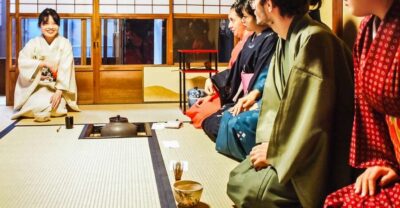
The tone is quiet and welcoming. Several sessions included an English translator who helped explain points that would be easy to miss. That support is especially useful because the ceremony contains many small gestures, and a silent demonstration would leave you guessing about their purpose.
More Tea Ceremonies in Kyoto
- Kyoto: Tea Ceremony in a Traditional Tea House in Kiyomizu
★ 4.9 · 3,519 reviews - Kyoto: Tea Ceremony Ju-An at Jotokuji Temple
★ 4.9 · 3,207 reviews - Kyoto: 45-Minute Tea Ceremony Lesson Experience
★ 4.3 · 2,378 reviews
What happens during the 45-minute tea ceremony
The activity is short enough to fit into a busy Kyoto day, but it has several distinct parts. I would allow extra time around the scheduled start because the house is in a residential neighborhood and can be tricky to locate.
Entering the tea room
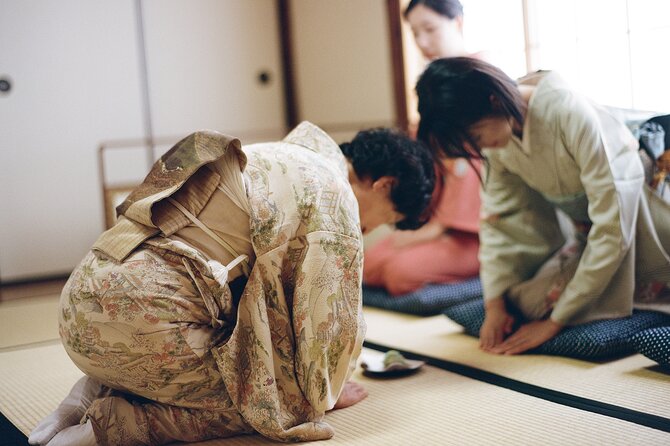
At the start, you are brought into the tea room and invited to notice its details. The hanging scroll and flowers change the mood from ordinary sightseeing to a more focused setting.
The host then explains the basic sequence of the ceremony. You learn about the tea utensils, the order of preparation, and the importance of the room’s layout. This introduction gives the later movements a reason, instead of leaving you to watch a series of unfamiliar actions.
White socks and a folding fan are provided. The socks are useful for the tatami floor and save you from having to prepare special clothing in advance. The fan is part of the formal setting and helps you take part in the customs of the room.
Watching the tea master prepare matcha
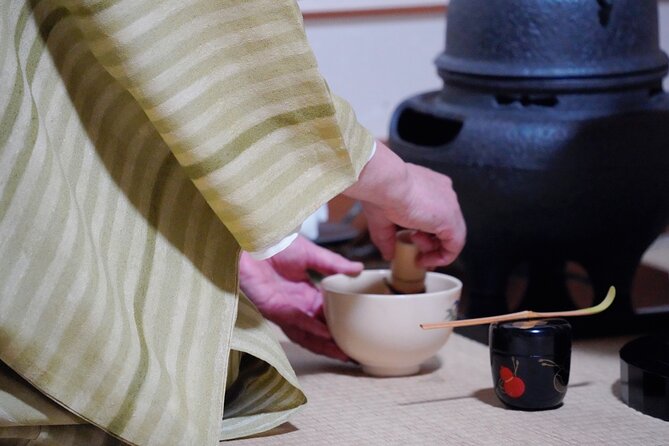
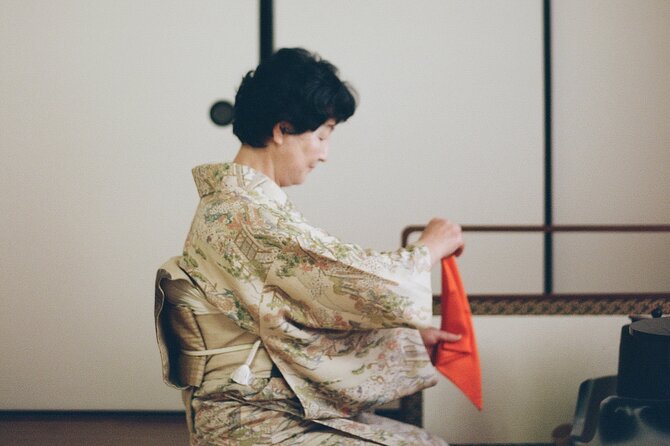
The tea master prepares matcha with careful, practiced movements. The appeal is not speed. It is the controlled pace, the handling of each utensil, and the attention given to the bowl and the person receiving it.
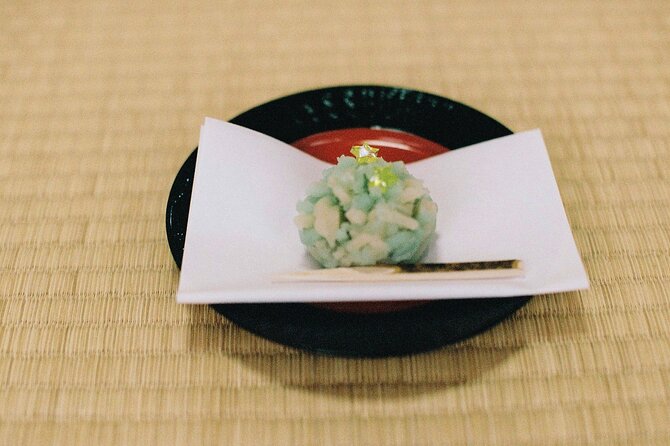
You receive a seasonal Japanese sweet with the tea. This is more than a snack between activities. The sweetness balances the bitter edge of matcha and is part of the traditional sequence.
The explanation also connects tea practice with Zen ideas. The ceremony is presented as a learned path toward self-discovery and awareness. You do not need to approach it as a religious event, but the quiet focus helps explain why the movements are repeated and refined over many years.
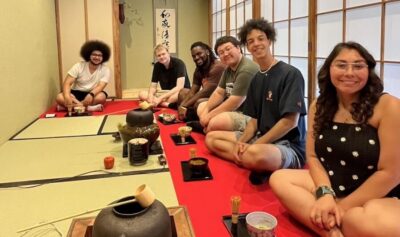
The atmosphere can feel peaceful, even for people who are not especially interested in tea. One session was attended by just one participant, creating an especially quiet experience. Group size varies, but the usual limit of six keeps the room personal. During busy seasons, as many as eight people may attend.
A completely different kind of day out in Kyoto:
- PERFECT KYOTO 1-Day Bus Tour
★ 5.0 · 13,518 reviews - Kyoto: Fushimi Inari, Kinkakuji, Bamboo Grove 1 Day Bus Tour
★ 4.8 · 4,316 reviews - Kyoto Geisha Walking Tour: Gion District & Hidden Gems
★ 4.7 · 3,273 reviews - Kyoto: Gion Magical Night Walking Tour with Geisha Trivia
★ 4.9 · 2,393 reviews
Making your own bowl of matcha
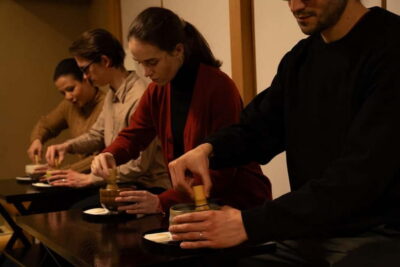
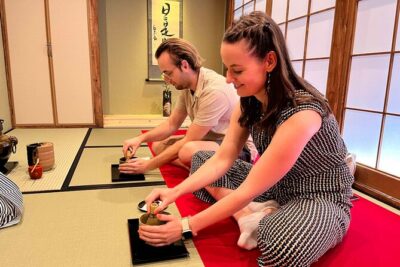
The hands-on part is the practical highlight. You receive a tea bowl, tea container, scoop, and whisk, then learn how to make your own matcha.
Do not expect to match the tea master’s polish on your first attempt. That contrast is part of the fun. The formal preparation looks effortless because it rests on years of practice. Your own bowl gives you a better sense of the technique and the concentration involved.
You enjoy two bowls of matcha in total: one prepared by the tea master and one made by you. Two kinds of Japanese sweets are also included. The second bowl makes the activity feel more complete than a demonstration where you only observe.
The teaching is patient. Questions are welcomed, and the translator can clarify the smaller details. For a first introduction, this balance of watching, listening, tasting, and doing is exactly right.
Daitoku-ji gives the setting real cultural weight
The location near Daitoku-ji is one of SHIUN AN’s strongest features. Daitoku-ji is a Zen Buddhist monastery with a close relationship to Japanese tea culture. Many important priests studied there, and its influence reaches beyond temple history into the development of Japanese arts and customs.
That context gives the ceremony a stronger sense of place. You are learning about tea in the northern part of Kyoto, near one of the city’s major Zen centers, rather than in a generic activity room.
Kinkaku-ji, the Golden Pavilion, is also nearby. The experience is described as only four bus stops from the World Cultural Heritage site, so you can combine the two if your timing works. I would not treat the ceremony as a quick add-on immediately after visiting Kinkaku-ji, though. Bus schedules, walking time, and the difficulty of locating the house can make the connection slower than it looks on a map.
This area is not Gion. That is a benefit if you want a calmer neighborhood, but a drawback if you are hoping to walk straight from the ceremony into Kyoto’s central evening sights. Plan the route before leaving your hotel, and give yourself a cushion before the start time.
Public transportation is available, and one participant found the local bus convenient from the station. Another suggested taking the subway to the nearest station and then using a taxi or Uber for the final stretch, costing about 1,000 yen at the time of that visit. Treat that amount as a useful guide, not a fixed fare.
Getting there takes more care than the ceremony itself
The meeting point is 955-1 Idacho, Kamigyo Ward, Kyoto, 602-8302. It is a specific address, but the setting is a small house in a quiet residential area, not a prominent tourist building.
The most common practical warning is simple: do not arrive at the last minute. Use Google Maps, check your route in advance, and allow time to walk from the bus stop or station. If you are combining the activity with Kinkaku-ji, confirm the connection before setting out.
There are stairs at the property, and traditional tea rooms use floor seating. One participant could not sit in the preferred position for the full time and was still made comfortable. Another said the staff accommodated a husband who could no longer sit on the floor.
That is encouraging, but I would still contact SHIUN AN before booking if stairs or kneeling are a serious concern. The supplied information confirms that service animals are allowed and that the activity is near public transportation. It does not promise every form of mobility access, so asking ahead is sensible.
What the $33.03 price really buys you
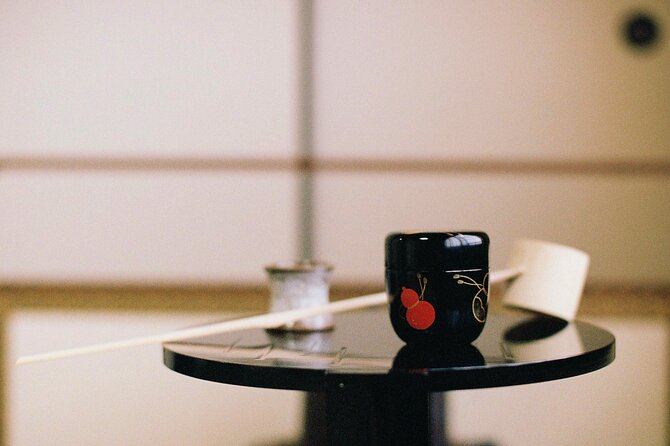
At $33.03 per person, this is a strong-value Kyoto activity if you want instruction rather than a quick cup of matcha. The fee includes the tea bowls, tea container, scoops, and whisks used during the lesson, plus white socks, a folding fan, matcha, and two types of Japanese sweets.
The strongest value comes from the access to a qualified tea master and the small group format. You are not only watching a ritual. You learn the purpose of the utensils, taste the tea, and prepare a bowl yourself.
The 45-minute duration also helps the price. This is not an expensive half-day commitment. You can place it between temple visits, though I would allow more than the official duration for transport and arrival.
The value is less clear if you only want a photo opportunity or dislike quiet, formal activities. The ceremony requires attention, and some of the time is spent listening and sitting still. For that reason, the experience is better suited to someone who wants cultural context than to someone racing through a checklist of Kyoto sights.
Sitting, etiquette, and what to wear
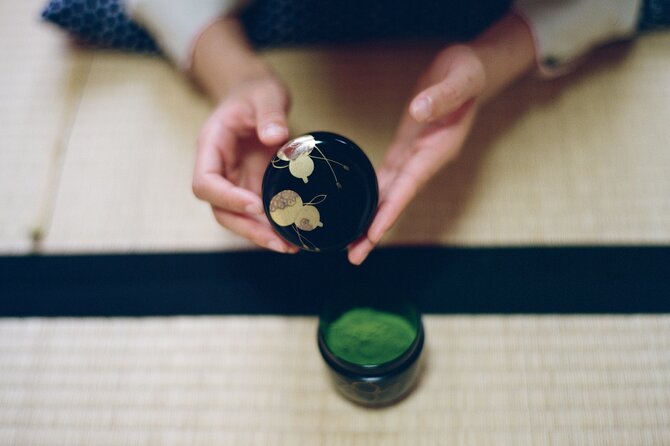
You do not need to bring tea equipment. The bowls, container, scoops, and whisks are supplied, as are white socks and a folding fan.
The traditional setting means you should be ready to remove shoes and use the tatami floor. Floor sitting is part of the experience, but it may be difficult for some people. The staff has shown flexibility, yet the room may not suit everyone for the full session.
Wear clothing that allows you to sit comfortably. The provided socks are practical, but they do not replace comfortable clothes. Since the ceremony takes place in a quiet house, modest, neat clothing fits the setting better than heavy sightseeing gear.
You should also report food allergies before the session. The sweets are included, but the available information does not identify their ingredients.
Photography is possible according to one account, including photos of the staff in kimono, but the supplied details do not set out a formal photography policy. Follow the host’s instructions and wait for permission before photographing the room or ceremony.
Who will enjoy this most
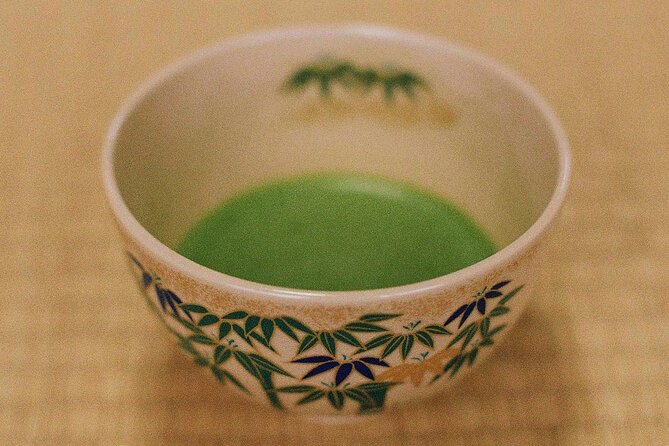
I would recommend SHIUN AN to first-time visitors who want a clear introduction to Japanese tea ceremony, especially those who prefer a small group and a traditional setting.
It also suits families and couples. A young child interested in Japanese culture enjoyed the experience, and the hands-on tea preparation gives younger participants something active to do after the demonstration.
This is a good choice for matcha fans, but you do not need to like strong green tea already. The sweets soften the tasting, and the main attraction is the method and meaning of the ceremony.
People with limited mobility should ask about the stairs and seating before booking. Anyone staying in Gion should also consider the journey. The setting is worthwhile, but it is not a convenient central-Kyoto stop.
The experience may be less suitable if you want a large-scale performance, a costumed photo session, or a ceremony within easy walking distance of the main downtown districts. SHIUN AN is quieter and more instructional.
A few useful ways to plan your visit
Build the ceremony into a northern Kyoto day. Daitoku-ji and Kinkaku-ji make natural companions, although you should leave enough time for transport and the scheduled meeting.
Arrive early. The address can be difficult to find, and the house sits in a residential area. A local bus may work well, while a short taxi ride from a subway station can reduce the stress of the final approach.
Do not eat a large meal immediately beforehand if you want to enjoy both sweets and two bowls of matcha. The experience is brief, but the tasting is a real part of it.
Read a little about tea ceremony before you go. Even a basic idea of the ceremony’s purpose will help you notice the importance of the scroll, flowers, utensils, and sequence.
Finally, keep the pace of the activity in mind. You are being asked to slow down in a city famous for fast sightseeing. That change of rhythm is one of the best reasons to book it.
Should you book SHIUN AN?
Book this tea ceremony if you want a personal, traditional introduction with a qualified tea master, an English translator, and a chance to prepare matcha yourself. The price is reasonable, the group is small, and the setting near Daitoku-ji adds genuine Kyoto context.
Think twice if stairs, floor seating, or a northern Kyoto location will cause problems. With early planning and realistic expectations, SHIUN AN offers a calm and useful cultural experience, not just a sweet drink and a photograph.
FAQ
Where does the tea ceremony take place?
It takes place at 955-1 Idacho, Kamigyo Ward, Kyoto, 602-8302, Japan, near Daitoku-ji Temple.
How long does the experience last?
The scheduled duration is approximately 45 minutes. Some sessions may take closer to an hour.
How many people can join each session?
The usual maximum is six people. During peak seasons, the group may increase to eight.
What is included in the price?
The experience includes tea bowls, tea containers, tea scoops, tea whisks, white socks, a folding fan, matcha tea, and Japanese sweets.
How much matcha and how many sweets are provided?
You receive two bowls of matcha and two kinds of Japanese sweets.
Do I get to make my own matcha?
Yes. After watching the tea master, you learn the basic steps and prepare your own bowl using the provided utensils.
Is the ceremony suitable for people who cannot sit on the floor?
The ceremony uses traditional floor seating, and stairs are present at the location. Staff have accommodated people who could not sit in the preferred position, but you should contact SHIUN AN in advance about your needs.
Can I cancel for a refund?
You can cancel at least 24 hours before the start time for a full refund. Cancellations or changes made less than 24 hours in advance are not refunded or accepted. If the minimum number of participants is not reached and the activity is canceled, you will be offered another date or experience, or a full refund.
Just added around Kyoto
- Kyoto: Private Customizable Day Trip by Car★ 5.0 · 38 reviews
- Kyoto: Gion Night Walking Tour with Geisha Insight★ 5.0 · 39 reviews
- Kyoto: Full Day Bike Tour★ 4.9 · 39 reviews
- Private Japanese Calligraphy in Kyoto – Learn Shodō with a Master★ 5.0 · 39 reviews
- Kyoto: Gion Evening Walk with Hidden Gems, Geisha & Sake★ 5.0 · 41 reviews
- Experience a tea ceremony in an authentic tearoom, in Kyoto!★ 4.5 · 41 reviews
- Kyoto Private Photo Shoot & Tour by SnapKyoto★ 5.0 · 41 reviews
- The Way of Tea: Kyoto Crafts, Hidden Temples & Wabi-Sabi Walk★ 5.0 · 41 reviews
Tea Ceremony Experiences, compared.
Tea Ceremony in a Traditional Tea House in Kiyomizu
Read our review →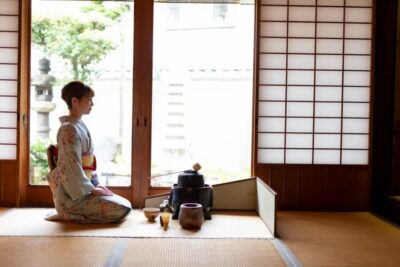
Browse the lists this tour appears in