
Reviewed · TEA CEREMONY EXPERIENCES
Tokyo Traditional Tea Ceremony with a Japanese Tea Master
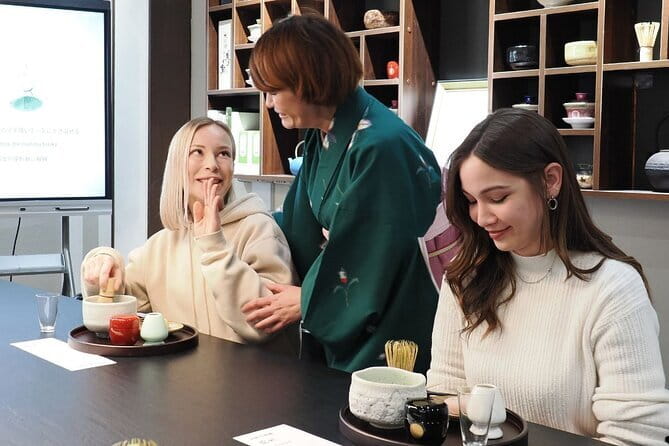
Tea here comes in four distinct acts. This one-hour Ocharu experience takes you from wakocha and cake to Gyokuro, hands-on matcha, and Genmaicha, giving you more than a quick ceremonial photo. I like the range of teas and the chance to prepare your own matcha with traditional tools. The main catch is that this is a relaxed tea lesson and tasting, not a formal geisha-style ceremony on tatami mats.
I also like the small-group format, capped at 12 people, because it leaves room for questions and personal guidance. The certificate and group photo are pleasant extras, though the English presentation may vary, so you should confirm language arrangements before booking if that matters to you.
In This Review
- Key points at a glance
- What this Tokyo tea experience really is
- Finding Ocharu across from Tokyo University
- First cup: wakocha with tea cake
- Gyokuro sencha and seasonal wagashi
- Making your own matcha
- Genmaicha brings the session home
- Why the small group matters
- Is $33.03 a fair price?
- Who should book this class?
- Practical details before you reserve
- Should you book it?
- FAQ
- Where does the tea experience take place?
- How long does the experience last?
- Where does the activity end?
- How many people can join the group?
- What teas are included?
- Is cake included?
- Do I make my own matcha?
- Is transportation included?
- Do I receive any souvenirs?
- What is the cancellation policy?
Key points at a glance
- Four distinct tea experiences: Taste wakocha, Gyokuro sencha, handmade matcha, and Genmaicha in one compact session.
- A hands-on matcha lesson: You whisk your own bowl using traditional tea tools rather than simply watching a demonstration.
- A thoughtful setting: Ocharu is across from the University of Tokyo in Bunkyo, a quieter and more local-feeling part of central Tokyo.
- Seasonal sweets included: Tea cake, wagashi, and a small sweet pairing help explain how Japanese tea is enjoyed.
- Small group, maximum 12: You have a better chance to ask questions than in a large bus tour.
- Useful keepsakes: You leave with a completion certificate and a group photograph.
What this Tokyo tea experience really is
The name may lead you to expect a highly formal Japanese tea ceremony. That is not quite what you get here. Ocharu offers a friendly introduction to Japanese tea culture, built around tasting, explanation, and participation.
That distinction matters. In a formal ceremony, the ritual itself can be the focus, with precise movements, quiet observation, traditional clothing, and strict etiquette. This activity is more accessible. You taste several kinds of tea, learn how brewing changes the flavor, and make matcha yourself.
I see that as a strength for many people. You get a clear introduction without spending several hours sitting still or trying to follow rules you do not understand. Families and first-time visitors can enjoy it without needing prior knowledge of tea customs.
The experience has earned a 4.8 rating from 40 reviews, with 95 percent recommending it. Praise centers on the educational format, the number of teas, the relaxed setting, and the friendly presentation. One important criticism is also clear: at least one person expected a formal ceremony and felt disappointed by the tasting-class format.
Book this for a practical cultural lesson. Do not book it if your main goal is to watch a geisha-like host perform a full traditional ceremony while you sit on the floor.
More Tea Ceremonies in Tokyo
- Tokyo: Traditional Tea Ceremony with a Tea Master
★ 5.0 · 528 reviews - Tea Ceremony Workshop in Tokyo by the Experienced Instrucor
★ 5.0 · 189 reviews - Asakusa: Kimono Tea Ceremony with Matcha and Sweet
★ 4.9 · 153 reviews
Finding Ocharu across from Tokyo University
The activity begins at OCHARU, at 6-chome-2-10 Hongo, Bunkyo City, Tokyo 113-0033. It is directly across from the University of Tokyo and near public transportation.
Bunkyo gives the visit a different feel from Tokyo’s main shopping districts. You are still in the city, but the setting around a major university makes a useful change of pace from Shibuya, Shinjuku, or Akihabara. If you have time before or after the tea class, the university area gives you a reason to linger rather than rushing straight back to a station.
The tour starts and ends at the same tea room. Travel to and from Ocharu is not included, so you need to plan your own route. Use the exact address when checking your route, and allow enough time to find the room. One serious complaint involved waiting outside the building for 30 minutes after the scheduled start, so arriving early and confirming the meeting instructions is sensible.
The mobile ticket makes the booking easy to carry. Confirmation is provided at booking, and the small group has a maximum of 12 people.
First cup: wakocha with tea cake
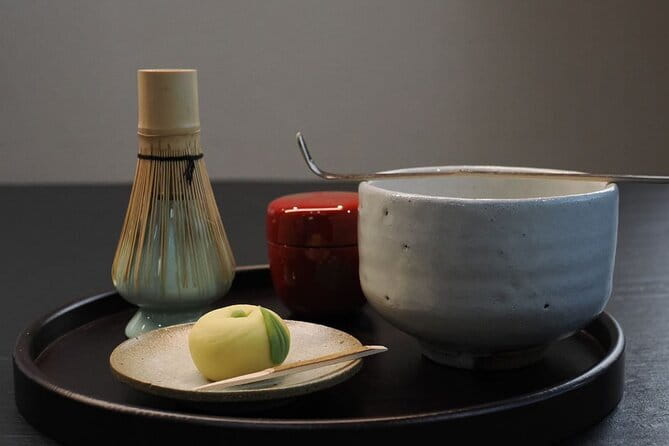
The session begins with wakocha, Japanese black tea from Shizuoka. This is a useful opening because it challenges the simple idea that Japanese tea means only green tea.
Wakocha can have fruity and floral notes, giving the first cup a softer, more fragrant character. It is served with a tea cake, so you begin with both flavor and context. The pairing helps you notice how a sweet changes the way tea tastes.
This first stage is also a gentle introduction to the rhythm of the class. You are not expected to know the correct way to hold every cup or respond to every gesture. The host explains what you are drinking and gives you time to taste it.
The cake is small, but it plays a real part in the lesson. Japanese tea culture often pays close attention to the relationship between bitterness, aroma, sweetness, and texture. Even a simple pairing can make that idea easier to understand.
Gyokuro sencha and seasonal wagashi
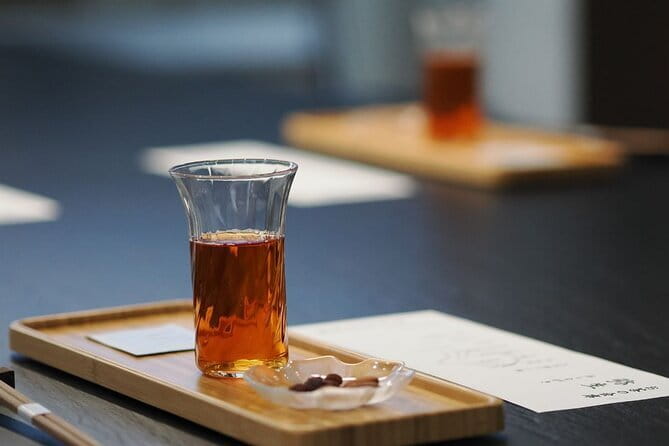
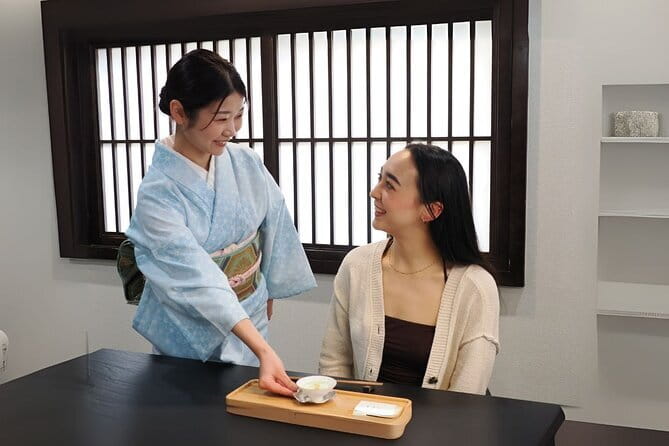
Next comes Gyokuro sencha, one of Japan’s highest-grade green teas. The tea master prepares it for you, allowing you to focus on its aroma, taste, and brewing method before trying your own matcha.
Gyokuro is especially useful in a tasting because brewing temperature matters. Green tea is not simply a matter of pouring boiling water over leaves. Heat and timing can change the balance of sweetness and bitterness, and this class gives you a chance to notice that difference.
You also taste the tea leaves after the Gyokuro has been brewed. That is an unusual detail and one of the more memorable parts of the experience. It turns the tea from something you merely drink into something you can examine and taste in another form.
The tea is paired with seasonal wagashi from Ougiya, a confectioner with generations of experience making Japanese sweets. Wagashi are designed to complement tea, not overpower it. The seasonal element also connects the food to the time of year, which is an important part of Japanese hospitality.
Portions are modest. Think of them as tasting portions rather than a meal. If you arrive hungry, eat beforehand.
A completely different kind of day out in Tokyo:
- Mt Fuji and Hakone 1-Day Bus Tour Return by Bullet Train
★ 5.0 · 26,383 reviews - 1-Day Tokyo Bus Tour
★ 5.0 · 14,250 reviews - Tokyo: TOKYO SKYTREE® Admission ticket
★ 4.5 · 11,192 reviews - Tokyo: teamLab Planets TOKYO Digital Art Museum Entry Ticket
★ 4.6 · 9,779 reviews
Making your own matcha
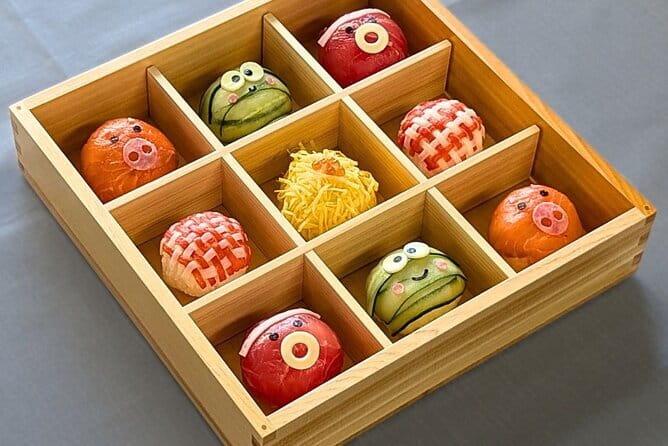
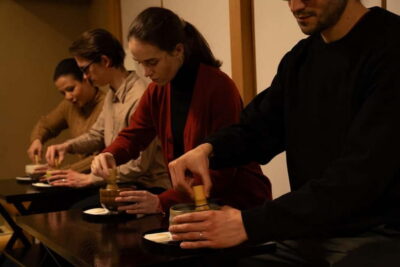
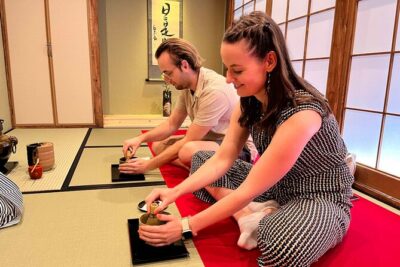
The hands-on matcha session is the heart of the activity. Instead of only watching the tea master, you use traditional tools to whisk your own matcha under guidance.
For many people, this is where the class becomes memorable. You learn that matcha is prepared differently from leaf tea. The powdered tea is whisked directly into water, creating a smooth, foamy drink with a stronger flavor and fuller texture.
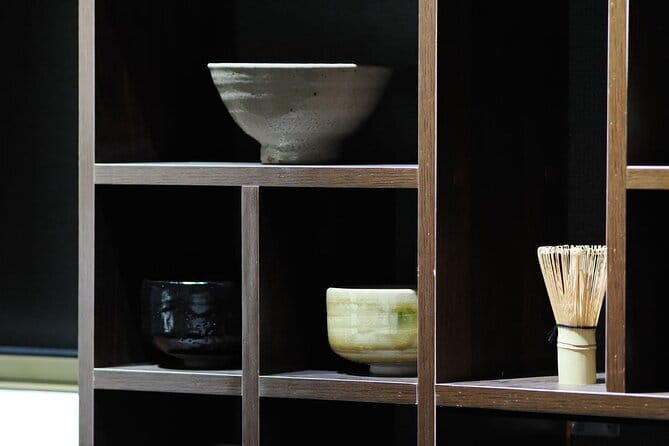
The practical lesson also makes the ceremony easier to understand. You begin to see why the bowl, whisk, scoop, water temperature, and movement all matter. Even if your first bowl is not perfect, the process gives you a better appreciation for the care involved.
This part suits families particularly well. Several people describe the activity as fun and educational, and the one-hour length keeps it from becoming tiring. You have enough time to learn the basic method without turning the class into a long workshop.
Still, keep your expectations realistic. You are learning the essentials, not becoming a tea master in 60 minutes. The appeal is the chance to try the method yourself and ask questions along the way.
Genmaicha brings the session home
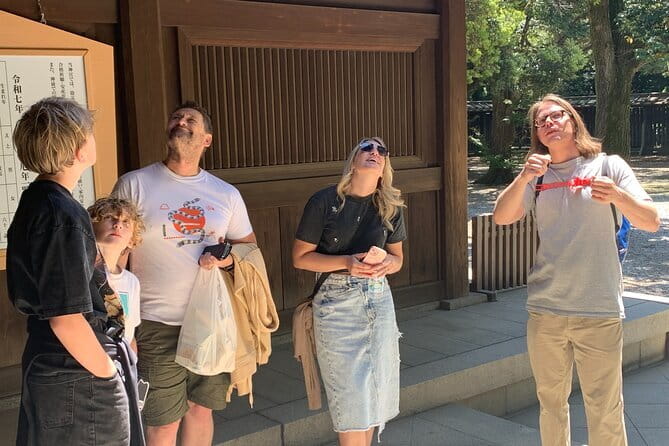
The final tea is Genmaicha, a blend of sencha and roasted rice from Niigata Prefecture. Its toasted rice flavor gives the class a more comforting finish than the sharper or more delicate teas earlier in the session.
Ending with Genmaicha creates a clear progression. You start with Japanese black tea, move through high-grade green tea, prepare matcha, and finish with a familiar roasted blend. The experience feels like a compact tour through different Japanese tea styles rather than one repeated cup.
This last serving is also a good moment to reflect on what changed from tea to tea. The ingredients, brewing method, water temperature, and food pairing all affect the result. You leave with a more useful understanding than you would get from simply ordering a green tea at a café.
The experience includes access to the tea ceremony room, all the listed tea tastings, the sweets, and the matcha-making session. Souvenirs and gifts beyond the certificate and group photo cost extra.
Why the small group matters
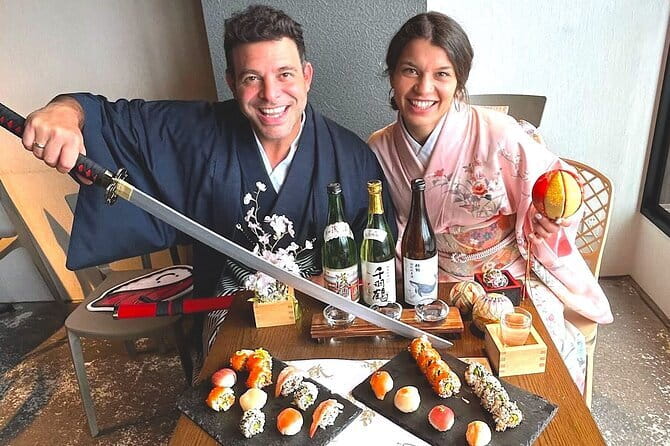
A maximum of 12 people is a good middle ground. The room should have enough people to feel social, but not so many that the activity becomes a presentation viewed from the back.
You have more chances to ask about tea varieties, brewing temperatures, Japanese customs, and the meaning behind the tools. That is especially helpful if you are curious about the difference between a formal tea ceremony and an everyday tea-drinking practice.
The intimate format has received strong praise. The tea master is described as clear and well-informed, and the relaxed setting helped families feel comfortable. One person called it a detailed and interesting hour, while another appreciated learning about five different Japanese teas.
There is one point to check before you commit. English communication may not always be equally strong for every session. One poor experience involved a guest who expected an English-speaking class but had to read information from a screen instead. If detailed spoken English is essential, contact the provider before booking and ask exactly how the session will be conducted.
Is $33.03 a fair price?
At about $33.03 per person, this is fairly priced for a one-hour cultural activity in Tokyo. You receive several tea tastings, sweets, a guided matcha-making lesson, access to a dedicated tea room, a certificate, and a group photograph.
The value comes from the range and the instruction, not the quantity of food. You are not paying for a full meal or a long formal performance. You are paying for a compact lesson that helps you understand what is in your cup.
The price makes the activity easy to add between sightseeing stops. It is short enough to fit into a busy Tokyo day, yet substantial enough to give you a real cultural takeaway. I would consider it better value for someone interested in Japanese food and customs than for someone seeking a purely visual show.
Because transport is not included, add your own train or taxi cost when working out the total. The same applies to extra souvenirs or custom requests, which are not part of the standard price.
Who should book this class?
I would recommend it to first-time visitors who want a simple introduction to Japanese tea. It also suits families, couples, and solo visitors who prefer doing something rather than only watching.
You will likely get the most from it if you enjoy trying new flavors and asking questions. The class offers enough variety to keep tea fans interested, while beginners can follow the basic explanation without feeling lost.
The one-hour format works well for children and for anyone with a packed schedule. The certificate and photograph add a light souvenir element, though neither should be the main reason you book.
I would not choose this activity if you want a full formal ceremony, a kimono or geisha-style presentation, or an extended session on a traditional floor setting. The strongest criticism comes from that mismatch in expectations, not from the tea tasting itself.
Practical details before you reserve
The activity is free to cancel up to 24 hours before the local start time for a full refund. Cancellations or changes made within 24 hours are not refunded or accepted.
The tour ends back at Ocharu. You need to arrange your own transportation to the starting point, and the activity is near public transportation. Confirmation is issued at booking, and the mobile ticket is useful for keeping the details on your phone.
Arrive with enough time to locate the room. Since one reported problem involved a long wait outside, double-check the address and meeting instructions rather than assuming the building will be obvious.
Should you book it?
Book this Ocharu session if you want to taste several Japanese teas, learn how brewing changes them, and whisk your own matcha in a friendly small group. The Shizuoka wakocha, Gyokuro leaves, seasonal wagashi, and Niigata Genmaicha give the hour real variety.
Skip it if the phrase tea ceremony means a highly formal performance to you. This is better understood as an intimate tea education experience with ceremonial elements. For the price, location, range of drinks, and hands-on lesson, it is a strong choice for visitors who want a practical connection to Japanese culture without giving up half a day.
FAQ
Where does the tea experience take place?
It takes place at OCHARU, at 6-chome-2-10 Hongo, Bunkyo City, Tokyo 113-0033, Japan, across from the University of Tokyo.
How long does the experience last?
The activity lasts approximately one hour.
Where does the activity end?
It ends back at the Ocharu meeting point.
How many people can join the group?
The group has a maximum of 12 participants.
What teas are included?
The experience includes wakocha, Gyokuro sencha, matcha that you prepare yourself, and Genmaicha. The session may also introduce additional Japanese teas.
Is cake included?
Yes. The experience begins with welcome tea and cake. Seasonal wagashi is also served with the Gyokuro tasting.
Do I make my own matcha?
Yes. You whisk your own matcha with traditional tools under the tea master’s guidance.
Is transportation included?
No. Travel to and from the Ocharu tea room is not included.
Do I receive any souvenirs?
You receive a certificate of completion and a group photo. Additional souvenirs and gifts are not included.
What is the cancellation policy?
You can cancel at least 24 hours before the local start time for a full refund. Cancellations or changes made less than 24 hours before the start are not refunded.
Just added around Tokyo
- Tokyo 6hr Instagram Highlights Private Tour with Licensed Guide★ 5.0 · 38 reviews
- Tokyo Small Group Tour with Guide★ 4.5 · 38 reviews
- Tokyo Sumo Experience with Live Show & Audience Challenge★ 5.0 · 38 reviews
- Japanese Food Cooking Class in Asakusa, Tokyo★ 5.0 · 39 reviews
- Very popular in Harajuku♡Animal petting zoo★ 4.6 · 39 reviews
- Ramen Making from Scratch with Tokyo Mom(Vegan Option Available)★ 5.0 · 39 reviews
- Tokyo JDM Night: 600hp C63s AMG Edition 1 (Private)★ 4.9 · 39 reviews
- Tokyo: Kimono Rental inside Shinjuku Gyoen National Garden★ 4.9 · 39 reviews
Tea Ceremony Experiences, compared.
Tea Ceremony in a Traditional Tea House in Kiyomizu
Read our review →
Browse the lists this tour appears in