Reviewed · GUIDED
Tour in Kyoto with a Goverment Certified Tour Guide
Kyoto rewards a well-planned day. This tour brings together Fushimi Inari, Kiyomizu-dera, Gion, Arashiyama, and several major temples, giving you a broad first look at the city in six to eight hours. I like the chance to adjust the day around your priorities, and I like that guides such as Andrea and Roberto have received strong praise for their patience, cultural explanations, and help with practical tasks such as buying train tickets.
The two biggest concerns are time and organization. Nine stops spread across Kyoto is an ambitious plan, especially in busy seasons, and several customers report late starts, unclear meeting points, changed pickup arrangements, or groups larger than expected. At $110 per person, the tour can be good value when the guide arrives on time and builds a sensible route, but you should confirm the details carefully before you commit.
In This Review
- Key Points to Know Before You Book
- What This Kyoto Day Is Trying to Do
- Fushimi Inari and Kiyomizu-dera: Kyoto’s Strongest Opening
- Nijo Castle: Samurai Power in the Middle of the City
- Gion and Nishiki Market: Old Streets and Local Food
- Kinkaku-ji: The Golden Pavilion at a Crowded Hour
- Ginkaku-ji: The Silver Pavilion That Is Not Silver
- Arashiyama and Tenryu-ji: Bamboo, Zen, and a Short Clock
- The Guide Can Make or Break the Day
- Price, Transport, and the Real Cost
- Who Should Choose This Experience?
- Should You Book This Kyoto Tour?
- FAQ
- How long does the Kyoto tour last?
- What sights are included in the planned route?
- Is hotel pickup available?
- Is this a private tour?
- Are transportation costs included?
- Are food and drinks included?
- Which admission fees are extra?
- Can the tour be customized?
- What is the cancellation policy?
Key Points to Know Before You Book
- Nine famous Kyoto sights in one day: The plan covers Fushimi Inari, Kiyomizu-dera, Nijo Castle, Gion, Nishiki Market, Kinkaku-ji, Ginkaku-ji, Arashiyama, and Tenryu-ji.
- The schedule is highly ambitious: Each stop is allotted about an hour, with only 30 minutes at Arashiyama and Tenryu-ji.
- A flexible private tour in theory: You can customize the day, but some solo and couple bookings may be combined with another party.
- Public transport costs are extra: Allow about $5 to $8 for the guide’s transport, plus your own fares, food, and personal spending.
- Guide quality can be excellent: Andrea and Roberto receive especially warm praise for their explanations, patience, and ability to tailor the day.
- Communication is the main risk: Several low ratings describe no-shows, last-minute changes, late starts, and unclear meeting instructions.
What This Kyoto Day Is Trying to Do
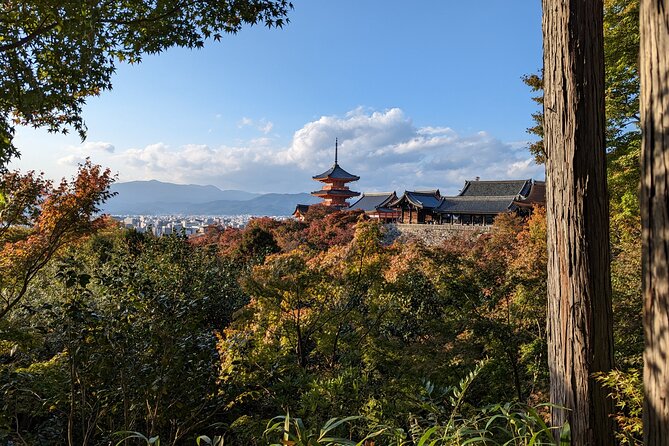
This is not a slow, single-neighborhood walk. It is a grand sweep across Kyoto, linking Shinto shrines, Buddhist temples, castle grounds, old streets, food stalls, and the bamboo of Arashiyama.
That breadth is the main attraction. If you have only one day in Kyoto, the itinerary gives you a way to see many of the city’s headline sights without having to design every train and bus connection yourself. A good guide also adds context that you might miss when moving from one site to the next, including Shinto customs, Buddhist traditions, samurai-era politics, geisha culture, and local legends.
The tradeoff is obvious. You cannot properly explore nine major places in six to eight hours. Crowds, ticket lines, weather, walking speed, and public transport can quickly eat into the schedule. I would treat the advertised route as a menu of possibilities, not a guarantee that every stop will receive a full hour.
The experience is described as private, but the small print says solo visitors and couples may be asked to join another solo visitor or couple. Several complaints describe larger groups being combined, in some cases far beyond a small private party. Ask directly about the expected group size before the day begins.
A few more Kyoto experiences worth weighing up
- PERFECT KYOTO 1-Day Bus Tour
★ 5.0 · 13,518 reviews - Kyoto: Fushimi Inari, Kinkakuji, Bamboo Grove 1 Day Bus Tour
★ 4.8 · 4,316 reviews - Kyoto: Tea Ceremony in a Traditional Tea House in Kiyomizu
★ 4.9 · 3,519 reviews
Fushimi Inari and Kiyomizu-dera: Kyoto’s Strongest Opening
Fushimi Inari-taisha is a natural first stop because its rows of orange torii gates create one of Kyoto’s most recognizable scenes. The shrine honors Inari, the Shinto deity associated with rice. You can expect a walk through the shrine grounds and an explanation of the religious meaning behind the gates, rather than simply a quick photograph at the entrance.
One hour is enough for a taste, but not for a long climb through the entire shrine complex. If you want to walk farther beneath the gates, tell your guide early. That choice may mean dropping a later stop, which is often a sensible trade.
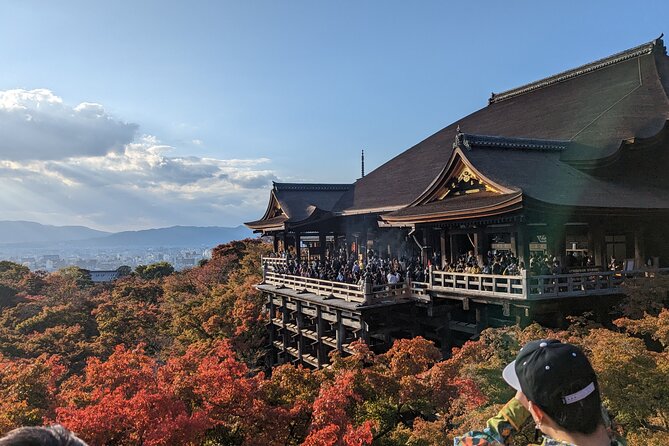
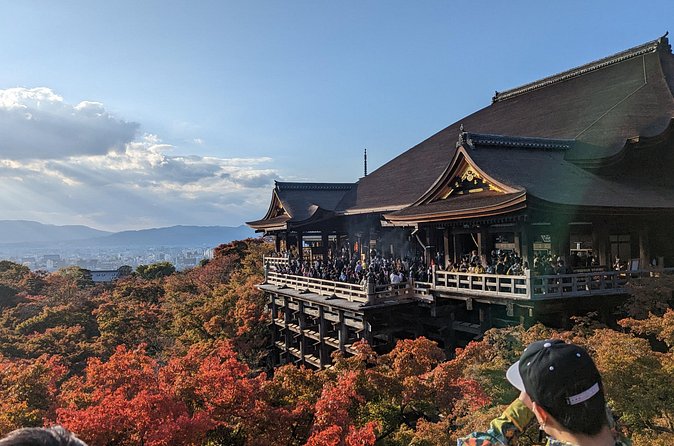
Kiyomizu-dera brings a different mood. This Buddhist temple sits on the hills of eastern Kyoto and is known for its striking wooden construction and elevated views. The surrounding Higashiyama area is full of narrow lanes and traditional buildings, so this stop can feel like more than a temple visit.
Again, one hour passes quickly. Crowds can make the approach slow, and the hillside setting means you should be ready for walking. Comfortable shoes matter here, especially if your day also includes Arashiyama and several other temple grounds.
Nijo Castle: Samurai Power in the Middle of the City
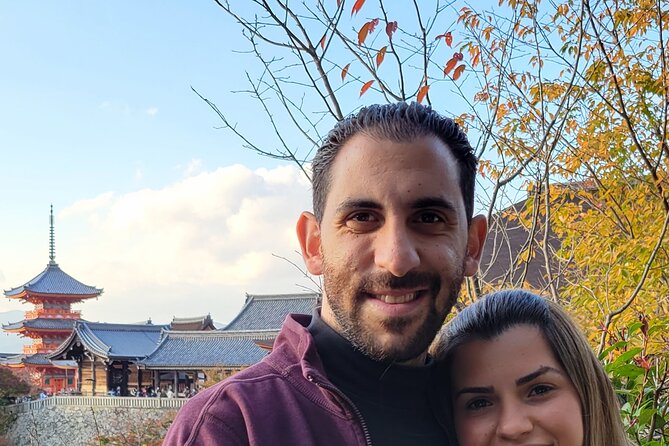
Nijo Castle adds political history to a day otherwise weighted toward religion and scenery. Built in the seventeenth century, it served as a residence and symbol of power for the shoguns. Its rooms and grounds help explain how authority worked in Japan during the samurai period.
The castle is a useful contrast with Fushimi Inari and Kiyomizu-dera. Instead of focusing on worship, you are looking at power, ceremony, architecture, and government.
The plan allows about an hour. That is enough for a focused visit, but not a leisurely examination of every room and garden. Admission is not included at this stop, so confirm the current cost with the operator or at the entrance. Since the tour already includes several paid temple entries, these extra charges can affect the day’s real price.
Gion and Nishiki Market: Old Streets and Local Food
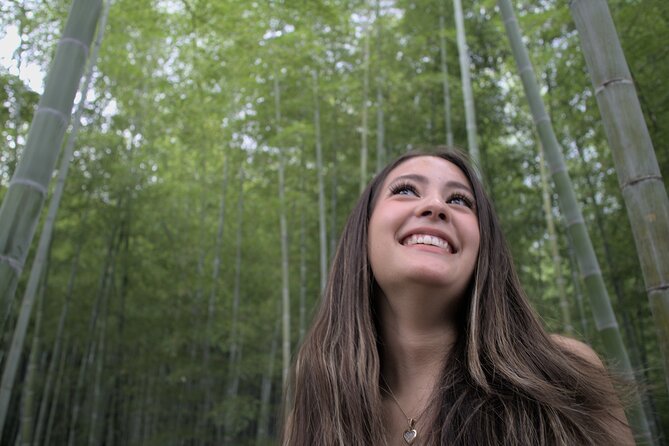
Gion is Kyoto’s best-known traditional entertainment district, with old wooden buildings, narrow lanes, and long associations with geisha culture. A guide can help you understand the difference between seeing a historic district and treating it like a stage set. Keep your camera respectful, follow local signs, and remember that residential lanes are still working neighborhoods.
The one-hour visit may include a walk through the district and explanations of its customs and architecture. The description also promises stories about geisha and samurai, though the exact depth will depend on the guide and the time available.
Nishiki Market shifts the focus to food and everyday life. The market stretches across several blocks and is known for local produce, prepared foods, traditional goods, and small tastings. Food is not included, so carry some yen or a payment method accepted by the vendors if you want to sample something.
This stop works best when you treat it as a chance to choose one or two things, not as a full meal with unlimited browsing. Crowds can make the narrow market lane slow. If you have food allergies or strong dietary needs, ask questions before buying, since the tour does not promise a special food arrangement.
A completely different kind of day out in Kyoto:
- Kyoto Geisha Walking Tour: Gion District & Hidden Gems
★ 4.7 · 3,273 reviews - Kyoto: Tea Ceremony Ju-An at Jotokuji Temple
★ 4.9 · 3,207 reviews - Kyoto: Gion Magical Night Walking Tour with Geisha Trivia
★ 4.9 · 2,393 reviews - Kyoto: 45-Minute Tea Ceremony Lesson Experience
★ 4.3 · 2,378 reviews
Kinkaku-ji: The Golden Pavilion at a Crowded Hour
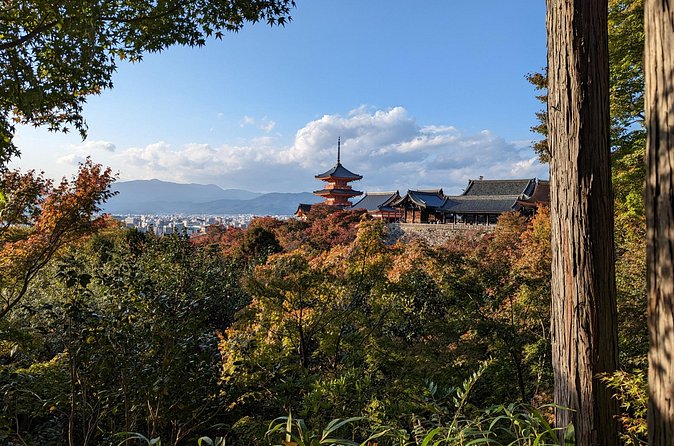
Kinkaku-ji, the Golden Pavilion, is one of Kyoto’s great visual stops. The gold-covered building reflected in the pond makes an immediate impression, and the surrounding grounds provide a carefully arranged garden setting.
The difficulty is that the sight is famous for a reason. Large numbers of people can gather around the best viewing area, making the one-hour allowance feel short. Your guide may help you understand the site and keep the visit moving, but no guide can remove the crowd.
I would not expect a quiet meditation here. Think of Kinkaku-ji as a powerful visual stop and a chance to see one of Kyoto’s most famous buildings. If you want more time for gardens and details, ask which later stop can be shortened.
Ginkaku-ji: The Silver Pavilion That Is Not Silver
Ginkaku-ji is commonly called the Silver Pavilion, but it was never covered in silver. The name comes from an old plan that was not completed, while the temple’s real appeal comes from its Zen gardens, restrained design, and calm setting.
This is one of the stops where a guide’s explanation can add real value. Without context, the building may seem less dramatic than Kinkaku-ji. With context, the contrast becomes the point: one temple is famous for gold and visual display, while the other reflects a quieter aesthetic.
The stated admission cost is $8 per person and is not included. The stop also has a one-hour allocation, but the full route may force a shorter visit. If quiet gardens matter more to you than collecting famous names, consider asking for extra time here and removing one of the more distant stops.
Arashiyama and Tenryu-ji: Bamboo, Zen, and a Short Clock
Arashiyama is often the emotional high point of a Kyoto day. The bamboo forest offers a narrow passage beneath tall green stalks, and the area around it has a very different feel from central Kyoto.
The schedule allows only 30 minutes for Arashiyama Forest. That is enough for a brief walk and photographs, but it may not satisfy you if the bamboo is one of your main reasons for booking. The description also refers to a possible rickshaw ride and monkey park experience, but those are not clearly included in the stated itinerary or price. Treat them as possible additions only after confirming cost and timing.
Tenryu-ji, also in Arashiyama, is a major Zen temple with an important garden and long religious history. The plan gives it another 30 minutes, and admission is not included. In practice, reaching Arashiyama, walking through the forest, entering the temple, and returning to transport can take much of the available time.
One customer specifically praised an Arashiyama mountain and monkey park visit. That suggests some guides may adapt the route well, but it should not be assumed as part of every booking. Ask what your guide can realistically include.
The Guide Can Make or Break the Day
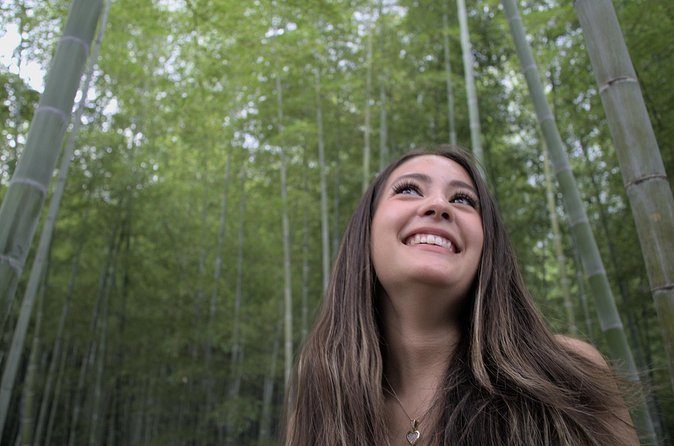
The best part of this experience is the human element. Andrea is praised for being patient, friendly, attentive to disabilities, and careful with explanations. One customer described her as helping create a day that fit their needs. Roberto is also praised for guiding visitors for more than six hours, explaining religion and mythology, and taking them to places they especially wanted to see.
Those comments point to the tour’s strongest use: a flexible day with a guide who can adjust the plan. You can ask for more temples, more food, more cultural background, or practical assistance. Calligraphy and kimono dressing are included in the promotional description, but the supplied itinerary does not assign them a stop or confirm them as included for every booking. Confirm these activities before relying on them.
The less encouraging side is organization. Several customers waited for guides who did not arrive, could not reach the operator, or received vague instructions such as meeting at Kyoto Station without a clear landmark. Other bookings started one to three hours late or changed from a private tour into a shared group.
The operator has responded to some complaints by saying that contact was attempted through the booking platform, that certain pickup locations were outside the service area, or that refunds were processed. That makes the meeting arrangement especially important. Get the exact station exit, meeting landmark, guide name, phone or messaging contact, and pickup boundary in writing before the day.
Price, Transport, and the Real Cost
The advertised price is $110 per person. For a genuinely private six to eight-hour day with a capable guide, that can be fair, particularly if you value help with navigation and cultural interpretation.
It becomes weaker value if your group is merged, the start is delayed, or only three or four of the nine sights are reached. You also pay additional costs for transportation, personal purchases, and food. The guide’s transportation fee is listed at about $5 to $8, and your own fares are separate.
Admission is another variable. Fushimi Inari, Kiyomizu-dera, Gion, Nishiki Market, Kinkaku-ji, and the Arashiyama Forest are shown with free admission in the plan. Nijo Castle, Ginkaku-ji, and Tenryu-ji are shown with admission not included, and Ginkaku-ji is specifically priced at $8 per person.
For the best value, decide what you want most before meeting the guide. A short list of three or four priorities is more useful than trying to force every stop into one day.
Who Should Choose This Experience?
I would consider this tour if you have one open day in Kyoto, prefer company on public transport, and want a guide to explain customs and history as you go. It may also suit families or visitors who want help adapting the day around mobility needs, provided those needs are discussed in advance.
It is less suitable if you require a precise private itinerary, guaranteed hotel pickup, a quiet small-group experience, or a strict start time. It is also a poor match if you want to explore each temple slowly. Kyoto is too spread out for that level of detail in one day.
The overall rating is 3.5 from 117 ratings, which reflects the sharp divide in the experience. High ratings praise the guides, flexibility, explanations, and memorable days. Low ratings focus less on the sights than on missed pickups, weak communication, cancellations, and changed group arrangements.
Should You Book This Kyoto Tour?
Book it only after confirming the operational details in writing. Ask who your guide is, where exactly you will meet, whether pickup is available at your hotel, how many people will join, and which of the nine stops can realistically fit your date and season.
If you receive clear answers and your main goal is a broad introduction to Kyoto, the tour can be worthwhile. Guides such as Andrea and Roberto appear capable of turning a crowded day into something personal and useful.
If the operator gives vague replies, changes the meeting point late, or promises all nine sights without discussing timing, I would choose another plan. Kyoto’s major sites are easy to visit independently with preparation, and a guide is worth paying for only when the organization is as solid as the cultural explanations.
FAQ
How long does the Kyoto tour last?
The experience lasts approximately six to eight hours.
What sights are included in the planned route?
The route includes Fushimi Inari-taisha Shrine, Kiyomizu-dera Temple, Nijo Castle, Gion, Nishiki Market, Kinkaku-ji Temple, Ginkaku-ji Temple, Arashiyama Forest, and Tenryu-ji Temple.
Is hotel pickup available?
Pickup is offered, but the exact service area must be confirmed. The provider has stated that pickup is within Kyoto and not from Osaka’s Tempozan area.
Is this a private tour?
It is described as a private activity for your group, but solo visitors and couples may be asked to join another solo visitor or couple. Confirm the expected group size before booking.
Are transportation costs included?
No. Transportation fees are separate. The guide’s transportation cost is listed at about $5 to $8, and your own transportation fares are also extra.
Are food and drinks included?
No. Food and drinks are not included, and personal expenses are separate.
Which admission fees are extra?
Ginkaku-ji has a listed admission cost of $8 per person. Nijo Castle and Tenryu-ji are also shown with admission not included in the stop details.
Can the tour be customized?
Yes. The tour can be customized around your expectations and the time available, although the number of distant sights that fit into one day depends on timing, crowds, and transport.
What is the cancellation policy?
You can cancel at least 24 hours before the start time for a full refund. Cancellations or changes made less than 24 hours before the experience are not refunded or accepted. If the minimum number of participants is not met and the provider cancels, you should be offered another date or experience, or a full refund.
Just added around Kyoto
- Kyoto: Gion Night Walking Tour with Geisha Insight★ 5.0 · 39 reviews
- Kyoto: Private Customizable Day Trip by Car★ 5.0 · 38 reviews
- Kyoto: Full Day Bike Tour★ 4.9 · 39 reviews
- Private Japanese Calligraphy in Kyoto – Learn Shodō with a Master★ 5.0 · 39 reviews
- Kyoto: Gion Evening Walk with Hidden Gems, Geisha & Sake★ 5.0 · 41 reviews
- Experience a tea ceremony in an authentic tearoom, in Kyoto!★ 4.5 · 41 reviews
- Kyoto Private Photo Shoot & Tour by SnapKyoto★ 5.0 · 41 reviews
- The Way of Tea: Kyoto Crafts, Hidden Temples & Wabi-Sabi Walk★ 5.0 · 41 reviews
Guided, compared.
Tokyo 6hr Private Tour with Government-Licensed Guide
Read our review →
Shinjuku Local Bar and Izakaya Guided Walking Tour
Read our review →
Private City Highlights Tour with Local Guide
Read our review →
Kyoto Early Morning Tour with English-Speaking Guide
Read our review →
Tokyo 4hr Private Tour with Government-Licensed Guide
Read our review →
Kyoto 6hr Private Tour with Government-Licensed Guide
Read our review →