
Reviewed · HISTORICAL TOURS
Walking Through History: Hiroshima’s Path to Peace
Hiroshima asks you to slow down. This two-hour walking tour turns the Peace Memorial Park into a readable story, linking memorials, survivor accounts, and the city’s path from destruction to renewal. I like the small groups, capped at 10 people, and I also like the chance to ask questions as you move from one site to the next. The main drawback is the tight schedule: two hours covers a lot, so the museum portion is brief rather than a full museum visit.
The tour costs $23 per person, a fair price for a guided route through places that can feel scattered and difficult to interpret alone. Guides such as Ghani, Sheraz, Shiraz, Wajid, and Cva have been praised for clear explanations, patience, and a respectful approach. You should still expect an emotional morning or afternoon, plenty of walking, and outdoor exposure in Hiroshima’s heat or rain.
In This Review
- Key Points at a Glance
- Why This Two-Hour Walk Works
- Starting at the Cenotaph Near the Atomic Bomb Dome
- The Atomic Bomb Dome and the Shape of Memory
- The Clock Tower, Peace Bell, and Korean Victims Cenotaph
- Sadako Sasaki and the Children’s Peace Monument
- The National Peace Memorial Hall and Individual Stories
- The Victims’ Cenotaph and the Flame of Peace
- A Short but Useful Visit to the Peace Memorial Museum
- The Prayer Fountain, Gates of Peace, and the Final Message
- What the Guide Adds for $23
- Practical Advice Before You Go
- Who Should Book This Hiroshima Walk?
- Should You Book Walking Through History?
- FAQ
- How long is the Hiroshima peace walking tour?
- How much does the experience cost?
- Where does the tour start?
- Where does the tour finish?
- Which languages are available?
- What places are included?
- Is the Peace Memorial Museum included?
- Is the tour wheelchair accessible?
- What should I bring?
- Can I cancel for a refund?
Key Points at a Glance
- Start beside the Cenotaph: Meet at the Atomic Bomb Dome near a cenotaph erected by former employees and executives of the Hiroshima Prefecture Chiho Lumber Company.
- See more than the famous dome: The route includes the Peace Bell, Korean Atomic Bomb Victims Cenotaph, Children’s Peace Monument, Prayer Fountain, Flame of Peace, and Gates of Peace.
- Hear the human stories: Survivor accounts, the story of Sadako Sasaki, and details about individual memorials give meaning to the stone and bronze.
- A PhD scholar leads the walk: The guide brings historical context, answers questions, and discusses Hiroshima’s recovery and modern city life.
- Keep the group personal: With no more than 10 participants, you have a better chance to hear clearly and ask about difficult subjects.
- Use it as an orientation: Several people found it especially useful before spending more time inside the Peace Memorial Museum.
Why This Two-Hour Walk Works
Hiroshima’s Peace Memorial Park is not a single monument with one simple message. It is a collection of memorials, fountains, bells, ruins, halls, and public spaces, each built for a different purpose. Without context, you can walk past an important site and see only another plaque.
This tour gives you a route and a storyline. You begin with the physical remains of the bombing, then move through memorials for victims, survivors, children, foreign victims, and those who helped the injured. The final stretch turns toward peace and reconstruction.
I especially value the guide-led format because the subject is easy to reduce to dates and military decisions. The best moments come when the guide explains how an individual monument connects to a person, a community, or a lasting idea. Guides Ghani and Sheraz, in particular, have been praised for answering detailed questions while keeping the mood respectful and the pace comfortable.
The advertised duration is two hours. That is enough for a strong introduction, but not enough for a slow examination of every display. Plan to return to the museum or other memorial sites afterward if you want more time.
More History Tours in Hiroshima
- Hiroshima Historical Walking Tour – Why A-Bomb was Dropped
★ 4.8 · 893 reviews - Hiroshima Peace (Heiwa) Walking Tour at World Heritage Sites
★ 5.0 · 872 reviews - Miyajima Half-day Trip Historical Walking Tour
★ 5.0 · 284 reviews
Starting at the Cenotaph Near the Atomic Bomb Dome
The meeting point is in front of the Atomic Bomb Dome, beside the cenotaph erected by volunteers who had worked for the Hiroshima Prefecture Chiho Lumber Company. This is a useful starting point because it places you among the park’s smaller memorials before the route reaches its most famous structure.
The cenotaph also sets the tone. Hiroshima’s memorials are not only about a single event or a single group. They remember workers, children, Korean victims, students, families, and people whose names may not be familiar to you.
Your guide can help you get your bearings before the walk begins. This matters because the park contains several similar-looking memorial spaces, and the meaning of each one is easy to miss when you are moving independently.
The Atomic Bomb Dome and the Shape of Memory
The Atomic Bomb Dome is the visual anchor of the tour. Its damaged walls and exposed frame make the bombing’s force visible in a way that photographs cannot fully convey. It is also a UNESCO World Heritage Site, so you are looking at both a memorial and a protected piece of global heritage.
The tour includes about 20 minutes of guided explanation here. That is enough time to understand why the building survived in its altered form and why the city chose to preserve it rather than remove every trace of destruction.
The dome is powerful, but it can also become a quick photo stop. A guide helps prevent that. You receive historical background before moving on, which gives the structure more meaning than its familiar outline alone.
One practical point: the dome is outdoors, and much of the route remains outside. Wear shoes that can handle steady walking, and bring water, sunscreen, and a hat. Rain can make the experience harder, but one group completed the walk in torrential rain and still found the guide’s explanations worthwhile.
The Clock Tower, Peace Bell, and Korean Victims Cenotaph
The Clock Tower of Peace receives about 10 minutes of guided attention. It is one of the smaller stops, but it helps broaden the park’s message beyond the dome and museum. Your guide explains how the park uses sound, time, and repeated acts of remembrance to express the wish for peace.
At the Bell of Peace, you can ring the bell as a sign of hope and world peace. This is one of the tour’s more active moments. Much of the walk asks you to listen and observe, while the bell lets you take part in a simple ritual.
The Korean Atomic Bomb Victims Cenotaph adds an important layer. The bombing affected people from across the region, including Koreans living and working in Hiroshima. This stop gives the tour a wider human frame and reminds you that wartime history rarely fits within modern national borders.
The route does not treat every memorial as interchangeable. Each stop has its own story, and the guide’s role is to explain why it was built and whom it remembers.
More Walking Tours in Hiroshima
- Hiroshima City 4hr Private Walking Tour with Licensed Guide
★ 5.0 · 437 reviews - Hiroshima Walking Tour Why A Bomb was dropped to Hiroshima
★ 5.0 · 347 reviews - Hiroshima: History of Hiroshima Group Walking Tour
★ 4.8 · 266 reviews - Hiroshima: Food and Culture Guided Walking Tour with Dinner
★ 4.9 · 212 reviews
Sadako Sasaki and the Children’s Peace Monument
The Children’s Peace Monument is among the most recognizable places in the park. It is closely linked with Sadako Sasaki and the thousand paper cranes, a story that has become a worldwide symbol of children affected by war and illness.
You will hear how Sadako’s story became connected with paper cranes and how the monument carries that message today. The subject can be especially moving for families and younger visitors, though it is not presented as a light or easy tale.
This stop also shows how Hiroshima’s peace message grew beyond the immediate postwar years. The park is not only preserving the past. It is asking later generations to remember, question, and work toward a different future.
Give yourself time here if the group allows it. The 10-minute stop is enough for an explanation, but the monument’s message may stay with you longer than the schedule suggests.
The National Peace Memorial Hall and Individual Stories
The Hiroshima National Peace Memorial Hall receives about 20 minutes, making it one of the longer stops on the route. It offers a quieter setting for remembrance and helps shift your attention from public symbols to personal loss.
This is where a well-prepared guide makes a real difference. Guides have shared individual survivor stories and personal accounts that bring the events closer to ordinary life. You may hear details that do not appear obvious from the buildings and monuments around you.
The guide also places the bombing in the larger setting of the Second World War and explains the events leading up to it. That context is useful, but the presentation is not limited to military history. The focus returns to civilians, families, survivors, and the city’s long recovery.
Several people have found that the guide can separate established facts from uncertain claims. That is valuable at a site where myths and simplified explanations often circulate.
The Victims’ Cenotaph and the Flame of Peace
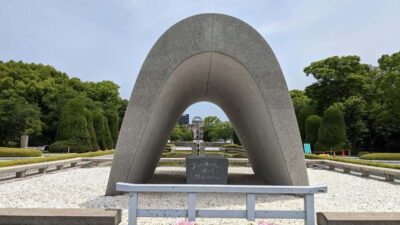
The Hiroshima Victims Memorial Cenotaph is the central place to pay tribute to those who died. Its curved form and the names associated with the memorial make it a solemn pause in the route.
You may find this part of the walk quiet and reflective rather than information-heavy. The guide explains the meaning of the cenotaph, then gives you room to take in the setting. Respect the atmosphere here. This is not a normal sightseeing stop, and photography should never take priority over the memorial’s purpose.
The Flame of Peace adds another layer to the park’s visual language. It represents the hope that nuclear weapons will no longer threaten the world. The flame’s presence links remembrance with a continuing appeal for disarmament and peace.
Together, these sites keep the tour from becoming only a history lecture. You are asked to remember real people while also considering the wider consequences of nuclear war.
A Short but Useful Visit to the Peace Memorial Museum
The Peace Memorial Museum is included in the route, with about 10 minutes set aside for guided attention. This is the tour’s biggest limitation for visitors who want a full museum experience.
Ten minutes cannot cover the exhibits, artifacts, photographs, and survivor testimonies in detail. Think of this stop as an introduction that helps you understand what you are seeing and prepares you for a longer independent visit.
Some people choose to visit the museum before the walking tour. That can work well because the exhibits give you a basic framework, and the guide then adds meaning to the outdoor memorials. Others prefer the tour first, using it as a warm-up before entering the museum.
I would not treat the tour and museum as duplicates. The museum gives you displays and artifacts. The walk connects those materials to the park’s monuments, public spaces, and individual stories. If your schedule allows, do both.
The Prayer Fountain, Gates of Peace, and the Final Message
The Prayer Fountain is a quieter stop on the route. Its purpose connects with the suffering of people who were left desperately thirsty after the bombing. Your guide explains the memorial’s symbolism and its place within the park.
The Gates of Peace mark the end of the walk. You pass through a series of gates carrying messages about peace, making this a fitting finish after the heavier memorials earlier in the route.
The final section also turns toward Hiroshima’s reconstruction and modernization. You learn how the city recovered and how its traditions, food, and contemporary identity continue alongside the memorial park.
That balance matters. Hiroshima is not only a place of wartime remembrance. It is also a living city. The tour gives you a starting point for noticing its modern character after you leave the park.
What the Guide Adds for $23
At $23, the value depends on how much interpretation you want. If you only need to see the Atomic Bomb Dome and take a few photos, you can visit the park without a tour. If you want to understand the connection among its memorials, the price is modest.
The strongest part of the experience is the guide’s ability to answer questions. People have praised Ghani and Sheraz for detailed historical explanations, an easy pace, and a willingness to discuss Japanese culture and Hiroshima life beyond the bombing.
The small group helps. A maximum of 10 participants is far more manageable than a large procession. You can hear the guide, ask follow-up questions, and take photographs without feeling rushed at every stop.
The guides also sometimes offer suggestions for local food and other things to do in the city. Those recommendations are a useful bonus, especially if Hiroshima is your first stop in the Chugoku Region.
The language choices are English, Urdu, and Hindi. Live interpretation in one of these languages is included, so check the available starting time when booking.
Practical Advice Before You Go
Wear comfortable shoes. The route has many outdoor stops, and you will be standing and walking for much of the two hours.
Bring:
- Water
- Sunscreen
- A hat
- Weather-appropriate clothing
- A camera, if you want one
Smoking is not allowed. People with heart problems should not choose this activity. The tour is wheelchair accessible, but the experience still includes outdoor movement between several memorials, so consider your personal comfort with the pace and weather.
Hotel pickup, hotel drop-off, meals, beverages, and personal expenses are not included. You meet at the Atomic Bomb Dome, in front of the cenotaph near the start point, and finish at the Gates of Peace.
Free cancellation is available up to 24 hours in advance for a full refund. You can also reserve now and pay later, which helps if your Hiroshima schedule is still changing.
Who Should Book This Hiroshima Walk?
I would recommend it to first-time visitors who want a clear introduction before exploring the park and museum on their own. It is also a strong choice for families, history students, and anyone who prefers asking questions instead of reading every plaque alone.
The tour suits you if you want historical context, personal stories, and a respectful discussion of the bombing and its aftermath. It is especially useful if you have only one day in Hiroshima and want to make your time in the Peace Memorial Park count.
You may want a different plan if you prefer to spend hours inside the museum, move at your own pace, or avoid emotionally difficult subjects. Two hours gives you a thoughtful overview, not an exhaustive study.
Should You Book Walking Through History?
Yes, if you want more than a quick look at the Atomic Bomb Dome. The combination of a PhD-led explanation, small group size, personal stories, and carefully linked memorials makes $23 good value.
Book it early in your Hiroshima visit if possible. Use the walk to understand the park, then return to the museum or memorials that deserve more time. If you already know the history well, the tour can still be worthwhile for the local details, survivor accounts, and questions you can put to the guide.
This is a serious experience, but it is not without hope. You leave with a clearer understanding of what happened, why Hiroshima remembers it in so many different ways, and how the city chose peace as part of its future.
FAQ
How long is the Hiroshima peace walking tour?
The tour lasts two hours.
How much does the experience cost?
The price is $23 per person.
Where does the tour start?
You meet at the Atomic Bomb Dome, in front of the cenotaph erected by volunteers of the former Hiroshima Prefecture Chiho Lumber Company.
Where does the tour finish?
The walk finishes at the Gates of Peace.
Which languages are available?
Live tour guidance is available in English, Urdu, and Hindi.
What places are included?
The route includes the Atomic Bomb Dome, Clock Tower of Peace, Peace Bell, Korean Atomic Bomb Victims Cenotaph, Children’s Peace Monument, Hiroshima National Peace Memorial Hall, Hiroshima Victims Memorial Cenotaph, Peace Memorial Museum, Prayer Fountain, Flame of Peace, Gates of Peace, Dr. Marcel Junod Memorial, and Norman Cousins Memorial Monument.
Is the Peace Memorial Museum included?
Yes. The museum is included as part of the guided route, with about 10 minutes scheduled for that stop.
Is the tour wheelchair accessible?
Yes, the activity is described as wheelchair accessible.
What should I bring?
Bring comfortable shoes, a hat, a camera, sunscreen, and water. Wear clothing suitable for the weather.
Can I cancel for a refund?
Yes. You can cancel up to 24 hours in advance for a full refund.
Just added around Hiroshima
- Hiroshima & Miyajima: Private Full-Day Tour with a Local Guide★ 5.0 · 39 reviews
- Hiroshima and Miyajima 1 Day Walking Tour★ 5.0 · 43 reviews
- Hiroshima History Tour : A-Bomb Dome, Peace Memorial & City★ 5.0 · 43 reviews
- The Journey of Hiroshima from Tragedy to Peace★ 4.8 · 44 reviews
- Cultural Activities :Kimono, tea ceremony, Calligraphy and Amulet★ 5.0 · 44 reviews
- Miyajima: Private Rickshaw Tour to Itsukushima Shrine★ 4.9 · 45 reviews
- Hiroshima Private Tour: Best Highlights in a Day★ 5.0 · 49 reviews
- Hiroshima & Miyajima All-Inclusive Tour w/Licensed guide Pancho★ 5.0 · 54 reviews
Historical Tours, compared.
World Heritage Shirakawa-go and Experience Tours from Kanazawa
Read our review →
Imperial Palace and Shogun Historical Walking Tour
Read our review →
World Heritage Kyoto & Nara Uji Authentic Matcha Experience
Read our review →
Kyoto Gion: 2-Hour Geisha Culture & History Walking Tour
Read our review →
World Heritage Shirakawa-go Morning Guided Tour
Read our review →
Hiroshima Historical Walking Tour – Why A-Bomb was Dropped
Read our review →
Hiroshima Peace (Heiwa) Walking Tour at World Heritage Sites
Read our review →Browse the lists this tour appears in