
Reviewed · WORKSHOPS
Itajime Shibori Scarf Class
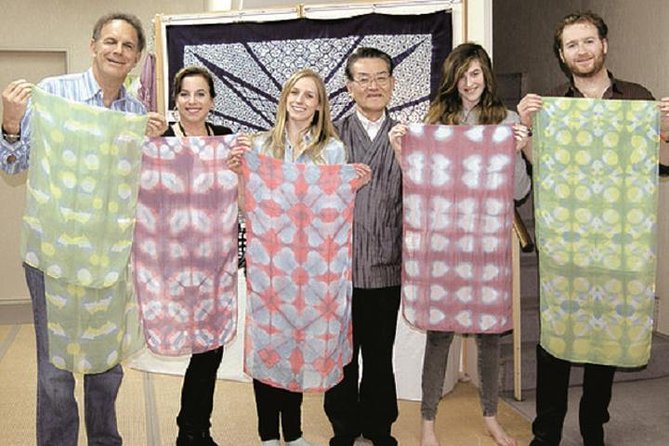
Small folds create big surprises. This 30 to 60-minute itajime shibori class at the Kyoto Shibori Museum lets you make a Japanese scarf with traditional tools and fabrics, then take your work home. I like the friendly, personal instruction and the chance to see fine shibori pieces upstairs. The main drawback is that the classroom can be hard to spot from the street.
The class costs $43.60 per person, a fair price for a hands-on craft session, museum access, and a finished souvenir. It works well for families, solo visitors, and anyone who wants a quiet break from Kyoto’s temples. Just remember that adult pricing applies to all ages, and the minimum age is six.
In This Review
- Key points to know before booking
- What itajime shibori means in plain English
- Entering the Kyoto Shibori Museum
- Choosing fabric, colors, and a pattern
- The hands-on dyeing process
- The grand reveal and finishing touches
- Visiting the second-floor exhibition
- Why the $43.60 price can be worthwhile
- Who will enjoy this class most
- Timing, transport, and small practical details
- A few honest limitations
- Should you book the Kyoto shibori class?
- FAQ
- Where does the itajime shibori scarf class take place?
- How long does the class last?
- What is the price?
- What is included?
- What will I make?
- What age can participate?
- How many people can join the activity?
- Is the museum near public transportation?
- Is parking available?
- Can I cancel for a full refund?
Key points to know before booking
- Make your own itajime scarf: Fold and clamp Japanese fabric before dyeing it to create a pattern that reveals itself at the end.
- Personal help throughout: Staff guide you through each stage, with some visitors receiving nearly one-on-one attention.
- Museum access included: See shibori artworks, learn about dyeing methods, and watch a film about the craft on the second floor.
- A useful Kyoto souvenir: Your handmade scarf is light, personal, and easy to pack.
- Small groups help: The activity accepts a maximum of 10 people, so instruction should feel more direct than in a large workshop.
- Allow extra time to find it: The classroom is on the second floor and may not be clearly marked from the street.
What itajime shibori means in plain English
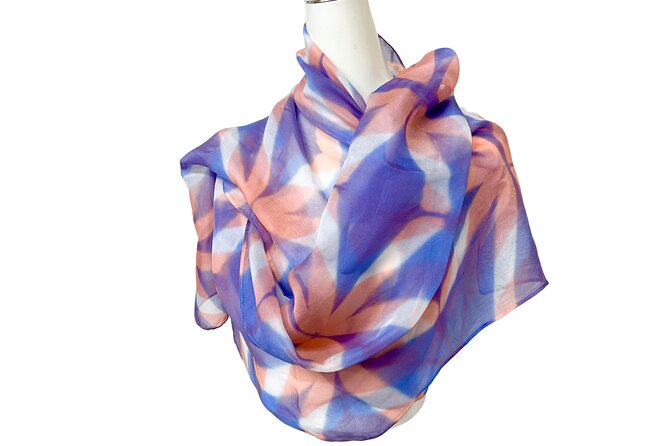
Shibori is a traditional Japanese method of decorating cloth by shaping, folding, binding, stitching, or compressing it before dye is applied. The parts protected from the dye remain lighter, while the exposed sections take on color.
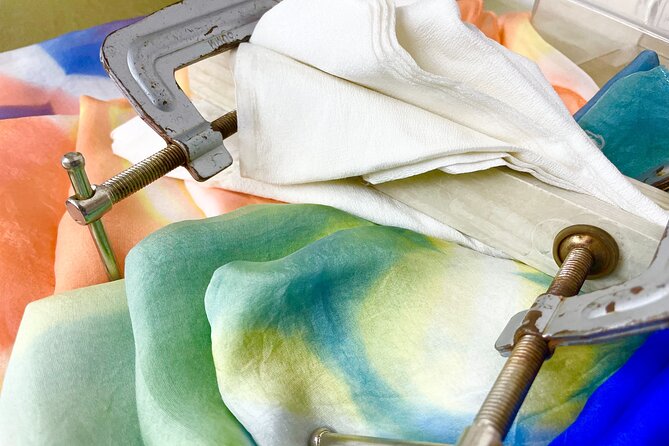
This class focuses on itajime shibori, a folding and clamping method. You arrange fabric, press sections together with traditional tools, and dye the material. When the folds and clamps come off, the pattern appears. That final reveal is the best part because you cannot see the full result while you work.
I like this method for first-time crafters because it does not demand perfect drawing skills. Your choices matter, but the dye creates some of the magic. One participant even noted that the class was enjoyable despite not being particularly artistic, while teenage children also found it fun. That makes this a good choice if you want a creative activity without signing up for a serious art lesson.
The finished fabric also gives you a small connection to Kyoto’s textile traditions. You are not simply buying a scarf from a shop. You are taking part in a basic version of a craft that has been used in Japan for centuries.
A few more Kyoto experiences worth weighing up
- Kyoto: 45-Minute Tea Ceremony Lesson Experience
★ 4.3 · 2,378 reviews - Ramen Cooking Class at Ramen Factory in Kyoto
★ 5.0 · 1,937 reviews - Kyoto : Chopsticks Making Workshop in Gion with Engraving Option
★ 5.0 · 958 reviews
Entering the Kyoto Shibori Museum
The class takes place at the Kyoto Shibori Museum, where the activity and the exhibition complement each other. The museum gives you a reason to look beyond the scarf in your hands and understand the time, skill, and planning behind larger shibori works.
The museum is near public transportation, and the location is also reported to be about a two-minute walk from Nijo Castle. That makes it easy to pair the class with a visit to the castle area. If you are planning a morning or afternoon around central Kyoto, the two activities can fit together neatly.
The practical warning is simple: the classroom is on the second floor, and the entrance is not always well marked from the street. Keep the address and booking details ready on your phone. The mobile ticket is useful here, especially if you are standing outside and trying to confirm that you have found the right doorway.
Once inside, the atmosphere appears to be small and personal rather than formal or crowded. The maximum group size is 10 people. That does not guarantee a private lesson, but it does make direct help more likely than at a large commercial workshop.
Choosing fabric, colors, and a pattern

The class begins with choices about the fabric, colors, and pattern. The available materials are Japanese fabrics, which gives the activity a stronger local connection than a generic tie-dye workshop.
You will not know the exact final image in advance. Itajime works by controlling where the dye can reach, so folds and clamps create light and dark sections. The fun comes from making a plan, then accepting a little surprise when the fabric opens.
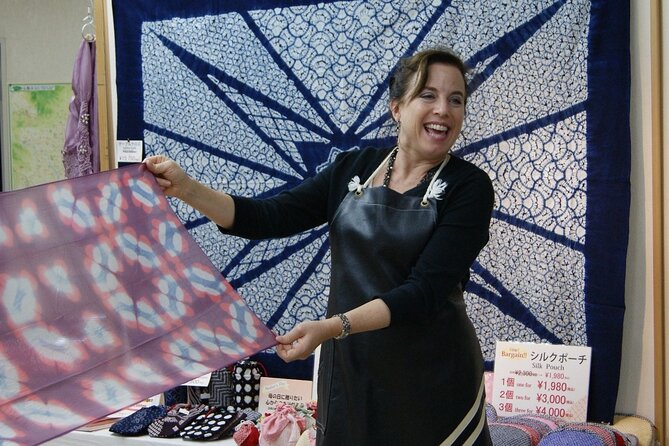
Staff explain the process before you begin. Several comments highlight clear instructions, patient assistance, and friendly support. June is specifically praised for being kind and patient, and other staff members are described as attentive and encouraging. That matters because the folding stage can feel confusing if you have never tried shibori before.
I would choose this activity if you enjoy making decisions with your hands. It is less suitable if you want a completely predictable souvenir or a long, technical studio course. The class is short, so you get the essential process rather than a full apprenticeship.
The hands-on dyeing process
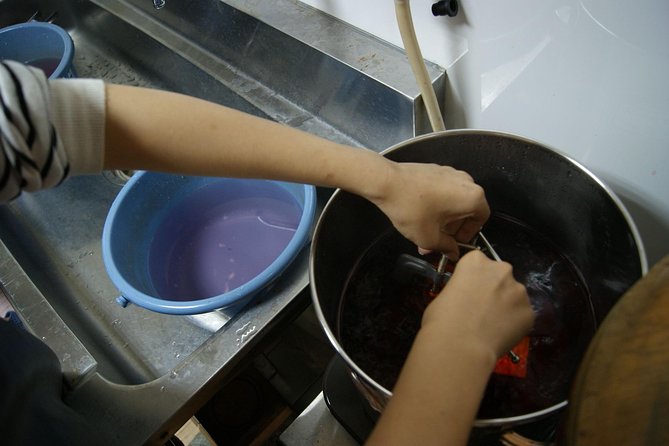
After preparing the cloth, you apply the dye according to the instructor’s directions. The traditional tools help block parts of the fabric, creating the characteristic geometric patterns of itajime shibori.
The class is practical from start to finish. You are not sitting through a long lecture while someone else does the work. You fold, arrange, dye, and later open the material yourself. The staff explain both what to do and why the technique works, which makes the finished scarf more meaningful.
This is also where the small group size helps. If you are unsure about a fold or clamp, you can ask for assistance. Solo participants may receive particularly close attention, while families can work through the steps together. The minimum age is six, so the activity is designed to include children, although adult pricing applies to everyone.
The pace is relaxed. The advertised duration is about 30 to 60 minutes, and several people describe spending roughly an hour in a calm setting. Your exact timing may depend on the group and the stage of the dyeing process. I would avoid scheduling another activity immediately afterward, especially if you want time for the museum.
A completely different kind of day out in Kyoto:
- PERFECT KYOTO 1-Day Bus Tour
★ 5.0 · 13,518 reviews - Kyoto: Fushimi Inari, Kinkakuji, Bamboo Grove 1 Day Bus Tour
★ 4.8 · 4,316 reviews - Kyoto: Tea Ceremony in a Traditional Tea House in Kiyomizu
★ 4.9 · 3,519 reviews - Kyoto Geisha Walking Tour: Gion District & Hidden Gems
★ 4.7 · 3,273 reviews
The grand reveal and finishing touches
The most satisfying moment comes when the folds and clamps are removed. Until then, the scarf is a bundle of fabric and careful preparation. Opening it reveals the pattern created by your choices and the dye.
That reveal gives the workshop a pleasant sense of occasion. The staff add finishing touches, and the scarf is dried and packaged for you to take home. One family also received a certificate for a child, a thoughtful extra that may appeal to parents planning a special activity.
The result will not be identical from one person to the next. That is part of the appeal. You might produce a bold, regular pattern, or something more irregular. The point is not to create a museum-quality masterpiece in one short class. It is to leave with a wearable reminder of your time in Kyoto.
A scarf is also a practical souvenir. It takes up little space in luggage, and its handmade quality gives it more character than a mass-produced gift. If your group makes several scarves, the different patterns can help each person remember which one they created.
Visiting the second-floor exhibition
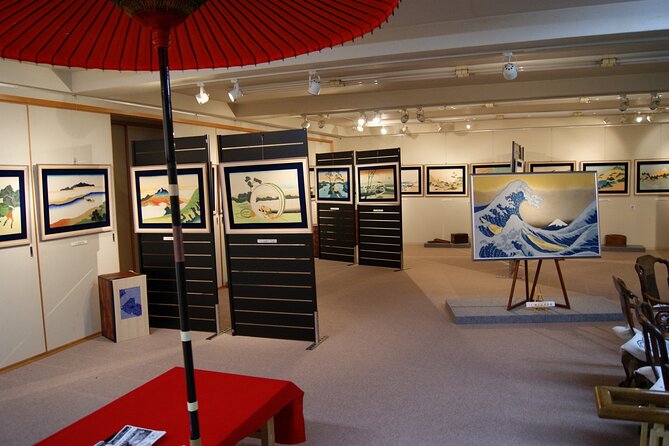
The museum visit adds real value to the class. While your scarf dries, you can explore the second-floor exhibition and see examples of shibori at a far higher level of craftsmanship.
The display includes intricate pieces connected with kimono fabrics and other textile work. You may also find a film explaining the shibori process and the making of fabric used for kimono. This background helps you understand why the simple folding activity downstairs is connected to such demanding traditional work.
I especially like this pairing of practice and exhibition. If you only make the scarf, you might think of shibori as a pleasant form of tie-dye. After seeing the detailed pieces upstairs, you gain a better sense of the countless hours required for advanced designs.
The exhibition is not a substitute for Kyoto’s major museums, but it gives the class cultural weight. The craft is not treated as a quick tourist pastime. Staff share the family connection to shibori, including a grandfather who was a master, and explain how the work has developed over time.
There is also a small shopping opportunity. A shibori and leather purse is one example of the kind of item you might find. You do not need to buy anything, but the display can help you compare your own scarf with more finished textile products.
Why the $43.60 price can be worthwhile
At $43.60 per person, this is not the cheapest short activity in Kyoto. Yet the price includes more than a brief demonstration. You receive instruction, Japanese fabric, dyeing materials, a handmade scarf, and admission to the museum exhibition.
The souvenir is the key value. A scarf bought in a shop might cost more or less depending on its quality, but the class adds the memory of making it. For couples, parents with children, and friends who want something shared, that personal element can justify the cost.
The museum access also prevents the activity from feeling too short. The making portion may take as little as 30 minutes, but the full visit can fill closer to an hour when you include the exhibition and drying time. If you are already interested in textiles, kimono, or Japanese craft, the price is easier to defend.
I would be more cautious if you are trying to pack your Kyoto schedule with major sights. This is a gentle craft stop, not a headline attraction such as a famous temple or castle. Its value comes from participation and personal attention, not from the size of the museum.
Who will enjoy this class most
This workshop suits people who want a creative activity with a clear beginning and end. You do not need prior craft experience, and the instructions are designed for beginners.
Families are a strong match. Children from age six can participate, and parents can enjoy seeing the pattern appear alongside them. Teenagers may also like it because the activity is hands-on and produces something they can keep, rather than requiring them to listen quietly for an hour.
Solo visitors can benefit from the personal format. One participant made three scarves and described the visit as a relaxing way to spend part of a final day in Japan. The staff’s willingness to answer questions also helps if you arrive alone and want more explanation about the craft.
Couples and small groups should enjoy the shared reveal. Each person makes a separate scarf, but everyone can compare colors and patterns afterward.
You may want to skip it if you dislike crafts, have very little time, or want a large-scale museum with many galleries. The exhibition is focused, and the workshop is deliberately simple. That is a strength for some people and a limitation for others.
Timing, transport, and small practical details
The activity lasts approximately 30 minutes to one hour. Plan for the longer end if you want to view the exhibition and learn about the process rather than rush out with your scarf.
The museum is near public transportation. It also has two car parking spaces and bicycle parking for two bicycles. Those spaces are limited, so do not treat them as a guarantee for a busy sightseeing day.
A mobile ticket is provided, and confirmation arrives when you book. Keep the ticket available on your phone, especially because the second-floor entrance can be difficult to identify from the street.
Most people can participate, and the minimum age is six. The maximum group size is 10. The published price applies to children and adults alike.
Free cancellation is available if you cancel at least 24 hours before the local start time. Changes or cancellations inside that window are not refunded, so check your Kyoto plans before booking.
A few honest limitations
The biggest practical issue is finding the classroom. The second-floor location is not always obvious from the street, so arrive with enough time to locate it rather than walking up at the last minute.
The short format also limits how much technique you can learn. You get a useful introduction to itajime shibori, but not a detailed course in every shibori method. The museum and film help fill that gap, though the main focus remains making one or more scarves.
The adult pricing for all ages may affect the value for families. A family of four pays four times the listed price, even when two participants are young children. Still, children are allowed from age six, and the hands-on format can make the cost easier to accept than a passive attraction.
Finally, the final pattern is partly unpredictable. If you need a perfectly controlled design, this may frustrate you. If you enjoy a handmade object with small surprises, it is exactly the point.
Should you book the Kyoto shibori class?
I would book this class if you want a small, friendly Kyoto activity that combines craft, culture, and a souvenir you made yourself. The strongest reasons are the patient instruction, the calm pace, and the exhibition upstairs, where you can see how demanding advanced shibori really is.
It is especially good for families with children six and older, solo visitors, craft lovers, and anyone looking for a break from shrine and temple visits. Pair it with Nijo Castle if that fits your route, but allow time to find the second-floor entrance.
At $43.60, it is a fair buy when you value participation more than sightseeing volume. Skip it only if your schedule is packed or textile crafts do not interest you. For everyone else, this is a pleasant way to make a personal Kyoto memory, with a scarf to prove you did more than simply take pictures.
FAQ
Where does the itajime shibori scarf class take place?
The class takes place at the Kyoto Shibori Museum in Kyoto, Japan.
How long does the class last?
The activity lasts approximately 30 minutes to one hour.
What is the price?
The price is $43.60 per person.
What is included?
The experience includes the scarf-making class, Japanese fabrics and traditional tools for the activity, and admission to the museum exhibition.
What will I make?
You will make a scarf using the itajime shibori dyeing technique and take the finished memento home.
What age can participate?
The minimum age is six. Adult pricing applies to all ages.
How many people can join the activity?
The maximum group size is 10 people.
Is the museum near public transportation?
Yes. The museum is near public transportation.
Is parking available?
Two car parking spaces and two bicycle parking spaces are available.
Can I cancel for a full refund?
Yes. You can cancel for a full refund at least 24 hours before the experience start time. Cancellations or changes made less than 24 hours before the local start time are not refunded.
Just added around Kyoto
- Kyoto: Private Customizable Day Trip by Car★ 5.0 · 38 reviews
- Kyoto: Gion Night Walking Tour with Geisha Insight★ 5.0 · 39 reviews
- Kyoto: Full Day Bike Tour★ 4.9 · 39 reviews
- Private Japanese Calligraphy in Kyoto – Learn Shodō with a Master★ 5.0 · 39 reviews
- Experience a tea ceremony in an authentic tearoom, in Kyoto!★ 4.5 · 41 reviews
- Kyoto: Gion Evening Walk with Hidden Gems, Geisha & Sake★ 5.0 · 41 reviews
- Kyoto Private Photo Shoot & Tour by SnapKyoto★ 5.0 · 41 reviews
- The Way of Tea: Kyoto Crafts, Hidden Temples & Wabi-Sabi Walk★ 5.0 · 41 reviews
Workshops, compared.
Sushi Making Tokyo Roll and Authentic Japanese Sushi Class
Read our review →

Roll and Authentic Sushi Making Class in Asakusa
Read our review →
Ramen Cooking Class at Ramen Factory in Kyoto
Read our review →
Sushi Making Class in a Happi Coat near a Famous Spot
Read our review →
Sushi Making Osaka Roll and Authentic Japanese Sushi Class
Read our review →Browse the lists this tour appears in