
Reviewed · TEA CEREMONY EXPERIENCES
Kyoto: Nishiki Market Tea Ceremony with Koto Performance
Quiet music, warm tea, and a Kyoto welcome. This one-hour experience at KOTOLILY KYOTO combines a hands-on matcha lesson with a live koto performance, giving you two classic Japanese traditions in one small, friendly setting. I especially like the calm atmosphere and the chance to prepare your own tea rather than simply watch a formal demonstration. The host, Yurika, is often praised for her clear English, humor, and warm manner.
The location beside Nishiki Market makes this easy to fit into a day of shopping and snacks. I also like that the koto music adds something you will not get from a standard tea ceremony. The main consideration is space: groups are limited to eight, but the shop is compact, shoes come off at the door, and the experience is not suitable for children under eight, wheelchair users, or people with food allergies.
In This Review
- Key points at a glance
- Finding KOTOLILY KYOTO beside Nishiki Market
- A gentle introduction from Yurika
- Preparing two kinds of Japanese green tea
- Listening to the koto between cups of tea
- Kimono photos and the optional koto lesson
- Why the one-hour length works
- Is $56 a fair price?
- Practical details before you go
- Who should book this Kyoto experience?
- Should you book KOTOLILY KYOTO?
- FAQ
- Where does the tea ceremony take place?
- How long does the experience last?
- How much does the experience cost?
- What is included in the price?
- Is transportation included?
- Is the experience offered in English?
- How many people can join?
- Can I wear a kimono?
- Can I learn to play the koto?
- What should I bring?
- Who should not book this activity?
- Can I cancel the booking?
Key points at a glance
- Make your own matcha: You learn how to prepare creamy green tea, including pouring the water and whisking it yourself.
- Hear a live koto performance: Yurika plays the traditional Japanese harp before and after the tea ceremony, with short explanations about the instrument and its music.
- Enjoy a peaceful break near Nishiki Market: The studio offers a calm indoor pause close to central Kyoto shopping streets.
- Keep the group small: A maximum of eight people allows room for questions and individual guidance.
- Add a kimono photo session: On-site, you can pay extra to wear a kimono and have photos and videos taken.
- Try the koto yourself: A separate koto lesson and photo option can be arranged for an additional fee after the ceremony.
Finding KOTOLILY KYOTO beside Nishiki Market
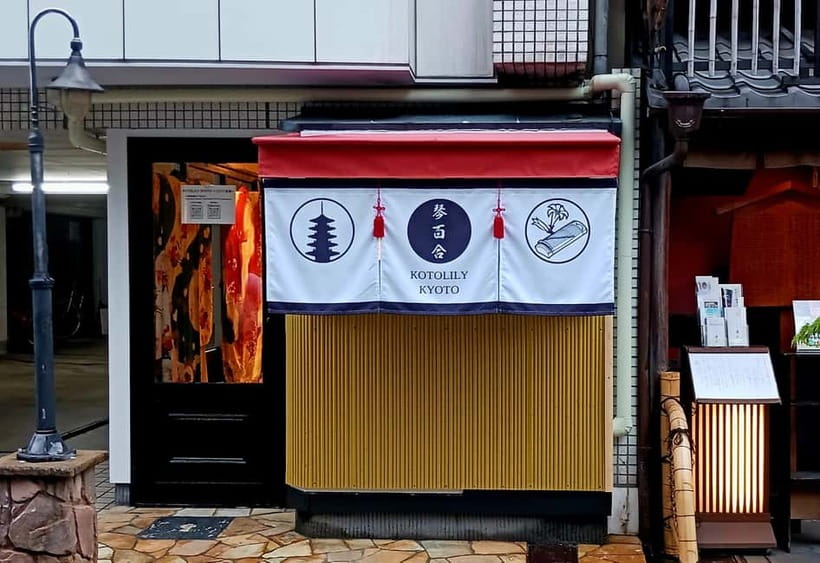
KOTOLILY KYOTO sits in central Kyoto, next to KINMATA Restaurant and across the street from Hotel GOCO stay. The meeting instructions are simple but worth taking seriously: go inside the shop rather than waiting at the hotel.
This central position is one of the experience’s practical strengths. You can pair the ceremony with Nishiki Market, nearby shops, and other central Kyoto sights without setting aside half a day for transport. It is also indoors, so it works well when rain interrupts your sightseeing plans.
Allow a little extra time to find the entrance. Nishiki Market has many signs, shops, and food stalls, and the meeting point is not described as a large public landmark. Check the names around KINMATA Restaurant and enter KOTOLILY KYOTO directly.
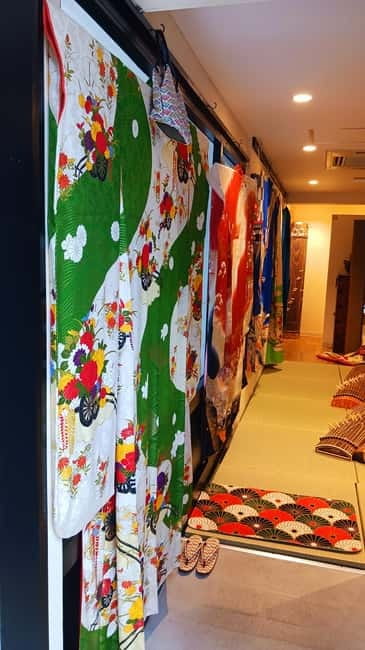
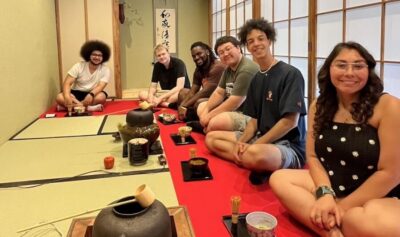
The shop itself is part of the experience. The walls are decorated with beautiful kimonos, creating a more personal setting than a hotel function room. Several people describe it as cozy, attractive, and inviting. That small scale helps the ceremony feel more like a visit to a cultural studio than a stage show designed for a large crowd.
More Market Tours in Kyoto
- Nishiki Market Brunch Walking Tour (7 Tastings + Brunch)
★ 5.0 · 1,355 reviews - Kyoto Nishiki Market Food and Culture Walking Tour
★ 5.0 · 412 reviews - Kyoto: Nishiki Market Brunch Walking Tour-7 Tastings+Brunch
★ 4.8 · 197 reviews
A gentle introduction from Yurika
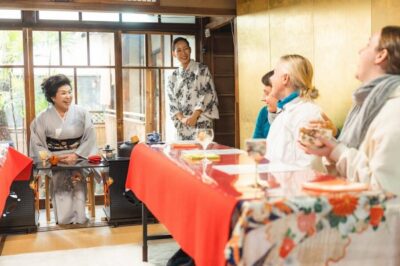
The host, Yurika, is central to the appeal of this activity. She welcomes the group, explains what will happen, and uses English and Japanese during the session. The English instruction has been described as clear, and the teaching style comes across as warm rather than stiff.
That matters during a tea ceremony. Japanese etiquette can feel intimidating if every movement is presented as a test. Here, you are guided through the process, with explanations of the meaning behind the steps. You can ask questions about tea, Japanese customs, and the koto without feeling that you are interrupting a sacred performance.
Yurika also brings a lively personality to the room. Her humor and friendly manner help put first-time participants at ease. At the same time, the ceremony keeps its sense of respect. The best balance here is that you learn about tradition without having to pretend you already understand it.
The group limit is eight people. That is small enough for direct instruction, but the exact feel will depend on the size of your booking. A private session is possible when demand and scheduling allow, but it should not be treated as guaranteed.
Preparing two kinds of Japanese green tea
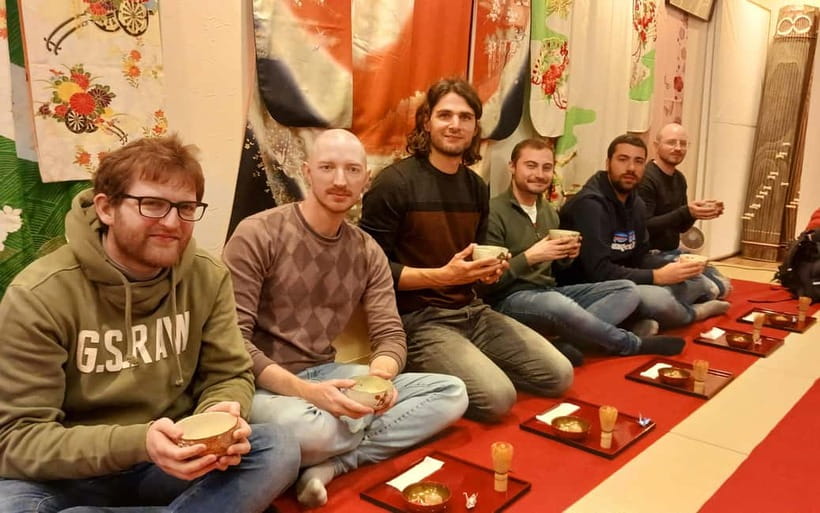
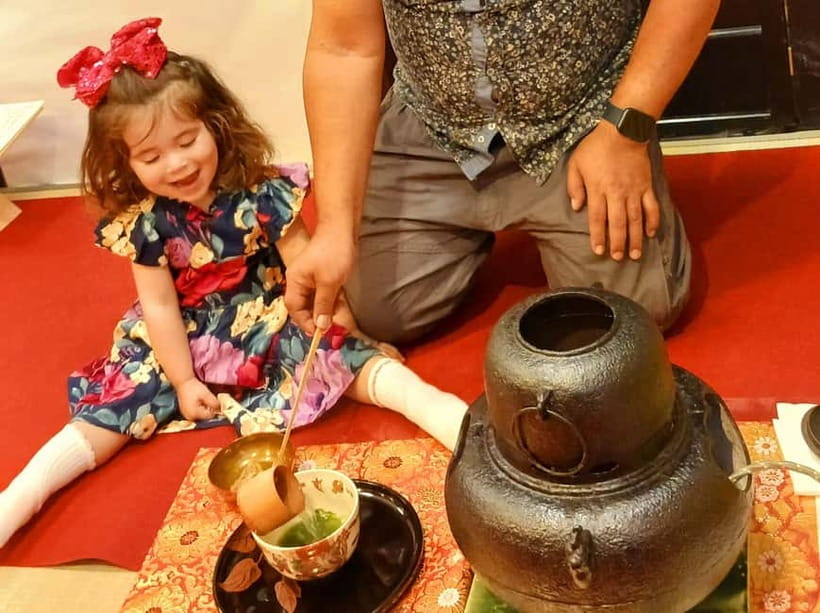
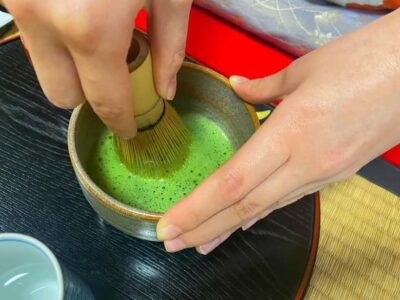
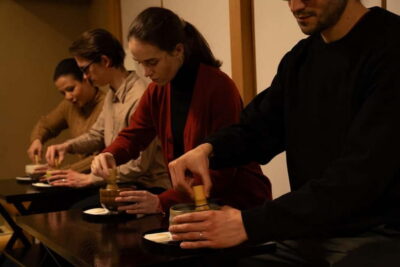
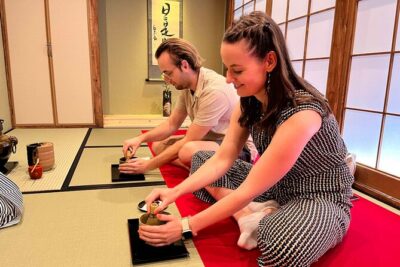
The practical heart of the experience is making your own matcha. Instead of only watching a tea master work, you handle the basic preparation yourself. The instructions cover the water, tea, and whisking, so you can produce a smooth cup with less bitterness.
That last point is useful. Matcha can taste strong, grassy, or bitter when it is prepared poorly. Careful guidance gives you a better idea of how the powder should be whisked and how the finished tea is meant to feel. You are not simply handed a bowl and told to drink it.
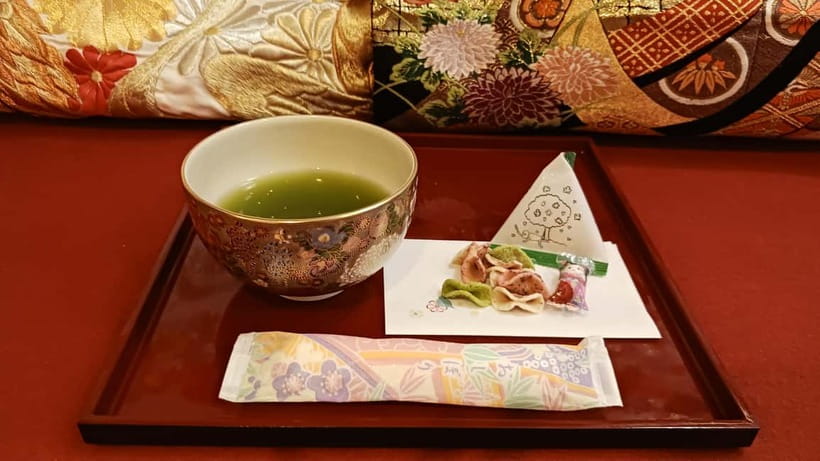
Some sessions include two different green teas. The exact sequence can vary, but the activity gives you a chance to compare flavors and learn how tea is enjoyed in Japan. Tea sweets are served alongside the matcha, adding the traditional sweet contrast that makes the tea easier to appreciate.
The sweets are included in the $56 price. They are not a meal, so you should eat before or after if you need lunch. Nishiki Market is close by, making it easy to continue with food afterward.
You will also learn some tea etiquette. This may include how to receive the tea and how to approach the bowl respectfully. The point is not to memorize a long list of rules. It is to understand why the movements are deliberate and how the ceremony creates a pause from ordinary daily life.
Listening to the koto between cups of tea
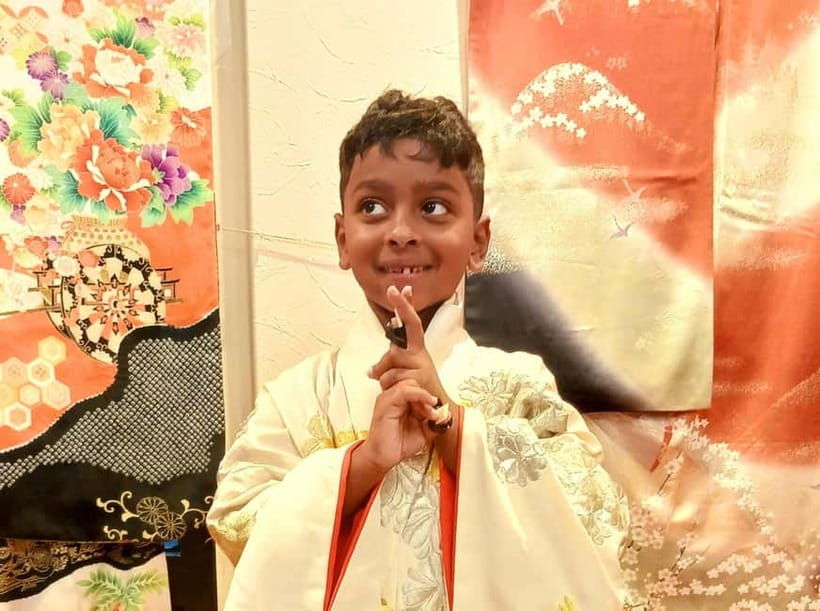
The koto performance is what gives this activity its own character. The koto is a traditional Japanese string instrument, often compared in simple terms to a Japanese harp. Yurika plays before and after the tea ceremony, with music interwoven into the hour.
The performance is not background music piped into a room. It is live, close-up, and part of the cultural explanation. Yurika also discusses the instrument and its musical history, helping you understand what you are hearing rather than treating the performance as decoration.
Several songs have been especially moving for participants, including arrangements of Childhood and Summer. You should not expect a full concert, but the music receives enough time to make a real impression. The combination of quiet tea preparation and koto melodies gives the hour a restful rhythm.
I think this pairing works particularly well for people who want more than a standard tea demonstration. You get a cultural activity and a traditional music performance in one booking. The koto also breaks up the instruction, so the hour does not feel like a single uninterrupted lesson.
The music may be the strongest reason to choose this particular tea ceremony over another one in Kyoto. If you already have a separate koto concert booked, the added value will be smaller. If traditional music is new to you, this is an easy and approachable introduction.
More Tea Ceremonies in Kyoto
- Kyoto: Tea Ceremony in a Traditional Tea House in Kiyomizu
★ 4.9 · 3,519 reviews - Kyoto: Tea Ceremony Ju-An at Jotokuji Temple
★ 4.9 · 3,207 reviews - Kyoto: 45-Minute Tea Ceremony Lesson Experience
★ 4.3 · 2,378 reviews - Kyoto: Table-Style Tea Ceremony at a Kyo-Machiya
★ 4.9 · 1,211 reviews
Kimono photos and the optional koto lesson
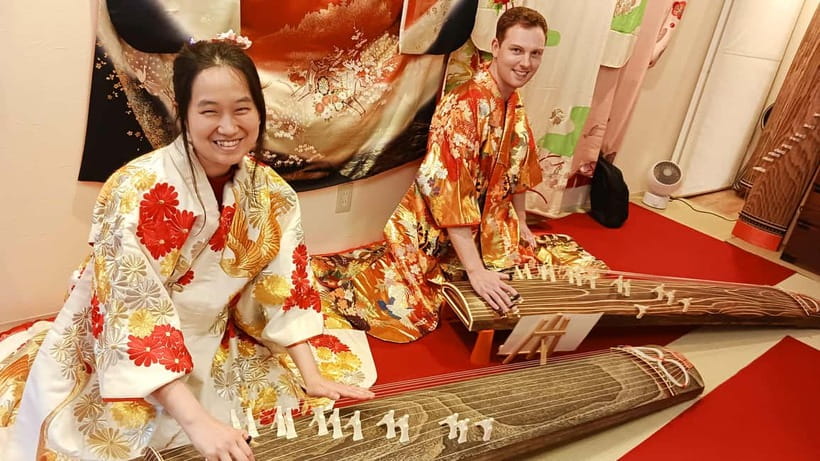
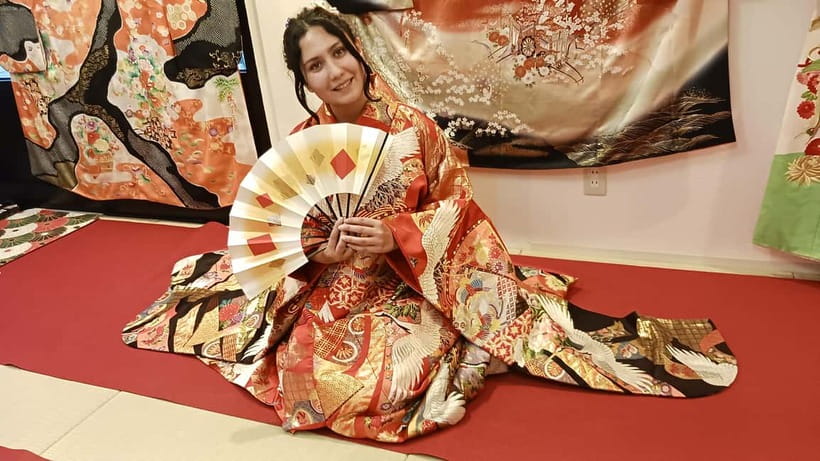
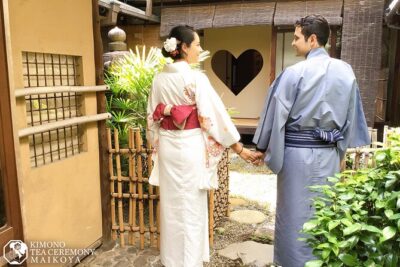
Kimonos are displayed in the studio, and you can pay an additional fee on-site for a kimono try-on with photos and videos. Traditional hair accessories may also be available as part of that add-on, depending on what the shop offers during your visit.
This is a good choice if you want a visual keepsake from Kyoto. The studio setting and kimono display create a more controlled photo opportunity than trying to take pictures in a crowded street. You can ask staff for help if you want to arrange the session.
There is one important limitation: the kimono option is an add-on, not part of the $56 base price. Some people also note that the kimono is worn for photos after the tea ceremony rather than throughout the tea experience. If wearing traditional clothing while making tea is your main goal, check the arrangement at the shop before paying for the extra session.
You can also ask about a koto-playing lesson after the tea ceremony. This costs extra and can include photos and videos. It is a nice option for anyone who wants participation rather than only listening. The lesson is brief according to the available descriptions, so think of it as an introduction, not a full music course.
These extras are offered after the main activity, which lets you decide once you know how much time and energy you have left. That flexibility is useful, especially if you are traveling on a tight schedule.
Why the one-hour length works
One hour is enough time to learn the basic tea process, enjoy sweets, and hear several koto pieces without turning the activity into a major time commitment. You can fit it between market visits, shopping, or an afternoon sightseeing plan.
The short format also keeps the focus clear. You are not expected to study every aspect of tea culture. Instead, you receive a practical introduction, make matcha, and experience live music in a small setting.
The trade-off is that this is not a full formal tea ceremony at a temple or a long traditional gathering. The emphasis is on participation and explanation for international visitors. If you want a highly formal ceremony with extensive ritual, seasonal utensils, or a longer meditation-like format, you may find this session too brief.
For most first-time visitors, though, the length is sensible. You get enough context to understand what you are doing, and you still have most of the day for Kyoto.
Is $56 a fair price?
At $56 per person, this is not the cheapest way to drink matcha in Kyoto. You could buy a bowl of tea and a sweet for far less. The price needs to be judged as a small cultural activity, not as a beverage purchase.
The fee includes the tea ceremony, hands-on matcha preparation, tea sweets, and live koto music. That combination gives you more than a simple tasting. You are paying for instruction, the host’s performance, the studio setting, and a limited group size.
I consider the price reasonable if you value personal guidance and want to combine two Japanese traditions. The koto performance is especially important to the value calculation. A standard tea ceremony alone may be enough for some people, but this experience adds a live musical element without requiring another booking.
The extra charges for kimono photos and a koto lesson should be included in your budget. They are optional, so you can keep the base experience at $56 if you prefer. You can also reserve now and pay later, which helps if your Kyoto plans may change.
Cancellation is flexible up to 24 hours before the activity for a full refund. Starting times vary, so you need to check availability for your date.
Practical details before you go
Wear comfortable clothes. You will remove your shoes at the door, so clean socks are a considerate and practical choice. This is especially helpful if you feel self-conscious about going barefoot.
The room is small, so leave large luggage and bulky shopping bags elsewhere if possible. A backpack may be manageable, but a suitcase would be awkward in the studio. The activity information specifically asks you to bring a camera, although flash photography is not allowed.
Food allergies are listed as a restriction. Since tea sweets are included and the experience is not suitable for people with food allergies, ask the provider directly if you have dietary concerns before booking.
The activity is not suitable for children under eight. It is also not suitable for wheelchair users, so check access needs carefully rather than assuming a central location guarantees step-free entry.
The activity is offered in English and Japanese. English ability is one of the reasons the instruction works well for international participants, but the experience remains rooted in Japanese customs and music.
Who should book this Kyoto experience?
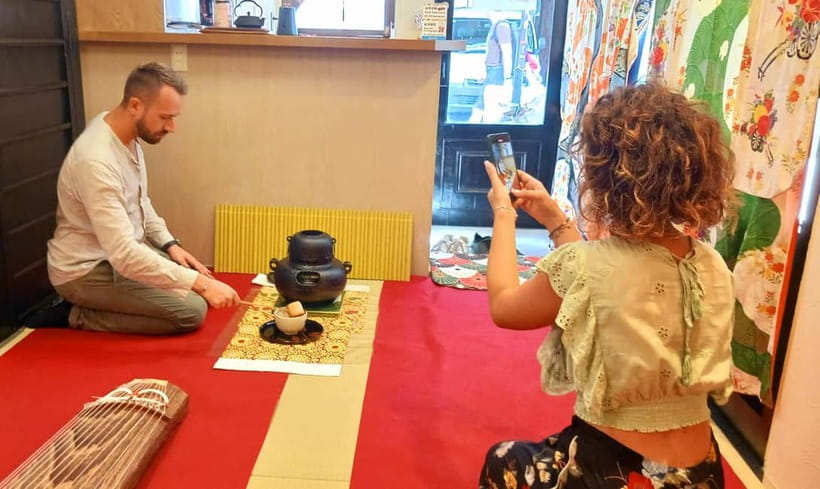
I would recommend it to first-time visitors who want a clear introduction to matcha and tea etiquette without committing to a long ceremony. It also suits couples, small families with older children, solo visitors, and anyone looking for a calm indoor activity near Nishiki Market.
Music lovers should give it special consideration. The live koto performance is not an afterthought, and Yurika’s skill is repeatedly praised. You may enjoy the activity even if you are not normally a matcha drinker because the preparation and sweets help explain how to approach the flavor.
It is also a good choice for people who prefer a personal host-led activity to a large group tour. The eight-person limit keeps the setting intimate, though the small room means you should be comfortable sitting close to others and removing your shoes.
I would hesitate to recommend it if you want a full meal, a long temple-based ceremony, guaranteed kimono wear during tea preparation, or wheelchair access. The photo session and koto lesson are optional extras, so they should not be treated as included features.
Should you book KOTOLILY KYOTO?
Book it if you want a compact, friendly cultural experience that combines matcha preparation, sweets, tea etiquette, and live koto music. The host’s warmth and musical ability are major strengths, and the central Nishiki Market location makes the timing easy to manage.
The strongest reason to choose it is the combination. You are not only watching tea being made, and you are not only listening to music. You take part in the preparation, learn the purpose behind the ceremony, and then hear a traditional instrument played in the same intimate room.
Choose another activity if you need a fully formal ceremony, accessible facilities, or a session where kimono is included in the basic price. For everyone else, this is a well-priced one-hour pause in central Kyoto, with enough substance to feel meaningful and enough simplicity to remain fun.
FAQ
Where does the tea ceremony take place?
It takes place at KOTOLILY KYOTO in central Kyoto, next to KINMATA Restaurant and opposite Hotel GOCO stay. You should enter the shop rather than wait at the hotel.
How long does the experience last?
The tea ceremony and koto performance last one hour.
How much does the experience cost?
The listed price is $56 per person.
What is included in the price?
The price includes the tea ceremony, matcha green tea preparation, tea sweets, and a live koto performance.
Is transportation included?
No. Transportation to and from KOTOLILY KYOTO is not included.
Is the experience offered in English?
Yes. The activity is offered in English and Japanese.
How many people can join?
The activity is a small-group experience limited to eight participants.
Can I wear a kimono?
Yes, but kimono wear with photos and videos costs extra and is arranged on-site. Ask the staff for assistance after the tea ceremony.
Can I learn to play the koto?
A koto-playing lesson can be added on-site for an additional fee. Photos and videos may also be available with that option.
What should I bring?
Bring a camera and wear comfortable clothes. Flash photography is not allowed, and you will remove your shoes at the door.
Who should not book this activity?
It is not suitable for children under eight, wheelchair users, or people with food allergies.
Can I cancel the booking?
You can cancel up to 24 hours in advance for a full refund. You can also reserve now and pay later.
More Shopping Tours in Kyoto
- Kyoto: Local Food Tasting Tour at the Nishiki Market
★ 4.7 · 135 reviews - Kyoto: Nishiki Market and Depachika Food Tour with a Local
★ 4.7 · 76 reviews - Kyoto: Nishiki Market Tour with a Local Foodie & Tastings
★ 4.5 · 67 reviews - Nishiki Market Lunch Tour
★ 5.0 · 47 reviews
Just added around Kyoto
- Kyoto: Gion Night Walking Tour with Geisha Insight★ 5.0 · 39 reviews
- Kyoto: Private Customizable Day Trip by Car★ 5.0 · 38 reviews
- Kyoto: Full Day Bike Tour★ 4.9 · 39 reviews
- Private Japanese Calligraphy in Kyoto – Learn Shodō with a Master★ 5.0 · 39 reviews
- Experience a tea ceremony in an authentic tearoom, in Kyoto!★ 4.5 · 41 reviews
- Kyoto: Gion Evening Walk with Hidden Gems, Geisha & Sake★ 5.0 · 41 reviews
- Kyoto Private Photo Shoot & Tour by SnapKyoto★ 5.0 · 41 reviews
- The Way of Tea: Kyoto Crafts, Hidden Temples & Wabi-Sabi Walk★ 5.0 · 41 reviews
Tea Ceremony Experiences, compared.
Tea Ceremony in a Traditional Tea House in Kiyomizu
Read our review →
Browse the lists this tour appears in