
Reviewed · MARKETS
Nishiki Market Brunch Walking Tour (7 Tastings + Brunch)
Come hungry, and leave curious. This three-hour Kyoto food walk combines a short stroll through Gion and Pontocho with time in Nishiki Market, the city’s famed food street. I like the seven market tastings and the chance to sit down for brunch, and I also like the small-group format, which can make ordering, translating, and asking questions much easier.
The main caution is that the food experience can vary. Some tastings may be very small vendor samples, and brunch has limited choices on some departures. The tour also does not accept gluten-free requests and cannot guarantee food without allergens.
I also like the human side of this experience. Guides such as Yuki, Yusuke, Takaya, Jimmy, Hikaru, Chie, Reiki, Aki, Emi, and Yutaka are praised for explaining Japanese food and culture while offering useful tips for the rest of your Kyoto visit. A good guide matters here, since Nishiki is easy to enter but harder to understand.
In This Review
- Key points at a glance
- Why Nishiki Market works best with a guide
- Starting at Shijo Bridge
- A short walk through Pontocho
- Nishiki Tenmangu Shrine adds a quiet pause
- Two hours inside Nishiki Market
- What the seven tastings really offer
- Brunch is useful, but expectations need adjusting
- The guide can make or break the morning
- Is the $68.31 price fair?
- Weather, clothing, and food restrictions
- Who will enjoy this Kyoto food walk?
- Should you book the Nishiki Market Brunch Walking Tour?
- FAQ
- How long does the Nishiki Market Brunch Walking Tour last?
- Where does the tour begin?
- Where does the tour end?
- What food is included?
- Are drinks included?
- What places are visited before Nishiki Market?
- Can the tour accommodate gluten-free requests?
- What happens if bad weather cancels the tour?
Key points at a glance
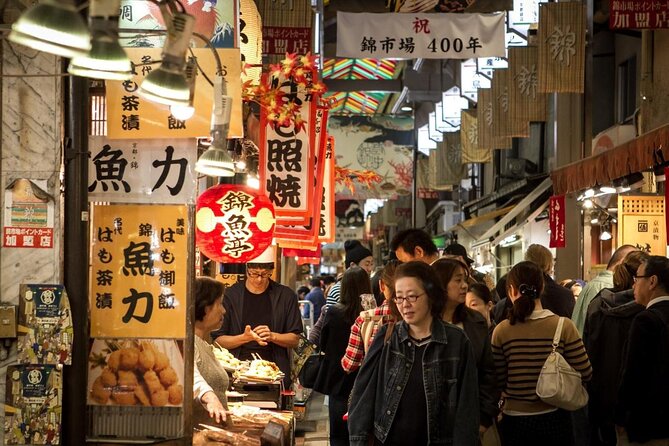
- Seven kinds of food plus brunch: The price includes seven tastings and a sit-down meal, with extra food and drinks available for purchase.
- A walk through three Kyoto districts: You begin near Shijo Bridge, pass through Pontocho, visit Nishiki Tenmangu Shrine, and finish at Nishiki Market.
- A compact group format: The experience is described as having a maximum of six people, while the additional booking information lists a maximum of ten.
- More than a market visit: Guides explain local food, Kyoto customs, geisha culture, Shinto, Buddhism, and everyday dining habits.
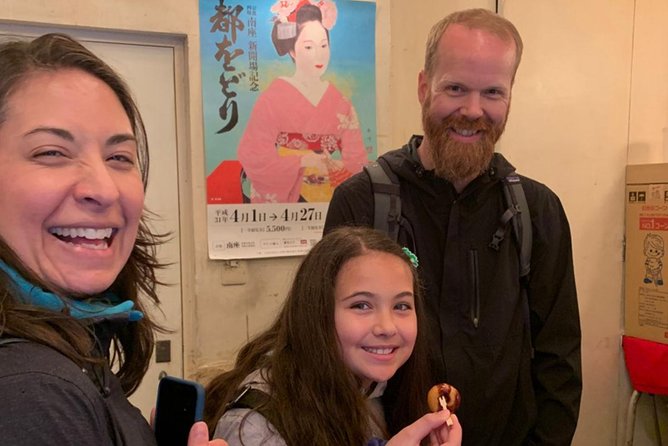
- Photos are provided: You are encouraged to focus on the food and conversation instead of spending the morning behind your camera.
- Dietary limits matter: Gluten-free requests cannot be accommodated, and allergy-free food is not guaranteed.
Why Nishiki Market works best with a guide
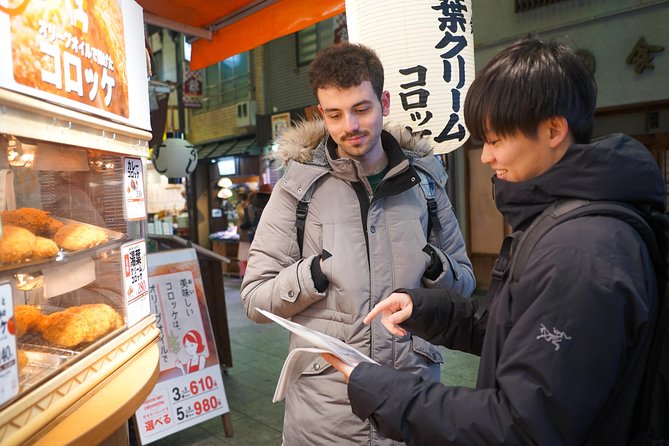
Nishiki Market is often called the kitchen of Kyoto, and that nickname makes sense. The covered shopping street is filled with food stalls, small shops, samples, and local specialties. It is also crowded, visually busy, and not always easy to interpret if you do not read Japanese.
You can certainly walk through Nishiki on your own. The market is free to enter, and many vendors offer samples. The value of this tour is not simple admission. It is the help you get deciding what to try, understanding what you are eating, and moving through the market without having to solve every small problem yourself.
A guide can also explain the difference between a free taste and a proper tasting included in the tour. This matters because the seven tastings are not necessarily seven full meals. Some stops may provide a small portion, while others offer a more substantial bite. One less enthusiastic account described the samples as mostly tiny vendor portions, while many stronger experiences praised the variety and the amount of food overall.
That difference in expectation is important. Think of the tour as a guided introduction to Kyoto food, not a three-hour restaurant crawl with seven full plates.
More Market Tours in Kyoto
- Kyoto Nishiki Market Food and Culture Walking Tour
★ 5.0 · 412 reviews - Kyoto: Nishiki Market Tea Ceremony with Koto Performance
★ 4.8 · 294 reviews - Kyoto: Nishiki Market Brunch Walking Tour-7 Tastings+Brunch
★ 4.8 · 197 reviews
Starting at Shijo Bridge
The meeting point is by the Statue of Izumo-no-Okuni near Kawabatacho in Higashiyama Ward. From there, the group heads toward Shijo Bridge, one of Kyoto’s best-known crossings.
The bridge stop lasts only about five minutes and has no admission fee. It is a brief orientation point rather than a major sightseeing visit. You get a look at the Kamo River setting and begin placing the surrounding districts on a map.
This short opening is useful because the tour is not only about eating. It connects the market to Kyoto’s streets, river, entertainment quarters, and religious sites. Still, if you expect a long historical talk at the bridge, adjust your expectations. The stop is quick.
A short walk through Pontocho
Next comes Pontocho, a narrow historic alley known for restaurants and traditional nightlife. The walk lasts about 15 minutes, so you will not spend a long time exploring every side street.
This part helps explain Kyoto’s dining culture. Pontocho is associated with refined restaurants, tea houses, and geisha entertainment, and several guides have added context about geisha culture and the customs of the area. Jimmy was praised for combining food with stories about Kyoto, while another guide received strong marks for explaining local religious and cultural traditions.
The tradeoff is time. If you have already taken several Kyoto history tours, some of this information may feel familiar. One account found the first part less useful because it repeated material heard elsewhere. I would treat Pontocho as a pleasant lead-in to the food portion, not the main reason to book.
Nishiki Tenmangu Shrine adds a quiet pause
The group then stops at Nishiki Tenmangu Shrine for around 15 minutes. This small shrine provides a change of pace before the market’s food stalls take over.
You can admire the shrine, learn about its role in local religious life, and see how easily Kyoto places worship alongside shopping and dining. Guides have also discussed Shinto and Buddhism during this part of the route, giving the market visit a wider cultural frame.
Admission is free. The stop is not a full shrine tour, but it gives you a useful contrast. Kyoto is not divided into tidy sightseeing categories. A food street, a shrine, an entertainment alley, and a river crossing can all sit within the same morning walk.
More Walking Tours in Kyoto
- Kyoto Geisha Walking Tour: Gion District & Hidden Gems
★ 4.7 · 3,273 reviews - Kyoto: Gion Magical Night Walking Tour with Geisha Trivia
★ 4.9 · 2,393 reviews - Kyoto: Gion Geisha District Walking Tour – Stories of Geisha
★ 4.7 · 2,187 reviews - Night Walk in Gion: Kyoto’s Geisha District
★ 4.5 · 2,003 reviews
Two hours inside Nishiki Market
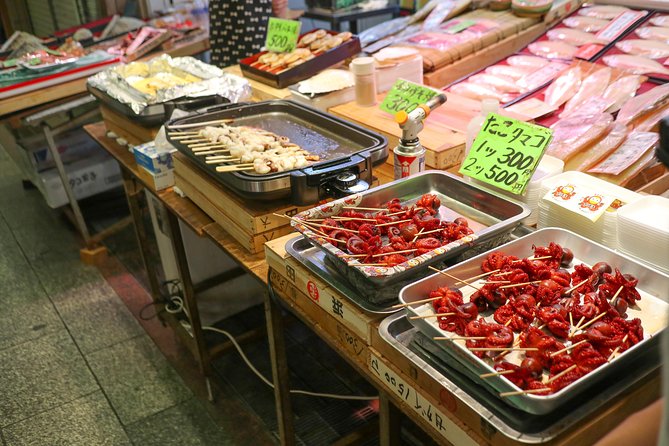
Most of the tour, about two hours and 15 minutes, is devoted to Nishiki Market. This is where the experience earns its keep, especially for anyone who feels unsure about approaching unfamiliar foods or ordering from small stalls.
The guide leads you between shops and tasting points, explaining ingredients and local eating customs along the way. You may encounter foods you would not select on your own, which is one of the strongest reasons to join rather than simply stroll through the market.
The food selection can include a range of local bites, but the exact menu is not fixed in the supplied details. The tour promises seven kinds of tastings rather than naming each dish. That gives the guide some flexibility, but it also means you should not book expecting a particular item shown in promotional photos. One disappointed customer specifically noted that a meat skewer pictured elsewhere was not available on that departure.
This is a market, not a controlled dining room. Vendors may run out of items, portions may change, and substitutions may not always be possible. The operator says it will try to compensate at other stops when dietary requests affect the planned food.
Crowds are another factor. Nishiki can be very crowded, and one account described spending less time inside the market than expected before moving to lunch. The tour description allocates most of the morning to Nishiki, but the exact rhythm depends on the group, the guide, and conditions on the day.
What the seven tastings really offer
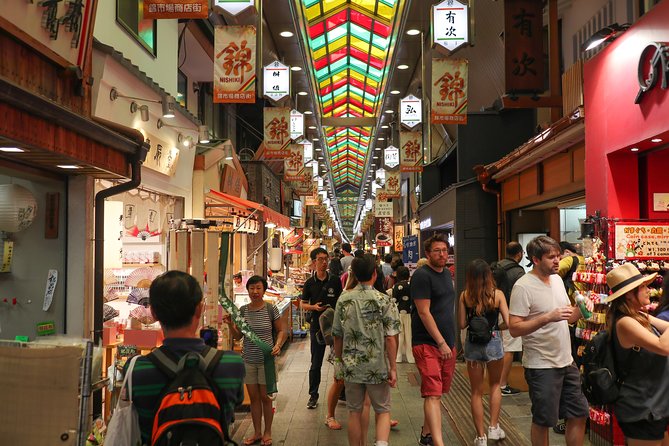
Seven tastings sounds generous, and it can create a satisfying range of flavors. You might sample foods that show how Kyoto uses seafood, vegetables, rice, pickled items, sweets, tea, or other local products. The goal is variety and discovery rather than a large portion of every item.
I would not arrive expecting to skip breakfast completely. One recommendation from a participant was to eat a light breakfast first, since the tasting sizes can differ and the main brunch comes later. That is sensible advice, especially if you have a strong appetite.
Some people found the tastings substantial and praised the number of stops. Others felt only two portions were a reasonable size and counted tiny market samples as part of the total. Both reactions are possible because market tastings are naturally uneven.
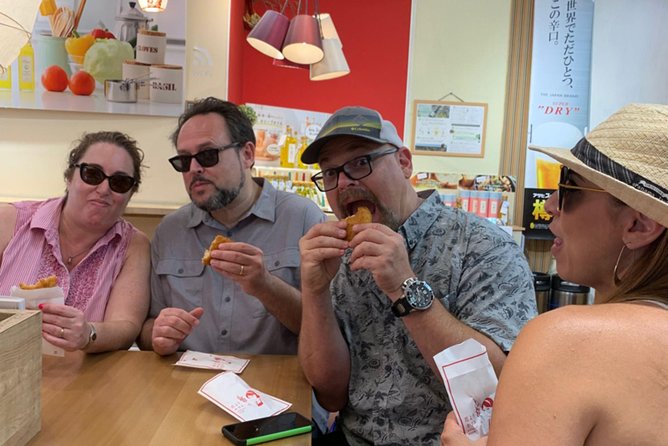
The tour works best if you enjoy trying small bites, asking questions, and learning how foods are sold. It is less suitable if you want seven restaurant-style servings or a drink paired with every dish. Additional food and drinks are not included, but you can buy them if a particular stall catches your eye.
Brunch is useful, but expectations need adjusting
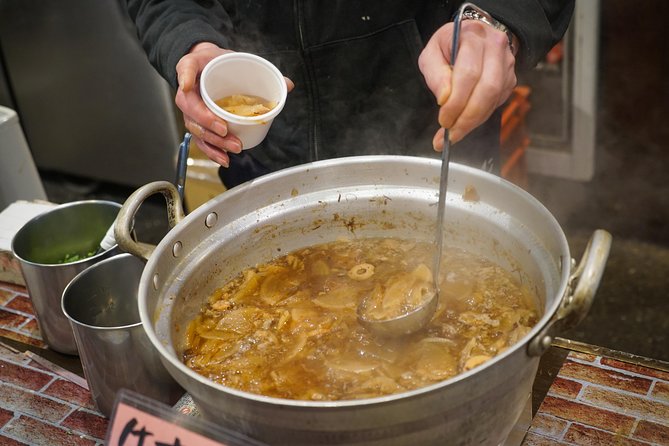
Brunch is included at a restaurant and comes after the market portion. Several people enjoyed the meal and described it as good quality, delicious, or better than expected. Dumplings were singled out as a favorite in one especially positive account, and another person appreciated having several lunch choices.
Still, brunch appears to be the most inconsistent part of the experience. Some departures have taken place at a bookshop café with limited options. One account described the meal as below average, while another felt it would have been better to eat more food inside the market instead.
The meal may also be smaller than you expect from the word brunch. One account described it as one of three small meals served with water. I would think of brunch as a pleasant sit-down finish, not a lavish feast.
This arrangement has one clear benefit. After walking and sampling food in a crowded market, you get a chance to sit, eat, and talk with the guide. It also gives you a proper meal before the rest of your sightseeing day.
If you would rather spend your full food budget on larger portions from market vendors, the included brunch may feel like less value. If you appreciate a scheduled meal and a comfortable ending, it is a useful part of the package.
The guide can make or break the morning
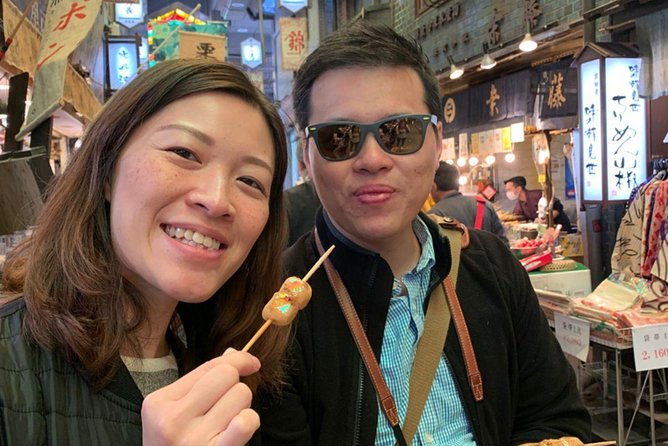
The strongest praise is aimed at the guides. Yuki is praised for taking the group beyond the main stalls and into several shops. Yusuke received praise for explaining both food and Japanese culture. Takaya was appreciated for answering questions and giving food suggestions for the rest of the trip.
Hikaru was described as informative and engaging, while Chie was praised for her humor and practical Kyoto tips. Reiki received strong approval for clear English and careful explanations. Emi was noted for covering history, culture, and food while keeping the morning enjoyable.
Yutaka appears several times in positive comments for his professionalism and ability to connect food with Japanese customs, aesthetics, and daily life. Aki was praised for working hard to keep the group happy, and Rakel was commended for making the experience accessible to both adults and a 14-year-old.
That is a useful clue about the tour’s real strength. You are not paying only for food. You are paying for someone to bridge the gap between a foreign market and your own understanding.
There is also one serious warning. A poor guide can leave long pauses, unclear explanations, and little help during the market portion. One very negative account described the tour as disorganized and wanted to leave early. The operator apologized and said it would work on communication and guidance.
The large number of positive ratings suggests that most departures go well, but no tour is completely guide-proof. If your experience starts late or the explanation is unclear, ask direct questions early. The format depends heavily on conversation.
Is the $68.31 price fair?
At $68.31 per person, the price is not the cheapest way to visit Nishiki Market. You can enter the market for free and buy small samples as you go. A confident eater who enjoys making independent choices may get more food by spending the same amount directly with vendors.
The price makes more sense when you value the added structure. You receive a guide, seven tastings, brunch, a route through several Kyoto districts, and photos from the tour. A group of no more than six, as described in the main tour details, also gives you a better chance to ask questions than a large bus tour. The additional information lists a maximum of ten, so confirm the group size if that point is important to you.
For a first visit to Kyoto, the tour can save time and reduce uncertainty. You do not need to research every stall or worry about making a mistake with unfamiliar food. The guide can also point out places and dishes worth returning to later.
For repeat Kyoto visitors, the value depends on your interest in food culture. If you have already explored Nishiki carefully, the short walks and guided tastings may feel less necessary. You may prefer to spend the money on a specific restaurant or on larger portions at the market.
Weather, clothing, and food restrictions
The tour requires good weather, and poor conditions can lead to a different date or a full refund. Kyoto’s weather can be severe, with summer highs listed as high as 40°C and winter lows as low as minus 5°C.
Wear comfortable shoes and carry water. Much of the time is spent walking and standing, and the market can be crowded. In hot weather, light clothing and sun protection will make the morning easier. In cold weather, dress for waiting outdoors between stops.
Food restrictions need careful attention. Gluten-free requests cannot be accommodated. The operator also cannot guarantee allergy-free food because the food is prepared in kitchens outside its control.
You should report allergies or dietary requests at least one day before the tour. Even then, substitutions may not be available at every stop. This is not a safe choice for anyone who requires strict control over cross-contact or ingredients.
Who will enjoy this Kyoto food walk?
I would recommend it most strongly to first-time Kyoto visitors who want help navigating Nishiki Market. It is also a good fit for curious eaters, families with older children, and people who enjoy cultural explanations alongside food.
The small-group format should suit you if you want to ask questions without speaking to a crowd. The supplied experiences suggest that the guides can adapt well to different ages and interests, including teenagers.
You may want to skip it if you prefer independent exploration, dislike small tasting portions, or want a food tour built around full servings at several restaurants. It may also disappoint you if brunch quality and menu choice are central to your decision.
Should you book the Nishiki Market Brunch Walking Tour?
Book it if you want a friendly introduction to Kyoto food, a guide through a crowded market, and a sit-down meal afterward. The strongest reason to go is the guide-led context, especially when you get someone like Yuki, Yusuke, Takaya, Hikaru, Chie, Reiki, Emi, Aki, Rakel, or Yutaka.
Go in with realistic expectations. Seven tastings does not mean seven large dishes, and brunch may be modest. If you understand that this is a cultural food walk rather than an all-you-can-eat feast, the $68.31 price can be fair.
If you are comfortable navigating markets alone, spend the money directly on food and choose your own route. If Nishiki feels intimidating, or you want someone to explain what you are seeing and eating, this three-hour walk is a practical way to get started.
Free cancellation is available up to 24 hours before the start time. That gives you useful flexibility, but changes or cancellations inside 24 hours are not refunded.
FAQ
How long does the Nishiki Market Brunch Walking Tour last?
The tour lasts approximately three hours.
Where does the tour begin?
The meeting point is at the Statue of Izumo-no-Okuni in Kawabatacho, Higashiyama Ward, Kyoto.
Where does the tour end?
The tour ends at Nishiki Market in Higashiuoyacho, Nakagyo Ward, Kyoto.
What food is included?
The tour includes seven kinds of tastings from the market and brunch at a restaurant.
Are drinks included?
Additional food and drinks are not included, but they are available for purchase.
What places are visited before Nishiki Market?
The route includes Shijo Bridge, the Pontocho District, and Nishiki Tenmangu Shrine before the main market visit.
Can the tour accommodate gluten-free requests?
No. Gluten-free requests cannot be accommodated.
What happens if bad weather cancels the tour?
If poor weather causes cancellation, you will be offered a different date or a full refund. You can also cancel up to 24 hours before the start time for a full refund.
More Shopping Tours in Kyoto
- Kyoto: Local Food Tasting Tour at the Nishiki Market
★ 4.7 · 135 reviews - Kyoto: Nishiki Market and Depachika Food Tour with a Local
★ 4.7 · 76 reviews - Kyoto: Nishiki Market Tour with a Local Foodie & Tastings
★ 4.5 · 67 reviews - Nishiki Market Lunch Tour
★ 5.0 · 47 reviews
Just added around Kyoto
- Kyoto: Private Customizable Day Trip by Car★ 5.0 · 38 reviews
- Kyoto: Gion Night Walking Tour with Geisha Insight★ 5.0 · 39 reviews
- Kyoto: Full Day Bike Tour★ 4.9 · 39 reviews
- Private Japanese Calligraphy in Kyoto – Learn Shodō with a Master★ 5.0 · 39 reviews
- Experience a tea ceremony in an authentic tearoom, in Kyoto!★ 4.5 · 41 reviews
- Kyoto: Gion Evening Walk with Hidden Gems, Geisha & Sake★ 5.0 · 41 reviews
- Kyoto Private Photo Shoot & Tour by SnapKyoto★ 5.0 · 41 reviews
- The Way of Tea: Kyoto Crafts, Hidden Temples & Wabi-Sabi Walk★ 5.0 · 41 reviews
Markets, compared.
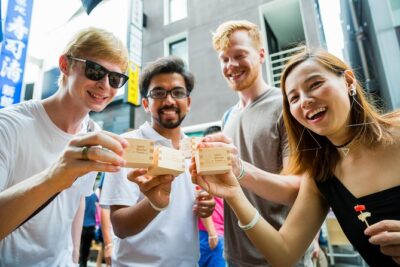
Tokyo Tsukiji Fish Market Food and Culture Walking Tour
Read our review →
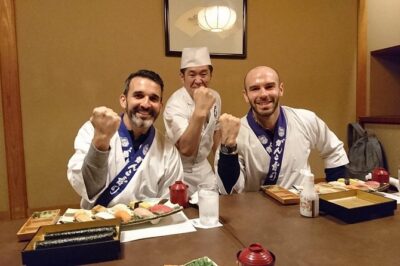
Tsukiji Fish Market Guided Tour and Sushi Making with Pro Chef
Read our review →Tsukiji Fish Market Food and Culture Walking Tour
Read our review →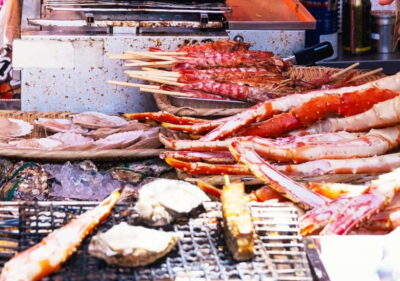
Tsukiji Fish Market: Street Food & Culture Walking Tour
Read our review →
Tsukiji Fish Market Small-Group Food Walking Tour
Read our review →
Kuromon Market Food Walking Tour in Osaka (6 stops, 6 tastes)
Read our review →Browse the lists this tour appears in