
Reviewed · CASTLE TOURS
Learning Zen of Japanese Calligraphy in kimono near Osaka Castle
Brush, ink, and a little courage make memorable souvenirs. This one-hour Osaka activity combines a kimono fitting with a beginner-friendly lesson in shodo, Japanese calligraphy, so you learn something rather than simply pose for a costume photo. I especially like choosing a kanji character with a personal meaning and receiving digital photos afterward. The main drawback is practical: the meeting place can be difficult to spot, and past operating problems caused serious confusion for some customers, so I would confirm the address and activity status before setting out.
The class suits adults, children, couples, and families who want a quiet cultural break after Osaka Castle. The small group of up to 10 people allows for individual help, though the one-hour schedule gives you only an introduction, not mastery of Japanese writing.
In This Review
- Key points to know before booking
- What this Osaka calligraphy class actually offers
- Changing into a kimono before touching the brush
- Learning the tools and the Zen mindset
- Choosing a kanji character with personal meaning
- Practice sheets, final drafts, and take-home art
- The photo session and included digital images
- Why the $43.59 price can be worthwhile
- Getting to the storefront near Osaka Castle
- Who will enjoy this activity most
- Language, timing, and booking advice
- Should you book the kimono calligraphy class?
- FAQ
- How long does the calligraphy experience last?
- Is the class suitable for beginners and children?
- What clothing is included?
- Are photographs included?
- Can I request a language other than English?
- What happens if I am late?
- Is the meeting point easy to find?
- Can I cancel for a refund?
Key points to know before booking
- You dress in traditional clothing first, including a kimono, hakama, or another available outfit, before sitting down to practice.
- You choose your own kanji character, then learn its meaning, stroke order, and basic brush movements.
- The teacher covers tome, hane, and harai, the essential stop, flick, and sweep techniques used in shodo.
- Your foreign name is translated into kanji and written on a wooden tag as a personal memento.
- Photos are included, with the image data sent to your designated email address.
- The meeting point requires care, since the small storefront has been easy for some participants to miss.
What this Osaka calligraphy class actually offers
This is not a long art course. It is a compact cultural activity built around three simple ideas: put on traditional clothing, learn the basic discipline of Japanese calligraphy, and leave with photographs and artwork.
The calligraphy portion gives you a first look at shodo, which means the way of writing, or the path of writing. The teacher explains that Japanese calligraphy is not just decorative handwriting. It depends on posture, brush control, the order of each stroke, and the balance of the finished character.
That distinction matters. You are not simply copying a pretty symbol from a card. You learn that a kanji character carries meaning, and that the order and direction of its strokes affect its form. The result is a more thoughtful activity than a quick photo stop.
The teaching is designed for complete beginners. You do not need to read Japanese, and the English-speaking arrangement is intended to handle the language gap. Other languages, including Italian, Spanish, French, Chinese, Thai, and Indonesian, may be requested, but staff availability is limited, so English is the safest choice.
More Calligraphy Classes in Osaka
- Osaka: Private Japanese Calligraphy Experience
★ 5.0 · 66 reviews - Calligraphy Workshop in Namba, Dotonbori
★ 5.0 · 57 reviews - Osaka: Private Tea Ceremony and Calligraphy Experience
★ 5.0 · 50 reviews
Changing into a kimono before touching the brush
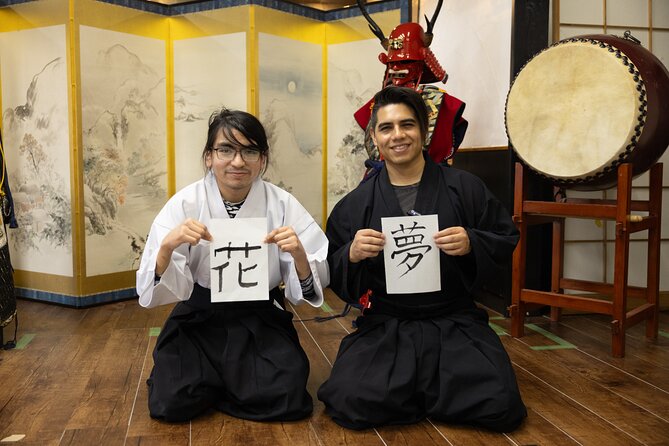
The experience begins with preparation. You change into traditional Japanese clothing before the lesson, which may include a kimono, hakama, or another period-style outfit offered by the studio.
Allow a little patience here. A kimono is not a jacket you pull on in ten seconds. One account describes roughly a dozen parts involved in the fitting, so the process takes several minutes. That is part of the activity, but it also means you should arrive early rather than treating the start time casually.
The clothing adds atmosphere to the class and makes the later photographs more distinctive. Sitting on tatami mats in traditional dress gives the lesson a clear Japanese setting, even though the session is short.
Comfort is worth considering. The information provided for the activity warns that traditional clothing can make you sweat, particularly when wearing hakama or heavier outfits. Use the restroom before changing, since going back and forth after the fitting may be inconvenient.
The optional wagami package, which includes arranged hair and kanzashi hair ornaments, costs ¥3,300 per person. It is not included in the listed price, so ask about it before the session if hairstyling is important to you.
Learning the tools and the Zen mindset
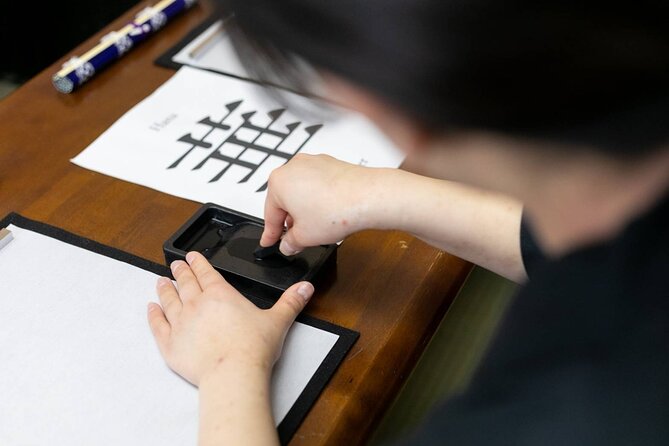
Once dressed, you sit down and are introduced to the tools. You learn how to hold the brush, how to position your hand, and how to use the ink and paper.
The teacher also explains how shodo differs from calligraphy traditions found overseas. The lesson places value on concentration and controlled movement, not just the final appearance. You may find the first few strokes surprisingly physical because the brush responds to pressure, speed, and direction.
The class begins with the basic brush actions called tome, hane, and harai. In practical terms, these teach you how to stop a line cleanly, flick the brush, and sweep it away in a controlled finish.
These small movements are the useful part of the session. They give you a way to understand why a character looks balanced or awkward. A patient instructor can correct your grip and guide your hand before you attempt the more meaningful final piece.
The pace appears gentle rather than competitive. Beginners receive repeated practice sheets and hands-on help. Children can participate, although very young children may need an adult to help them follow instructions and remain comfortable in the traditional clothing.
Choosing a kanji character with personal meaning
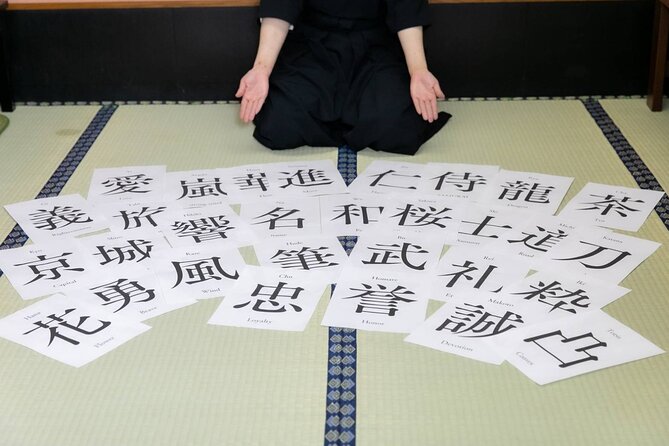
You then select a Japanese kanji character to practice. This is one of the best parts of the activity because the character is not just a design. Each kanji can carry several shades of meaning depending on context.
You might choose an idea such as sincerity, loyalty, peace, strength, or another quality that matters to you. The teacher explains the character and shows its stroke order before you copy it.
Do not expect to memorize Japanese writing in one hour. Kanji can be difficult, and even one character requires attention to shape and sequence. The value here is learning how the writing works and understanding that the image on your finished paper represents an idea, not merely your name in another alphabet.
One useful detail is the translation of foreign names. The teacher writes participants’ names using kanji characters and places them on wooden tags. The character choices can reflect sound, meaning, or both, so ask about the meaning of the characters used for your name.
More Castle Tours in Osaka
- Osaka Castle: Museum and Tower Entry Ticket
★ 4.5 · 2,380 reviews - Ultimate Osaka Walking Tour: Castle, Dotonbori & Hidden Gems
★ 5.0 · 862 reviews - Osaka Castle Walking Tour and Castle Tower Admission
★ 5.0 · 561 reviews - From Osaka: Himeji Castle, Arima Onsen & Mt. Rokko Day Tour
★ 4.6 · 339 reviews
Practice sheets, final drafts, and take-home art
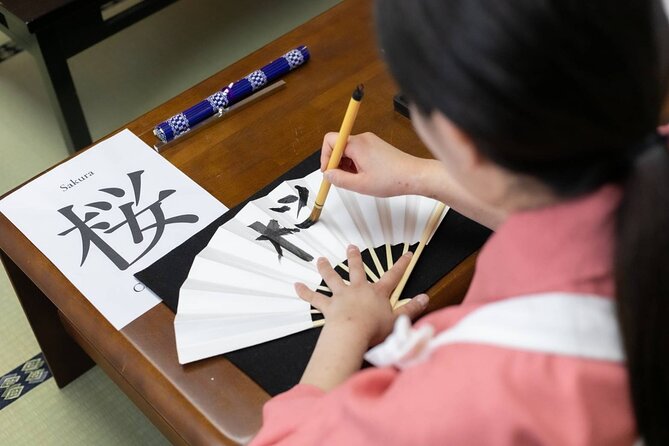
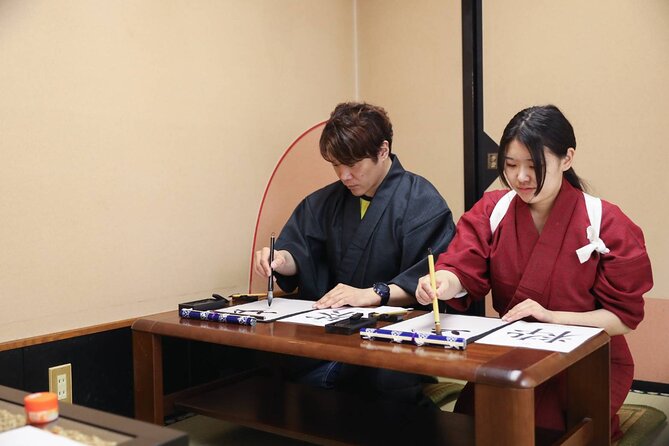
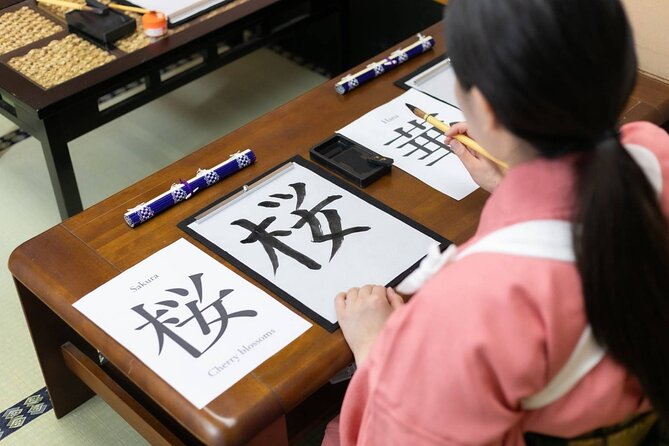
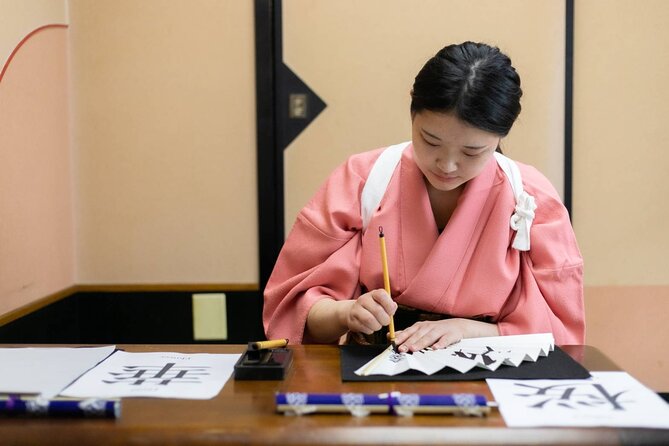
After the demonstration, you practice your selected character several times. The teacher shows the stroke order and watches your technique as you work.
This practice stage gives you room to make mistakes. The brush may spread ink, a line may finish too heavily, or the character may lean. That is normal. The class is meant to introduce the discipline of shodo, not judge you as an accomplished calligrapher.
When you feel ready, you write a final draft while keeping the lesson in mind. Depending on the session arrangement, your completed work may be placed on a fan, scroll, or another paper item. The supplied details confirm the calligraphy work and photographs, while the exact final format may vary, so it is sensible to ask the instructor what you will take home that day.
You may also receive practice sheets or a small gift bag. The wooden name tag is a particularly nice touch because it gives you something personal rather than a generic souvenir.
The strongest part of the activity is this shift from watching to making. You first see the teacher’s controlled brushwork, then struggle through your own attempts, and finally create a piece that records what you learned.
The photo session and included digital images
At the end, the class turns into a short photo session. You pose in your kimono with your calligraphy, and staff take photographs for you.
The photography is included. Image data is sent to the email address you provide, which is more useful than receiving one hurried snapshot on a staff member’s phone. Check that your email address is correct before leaving.
You can also take personal smartphone photographs, but the rules are specific. Do not photograph other participants without permission, do not take selfies during the organized activity, and do not use a fixed tripod or record video. These restrictions help keep a small class from turning into a photo shoot that interrupts the lesson.
The photographs are a real part of the value. At $43.59 per person, you are paying for instruction, traditional clothing, the calligraphy activity, and a set of digital images. If you only wanted a costume portrait, a dedicated photo studio might offer more poses. If you want a cultural activity with a finished piece of art, this package makes better sense.
Why the $43.59 price can be worthwhile
The price is moderate for Osaka, but its value depends on what you want from the hour.
The included clothing saves you from arranging a separate kimono rental. The teacher’s instruction gives the activity more substance than a simple dress-up session, and the name translation, artwork, and digital photographs provide several take-home results.
The small maximum of 10 participants also helps. You are not entering a large production line where everyone copies the same symbol without guidance. The class still may feel brisk because one hour includes changing, explanation, practice, final writing, and photographs.
I would consider the price fair for a first cultural activity, especially if you are already visiting Osaka Castle. It becomes less attractive if you want a serious calligraphy course, a long meditation session, or detailed instruction on all Japanese scripts. One hour can introduce shodo, but it cannot cover kanji, hiragana, katakana, and the history of Japanese writing in depth.
One participant found the background explanation of the different Japanese alphabets too limited. That is a fair caution. The focus is practical brushwork and one chosen character, not a full language lesson.
Getting to the storefront near Osaka Castle
The meeting address is in Osaka’s Joto Ward at 2-chome 3-19 Shiginonishi, listed with the postal code 536-0014. The activity ends at the same place.
The operator describes the venue as close to Osaka Castle Park Station, with one response describing it as about a one-minute walk from the station. At the same time, the address and storefront description deserve attention. One participant found the small shop easy to walk past, even with accurate Google Maps directions.
I would allow at least 15 extra minutes to locate the entrance. Keep the mobile ticket and booking details open on your phone, and confirm the exact pin before leaving the station. The warning about lateness is strict: more than 30 minutes late can mean refused entry, even if you contact the operator.
The location works especially well after a visit to Osaka Castle Park. Calligraphy gives your legs a rest after walking around the castle grounds, and the activity adds a quieter side of Japanese culture to a day often centered on fortifications, gardens, and military history.
There is an important reliability caution. Several customers reported arriving at a closed or hard-to-identify location and being unable to reach the host. The operator later attributed some cancellations to a temporary closure from June 9 through June 29, 2025, and stated that management and staffing had changed. Since this type of problem can ruin a tightly planned day, I would verify the reservation and operating status shortly before your appointment.
Who will enjoy this activity most
This class is a good choice for:
- Families looking for a hands-on activity that children can attempt
- First-time visitors who want a simple introduction to Japanese culture
- Couples or friends who want photographs in traditional clothing
- People who enjoy making souvenirs instead of only buying them
- Anyone already planning time around Osaka Castle
It also works for solo participants. The small class size and individual guidance can make it easier to concentrate, although the photo portion may feel more valuable to couples and families.
You should reconsider it if you have significant back problems or a heart condition. The activity is not stroller accessible, and pets are not suitable, although service animals are allowed. Sitting on tatami and wearing traditional clothing may not be comfortable for everyone.
You must also sign a liability waiver before taking part. That is a routine condition of the activity, but it is worth knowing in advance.
Language, timing, and booking advice
English is the default language. The provider may accommodate Italian, Spanish, French, Chinese, Thai, or Indonesian, but limited staff availability means these requests cannot be guaranteed.
The activity is usually booked well ahead, with an average booking lead time of about 36 days. That suggests you should reserve early if your Osaka schedule is fixed, particularly if you want to pair it with a specific Osaka Castle visit.
The mobile ticket is convenient, but it does not solve the location issue. Save the address, map pin, start time, and contact details before you arrive.
Free cancellation is available when you cancel at least 24 hours before the start time. Cancellations or changes made inside that period are not refunded, and the cut-off uses Osaka local time.
Should you book the kimono calligraphy class?
I would book this experience if you want a friendly, low-pressure introduction to shodo and like the idea of leaving with personal artwork and photos. The strongest elements are the patient instruction, the chance to choose a kanji character, the translated name tag, and the traditional clothing.
I would not book it expecting a full lesson in Japanese writing or a polished professional photo session. The hour is short, the alphabet background may be brief, and the venue has had enough communication and closure trouble that you should confirm everything before traveling across Osaka.
For families and first-time visitors, this is a thoughtful add-on to Osaka Castle. Reserve ahead, arrive early, use the restroom before changing, and check the storefront carefully. With those precautions, the class offers a pleasant way to slow down, try something unfamiliar, and bring home a souvenir you actually made.
FAQ
How long does the calligraphy experience last?
The activity lasts approximately one hour, including changing into traditional clothing, instruction, practice, the final draft, and photographs.
Is the class suitable for beginners and children?
Yes. The class is open to all skill levels, and children can participate.
What clothing is included?
Traditional Japanese attire is included, such as a kimono, hakama, or another available traditional outfit. Arranged hair and kanzashi hair ornaments are optional and cost ¥3,300 per person.
Are photographs included?
Yes. Photography is included, and the digital images are sent to the email address you provide.
Can I request a language other than English?
English is the default language. Italian, Spanish, French, Chinese, Thai, and Indonesian may be requested, but availability is limited and cannot be guaranteed.
What happens if I am late?
You should arrive on time. If you are more than 30 minutes late, the provider may refuse entry, even if you have made contact.
Is the meeting point easy to find?
The activity takes place in Osaka’s Joto Ward near Osaka Castle Park Station. The storefront may be easy to miss, so allow extra time and check the map pin and address carefully.
Can I cancel for a refund?
You can receive a full refund if you cancel at least 24 hours before the start time. Cancellations or changes made less than 24 hours before the activity are not accepted for a refund.
More Kimono Experiences
- Osaka: Sumo Show & Experience w/ Optional Kimono & Hot Pot
★ 4.5 · 609 reviews - Kimono Tea Ceremony at Kyoto Maikoya, NISHIKI
★ 5.0 · 911 reviews - Kyoto: Kimono Rental with Hairstyling and Accessories
★ 4.8 · 653 reviews - Kyoto: Kimono Tea Ceremony at Orizuruya Gion
★ 4.9 · 618 reviews
Just added around Osaka
- Osaka Food Tour with 10 Classic Japanese Tastings & Drinks★ 5.0 · 38 reviews
- Osaka: Highlights & Hidden Gems Private Walking Tour★ 4.7 · 38 reviews
- Kyoto private tour (Shore excursion available from Osaka or Kobe port)★ 5.0 · 39 reviews
- Osaka Private Day Trip – Enjoy Your First-Time Visit to Osaka!★ 5.0 · 39 reviews
- Kyoto & Nara & Uji: Full Day Sightseeing Tour from Osaka or Kyoto★ 4.5 · 39 reviews
- Authentic SUSHI Course Cooking Class★ 5.0 · 39 reviews
- Osaka: Mind & Spirit Balance Temple Reiki Healing★ 5.0 · 41 reviews
- Osaka Afternoon Walking Tour with Osaka River Cruise★ 3.5 · 42 reviews
Castle Tours, compared.

Tokyo Castle & Imperial PalaceーShogun Walking Tour
Read our review →
Nijo-jo Castle and Ninomaru Palace Guided Tour
Read our review →
Ultimate Osaka Walking Tour: Castle, Dotonbori & Hidden Gems
Read our review →Tokyo Castle & Imperial PalaceーShogun Walking Tour
Read our review →
Nijo Castle, Kiyomizu & Fushimi Inari Guided Tour
Read our review →
Osaka Castle Walking Tour and Castle Tower Admission
Read our review →
Imperial Palace East Garden and Edo Castle Walking Tour in Tokyo
Read our review →Browse the lists this tour appears in