
Reviewed · WALKING TOURS
Osaka: Dark Side of Osaka Night Walking Tour
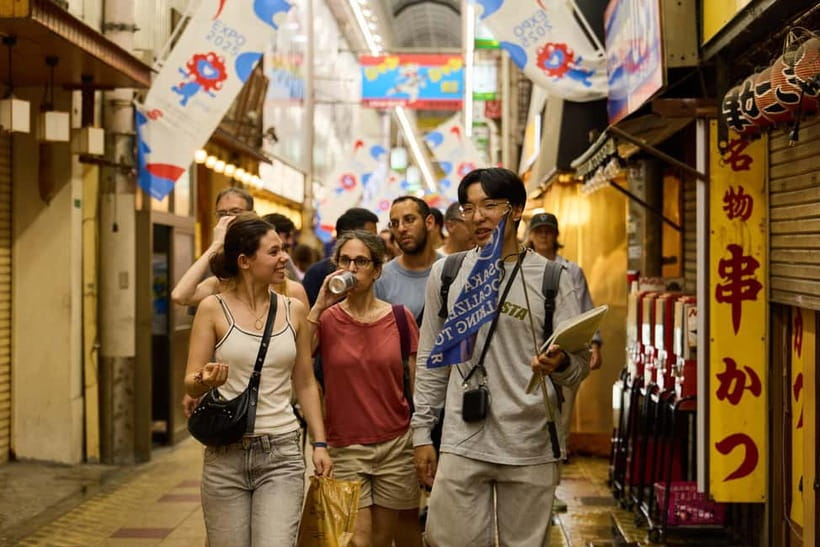
Osaka has stories beyond neon and noodles. This two-hour night walk connects Shinsekai, Nishinari, and Tobita Shinchi while explaining the social forces that shaped them. I like the tour’s willingness to discuss difficult subjects plainly, and I like how its English-speaking guides link old Osaka with life today.
The price is $25 per person, a fair deal for two hours with a live guide and a route you would not easily piece together from a guidebook. The main consideration is its subject matter. Some scenes and topics are confronting, and the tour is not suitable for children under 18 or wheelchair users.
The experience works best if you arrive curious rather than judgmental. Guides such as Jay, Rico, and Matt have been praised for their warmth, historical insight, and care when discussing sensitive issues. Matt’s quick speaking pace may challenge some English learners, but the tour leaves room for questions.
In This Review
- Key points before you book
- Why this Osaka night walk is different
- Starting under the Giant Penguin at MEGA Don Quijote
- Shinsekai, Osaka’s old New World
- Tsutenkaku and the old Osaka mood
- Jyanjyan Yokocho and the taste of retro Osaka
- Nishinari and the working-class side of Osaka
- Tobita Shinchi, tradition behind closed doors
- Small street details that make the walk memorable
- What the $25 price really buys you
- Who should book this experience
- Practical details for a smoother evening
- Should you book the Dark Side of Osaka tour?
- FAQ
- How much does the Dark Side of Osaka Night Walking Tour cost?
- How long does the walking tour last?
- Where does the tour begin?
- Where does the tour finish?
- What language is the tour conducted in?
- Are food and drinks included?
- Is the tour suitable for children?
- Can wheelchair users join the tour?
Key points before you book
- Shinsekai’s unusual design: Learn how this 1912 entertainment district drew inspiration from Paris and Coney Island.
- A close look at Nishinari: See a working-class part of southern Osaka with a complicated past and a changing present.
- Tobita Shinchi after dark: Visit Osaka’s largest and best-known red-light district from public streets, with an explanation of its traditions and strict local boundaries.
- Jyanjyan Yokocho’s retro mood: Walk a narrow food and shopping alley beside Tsutenkaku where old Osaka atmosphere still lingers.
- Small details with big meaning: Guides may explain local signs, street customs, and unusual clues, including the meaning of a torii painted on a wall.
- A practical evening format: The tour lasts two hours, meets under the Giant Penguin at MEGA Don Quijote Shinsekai, and ends at Tsutenkaku.
Why this Osaka night walk is different
Many Osaka tours stay with the easy material: street food, shopping, famous temples, and postcard views. This one asks you to look at the city through poverty, labor, entertainment, social rules, and public behavior.
That does not mean every minute feels grim. Shinsekai is colorful, noisy, and full of places to eat. The point is contrast. You see a district built to represent modern fun, then hear how its fortunes changed. You walk through streets shaped by working-class life, then encounter an entertainment quarter that operates according to old customs and quiet rules.
I find that approach useful because it gives familiar Osaka sights more meaning. Tsutenkaku is not just a tower for photographs. Shinsekai is not only a retro backdrop. The streets become evidence of how the city has changed.
The tone also matters. The strongest guide feedback centers on respectful explanations rather than cheap shock. Jay is repeatedly praised for being friendly and engaging. Rico is noted for clear explanations and practical restaurant suggestions. Matt receives particular credit for handling people’s circumstances with care. That balance is important on a tour that passes through places where careless photography or jokes would be poor form.
More Walking Tours in Osaka
- Osaka: Hotspots & Hidden Gems Walking Tour Private or Group
★ 4.9 · 1,300 reviews - Osaka Local Foodie Walking Tour in Dotonbori and Shinsekai
★ 5.0 · 985 reviews - Osaka Bar Hopping Night Walking Tour in Namba (3 bars, 6 tastes)
★ 5.0 · 958 reviews
Starting under the Giant Penguin at MEGA Don Quijote
The meeting point is under the Giant Penguin outside MEGA Don Quijote Shinsekai. Your guide holds a GetYourGuide sign, so the location should be easy to identify, but give yourself enough time to find the right entrance and gather before the walk begins.
This is a practical starting point. You are already near Shinsekai, so the tour can move quickly into the district instead of spending much of the two hours on transport. There is no hotel pickup, and the experience is entirely on foot.
Wear comfortable walking shoes. You should also prepare for rain, heat, or cooler evening weather, since the tour runs outdoors and the schedule does not promise shelter. Smoking is not allowed, and the activity information also prohibits alcoholic drinks in the vehicle, although this is a walking tour.
The tour is offered in English. If you follow spoken English comfortably, you should get the most from the guide’s historical explanations and question time. One useful caution comes from the feedback about Matt speaking fast. If English is not your first language, ask the guide to slow down when needed.
Shinsekai, Osaka’s old New World
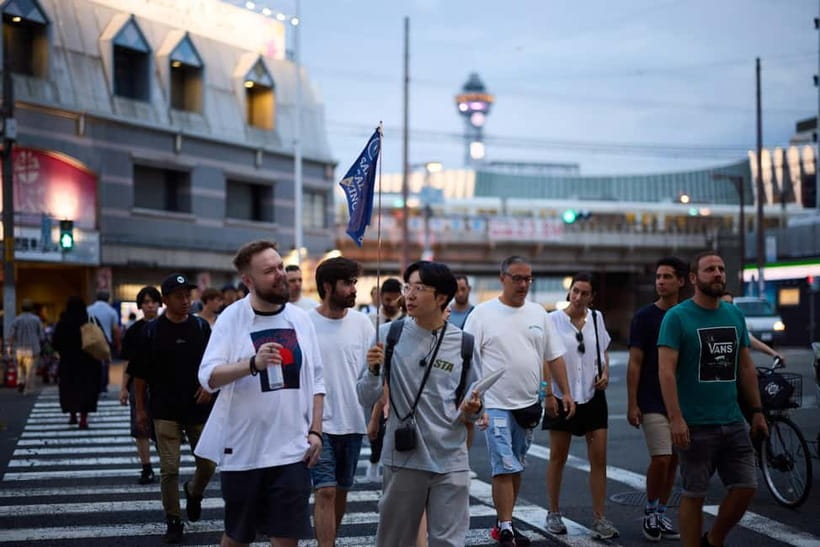
Shinsekai means New World, and its name tells you something about the district’s original ambition. Created in 1912, it was planned as a modern amusement area influenced by foreign ideas. The southern section was modeled after Paris, while the northern part drew from New York’s Coney Island.
That is a curious pairing, and the district still feels like an odd mixture of grand plans and everyday Osaka. The initial shine faded, but Shinsekai kept its retro character. The tour uses the streets to explain that change rather than treating the area as a simple theme park.
This is the first major stop, with roughly 30 minutes of guided sightseeing. You can expect the guide to point out the district’s layout, explain its social role, and set up the wider story of southern Osaka.
I like this section because it gives context before the more sensitive stops. Without it, Tobita Shinchi might seem like an isolated curiosity. With it, you begin to see how entertainment, work, class, and urban planning overlap.
Tsutenkaku and the old Osaka mood

Tsutenkaku Tower is one of Shinsekai’s defining landmarks. It provides the visual anchor for the neighborhood and helps you keep track of the route as you move through its streets.
The tower is part of the sightseeing story, not a promised observation-deck visit. The tour description says you will see Tsutenkaku, and the walk finishes there. If you want to go inside the tower or visit an attraction, treat that as a separate plan rather than something included in the $25 price.
The area around it has a strong nostalgic feel. That does not mean polished or carefully packaged. You see an older entertainment district still functioning as a local neighborhood, with restaurants, signs, alleys, and street life woven together.
A guide can make a large difference here. Jay’s warmth and ability to answer questions are often highlighted, while Rico is praised for combining historical explanation with useful food recommendations. That extra advice can be valuable if you plan to stay in Shinsekai after the walk.
A completely different kind of day out in Osaka:
- Osaka Go Karting Tour with Funny Costume
★ 5.0 · 2,658 reviews - Osaka Castle: Museum and Tower Entry Ticket
★ 4.5 · 2,380 reviews - Osaka: Shinsekai Food Tour with 13-15 Dishes at 5 Eateries
★ 4.8 · 2,204 reviews - Osaka Food Tour: 13 Dishes at 5 Local Eateries
★ 5.0 · 2,149 reviews
Jyanjyan Yokocho and the taste of retro Osaka
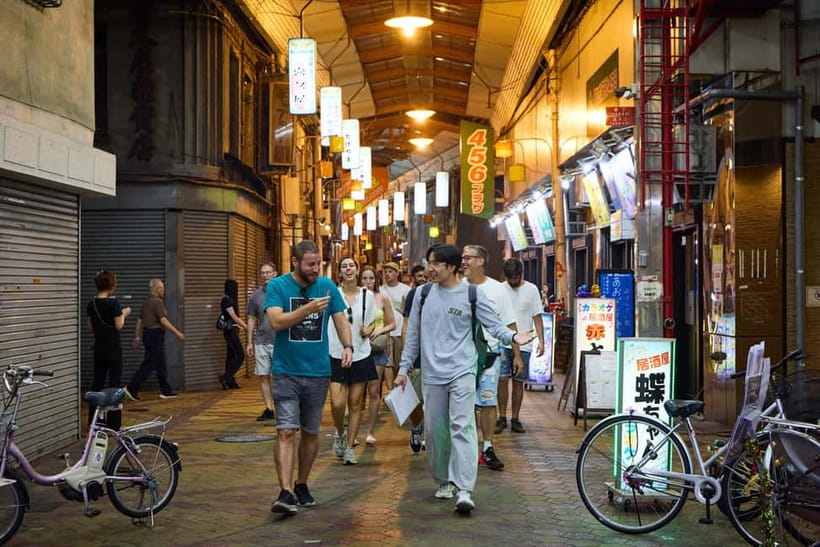
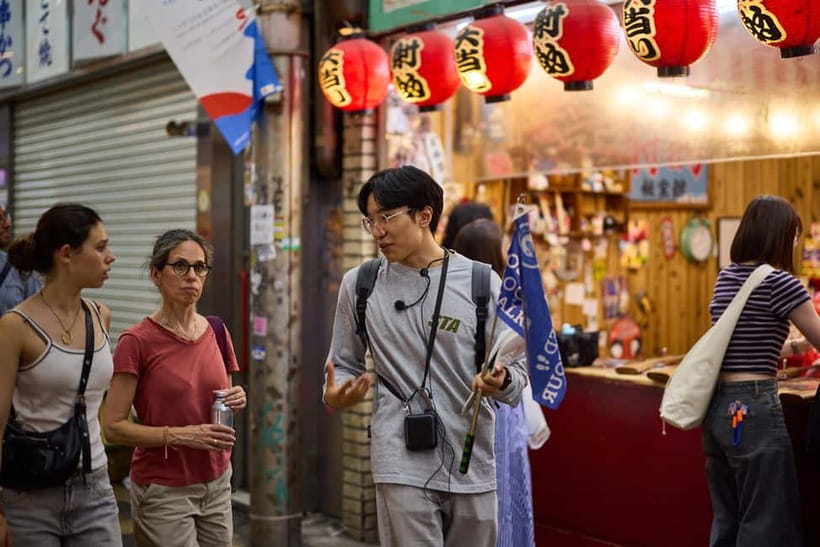
Jyanjyan Yokocho is a narrow shopping and dining street near Tsutenkaku. Its old-style eateries, bars, and small shops create one of the tour’s lighter moments.
The lane is presented as a trip back to mid-20th-century Japan, but it is still a working food street rather than a museum display. You can listen to the guide, look closely at the signs and storefronts, and decide if you want to return for a meal after the tour.
Food and drinks are not included. That is worth remembering because the street may tempt you to stop for kushikatsu or another local bite. The tour itself is about walking and explanation, so budget separately if you want to eat afterward.
One useful feature is the way Jyanjyan Yokocho connects atmosphere with history. You are not simply told that the street looks old. You learn how this kind of entertainment corridor fits into Shinsekai’s identity.
Nishinari and the working-class side of Osaka
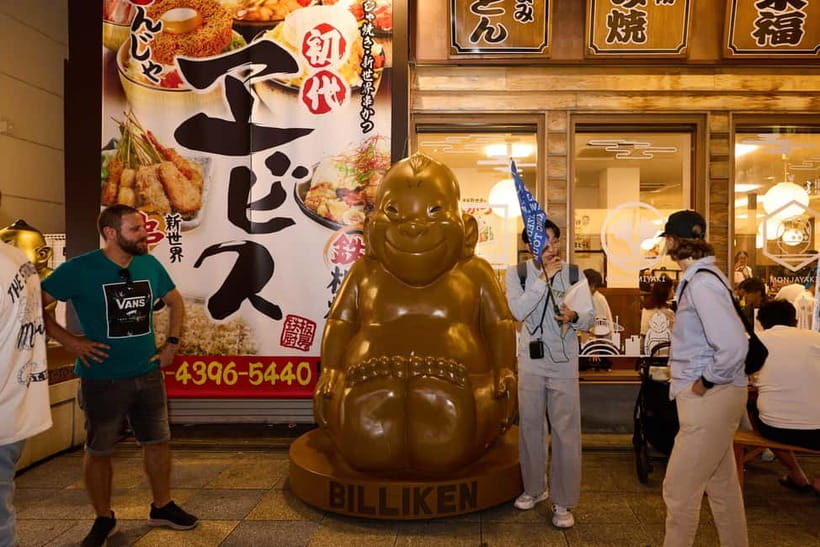
The route continues into Nishinari, a southern Osaka district associated with day laborers and working-class communities. Its character is more raw than the polished central districts most people see on a first visit.
The tour uses about 20 minutes here to discuss the area’s past and its changes. In recent years, Nishinari has attracted budget visitors and people interested in urban history, but the tour does not present it as a spectacle. That distinction matters.
You should pay attention to how the guide talks about residents and local circumstances. Matt has been especially praised for discussing the people connected with the tour’s subject matter respectfully. That is the right approach, and it helps you understand the area without turning hardship into entertainment.
The district may also challenge your expectations of Japan. Visitors often arrive expecting every street to be spotless, prosperous, and quiet. Osaka contains all of those scenes, but Nishinari shows a less comfortable side of city life. The value lies in seeing that contrast and asking better questions about how the city developed.
Tobita Shinchi, tradition behind closed doors
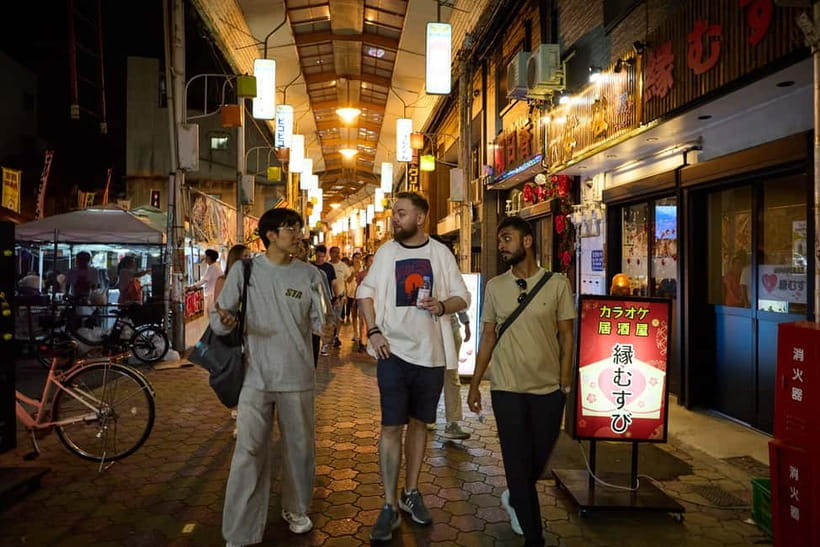
Tobita Shinchi is the most sensitive part of the route. It is Osaka’s largest and most famous red-light district, with more than a century of history. The area is known for distinctive architecture and a tightly regulated environment.
The tour offers a look at this part of urban culture from the public streets. It does not turn the district into a show, and you should follow the guide’s instructions closely. Be discreet, avoid intrusive photography, and remember that people live and work in the area.
This stop lasts about 20 minutes. The guide’s job is to explain the district’s traditions, organization, and place in Osaka, not to encourage gawking. That makes the quality and tone of the guide especially important.
Some subjects here may be confronting. If you prefer cheerful sightseeing, this is probably not your ideal evening. If you want a more honest understanding of the city, the stop can be one of the tour’s most useful parts, provided you approach it with respect.
Small street details that make the walk memorable
The best moments may be details you would miss alone. One guide explained that a torii painted on a wall can mean please do not pee here. It is a tiny piece of street culture, but it shows how local habits, public space, and visual symbols interact.
Those details give the walk its value. A guide can point out something that looks random, then explain the practical reason behind it. You may not remember every date or district boundary, but you are more likely to remember a sign that quietly tells people where not to relieve themselves.
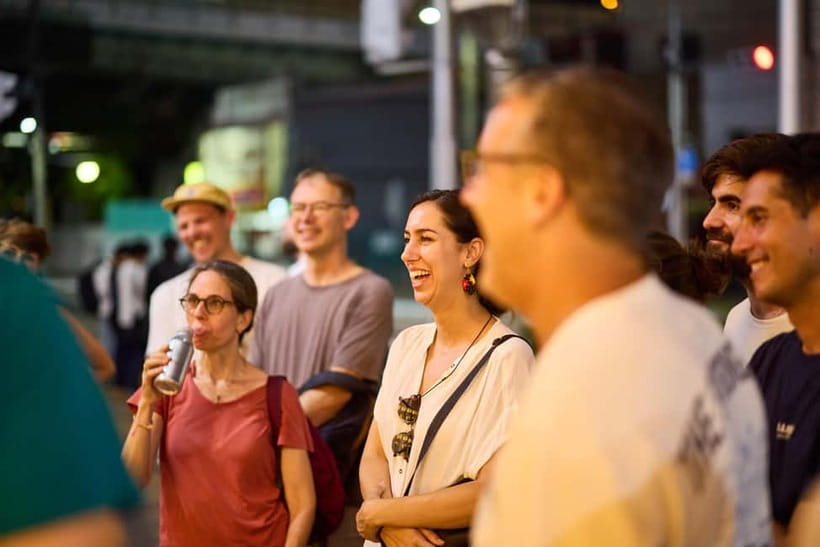
The tour also leaves room for questions. Several guide comments praise the chance to ask about modern Japanese life, local customs, and the difference between historical practices and current rules. That makes the experience more flexible than a speech delivered while you march from stop to stop.
What the $25 price really buys you
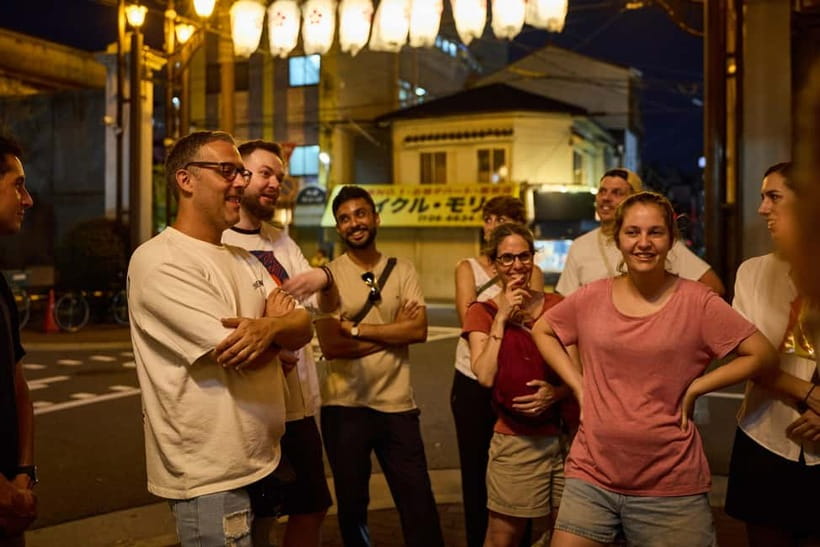
At $25, this is inexpensive by guided-tour standards, especially for a full two hours with an English-speaking guide. You are paying less for entry tickets and more for interpretation, route planning, and access to background that is difficult to find in a standard Osaka guidebook.
There are no attractions or meals included. That keeps the base price low, but you should not mistake the tour for a food crawl or tower admission. Its product is the walk itself and the guide’s explanation.
The value is strongest for first-time visitors who want context. You can visit Shinsekai on your own, but you may only see the tower, restaurant signs, and retro streets. The tour links those sights to Osaka’s modern social history.
A small-group experience can make the price even better because questions are easier. One reported outing had six people, but group size can vary. Do not book expecting a guaranteed private walk.
Who should book this experience
I would recommend the tour to adults who want a side of Osaka beyond shopping and famous landmarks. It suits people interested in social history, urban change, working-class districts, Japanese customs, and the gap between public image and daily life.
It is also a good choice if you enjoy asking questions. The guides are praised for friendliness and for adapting explanations to what catches the group’s attention. On a rainy day, Rico reportedly adjusted well to the conditions, which is reassuring, though you should still dress for the forecast.
This is not a family outing. Children under 18 are not accepted, and the subject matter may be too direct for anyone with a low tolerance for uncomfortable topics. It is also not suitable for wheelchair users, and the walking route may be difficult for anyone who needs step-free access.
You should also be comfortable with an evening walk on ordinary streets. This is not a staged performance. Some locations can feel confronting precisely because they are real neighborhoods rather than attractions designed for sightseeing.
Practical details for a smoother evening
The activity lasts two hours, with the route divided into several guided sections of about 10 to 30 minutes. It begins at MEGA Don Quijote Shinsekai and finishes at Tsutenkaku.
Book a start time that leaves room for dinner afterward if you want to eat in Shinsekai. Food and drinks are not included, but the ending location puts you close to the neighborhood’s restaurants and old dining lanes.
Comfortable shoes matter more than stylish ones. Check the weather before leaving, carry what you need for rain or heat, and keep your hands free enough to walk safely.
The tour has free cancellation up to 24 hours before the start time, and you can reserve now and pay later. Those terms are useful if your Osaka plans are still shifting, but the main booking decision should be about subject matter, not flexibility.
Should you book the Dark Side of Osaka tour?
Book it if you want a thoughtful, adult look at Osaka’s less polished districts and are willing to listen with respect. The strongest reasons are the reasonable $25 price, the compact two-hour route, and guides such as Jay, Rico, and Matt, who are praised for warmth, careful explanations, and strong knowledge of modern Osaka.
Skip it if you want only food, shopping, tower views, or light entertainment. Tobita Shinchi and Nishinari require sensitivity, and the tour may leave you thinking more than smiling.
For the right person, that is the point. You finish near Tsutenkaku with a better understanding of why Osaka looks and feels the way it does, including the parts most visitors never notice.
FAQ
How much does the Dark Side of Osaka Night Walking Tour cost?
The tour costs $25 per person.
How long does the walking tour last?
The experience lasts two hours.
Where does the tour begin?
Meet under the Giant Penguin at MEGA Don Quijote Shinsekai. The guide will be holding a GetYourGuide sign.
Where does the tour finish?
The tour finishes at Tsutenkaku.
What language is the tour conducted in?
The live tour guide speaks English.
Are food and drinks included?
No. Food and drinks are not included in the tour price.
Is the tour suitable for children?
No. The experience is not suitable for children under 18.
Can wheelchair users join the tour?
No. The activity is listed as unsuitable for wheelchair users.
Just added around Osaka
- Osaka Food Tour with 10 Classic Japanese Tastings & Drinks★ 5.0 · 38 reviews
- Osaka: Highlights & Hidden Gems Private Walking Tour★ 4.7 · 38 reviews
- Kyoto private tour (Shore excursion available from Osaka or Kobe port)★ 5.0 · 39 reviews
- Osaka Private Day Trip – Enjoy Your First-Time Visit to Osaka!★ 5.0 · 39 reviews
- Kyoto & Nara & Uji: Full Day Sightseeing Tour from Osaka or Kyoto★ 4.5 · 39 reviews
- Authentic SUSHI Course Cooking Class★ 5.0 · 39 reviews
- Osaka: Mind & Spirit Balance Temple Reiki Healing★ 5.0 · 41 reviews
- Osaka: Gluten-Free Ramen and Gyoza Cooking Class★ 5.0 · 42 reviews
Walking Tours, compared.
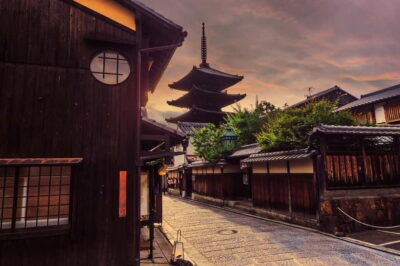
Kyoto Geisha Walking Tour: Gion District & Hidden Gems
Read our review →
Tokyo Tsukiji Fish Market Food and Culture Walking Tour
Read our review →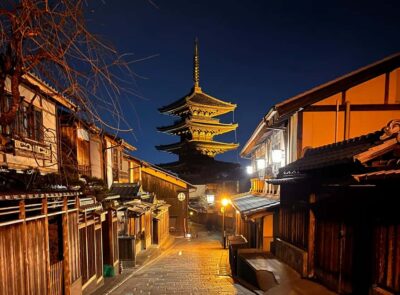
Gion Magical Night Walking Tour with Geisha Trivia
Read our review →
Imperial Palace and Shogun Historical Walking Tour
Read our review →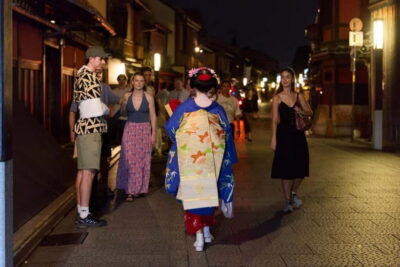
Gion Geisha District Walking Tour – Stories of Geisha
Read our review →
Shinjuku Local Bar and Izakaya Guided Walking Tour
Read our review →
Browse the lists this tour appears in