
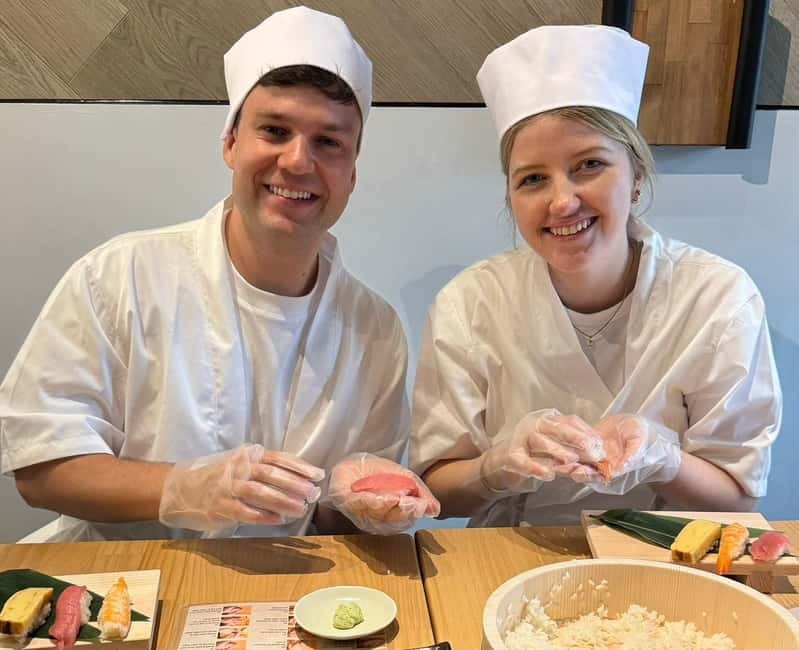
Reviewed · SUSHI-MAKING CLASSES
Osaka Dotonbori: Sushi Making Experience
Sushi tastes better when you make it. This 90-minute Osaka Dotonbori class turns lunch into a hands-on lesson in Japanese food culture, with English-speaking instructors, 12 pieces of sushi, Japanese sake, playful sushi cosplay, and a sushi master certificate. I like the clear step-by-step teaching, and I like that vegan and halal sushi options are available. The one consideration is that one recent participant found the seafood good but not exceptionally fresh, so serious sushi connoisseurs may want to keep expectations sensible.
The class costs $45 per person, which is fair for a central Osaka activity that combines food, instruction, drinks, photos, and a small gift. I also like how friendly the teaching style sounds, with instructors such as Mako, Mika, Saki, Yumiko, Kosei, and Toshiki repeatedly praised for making beginners feel comfortable.
In This Review
- Key points at a glance
- Why this Dotonbori class works so well
- The first lesson: building proper sushi rice
- Adding wasabi and neta to each piece
- Shaping the finished sushi with your hands
- Sake, sushi cosplay, and the fun extras
- The instructors are the heart of the experience
- Food choices for different diets
- Is $45 good value in Osaka?
- Timing, location, and practical planning
- Who should book this sushi class?
- Should you book Osaka Dotonbori Sushi Making?
- FAQ
- How long does the Osaka Dotonbori sushi class last?
- How much does the sushi-making experience cost?
- Is the class taught in English?
- How many pieces of sushi will I make?
- Is Japanese sake included in the experience?
- Are vegan and halal sushi options available?
- Is the activity wheelchair accessible?
- Can I cancel and receive a refund?
Key points at a glance
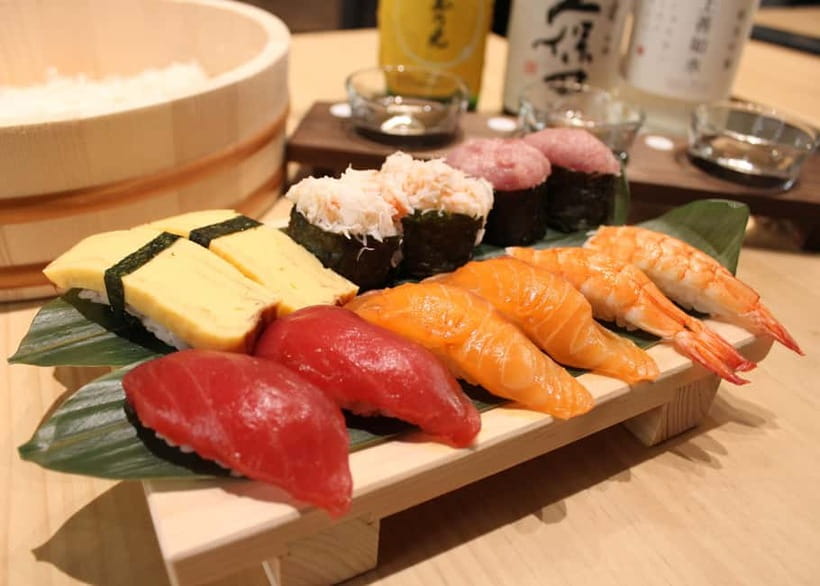
- You make 12 pieces of sushi yourself, from seasoning the rice to shaping the finished pieces.
- English-speaking instructors guide every stage, including sushi ingredients, techniques, Japanese culture, and chopstick use.
- Japanese sake is part of the experience, giving you a small introduction to a classic Japanese drink alongside your handmade meal.
- Sushi cosplay and photos add a light, silly touch, making this more than a standard cooking lesson.
- Vegan and halal sushi options are available, while gluten-free soy sauce has also been provided when requested.
- The $45 price includes ingredients, cosplay, and a sushi master certificate, with free cancellation up to 24 hours before the start time.
Why this Dotonbori class works so well
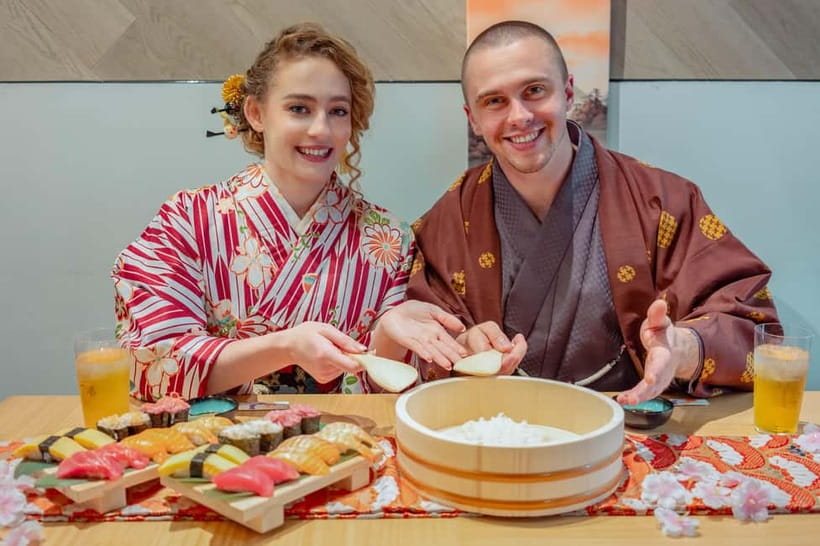
Dotonbori is one of Osaka’s most famous eating districts, so a sushi class here fits neatly into a day of food, neon signs, shopping, and canal-side sightseeing. You are not simply sitting down to eat sushi. You are learning how the pieces are built, then eating the results while the steps are still fresh in your mind.
The class is aimed at beginners. That matters. Sushi can look simple, but the rice, topping, pressure, and shape all need to work together. The instructors break the work into small jobs and demonstrate each one before you try it.
The strongest part of the experience is the human touch. Mako, Mika, Saki, Yumiko, Kosei, and other instructors are repeatedly described as cheerful, patient, funny, and easy to understand in English. Their approach seems less like a formal culinary school and more like a friendly introduction to a food tradition.
That makes this a good pick for families, couples, first-time visitors, and anyone who enjoys doing something rather than just watching. A family with a 15-year-old found the session suitable for all three members, and several first-time sushi makers were able to follow the instructions without trouble.
More Sushi-Making Classes in Osaka
- Sushi Making Osaka Roll and Authentic Japanese Sushi Class
★ 5.0 · 1,220 reviews - Osaka Sushi Making Experience
★ 5.0 · 400 reviews - Osaka Sushi Making Class – Hands-On Nigiri & Rolls (Same-Day OK)
★ 5.0 · 352 reviews
The first lesson: building proper sushi rice
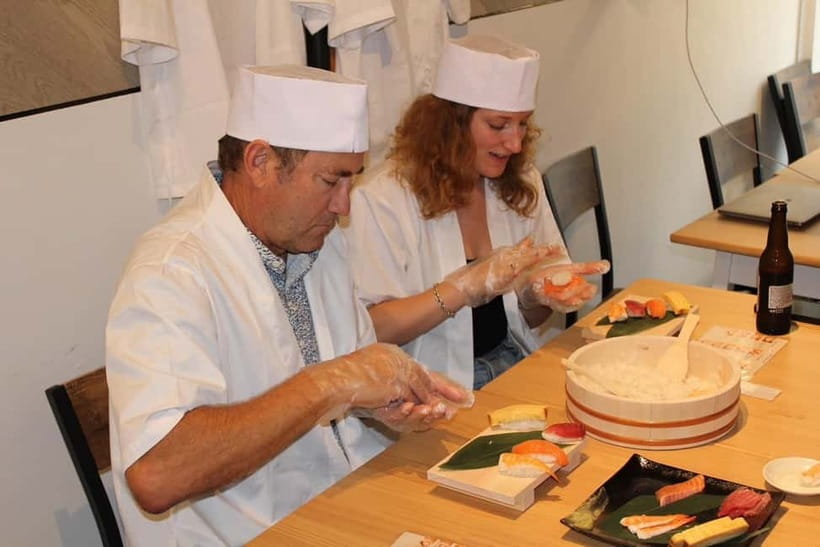
The class begins with shari, the seasoned sushi rice. You pour sushi vinegar over the rice and learn how this changes plain rice into the slightly sweet, tangy base used for sushi.
This may sound like a small detail, but it is the foundation of the whole meal. If the rice is too loose, too firm, or badly shaped, the topping will not sit correctly. The class gives you a practical sense of why sushi rice is different from ordinary steamed rice.
You then shape the rice into small portions. The instructors show you how to make a rice ball and form it with your fingers. You will not leave as a Tokyo sushi master, but you should understand the basic pressure needed to keep the rice together without crushing it.
I appreciate that this method teaches the logic behind the food. Instead of handing you a prepared kit, the class lets you take part in the early stages. That gives the meal more meaning, even if your first pieces look a little uneven.
Adding wasabi and neta to each piece
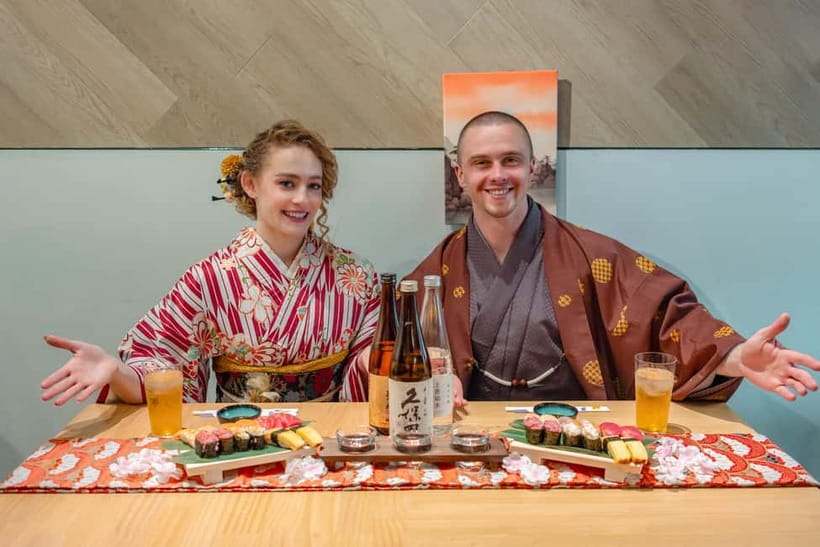
Next comes the neta, or sushi topping. You place wasabi on the topping, then bring it together with the shaped rice.
This stage is easy to underestimate. The amount of wasabi can change the whole bite, and the topping needs to sit in the right position. The instructors demonstrate the order of the steps, then help you repeat them.
The class is designed to keep things calm and accessible. You are not expected to know Japanese food terms in advance. Words such as shari and neta are introduced as part of the lesson, giving you a small but useful vocabulary for reading sushi menus later.
The food itself receives consistently strong praise. People describe the finished sushi as delicious, with the Japanese omelette sushi earning a special mention. One participant who does not usually like fish still enjoyed the meal, which suggests the selection may work for cautious eaters as well as committed sushi fans.
Still, do not book this as a premium omakase meal. The point is participation, not a rare-dining showcase. The seafood has been described as good rather than perfect by one recent participant, so your main reward is the activity and the freshly made meal, not an elite sushi tasting.
Shaping the finished sushi with your hands
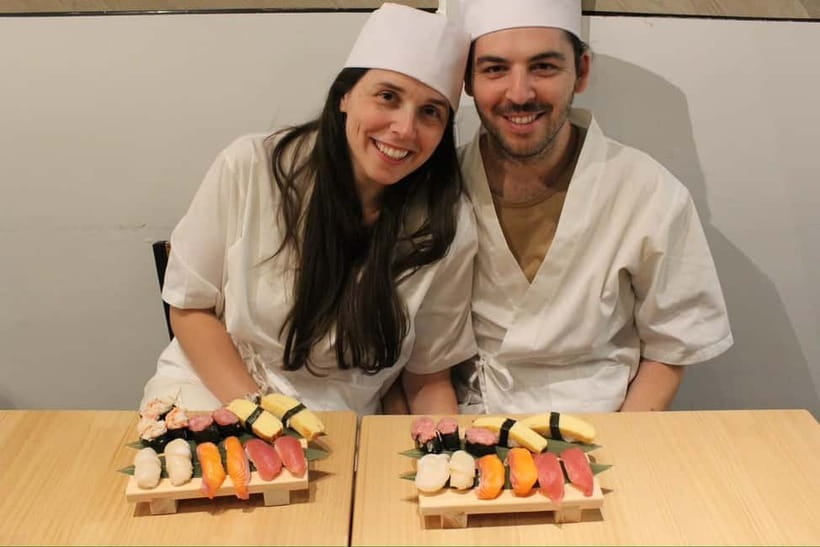
The final technique is shaping the sushi. Using your fingers, you form the rice and topping into a finished piece.
This is where the lesson becomes most satisfying. You can see the food change from separate ingredients into something that looks recognizably like sushi. The instructors explain how to hold and shape each piece, and their demonstrations make the process manageable for complete beginners.
You will make 12 pieces in total. That is enough to feel like you have completed a real meal, but not so much that the class becomes tiring or repetitive.
A small practical note: the quality of your result may depend on how much individual help you receive. One participant suggested that instructors could watch each person more closely and correct mistakes as they happen. If you want detailed technique coaching, ask questions and request a quick check of your shaping rather than quietly repeating a mistake.
For most people, that informal style is part of the charm. The teaching is friendly and social, with plenty of conversation about sushi, Osaka, Japan, and even basic Japanese words. You may also get help with chopsticks, which is useful if you are still getting used to them.
A completely different kind of day out in Osaka:
- Osaka Go Karting Tour with Funny Costume
★ 5.0 · 2,658 reviews - Osaka Castle: Museum and Tower Entry Ticket
★ 4.5 · 2,380 reviews - Osaka: Shinsekai Food Tour with 13-15 Dishes at 5 Eateries
★ 4.8 · 2,204 reviews - Osaka Food Tour: 13 Dishes at 5 Local Eateries
★ 5.0 · 2,149 reviews
Sake, sushi cosplay, and the fun extras
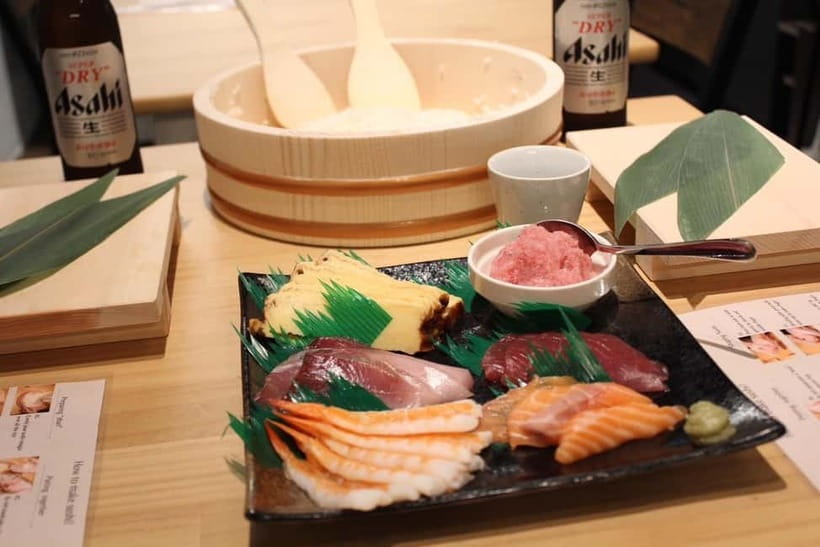
Japanese sake adds a tasting element to the class. You can enjoy it with the sushi and learn a little about this traditional drink at the same time. Several people especially enjoyed the combination of sushi making and sake tasting.
The sake portion should appeal to adults who want more than a cooking demonstration. It gives the session a small cultural context without turning it into a formal lecture. If you do not drink alcohol, check the arrangement when booking, since the supplied details confirm sake as part of the activity but do not explain the nonalcoholic alternative.
Then comes the sushi cosplay. This is exactly the sort of playful extra that can feel corny in a brochure but work well in person, especially for families, couples, and groups of friends. You can dress up, take photos, and leave with something more memorable than a plate of food.
A special gift is also provided, although the details of that gift are not specified. You receive a certificate naming you a sushi master, too. It is a novelty rather than a professional qualification, but it makes a nice keepsake and gives children a clear finish line for the class.
The instructors are the heart of the experience
Food classes succeed or fail on the teaching. Here, the people leading the session receive the warmest praise.
Mako is often singled out for explaining sushi, Osaka, and Japanese culture in a lively way. Mika, Saki, Yumiko, Kosei, Toshiki, Anri, and others are also described as friendly, capable, and good at keeping the atmosphere relaxed.
The English instruction is important. You are not left to copy a silent demonstration or guess what to do next. The class is conducted in English, and the instructions are generally described as easy to follow.
The tone also seems flexible. If you book during a quiet time, you might find yourself in a very small group or even a private-style lesson. That can mean more direct attention, although a larger group may bring more conversation and shared laughs.
The balance is informal rather than highly technical. You will learn the basics of sushi ingredients and preparation, along with some Japanese culture. If you want a detailed study of regional seafood, rice varieties, knife work, or restaurant-level presentation, this class may feel introductory.
For a 90-minute holiday activity, that is a sensible trade-off. You get enough explanation to understand the food, enough practice to make your own pieces, and enough conversation to keep the session lively.
Food choices for different diets
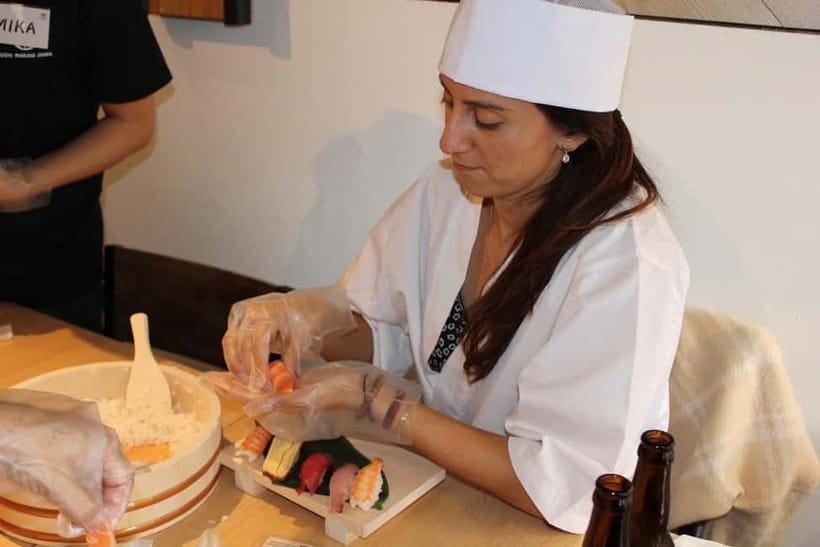
The availability of vegan and halal sushi makes this class more useful for mixed groups. You do not have to split up your party because one person cannot eat the standard menu.
There is also a useful example involving a gluten allergy. Gluten-free soy sauce was provided when requested, showing that the staff may be able to make practical adjustments. You should still state your dietary needs clearly before the class, since the available information does not list every ingredient or guarantee that all allergies can be accommodated.
If you dislike raw fish, this may still work for you. Sushi can include cooked or non-seafood toppings, and the Japanese omelette sushi received particular praise. But the exact 12-piece selection is not provided, so you should ask ahead if you need a strict ingredient list.
Is $45 good value in Osaka?
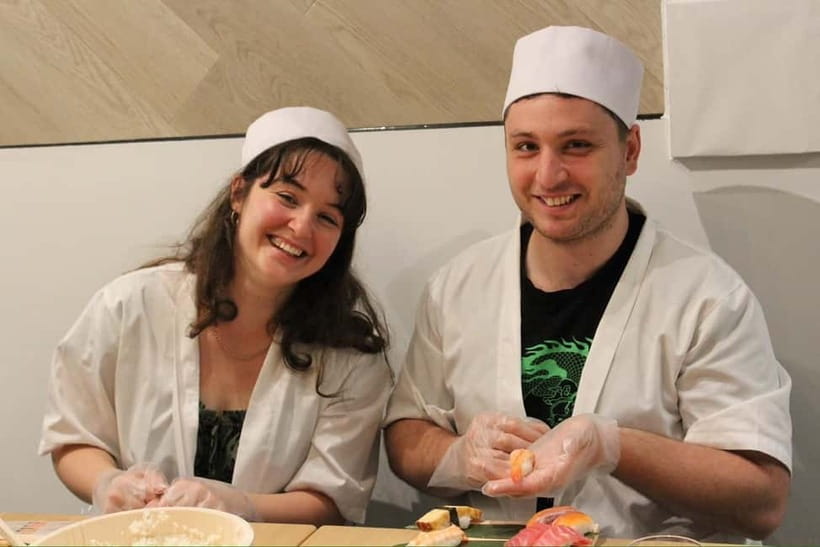
At $45 per person, the class is not the cheapest way to eat lunch in Dotonbori. You can buy sushi for less. That comparison misses the point, though.
Your fee covers all ingredients for 12 pieces, instruction in English, Japanese sake, sushi cosplay, a photo opportunity, a special gift, and a certificate. You are paying for a meal plus an activity in one of Osaka’s most convenient sightseeing areas.
The 90-minute length is another advantage. It is long enough to feel worthwhile but short enough to fit before dinner, after sightseeing, or between other Dotonbori plans. You do not need to give up half a day for a beginner-level lesson.
I would call it good value for anyone who wants a hands-on cultural activity. It is less compelling for someone who only wants the best possible sushi for the lowest price. In that case, spend the $45 on a restaurant meal instead.
Timing, location, and practical planning
The class takes place in Osaka’s Dotonbori area, making it easy to pair with nearby food and sightseeing. The exact meeting point can be difficult to navigate, so allow extra time and check the location details carefully before setting out.
One participant specifically noted that the Google Maps location needed improvement. That is useful advice. Do not rely on rushing from a crowded shopping street directly to the door. Confirm the address and starting time in advance.
Starting times vary, so you need to check availability for your chosen date. The activity offers free cancellation up to 24 hours before the start time, and you can reserve now and pay later, which helps if your Osaka schedule is still changing.
The experience is listed as wheelchair accessible. English is the stated language, and the ticket line can be skipped. Those details make the class a fairly easy addition to a busy Japan itinerary.
Who should book this sushi class?
I would recommend it most strongly to:
- First-time visitors who want a simple introduction to sushi culture
- Families with older children and teenagers
- Couples looking for a playful food activity
- Adults interested in trying sake with a Japanese meal
- People who prefer making food to watching a demonstration
- Mixed groups needing vegan, halal, or some allergy-conscious options
- Anyone with a free 90-minute slot in Dotonbori
It may not suit you if you are looking for advanced chef training, a long discussion of sushi history, or a luxury seafood tasting. The class teaches approachable basics, not professional restaurant technique.
It is also worth remembering that the experience is social. You will likely get conversation, jokes, photos, and a relaxed teaching style. If you prefer a quiet, highly formal class, this may feel too casual.
Should you book Osaka Dotonbori Sushi Making?
I would book this if you want a friendly, easy-to-follow activity that combines food, culture, and a little harmless silliness. The 4.9 rating from 122 reviews reflects a clear pattern: the instructors are the main attraction, the sushi is enjoyable, and beginners generally feel well looked after.
Book it for the experience of making and eating your own 12 pieces, not for a high-end sushi meal. Check the meeting location carefully, mention dietary needs early, and ask for extra guidance if you want close attention to your technique.
At $45, it earns its place in an Osaka itinerary, especially for families, first-time sushi makers, and anyone who has already seen enough temples for one afternoon. You leave with a full stomach, a few new Japanese words, photos in sushi cosplay, and a certificate that may or may not impress your dinner companions.
FAQ
How long does the Osaka Dotonbori sushi class last?
The experience lasts 90 minutes. You learn the basic sushi-making process, prepare 12 pieces, enjoy them with Japanese sake, and take part in the extra photo and cosplay elements.
How much does the sushi-making experience cost?
The listed price is $45 per person. This includes the ingredients for 12 pieces of sushi, sushi cosplay, and a sushi master certificate.
Is the class taught in English?
Yes. English is the stated language, and the instructor provides the explanations and demonstrations in English.
How many pieces of sushi will I make?
You will make 12 pieces of sushi. The class covers seasoning the rice, shaping it, adding the topping and wasabi, and forming the final pieces.
Is Japanese sake included in the experience?
Japanese sake is part of the advertised activity, and you can enjoy it with the sushi. The supplied information does not specify a separate charge or a nonalcoholic replacement.
Are vegan and halal sushi options available?
Yes. Vegan and halal sushi options are advertised. If you have a specific allergy or dietary requirement, tell the provider in advance.
Is the activity wheelchair accessible?
Yes. The experience is listed as wheelchair accessible.
Can I cancel and receive a refund?
You can cancel up to 24 hours before the activity for a full refund. The experience also allows you to reserve now and pay later.
Just added around Osaka
- Osaka Food Tour with 10 Classic Japanese Tastings & Drinks★ 5.0 · 38 reviews
- Osaka: Highlights & Hidden Gems Private Walking Tour★ 4.7 · 38 reviews
- Kyoto private tour (Shore excursion available from Osaka or Kobe port)★ 5.0 · 39 reviews
- Osaka Private Day Trip – Enjoy Your First-Time Visit to Osaka!★ 5.0 · 39 reviews
- Kyoto & Nara & Uji: Full Day Sightseeing Tour from Osaka or Kyoto★ 4.5 · 39 reviews
- Authentic SUSHI Course Cooking Class★ 5.0 · 39 reviews
- Osaka: Mind & Spirit Balance Temple Reiki Healing★ 5.0 · 41 reviews
- Osaka: Gluten-Free Ramen and Gyoza Cooking Class★ 5.0 · 42 reviews
Sushi-Making Classes, compared.
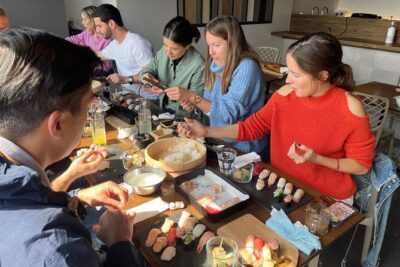
Sushi Making Tokyo Roll and Authentic Japanese Sushi Class
Read our review →
Roll and Authentic Sushi Making Class in Asakusa
Read our review →
Make Sushi and Create Unforgettable Memories in Tokyo
Read our review →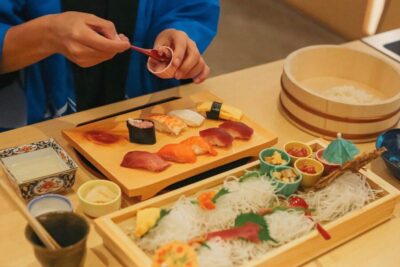
Sushi Making Class in a Happi Coat near a Famous Spot
Read our review →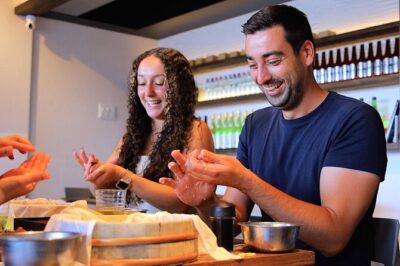
Sushi Making Osaka Roll and Authentic Japanese Sushi Class
Read our review →
Tokyo Sushi Making Class in Tsukiji with Professional Chef
Read our review →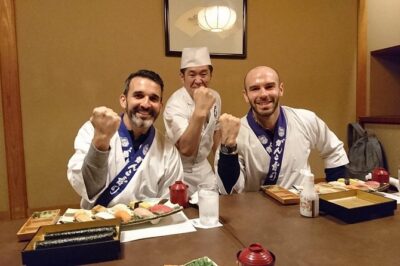
Tsukiji Fish Market Guided Tour and Sushi Making with Pro Chef
Read our review →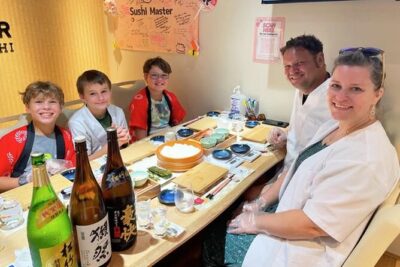
Sushi Making in Kyoto! Same-day bookings welcome!
Read our review →Browse the lists this tour appears in