
Reviewed · SAMURAI & NINJA EXPERIENCES
Osaka: Learn Bushido – Trial Slashing with Samurai Sword
Samurai training gets real surprisingly fast. This one-hour class near Osaka Castle combines traditional clothing and etiquette with hands-on sword practice, then gives you a chance to cut rolled tatami with a real Japanese sword. I like the tiny group size, limited to four people, and the patient instruction that takes you from basic stances to controlled cutting. I also like that photos are included, so you leave with more than a costume snapshot.
The main drawback is that the advertised duration is only one hour, while one participant found the full lesson lasted nearly two hours. That may be welcome if you enjoy the activity, but it can make a tight sightseeing schedule difficult. The location is also not at Osaka Castle itself, so check Google Maps carefully before setting out.
In This Review
- Four details that make this samurai class different
- What you are really paying for at $92
- Finding Bushi no Homare near Osaka Castle
- Changing into dogi and hakama
- Bowing, sword etiquette, and the samurai code
- Walking with a sword belt
- Learning the sword basics before cutting
- The final cut with a real Japanese sword
- How the one-hour timing works in practice
- Language, group size, and the feel of the lesson
- Who should book this, and who should skip it
- Booking details worth knowing
- My verdict: a good choice for a hands-on Osaka afternoon
- FAQ
- How much does the samurai sword experience cost?
- How long does the experience last?
- Where does the activity take place?
- How do I find the meeting point?
- Should I use Google Maps or Apple Maps?
- What languages are available?
- How many people are in each group?
- What does the price include?
- What should I bring?
- Is the activity suitable for children?
Four details that make this samurai class different
- You wear dogi and hakama: This is not simply a quick costume photo. You change into traditional training clothes before entering the lesson.
- You learn real sword routines: The class covers stances, drawing the sword, swinging, symbolic blood removal, and returning the blade to its sheath.
- You try tameshigiri: The final cutting exercise uses a real Japanese sword and a rolled tatami target.
- The class is limited to four people: A small group gives the instructor room to watch your movements and correct your technique.
- Photos are sent by email: Staff photograph the cutting moment and send the images to your designated email address.
- The meeting point needs care: Look for a wooden sign reading Honor of the Samurai at Bushi no Homare, not an Osaka Castle entrance.
What you are really paying for at $92
At $92 per person, this is not the cheapest one-hour activity in Osaka. You are paying for a certified professional instructor, sword instruction, traditional clothing, the cutting exercise, tax, tips, and a set of photographs. The small group limit also matters. With no more than four participants, this feels closer to a private lesson than a stage show.
The value depends on what you want. If you only want to put on a hakama and hold a sword for a picture, you can likely find simpler photo experiences. This class earns its price by teaching the basic movements and customs before handing you a real blade.
The included photography adds useful value. Staff take pictures of the test cutting, and they are also willing to use your phone for additional shots. That is helpful because you will be busy concentrating on your stance and grip when the important moment arrives.
There is one pricing detail to keep in mind. Transportation is not included, and neither is hotel or station pickup. You pay the $92, then make your own way to the dojo and cover any personal expenses. Tips are already included, so you do not need to calculate an extra amount at the end.
More Samurai & Ninja Experiences in Osaka
- Samurai Training Experience KENDO in Osaka
★ 5.0 · 515 reviews - OSAKA NIGHT FUSION Japanese Taiko Kabuki Samurai Dance Show
★ 4.8 · 155 reviews - Osaka: Samurai Training Experience KENDO in Osaka
★ 5.0 · 111 reviews
Finding Bushi no Homare near Osaka Castle
The actual venue is called Bushi no Homare, or Samurai Honor. Its address is Excellence Takayama 1F, 2-3-19 Shiginonishi, Joto-ku, Osaka-shi, Osaka 536-0014.
The activity is described as being near Osaka Castle, but you should not assume that you are meeting beside the castle grounds. One participant found the building easy to reach from Osakajokoen Station, just across the river. That is a useful orientation point, but the address should take priority.
Use Google Maps rather than Apple Maps. The Apple Maps address is reported as incorrect, which is exactly the kind of small mistake that can turn a one-hour class into a hurried treasure hunt.
At the venue, look for the wooden sign marked Honor of the Samurai. A rack filled with Samurai Honor activity pamphlets sits in front of the shop. Kimonos and hakama hanging outside may also help you spot the place.
Arrive 30 minutes before your reserved time. You need that extra half hour for instructions and changing clothes. If you arrive at the advertised start time, you may already be behind the group.
Changing into dogi and hakama
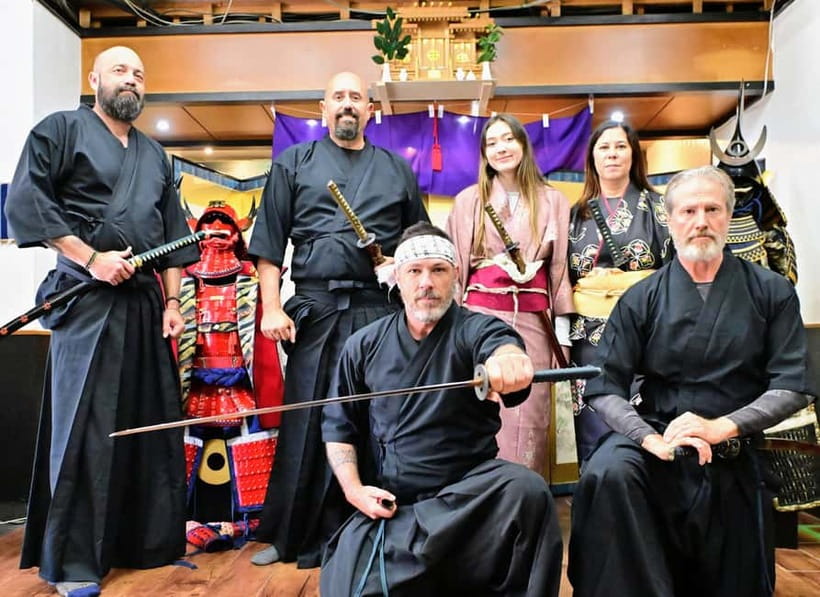
The first step is changing into samurai training clothing. You wear a dogi, the top used for martial arts practice, and hakama, the pleated lower garment often associated with formal Japanese dress and traditional martial arts.
This preparation sets the tone. You are not immediately handed a sword for a quick slash. You first change, get organized, and take on the posture expected inside a dojo.
Bring a T-shirt. The class does not list special footwear or equipment that you need to carry. Food and drinks are not allowed, and the venue also prohibits alcohol and drugs. Baby strollers and carriages are not allowed, and party groups such as bachelor or bachelorette parties cannot join.
The atmosphere is more disciplined than theatrical. You are being asked to pay attention to manners, balance, and control. That makes the costume useful rather than decorative.
Bowing, sword etiquette, and the samurai code
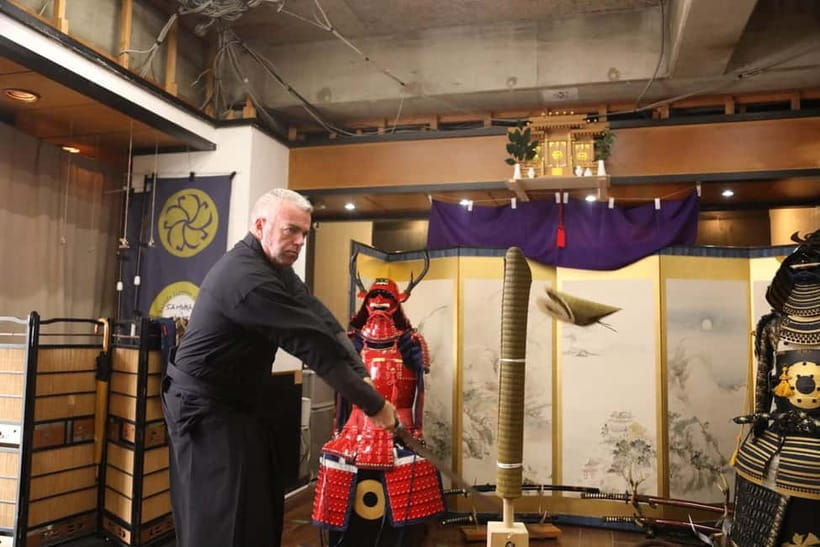
Training begins and ends with a bow toward a shrine in the dojo. The shrine is connected with the ancient god of war, and the bow marks the opening and closing of practice.
That simple act explains the class well. Bushido is presented as a way of shaping mind, technique, and body together. The focus is not only on striking a target. Courtesy, self-respect, discipline, and responsibility are part of handling a weapon.
The instructor also explains the relationship between the samurai and the Japanese sword. In the tradition presented during the class, a sword was tied closely to a samurai’s identity and honor. Samurai learned its use from a young age, and wearing a serious sword belt at 15 represented a new level of responsibility.
The lesson describes samurai life as inseparable from the sword, even during peaceful periods. A sword was kept close while eating or sleeping so it could be drawn quickly if needed. You also hear the traditional idea that the sword was the samurai’s soul and not something to sell simply because times were hard.
Some of this material is idealized and ceremonial rather than a full academic history lesson. That is worth knowing. You are receiving a focused introduction to samurai values and manners, not a detailed course on every period of Japanese history.
A completely different kind of day out in Osaka:
- Osaka Go Karting Tour with Funny Costume
★ 5.0 · 2,658 reviews - Osaka Castle: Museum and Tower Entry Ticket
★ 4.5 · 2,380 reviews - Osaka: Shinsekai Food Tour with 13-15 Dishes at 5 Eateries
★ 4.8 · 2,204 reviews - Osaka Food Tour: 13 Dishes at 5 Local Eateries
★ 5.0 · 2,149 reviews
Walking with a sword belt
Before the cutting practice, you learn how to wear the sword belt and walk with it. The movement is deliberate. A sword changes how you hold your body, how you turn, and how you manage the space around you.
This part can feel less dramatic than swinging a blade, but I consider it one of the more useful sections. It shows that samurai technique was not just a sequence of movie poses. The weapon affected ordinary movement and required awareness at every step.
You also practice samurai gestures and language. The class introduces language associated mainly with the samurai class during the Warring States period, when loyalty, discipline, and service to a lord shaped social behavior.
The amount of historical explanation may vary depending on the instructor and the group. The activity is taught in English and Japanese, with an English interpreter as the default arrangement. If you need Italian, Spanish, French, Chinese, Thai, or Indonesian interpretation, ask about staff availability before booking. That service is not guaranteed.
Learning the sword basics before cutting
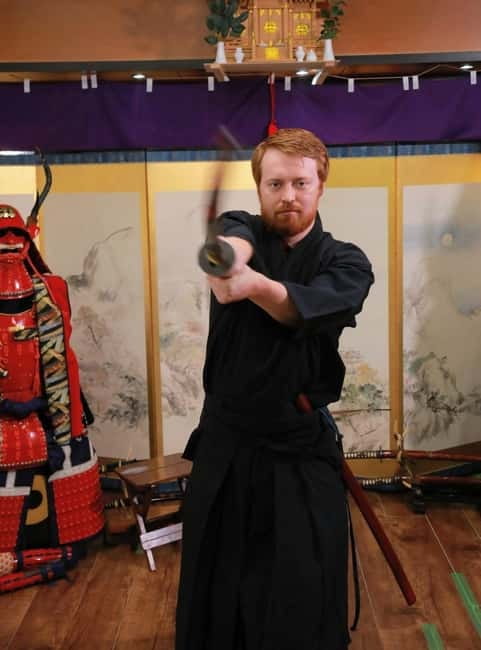
The technical lesson begins with an iai practice sword. This gives you a controlled way to learn the basic actions before you handle a live blade.
The class covers:
- Battou: Drawing the sword from its scabbard as part of a cutting action.
- Chiburui: A symbolic movement for removing blood from the blade after a cut.
- Nottou: Returning the sword to its sheath after the routine.
You practice from several positions, including middle stance, upper stance, lower stance, side stance, and an eight-phase stance. The instructor demonstrates the basic kata and then guides you through the movements.
The lesson is repetitive by design. You swing, reset, and swing again. The instruction emphasizes using the sword’s weight rather than forcing the motion with your arm. When the technique is correct, the blade should produce a distinctive hi-nari sound as it moves through the air.
That sound gives you instant feedback, though you should not expect to master the technique in one short visit. The value is in feeling how much control and body alignment the sword demands. The instructor moves from simple actions to more advanced movements once your form is satisfactory.
Several participants especially appreciated the patient teaching. One person described the master as careful and detailed, while another found the class both challenging and fun. That combination matters. A sword lesson without correction would be little more than waving metal around in costume.
The final cut with a real Japanese sword
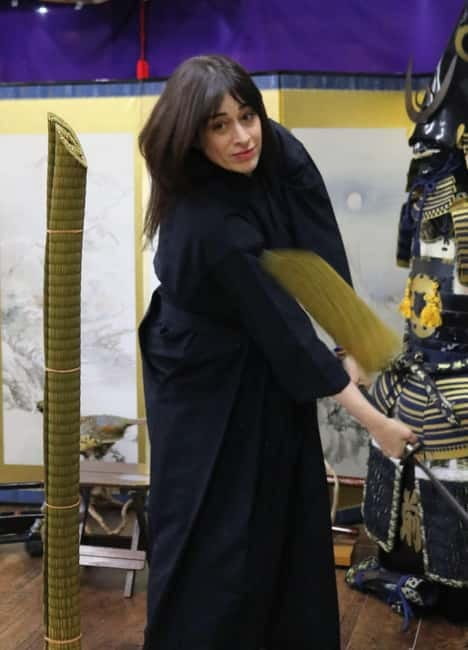
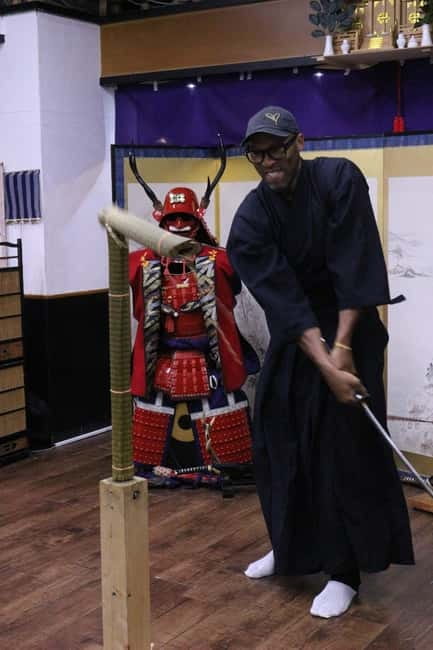
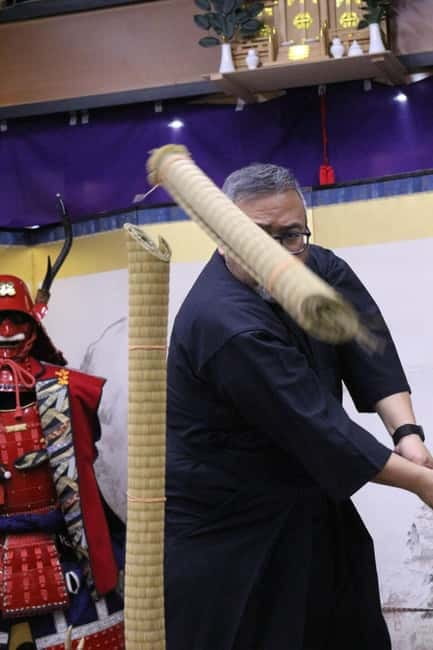
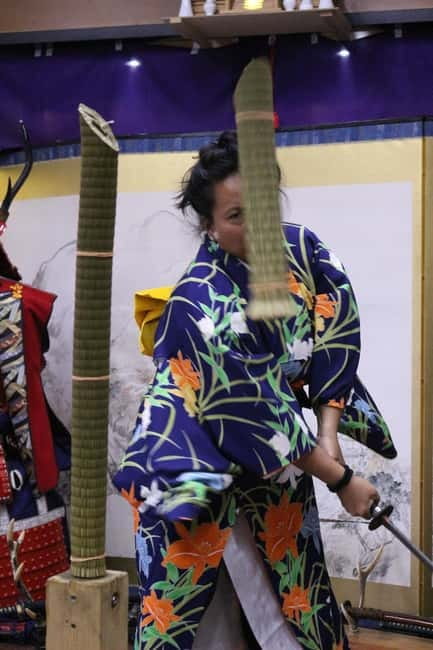
The payoff is tameshigiri, or test cutting. You use a real Japanese sword to cut a rolled tatami target mounted on a stick.
The target can look like bamboo at first glance, but it is actually rolled tatami. That small detail helps set expectations. You are not cutting a thick wooden post or taking part in a staged combat scene. You are making one controlled cut through a prepared material.
The cutting comes only after the basic stances and sword actions. That order is important. You first learn how to stand, swing, draw, and return the sword. Then the master decides when your movement is ready for the live-blade exercise.
The final cut feels more meaningful because you have worked toward it. It is not simply a dramatic opening act. You have already learned why the blade must be treated with respect and why body position matters.
Safety depends on following instructions exactly. Keep your attention on the instructor, use the assigned movements, and do not treat the sword like a prop. The activity is not suitable for children under 10, and the provider also lists people over 95 and people with altitude sickness as unsuitable.
The included photos focus on the moment of test cutting. Staff send the images to your designated email address after the activity. You can also ask staff to take more pictures on your phone, which is useful for family groups.
How the one-hour timing works in practice
The stated duration is one hour, with starting times available according to the booking calendar. That makes the class easy to fit into a day, but only if you plan around the required early arrival and the possibility of a longer session.
You should allow at least 90 minutes from the time you reach the neighborhood: 30 minutes before the booking for arrival and changing, then the scheduled activity itself. One participant reported that the lesson lasted almost two hours, including the teaching, explanations, photos, and cutting.
That longer experience may be a bonus if you enjoy the subject. It becomes a problem only if you have a castle entry reservation, a train to catch, or a restaurant booking immediately afterward.
Osaka Castle sightseeing pairs naturally with the class because the venue is in the same general area. I would not schedule the two events back to back without a buffer. Visit the castle first only if you can reach the dojo early enough and still have time to find the correct address.
Language, group size, and the feel of the lesson
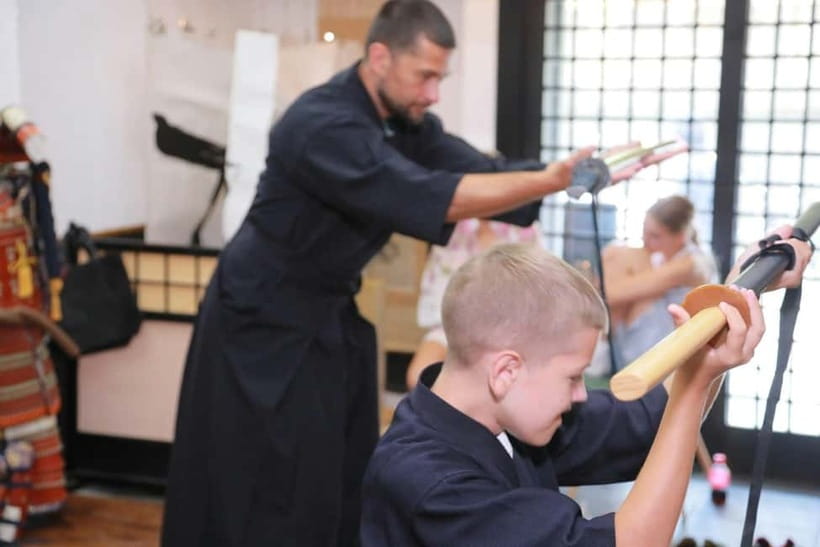
The listed teaching languages are English and Japanese. The default interpreter language is English, and the small group size is limited to four people.
That limit is one of the strongest features. Sword work needs close attention, and a crowded room would make it harder to see the instructor or receive corrections. If you are alone, you may have the class to yourself, depending on bookings.
The experience takes place in a room that also shares space with a calligraphy room. Do not expect a giant training hall or a grand castle setting. The smaller indoor venue is practical, and it supports the personal teaching style, but the surroundings may feel modest.
The class suits people who enjoy learning by doing. It is a good choice for families with older children, couples, solo visitors, and anyone who has watched samurai films and wants to understand the physical work behind the image.
It is less suitable for a loud party group or anyone looking for a purely staged performance. The rules specifically exclude bachelor and bachelorette groups, and the etiquette portion requires a respectful attitude.
Who should book this, and who should skip it
I would recommend this activity if you want a focused cultural experience with a clear hands-on finish. You get clothing, instruction, historical context, a real cutting exercise, and photographs in a compact format.
Families should note the minimum age of 10. A 12-year-old with an interest in samurai culture may find the lesson fascinating, especially because the instructor explains the traditions instead of rushing straight to the cut.
Solo visitors can also do well here. A solo participant may receive especially direct attention if no one else books the same time. The small group format works in your favor.
You should skip it if you dislike structured instruction, cannot arrive 30 minutes early, or want an activity located directly inside Osaka Castle. You should also think twice if you are booking around a strict schedule, since the actual lesson may last longer than the advertised hour.
Booking details worth knowing
The activity costs $92 per person. You can reserve now and pay later, which helps if your Osaka plans are still moving around. Cancellation is free up to 24 hours before the experience for a full refund.
The price includes samurai clothing, a certified professional instructor, tax, tips, and photography sent by email. Transportation, pickup and drop-off, paid movie shooting, and personal expenses are extra.
The provider is 株式会社武士の誉れ. The venue offers other activities connected with Japanese culture, including martial arts, calligraphy, and tea ceremony, though those are separate from this sword class.
My verdict: a good choice for a hands-on Osaka afternoon
I would book this if you want more than a costume photograph. The strongest part is the steady path from bowing and sword etiquette to basic kata and finally tameshigiri. The patient teaching, four-person limit, and included photos make the $92 easier to justify.
Just plan carefully. Use Google Maps, arrive 30 minutes early, wear a T-shirt under the training clothes, and leave extra time after the class. For families with children under 10, strict party groups, or people expecting a grand castle setting, this is not the right fit.
For everyone else, it offers a memorable way to connect Osaka sightseeing with a real physical tradition. You will not become a master swordsman in an hour, but you will gain a better sense of the control, ceremony, and responsibility behind the samurai image.
FAQ
How much does the samurai sword experience cost?
The price is $92 per person.
How long does the experience last?
The listed duration is one hour. You should allow extra time because arrival is required 30 minutes before the booking, and one participant reported that the full lesson lasted almost two hours.
Where does the activity take place?
It takes place at Bushi no Homare, also called Samurai Honor, at Excellence Takayama 1F, 2-3-19 Shiginonishi, Joto-ku, Osaka-shi, Osaka 536-0014.
How do I find the meeting point?
Look for a wooden sign reading Honor of the Samurai. A rack with Samurai Honor pamphlets is in front of the venue, and kimonos and hakama may be hanging outside.
Should I use Google Maps or Apple Maps?
Use Google Maps. The Apple Maps address is reported to be incorrect.
What languages are available?
The instructors speak English and Japanese. English is the default interpreter language. Italian, Spanish, French, Chinese, Thai, and Indonesian interpretation may be possible if staff are available, but it is not guaranteed.
How many people are in each group?
The activity is limited to four participants.
What does the price include?
It includes samurai clothing, a certified professional instructor, tax, tips, and photographs sent to your designated email address.
What should I bring?
Bring a T-shirt. Food and drinks are not allowed.
Is the activity suitable for children?
The experience is not suitable for children under 10 years old. It is also listed as unsuitable for people with altitude sickness and people over 95 years old.
Just added around Osaka
- Osaka Food Tour with 10 Classic Japanese Tastings & Drinks★ 5.0 · 38 reviews
- Osaka: Highlights & Hidden Gems Private Walking Tour★ 4.7 · 38 reviews
- Kyoto private tour (Shore excursion available from Osaka or Kobe port)★ 5.0 · 39 reviews
- Osaka Private Day Trip – Enjoy Your First-Time Visit to Osaka!★ 5.0 · 39 reviews
- Kyoto & Nara & Uji: Full Day Sightseeing Tour from Osaka or Kyoto★ 4.5 · 39 reviews
- Authentic SUSHI Course Cooking Class★ 5.0 · 39 reviews
- Osaka: Mind & Spirit Balance Temple Reiki Healing★ 5.0 · 41 reviews
- Osaka: Gluten-Free Ramen and Gyoza Cooking Class★ 5.0 · 42 reviews
Samurai & Ninja Experiences, compared.
Samurai Ninja Museum Guided tour and Experience
Read our review →
Kendo and Samurai Experience with Uniform and Gear
Read our review →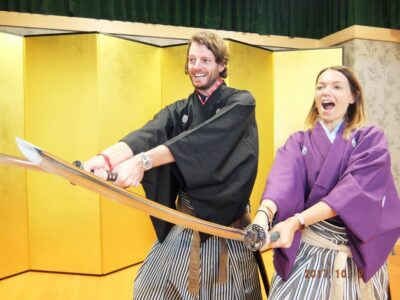
Samurai Sword Class by Experts in Traditional Arts
Read our review →
Skip the lines Basic Ticket at SAMURAI NINJA MUSEUM KYOTO
Read our review →
Samurai Sword & Archery Class from Samurai Descendant
Read our review →
Browse the lists this tour appears in