
Reviewed · SUSHI-MAKING CLASSES
Osaka: Sushi Class in Dotonbori
Sushi is easier than it looks. This three-hour Dotonbori sushi class gives you hands-on practice with nigiri, salad rolls, and Osaka-style oshizushi, rather than just a quick demonstration. I like the small-group format, limited to eight people, and the generous amount of food included. The one thing to consider is that the class focuses on shaping and assembling sushi, not slicing whole fish.
You meet English-speaking instructors at Cooking Sun Osaka, where patient teachers such as Yoshi, Yoko, Ami, Eriko, Naomi, and others guide you through each stage. I also like the cultural side of the lesson: you learn why pressed sushi matters in Osaka and how Japanese cooking methods connect with preservation, pickling, and everyday food traditions. Finding the entrance can take a little patience, so allow time to locate room 202.
In This Review
- Key points to know before booking
- Three hours of practical sushi making
- Starting with the salad roll
- Learning the shape of nigiri
- Pressing Osaka-style oshizushi
- Fresh ingredients and a proper lunch
- Why the small group matters
- Food culture beyond the sushi mat
- Getting to Cooking Sun Osaka in Dotonbori
- Dietary requests and beginner concerns
- Is $67 a fair price?
- Who should book this Osaka class?
- Should you book it?
- FAQ
- Where does the sushi class take place?
- How do I enter the building?
- How long does the sushi class last?
- How much does the class cost?
- What types of sushi will I make?
- What is in the salad roll?
- What is oshizushi?
- Is the class taught in English?
- Can I request vegetarian or gluten-free food?
- How many people can join the class?
Key points to know before booking
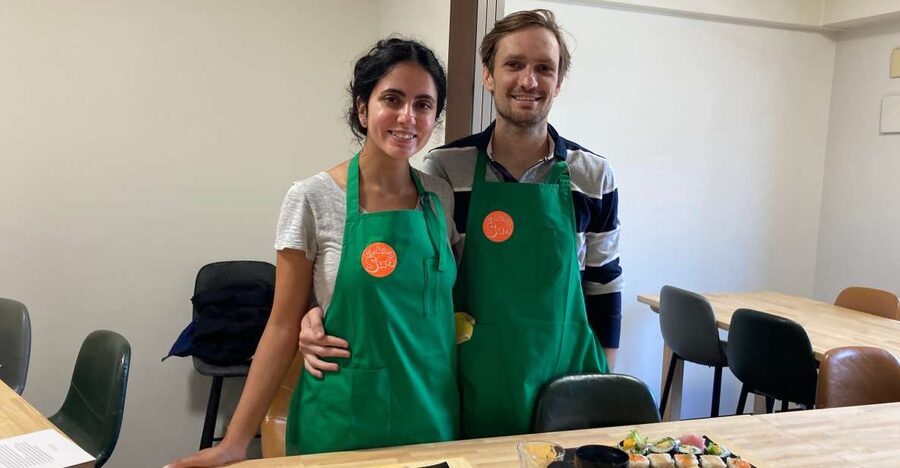
- Three distinct sushi styles: Make a salad roll, hand-shaped nigiri, and Osaka’s pressed oshizushi.
- A real meal at the end: The ingredients become a substantial plate of sushi, not just a few samples.
- Small groups help beginners: With no more than eight people, instructors can correct your technique and answer questions.
- English instruction is clear and friendly: Yoshi, Yoko, Ami, Eriko, and other instructors are praised for patient explanations and conversation.
- Dotonbori location: The class fits neatly into a day of food and sightseeing in central Osaka.
- Tell them about dietary needs early: Vegetarian and gluten-free options are available by request when you book.
Three hours of practical sushi making
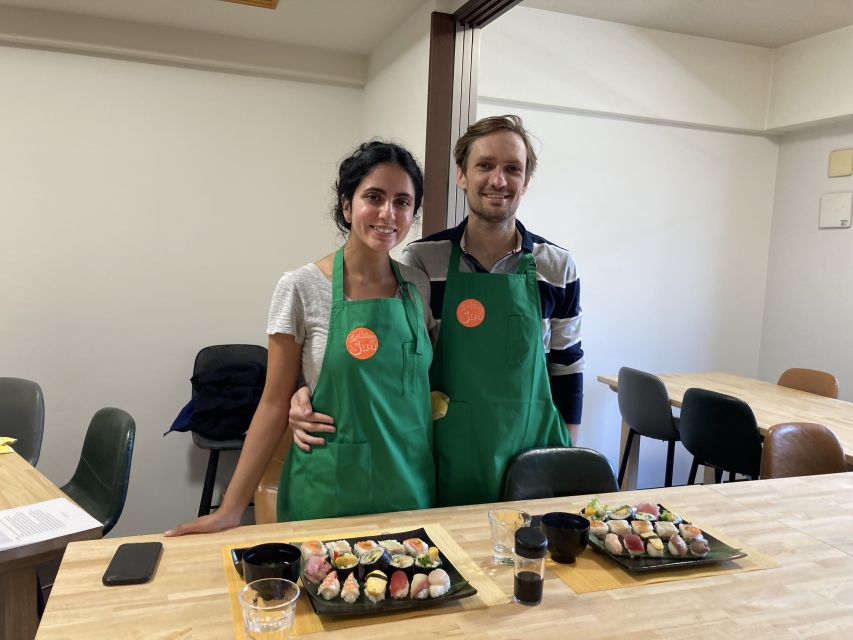
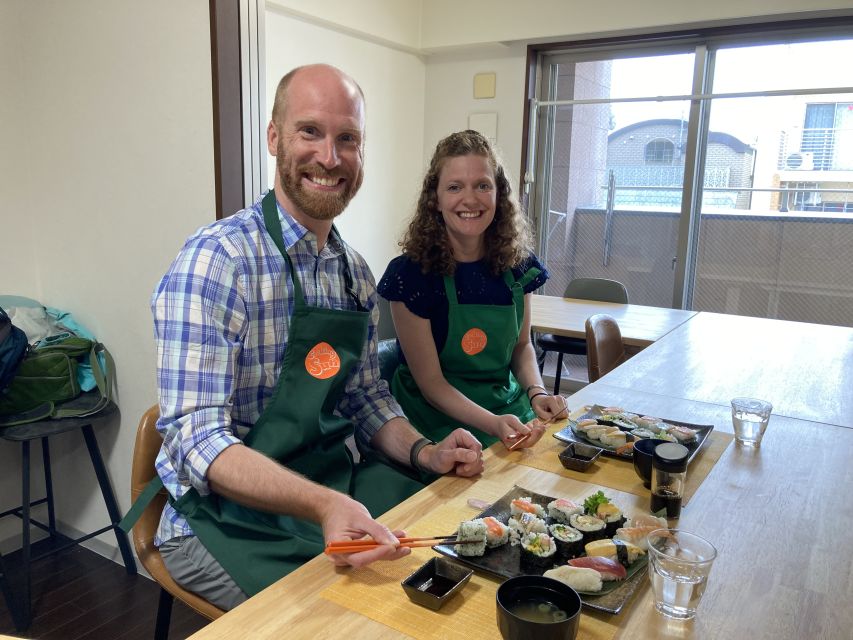
This experience is best understood as a cooking lesson followed by lunch. You do not simply watch a chef place fish on rice. You handle the ingredients, follow the method step by step, and eat what you prepare.
The class makes three types of sushi. That mix is useful because it shows three different approaches to texture, shape, and presentation. Nigiri is familiar around the world, salad rolls are approachable and fresh, and oshizushi introduces you to a style strongly tied to Osaka and the Kansai region.
The pace also suits beginners. Several instructors are praised for showing each action clearly before asking you to try it. If you have never made sushi, you should not feel that you need steady hands or professional kitchen skills. The point is to learn the basic movements and understand how the ingredients fit together.
The class is taught in English, and the instructors do more than give kitchen commands. They explain Japanese food customs and answer questions about local dishes, ingredients, and places to eat. Yoshi, in particular, has been praised for chatting about Osaka recommendations during the lesson, which adds a pleasant local touch.
More Sushi-Making Classes in Osaka
- Sushi Making Osaka Roll and Authentic Japanese Sushi Class
★ 5.0 · 1,220 reviews - Osaka Sushi Making Experience
★ 5.0 · 400 reviews - Osaka Sushi Making Class – Hands-On Nigiri & Rolls (Same-Day OK)
★ 5.0 · 352 reviews
Starting with the salad roll
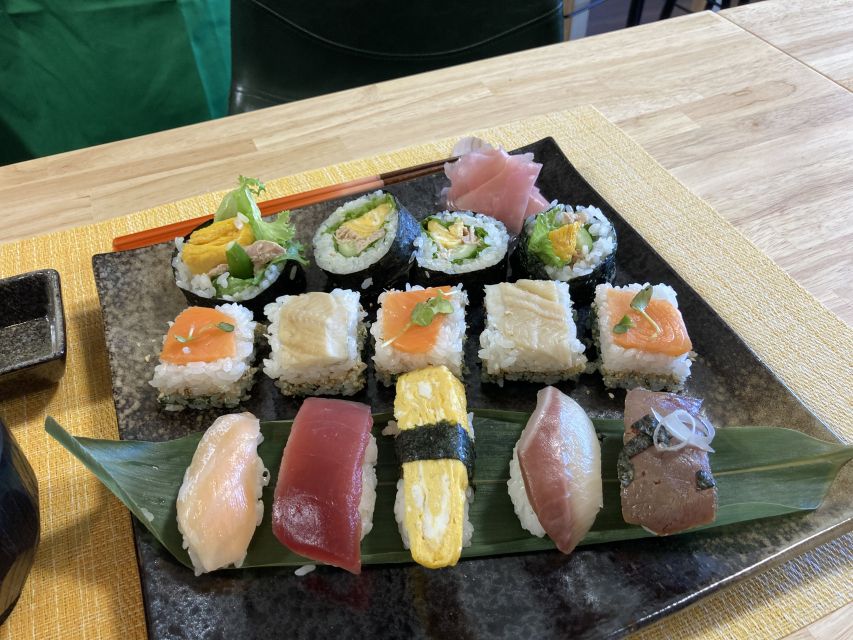
The salad roll is the least intimidating of the three styles. You work with nori seaweed and a filling that includes crab-flavored kamaboko, lettuce, cucumber, tuna mixed with mayonnaise, and a central strip of tamagoyaki, or Japanese rolled omelet.
This is a good first exercise because it teaches the basic logic of a sushi roll. You learn how to arrange the filling, keep the roll together, and cut it into pieces without crushing the rice or tearing the nori. The ingredients offer several textures: crisp cucumber, soft egg, creamy tuna, and the savory seaweed wrapper.
The salad roll is also a useful choice for people who are unsure about raw fish. It contains tuna mixed with mayonnaise, but the lesson also includes cooked and vegetable ingredients. Ask about the exact preparation if you have an allergy or a strict dietary requirement.
Do not expect a Western-style salad wrapped in rice. The roll is still recognizably Japanese sushi, and the nori gives it a salty, roasted flavor. It is a simple but effective introduction before you move on to the more delicate shaping required for nigiri.
Learning the shape of nigiri
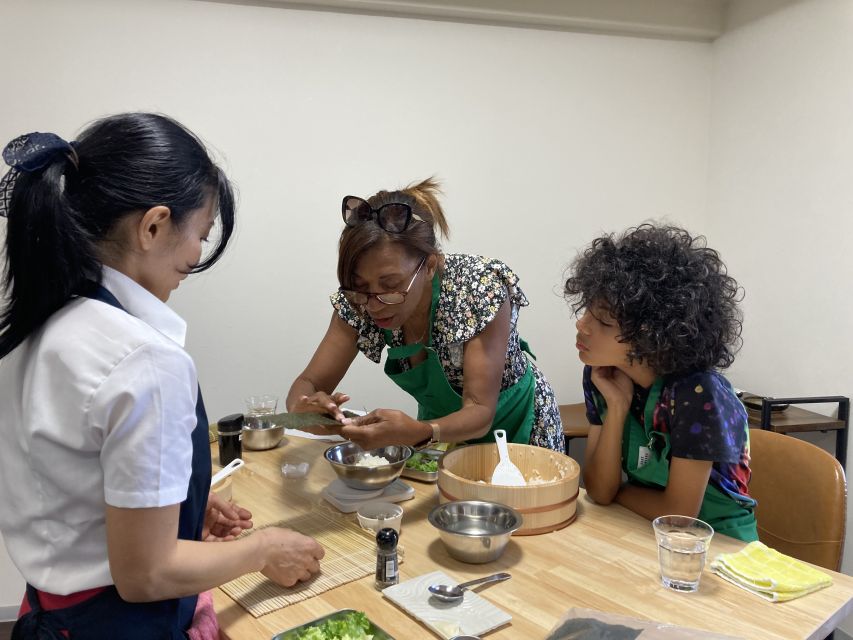
Nigiri is the sushi form most people picture first: a small piece of vinegared rice topped with an ingredient such as fish, shellfish, or omelet. The challenge is not simply placing one item on rice. You need to form a compact bite that holds together while staying light enough to eat comfortably.
The instructor demonstrates the size and shape before you begin. You then practice making bite-sized portions of rice and placing the toppings neatly on top. This is where an attentive teacher matters, especially if your rice is too loose, too large, or too tightly packed.
The class is not presented as a fish-cutting workshop. One person specifically wished for a chance to slice the fish, so book this experience for sushi assembly and technique rather than knife training. If handling a whole fish is your main goal, you will need a different type of class.
Still, nigiri offers the clearest lesson in balance. The rice needs enough seasoning to support the topping, while the topping remains the focus. You begin to understand why a small piece of sushi can require more care than a much larger dish.
Pressing Osaka-style oshizushi
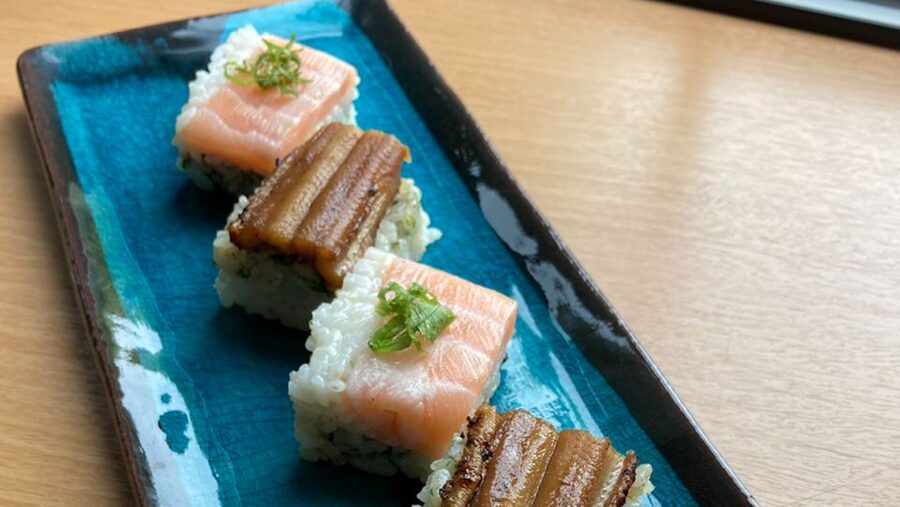
Oshizushi is the most distinctive part of this class for anyone focused on Osaka food. It is a traditional Kansai style also known as box sushi, and its finished shape is square rather than rounded or rolled.
You fill a square wooden mold with sushi rice and toppings. Then you press the rice by hand so it bonds with the ingredients above it. Once the block is removed, you cut it into pieces shortly before eating.
This method gives the sushi a firmer texture and a clean, geometric look. It also explains an important regional difference. Tokyo is often linked with the hand-formed nigiri style, while Osaka has a long connection with pressed sushi and prepared foods designed to hold their shape.
For you, the value is not just learning another recipe. Oshizushi gives the class a local identity. Many cooking lessons could teach rolls and nigiri, but the pressed box sushi makes this one feel tied to Osaka rather than interchangeable with a class in another Japanese city.
The mold also makes this style fairly friendly to beginners. You are not relying entirely on delicate hand movements. The wooden frame helps create a consistent shape, though you still need to press firmly and cut carefully.
A completely different kind of day out in Osaka:
- Osaka Go Karting Tour with Funny Costume
★ 5.0 · 2,658 reviews - Osaka Castle: Museum and Tower Entry Ticket
★ 4.5 · 2,380 reviews - Osaka: Shinsekai Food Tour with 13-15 Dishes at 5 Eateries
★ 4.8 · 2,204 reviews - Osaka Food Tour: 13 Dishes at 5 Local Eateries
★ 5.0 · 2,149 reviews
Fresh ingredients and a proper lunch
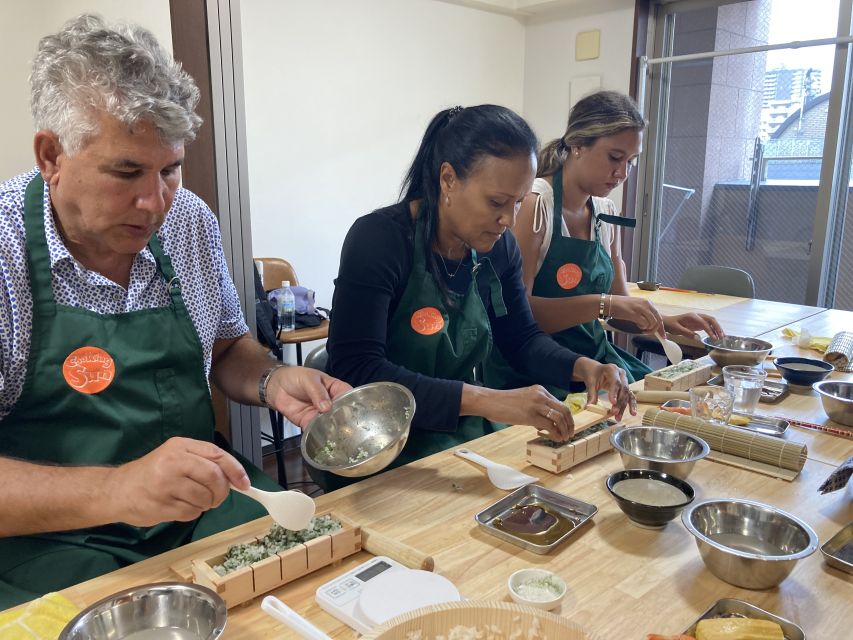
All ingredients for the sushi making are included. That matters at $67 per person, since the activity ends with enough food to function as a meal rather than a tasting stop.
Several class experiences describe fresh sushi and generous portions. People with large appetites found the quantity substantial, which is useful to know if you are deciding between this and a brief food demonstration. You should arrive ready to eat, especially if the class is part of a full day in Dotonbori.
The meal also gives you a chance to compare the three preparations side by side. The salad roll is soft and varied, nigiri is compact and topping-led, and oshizushi is firmer and more structured. Eating your own work makes the lesson more memorable, even if your first rolls are not perfectly symmetrical.
Some class sessions have also included extras such as dashi and miso soup, along with additional preparation work. The confirmed core of the activity is the three sushi types, so treat any extra dishes as possible additions rather than guaranteed parts of every session.
Why the small group matters
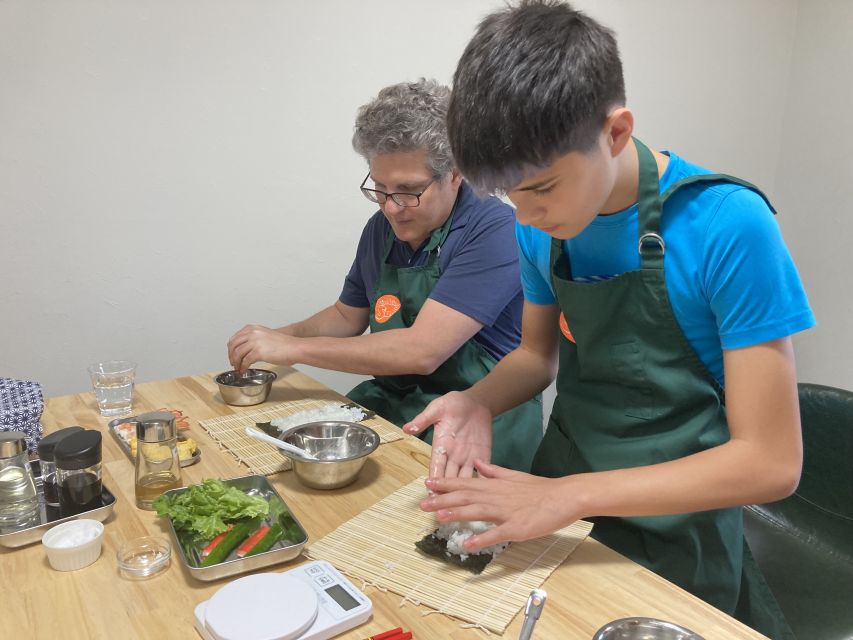
The class allows up to eight participants. That is small enough for an instructor to watch your hands, repeat a step, and respond to questions without turning the lesson into a crowded production line.
Past class sizes have sometimes been as small as four people. A group that size can feel almost private, while eight is still manageable for an English-language lesson. The exact number depends on the date you choose.
Small groups are especially helpful during nigiri and oshizushi. A teacher can show you how much rice to use, how to keep a roll tight, or how much pressure to apply to the mold. You also get more opportunity to ask about Japanese ingredients and food customs.
The teaching style is one of the strongest reasons to book. Yoko has been praised for being funny, friendly, and well organized. Yoshi is known for patient explanations and food recommendations. Ami and Eriko have also been described as helpful and encouraging.
The class seems designed to make beginners feel capable. You are shown the technique, given time to copy it, and then supported when the result does not look like the instructor’s first attempt. That is the right balance for a holiday activity: enough guidance to learn, but still enough participation to feel like you made the meal.
Food culture beyond the sushi mat
The cultural material adds value without turning the lesson into a lecture. Instructors explain the meaning and use of Japanese cooking methods, including how food can be preserved and pickled. They also discuss the place of different dishes within Japanese food culture.
That context is most useful when it connects directly to what you are doing. Oshizushi makes more sense when you know it is a Kansai tradition. Vinegared rice makes more sense when you learn how it supports the toppings and helps create the familiar sushi flavor.
You can also use the class as a chance to ask practical food questions. Instructors have offered advice on buying ingredients locally and recreating the dishes at home. If you want to repeat the experience after returning home, bring a few notes or ask about the tools and ingredients while you have the chance.
One participant even bought utensils after class. That suggests the lesson can lead naturally into a small food-shopping project, though the purchase is not part of the $67 activity.
Getting to Cooking Sun Osaka in Dotonbori
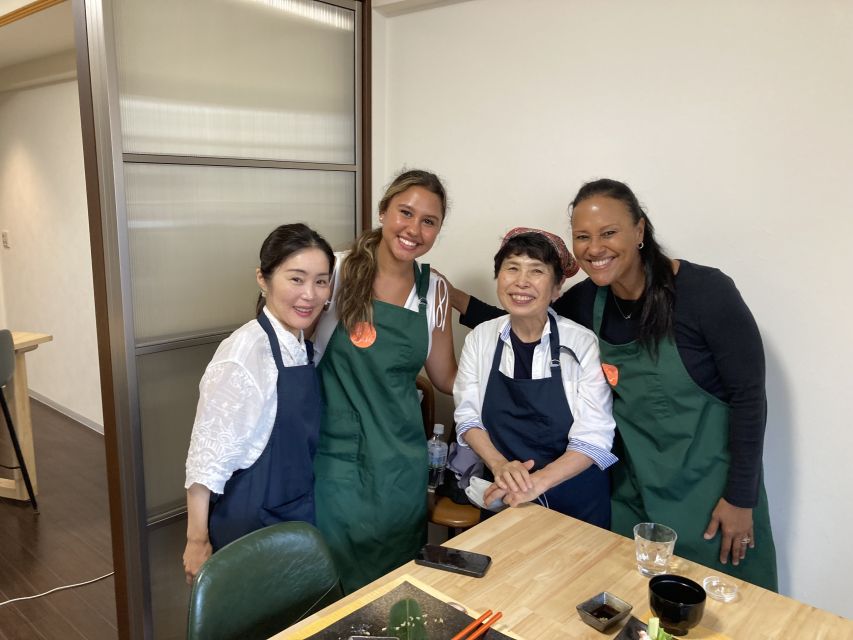
The meeting point is Cooking Sun Osaka, room 202. At the entrance, press 202 and then press the button marked 呼出, which means call.
This detail is worth saving in your phone. One person had trouble finding the building, and a taxi driver could not locate it immediately. The tree outside was described as an identifying feature once you know what to look for, but the entrance may not be obvious at first glance.
Give yourself extra time rather than arriving at the last minute. Dotonbori is a busy area with many signs, shops, and food businesses, so a little preparation will keep the meeting point from becoming a stressful part of the experience.
The location is convenient if you already plan to spend time around central Osaka’s food streets and canal area. You can schedule the class as a morning activity followed by sightseeing, or as a lunch-centered experience before continuing through Dotonbori.
The venue is described as clean and fitted with modern kitchen equipment. The activity is wheelchair accessible, which makes it a practical option for people who need an accessible cooking space. Confirm any personal access requirements when booking if you need more specific arrangements.
Dietary requests and beginner concerns
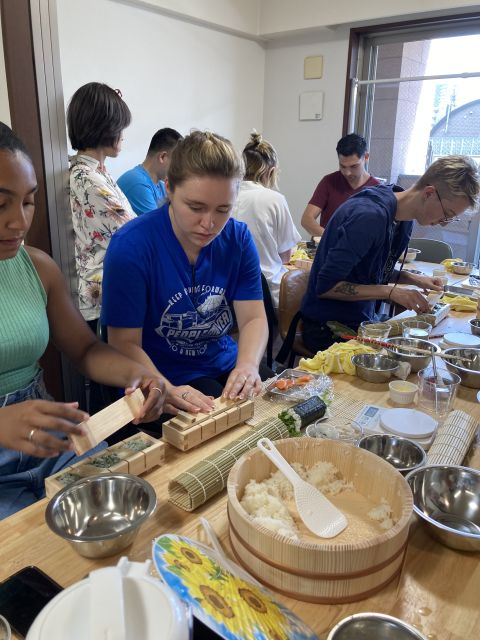
Vegetarian and gluten-free options are available, but you need to leave a note when booking. Do not wait until you arrive. Sushi ingredients can include soy sauce, imitation crab, mayonnaise, fish, egg, and other items, so advance notice gives the instructors time to prepare an appropriate version.
The standard salad roll includes crab-flavored kamaboko, tuna with mayonnaise, egg, vegetables, and nori. The nigiri may include fish, shellfish, or omelet. If you have allergies, be specific about each ingredient and ask what substitutions are possible.
The class is a good match for first-time sushi makers. Clear demonstrations and active help are repeated strengths of the instruction, and people with no previous experience have been able to make sushi they were happy to eat.
You should not book it expecting restaurant-level knife training or a lesson in every kind of sushi. The menu is focused and manageable. That focus is a benefit for beginners, though experienced home cooks may want a more advanced class.
Is $67 a fair price?
At $67 per person, this is not the cheapest way to eat sushi in Osaka. You can certainly buy a meal for less. The value comes from combining instruction, cultural explanation, a small group, all ingredients, and a substantial meal over three hours.
I consider the price fair for someone who wants an activity rather than another restaurant sitting. You spend enough time making three styles to understand the differences, and you eat the results at the end. The class also gives you skills you can try again at home.
The value improves for couples, families, and friends who want a shared activity. It is also a strong rainy-day choice because the main experience takes place indoors and does not depend on clear weather.
Solo participants may enjoy the small group because the teaching remains social without requiring you to bring a large party. The English instruction removes a major barrier, and the friendly instructors often chat about Osaka food and sightseeing.
The main value limit is your interest level. If you only want to eat sushi, spend the money at a restaurant. If you want to understand how sushi is formed and take part in making lunch, three hours feels justified.
Who should book this Osaka class?
I would recommend it to sushi lovers, curious first-time cooks, couples, families with older children, and anyone who wants a food activity with real participation. It also suits people who like to take home a practical skill from a trip.
It is particularly good for anyone who wants to learn something regional. The oshizushi lesson gives you a direct connection to Osaka’s Kansai food traditions, rather than offering only the most familiar international sushi styles.
You may want to skip it if your schedule is extremely tight, if you dislike structured group activities, or if you want to slice and prepare fish from scratch. The three-hour duration is long enough to feel worthwhile, but it does require a real block of your day.
The class has a 4.9 rating from 160 reviews, with repeated praise for the instructors, clear English, food quantity, fresh ingredients, and friendly atmosphere. That pattern points to a dependable experience, especially for beginners.
Should you book it?
Book this class if you want more than a plate of sushi and have three hours to spare in Dotonbori. The combination of nigiri, salad roll, and Osaka-style oshizushi gives you a broad introduction without making the lesson too technical.
I especially like the generous meal, the small group limit, and the chance to learn from instructors who talk about Japanese food as part of daily culture. Just arrive early enough to find room 202, state dietary needs when booking, and do not expect a fish-slicing course. For a hands-on Osaka food experience at $67, this is an easy recommendation.
FAQ
Where does the sushi class take place?
The class takes place at Cooking Sun Osaka, in room 202.
How do I enter the building?
At the entrance, press 202 and then press the 呼出 call button.
How long does the sushi class last?
The class lasts three hours.
How much does the class cost?
The listed price is $67 per person.
What types of sushi will I make?
You will make a salad roll, nigiri, and oshizushi, which is pressed or box sushi.
What is in the salad roll?
The salad roll includes crab-flavored kamaboko, lettuce, cucumber, tuna mixed with mayonnaise, nori seaweed, and tamagoyaki egg roll.
What is oshizushi?
Oshizushi is a Kansai-style pressed sushi. You fill a square wooden frame with sushi rice and toppings, press it together, and cut the finished square into pieces.
Is the class taught in English?
Yes. The instructor language is English.
Can I request vegetarian or gluten-free food?
Yes. Leave a note when booking to request a vegetarian or gluten-free option.
How many people can join the class?
The class is limited to eight participants, making it a small-group activity.
Just added around Osaka
- Osaka Food Tour with 10 Classic Japanese Tastings & Drinks★ 5.0 · 38 reviews
- Osaka: Highlights & Hidden Gems Private Walking Tour★ 4.7 · 38 reviews
- Kyoto private tour (Shore excursion available from Osaka or Kobe port)★ 5.0 · 39 reviews
- Osaka Private Day Trip – Enjoy Your First-Time Visit to Osaka!★ 5.0 · 39 reviews
- Kyoto & Nara & Uji: Full Day Sightseeing Tour from Osaka or Kyoto★ 4.5 · 39 reviews
- Authentic SUSHI Course Cooking Class★ 5.0 · 39 reviews
- Osaka: Mind & Spirit Balance Temple Reiki Healing★ 5.0 · 41 reviews
- Osaka: Gluten-Free Ramen and Gyoza Cooking Class★ 5.0 · 42 reviews
Sushi-Making Classes, compared.
Sushi Making Tokyo Roll and Authentic Japanese Sushi Class
Read our review →
Roll and Authentic Sushi Making Class in Asakusa
Read our review →
Make Sushi and Create Unforgettable Memories in Tokyo
Read our review →
Sushi Making Class in a Happi Coat near a Famous Spot
Read our review →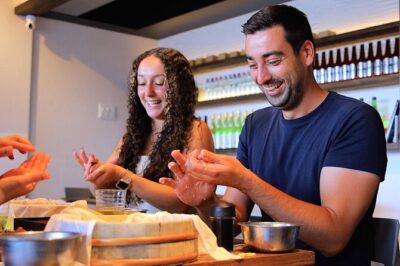
Sushi Making Osaka Roll and Authentic Japanese Sushi Class
Read our review →
Tokyo Sushi Making Class in Tsukiji with Professional Chef
Read our review →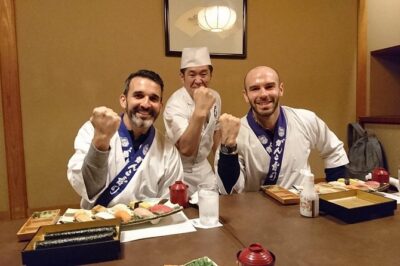
Tsukiji Fish Market Guided Tour and Sushi Making with Pro Chef
Read our review →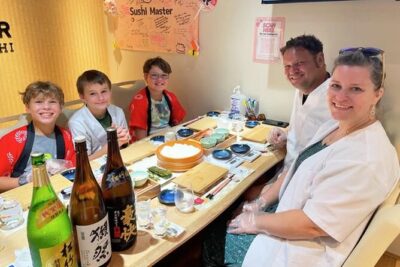
Sushi Making in Kyoto! Same-day bookings welcome!
Read our review →Browse the lists this tour appears in