
Reviewed · GEISHA & GION DISTRICT TOURS
Private Dinner with a Geisha
A rare Kyoto evening awaits. This experience combines a guided walk through Gion with a private meeting with a geiko or maiko, a traditional meal, conversation, music, dancing, and Japanese party games. It offers something most visitors cannot arrange on their own: time in a private setting with a woman trained in Kyoto’s geisha traditions.
I especially like the cultural briefing before dinner and the chance to ask direct questions rather than simply watch a staged show. Guides such as Mia and Mie have been praised for their clear English, warmth, and command of geiko and maiko customs. The main caution is the food: kaiseki is traditional and carefully prepared, but it can be difficult for picky eaters, vegetarians, vegans, or anyone uneasy with seafood.
The price is high at $381.49 per person, yet the evening includes a guide, dinner, a geiko or maiko appearance, and a dance performance. For a special family occasion or a first trip to Kyoto, I can see the value. I would book it only after checking the meal option, drink policy, and dietary arrangements carefully.
In This Review
- Key points to know before booking
- Why this geisha dinner is different from a show
- Meeting at Minamiza and walking through Gion
- Arriving at the private tea house or restaurant
- What dinner is like: a traditional kaiseki meal
- Meeting the maiko or geiko
- The dance, music, and traditional games
- Is $381.49 per person good value?
- Who should book this evening?
- Timing, transport, and practical details
- My final recommendation
- FAQ
- Where does the Private Dinner with a Geisha begin?
- What time does the experience start?
- How long does the activity last?
- Is dinner included?
- Are drinks included?
- Can children participate?
- Can I cancel or change the booking?
Key points to know before booking
- The evening begins at Minamiza Kabuki Theatre: Meet at 5:00 pm in front of the main gate, facing Shijo Street.
- Gion comes before the meal: The walk explains Kyoto’s geiko district, traditional houses, and the difference between a geiko and a maiko.
- The meal is kaiseki-style: Expect multiple courses with seafood, vegetables, tempura, and other traditional Japanese dishes.
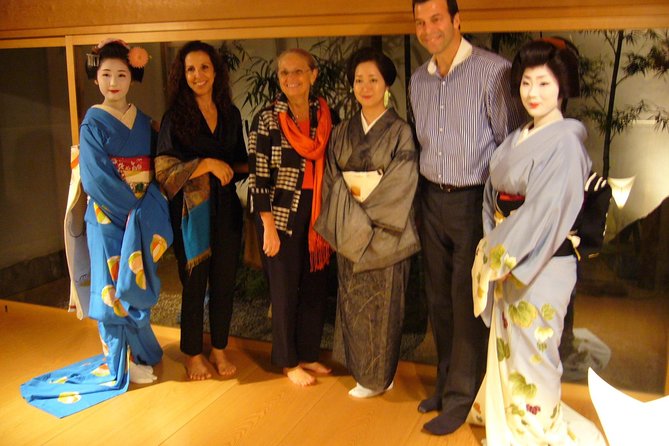
- The entertainment is personal: Your maiko or geiko may dance, sing, play a traditional instrument, answer questions, and lead simple games.
- Private options cost more for a reason: A private tea house option includes drinks, while other options require you to buy drinks separately.
- Food planning matters: Specific dietary needs must be supplied when booking, but at least one booking had trouble getting restrictions honored.
Why this geisha dinner is different from a show
Kyoto’s geiko and maiko traditions are often reduced to colorful costumes and quick photographs. This evening offers more context. You learn how the profession works, how a maiko trains, and what daily life can be like before meeting your host.
In Kyoto, a geiko is a professional entertainer trained in traditional dance, music, conversation, and social customs. A maiko is an apprentice. The word geisha is widely understood outside Japan, but geiko is the Kyoto term. Your evening may include one or both.
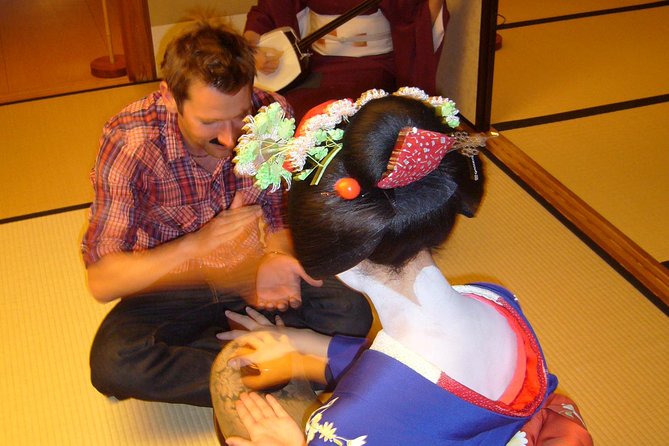
The private setting changes the mood. You are not simply sitting in a theater watching a performance from a distance. You can ask questions about the kimono, hair, training, music, and career path. One family asked how a maiko sleeps without disturbing her elaborate hairstyle. Another asked about her pop culture interests. Those small exchanges can make the evening feel far more human than a formal presentation.
I also like that the guide prepares you before the meeting. That matters because many visitors arrive with a jumble of movie images and tourist myths. A good guide helps you ask respectful questions and understand the setting.
There is an important condition attached to this access. The operator describes the traditions as noble and not open to the public, and it can refuse service to anyone who behaves disrespectfully. Treat the evening as a cultural appointment, not a costume-themed party where anything goes.
More geisha district walks in Kyoto:
- Kyoto Geisha Walking Tour: Gion District & Hidden Gems
★ 4.7 · 3,273 reviews - Kyoto: Gion Magical Night Walking Tour with Geisha Trivia
★ 4.9 · 2,393 reviews - Kyoto: Gion Geisha District Walking Tour – Stories of Geisha
★ 4.7 · 2,187 reviews
Meeting at Minamiza and walking through Gion
The meeting point is in front of Minamiza Kabuki Theatre at 198 Nakanochō in Kyoto’s Higashiyama Ward. The listed start time is 5:00 pm. The theater faces Shijo Street, making it a useful landmark in central Gion.
From there, the group walks through Gion toward the restaurant or tea house. The walking portion is usually around 45 minutes, though the total program is listed at roughly three to three and a half hours depending on the selected option.
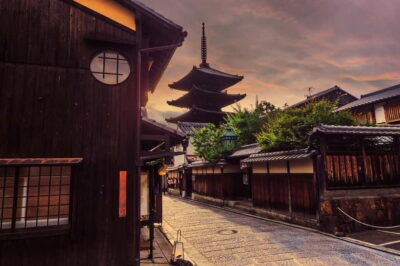
This walk is not just filler before dinner. It gives you a basic map of the district and introduces the traditional wooden townhouses associated with Gion. Your guide explains the role of the geiko district and the difference between public streets, private venues, and the formal world of the tea houses.
Guide quality has a major effect here. Mia has received especially warm praise for her English, humor, and ability to explain difficult cultural points in a relaxed way. Mie has also been praised for giving families and teenagers a clear introduction before dinner. Mei is another guide named in the feedback, so your assigned guide may vary.
Large groups can make the walk less satisfying. One booking had a group of more than ten people, and the guide was difficult to hear on the street. If you have a large party, stay close to the guide and ask for clarification before moving on.
Arriving at the private tea house or restaurant
After the Gion walk, you go to a Japanese restaurant or private tea house. The exact venue depends on the option you choose at checkout. The setting described in the feedback is a traditional room, often with a private area for the meal and entertainment.
The tea house option is the most special choice, but it also costs more. It includes drinks such as sake and beer, while drinks are not included with the other choices. The general inclusions are dinner, the professional guide, geiko or maiko accompaniment, and a dance performance.
The private room helps conversation, though the performance area may be tight. One booking found that the maiko had limited space to dance in a corner of the room. That is worth keeping in mind if you expect a large theatrical production. This is a close-up cultural visit, not a full stage show.
The program can also vary depending on how many performers are assigned. Most descriptions refer to one maiko or geiko, while one evening included two maiko and one geiko because another group was sharing part of the occasion. Treat multiple performers as a pleasant possibility, not a promise.
What dinner is like: a traditional kaiseki meal
The food is a major part of the cost, but it is not designed to suit every palate. Depending on the option, you receive a half or full kaiseki-style dinner. Courses may include seafood, vegetables, tempura, and other traditional Japanese preparations.
A half kaiseki meal may be enough for many people. One family found the half dinner plentiful, while another group described the full meal as elaborate and delicious. You should arrive ready for a sequence of small dishes rather than one large plate.
This style of dining rewards curiosity. You may see ingredients or preparations that are unfamiliar, and the guide can explain what is being served. I would ask questions as each course arrives rather than quietly guessing. A menu explaining the dishes would make the evening easier, since at least one group had to ask what several items were.
Food is also the clearest weakness. One diner found the meal barely edible and felt the evening ran too long. Others praised the food highly, calling it outstanding or very tasty. That difference is easy to understand: kaiseki can be memorable for an adventurous eater and uncomfortable for someone who dislikes raw fish, seafood, or unfamiliar textures.
Dietary requirements deserve serious attention. You are asked to provide them when booking, but at least one vegetarian request was not accommodated, despite attempts to contact the operator. Another group reported that restrictions involving seafood and shellfish were not handled as expected.
Do not assume that a note added to the booking guarantees a changed menu. If your diet is essential to your health or enjoyment, contact the operator before paying if possible. Because the activity is non-refundable, discovering a problem on the evening itself leaves little room to fix it.
A few more Kyoto experiences worth weighing up
- Kyoto Gion Cultural Walk & Geisha Show with Dining Options
★ 5.0 · 518 reviews - Kyoto Gion Cultural Walk & Geisha Show with Dining Options
★ 5.0 · 483 reviews - Dinner with Maiko in a Traditional Kyoto Style Restaurant Tour
★ 5.0 · 175 reviews - Kyoto: Geisha Dinner & Gion Cultural Walk
★ 5.0 · 73 reviews
Meeting the maiko or geiko
The personal conversation is the heart of the evening. Your host may speak about training, daily routines, traditional clothing, music, dance, and the path from maiko to geiko. The guide translates and keeps the conversation moving.
Some maiko may speak little or no English. That does not make the meeting empty, but it makes the interpreter important. One family with teenagers still enjoyed the encounter greatly despite the maiko not speaking English, while other groups valued having a guide translate detailed questions one by one.
The tone is usually friendly and interactive. You may be invited to ask questions directly, see details of the kimono and hairstyle, join a simple drinking game, or try a traditional party activity. Several families found the maiko warm and eager to share her story.
Keep your expectations sensible. The host is there to entertain and converse, but she is also working. The evening is not an invitation to demand personal information or treat her as a photographic prop. Ask polite questions, listen to the answers, and allow the guide to explain customs that may not be obvious.
Photography is part of some experiences described in the feedback, with families taking pictures during games and conversation. Still, follow the guide’s directions on timing and manners. The operator explicitly reserves the right to refuse service for disrespectful behavior.
The dance, music, and traditional games
The performance usually includes traditional dance, and it may also feature singing or a musical instrument such as the shamisen. The style is graceful and controlled rather than loud or theatrical.
One maiko performed two of the many dances she had studied. Other evenings included songs, dancing, games, and conversation. The performance may be brief, particularly when the maiko has another appointment afterward.
That timing can surprise people. One group felt the dance was too short and the room did not allow enough space for movement. I would view the performance as one part of a private cultural visit, not the entire product. The conversation and explanation are just as important.
The games are a welcome change of pace. They give you something to do together and make the interaction less formal. Some groups played a drinking game, though the minimum drinking age in Japan is 20. Drinks are included only with the private tea house option, so check your selection before assuming that sake or beer is part of the meal.
Is $381.49 per person good value?
At $381.49 per person, this is a major splurge. You are paying more than the cost of an ordinary Kyoto dinner or a standard Gion walk. The price makes sense only if the private cultural access is your main reason for booking.
The package includes a professional English-speaking guide, dinner, a maiko or geiko appearance, and a dance performance. The private tea house option also includes drinks. Group discounts may reduce the cost for larger parties, but you should confirm how the discount applies to your selected option.
I see the best value for families, couples marking a special occasion, and visitors with a strong interest in Japanese performance traditions. The evening can become one of the defining memories of a Kyoto visit because it combines place, food, history, conversation, and live entertainment in one appointment.
The value is weaker if you mainly want a good dinner. You can find excellent food elsewhere in Kyoto without paying for the cultural program. It is also weaker if you need a highly flexible menu or want a long dance performance in a spacious room.
Book this for access, not for luxury service. Reports of slow restaurant service and repeated requests for water suggest that the dining operation may not always be perfectly polished. The guide and performer are the reason to pay the premium.
Who should book this evening?
I would recommend it to adults and families with older children who can listen, ask questions, and behave respectfully in a formal setting. Several families had excellent evenings with teenagers, including a group with children aged 19 and 22.
Children must be accompanied by an adult. The experience is private to your group, although the meaning of private can vary by option and venue. One booking involving a larger party found more people present than expected, so confirm the group arrangement if that detail matters to you.
This is a good choice for you if:
- You want to learn about geiko and maiko life from an interpreter.
- You enjoy traditional Japanese food and are open to unfamiliar ingredients.
- You value conversation as much as performance.
- You are willing to follow strict cultural manners.
- You are comfortable paying for a rare, specialized evening.
I would hesitate if you are vegetarian, vegan, highly selective with food, or uncomfortable with raw seafood unless the menu has been confirmed in advance. I would also think twice if your main goal is a long dance performance.
Timing, transport, and practical details
The meeting point is near public transportation in Gion, and the activity ends back at the meeting point after dinner. The start time is 5:00 pm, with the full program lasting about three hours, or approximately three and a half hours depending on the selected arrangement.
Confirmation is sent within 48 hours, subject to availability. The experience is often booked about 38 days ahead, which tells you to plan early if your Kyoto schedule is tight.
The activity is non-refundable and cannot be changed after booking. That makes advance planning especially important. Check the date, number of people, dinner type, drink arrangement, and dietary needs before committing.
Wear clothing that lets you walk comfortably through Gion and sit through a traditional meal. The exact seating details are not provided, but Japanese dining rooms can involve a more formal posture than a typical Western restaurant. Ask your guide for help if you are unsure.
My final recommendation
I recommend the Private Dinner with a Geisha for the right kind of visitor. The strongest parts are the Gion walk, the excellent cultural guides, and the chance to speak with a maiko or geiko in a private setting. The dance, shamisen, songs, and games add charm, but the real value is the personal exchange.
I would not book it blindly. Confirm the food arrangement, especially for vegetarian, vegan, shellfish-free, or other special diets. Choose the private tea house option if drinks and a more exclusive setting matter to you, and remember that the performance may be intimate and short.
For a respectful visitor who wants more than a photo opportunity, this can be a remarkable Kyoto evening. At this price, it should be treated as a once-in-a-trip cultural splurge, not a routine dinner.
FAQ
Where does the Private Dinner with a Geisha begin?
The meeting point is in front of the main gate of Minamiza Kabuki Theatre, at 198 Nakanochō in Kyoto’s Higashiyama Ward. The theater faces Shijo Street.
What time does the experience start?
The listed start time is 5:00 pm.
How long does the activity last?
The activity lasts approximately three hours and 30 minutes. The walking tour and party portion is also described as taking about three hours, depending on the selected option.
Is dinner included?
Yes. Dinner is included, with either a half or full kaiseki-style meal depending on the option selected.
Are drinks included?
Drinks are included with the private tea house option. For other options, drinks are available for purchase and are not included in the listed inclusions.
Can children participate?
Yes, children can participate, but they must be accompanied by an adult. Most travelers can take part in the activity.
Can I cancel or change the booking?
No. The experience is non-refundable and cannot be changed for any reason after booking.
More Dining Experiences
- Kyoto Evening Gion Food Tour Including Kaiseki Dinner
★ 5.0 · 62 reviews - Kyoto: Maiko Dinner in Traditional Restaurant and Tour
★ 4.8 · 55 reviews - Kyoto: Lunch or Dinner with Maiko
★ 4.2 · 52 reviews - Tokyo Bar Hopping Tour in Shinjuku (All-You-Can-Drink + Dinner)
★ 5.0 · 3,587 reviews
Just added around Kyoto
- Kyoto: Private Customizable Day Trip by Car★ 5.0 · 38 reviews
- Kyoto: Gion Night Walking Tour with Geisha Insight★ 5.0 · 39 reviews
- Kyoto: Full Day Bike Tour★ 4.9 · 39 reviews
- Private Japanese Calligraphy in Kyoto – Learn Shodō with a Master★ 5.0 · 39 reviews
- Experience a tea ceremony in an authentic tearoom, in Kyoto!★ 4.5 · 41 reviews
- Kyoto: Gion Evening Walk with Hidden Gems, Geisha & Sake★ 5.0 · 41 reviews
- Kyoto Private Photo Shoot & Tour by SnapKyoto★ 5.0 · 41 reviews
- The Way of Tea: Kyoto Crafts, Hidden Temples & Wabi-Sabi Walk★ 5.0 · 41 reviews
Geisha & Gion District Tours, compared.
Kyoto Geisha Walking Tour: Gion District & Hidden Gems
Read our review →
Gion Magical Night Walking Tour with Geisha Trivia
Read our review →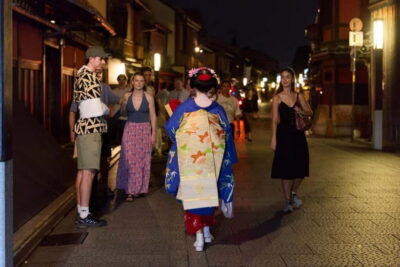
Gion Geisha District Walking Tour – Stories of Geisha
Read our review →
Best of Kyoto: Gion, Geisha, Pagodas & Cobblestones
Read our review →
Kyoto Night Foodie Tour in Gion (9+ dishes + 6 Sake tastings)
Read our review →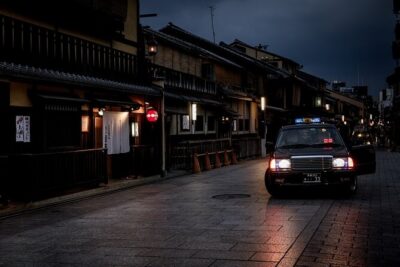
Kyoto Gion Geisha District Walking Tour – The Stories of Geisha
Read our review →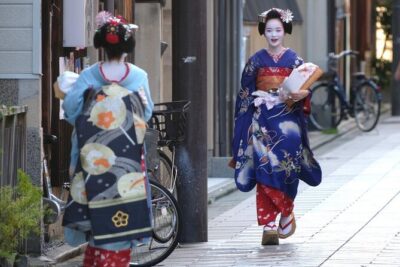
Kyoto Gion: 2-Hour Geisha Culture & History Walking Tour
Read our review →Browse the lists this tour appears in