

Reviewed · WORKSHOPS
Private Mochi Sweets Making class near Shibuya area
Mochi tastes better when you make it yourself. This two-hour class brings you into Sakura’s home near Shibuya, where you prepare fruit daifuku and dango by hand, then sit down with Japanese tea to enjoy the results. I especially like the small group setting, limited to eight people, and the chance to learn in a real neighborhood rather than a polished cooking studio. I also like that Sakura explains why mochi matters in Japanese life, not just how to shape it. The main consideration is that the class takes place in a home with a dog and requires stairs to the second floor.
You meet in Sangenjaya, a short trip from central Tokyo and a pleasant area to explore before or after class. At $79.28 per person, this is not the cheapest snack activity in Tokyo, but the price covers instruction, ingredients, tea, your handmade sweets, and a personal cultural exchange with Sakura. Families and first-time cooks get the most from it, though anyone expecting a formal restaurant meal should know this is a friendly home lesson, not a dining experience.
In This Review
- Key Points Before You Book
- Sangenjaya Gives You a Different Side of Tokyo
- Entering Sakura’s Home for a Two-Hour Lesson
- The Cultural Meaning Behind Mochi
- Making Fruit Daifuku by Hand
- Shaping Dango and Learning the Details
- Tea, Conversation, and the Finished Sweets
- How Much Value Do You Get for $79.28?
- Who Will Enjoy This Class Most?
- Planning Your Visit to Sangenjaya
- Should You Book Sakura’s Mochi Class?
- FAQ
- Where does the mochi-making class take place?
- How long does the experience last?
- What sweets will I make?
- Is tea included?
- How many people can join the class?
- Is the class suitable for children?
- Is the home suitable for people with dog allergies?
- Can I cancel for a refund?
Key Points Before You Book
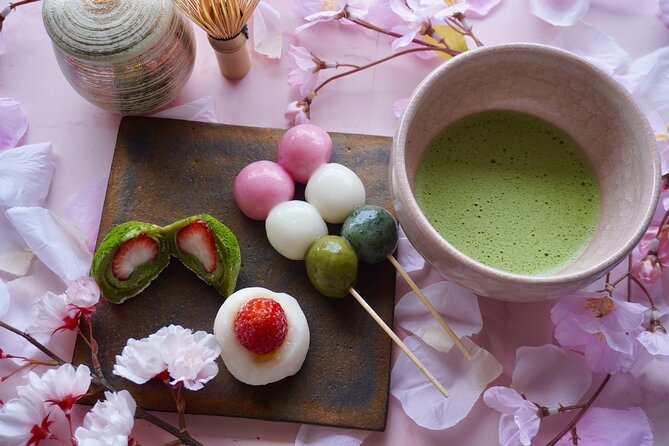
- Make several Japanese sweets by hand: The class includes fruit daifuku and dango, with every participant involved in the process.
- Learn in Sakura’s own home: You get a glimpse of everyday Japanese hospitality in a residential neighborhood near Shibuya.
- Enjoy matcha or tea afterward: Your finished sweets are served with Japanese green tea, matcha, or decaffeinated black tea.
- Good for families: Sakura has taught children gently and patiently, and young participants can take part rather than watch from the side.
- Take leftovers with you: A take-out bag is provided, useful if your appetite gives out before the mochi does.
- Check the practical limitations: The home has a dog, the class is upstairs, and you need to climb stairs to reach it.
Sangenjaya Gives You a Different Side of Tokyo
The meeting point is at 1-chōme-11-13 Sangenjaya in Setagaya City. Although the class is advertised as being near Shibuya, it is not in the middle of Shibuya’s bright shopping streets. That is part of its appeal. Sangenjaya feels more residential and local, giving you a calmer setting before you begin cooking.
The meeting point is near public transportation, and the neighborhood is easy to explore on foot. I would allow a little extra time before class so you can arrive without rushing and enjoy the streets around the station. Several families have found the area pleasant for a short walk, making this a useful activity when you want a break from major sights and packed commercial districts.
The activity begins and ends at the same meeting point. Private transportation is not included, so you are responsible for reaching Sangenjaya and returning to your hotel. That is simple enough if you are already visiting Shibuya or Setagaya, but you should plan your route in advance and avoid arriving at the last minute.
More Dessert Tours in Tokyo
- Matcha Making Class in Tokyo with Authentic Japanese Sweets Set
★ 5.0 · 744 reviews - Tokyo: Matcha Making Experience with Mochi Sweets in Asakusa
★ 4.9 · 388 reviews - Make Traditional Nerikiri Sweets & Matcha experience in Shibuya
★ 5.0 · 130 reviews
Entering Sakura’s Home for a Two-Hour Lesson
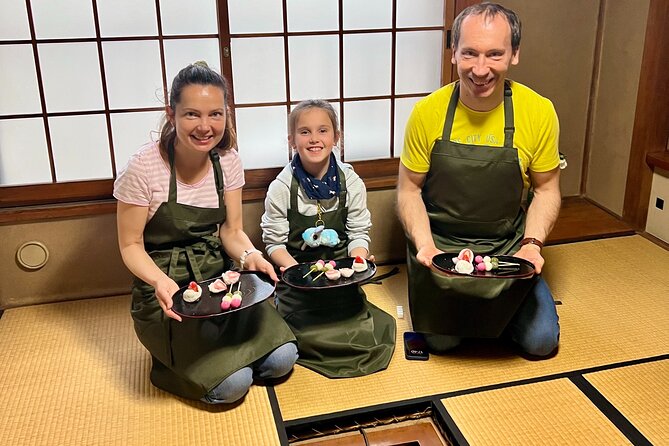
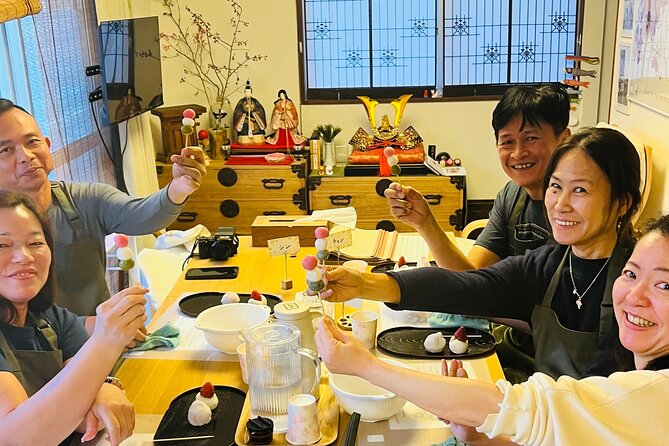
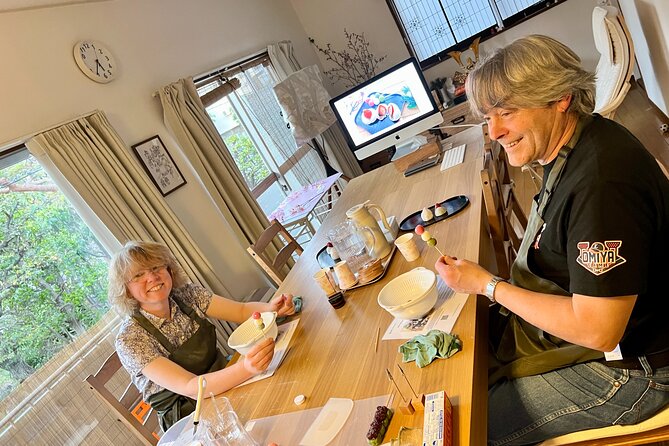
Sakura welcomes you into her home, which changes the tone immediately. You are not sitting in rows while a chef performs every step at a distance. You work at the table, follow her instructions, and shape the sweets yourself.
The group can include up to eight people, though some bookings may be smaller. A small class matters here because mochi dough can be tricky. You may need help judging texture, handling sticky dough, or placing the filling neatly in the center. Sakura can move around the table and give individual guidance instead of leaving beginners to struggle.
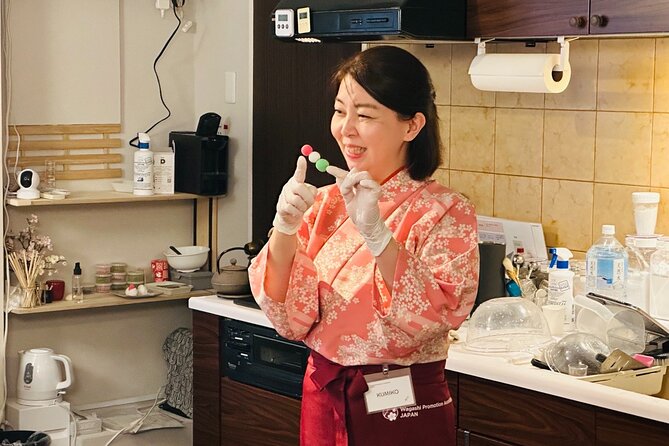
Sakura has taught more than 1,000 people from over 35 countries, and she has also taught in Switzerland as a guest instructor. Her experience shows in the way the lesson is structured. You get a clear introduction, practical instructions, and time to repeat the movements yourself. English is available for instruction, and several people have found communication easy.
You should still think of this as a warm home visit rather than a highly formal culinary school. The setting is personal and relaxed. That makes the class comfortable for families and couples, but it also means the atmosphere may be less polished than a purpose-built cooking venue.
The Cultural Meaning Behind Mochi
Before making sweets, Sakura explains mochi and its place in Japanese culture. This short introduction gives the cooking a useful frame. Mochi is not simply a chewy dessert sold in colorful packages. It appears in seasonal customs, celebrations, family traditions, and everyday Japanese food culture.
I like this part because it helps you understand what you are making. Dango and daifuku have different forms and uses, and the class connects those differences with traditional recipes and customs. You also learn that the ingredients used are available outside Japan, which makes the lesson more useful once you return home.
One particularly practical feature is that the class is designed around recipes without gluten, alcohol, or additives. That does not automatically mean the class is suitable for every allergy or dietary need, so you should confirm your requirements before booking. Still, the recipe choices make this a more approachable introduction to Japanese sweets for many people.
The cultural talk is not meant to replace a museum visit or a full food history lecture. It is short and connected to the work in front of you. For me, that is the right balance for a two-hour activity: enough context to make the food meaningful, without turning the afternoon into a classroom presentation.
Making Fruit Daifuku by Hand
Fruit daifuku is one of the most appealing parts of the class. You work with soft mochi dough and a fruit filling, then learn how to wrap it into a neat, rounded sweet. The process looks easy when someone else does it. In practice, sticky dough has its own ideas.
Sakura guides you through each stage instead of expecting you to know the technique. You learn how to handle the dough, position the filling, and close the edges. The hands-on format is important because the finished shape depends on touch and timing. You can see and feel the difference between a well-sealed daifuku and one that needs another try.
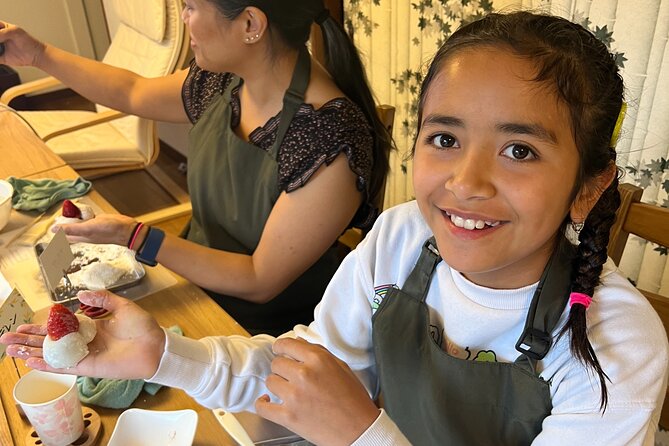
The class includes strawberry daifuku according to the experiences described by participants, and the finished sweets are eaten during the lesson. You may also have extra pieces to take back in the provided bag. That small detail adds value. Mochi is best appreciated fresh, but carrying a piece back to your hotel lets you enjoy the result later and gives you something to share.
Children tend to enjoy this section because it feels like edible craft work. Sakura is also a mother who raised two children, and her teaching style is described as gentle and patient. If you are bringing a child, this is a better fit than a class built around long explanations or sharp kitchen tools.
A completely different kind of day out in Tokyo:
- Mt Fuji and Hakone 1-Day Bus Tour Return by Bullet Train
★ 5.0 · 26,383 reviews - 1-Day Tokyo Bus Tour
★ 5.0 · 14,250 reviews - Tokyo: TOKYO SKYTREE® Admission ticket
★ 4.5 · 11,192 reviews - Tokyo: teamLab Planets TOKYO Digital Art Museum Entry Ticket
★ 4.6 · 9,779 reviews
Shaping Dango and Learning the Details
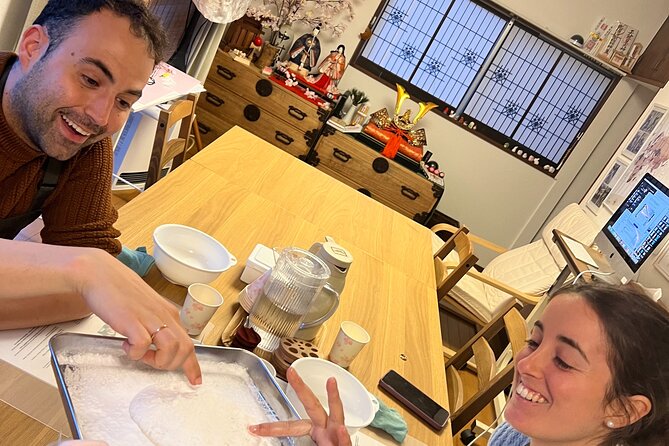
Dango gives you a different task. Instead of wrapping a filling inside dough, you shape the mixture into small rounds and prepare them as a separate Japanese sweet. The change keeps the lesson active and lets you compare two familiar forms of wagashi.
The class may include more than one dango variation, with some sessions teaching two kinds of daifuku and two kinds of dango. The exact preparation can depend on the class format, but you can expect to take part in the shaping and cooking rather than simply watching Sakura work.
This is also where Sakura’s close supervision helps. Even a simple ball needs consistent size if you want the finished plate to look tidy. You will get tips that are difficult to pick up from a recipe alone, such as how to work with the texture and how to keep the dough manageable.
One session also included dango haiku, adding a playful cultural touch. It is a reminder that the class is not only about producing sweets. Sakura uses the food to open a conversation about Japanese customs, language, and daily life. You should not book this expecting a serious poetry workshop, but the small creative touches help make the afternoon memorable.
Tea, Conversation, and the Finished Sweets
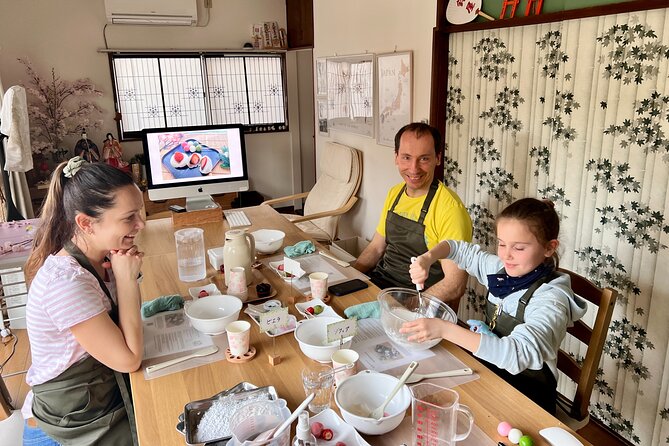
After cooking, you sit down to sample what you made. Japanese green tea or matcha is included, and decaffeinated black tea is available if you avoid caffeine. Soda, alcohol, bottled water, and brunch are not included, so plan accordingly.
The tea service gives the class a natural pause. You are no longer concentrating on sticky dough or trying to close a daifuku. You can look at the finished sweets, taste them fresh, and talk with Sakura about Japan, food, and travel.
Sakura has traveled herself, and her English makes it possible to have more than a basic cooking exchange. The conversation is one of the strongest reasons to choose this activity over buying mochi from a shop. You get food, but you also get time with a local host in her own space.
There is a dog in the home, named Chico or Choco in different descriptions. The dog is part of the household atmosphere and has been a friendly presence during classes. If you have a dog allergy, this activity is specifically not recommended. This is not a minor point, so take it seriously before booking.
How Much Value Do You Get for $79.28?
At $79.28 per person, the class sits in the midrange for a small-group Tokyo food experience. You are paying more than you would for a plate of daifuku at a department-store food hall, but that comparison misses the point. The fee includes instruction, ingredients, tea, the cultural explanation, and access to Sakura’s home.
The value is strongest if you want an activity rather than a quick tasting. You spend about two hours making several sweets, eating them fresh, and learning recipes you can try again at home. The recipes also use ingredients that can be found abroad, which makes the class more useful than a one-time novelty.
Group discounts are available, another advantage for families or larger parties. The maximum group size is eight, so even a discounted booking should retain a personal feel. A family of four or five may find this especially worthwhile because everyone can participate and younger children do not need to sit quietly for long periods.
The value is less clear if you dislike sweets, have strict food restrictions, or prefer a busy sightseeing schedule. This is a focused activity with a set meeting point, not something you can squeeze casually between distant attractions. You should also remember that drinks other than the included tea are extra.
Who Will Enjoy This Class Most?
I would recommend the experience most strongly to families, couples, small groups of friends, and solo visitors who want a personal introduction to Japanese food culture. Children as young as eight have enjoyed the class, and teenagers have found the hands-on work more engaging than a standard guided talk.
It is also a good choice for people who love taking cooking ideas home. Sakura explains methods that can be repeated abroad, and the recipes do not depend on unusual ingredients that are impossible to find outside Japan. You leave with more than photographs. You leave with a better idea of how to recreate the sweets.
The class suits first-time visitors, but it can also work for people who already know Japan well. One Japanese participant found the explanation of mochi customs informative despite growing up in the country. That tells me the lesson is not limited to outsiders who know nothing about the subject.
I would hesitate to recommend it if you have a dog allergy, cannot climb stairs, or want a professional kitchen environment. The venue is on the second floor, and stairs are required. Service animals are allowed, but the dog allergy warning remains important.
Planning Your Visit to Sangenjaya
Confirmation is sent within 48 hours of booking, subject to availability. The experience has a maximum of eight people, and a minimum number of participants may be required, so check your confirmation before arranging tightly timed plans around it.
The activity is listed as weather dependent. If poor weather causes cancellation, you are offered another date or a full refund. You can also cancel for a full refund up to 24 hours before the start time. Changes or cancellations inside that 24-hour window are not accepted, and the local Tokyo time controls the cut-off.
Wear something comfortable for a hands-on food activity. Aprons are available to rent, but the class takes place in a private home, so a neat, practical outfit is the sensible choice. Arrive with enough time to find the address and climb the stairs without turning the first few minutes into a scramble.
Should You Book Sakura’s Mochi Class?
Book it if you want to make Japanese sweets, meet a local host, and see a quieter neighborhood near Shibuya. The strongest features are the small class size, Sakura’s patient instruction, the cultural explanation, and the chance to eat what you make with tea.
Skip it if you have a dog allergy, cannot manage stairs, or would rather spend your time sampling finished desserts in shops. For everyone else, $79.28 buys a useful, personal two-hour experience, especially for families and anyone hoping to recreate daifuku and dango at home.
FAQ
Where does the mochi-making class take place?
The class takes place in Sakura’s home at 1-chōme-11-13 Sangenjaya, Setagaya City, Tokyo 154-0024, Japan. The activity begins and ends at the same meeting point.
How long does the experience last?
The class lasts approximately two hours.
What sweets will I make?
You will learn to make traditional Japanese sweets including fruit daifuku and dango. Some sessions include two types of daifuku and two types of dango.
Is tea included?
Yes. Japanese green tea or matcha is included. Decaffeinated black tea is available if you do not want caffeine.
How many people can join the class?
The maximum group size is eight people.
Is the class suitable for children?
Yes. Sakura teaches children gently and has experience teaching young participants. Children and teenagers have taken part in the hands-on preparation.
Is the home suitable for people with dog allergies?
No. A dog lives in the home, and the activity is not recommended for people with dog allergies.
Can I cancel for a refund?
You can cancel up to 24 hours before the start time for a full refund. Cancellations or changes made less than 24 hours before the experience are not accepted. If the class is canceled because of poor weather or an insufficient number of participants, you are offered another date or a full refund.
Just added around Tokyo
- Tokyo 6hr Instagram Highlights Private Tour with Licensed Guide★ 5.0 · 38 reviews
- Tokyo Small Group Tour with Guide★ 4.5 · 38 reviews
- Tokyo Sumo Experience with Live Show & Audience Challenge★ 5.0 · 38 reviews
- Very popular in Harajuku♡Animal petting zoo★ 4.6 · 39 reviews
- Japanese Food Cooking Class in Asakusa, Tokyo★ 5.0 · 39 reviews
- Ramen Making from Scratch with Tokyo Mom(Vegan Option Available)★ 5.0 · 39 reviews
- Tokyo: Kimono Rental inside Shinjuku Gyoen National Garden★ 4.9 · 39 reviews
- Tokyo JDM Night: 600hp C63s AMG Edition 1 (Private)★ 4.9 · 39 reviews
Workshops, compared.
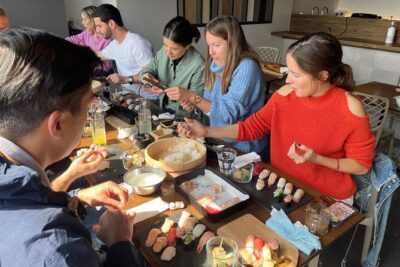
Sushi Making Tokyo Roll and Authentic Japanese Sushi Class
Read our review →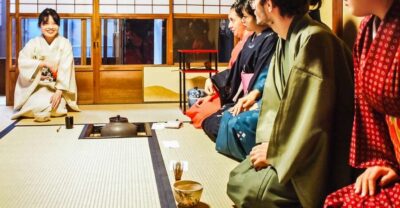

Roll and Authentic Sushi Making Class in Asakusa
Read our review →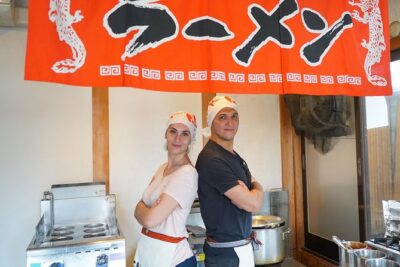
Ramen Cooking Class at Ramen Factory in Kyoto
Read our review →
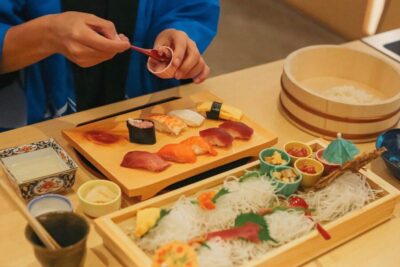
Sushi Making Class in a Happi Coat near a Famous Spot
Read our review →
Sushi Making Osaka Roll and Authentic Japanese Sushi Class
Read our review →Browse the lists this tour appears in