
Reviewed · WALKING TOURS
Sakai – Knife Factory and Craft Walking Tour
Knives reveal a city’s character. This half-day Sakai walk takes you beyond Osaka’s usual sights and into a working knife factory, where raw blades arrive from blacksmiths and skilled craftsmen turn them into cooking tools. I like the direct access to the sharpening station, and I like that you can order a custom knife and watch it being made. The main caution is that the historical commentary and knife expertise may depend heavily on your guide.
The tour costs about $66.05 per person and lasts roughly three to four hours. That is fair value if you want factory access, a sharpening lesson, a bilingual guide, and help choosing a knife. It is less compelling if you only want to see Sakai’s museum and shops, since those parts can be visited independently.
In This Review
- Key points at a glance
- Why Sakai is worth a morning from Osaka
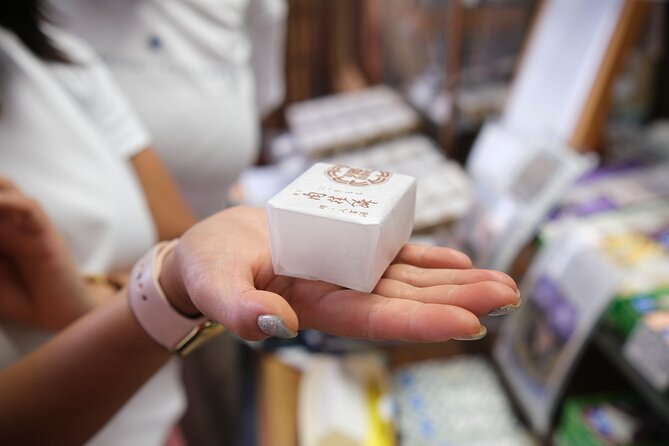
- Starting with Sakai’s cinnamon mochi
- Inside the century-old knife factory
- The sharpening lesson is the hands-on part
- Choosing a custom knife in Sakai
- Sakai Traditional Crafts Museum in 30 minutes
- What the $66.05 price really covers
- Guides can shape the whole experience
- Timing, transport, and the small print
- Who will enjoy this Sakai walk most
- Should you book the Sakai Knife Factory tour?
- FAQ
- How long does the Sakai Knife Factory and Craft Walking Tour last?
- What time and where does the tour begin?
- Is a knife included in the tour price?
- Can I order a customized knife?
- Is a French-speaking guide guaranteed?
- What happens on the third Tuesday of the month?
- Can a solo traveler book the tour?
Key points at a glance
- Enter a working knife factory: See a family-run operation with more than 100 years of history, including its sharpening station and main office.
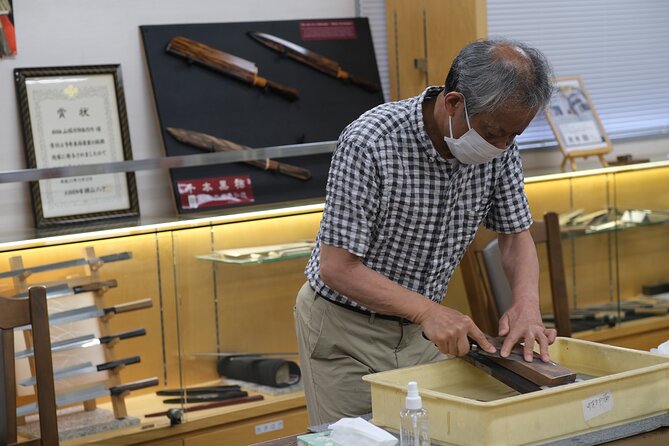
- Practice traditional sharpening: A professional demonstrates the method and gives you a chance to try it yourself.
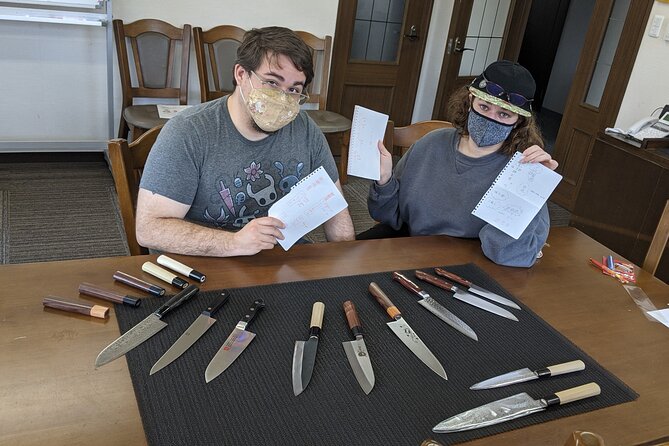
- Order a knife made for you: You may select a customizable knife and watch it being prepared in front of you.
- Taste Sakai’s cinnamon mochi: The walk begins with a sweet made according to a 400-year-old local tradition.
- Learn beyond knives: The Sakai Traditional Crafts Museum covers local products, handmade work, bicycles, and Shimano’s Sakai origins.
- Keep the calendar in mind: From March 6 to April 6, 2026, the blacksmith visit is available only on Tuesdays, Wednesdays, and Thursdays.
Why Sakai is worth a morning from Osaka
Sakai sits in Osaka Prefecture but has a very different feel from central Osaka. This tour gives you a reason to make the trip: it connects local food, craft, manufacturing, and the city’s long association with blades.
The focus is not on a staged demonstration made only for visitors. You enter a real knife factory, see the sharpening station, and visit the main office. The raw blades come directly from the blacksmith, then pass through later steps before becoming usable handmade cooking knives.
That division of labor matters. A knife is not simply forged once and placed on a shelf. The factory visit helps you see the care involved after the blade arrives. Sharpening, finishing, and fitting a knife for kitchen use all require control and patience.
I would choose this tour for a morning when you want something more specific than another major Osaka attraction. It is especially useful if you cook, collect Japanese knives, or want a practical souvenir with a clear local connection.
More Walking Tours in Osaka
- Osaka: Hotspots & Hidden Gems Walking Tour Private or Group
★ 4.9 · 1,300 reviews - Osaka Local Foodie Walking Tour in Dotonbori and Shinsekai
★ 5.0 · 985 reviews - Osaka Bar Hopping Night Walking Tour in Namba (3 bars, 6 tastes)
★ 5.0 · 958 reviews
Starting with Sakai’s cinnamon mochi
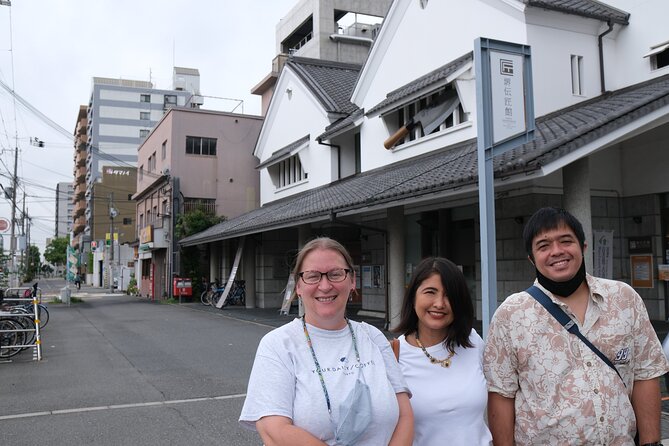
The meeting point is at 3-chōme-22 Ebisujimachō in Sakai Ward. The tour starts at 9:00 a.m., so you get an early start before the day grows hot or busy.
The first stop is 八百源来弘堂本店, a shop connected with Sakai’s traditional cinnamon mochi. You receive one sweet as part of the tour, and you can buy more if you enjoy it.
This opening stop lasts about 15 minutes. It is short, but it gives the walk a useful local-food beginning. The mochi is tied to a 400-year-old origin story, so it is more than a quick snack. You get a small introduction to a Sakai specialty before moving to the main subject.
I would not book this experience just for the mochi. Still, this is the kind of small detail that makes a walking tour feel connected to its neighborhood rather than assembled around a single factory visit. If you have a sweet tooth, leave room for one more.
Inside the century-old knife factory
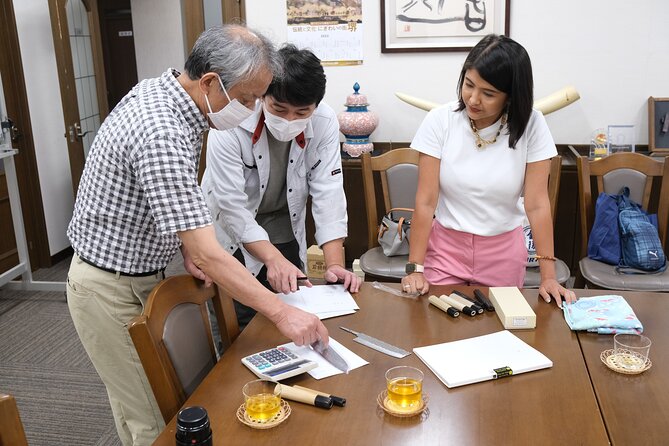
The factory is the heart of the experience. You spend about an hour at a traditional Japanese knife factory with more than a century of family history.
The important word here is working. You are not only looking at finished knives behind glass. You enter the sharpening station and watch professionals at work. You also visit the main office and see how blades are turned into proper handmade cooking knives.
The supplied details do not promise a full blacksmithing demonstration on every date. In fact, from March 6 through April 6, 2026, the blacksmith portion is available only on Tuesdays, Wednesdays, and Thursdays. If seeing the blacksmith is your main reason for booking, check your date carefully.
The factory visit should appeal to anyone who likes seeing how ordinary household objects are made. A kitchen knife looks simple until you watch the accuracy required to shape and sharpen it. The value is in seeing the work close up, not in collecting a long list of technical terms.
The guide helps connect the activity to Sakai. Past guides have included Scott, Jean-Yves, Rémi, and Remi, with some guides able to speak French, English, and Japanese. A French-speaking guide cannot be guaranteed on a shared tour, so French speakers should treat that as a possibility, not a promise.
One fair warning: I would not assume every guide has the same level of knife-making expertise. The tour provider has received praise for friendly guides and clear explanations, but one dissatisfied participant felt the guide lacked strong knowledge of knives and knife-making. That makes it worth asking focused questions during the factory visit, especially if you already know a lot about blades.
The sharpening lesson is the hands-on part
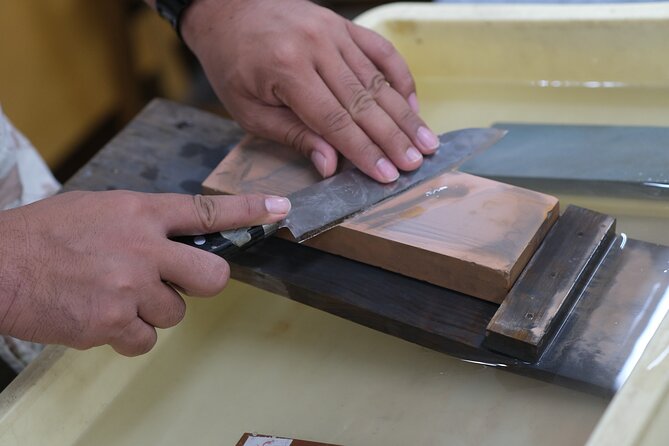
The included sharpening lesson gives the factory visit a practical edge. You do not just watch a professional work. You learn and practice traditional sharpening techniques.
The supplied information does not specify how long each person practices or whether you sharpen a personal knife. Do not arrive expecting a full professional apprenticeship. Think of it as a guided introduction to the skill, with a chance to understand the pressure, angle, and patience involved.
For most people, this will be the most memorable part of the morning. A demonstration can be interesting, but trying the technique yourself makes the process easier to understand. It also gives you more respect for the work behind a sharp, balanced kitchen knife.
I like this feature because it adds real value to the admission. Many craft visits stop at observation. Here, you get at least some direct practice under professional guidance.
A completely different kind of day out in Osaka:
- Osaka Go Karting Tour with Funny Costume
★ 5.0 · 2,658 reviews - Osaka Castle: Museum and Tower Entry Ticket
★ 4.5 · 2,380 reviews - Osaka: Shinsekai Food Tour with 13-15 Dishes at 5 Eateries
★ 4.8 · 2,204 reviews - Osaka Food Tour: 13 Dishes at 5 Local Eateries
★ 5.0 · 2,149 reviews
Choosing a custom knife in Sakai
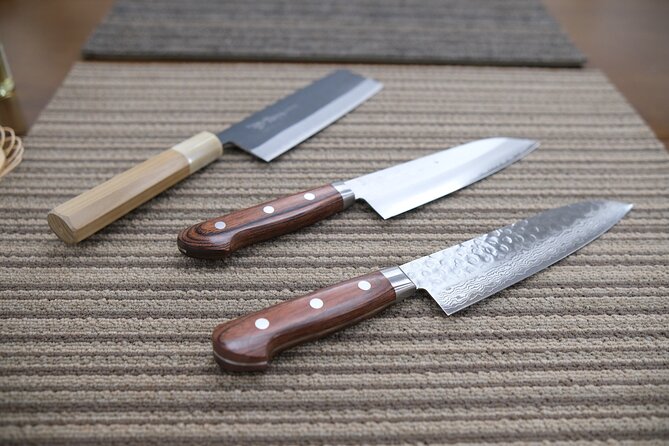
The strongest reason to book this tour may be the chance to order your own customizable knife. You can watch it being made in front of you, which turns a purchase into part of the experience.
This is not described as a required purchase, and there is no stated hard sell. That matters. You can learn about knives and leave without buying one. If you do want a special cooking knife, the factory connection gives you access that may be harder to arrange on your own.
You should budget separately for the knife. Shopping and souvenirs are not included in the $66.05 tour price. The tour covers the visit, guide, fees, sweet, and sharpening lesson, but the cost of any blade is extra.
I would think about your luggage and cooking habits before you go. A knife can be a superb souvenir, but it is also a serious tool rather than a casual trinket. The experience is best for you if you are ready to ask what kind of cooking you do, how much maintenance you expect, and what sort of blade you actually need.
The main benefit is not simply buying a knife in Japan. It is getting help understanding the object and seeing part of its production. That is why the shopping opportunity can justify the tour price for a serious home cook.
Sakai Traditional Crafts Museum in 30 minutes
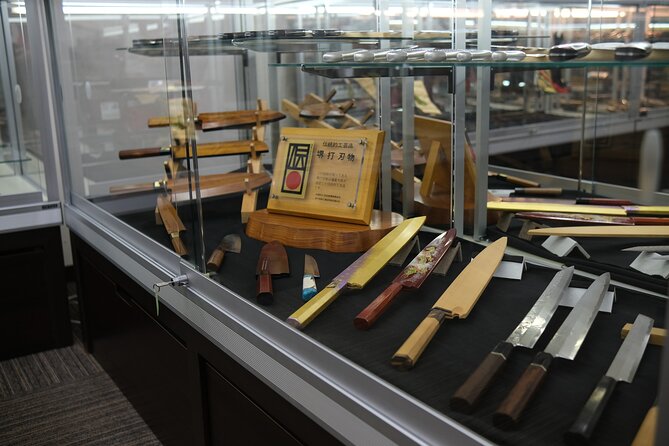
The final major stop is the Sakai Traditional Crafts Museum and Knife Shop. You spend about 30 minutes there.
The museum presents the crafts and products associated with Sakai. Knives are central, but the displays also cover bicycles and local manufacturing. The connection with Shimano is a useful detail: the bicycle brand was first created in Sakai.
This stop broadens the tour. You see that Sakai is not defined by one craft alone. The museum gives you a wider look at the city’s working traditions and provides another place to see or buy knives.
Thirty minutes is enough for a purposeful visit, but not for a slow museum study. If you want detailed background on every display, you may wish you had more time. I would treat it as a compact final chapter after the factory, not the main attraction.
A practical point: every third Tuesday of the month, the museum may close for inventory without notice. If that happens, the guide takes the group directly to The Craftsman location instead. This change may alter the museum portion, so keep your plans flexible on that date.
What the $66.05 price really covers
At about $66.05 per person, this is not the cheapest way to walk around Sakai. The museum and some local sights are accessible without a tour, and one participant felt that many parts could be done independently.
The price makes more sense when you count the pieces that are difficult to arrange alone:
- Entry to a working knife factory
- Access to the sharpening station
- A traditional sharpening lesson
- A bilingual guide
- Help understanding the knife-making process
- A local mochi tasting
- A chance to order a customized knife through the craft connection
- All listed fees and taxes
If your main goal is to buy a blade, the factory access may be worth the cost by itself. If your goal is simply to stroll through Sakai, eat a snack, and visit the museum, you may prefer an independent outing.
The group is capped at 10 people. That is small enough for questions and close viewing, though the experience may feel less personal if the group fills. A smaller group should also make the sharpening lesson easier to follow.
Guides can shape the whole experience
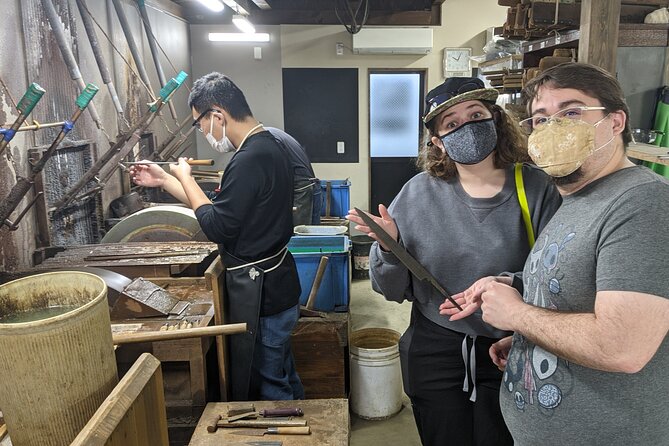
The tour includes a bilingual guide, and guide quality appears to be a key part of its appeal. Scott has been praised for interesting history and easy conversation. Jean-Yves has led guests around Sakai and the factory, with lunch and mochi suggestions adding useful local help. Rémi and Remi have also received praise for explaining both knife-making and Japanese culture.
Those names should not be taken as a guarantee of who will lead your tour. They do show the range of guide styles available. If you are lucky enough to have Rémi, the supplied information notes that he speaks French, English, and Japanese. Still, shared tours do not guarantee a French-speaking guide.
I would tell your guide early if you care most about technical knife details, Sakai’s history, shopping advice, or cultural context. That helps direct the conversation toward what you want. It also gives you a quick sense of how strong the guide is on your chosen subject.
One criticism deserves attention. A dissatisfied participant found the history presentation too Euro-centered and felt the guide was not sufficiently informed about knives. I would keep expectations sensible: this is a guided craft visit, not a specialist certification course or an academic history seminar.
Timing, transport, and the small print
The tour takes approximately three to four hours and ends back at the meeting point. It begins at 9:00 a.m., so plan your Osaka morning around an early departure.
The meeting point is near public transportation, and confirmation arrives at booking. Most people can take part, but the supplied information does not give a detailed accessibility description. If you need specific support, confirm it before paying.
A single person can book directly, but the tour requires at least two participants to operate. If only one person books, the session may be canceled, with the choice of a new date or a full refund. Solo visitors should keep another morning free as a backup.
You can cancel for a full refund up to 24 hours before the local start time. Changes or cancellations inside that 24-hour window are not accepted for a refund. The tour also offers a full refund or another experience if the minimum number is not reached and the operator cancels.
Wear comfortable shoes. The tour includes walking between stops and time on your feet. You should also leave space in your schedule after the tour if you plan to shop for a knife or ask the guide for lunch advice.
Who will enjoy this Sakai walk most
I would recommend this tour to:
- Home cooks interested in Japanese kitchen knives
- Visitors who want to see a working craft operation
- People who enjoy hands-on lessons more than passive sightseeing
- Anyone looking for a quieter Osaka-area outing
- Shoppers who want help selecting a customized knife
- Visitors curious about Sakai’s food, crafts, and manufacturing
It is a weaker choice for you if you dislike shopping, have little interest in knives, or want a long museum visit. The factory is the main event, and the rest of the walk supports that focus.
Families and mixed-age groups may like the variety. The mochi provides a quick food stop, the factory offers movement and machinery, and the museum adds a broader local view. The tour is limited to 10 people, which helps keep the morning manageable.
Should you book the Sakai Knife Factory tour?
Book it if you want access to a real knife factory, practical sharpening instruction, and the chance to buy a custom blade directly through a craft connection. At $66.05, the tour offers good value for a serious cook or anyone who prefers local industry to standard sightseeing.
Think twice if you only want to see Sakai’s museum or browse knife shops. You can do much of that without paying for a guided walk. Also check the date if you are visiting between March 6 and April 6, 2026, since the blacksmith portion is limited to Tuesdays, Wednesdays, and Thursdays.
For the best experience, arrive ready to ask questions and decide in advance how much you want to spend on a knife. The strongest moments are the factory access, the sharpening lesson, and watching a custom knife take shape. Those are the reasons I would choose this tour over a simple museum visit.
FAQ
How long does the Sakai Knife Factory and Craft Walking Tour last?
The tour lasts approximately three to four hours and ends back at the meeting point.
What time and where does the tour begin?
It begins at 9:00 a.m. at 3-chōme-22 Ebisujimachō, Sakai Ward, Sakai, Osaka 590-0985, Japan.
Is a knife included in the tour price?
No. The tour includes the factory visit, sharpening lesson, guide, snack, fees, and taxes. Any knife or souvenir purchase costs extra.
Can I order a customized knife?
Yes. The experience provides a chance to order a customizable knife and watch it being made in front of you.
Is a French-speaking guide guaranteed?
No. French-speaking guides may be available, but French cannot be guaranteed on a shared tour.
What happens on the third Tuesday of the month?
The museum may close for inventory without notice. If it is closed, the guide takes the group directly to The Craftsman location.
Can a solo traveler book the tour?
Yes, a solo traveler can book directly, but at least two guests are required for the tour to operate. If the minimum is not met, you may be offered another date or a full refund.
Just added around Osaka
- Osaka Food Tour with 10 Classic Japanese Tastings & Drinks★ 5.0 · 38 reviews
- Osaka: Highlights & Hidden Gems Private Walking Tour★ 4.7 · 38 reviews
- Kyoto private tour (Shore excursion available from Osaka or Kobe port)★ 5.0 · 39 reviews
- Osaka Private Day Trip – Enjoy Your First-Time Visit to Osaka!★ 5.0 · 39 reviews
- Kyoto & Nara & Uji: Full Day Sightseeing Tour from Osaka or Kyoto★ 4.5 · 39 reviews
- Authentic SUSHI Course Cooking Class★ 5.0 · 39 reviews
- Osaka: Mind & Spirit Balance Temple Reiki Healing★ 5.0 · 41 reviews
- Osaka: Gluten-Free Ramen and Gyoza Cooking Class★ 5.0 · 42 reviews
Walking Tours, compared.

Kyoto Geisha Walking Tour: Gion District & Hidden Gems
Read our review →
Tokyo Tsukiji Fish Market Food and Culture Walking Tour
Read our review →
Gion Magical Night Walking Tour with Geisha Trivia
Read our review →
Imperial Palace and Shogun Historical Walking Tour
Read our review →
Gion Geisha District Walking Tour – Stories of Geisha
Read our review →

Shinjuku Local Bar and Izakaya Guided Walking Tour
Read our review →
Browse the lists this tour appears in