
Reviewed · WALKING TOURS
The Dark Side of Osaka Walking Tour
Osaka has a side most guidebooks skip. The Dark Side of Osaka Walking Tour takes you through Shinsekai, Nishinari, and Tobita Shinchi, areas shaped by working-class life, old entertainment districts, and social history. I like the tour’s small-group limit of 15 people and its focus on explanation rather than simple sightseeing. I also like the 5:30 pm start, when the streets begin to take on a different character. The main drawback is clear: some of the first half can feel like walking through ordinary, worn city streets rather than visiting a series of dramatic sights.
This is a good choice if you want context for Osaka’s less polished neighborhoods and are comfortable discussing poverty, day labor, and the sex industry in a respectful way. Guides Jay, Matt, and Rico have been praised for their local knowledge, friendly manner, and willingness to answer questions. The walk lasts about two hours, so you should be ready to stay on your feet.
In This Review
- Key points to know before booking
- Why this side of Osaka is worth your evening
- Meeting at Shinsekai at 5:30 pm
- Shinsekai: Osaka’s retro New World
- Nishinari and Dobutsuen-mae: the tour’s most direct section
- Jyanjyan Yokocho, a narrow street with old Osaka character
- Tobita Shinchi and the difficult subject of red-light districts
- Tsutenkaku Hondori and the finish near the tower
- What the $25 price really covers
- The guides can make or break the experience
- Practical details and who should book
- Should you book the Dark Side of Osaka Walking Tour?
- FAQ
- How long is the Dark Side of Osaka Walking Tour?
- What time does the tour begin?
- Where does the tour start?
- Where does the tour end?
- What places are included on the route?
- Is admission included?
- How much does the tour cost?
- How large is the group?
- Is the tour available with a mobile ticket?
- Can I cancel for a full refund?
Key points to know before booking
- The route covers five distinct areas: Shinsekai, Nishinari, Jyanjyan Yokocho, Tobita Shinchi, and Tsutenkaku Hondori Shopping Street.
- The tour begins at 5:30 pm: This gives you an evening look at Osaka rather than a daytime street tour.
- The guide is the main attraction: Jay, Matt, and Rico have been praised for clear explanations, local stories, and useful area tips.
- The subject matter is serious: Expect discussion of working-class neighborhoods, social inequality, and Osaka’s largest red-light district.
- The cost is $25 per person: Since there are no admission charges, you are paying mainly for the guide’s interpretation and the carefully planned route.
- It ends near Tsutenkaku Tower: You finish at 1-chōme-18-6 Ebisuhigashi, within the Shinsekai area.
Why this side of Osaka is worth your evening
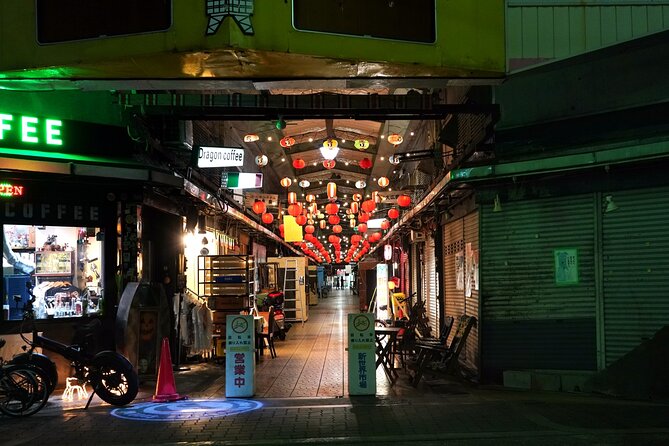
Osaka is often sold through food, neon, shopping, and easygoing humor. Those things are real, but they are only part of the city. This walk asks you to look at neighborhoods that reveal another side of Osaka’s past and present.
The word dark can sound sensational, so it is worth setting expectations. This is not a ghost walk, crime tour, or theatrical scare show. The darkness here refers to subjects that are often left out of standard sightseeing: poverty, precarious work, the history of red-light districts, and the social divisions that shaped southern Osaka.
I like that distinction. If you want polished streets and famous landmarks, this is not the best use of your time. If you want a guide to explain why certain streets look and feel different, the tour offers something more useful than another pass by a postcard view.
The route also gives you a chance to see how several parts of Osaka sit close together. Retro shopping streets, local eating spots, working-class districts, and a tightly regulated entertainment area all appear within a compact walk. That contrast is the point.
More Walking Tours in Osaka
- Osaka: Hotspots & Hidden Gems Walking Tour Private or Group
★ 4.9 · 1,300 reviews - Osaka Local Foodie Walking Tour in Dotonbori and Shinsekai
★ 5.0 · 985 reviews - Osaka Bar Hopping Night Walking Tour in Namba (3 bars, 6 tastes)
★ 5.0 · 958 reviews
Meeting at Shinsekai at 5:30 pm
The walk starts outside MEGA Don Quijote Shinsekai at 3-chōme-4-36 Ebisuhigashi, in Naniwa Ward. The meeting point is near public transportation, which makes it practical to reach, though you should allow enough time to find the exact entrance and gather before the 5:30 pm departure.
The start time matters. You are not seeing Shinsekai under bright midday light. As the evening begins, signs, shopfronts, and streets take on more character. That timing also connects naturally with the tour’s focus on entertainment districts and nighttime urban life.
The group can include up to 15 people. That is not a private walk, but it is still small enough for a guide to respond to questions without turning the experience into a moving lecture. Several guides have received praise for being approachable and patient, especially Jay, who is described as thoughtful and well informed about Japanese social history.
You receive a mobile ticket, and all fees and taxes are included. Snacks are not included, which is hardly a problem in this part of Osaka. You may want to eat before the tour or plan a meal afterward, but do not count on a provided food stop.
Shinsekai: Osaka’s retro New World
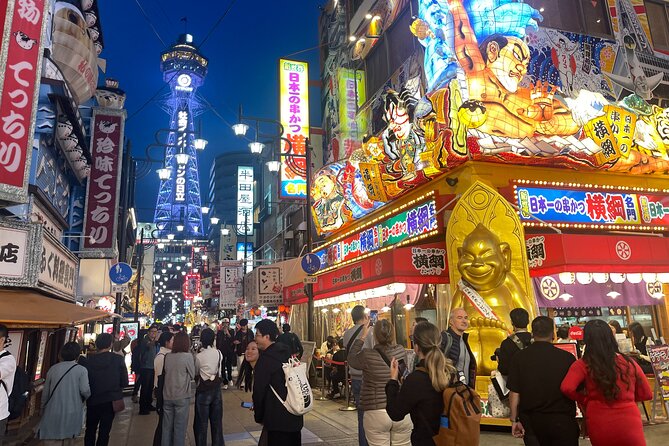
The first stop is Shinsekai, meaning New World. The district was established in 1912 and was designed as a modern entertainment area. Today, it is known for retro surroundings and local street life, with Tsutenkaku Tower serving as its familiar landmark.
This is a useful opening because Shinsekai is easy to misread. At first glance, you may see colorful signs, old-fashioned storefronts, and restaurants serving Osaka specialties. A guide can help you connect that surface appearance with the district’s original purpose and later changes.
The stop lasts about 30 minutes. There is no admission fee, so the value comes from what the guide points out and explains. This is not a museum visit with labels and displays. It is a street-based introduction, and your attention needs to stay on the buildings, signs, side streets, and stories around you.
I would expect this portion to appeal most to people who like urban history. If your idea of a tour requires entering major monuments, you may find the opening modest. If you enjoy learning how a neighborhood developed, the setting gives the guide plenty to work with.
Nishinari and Dobutsuen-mae: the tour’s most direct section
The route then moves toward Nishinari and the Dobutsuen-mae area. Nishinari is associated with day laborers and working-class communities, and this is where the tour takes its most direct look at Osaka’s social history.
This section is likely to feel less comfortable than Shinsekai. That is not necessarily a weakness. The area’s importance comes from seeing a part of the city that many short sightseeing routes pass by. The guide’s job is to provide context and avoid turning local life into a spectacle.
The stop is scheduled for about 30 minutes. That is a substantial share of a two-hour walk, which tells you where the tour places its emphasis. You will not simply pass through on the way to a better-known attraction. The guide discusses the area, its past, and the people who have lived and worked there.
Several guides have been praised for answering questions and offering local tips along the route. That matters here. Nishinari can raise questions about poverty, public policy, and the way Japanese cities manage working-class districts. A guide who can explain those subjects calmly adds real value.
Still, you should book with the right attitude. This is not a photo opportunity, and it is not a performance built around shock. Bring respect, listen carefully, and avoid treating residents or businesses as part of the show.
A completely different kind of day out in Osaka:
- Osaka Go Karting Tour with Funny Costume
★ 5.0 · 2,658 reviews - Osaka Castle: Museum and Tower Entry Ticket
★ 4.5 · 2,380 reviews - Osaka: Shinsekai Food Tour with 13-15 Dishes at 5 Eateries
★ 4.8 · 2,204 reviews - Osaka Food Tour: 13 Dishes at 5 Local Eateries
★ 5.0 · 2,149 reviews
Jyanjyan Yokocho, a narrow street with old Osaka character
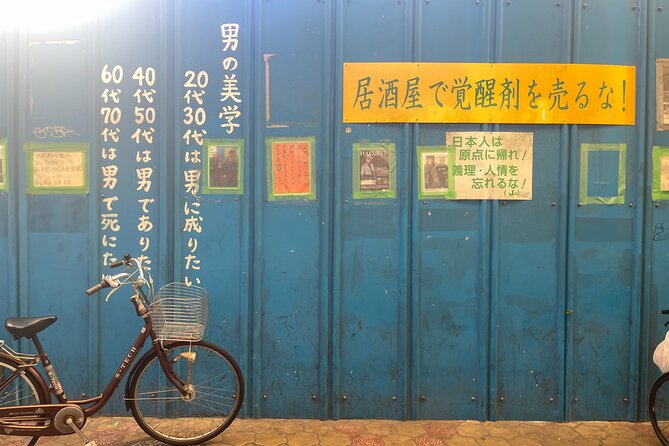
Jyanjyan Yokocho, also called the Nanyodori Shopping District, is a narrow shopping and dining street near Tsutenkaku Tower. The tour allows about 20 minutes here.
This stop changes the rhythm. After the heavier subject matter in Nishinari, the arcade offers a more everyday view of the neighborhood. Its retro atmosphere and small-scale shops help show that these districts are not defined only by hardship or the sex trade. People also eat, shop, work, and meet here.
The short visit does not leave much time for a full meal, especially since snacks are not included. Think of it as a quick orientation rather than a food tour. You may spot places you want to return to after the walk, but the tour’s main purpose remains explanation.
I appreciate this balance. A tour that only presented the area as bleak would be just as misleading as one that only showed the colorful signs. Jyanjyan Yokocho helps keep the route grounded in ordinary city life.
Tobita Shinchi and the difficult subject of red-light districts
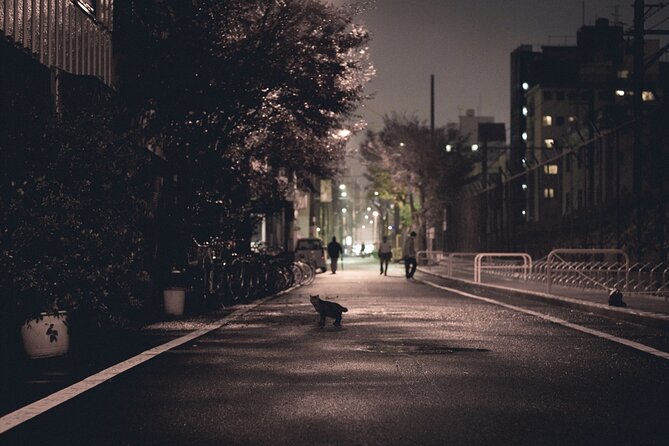
Tobita Shinchi is the most sensitive stop. It is Osaka’s largest red-light district, with a history going back more than a century. The area is known for distinctive architecture and a tightly regulated environment.
The tour spends about 20 minutes here. You should understand that this is an observation and history stop, not a chance to enter businesses or seek services. The guide explains the area’s role and appearance, while you remain aware that this is a functioning district rather than a preserved attraction.
This part will interest you if you want to understand how entertainment districts operate within Japanese cities. It may be uncomfortable if you prefer tours to avoid adult subjects. The title prepares you for serious material, but the real experience is more about social context than lurid detail.
A good guide is especially important here. The strongest comments about Jay, Matt, and Rico focus on their ability to explain local stories in a friendly, informed way. That tone can make the difference between a thoughtful walk and an unpleasant one.
You should also follow the guide’s instructions about photography and conduct. The supplied details do not set out specific photography rules, so I would use basic courtesy: do not photograph people without permission, do not block entrances, and do not treat private businesses as curiosities.
Tsutenkaku Hondori and the finish near the tower
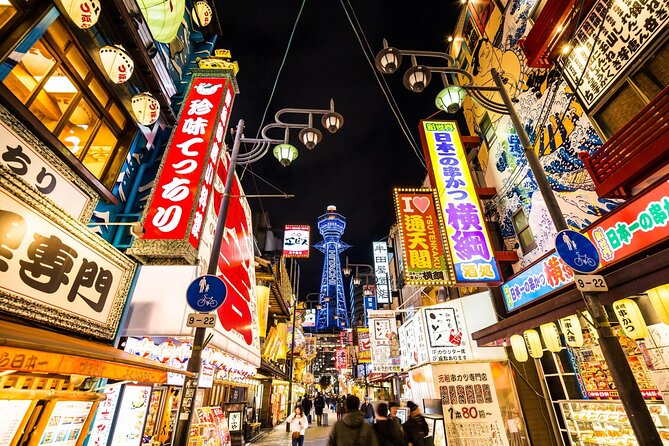
The final stop is Tsutenkaku Hondori Shopping Street, a lively arcade at the foot of Tsutenkaku Tower. The tour ends nearby at 1-chōme-18-6 Ebisuhigashi.
This closing section brings the walk back toward a more familiar Osaka scene. Shops, signs, and the tower provide an easy visual finish after the more serious discussion in Nishinari and Tobita Shinchi. It is also a useful place to continue your evening, though the tour itself does not include food or admission to the tower.
The 20-minute stop gives you enough time to get oriented without making the walk feel drawn out. Since the ending is close to the starting district, you can use the location as a base for dinner or further independent exploring. The tour does not promise a restaurant reservation or a tasting, so plan those separately.
The route’s five stops add up to about two hours of walking and commentary. The actual distance is not provided, but one guide describes the experience as requiring almost two hours on foot. Wear comfortable shoes and do not schedule a demanding activity immediately afterward.
What the $25 price really covers
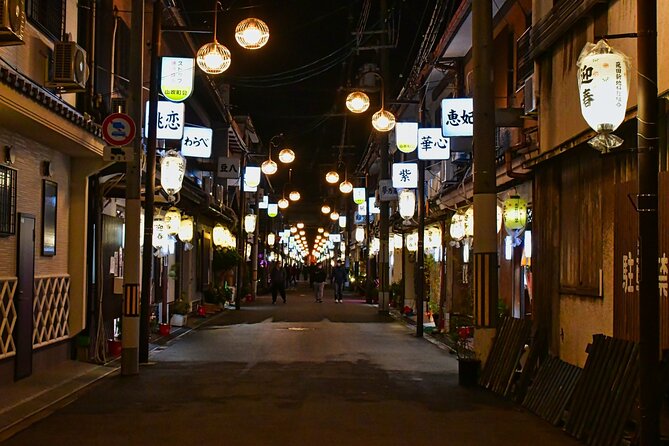
At $25 per person, this is not an attraction-ticket tour. Every listed stop is free, and no snacks are included. You are paying for the guide, the route, the translation of local context, and the chance to ask questions along the way.
That can be good value if you are curious about Osaka beyond its headline sights. A self-guided walk might show you the same streets, but it would not necessarily explain the connection between Shinsekai, Nishinari, day labor, and Tobita Shinchi. The guide is the product.
The price is less compelling if you mainly want entertainment or a long list of photo stops. One critical assessment found that there was not enough to see or do, even while giving the guide top marks for expertise. That is a fair warning. Much of this tour’s content is spoken rather than displayed.
For me, the deciding question is simple: do you want access to places, or do you want interpretation? If you want access, the free streets offer little value by themselves. If you want a careful explanation of how these districts fit into Osaka, $25 is reasonable.
The guides can make or break the experience
The strongest part of this tour is the guide. Jay is praised for his social history knowledge, local tips, and thoughtful answers. Matt is described as friendly and interesting, while Rico is praised for being well informed and accommodating.
That variety is worth noting because the quality of a walking tour depends heavily on the person leading it. The basic route is fixed, but the depth of the discussion, the pace, and the response to questions can differ from one guide to another.
The pace has been described as comfortable, which should help you absorb the subject matter without rushing between districts. You can also expect a conversational format rather than a silent march from one stop to the next.
I would ask questions. This is the kind of tour where your curiosity can shape the experience. Ask about the area’s development, the meaning of local streets, or how entertainment districts fit into Osaka’s urban story. The guide’s willingness to answer is one of the clearest reasons to choose a small-group walk.
Practical details and who should book
The tour is suitable for most people according to the supplied participation information, and service animals are allowed. It is near public transportation, uses a mobile ticket, and has a maximum group size of 15.
The walk requires good weather. If poor weather cancels the experience, you are offered another date or a full refund. You can cancel for a full refund up to 24 hours before the start time, but cancellations or changes made less than 24 hours ahead are not refunded or accepted.
I would recommend this tour to:
- People who have already seen Osaka’s major commercial districts and want a different angle
- Visitors interested in urban history and social issues
- Curious first-time visitors who prefer explanation to a standard landmark checklist
- Anyone comfortable discussing poverty, working-class life, and the sex industry respectfully
- Solo visitors or couples who want a small-group evening activity
I would be cautious about booking it for young children, although the available information does not set a specific age restriction. The subject matter may not suit every family. I would also skip it if you have limited mobility or dislike two hours of walking, since no detailed mobility information is provided beyond the general participation note.
Should you book the Dark Side of Osaka Walking Tour?
Book it if you want Osaka explained from the street level, not just displayed through bright signs and famous food. The route is unusual, the evening timing works well, and the guide can give meaning to neighborhoods that may otherwise seem confusing or unremarkable.
Do not book it expecting attractions, tastings, or constant spectacle. The first half, especially Nishinari and Dobutsuen-mae, may look ordinary and worn. The reward comes from listening, asking questions, and understanding what you are seeing.
At $25, I see this as a solid value for a curious visitor who wants social history and local context. The 4.9 rating from 49 reviews and 98 percent recommendation indicate very strong satisfaction, but the lower score also points to the tour’s central limitation: its appeal depends more on the guide’s explanation than on things you can actively do.
If Jay, Matt, or Rico is leading, you can expect the kind of friendly, detailed guidance that has earned the tour its strongest praise. Bring comfortable shoes, an open mind, and respectful behavior. If that sounds like your sort of evening, this walk can add depth to your understanding of Osaka.
FAQ
How long is the Dark Side of Osaka Walking Tour?
The tour lasts approximately two hours.
What time does the tour begin?
The tour starts at 5:30 pm.
Where does the tour start?
It begins at MEGA Don Quijote Shinsekai, located at 3-chōme-4-36 Ebisuhigashi, Naniwa Ward, Osaka, 556-0002, Japan.
Where does the tour end?
The walk ends near Tsutenkaku Tower at 1-chōme-18-6 Ebisuhigashi, Naniwa Ward, Osaka, 556-0002, Japan.
What places are included on the route?
The route includes Shinsekai, Nishinari Dobutsuen-mae Deep Osaka Street, Jyanjyan Yokocho, Tobita Shinchi, and Tsutenkaku Hondori Shopping Street.
Is admission included?
All listed stops have free admission, and all fees and taxes are included. The tour does not include snacks.
How much does the tour cost?
The price is $25 per person.
How large is the group?
The tour has a maximum of 15 people.
Is the tour available with a mobile ticket?
Yes. A mobile ticket is provided, and booking confirmation is received at the time of booking.
Can I cancel for a full refund?
Yes. You can cancel at least 24 hours before the start time for a full refund. Cancellations made less than 24 hours before the start time are not refunded.
Just added around Osaka
- Osaka Food Tour with 10 Classic Japanese Tastings & Drinks★ 5.0 · 38 reviews
- Osaka: Highlights & Hidden Gems Private Walking Tour★ 4.7 · 38 reviews
- Kyoto private tour (Shore excursion available from Osaka or Kobe port)★ 5.0 · 39 reviews
- Osaka Private Day Trip – Enjoy Your First-Time Visit to Osaka!★ 5.0 · 39 reviews
- Kyoto & Nara & Uji: Full Day Sightseeing Tour from Osaka or Kyoto★ 4.5 · 39 reviews
- Authentic SUSHI Course Cooking Class★ 5.0 · 39 reviews
- Osaka: Mind & Spirit Balance Temple Reiki Healing★ 5.0 · 41 reviews
- Osaka: Gluten-Free Ramen and Gyoza Cooking Class★ 5.0 · 42 reviews
Walking Tours, compared.
Kyoto Geisha Walking Tour: Gion District & Hidden Gems
Read our review →
Tokyo Tsukiji Fish Market Food and Culture Walking Tour
Read our review →
Gion Magical Night Walking Tour with Geisha Trivia
Read our review →
Imperial Palace and Shogun Historical Walking Tour
Read our review →
Gion Geisha District Walking Tour – Stories of Geisha
Read our review →
Shinjuku Local Bar and Izakaya Guided Walking Tour
Read our review →
Browse the lists this tour appears in