
Reviewed · SUSHI-MAKING CLASSES
The Original Small-Group Sushi Making Class in Kyoto
Make sushi, then eat the evidence. This Kyoto workshop pairs hands-on technique with the warm welcome of a small family-run business. I like the limited eight-person format, which gives you room to ask questions, and I like the setting near Kiyomizu-dera and Gion, inside a restored historic townhouse. The main consideration is dietary choice: no vegetarian or vegan option is offered.
At about 90 minutes and $69.64 per person, this is not the cheapest meal in Kyoto. But you are paying for instruction, fresh fish, an included lunch or dinner, tea or coffee, and a practical skill you can take home. Kana is repeatedly praised for her patience, humor, clear English, and thoughtful cultural stories.
In This Review
- Key points to know before booking
- Why this Kyoto sushi class is worth your time
- Arriving near Kiyomizu-dera and Gion
- The first lesson: getting sushi rice right
- Making nigiri, one piece at a time
- Rolling maki with a little more teamwork
- Sitting down to eat what you made
- The people make the lesson work
- What you can take home
- Allergies and dietary limits
- Is $69.64 a fair price?
- Practical booking advice
- Who should book this Kyoto sushi workshop?
- Should you book it?
- FAQ
- Where does the sushi-making class take place?
- How long does the experience last?
- How many people can join the class?
- Is the class taught in English?
- What types of sushi will I learn to make?
- Is a meal included?
- Are drinks included?
- Are vegetarian or vegan options available?
- Can I cancel for a full refund?
Key points to know before booking
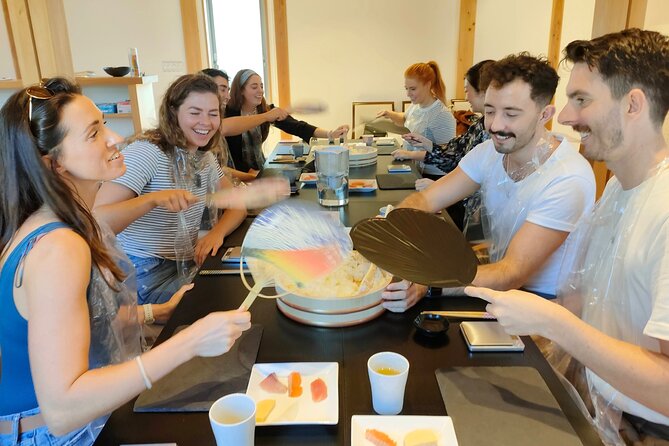
- Only eight people per class: The small group allows personal help with rice, nigiri, and maki.
- A full meal is included: You eat the sushi you prepare, and the portions are generous enough that you should arrive hungry.
- Kana leads the lesson: Her teaching style is patient, friendly, and easy to follow, with Japanese culture woven into the class.
- The townhouse adds atmosphere: The workshop takes place in a traditional Kyoto building near Kiyomizu-dera and Gion.
- You learn two sushi styles: The class focuses on shaping nigiri and making maki rolls with fresh fish and local ingredients.
- You may leave with useful keepsakes: Gift bags have included class notes, recipes, chopsticks, and a sushi mat for making sushi at home.
Why this Kyoto sushi class is worth your time
Kyoto has no shortage of food experiences. Some are built around watching a chef work. This one puts you at the counter, apron on, hands busy, trying to make the food yourself.
That difference matters. Sushi looks simple because the finished pieces are small and neat. The craft lies in the details: rice seasoning, rice temperature, the amount of fish, the pressure used to shape each piece, and the way a roll is tightened. A small class gives you time to correct those details instead of copying a demonstration from the back of a crowded room.
I also like the balance between food and conversation. Kana does not simply explain a recipe and send you on your way. The class includes stories about her own life, Japanese customs, and Kyoto. Her husband has assisted with some sessions, adding to the relaxed, family-style mood.
The result is less formal than a restaurant meal but more focused than a casual cooking party. You learn something, eat well, and spend time with local hosts who are happy to offer Kyoto advice.
More Sushi-Making Classes in Kyoto
- Sushi Making in Kyoto! Same-day bookings welcome!
★ 5.0 · 713 reviews - Kyoto: Small-Group Authentic Sushi Making Workshop
★ 5.0 · 137 reviews - Kyoto: Sushi Making Class with Sushi Chef
★ 4.8 · 64 reviews
Arriving near Kiyomizu-dera and Gion
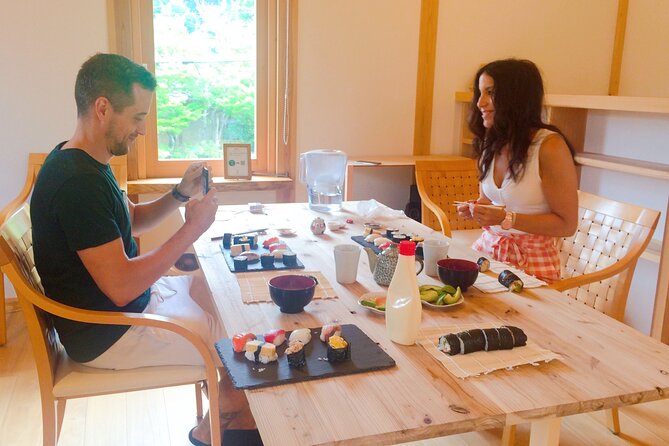
The meeting point is Atelier SUSHI at 311-1 Kitatōryōchō in Higashiyama Ward, Kyoto. The location is near public transportation and close to two of Kyoto’s best-known areas, Kiyomizu-dera and Gion.
The setting is part of the appeal. Rather than meeting in a modern cooking school designed for large groups, you enter a restored Kyoto townhouse. That gives the class a calmer sense of place. The building itself has history and character, but the information provided does not promise a separate architectural tour, so think of the townhouse as your workshop setting rather than a sightseeing stop.
Plan your route carefully. Higashiyama is a popular part of Kyoto, and you may already be walking between temples, lanes, and shops. The class ends where it begins, making it easy to continue exploring the area afterward. If you book it early in your stay, the local advice from Kana and her family may help you plan the rest of your Kyoto visit.
The first lesson: getting sushi rice right
The foundation of the class is properly seasoned rice. This is a useful choice for beginners because rice is the part most likely to be underestimated at home.
You learn how the rice is prepared and seasoned before moving on to shaping sushi. The aim is not just to give you a bowl of rice and a few ingredients. You are shown how the rice supports the fish and how much to use for each piece.
This is where the small group helps. With a maximum of eight people, the instructor can watch your technique and give individual feedback. You can ask why the rice is handled in a certain way, how firmly to press it, and what makes a piece hold together without becoming heavy.
The workshop is conducted in English. Several experiences describe Kana as easy to understand, encouraging, and good at simplifying the process. That is especially helpful if you have never made sushi before or if you have cooked sushi at home but still struggle with shaping it.
Making nigiri, one piece at a time
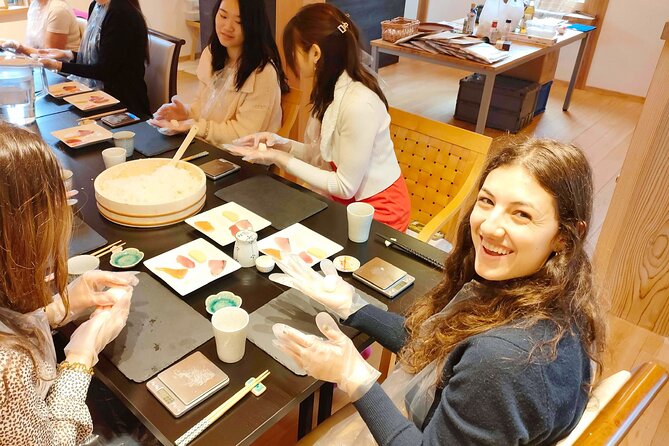
Nigiri is the classic sushi form: a small mound of rice topped with fish. It looks uncomplicated, but it requires a light touch.
In the class, you work on forming several pieces of nigiri. The instructor demonstrates the basic technique, then gives you a chance to repeat it. You are not expected to produce restaurant-perfect pieces on your first try. The value is in learning the hand movements and seeing how fresh ingredients can carry a dish without heavy decoration.
Fresh fish is central to the experience. The workshop uses premium fresh fish and selected local ingredients. One useful lesson here is restraint. Good sushi does not need a long ingredient list. The rice, fish, and seasoning have to be in balance.
Some participants have arrived unsure about raw fish and still enjoyed the meal because the ingredients tasted fresh and clean. That does not mean the class is right for anyone who avoids raw seafood, but it may suit a curious eater who wants a more informed introduction to sushi.
A completely different kind of day out in Kyoto:
- PERFECT KYOTO 1-Day Bus Tour
★ 5.0 · 13,518 reviews - Kyoto: Fushimi Inari, Kinkakuji, Bamboo Grove 1 Day Bus Tour
★ 4.8 · 4,316 reviews - Kyoto: Tea Ceremony in a Traditional Tea House in Kiyomizu
★ 4.9 · 3,519 reviews - Kyoto Geisha Walking Tour: Gion District & Hidden Gems
★ 4.7 · 3,273 reviews
Rolling maki with a little more teamwork
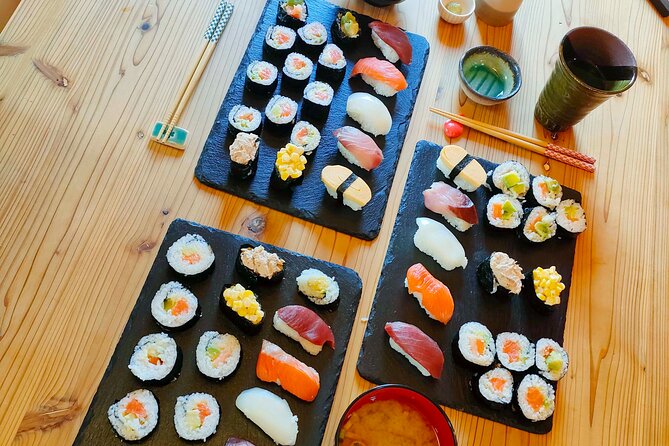
The second main skill is maki, or rolled sushi. You learn to place the ingredients, use the sushi mat, and shape the roll before cutting it into pieces.
Maki is often the more forgiving style for beginners. The mat gives you something firm to work with, and the roll can hide small imperfections. It is also an enjoyable part of the class because you can see the sushi take shape quickly.
The workshop includes several pieces of nigiri and a roll of maki, according to detailed participant descriptions. The variety keeps the 90-minute session from feeling repetitive. You are practicing more than one technique, then sitting down to enjoy the results.
The class is partly prepared in advance, which is sensible for a short workshop. You are not spending the whole session washing rice or waiting for ingredients. At the same time, there are enough interactive steps to keep you involved. If you are an experienced home sushi maker, this is worth knowing. You may not be learning every part of a professional kitchen operation, but you can still pick up better shaping methods and enjoy the social side.
Sitting down to eat what you made
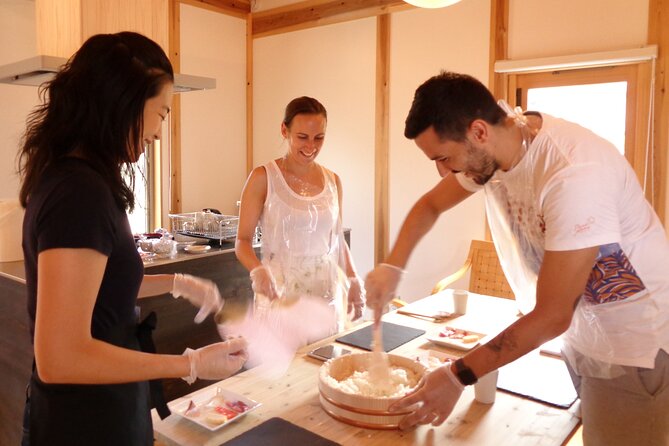
The final meal is not an afterthought. You eat the sushi you prepared, served as lunch or dinner depending on the time of your class.
The food is reported to be generous. Several descriptions advise arriving hungry, and one person specifically noted that they did not leave hungry. That makes the price easier to assess. You are not paying $69.64 for a short demonstration followed by a token tasting. The class combines instruction and a substantial meal.
Coffee, tea, or Japanese tea is included. The drink service helps slow down the ending and gives you time to talk with the hosts. The tone appears friendly rather than rushed, with room for questions about food, Japanese life, and Kyoto.
I would not book this as a substitute for an evening of high-end sushi dining. The point is participation. Some pieces may look uneven, and that is part of the fun. Your reward is understanding the work behind the neat sushi you order elsewhere.
The people make the lesson work
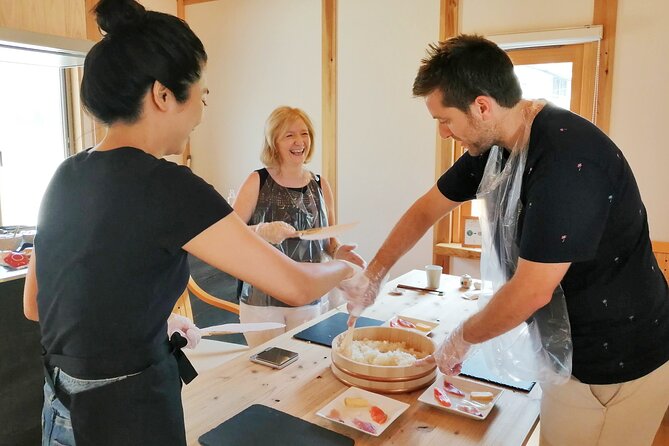
Kana receives the strongest praise. Her style is described as kind, patient, funny, and encouraging. Those qualities matter more here than a long technical lecture.
A cooking class can become awkward if the instructor moves too fast or makes beginners feel clumsy. Kana appears to do the opposite. She makes the process feel manageable, explains the steps clearly, and gives people confidence to try again.
The hosts also talk about Japanese culture and provide local travel suggestions. That informal exchange is one of the better reasons to take the class near the start of your Kyoto visit. You may leave with ideas for restaurants, neighborhoods, or sights to add to your schedule.
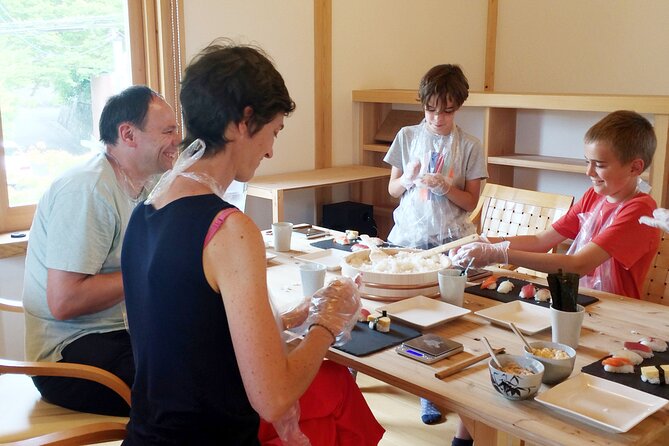
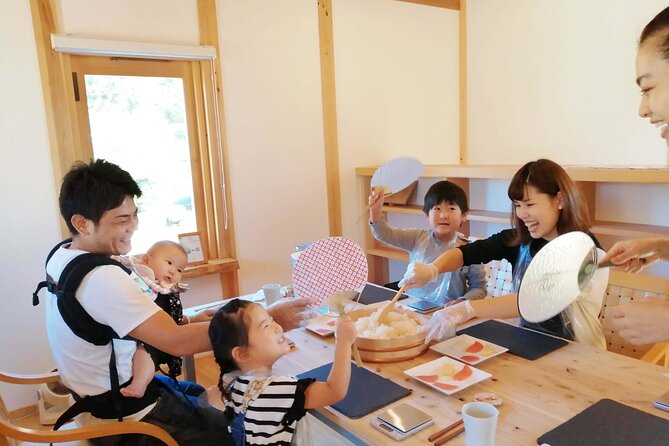
Families, couples, solo visitors, and siblings have all been suited to this format. A 12-year-old sushi fan particularly enjoyed one class, while an experienced home sushi maker also found it entertaining. The common thread is not age or skill level. It is a willingness to take part and have a laugh when the first roll is less than perfect.
What you can take home
The practical value continues after the meal. Gift bags have included class notes, rice recipes, chopsticks, and a sushi rolling mat. These extras are useful rather than decorative. A rolling mat and clear instructions give you a real chance to repeat the experience at home.
You should keep expectations sensible. The class cannot turn you into a professional sushi chef in 90 minutes. It can give you a working foundation for nigiri and maki, along with enough confidence to practice.
That is a good souvenir from Kyoto. Instead of taking home another mass-produced trinket, you return with a new food skill connected to your time in Japan.
Allergies and dietary limits
The workshop does not offer a vegetarian or vegan option. If that describes your diet, choose a different cooking activity.
Common allergies have been accommodated in some sessions. In particular, people with gluten and shellfish allergies have received adjustments. Still, the safest approach is to contact Atelier SUSHI before booking and explain your needs. The available information does not guarantee that every allergy or dietary restriction can be handled.
If you eat fish but avoid shellfish, the class may be workable with advance discussion. If you cannot eat raw fish, be careful before reserving, since fresh fish and sushi preparation are central to the experience.
Is $69.64 a fair price?
At $69.64 per person, the cost is reasonable for a small-group food workshop in a central Kyoto location.
You receive about 90 minutes of instruction, an English-speaking Japanese instructor, an apron, gloves, tea or coffee, fresh ingredients, and the sushi meal. The group limit of eight is important. A cheaper class with a large crowd may give you less personal help and less time to practice.
The value is strongest if you want an activity, not just food. A restaurant meal might cost less, depending on where you eat, but it will not teach you how to season rice or shape sushi. A private lesson could cost more, while a large group class may feel less personal.
The rating is 5 out of 5 from 436 reviews, with 100 percent recommending the experience. That unusually consistent response matches the qualities I would care about most: a clear teacher, fresh food, a welcoming setting, and enough food to make the session feel complete.
Practical booking advice
Your mobile ticket is convenient, and confirmation is provided at booking. The activity begins and ends at the same townhouse, and it runs for approximately 1 hour and 30 minutes.
The class is available as lunch or dinner depending on the workshop time. Check the exact start time against your temple visits and evening plans. Since the meeting point is in Higashiyama, allow enough time to reach it from elsewhere in Kyoto.
Free cancellation is available if you cancel at least 24 hours before the start time. Changes or cancellations made inside that window are not accepted and are not refunded.
Who should book this Kyoto sushi workshop?
I would choose this class for:
- First-time sushi makers who want patient instruction
- Couples looking for a shared activity beyond sightseeing
- Families with older children who enjoy food and hands-on projects
- Solo visitors who like small groups and conversation
- Sushi fans who want to understand the technique behind nigiri and maki
- Visitors arriving early in their Kyoto stay who would value local advice
I would skip it if you want a silent, formal sushi meal, a fully private lesson, or a vegetarian cooking class. It is also not the best fit if you are uncomfortable handling or eating fish.
Should you book it?
Yes, if you want a friendly Kyoto activity that combines food, culture, and a skill you can repeat at home. The strongest reasons are the eight-person limit, Kana’s personal teaching style, the restored townhouse, and the generous meal at the end.
Book it near the beginning of your stay if local tips matter to you. Come hungry, tell the provider about allergies in advance, and expect your first nigiri to look handmade rather than perfect. That is exactly the point.
FAQ
Where does the sushi-making class take place?
The class takes place at Atelier SUSHI, 311-1 Kitatōryōchō, Higashiyama Ward, Kyoto, Japan. It is near public transportation and close to Kiyomizu-dera and Gion.
How long does the experience last?
The workshop lasts approximately 1 hour and 30 minutes.
How many people can join the class?
The class has a maximum of eight participants.
Is the class taught in English?
Yes. The workshop is conducted in English and includes an English-speaking instructor.
What types of sushi will I learn to make?
You will learn techniques for making nigiri and maki rolls. The workshop also covers how to season sushi rice properly.
Is a meal included?
Yes. You eat the sushi you prepare, served as lunch or dinner depending on the workshop time.
Are drinks included?
Coffee, tea, or Japanese tea is included.
Are vegetarian or vegan options available?
No. A vegetarian or vegan option is not offered.
Can I cancel for a full refund?
Yes, if you cancel at least 24 hours before the experience start time. Cancellations or changes made less than 24 hours before the start time are not accepted and are not refunded.
Just added around Kyoto
- Kyoto: Private Customizable Day Trip by Car★ 5.0 · 38 reviews
- Kyoto: Gion Night Walking Tour with Geisha Insight★ 5.0 · 39 reviews
- Kyoto: Full Day Bike Tour★ 4.9 · 39 reviews
- Private Japanese Calligraphy in Kyoto – Learn Shodō with a Master★ 5.0 · 39 reviews
- Experience a tea ceremony in an authentic tearoom, in Kyoto!★ 4.5 · 41 reviews
- Kyoto: Gion Evening Walk with Hidden Gems, Geisha & Sake★ 5.0 · 41 reviews
- Kyoto Private Photo Shoot & Tour by SnapKyoto★ 5.0 · 41 reviews
- The Way of Tea: Kyoto Crafts, Hidden Temples & Wabi-Sabi Walk★ 5.0 · 41 reviews
Sushi-Making Classes, compared.
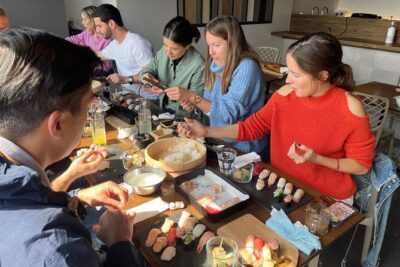
Sushi Making Tokyo Roll and Authentic Japanese Sushi Class
Read our review →
Roll and Authentic Sushi Making Class in Asakusa
Read our review →
Make Sushi and Create Unforgettable Memories in Tokyo
Read our review →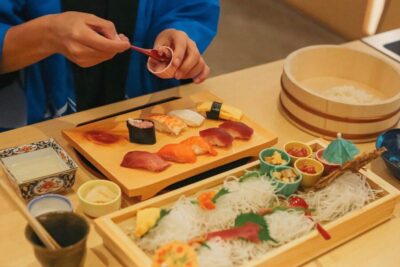
Sushi Making Class in a Happi Coat near a Famous Spot
Read our review →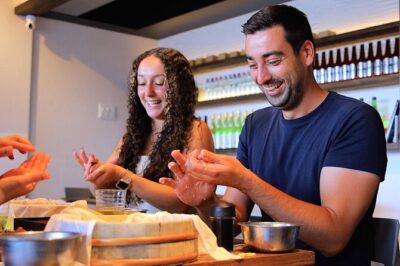
Sushi Making Osaka Roll and Authentic Japanese Sushi Class
Read our review →
Tokyo Sushi Making Class in Tsukiji with Professional Chef
Read our review →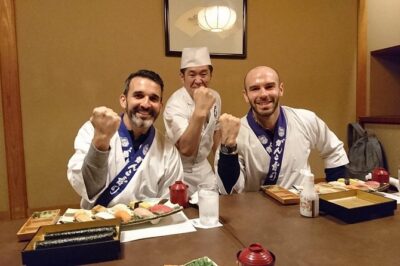
Tsukiji Fish Market Guided Tour and Sushi Making with Pro Chef
Read our review →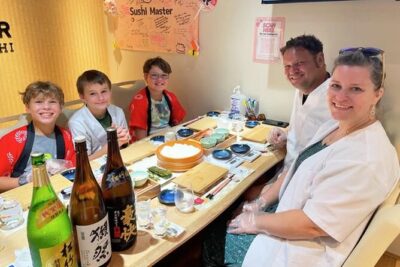
Sushi Making in Kyoto! Same-day bookings welcome!
Read our review →Browse the lists this tour appears in