
Reviewed · SUSHI-MAKING CLASSES
Tokyo Sushi Making Class : Sake Ceremony & Matcha Experience
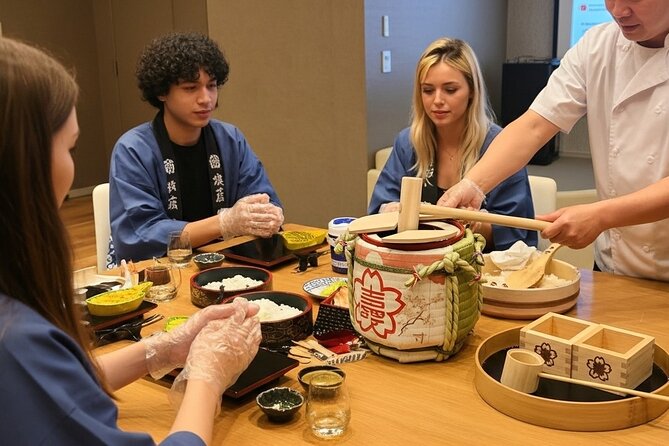
Sushi, sake, and matcha fit neatly into one Tokyo hour. This lively Asakusa class combines hands-on sushi making with a traditional barrel-opening ceremony and a calm matcha finale. I like the friendly, celebratory format, and I like that you make 6 to 12 pieces instead of simply watching a demonstration. The main consideration is time: 90 minutes goes quickly, so this is a focused introduction rather than a full lesson in Japanese food culture.
The class also offers a playful modern touch with torched salmon mayo gunkan, complete with a group Wasshoi! chant and photos. It has earned a perfect 5 rating from 48 ratings, with 100 percent recommending it. At $45.77 per person, the combination of instruction, food, cultural activities, and a drink makes it good value, especially for first-time sushi makers.
In This Review
- Key points at a glance
- Why this Asakusa class is more than a sushi lesson
- Starting with kagami-biraki and a cheerful Yoisho
- Learning the basic shape of nigiri
- The WASSHOI moment: torched salmon mayo gunkan
- Making matcha after the lively food work
- What the 90-minute schedule means for you
- Is $45.77 a fair price?
- Who will enjoy this most?
- Practical details before you reserve
- Should you book this Asakusa experience?
- FAQ
- Where does the Tokyo sushi-making class meet?
- How long does the experience last?
- Where does the activity end?
- How many sushi pieces will I make?
- Is alcohol required during the sake ceremony?
- What happens if I need to cancel?
Key points at a glance
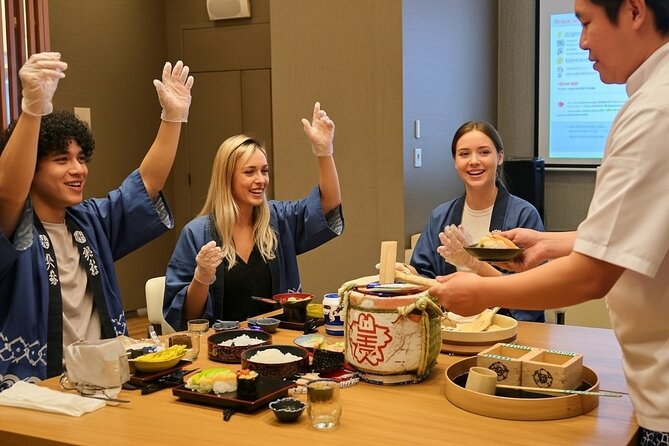
- Kagami-biraki starts the class: Help open a traditional sake barrel and chant Yoisho! three times before a group toast.
- You make 6 to 12 sushi pieces: The lesson covers nigiri and rolls, with clear guidance on rice shape, toppings, and assembly.
- Torched salmon mayo gunkan adds a modern Tokyo note: You pile on salmon, zigzag mayonnaise, and finish the piece with a quick torch.
- Matcha closes the experience: Whisk your own bowl and enjoy a foamy cup after the lively sushi work.
- The class stays small enough to feel social: Attendance is capped at 20 people, creating a group activity without the scale of a large food tour.
- The location is practical: You meet at Sushi Meets Matcha, 1-chōme-10-16 Hanakawado in Taito City, Asakusa, and return there at the end.
Why this Asakusa class is more than a sushi lesson
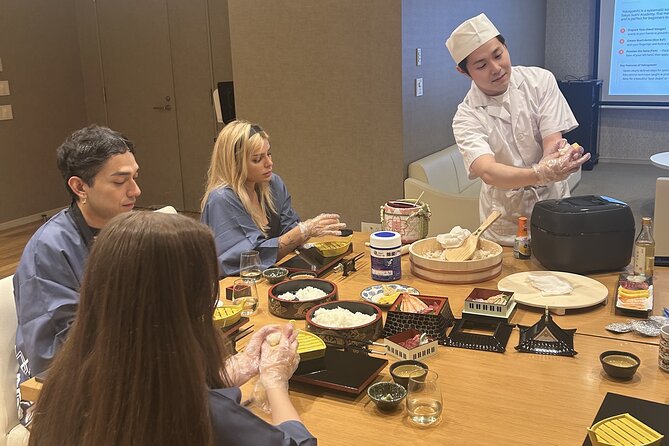
Many food classes give you a recipe and send you home. This one adds a clear Japanese cultural frame. You begin with kagami-biraki, the opening of a sake barrel, then move into sushi technique, and finish with matcha preparation.
That order works well. The barrel ceremony brings energy to the room, the sushi section gives you something practical to do, and the matcha provides a quiet finish. I like the balance because you are not asked to sit through a long cultural talk before touching the food.
The class also avoids treating sushi as one fixed tradition. You learn basic nigiri skills linked with classic Edomae sushi, then make a torched salmon mayo gunkan that reflects a more modern Tokyo flavor. That contrast is useful. It shows you that Japanese sushi includes both careful technique and playful combinations.
The perfect 5 rating from 48 ratings, along with a 100 percent recommendation rate, suggests the class has been especially strong at creating a warm, welcoming atmosphere. One detailed comment praised the instructor’s fun manner and personal attention, describing the experience as relaxing and special. That matters here because beginners need encouragement more than a stern lecture about rice angles.
More Food Tours in Tokyo
- Tokyo: Shinjuku Food Tour (13 Dishes at 4 Local Eateries)
★ 5.0 · 6,603 reviews - Tokyo Tsukiji Fish Market Food and Culture Walking Tour
★ 5.0 · 3,184 reviews - Tokyo: Shinjuku Food Tour (15 Dishes and 4 Eateries)
★ 4.9 · 2,033 reviews
Starting with kagami-biraki and a cheerful Yoisho
The first activity is kagami-biraki, a traditional sake barrel opening associated with new beginnings. You join the group, help open the barrel, and chant Yoisho! three times.
This is not just a drink before class. It gives everyone a shared starting point. A cooking lesson can feel awkward for the first few minutes, especially when people do not know one another. A group chant breaks that spell quickly. It also gives the class a distinctly Japanese ceremony rather than making the experience feel like a standard western cooking workshop.
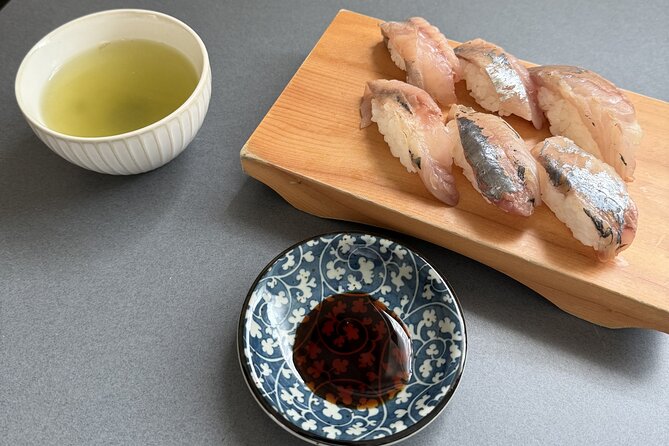
The drink is sake, but you are not required to have alcohol. Water or warm Japanese tea is available as the non-alcohol option. That small choice makes the activity easier for people who do not drink, families with older children, or anyone who simply wants to stay clear-headed while handling sushi ingredients.
I would think of the ceremony as a short cultural welcome, not a formal sake tasting. The stated focus is the barrel opening and group toast, so you should not book this expecting detailed instruction about brewing, regions, or sake styles.
Learning the basic shape of nigiri
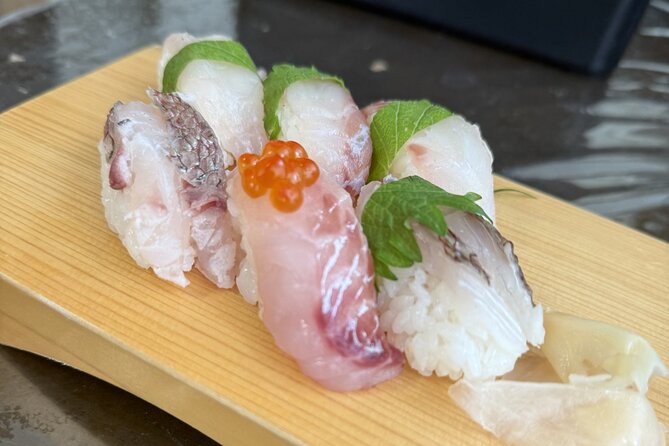
The core of the class is a step-by-step introduction to nigiri. You learn how to shape the rice with the right pressure, handle the toppings, and place the fish cleanly.
Rice pressure is one of those details that looks easy until you try it. Press too firmly and the piece becomes dense. Use too little pressure and it falls apart before it reaches your mouth. The lesson gives you a chance to practice that balance, which is more useful than simply seeing an instructor form a perfect piece in seconds.
You also work on the relationship between rice and topping. Sushi-making is partly about neatness, but it is also about proportion and control. The goal is not to create restaurant-level pieces on your first attempt. The goal is to understand the basic movements well enough that you can repeat them at home.
The guidance is designed for beginners. That makes this a sensible choice if you have never made sushi, have tried once without much success, or want a low-pressure activity during a Tokyo visit. You still get enough technique to feel that you made something, rather than just assembled ingredients.
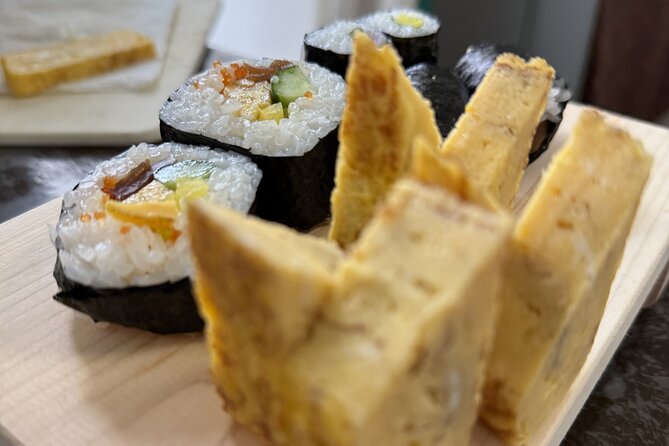
The class covers nigiri and rolls, producing about 6 to 12 pieces in total. That range gives you a satisfying amount to eat without turning the session into a long production line. The exact number can vary, but you should expect a tasting portion and a practical lesson, not a large meal.
The WASSHOI moment: torched salmon mayo gunkan
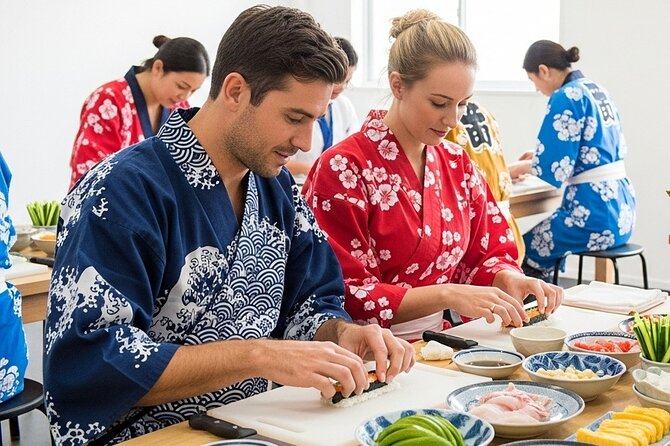
The most theatrical part of the class is the torched salmon mayo gunkan. It is deliberately described as a modern Tokyo-style flavor rather than classic Edomae sushi.
You pile salmon high, add a zigzag of mayonnaise, and finish the piece with a quick torch. The result aims for smoky, creamy umami. This is a smart choice for a group class because the torching creates a clear moment of excitement, while the ingredients are familiar enough for many first-time sushi makers.
The group chants Wasshoi! three times at the best moment, and photos are taken. That makes the activity more social and memorable, particularly if you are visiting Asakusa with friends or family. The photos also give you a record of the class beyond the sushi you eat on the spot.
I appreciate the distinction between this dish and the nigiri lesson. You are not being told that mayonnaise and torching represent the whole sushi tradition. Instead, you get a taste of two sides of Tokyo sushi: restrained technique and bold contemporary flavor.
If you prefer only traditional sushi, this part may feel less authentic to you. The class is transparent about that point. Treat the gunkan as a fun modern sample, not as a replacement for learning classic sushi forms.
More Sake Tastings in Tokyo
- Ramen and Sushi Cooking Class with Sake Pairing Set in Tokyo
★ 5.0 · 291 reviews - Sake Tasting Masterclass in Shinjuku (8+ Varieties with a Pro)
★ 5.0 · 271 reviews - Sake Omakase in Tokyo: Guided Tasting by Certified Sommeliers
★ 5.0 · 239 reviews - Tasting All Types of Sake with Sommelier
★ 5.0 · 151 reviews
Making matcha after the lively food work
After the sushi and the Wasshoi! energy, the class slows down with matcha. You whisk your own bowl and learn how to create a smooth, foamy drink.
This is a good closing activity because it changes the pace. Sushi-making asks for hand control and attention, while matcha whisking gives you a quieter task. The finish also broadens the experience beyond one type of Japanese food.
You should expect a simple introduction rather than a full tea ceremony. The information provided focuses on whisking properly and enjoying the fresh matcha. There is no promise of an extended lesson on tea utensils, schools, or ceremony etiquette.
Still, the hands-on part is valuable. You do not merely receive matcha from someone else. You make it yourself, which gives the final few minutes a sense of completion. You have prepared food, shared a toast, taken part in a chant, and made a drink.
What the 90-minute schedule means for you
The advertised duration is about one hour and 30 minutes. That is long enough to include several distinct activities, but short enough to fit into a busy Tokyo day.
I would plan this as a morning or afternoon activity around other time in Asakusa. Since the class begins and ends at the same location, you do not lose time changing meeting points. The meeting address is Sushi Meets Matcha, 1-chōme-10-16 Hanakawado, Taito City, Tokyo 111-0033, Japan.
The return to the starting point is useful if you are arranging the rest of your day. You can go into the class with a simple plan and leave from the same area when it finishes. The location is near public transportation, though the supplied details do not specify a particular station or walking time. Check the exact route before you leave your hotel.
The pace will probably feel active. In 90 minutes, the instructor needs to cover the ceremony, sushi shaping, the torched gunkan, photos, and matcha. You will have time to participate, but not much room for a slow, highly detailed discussion of each ingredient.
That is the tradeoff. The short format is convenient and keeps the mood light. If you want advanced knife work, fish selection, or a long explanation of sushi history, you need a more specialized class.
Is $45.77 a fair price?
At $45.77 per person, I see this as a solid activity value rather than a bargain meal. You are paying for more than the sushi you eat. The price includes a guided food lesson, participation in a sake barrel ceremony, the modern salmon gunkan activity, matcha preparation, and the chance to take photos during the class.
The value improves if you want a cultural activity that does not take half a day. A 90-minute class leaves room for Asakusa sightseeing, shopping, or another meal. You also leave with skills you can try again at home, even if your homemade sushi will probably look less tidy than the instructor’s first attempt.
The value is less clear if you only want to eat sushi. A restaurant meal may be a better choice for that purpose. This experience makes sense when you want to prepare the food yourself and enjoy a group activity.
A maximum of 20 people keeps the class from becoming enormous. That is not the same as a private lesson, and the exact amount of individual help can vary in a group of that size. Still, the cap gives the instructor a workable setting for beginner guidance.
Who will enjoy this most?
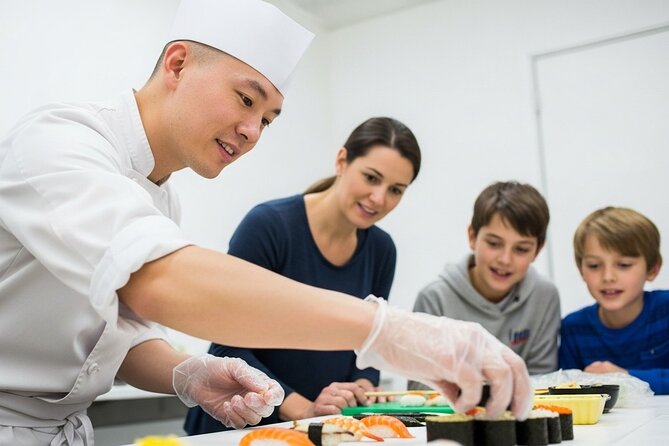
I would recommend this class to first-time sushi makers, couples, families, and small groups of friends who want an activity with a cheerful social side. The chant, barrel opening, torching, and photos give it more personality than a quiet cooking demonstration.
It also suits people with limited time in Tokyo. You can fit the class into a day in Asakusa without giving up an entire morning or afternoon. The meeting point remains the same from start to finish, and the mobile ticket makes the booking easy to carry on your phone.
The class is also a good choice for non-drinkers because the sake toast has water or warm Japanese tea alternatives. You can still take part in the ceremony without drinking alcohol.
I would be more cautious about booking it if you want an advanced culinary course. You will learn the essentials of rice shaping, toppings, nigiri, rolls, and one modern gunkan. That is plenty for a beginner session, but the short length limits how far the technique can go.
Likewise, people seeking a formal tea ceremony should set their expectations carefully. The matcha section is about whisking and enjoying your own bowl, not a full ceremonial performance.
Practical details before you reserve
You receive confirmation at the time of booking, and the activity uses a mobile ticket. Keep the meeting address handy: Sushi Meets Matcha, 1-chōme-10-16 Hanakawado, Taito City, Tokyo 111-0033, Japan.
The class ends back at the meeting point. It is near public transportation, but no specific station information is provided, so I would check the route and allow enough time to find the building.
Free cancellation is available if you cancel at least 24 hours before the start time. Canceling or changing the booking less than 24 hours before the start time does not qualify for a refund, and the cut-off follows local Tokyo time.
With 5 or more bookings recorded in the previous month, popular time slots may fill more quickly than quiet ones. Since the class is capped at 20 people, booking ahead is sensible if your Tokyo schedule is fixed.
Should you book this Asakusa experience?
Book it if you want to make sushi, not just eat it. The strongest part is the mix of hands-on work and good-natured ceremony: you shape nigiri, make rolls, build a torched salmon mayo gunkan, chant Yoisho! and Wasshoi!, then settle down with whisked matcha.
I especially like the clear beginner focus and the blend of traditional and modern flavors. The main limit is the 90-minute schedule, which leaves little time for advanced technique or a full tea lesson.
At $45.77, this is a sensible pick for a first taste of Japanese food culture in Asakusa. Choose it for participation, photos, and a memorable group mood. Skip it if your priority is a long professional cooking course or a quiet, formal tea ceremony.
FAQ
Where does the Tokyo sushi-making class meet?
You meet at Sushi Meets Matcha, 1-chōme-10-16 Hanakawado, Taito City, Tokyo 111-0033, Japan, in Asakusa.
How long does the experience last?
The class lasts approximately 1 hour and 30 minutes.
Where does the activity end?
The activity ends back at the same meeting point where it begins.
How many sushi pieces will I make?
You will make approximately 6 to 12 pieces, including nigiri and rolls.
Is alcohol required during the sake ceremony?
No. The sake toast can be replaced with water or warm Japanese tea.
What happens if I need to cancel?
You can receive a full refund if you cancel at least 24 hours before the experience start time. Cancellations or changes made less than 24 hours in advance are not accepted for a refund.
More Drinking Tours
- Tokyo Bar Hopping Tour in Shinjuku (All-You-Can-Drink + Dinner)
★ 5.0 · 3,587 reviews - Best of Shinjuku: Izakaya Food Tour (4 Stops, 14+ Tastings)
★ 5.0 · 1,863 reviews - Tokyo: Shinjuku Local Bar and Izakaya Guided Walking Tour
★ 4.9 · 1,794 reviews - Shibuya Meltdown Nightlife Tour: All-You-Can-Drink Bar Hopping
★ 5.0 · 1,058 reviews
More Sushi-Making Classes in Tokyo
- Sushi Making Tokyo Roll and Authentic Japanese Sushi Class
★ 5.0 · 3,971 reviews - Tokyo: Roll and Authentic Sushi Making Class in Asakusa
★ 4.9 · 1,957 reviews - Make Sushi and Create Unforgettable Memories in Tokyo
★ 5.0 · 1,413 reviews - Tokyo: Sushi Making Class in a Happi Coat near a Famous Spot
★ 4.9 · 1,377 reviews
Just added around Tokyo
- Tokyo 6hr Instagram Highlights Private Tour with Licensed Guide★ 5.0 · 38 reviews
- Tokyo Small Group Tour with Guide★ 4.5 · 38 reviews
- Tokyo Sumo Experience with Live Show & Audience Challenge★ 5.0 · 38 reviews
- Japanese Food Cooking Class in Asakusa, Tokyo★ 5.0 · 39 reviews
- Very popular in Harajuku♡Animal petting zoo★ 4.6 · 39 reviews
- Ramen Making from Scratch with Tokyo Mom(Vegan Option Available)★ 5.0 · 39 reviews
- Tokyo JDM Night: 600hp C63s AMG Edition 1 (Private)★ 4.9 · 39 reviews
- Tokyo: Kimono Rental inside Shinjuku Gyoen National Garden★ 4.9 · 39 reviews
Sushi-Making Classes, compared.
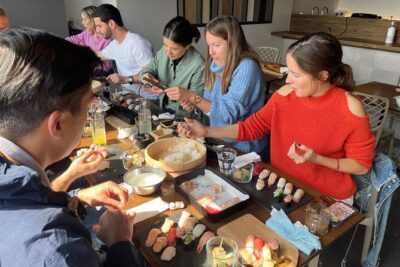
Sushi Making Tokyo Roll and Authentic Japanese Sushi Class
Read our review →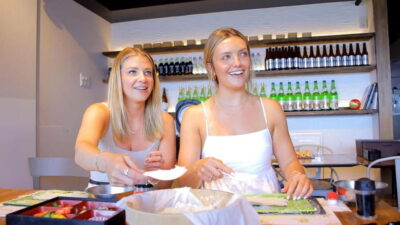
Roll and Authentic Sushi Making Class in Asakusa
Read our review →
Make Sushi and Create Unforgettable Memories in Tokyo
Read our review →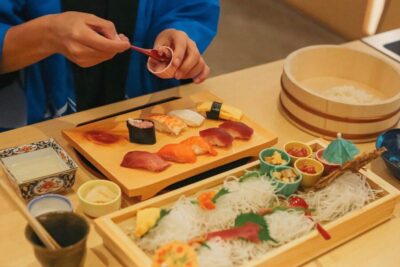
Sushi Making Class in a Happi Coat near a Famous Spot
Read our review →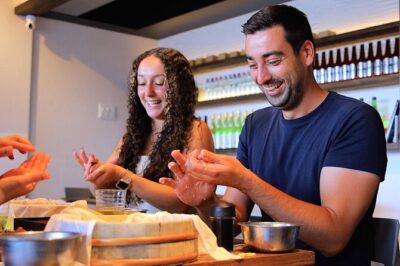
Sushi Making Osaka Roll and Authentic Japanese Sushi Class
Read our review →
Tokyo Sushi Making Class in Tsukiji with Professional Chef
Read our review →
Tsukiji Fish Market Guided Tour and Sushi Making with Pro Chef
Read our review →
Sushi Making in Kyoto! Same-day bookings welcome!
Read our review →Browse the lists this tour appears in