
Reviewed · COOKING CLASSES
Eat Osaka: Street Food Cooking in an Authentic Kitchen!
Osaka tastes best when you make it yourself. This 2.5-hour class brings you into an old Japanese house and gives you practical instruction from a local bilingual chef. I like the small maximum of eight people, which should leave room for questions, and I like that the meal includes drinks such as beer, sake, or green tea.
The class is a strong pick if you want more than a market snack and would like to understand how familiar Japanese dishes come together. The main point to check before booking is the exact menu: the tour details describe both udon, vegetable tempura, pickled cucumber, and mochi, as well as okonomiyaki and yakitori. The dishes may vary by session.
The setting also adds real appeal. This is not simply a demonstration in a modern rental room. You cook in an old restaurant kitchen or purpose-built studio inside an old Japanese house, using professional tools and ingredients. At $79.28 per person, the price makes the most sense if you value instruction, a full meal, drinks, and a personal cultural exchange.
In This Review
- Key points at a glance
- Entering the old Japanese kitchen
- A small group changes the lesson
- Making noodles from flour to bowl
- Osaka flavors on the cooking table
- The food is only half the experience
- Sitting down with beer, sake, or green tea
- What the $79.28 price covers
- Who will enjoy this class most
- Timing, transport, and cancellation
- Should you book Eat Osaka?
- FAQ
- How long does the Eat Osaka cooking class last?
- Where does the experience begin?
- Where does the activity end?
- How many people can join the class?
- Is the location near public transportation?
- Are ingredients and instruction included?
- Which dishes might I learn to make?
- Are drinks included?
- Can I cancel for a full refund?
Key points at a glance
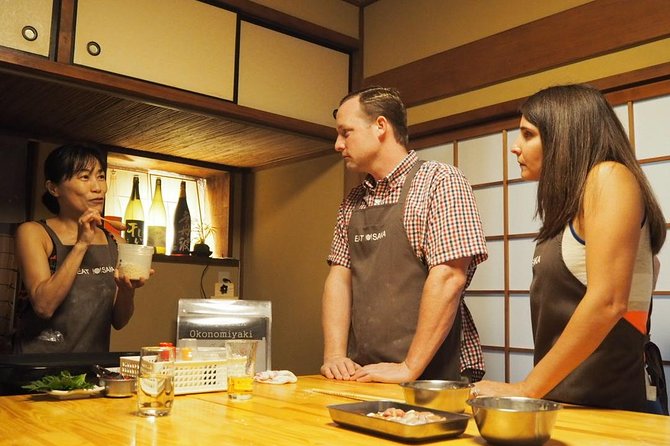
- Small classes capped at eight: A limited group should give you more direct help from the chef and an easier chance to ask questions.
- An old Japanese house kitchen: The setting gives the cooking lesson a sense of place that a standard studio may lack.
- Hands-on Osaka dishes: You may prepare handmade udon, vegetable tempura, okonomiyaki, yakitori, pickled cucumber, and mochi, depending on the session menu.
- Professional tools and included ingredients: You do not need to shop for supplies or bring cooking equipment.
- Food and drinks follow the lesson: Sit down with your creations and choose from local beer, sake, or green tea.
- Strong praise for the hosts: Miki, Niki, and Natalie are singled out for patient teaching, clear explanations, and a relaxed atmosphere.
Entering the old Japanese kitchen
The meeting point is Eat Osaka Higashinari, at 1-2-10 Higashinaka, Higashinari Ward, Osaka. The class starts and ends at this same location, and the meeting point is near public transportation. Booking confirmation is provided at the time of reservation, and the ticket is mobile, so you can keep it on your phone.
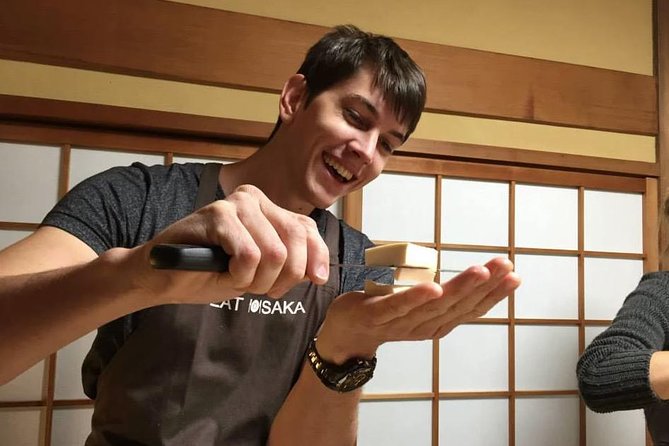
The physical setting is part of the lesson. You are not only learning recipes, you are doing so in an old Japanese house that serves as a cooking studio. That matters because the room helps connect the food to everyday Osaka life. The atmosphere sounds warm and informal, with enough structure to keep the class moving but enough room for conversation.
I would allow extra time to find the address, especially if this is your first visit to Higashinari. The information says the location is a short walk from a train station, but it does not name the station or give a precise walking time. Keep the full address available rather than relying only on a map pin.
More Cooking Classes in Osaka
- Osaka: Ramen and Gyoza Cooking Class in Dotonbori
★ 5.0 · 378 reviews - Osaka Cooking Class: Okonomiyaki &Japanese cuisines experience
★ 5.0 · 261 reviews - Ramen and Gyoza Cooking Class in Osaka
★ 5.0 · 202 reviews
A small group changes the lesson
The class has a maximum of eight people. That is a useful limit for a practical cooking session, since you will be handling dough, batter, skewers, and cooking tools rather than only watching a chef work.
A small group also helps if you are unsure about a technique. Natalie is praised for creating a relaxed environment, while Miki is noted for explaining both the steps and the reasons behind them. Those details matter. A class is more useful when you understand why a process works, not just which action to copy.
The class also appears suited to mixed-age groups and families. One family described the hosts as warm and patient, with activities that kept everyone involved. Another participant received vegetarian accommodation from Natalie. That is encouraging, but you should still state dietary needs clearly before the class, since the available information confirms one vegetarian accommodation rather than a complete list of options.
Making noodles from flour to bowl
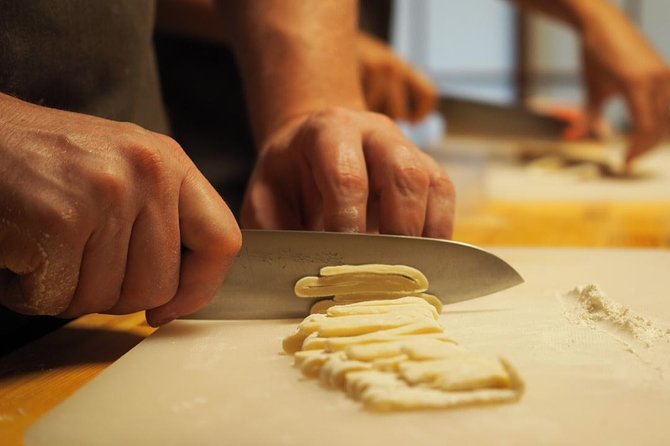
Handmade udon is one of the clearest reasons to book this experience. The appeal is not just eating thick noodles. You get to see how a basic mixture becomes a familiar Japanese staple, with the chef guiding you through the process.
The class uses professional-level ingredients and tools, so you can expect a more structured lesson than a casual home demonstration. The exact technique is not listed, so I would not promise a particular kneading or cutting method. What is clear is that you make the noodles yourself and later eat them as part of the finished meal.
This part should suit you if you enjoy tactile cooking. It also gives you a useful skill to take home, since handmade noodles are easier to understand once you have worked with the dough yourself. The only limitation is the short overall schedule. With two and a half hours covering several dishes, the lesson is designed to be lively and practical rather than a slow, specialist noodle workshop.
Osaka flavors on the cooking table
The class description presents several dishes associated with Osaka street food and casual Japanese cooking. One version includes Osaka-style okonomiyaki made from scratch, while another highlights vegetable tempura, handmade udon, pickled cucumber, and mochi. Yakitori skewers with a signature sauce are also included in the detailed description.
Okonomiyaki is especially fitting for an Osaka class. The dish is often described as a savory pancake, but that simple label misses the pleasure of assembling and cooking it yourself. You can learn how the ingredients combine, how the mixture is handled, and how a common local favorite becomes a meal.
Vegetable tempura gives the class a different lesson in texture. You are working toward a light coating rather than a heavy fried crust. The available information does not specify which vegetables are used, so do not book this expecting a particular ingredient.
Yakitori adds another street-food element, with skewers finished in the class signature sauce. Pickled cucumber provides a sharp, cool contrast to the cooked dishes, while mochi brings a sweet finish. If all of these dishes appear in one session, the meal offers a broad tour of Japanese textures and flavors. Since the descriptions do not match perfectly, I would confirm the day’s menu if one dish is especially important to you.
More Food Tours in Osaka
- Osaka: Shinsekai Food Tour with 13-15 Dishes at 5 Eateries
★ 4.8 · 2,204 reviews - Osaka Food Tour: 13 Dishes at 5 Local Eateries
★ 5.0 · 2,149 reviews - Hungry Osaka Street Food Tour:15 Tastings & 3 Drinks with a Local
★ 5.0 · 1,727 reviews - Hungry Osaka Street Food Tour: 15 Dishes & 3 Drinks
★ 4.9 · 694 reviews
The food is only half the experience
The most valuable part of a cooking class is often the explanation around the food. Miki is praised for explaining the reasoning behind each step and for encouraging questions about Japanese cuisine and culture. Natalie is repeatedly described as friendly, patient, and easy to learn from.
That teaching style can turn a recipe into a cultural lesson. You might learn how Osaka food differs in spirit from dishes served in more formal settings, or why certain ingredients and sauces work together. The available details do not promise a formal lecture, so expect conversation woven into the cooking rather than a long history presentation.
The bilingual format is important if you want more than a visual demonstration. A local bilingual chef can explain techniques and answer questions in a way that helps you take part instead of simply copying movements. I would make a point of asking about ingredients, cooking habits, and how the dishes are eaten in Japan. The small group should make those questions easier to raise.
Sitting down with beer, sake, or green tea
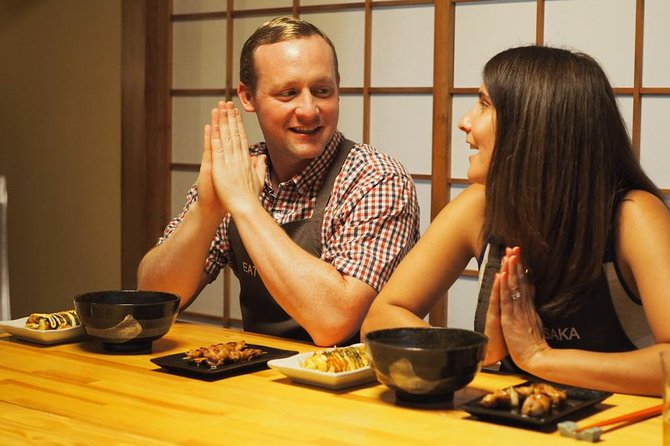
After the cooking, you sit down and eat what you have made. Welcome drinks are included, and the listed choices are local beer, sake, or green tea. This turns the class into a complete meal rather than a short lesson followed by a snack.
The drink selection also lets you set the tone. Beer suits a casual street-food meal, sake connects naturally with Japanese dining, and green tea gives you a nonalcoholic choice. The information does not state how many drinks are included or whether additional drinks cost extra, so I would treat the choices as included refreshments rather than assume unlimited service.
Eating together is where the social side of the class comes into focus. One account describes enjoying the experience with another couple from Ireland, while other accounts praise the friendly atmosphere. You may be seated with people you did not arrive with, which can be a plus if you enjoy meeting others and less appealing if you want a private meal.
What the $79.28 price covers
At $79.28 per person, this is not the cheapest way to eat street food in Osaka. You can buy a snack from a stall for far less. The better comparison is with a guided food activity that includes ingredients, equipment, instruction, several dishes, a sit-down meal, and drinks.
The value improves if you are interested in cooking. You are paying for access to a local instructor, a purpose-built kitchen in an old Japanese house, professional tools, and help throughout the preparation. You also avoid spending time finding ingredients and working out unfamiliar recipes on your own.
I would see the price as fair for a special activity, especially if you want one memorable food experience during a short Osaka visit. It is less compelling if your main goal is simply to eat as much as possible for the lowest cost. The class gives you participation and context, not just food.
The high rating and 99 percent recommendation suggest that the teaching and atmosphere are major strengths. The strongest praise focuses on the hosts, not on luxury facilities. That is useful when setting expectations: book this for warm guidance and hands-on cooking, not for a polished restaurant meal.
Who will enjoy this class most
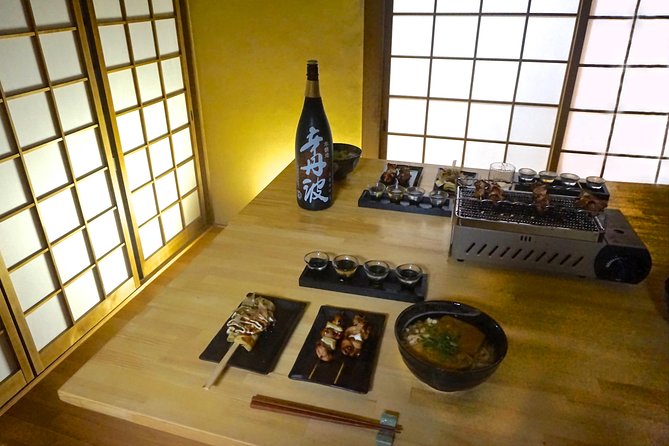
I would recommend Eat Osaka to you if you fit one or more of these descriptions:
- You want a hands-on food activity rather than a sightseeing tour.
- You enjoy learning simple techniques you can remember after returning home.
- You are visiting Osaka with family and want an activity that can involve different ages.
- You prefer a small group and personal help.
- You want to learn about Japanese food while eating the results.
- You are comfortable with a menu that may include several dishes in a short session.
The class also works well for couples and solo visitors. A solo participant may find the small group an easy setting for meeting others, while couples can share a practical activity instead of booking another restaurant meal.
I would hesitate if you need a fully private class, dislike cooking, or want a precise published menu with no variation. I would also confirm dietary arrangements in advance. Vegetarian accommodation has been provided, but the information does not spell out every possible substitution or allergy procedure.
Timing, transport, and cancellation
The activity lasts about two hours and thirty minutes. That is long enough for several cooking stages and a meal, but not so long that it takes over your day in Osaka. Since the class returns to the meeting point, you can plan your next activity from the same neighborhood.
The location is near public transportation, and the address is in Higashinari Ward. Because the exact station details are not provided, check the route before leaving and arrive with enough time to identify the old house.
You can cancel for a full refund if you do so at least 24 hours before the local start time. Changes or cancellations inside that 24-hour window are not accepted for a refund. The class also requires a minimum number of participants. If that minimum is not reached and the provider cancels, you are offered another date or experience, or a full refund.
Should you book Eat Osaka?
I would book this class if you want to understand Osaka through its food and prefer making a meal to simply ordering one. The old-house kitchen, eight-person limit, included drinks, and repeated praise for Miki, Niki, and Natalie give it a strong personal feel.
The one point I would settle before paying is the menu. The details list both an udon and tempura-focused version and an okonomiyaki and yakitori version, with cucumber and mochi also appearing. If you are flexible, that variety is a benefit. If you have your heart set on one dish, ask Eat Osaka what your chosen session includes.
For most food-loving visitors, the $79.28 cost is reasonable for two and a half hours of instruction, cooking, eating, and conversation. It is a good choice for a family, couple, or solo participant who wants an active Osaka memory rather than another meal at a table.
FAQ
How long does the Eat Osaka cooking class last?
The class lasts approximately 2 hours and 30 minutes.
Where does the experience begin?
It begins at Eat Osaka Higashinari, 1-2-10 Higashinaka, Higashinari Ward, Osaka, Osaka Prefecture 537-0021, Japan.
Where does the activity end?
The experience ends back at the meeting point.
How many people can join the class?
The class has a maximum of eight participants.
Is the location near public transportation?
Yes. The meeting point is described as being near public transportation.
Are ingredients and instruction included?
Yes. The experience includes all ingredients and instruction from the chef.
Which dishes might I learn to make?
The listed dishes include Osaka-style okonomiyaki, handmade udon, vegetable tempura, yakitori skewers with a signature sauce, pickled cucumber, and mochi dessert. The menu descriptions vary, so confirm the exact dishes for your session.
Are drinks included?
Yes. Welcome drinks are included, and the listed choices include local beer, sake, and green tea.
Can I cancel for a full refund?
Yes. You can receive a full refund if you cancel at least 24 hours before the experience start time. Cancellations or changes made less than 24 hours before the start are not accepted for a refund.
Just added around Osaka
- Osaka Food Tour with 10 Classic Japanese Tastings & Drinks★ 5.0 · 38 reviews
- Osaka: Highlights & Hidden Gems Private Walking Tour★ 4.7 · 38 reviews
- Kyoto private tour (Shore excursion available from Osaka or Kobe port)★ 5.0 · 39 reviews
- Osaka Private Day Trip – Enjoy Your First-Time Visit to Osaka!★ 5.0 · 39 reviews
- Kyoto & Nara & Uji: Full Day Sightseeing Tour from Osaka or Kyoto★ 4.5 · 39 reviews
- Authentic SUSHI Course Cooking Class★ 5.0 · 39 reviews
- Osaka: Mind & Spirit Balance Temple Reiki Healing★ 5.0 · 41 reviews
- Osaka Afternoon Walking Tour with Osaka River Cruise★ 3.5 · 42 reviews
Cooking Classes, compared.
Ramen Cooking Class at Ramen Factory in Kyoto
Read our review →
Ramen & Gyoza Cooking Class in Tokyo with Local Supermarket Visit
Read our review →
Ramen Cooking Class at a Ramen Factory with Souvenir
Read our review →
Japanese Washoku Bento Small Group Cooking Class
Read our review →

Easy Ramen Cooking Experience in Kabukicho, Shinjuku
Read our review →
Ramen and Sushi Cooking Class with Sake Pairing Set in Tokyo
Read our review →Browse the lists this tour appears in