Reviewed · TEA CEREMONY EXPERIENCES
Kyoto Tea Ceremony and Samurai Photo Session
Matcha, sweets, and samurai armor in one hour. This Kyoto experience brings several Japanese traditions together inside a 100-year-old machiya, with hands-on tea making, seasonal wagashi, and a modern matcha latte lesson. I like the friendly teaching style, especially Maya’s clear English and easy humor, and I like that you do more than watch a formal ceremony. The main drawback is that the tea portion is compact, so anyone hoping for a long, highly formal ceremony may find the pace brisk.
At $71.74 per person, the value comes from the variety: traditional matcha, sweets, a latte-making session, and samurai photographs in one short visit. You should also note the timing carefully. The core tea activity is described as about 50 minutes, while the full experience is listed at approximately 1 hour 20 minutes, likely allowing time for the armor photos and related activities.
In This Review
- Key points to know before you book
- Entering a Kyoto machiya for a short cultural lesson
- Watching the ceremony before making your own matcha
- Making matcha and tasting seasonal wagashi
- Switching from tradition to a Kyoto-style matcha latte
- Putting on samurai armor for the final photographs
- What the teaching style adds
- Is $71.74 good value in Kyoto?
- Who will enjoy this experience most?
- Practical details that can shape your visit
- Should you book the Kyoto tea ceremony and samurai photos?
- FAQ
- How long does the Kyoto tea ceremony and samurai photo session last?
- How much does the experience cost?
- Where does the activity start and end?
- Is the experience suitable for beginners?
- How many people can join the activity?
- Is the experience available in English?
- Can I cancel for a full refund?
Key points to know before you book
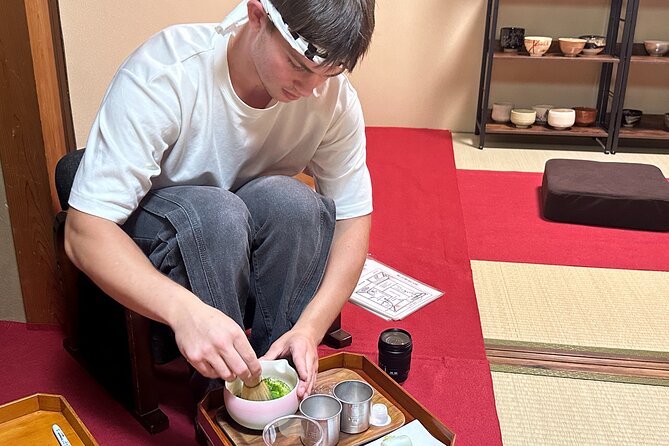
- Tea in a 100-year-old machiya: You meet at a traditional Kyoto townhouse rather than a modern classroom or large attraction.
- You make your own matcha: Maya demonstrates the proper method, then gives you a chance to prepare the tea yourself.
- Two very different drinks: The session includes traditional matcha and a creamy Kyoto-style matcha latte, with a recipe to take home.
- Seasonal wagashi included: The small Japanese sweets provide the classic pairing for bitter matcha.
- Samurai armor photos: The experience finishes with photographs while wearing authentic samurai armor.
- Small group, short format: A maximum of 10 people keeps the class personal, but the 50-minute tea portion moves along quickly.
Entering a Kyoto machiya for a short cultural lesson
The meeting point is Samurai Gyoza Factory Kyoto, at 230-1 Kamimyōkakujichō in Nakagyo Ward. The activity begins and ends at this same location, and it is near public transportation. You receive confirmation when booking, and a mobile ticket makes the arrival process simple.
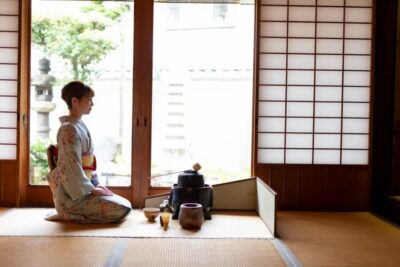
The setting does much of the work. A machiya is a traditional Kyoto townhouse, and a building around a century old gives the class a more suitable atmosphere than a generic studio. You are not only hearing about tea culture. You are sitting in a place connected to the kind of architecture that shaped old Kyoto neighborhoods.
I would allow a few extra minutes to find the address, particularly if you are moving through central Kyoto on a busy day. The supplied information does not name a specific station or give detailed walking directions, so check the meeting point on your phone before setting out. Since the activity returns to the same place, you do not need to plan for a separate ending location.
The group limit is 10 people. That is small enough for personal instruction without making this feel like a private lesson. It also makes the experience a reasonable choice for solo visitors, couples, families, and small groups of friends who want to learn together.
More Photo Tours in Kyoto
- Kyoto: Maiko Makeover and Photoshoot Experience
★ 4.7 · 239 reviews - Kyoto: Private Photoshoot Service
★ 5.0 · 158 reviews - Your Private Vacation Photography Session In Kyoto
★ 5.0 · 110 reviews
Watching the ceremony before making your own matcha
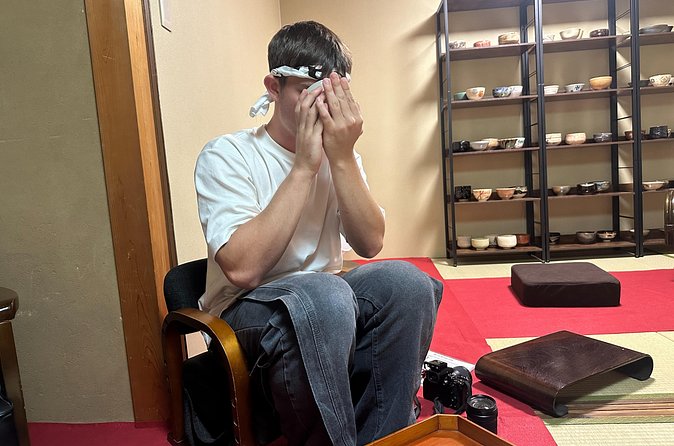
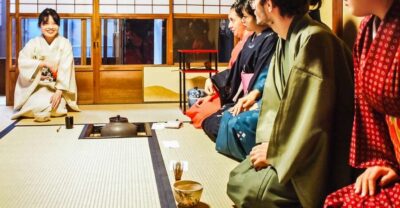
The class begins with an introduction to the history and meaning of the tea ceremony. Maya explains the process in English, including the role of mindfulness and the care taken with each step. Her teaching style comes through as cheerful, patient, and relaxed, which matters if this is your first contact with Japanese tea culture.
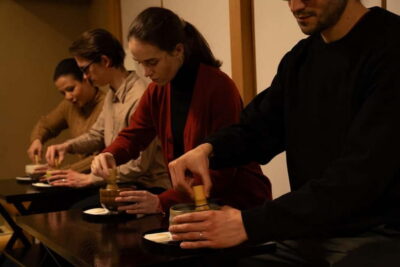
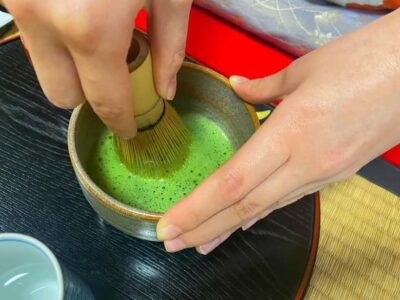
You first watch a demonstration of the traditional preparation. This gives you a chance to see the movements before handling the equipment yourself. The lesson is not built around silently observing a master from across the room. You are encouraged to participate.
That approach suits most first-time visitors. Japanese tea ceremony can seem formal from the outside, with gestures and customs that are unfamiliar to newcomers. A clear explanation helps you understand that the ceremony is not simply about producing a bowl of green tea. It is also about attention, calm, hospitality, and respect for the moment.
The compact format is both a strength and a limitation. In less than an hour, you receive a useful introduction without giving up half a day of sightseeing. At the same time, this is not likely to cover every school, tool, historical period, or regional variation in Japanese tea practice. Think of it as a friendly first lesson rather than a full study of tea ceremony.
Making matcha and tasting seasonal wagashi
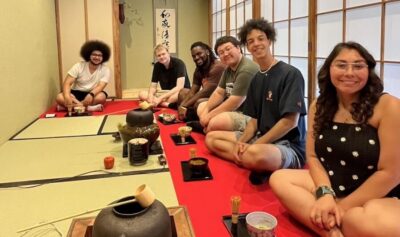
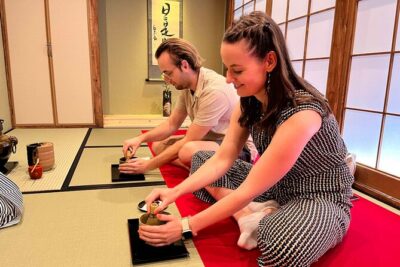
After the demonstration, you prepare your own matcha. This is where the class becomes memorable because you can feel the process rather than simply hear about it. Maya is described as patient and encouraging, making it easier for beginners to try without worrying about getting every movement perfect.
The matcha itself is presented as good quality, and the tea is served with seasonal wagashi. These traditional Japanese sweets are important to the experience, not just a small snack added to the ticket. Their sweetness balances matcha’s sharper, more earthy flavor and gives you a classic tea pairing.
If you have never tasted matcha prepared in this style, expect something different from a sweet café drink. Traditional matcha is direct and grassy, with a texture that comes from the powdered tea itself. The wagashi helps soften that flavor, and the contrast is part of the lesson.
I especially like that the sweets are seasonal. That small detail connects the ceremony to the Japanese habit of paying attention to the time of year. The available information does not specify which wagashi will be served, so you should not book expecting a particular sweet.
The class also includes plenty of chances for photographs. The setting, tea tools, sweets, and preparation process all give you something to remember beyond the final drink. The activity is clearly designed to be participatory and visual, which makes it a good fit if you want a cultural experience that produces photographs without turning into a long photo shoot.
Switching from tradition to a Kyoto-style matcha latte
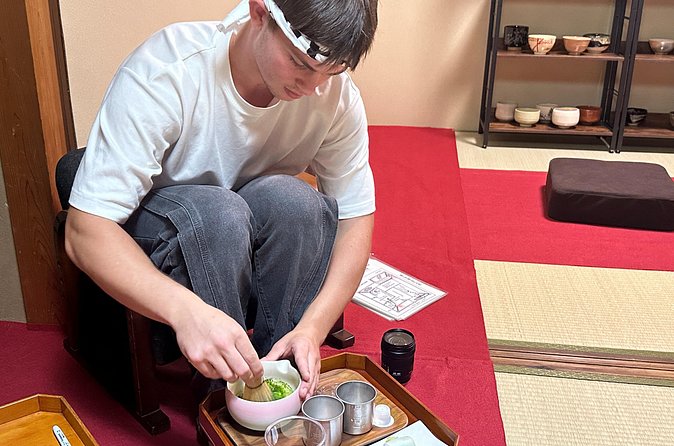
The modern half of the class is the matcha latte lesson. After making traditional tea, you learn how to prepare a creamy Kyoto-style latte yourself. This change in style gives the session a useful connection to everyday tea culture, where matcha appears in cafés, desserts, and home kitchens as well as formal ceremonies.
The latte is not presented as a replacement for the traditional preparation. Instead, it shows how the same ingredient can be used in two very different ways. You first learn the older method, then try something more familiar and immediately practical.
A recipe is provided so you can make the latte at home. That adds real value to the ticket. Many short cultural activities end when you leave the room, but a recipe gives you a way to repeat part of the experience after returning home. If you already enjoy tea, this may be one of the most useful parts of the session.
The latte section also helps people who are unsure about strong matcha. Traditional tea can be an acquired taste, while a latte is softer and more accessible. You get to compare both rather than deciding based on a single cup.
Still, the modern drink takes time away from the formal ceremony. If your main goal is an exact, highly traditional tea-school performance, you may prefer a longer specialist class. If you want a relaxed introduction with something tasty and practical at the end, the latte is a smart addition.
More Samurai & Ninja Experiences in Kyoto
- Kyoto Samurai Experience
★ 5.0 · 1,294 reviews - Kyoto: Kendo and Samurai Experience with Uniform and Gear
★ 4.9 · 815 reviews - Kyoto: Samurai Sword Class by Experts in Traditional Arts
★ 4.9 · 657 reviews - Skip the lines Basic Ticket at SAMURAI NINJA MUSEUM KYOTO
★ 4.5 · 632 reviews
Putting on samurai armor for the final photographs
The experience ends with a samurai photo session. You have the chance to wear authentic samurai armor and take photographs that capture a different side of Japanese culture. This is a playful finish after the quiet concentration of tea preparation.
The contrast works well. Tea ceremony emphasizes calm movements and mindfulness. Samurai armor brings costume, character, and a little theatrical energy. In a single visit, you move from the careful preparation of matcha to photographs inspired by Japan’s warrior past.
The supplied information does not describe the armor sizes, the exact number of photographs, posing arrangements, or whether staff take the pictures with a phone or camera. I would therefore treat the photo session as a memorable included activity rather than booking it with a fixed portrait package in mind.
For families and groups of friends, this may be the most entertaining part. It gives everyone a clear souvenir and creates a shared joke as well as a cultural memory. Solo visitors should also be able to take part, but the details of photography support are not specified, so it is sensible to ask the host if that matters to you.
The full experience is listed as approximately 1 hour 20 minutes, while the tea ceremony and matcha workshop itself is described as 50 minutes. The difference likely reflects the armor and photo portion, but the exact timing may vary. Leave a little breathing room before your next reservation.
What the teaching style adds
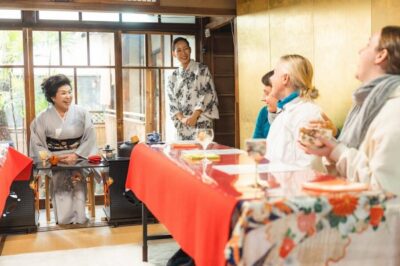
Maya receives repeated praise for being kind, funny, patient, and easy to understand in English. That combination is important. A teacher can know the subject well, but a beginner needs someone who can explain unfamiliar customs without making the lesson feel stiff.
The comments about her English are especially useful for international visitors. You should be able to follow the explanation of tea ceremony history, preparation, and mindfulness without needing specialist knowledge. Her humor also keeps the class from becoming overly solemn.
I like the balance between demonstration and participation. You see the proper method, then make your own matcha and latte. The instruction is not designed to test you. It is designed to help you try.
This style also makes the experience suitable for people who are curious about Japanese culture but do not consider themselves tea experts. You do not need prior knowledge, and the activity is specifically presented as beginner-friendly.
The consistently positive response, including a 5 rating from 70 reviews and a 100 percent recommendation figure, supports the idea that the class delivers what it promises. The strongest praise centers on the host, the clear explanations, the high-quality matcha, the tasty wagashi, and the interactive format. Those are the parts I would weigh most heavily when deciding.
Is $71.74 good value in Kyoto?
At $71.74, this is not the cheapest way to drink matcha in Kyoto. You can find a café serving matcha for far less. But this is not simply a beverage purchase. The price includes instruction, participation, traditional sweets, a matcha latte activity, the townhouse setting, and samurai armor photographs.
The value is strongest if you want several cultural elements in one compact booking. You are paying for a hosted lesson rather than just a cup of tea. The included recipe improves the value for anyone who expects to make matcha at home.
The price may feel less attractive if you are mainly interested in drinking matcha or watching a formal ceremony. In that case, a shorter café visit or a more specialized ceremony could better match your priorities. This activity is aimed at participation, explanation, and fun.
Because the group is capped at 10, you are also paying for a more personal format than a large demonstration. That does not guarantee private attention every second, but it should make it easier to follow the instructor and ask questions.
The experience is booked an average of 72 days ahead, which suggests that popular dates may fill early. If this is important to your Kyoto plans, booking ahead is sensible. Free cancellation is available when you cancel at least 24 hours before the start time. Cancellations or changes made less than 24 hours before the start are not accepted for a refund.
Who will enjoy this experience most?
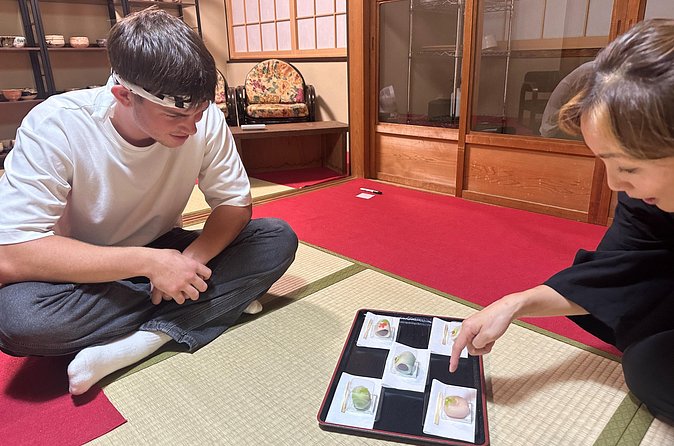
I would recommend it to first-time visitors who want a manageable introduction to Japanese tea culture. The class explains the background, lets you make the drinks, and gives you a visual souvenir at the end.
It is also a good choice for:
- Friends who want an activity they can do together
- Families looking for a short cultural class
- Tea lovers interested in practicing at home
- Visitors who want an English-language experience
- People who enjoy taking photos in traditional clothing
- Anyone with limited time between Kyoto sightseeing plans
You may want to skip it if you are seeking a long, silent, highly formal tea ceremony with extensive instruction in etiquette. You may also find the samurai photography less appealing if you prefer a purely tea-focused activity.
For most people, though, the mixed format is the point. It is traditional without being intimidating and modern without losing the connection to Japanese customs.
Practical details that can shape your visit
The mobile ticket is convenient, and confirmation arrives at booking. Since the meeting point is near public transportation, you should be able to reach it without arranging a special transfer, though the exact route depends on where you are staying.
The activity ends back at the starting point. That makes it easy to continue sightseeing in the same general area, but remember that the stated duration is approximate. Do not schedule a major attraction with no gap at all afterward.
The maximum group size is 10. Wear something that allows comfortable movement, especially if you are looking forward to the armor photographs. The available information does not state clothing restrictions, photography limits, or accessibility details, so ask the provider directly if you have specific needs.
Japan food entertainment Ltd operates the experience. The strong recommendation rate and full rating indicate a dependable choice, but the most important question is still whether the format suits you. This is a lively introduction, not a formal apprenticeship.
Should you book the Kyoto tea ceremony and samurai photos?
Yes, if you want hands-on culture in a short format. Making traditional matcha, tasting seasonal wagashi, preparing a latte, and posing in samurai armor gives you more variety than a standard tea demonstration. Maya’s friendly English-language instruction appears to be a major part of the appeal.
At $71.74, the experience makes the most sense when you value explanation and participation, not just the drink itself. Book early if your Kyoto dates are fixed, and leave enough time around the approximately 1 hour 20 minute visit.
Skip it only if you want a longer and more formal ceremony, or if the photo session does not interest you. For everyone else, this is an easy, cheerful way to connect with Kyoto’s tea culture without committing a full afternoon.
FAQ
How long does the Kyoto tea ceremony and samurai photo session last?
The full experience lasts approximately 1 hour 20 minutes. The tea ceremony and matcha-making portion is described as about 50 minutes, with the remaining time likely used for the samurai armor photographs and related activities.
How much does the experience cost?
The listed price is $71.74 per person.
Where does the activity start and end?
It starts at Samurai Gyoza Factory Kyoto, 230-1 Kamimyōkakujichō, Nakagyo Ward, Kyoto, 604-0025, Japan. It ends back at the same meeting point.
Is the experience suitable for beginners?
Yes. The activity is designed for beginners and curious visitors, and the instructor demonstrates the process before you make your own matcha and matcha latte.
How many people can join the activity?
The group can include a maximum of 10 people.
Is the experience available in English?
The instructor Maya is described as speaking very good English and explaining the tea ceremony, its history, and the preparation process clearly in English.
Can I cancel for a full refund?
Yes, if you cancel at least 24 hours before the experience start time. Cancellations or changes made less than 24 hours before the start time are not accepted for a refund.
More Tea Ceremonies in Kyoto
- Kyoto: Tea Ceremony in a Traditional Tea House in Kiyomizu
★ 4.9 · 3,519 reviews - Kyoto: Tea Ceremony Ju-An at Jotokuji Temple
★ 4.9 · 3,207 reviews - Kyoto: 45-Minute Tea Ceremony Lesson Experience
★ 4.3 · 2,378 reviews - Kyoto: Table-Style Tea Ceremony at a Kyo-Machiya
★ 4.9 · 1,211 reviews
Just added around Kyoto
- Kyoto: Gion Night Walking Tour with Geisha Insight★ 5.0 · 39 reviews
- Kyoto: Private Customizable Day Trip by Car★ 5.0 · 38 reviews
- Kyoto: Full Day Bike Tour★ 4.9 · 39 reviews
- Private Japanese Calligraphy in Kyoto – Learn Shodō with a Master★ 5.0 · 39 reviews
- Kyoto: Gion Evening Walk with Hidden Gems, Geisha & Sake★ 5.0 · 41 reviews
- Experience a tea ceremony in an authentic tearoom, in Kyoto!★ 4.5 · 41 reviews
- Kyoto Private Photo Shoot & Tour by SnapKyoto★ 5.0 · 41 reviews
- The Way of Tea: Kyoto Crafts, Hidden Temples & Wabi-Sabi Walk★ 5.0 · 41 reviews
Tea Ceremony Experiences, compared.
Tea Ceremony in a Traditional Tea House in Kiyomizu
Read our review →