
Reviewed · WALKING TOURS
Private Osaka Walking Tour: Highlights & Hidden Gems
Osaka rewards curious feet. I like the way this private walking tour mixes famous places such as Shitennoji and Dotonbori with quiet lanes, small shrines, and local shopping streets. I also like the freedom to shape the day around food, history, shopping, or modern Osaka. The main drawback is simple: this can become a very long walk, and public transport or taxis may cost extra if your route stretches across the city.
At $81.07 per person, the tour offers solid value for a private experience, especially if you want personal attention rather than a fixed group route. Guides including Maria, Max, Taku, Ryan, Kai, and Loys are praised for their warmth, storytelling, flexibility, and help with trains and restaurants. Just remember that food, entry fees, and transport are not included.
In This Review
- Key points to know before booking
- A private start to Osaka’s many personalities
- Starting around Namba and Nanbanaka
- Namba Yasaka Shrine and its giant lion
- Hozenji Temple and the stone lanes of Hozenji Yokocho
- Dotonbori after dark or in daylight
- Shitennoji, founded in 593
- Amerikamura and Osaka’s creative side
- Shopping arcades, department stores, and White Umeda
- Nakanoshima, an island pause in the city
- Osaka Castle, markets, and flexible additions
- How much walking should you expect?
- The guides are the real reason to book
- Price, private value, and extra costs
- Who will enjoy this Osaka walk?
- Should you book the Private Osaka Walking Tour?
- FAQ
- How long does the private Osaka walking tour last?
- Is hotel pickup included?
- Is this a private tour?
- Are food and drinks included?
- Are transportation costs included?
- How much walking should I expect?
- What happens if I need to cancel?
Key points to know before booking
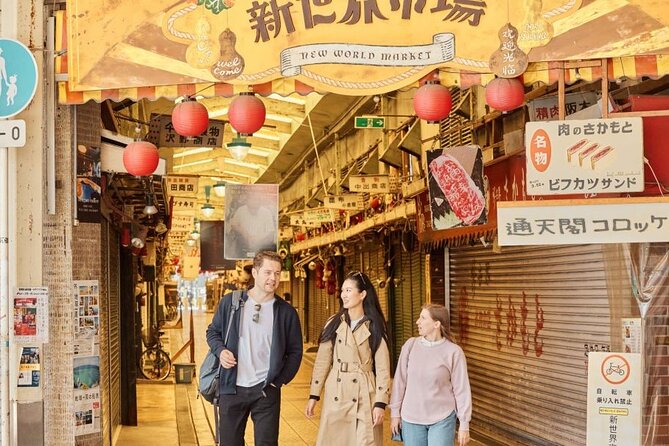
- Your interests shape the route: Share your must-sees, food wishes, shopping plans, and pace in the pre-tour questionnaire.
- The itinerary can cover old and new Osaka: Expect choices ranging from Shitennoji and Hozenji to Amerikamura, department stores, and neon-lit Dotonbori.
- Private means flexible: Only your group joins, and the guide can adjust the route as your energy and interests change.
- A four-hour tour can be a serious walk: Past groups have logged 15,000 to more than 20,000 steps.
- Local help is part of the value: Guides may explain ICOCA cards, show you how to use public transport, suggest restaurants, and help with shopping.
- The price does not cover extras: Food, drinks, attraction admissions, taxis, and public transport are paid separately.
A private start to Osaka’s many personalities
Osaka is not one single sightseeing district. It shifts quickly from department stores and underground malls to temple grounds, narrow restaurant lanes, youth-fashion streets, and bright canal-side signs. That makes a tailored walk useful, especially if you have only one day or want help sorting out the city’s many choices.
The tour lasts from two to eight hours. That broad range matters. A two-hour outing can help you get your bearings around Namba or another central area. A four-hour route gives you a good introduction to several districts. Six to eight hours allows more room for Osaka Castle, markets, food stops, shopping, and sites farther apart.
After booking, you complete a short questionnaire. Use it well. If you care about Buddhist temples, ask for Shitennoji and Hozenji. If food is your priority, mention local specialties and markets. If you have children, sore knees, limited time, or a strong shopping list, say so before the day begins.
This is one of the tour’s best features. You are not simply following a preset march from one famous sight to another. The guide can adjust the balance between major attractions and places you might miss on your own.
More Hidden Gem Tours in Osaka
- Osaka Kickstart: Hotspots & Hidden Gems Tour
★ 5.0 · 1,306 reviews - Osaka: Hotspots & Hidden Gems Walking Tour Private or Group
★ 4.9 · 1,300 reviews - Ultimate Osaka Walking Tour: Castle, Dotonbori & Hidden Gems
★ 5.0 · 862 reviews
Starting around Namba and Nanbanaka

The listed meeting point is at DAISO, 2-chome-2-17 Nanbanaka, in Naniwa Ward. Hotel pickup is offered when your hotel is centrally located, so confirm the arrangement after booking rather than assuming every address qualifies.
Namba is a practical starting area because it puts you close to shopping, food, entertainment, and several of the city’s most interesting side streets. It is also a useful place to begin if you want to understand how Osaka works as a city of neighborhoods rather than isolated sights.
Your guide may take you toward Namba’s arcades, local shops, restaurants, and side alleys. The area can feel crowded, particularly around major shopping and dining streets, but a private guide helps you read the scene instead of simply pushing through it.
The best part is the ability to pause for questions. You can ask what a shop sells, how a shrine is used, why a lane looks different from the next one, or where to return for dinner. That kind of everyday context is often more useful than another list of dates.
Namba Yasaka Shrine and its giant lion
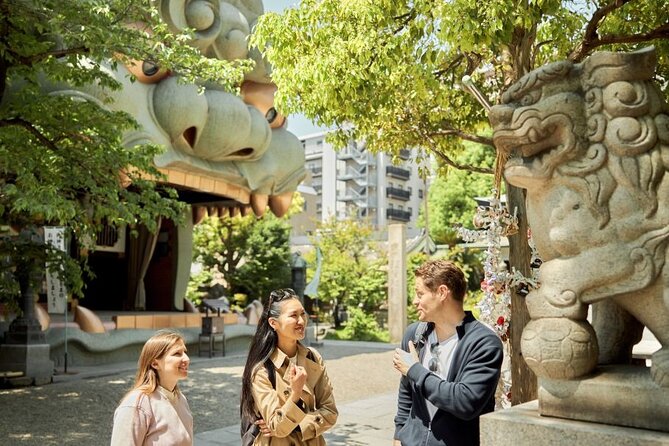
Namba Yasaka Shrine is one of Osaka’s most memorable quick stops. Its enormous lion-shaped structure is designed to swallow evil spirits and bring good fortune. The scale makes it easy to remember, and the shrine provides a sharp contrast with the commercial streets nearby.
I like this stop because it is both cultural and visual. You do not need a long visit to appreciate it, yet your guide can explain why the lion matters and how the shrine fits into local religious life.
The limitation is that this is not a large temple complex with hours of exhibits. Think of it as a focused stop rather than a place where you will spend half a day. It works best when combined with nearby Namba sights.
Hozenji Temple and the stone lanes of Hozenji Yokocho
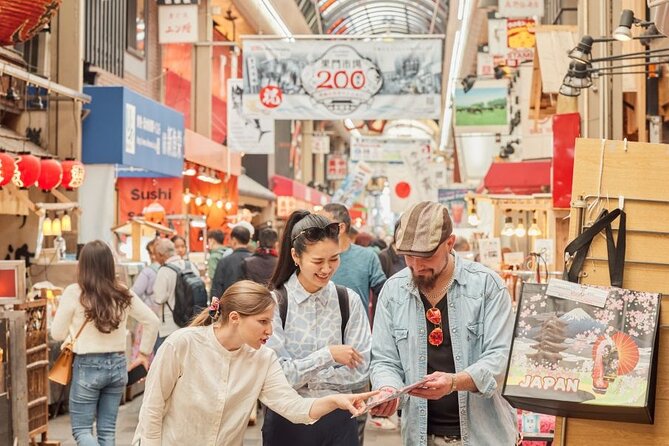
Hozenji Yokocho offers a very different mood. This stone-paved alley is lined with more than 60 traditional Japanese restaurants and bars. It is narrow, atmospheric, and far removed from the scale of Osaka’s department stores.
At Hozenji Temple, you will find a moss-covered statue of Fudomyoo. Visitors pour water over the statue to ask for blessings, and the wet moss gives the small temple a distinctive appearance. Your guide can explain the custom and help you approach the site respectfully.
This is exactly the sort of place a private guide improves. You might walk past the lane without knowing what to look for. With a guide, you can slow down, learn the ritual, and make a note of restaurants to consider later.
The alley is not a grand attraction, and space is limited. Be considerate around diners and worshippers. If you are hoping for a quiet, empty lane, timing will matter, since the restaurant area can become busy.
More Walking Tours in Osaka
- Osaka Local Foodie Walking Tour in Dotonbori and Shinsekai
★ 5.0 · 985 reviews - Osaka Bar Hopping Night Walking Tour in Namba (3 bars, 6 tastes)
★ 5.0 · 958 reviews - Osaka: Deep Backstreets Walking Tour with Dinner Option
★ 4.9 · 902 reviews - Osaka: Main Sights and Hidden Spots Guided Walking Tour
★ 4.9 · 702 reviews
Dotonbori after dark or in daylight
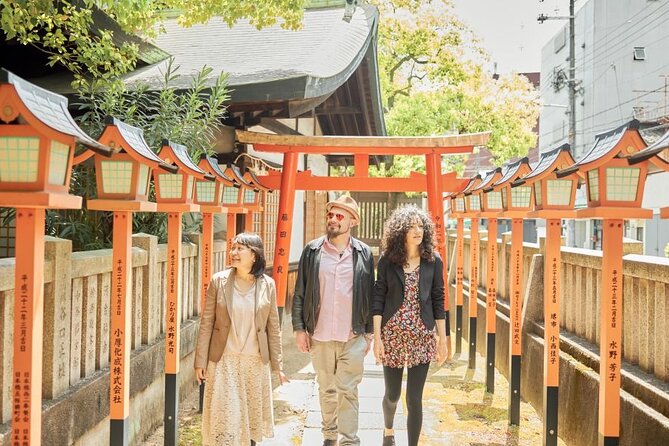
Dotonbori is Osaka’s famous canal district, packed with bright signs, arcades, food outlets, and entertainment. The neon along the water is especially striking in the evening, though daytime has its advantages if you want clearer views and fewer crowds.
A guide gives this familiar district more depth. Instead of only taking the standard canal photo, you can look for side streets, smaller businesses, and food choices beyond the most obvious signs. The guide may also point out places to return to after the walk.
Food is not included, so budget separately for anything you eat. That is a small but important point in Osaka, where a short walk can quickly turn into a meal of curry, kushikatsu, or other local specialties.
Past outings have included curry, hot chocolate, kushikatsu, fish-market visits, and unusual local foods. Your own route will depend on your questionnaire and guide, but tell the host if tasting Osaka matters more to you than checking off monuments.
Shitennoji, founded in 593
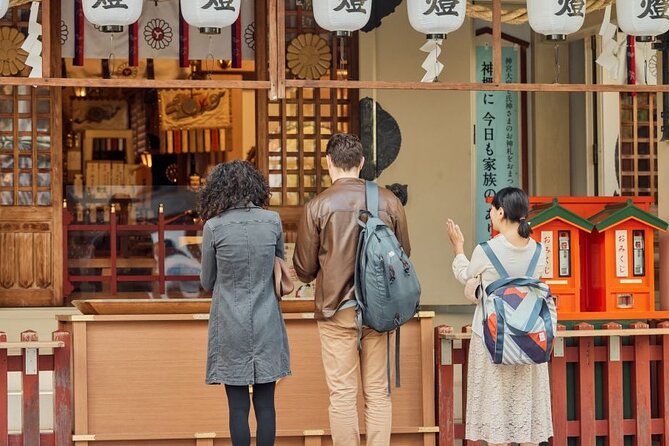
Shitennoji is the historical anchor of the experience. Founded in 593, it is regarded as Japan’s oldest official temple and is linked to the early introduction of Buddhism to the country.
The temple grounds offer a welcome pause from Osaka’s traffic and shopping streets. Even if you are not a temple specialist, the setting helps explain how old religious institutions continue to exist inside a modern city.
This is a good place to ask your guide for context. Dates alone do not tell you much. A clear explanation of the temple’s place in Japanese history and Buddhist practice can turn a quick visit into one of the day’s most rewarding stops.
Allow for walking on temple grounds and uneven surfaces. The stop is peaceful, but it may not suit you if you want a fast, tightly packed route focused only on shopping and food.
Amerikamura and Osaka’s creative side
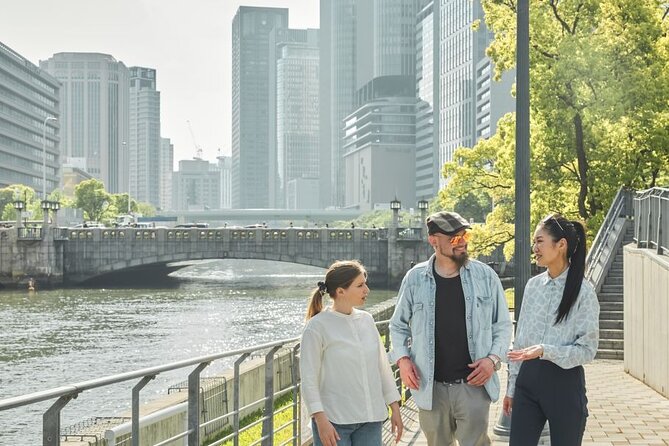
Amerikamura, often shortened to Amemura, is the city’s center for American-influenced youth culture. Indie music, street fashion, thrift shops, galleries, and unusual stores give the district a different look from traditional Osaka.
I would choose this area if you want to see present-day local life rather than only historic sites. It can be especially useful for shoppers searching for character goods, secondhand clothing, or smaller independent shops.
The district is best approached with an open mind. It is not a formal attraction, and the appeal comes from browsing streets and seeing how Osaka’s younger culture expresses itself. Your guide can help you focus on the parts that fit your interests instead of wandering without a plan.
Shopping arcades, department stores, and White Umeda
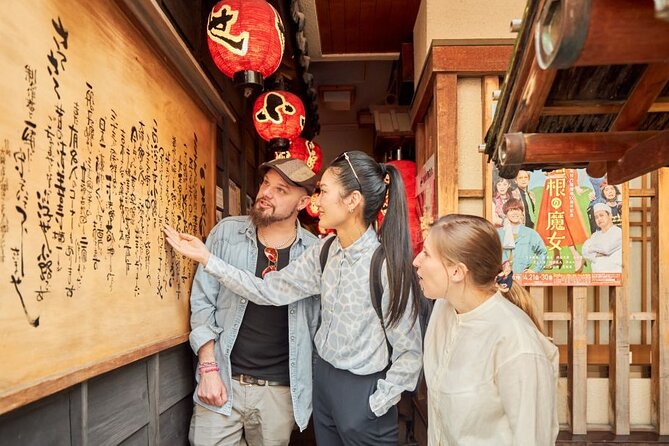
The tour can also move north toward Umeda. One option is a major department store, where several floors offer clothing, household goods, food, and unexpected finds. Another is White Umeda, a large underground shopping area that can feel like a maze.
Underground shopping centers are practical in bad weather and useful for seeing how Osaka residents shop and move through the city. They are also easy places to lose time. A guide can help you decide which sections are worth your attention and how to navigate back to the surface.
Osaka’s main shopping arcade offers another style of retail experience. Shops, cafés, restaurants, souvenirs, and character goods fill the covered route. It is a good choice if you want gifts or prefer browsing local storefronts to visiting a single department store.
Do not expect every shopping stop to feel distinctly historic. These areas are commercial, and some stores may resemble those in other Japanese cities. Their value lies in the range of choices, the local pace, and the guide’s ability to match the area to your list.
Nakanoshima, an island pause in the city
Nakanoshima provides a calmer change of pace. This island area has art museums, early 20th-century architecture, and a picturesque park. It works well for a late-morning stroll when you want a break from crowded streets.
The contrast is the point. Osaka can shift from a noisy arcade to a quiet park within a short journey. Nakanoshima gives you a chance to notice the city’s civic and architectural side, not just its food and shopping reputation.
It is not the strongest choice if you want maximum sightseeing density. The appeal is slower: buildings, open space, museums, and a more relaxed walk. Tell your guide if you would rather spend time inside an art museum, though any admission fee would be extra.
Osaka Castle, markets, and flexible additions
Several outings have included Osaka Castle, and it is a sensible choice for a first visit. The castle and surrounding park give you a major landmark, open space, and a chance to connect Osaka’s present-day identity with its political past.
A fish market has also been included on some routes. If you enjoy food, ask about a market stop in advance. It can add a more everyday feel than a standard restaurant visit, though the exact market and timing are not fixed in the information provided.
This flexibility is helpful, but it also means you should not assume every listed place will fit into one day. Namba, Shitennoji, Dotonbori, Amerikamura, Nakanoshima, Umeda, and Osaka Castle are spread across different parts of the city.
A good guide will help you choose. Trying to force every stop into four hours could leave you rushing, skipping meals, and counting subway stairs. I would rather see three districts properly than collect eight rushed photographs.
How much walking should you expect?
Bring comfortable shoes. One four-hour route covered about 15,000 steps, while another reached more than 20,000. Those figures are not promises, but they show how active the day can become.
The tour is described as a walking experience, not a private vehicle tour. Public transport or local taxis may be used if requested, with those costs discussed after your reservation is finalized. This can make a major difference if you have sore knees, young children, or a route that crosses from Namba to Umeda.
One particularly useful example involved a guide using public transport and Uber to keep the route comfortable for a guest with knee pain. Another guide helped a family learn to buy ICOCA cards and use the transport system.
Tell your host about mobility needs before the tour. Most people can take part, service animals are allowed, and the activity is near public transport, but the basic format still involves substantial walking.
The guides are the real reason to book
The strongest part of this experience is the host. The praise centers on guides who listen, explain, and adjust the day without making you feel rushed.
Maria is repeatedly praised for contacting people in advance, tailoring routes closely, speaking excellent English, and balancing major sights with local corners. She has also been praised for making families feel included and for responding well to last-minute requests.
Max is noted for clear help with public transport, family photos, market visits, kushikatsu, and restaurant suggestions. He has even helped people reach a sukiyaki restaurant inside Osaka Station after the tour.
Taku is a good name to request if you want lesser-known spots and food advice. Loys has been praised for combining old and new Osaka while helping a family with shopping. Ryan is valued for his long experience living in Osaka and his storytelling. Kai has been praised for explaining Osaka’s history and transport system.
Guide assignments can vary, so requesting a particular host is not a guarantee. Still, the repeated pattern is useful: this tour works best when you want a person who can respond to your interests, not merely recite prepared facts.
Price, private value, and extra costs
The listed price is $81.07 per person. For a private tour, that is reasonable if you are traveling with several people and will use the host’s time well.
The value is less convincing for a solo visitor seeking only a quick orientation. A shorter two-hour booking may make more sense, or you could compare the cost with a small-group tour. The private format becomes more useful when your group has different ages, food needs, mobility concerns, or a tight sightseeing wish list.
You pay separately for food and drinks, attraction admissions, and transport. Optional gratuities are also not included. Ask early if the planned route requires trains or taxis, and keep some budget for snacks because Osaka is hard to walk through without noticing something appetizing.
Free cancellation is available if you cancel at least 24 hours before the start time. Changes or cancellations inside that window are not accepted for a refund.
Who will enjoy this Osaka walk?
I would recommend it most for first-time visitors who want an efficient introduction without surrendering control of the day. It also suits families, couples, and small private groups that want to mix history, food, shopping, and modern neighborhoods.
It is a strong fit for a short Osaka stop between Kyoto and Tokyo. One family used a short visit to see several districts in limited time, and that is where a local host can save you from losing half the day to route planning.
Food-focused visitors should make their priorities clear. So should shoppers, architecture fans, history lovers, and anyone with mobility concerns.
I would hesitate if you dislike walking, want a fixed luxury vehicle, or prefer a detailed museum tour with guaranteed admission. This is an adaptable city walk, not a formal lecture or a private car sightseeing package.
Should you book the Private Osaka Walking Tour?
Book it if you want personal guidance and a flexible route through Osaka’s very different neighborhoods. The combination of Namba, Hozenji, Shitennoji, Dotonbori, Amerikamura, Umeda, Nakanoshima, markets, and Osaka Castle can give you a useful sense of the city in one day.
For the best result, answer the pre-tour questionnaire carefully, name your top three priorities, wear serious walking shoes, and discuss transport before you meet. I would choose four hours for a first taste, six or more if food, shopping, and several districts all matter.
With a 4.8 rating from 569 reviews and a 96 percent recommendation rate, the experience has a strong record. Its success depends heavily on the guide and on how clearly you explain what you want, but for visitors who value local conversation over a rigid schedule, it is a worthwhile Osaka introduction.
FAQ
How long does the private Osaka walking tour last?
The tour can last approximately two to eight hours. A four-hour option is a common middle ground for seeing several districts without committing to a full day.
Is hotel pickup included?
Pickup is offered from centrally located hotels. Confirm your pickup details after booking, since the service does not apply to every hotel address.
Is this a private tour?
Yes. Only your group participates in the activity, and the itinerary is planned around your interests.
Are food and drinks included?
No. You pay separately for food and drinks purchased during the experience.
Are transportation costs included?
No. The basic experience is a walking tour. Public transport or local taxis may be used if requested, and those costs can be discussed with your host after the reservation is finalized.
How much walking should I expect?
The amount depends on your route and duration. Past four-hour outings have involved roughly 15,000 steps, and one reached more than 20,000 steps, so comfortable shoes are important.
What happens if I need to cancel?
You can receive a full refund if you cancel at least 24 hours before the scheduled start time. Cancellations or changes made less than 24 hours before the start are not refunded or accepted.
Just added around Osaka
- Osaka Food Tour with 10 Classic Japanese Tastings & Drinks★ 5.0 · 38 reviews
- Osaka: Highlights & Hidden Gems Private Walking Tour★ 4.7 · 38 reviews
- Kyoto private tour (Shore excursion available from Osaka or Kobe port)★ 5.0 · 39 reviews
- Osaka Private Day Trip – Enjoy Your First-Time Visit to Osaka!★ 5.0 · 39 reviews
- Kyoto & Nara & Uji: Full Day Sightseeing Tour from Osaka or Kyoto★ 4.5 · 39 reviews
- Authentic SUSHI Course Cooking Class★ 5.0 · 39 reviews
- Osaka: Mind & Spirit Balance Temple Reiki Healing★ 5.0 · 41 reviews
- Osaka: Gluten-Free Ramen and Gyoza Cooking Class★ 5.0 · 42 reviews
Walking Tours, compared.
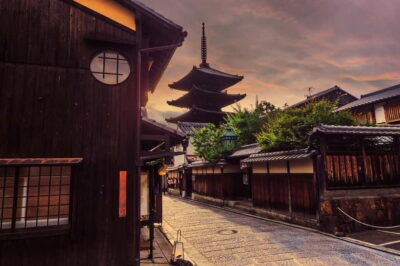
Kyoto Geisha Walking Tour: Gion District & Hidden Gems
Read our review →
Tokyo Tsukiji Fish Market Food and Culture Walking Tour
Read our review →
Gion Magical Night Walking Tour with Geisha Trivia
Read our review →
Imperial Palace and Shogun Historical Walking Tour
Read our review →
Gion Geisha District Walking Tour – Stories of Geisha
Read our review →
Shinjuku Local Bar and Izakaya Guided Walking Tour
Read our review →
Browse the lists this tour appears in